How AV can open you to attacks that otherwise wouldn’t be possible
Enlarge (credit: Florian Bogner)
Antivirus programs, in many cases, make us safer on the Internet. Other times, they open us to attacks that otherwise wouldn't be possible. On Friday, a researcher documented an example of the latter-a vulnerability he found in about a dozen name-brand AV programs that allows attackers who already have a toehold on a targeted computer to gain complete system control.
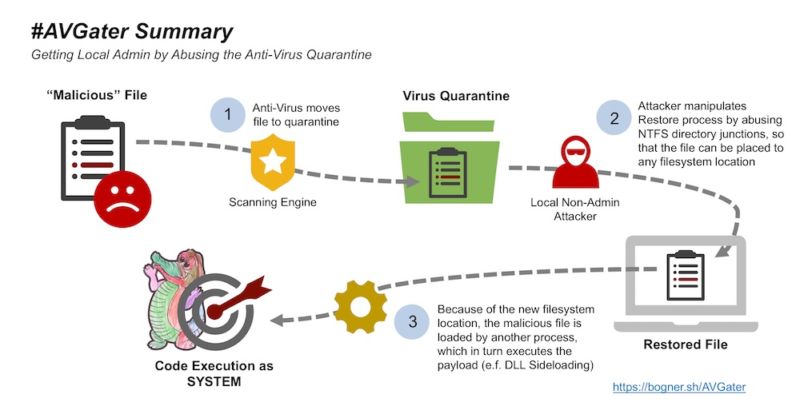
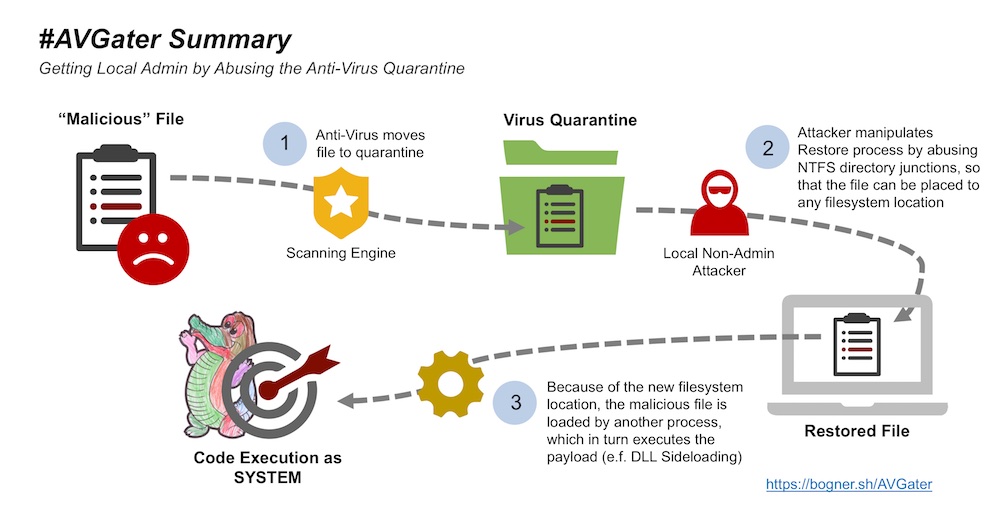
AVGater, as the researcher is calling the vulnerability, works by relocating malware already put into an AV quarantine folder to a location of the attacker's choosing. Attackers can exploit it by first getting a vulnerable AV program to quarantine a piece of malicious code and then moving it into a sensitive directory such as C:\Windows or C:\Program Files, which normally would be off-limits to the attacker. Six of the affected AV programs have patched the vulnerability after it was privately reported. The remaining brands have yet to fix it, said Florian Bogner, a Vienna, Austria-based security researcher who gets paid to hack businesses so he can help them identify weaknesses in their networks.
Bogner said he developed a series of AVGater exploits during several assignments that called for him to penetrate deep inside customer networks. Using malicious phishing e-mails, he was able to infect employee PCs, but he still faced a significant challenge. Because company administrators set up the PCs to run with limited system privileges, Bogner's malware was unable to access the password database-known as the Security Account Manager-that stored credentials he needed to pivot onto the corporate network.
Read 8 remaining paragraphs | Comments