Enceladus heats up because its core is like a sponge
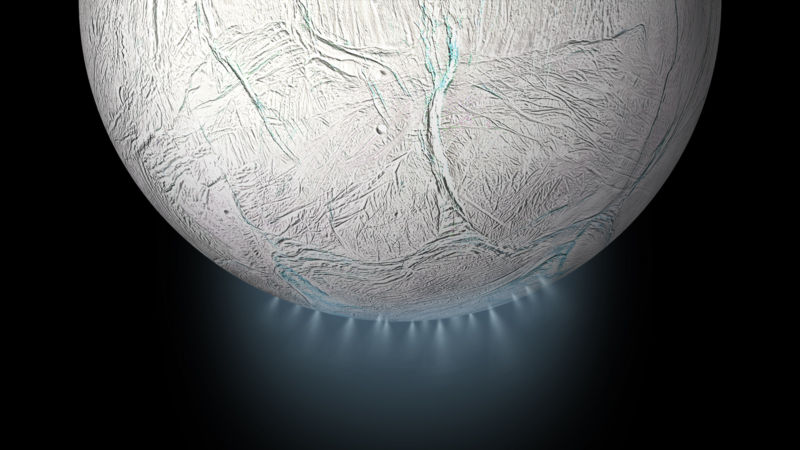
Enlarge (credit: NASA/JPL/Caltech)
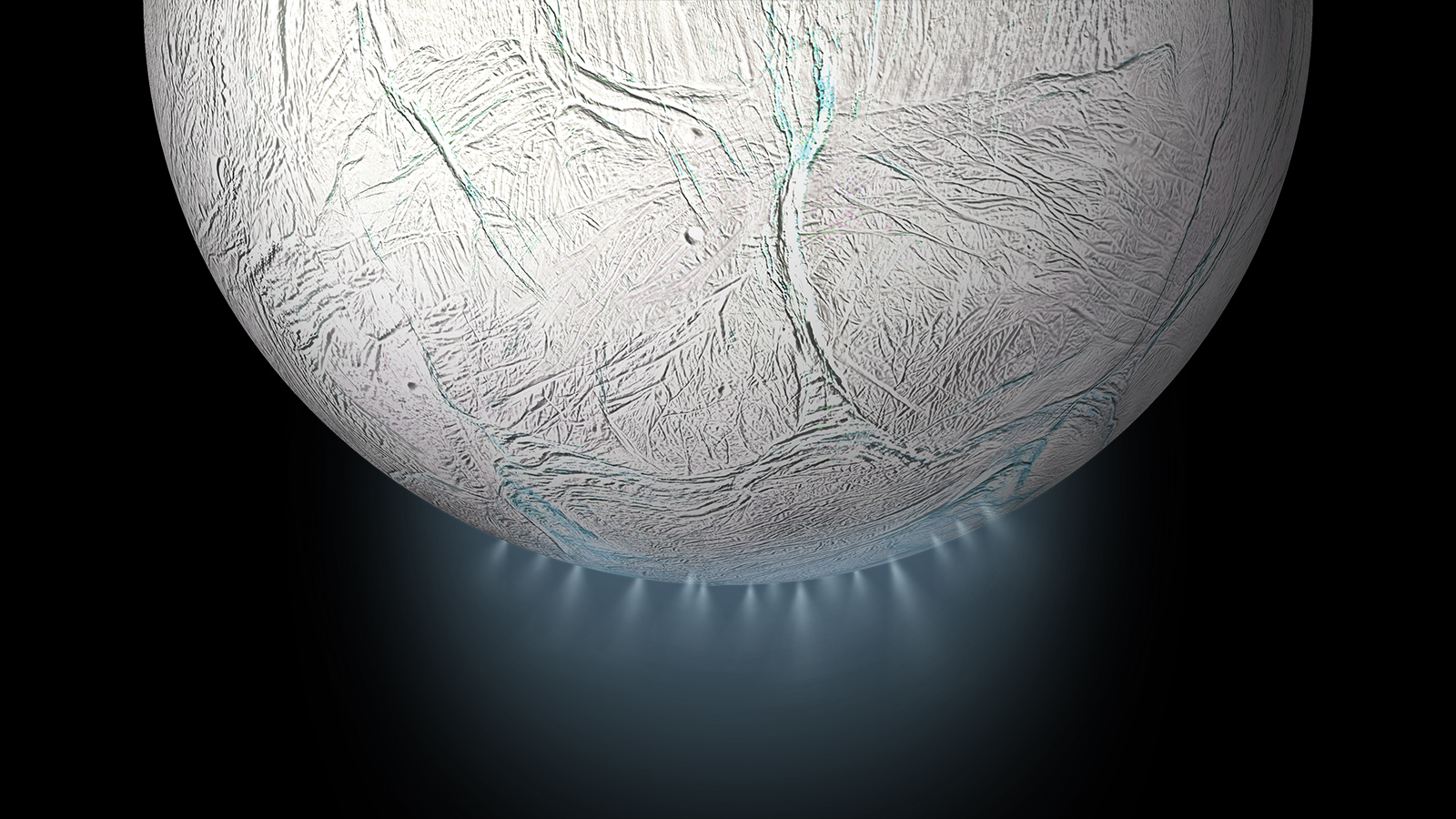
On Earth, the heat that drives geology is partly leftover from the planet's formation and partly the result of radioactive decay. For the smaller bodies of our Solar System, neither of these should be big factors. Yet many of them are geologically active, thanks to heat generated by gravitational interactions. Uneven gravitational forces throughout a moon's orbit leads to internal flexing, generating enough heat to power geysers and volcanoes.
Or we think. In the case of Enceladus, Saturn's geyser-riddled moon, calculations suggest that the heat generated by orbital torques would only be enough to keep the moon's internal ocean liquid for about 30 million years. And, once its sub-surface ocean freezes, the moon's ability to flex goes down, which means less internal friction to warm it back up again. So why does Enceladus have an ocean at all, billions of years after it formed?
According to new research published in Nature Astronomy, that ocean survives because the core of the moon isn't a solid sphere of rock and metal; instead, it's a porous, loosely aggregated hunk of rock. Its sponge-like nature allows tidal heating to warm up its water to roughly 90 degrees Celsius.
Read 7 remaining paragraphs | Comments