After a “major” launch anomaly, satellites scrambling to reach orbits
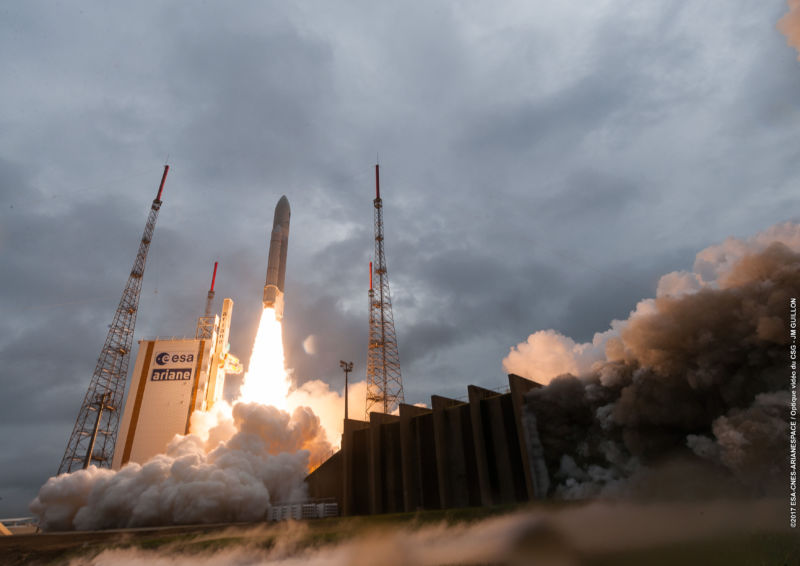
Enlarge / An Ariane 5 rocket launches in December, 2017. (credit: Arianespace)
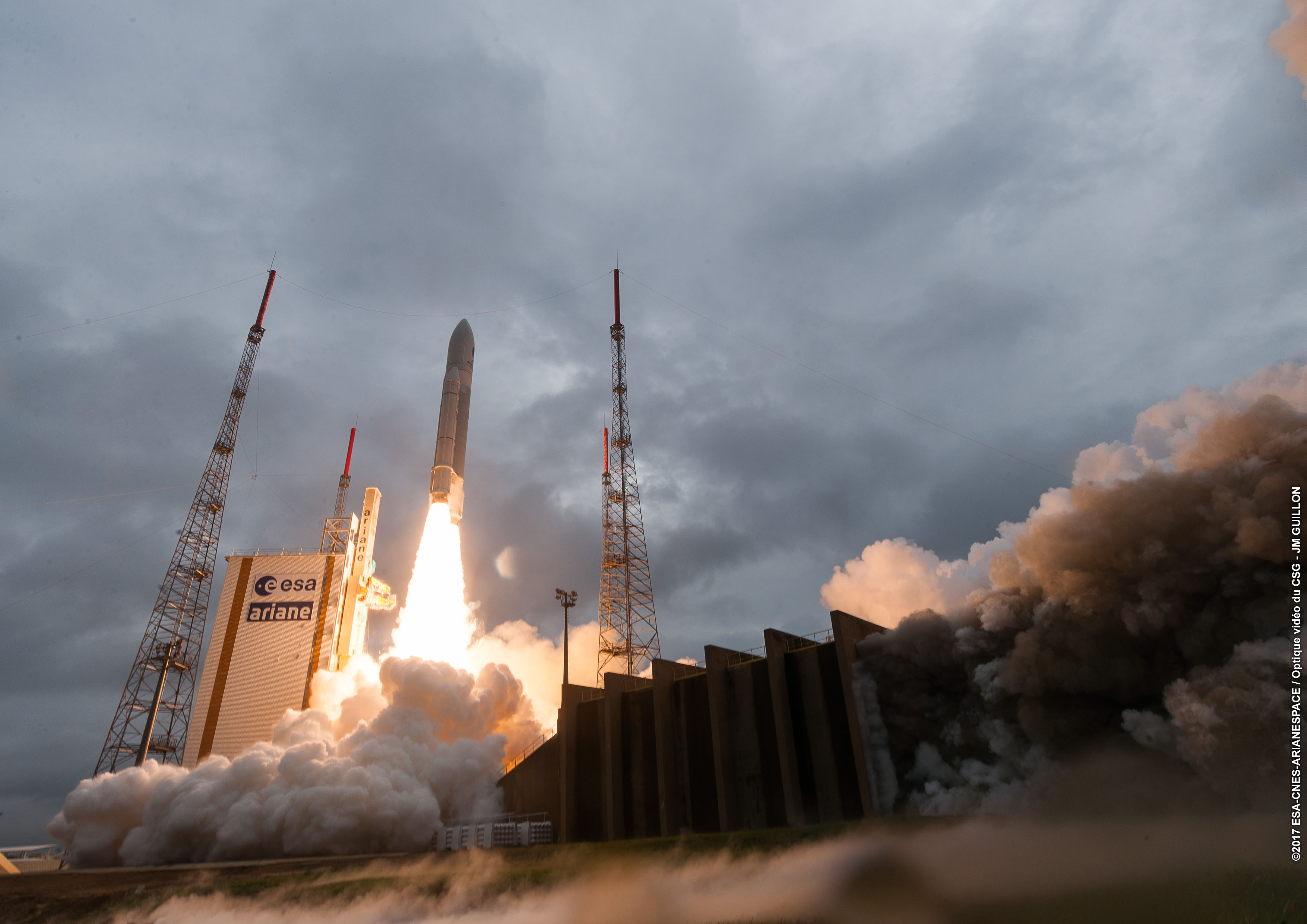
On Wednesday night, an Ariane 5 booster took off from Kourou, a launch site in French Guiana operated by a European rocket company. The launch proceeded normally until shortly before nine minutes and 26 seconds into the flight, when ground tracking stations lost contact with the rocket. It was feared that the launch vehicle and its two satellites were lost.
But later Wednesday night, and again on Thursday, both of the satellite operators, SES and Eutelsat, separately confirmed that they were in contact with their respective spacecraft, the SES-14 satellite and the Al Yah 3 satellite. They were not in their proper geostationary orbits, but that could be fixed, the satellite companies said.
Just how far off those orbits became clear publicly later on Thursday, when data about them started appearing in satellite trackers. According to one orbital expert, Jonathan McDowell, each of the satellites had reached near the 45,000km heights where they need to be, but the inclinations were way off.
Read 4 remaining paragraphs | Comments