New observations of galaxies challenge the standard cosmological model
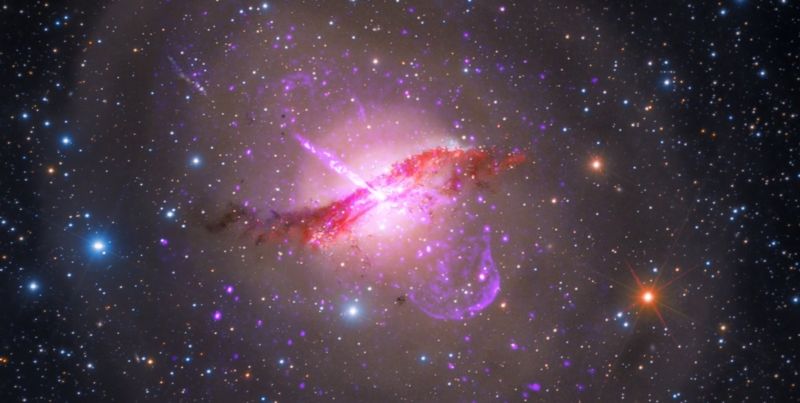
Enlarge / A multi-wavelength composite image of Centaurus A. (credit: NASA/CXC/SAO - Rolf Olsen - NASA/JPL-Caltech)
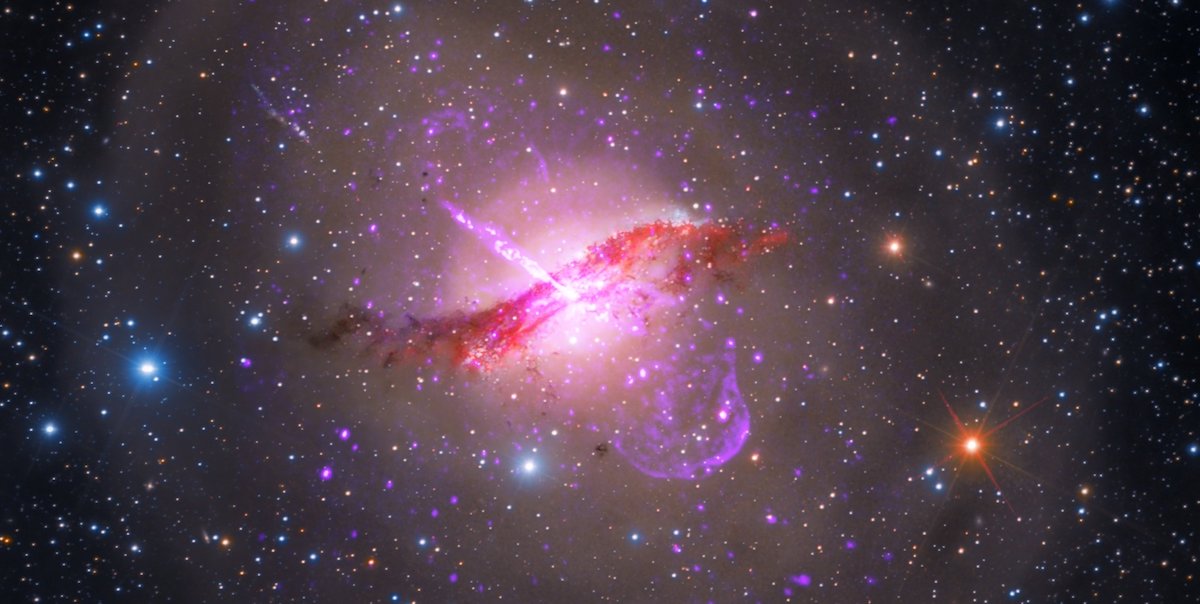
Thirteen million light years away, a handful of relatively small galaxies revolve in a disk around the larger elliptical galaxy Centaurus A. There's nothing unusual about a collection of small galaxies orbiting a large one. But the behavior of these particular galaxies doesn't fit our existing models of how the Universe works. Some astronomers say that new observations could prompt a reconsideration of the standard cosmological model.
In the standard cosmological model, or ICDM, the unseen gravitational influence of dark matter provides an invisible framework for the regular matter that we can actually detect, which only accounts for 4.6 percent of the Universe's contents. The model does a good job of explaining nearly everything about the large-scale structure of our Universe, from its earliest moments to the present day, and there's a lot of very strong evidence to support it.
But the model doesn't seem to explain why a group of small galaxies, called dwarf or satellite galaxies, seem to orbit Centaurus A in a neat orbital plane like planets orbiting a star.
Read 17 remaining paragraphs | Comments