For the first time, two CubeSats have gone interplanetary
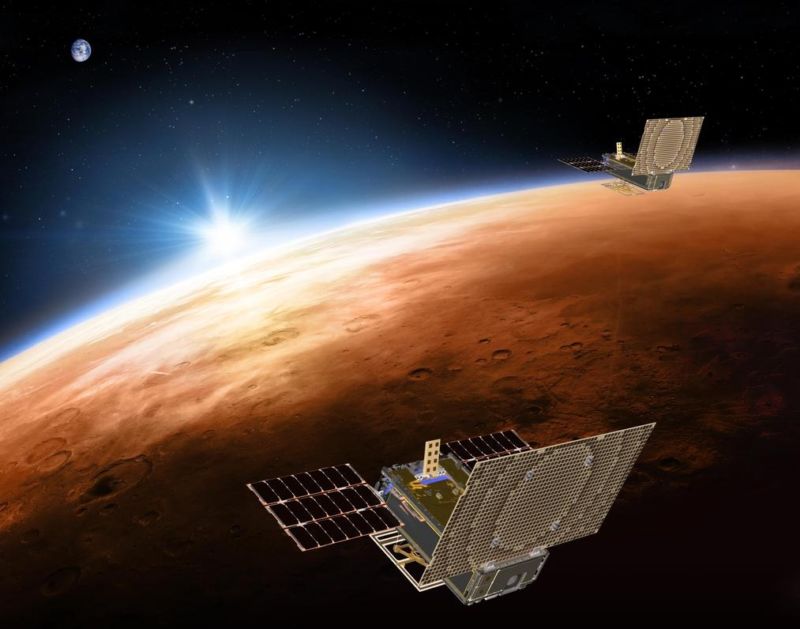
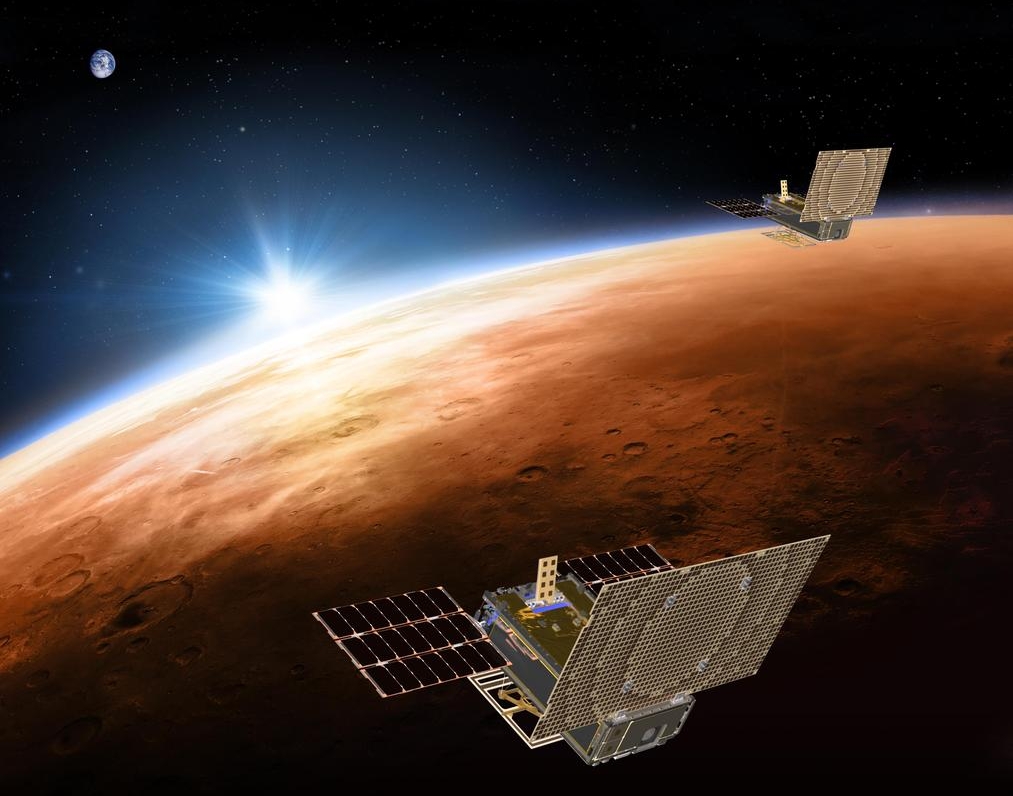
Enlarge / Artist's illustration of two CubeSats at Mars. (credit: NASA)
The first CubeSats launched in 2003, and in less than a decade, more than 100 had reached orbit around Earth. The aerospace industry has debated whether the 2kg to 15kg microsatellites are a fad, a toy, or a disruptive technology that will change they way we ultimately observe and study Earth and the rest of the Solar System. However, what is now beyond doubt is that the first CubeSats have gone interplanetary.
On Saturday, after the launch of the InSight probe to Mars, NASA received signals from the Mars Cube One, or MarCO-A and -B satellites. The signals indicated that the twin spacecraft had retained enough charge in their batteries to deploy their own solar arrays, stabilize themselves, pivot toward the Sun, and turn on their radios.
The twin MarCO satellites are not critical to the success of the InSight lander-they instead have their own separate mission to test the feasibility of CubeSats in deep space. They will follow InSight on its interplanetary trajectory to Mars and attempt to track the larger spacecraft's descent and landing on Mars in November.
Read 5 remaining paragraphs | Comments