Ars on your lunch break: Teaching AI to diagnose patient health risks
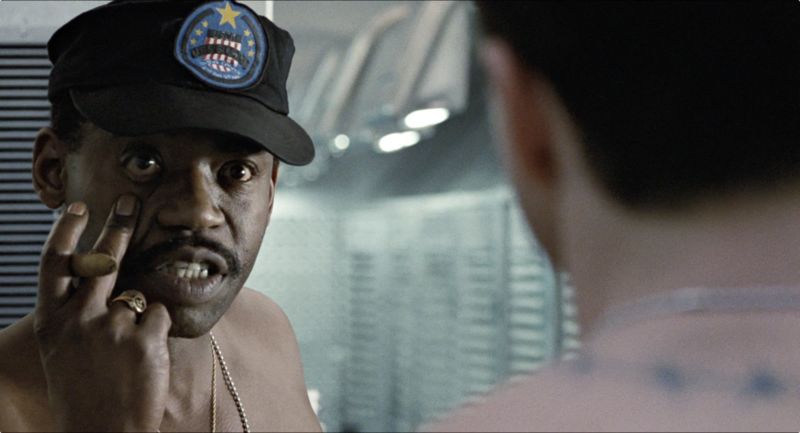
Enlarge / Google trained an AI to make inferences about a patient's health from retinal scans. Unfortunately, even if this kind of retinal scan diagnosis were commonplace in the future, it wouldn't have really done much to help poor MSG Apone. (credit: 20th Century Fox)
This week we're serializing another episode of the After On Podcast here on Ars. Our guest is pediatric oncologist and medical futurist Daniel Kraft. We'll run the interview in two installments, wrapping it up tomorrow (I mistakenly say it will be three installments in my introduction to the audio file-apologies).
Daniel founded and runs the Exponential Medicine Conference, which is one of the largest cross-disciplinary gatherings of life science researchers and innovators. He also founded and runs the medical faculty at Singularity University-an academic institution so quirky, it could only have sprouted up from Silicon Valley's soil.
When Daniel does a presentation, he's the opposite of that speaker we've all seen-the one who has to do everything possible to pad their words and slides to fill a time slot. With Daniel, I always sense that there's an entire presentation lurking behind every slide that he puts on the screen. He just has so much surface area from his two highly complementary jobs, which connect him to hundreds of startups and researchers every year. Daniel is particularly deep in medical devices, ranging from consumer-grade gear to tools that only turn up in research hospitals. And as an oncologist, he's of course deeply informed about cancer.
Read 10 remaining paragraphs | Comments