Better Buses in Seattle
The recent election of the former head the Seattle Transit Riders Union Katie Wilson to be Seattle's mayor occurred less than a month after Councilmember Alexis Mercedes Rinck announced her Better Bus Lanes' Campaign. In the spirit of that campaign I offer suggestions for improvements that can be accomplished in the near future:
Better Bus LanesCouncilmember Rinck is right. Adding bus lanes (BAT lanes or even FAB lanes) could do a lot for the buses. The campaign focuses on three corridors (Denny Way, Aurora Avenue North, and Rainier Avenue South). There is no reason to limit our efforts to those streets. We should consider other corridors, and also short sections of roadways that involve lots of different bus routes. For example, several bus routes (and the streetcar) share a relatively short section of Jackson Street (between Rainier Avenue and downtown). Anything to make that section faster and more reliable for transit would help tens of thousands of riders, either directly or indirectly. But the fight for transit lanes is complicated, which leads me to the next item.
Work with WSDOT to Improve TransitWSDOT has an important role to play in improving transit mobility in Seattle. One simple example is the work they are considering for the freeway ramps on Rainier Avenue. Concept 4 would be much better for transit (and those walking). It would allow buses to travel in a BAT lane for several more blocks (with fewer cars turning right). Similarly, while the SR-520 HOV-3 ramps are good, riders have noted that buses are routinely stuck in traffic. Fixing this may be as simple as changing the traffic light cycle or moving the existing bus lanes. WSDOT and SDOT would have to cooperate to get that done. This is also true of Aurora, a state highway. For Aurora, we should consider Freight and Bus (FAB) lanes lanes (which are now at the experimental phase on Westlake). This would be in line with the Washington Transportation Plans goals for moving people and goods.
Work with the County to Provide Better RoutingWhile a lot of routing decisions are made by the county, the city has final say as to whether it will allow a bus on a particular street. This explains why the 62 was not modified as suggested by the Metro planners with the North Link Connections project for Northgate Link. Moving the 62 would enable better coverage in the area and faster service. It isn't often you can improve both coverage and ridership, but this change would do that. It is only awaiting city approval. There may be similar opportunities in other parts of the city.
Don't Make Buses Worse to Help StreetcarsSome streetcar routes are as good as bus routes. A few are even better. But in Seattle, the streetcar routing is poor, limiting their capability. RapidRide C serves South Lake Union much better than the South Lake Union Streetcar. But the C is stuck in traffic in South Lake Union. Instead of bus lanes on Valley Street there are bike lanes. Instead of bike lanes along the south edge of the lake there are streetcar tracks. If we got rid of the South Lake Union Streetcar then we could both add bus lanes for RapidRide C and improve the bike lanes as well. This would be a big win for both cyclists and transit riders. It would also make it easier to extend RapidRide H to the same place. Then riders from the waterfront could more easily get to South Lake Union via either bus line.
Likewise, the streetcar plans along First Avenue do not come with service resources. Even if we spent over $400 million for a surface train, we would still have to come up with additional money to run it. Unlike other projects like RapidRide G, the streetcar would not be replacing existing service, which means it would come from running buses less often. However, if we move some bus routes to First Avenue, the service would essentially be free. The routing would also be better. Service along First Avenue would be more extensive (it would serve Belltown). Very little work would need to be done to the street - capital costs would be minimal.
Don't Assume ST3 Link Plans are IdealST3 planning was clearly flawed. They came up with projects well before they knew what they would cost. But it goes beyond the terrible cost estimates. Even the choice of projects was arbitrary. No one sat down and figured out what the most cost-effective options were to improve transit. Even when they chose a corridor they ignored other options besides light rail. For example, the City of Kirkland hired a consultant to figure out how best to leverage the Cross-Kirkland Connector rail corridor. They recommended BRT. Yet the board insisted on light rail (only to end up serving just the southern border of Kirkland instead). The same is true for West Seattle. West Seattle is extremely well suited for an enhanced bus network - yet they never seriously considered it. Not only were the areas chosen for enhanced service arbitrary, but so too were the projects themselves.
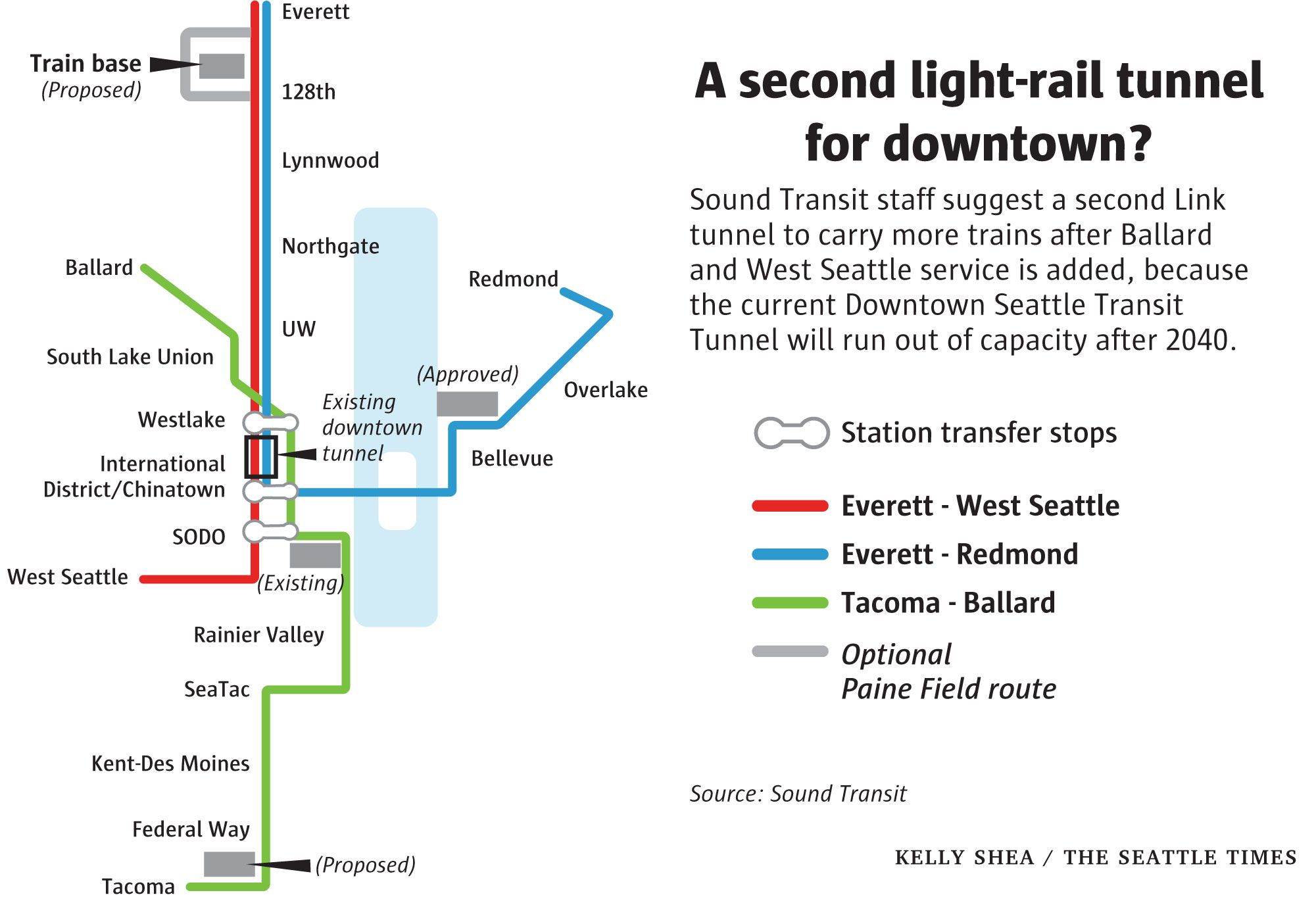
Given the arbitrary nature of such planning - and the very poor cost estimates - everything should be on the table. To assume that West Seattle Link is the next thing we should build is completely unfounded. It would make transit worse for a lot of people in the south end (by bus or by Link). For West Seattle, either Metro will continue to run buses downtown (leading to very low Link ridership) or many riders will be forced to transfer. It will take the vast majority of those riders longer to reach their destination. To be clear, some people will benefit. But the cost per station is enormous and not that many would actually benefit. Seattle would be much better off asking Sound Transit to shift towards bus improvements. ST3 includes projects to improve RapidRide C and D. This was intended as a stopgap until Link could come online. But with ST3's budget woes they were postponed to the last tier of projects. They should be moved forward again, and possibly enhanced as an alternative to the West Seattle and Ballard Link plans. We could see much faster, more frequent bus service in West Seattle much sooner than when West Seattle Link reaches downtown (currently scheduled for 2039). It would be better for West Seattle in both the short and long term.
There are many ways improve transit in Seattle. We should pursue all of them.