Red Hat blasts RHEL 10.1 into orbit aboard Voyager's micro datacenter
by from www.theregister.com - Articles on (#75J4B)
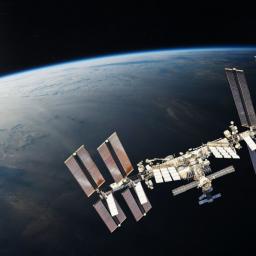 Red Hat Enterprise Linux 10.1 has powered up on board a datacenter orbiting 250 miles or about 400 km above the earth. That RHEL-powered satellite is Voyager's LEOcloud Space Edge micro" datacenter, which launched aboard a SpaceX Falcon 9 rocket and hitched a ride on the International Space Station (ISS) back in September. The system is designed to demonstrate the advantages of processing data gathered directly in orbit, rather than sending info back to a terrestrial conventional datacenter. Voyager boasts the reduction in latency makes the system as much as 30x faster than sending all the data back to Earth. Originally developed by LEOcloud prior to its acquisition by Voyager last year, Space Edge is, as its name suggests, a low-power edge compute platform for orbital data processing. Voyager and Red Hat contend that as commercial and government organizations increase their reliance on space-based data, the ability to process data in orbit is increasingly critical." And they certainly wouldn't be the first to suggest that. Faced with power constraints, SpaceX, Amazon, Google, Nvidia and others have all announced plans to put large clusters of AI datacenters in orbit, with some designs aiming to cram 100kW worth of compute onboard a single satellite. The company hasn't disclosed the hardware used in Voyager's Space Edge, stating only that it's a space-hardened managed cloud infrastructure." Hardening is certainly a concern for complex electronics operating outside Earth's atmosphere, where charged particles and radiation can corrupt data or do permanent damage over time. HPE's Spacebourne compute platform demonstrated many of these challenges during its first mission aboard the ISS in 2017. Over the course of its mission the system, which was composed of mostly off-the-shelf components, suffered several upsets including a power failure and SSDs that failed at an alarming rate," HPE's Mark Fernandez said at the time. We've reached out to Voyager for comment on the system and what kind of data its micro" datacenter will process during its mission. We'll let you know if we hear anything back. It's safe to assume Space Edge's compute capacity is limited compared as promotional images show its systems are little larger than a shoebox - and therefore offer less room for components than servers used on earth. What we do know is that RHEL 10.1, along with Red Hat's Universal Base Image (UBI), are up and running on the ISS. Specifically, Space Edge is running RHEL in image mode, an immutable build of the OS where changes to the most directories will reset to a known good state upon reboot. This means that any issues related to what they call "configuration drift" can be addressed by turning the machine off and back on again, a feature we'll sure will be popular among many in the IT crowd. Alongside the base OS, Space Edge is also running Red Hat's UBI container image under Podman, a container runtime interface (CRI) similar to Docker that is rootless and daemonless by default. RHEL 10.1's arrival in orbit comes amid renewed interest in space driven by the yearning of every great hyperscaler to boldly go and generate tokens where no one has before. Actually, they have, but not at scale. But that's exactly what SpaceX, Amazon and others have proposed. In pursuit of unlimited power, the two companies have independently filed to put large constellations of AI satellite compute platforms in sun-synchronous orbit. In February, SpaceX filed an application with the Federal Communications Commission to lob a million space-based datacenters into orbit. Meanwhile, Amazon has proposed a slightly smaller constellation with 51,600 data processing satellites. Of course, these plans do have one small problem left to solve. How will they get those sats into orbit for less than the cost of simply building more terrestrial infrastructure? According to one space datacenter startup, the economics of orbital datacenters won't be viable until the cost to orbit falls to around $10 per kilogram. As of writing, a rideshare aboard a Falcon 9 runs about $7,000 a kilogram. (R)