Americans would rather have a nuclear plant in their backyard than a datacenter
by from www.theregister.com - Articles on (#75M2E)
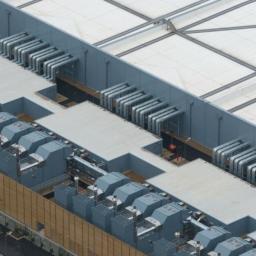 The majority of Americans are now opposed to datacenters being built in their area, many strongly opposed, pointing to tough times ahead for site developers. A Gallup survey found more than 70 percent of respondents indicate they would be against the construction of an AI datacenter in their neighboorhood, with almost half (48 percent) saying they were strongly opposed. Only 27 percent were in favor. The polling shows how quickly AI server farms have become politically toxic in the US, not helped by stories about their effects on energy bills, slurping up water supplies, and creating air and noise pollution in their vicinity. To highlight this, Gallup found that more US residents are opposed to massive data halls than to having a nuclear power plant in their backyard: 53 percent of Americans oppose building a nuclear energy site nearby, compared with the 71 percent against datacenter construction. When it comes to the reasons for opposing AI campuses, half of all respondents cite the effect on resources, with excess water usage and potential power grid constraints topping the list. Concern about loss of farmland and nature was surprisingly low, with just 7 percent mentioning this, but it is possible the scores are higher in rural areas. Quality-of-life concerns such as increased traffic were put forward by nearly a quarter, while a fifth mentioned higher utility bills. Many were worried about AI specifically: that it would replace human workers, that they don't trust it, that it is moving too fast, and that the industry needs regulating. Perhaps the latter sentiment is why President Trump appears to have shifted his own position on the need for AI regulations. Conversely, those in favor of datacenters cite economic benefits, with 55 percent mentioning increased job opportunities, and 13 percent saying it is because of increased tax revenues. However, these people are perhaps laboring under some delusions, as datacenters generally deliver few long-term local jobs once they are operational, and far from increasing tax revenue, many benefit from generous tax subsidy schemes that are costing some individual US states upward of $1 billion in lost income each year. This being America in 2026, Gallup looked at how attitudes stack up depending on political affiliation. It found that Democrats, at 56 percent, are much more likely than Republicans to be strongly opposed to a server farm in their vicinity. But 39 percent of Republicans are also strongly opposed, while another 24 percent are somewhat averse to it, and only about a third are in favor. Gallup points out the contradiction: for AI usage to expand in the US, facilities that can handle the necessary computing power will have to be built. But most Americans appear to take a "not in my backyard" attitude to new bit barns, and that attitude has grown in strength. The Register noted this last year, when Emma Fryer, public policy director for datacenter operator CyrusOne, said: "People don't make a connection between the digital services they depend on every minute of every day of their lives and the fact that providing them every minute of every day of their lives requires industrial-scale infrastructure." She was speaking during a discussion of the industry's image problem at the Datacloud Global Congress event in Cannes, France. Garry Connolly, founder of Digital Infrastructure Ireland, told the same audience: "Most people are fucking scared of AI, like we're feeding a monster." Telling the public that all those massive datacenters are needed for AI is therefore not a winning argument. (R)