NASA fleshes out Artemis III, the Moon mission that won't go to the Moon
by from www.theregister.com - Articles on (#75M2G)
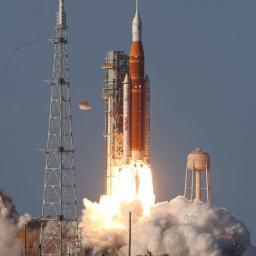 Artemis III is currently targeted for late 2027, and NASA has shared some of its plans for the mission, though exactly how SpaceX and Blue Origin will participate remains unclear. The mission to low Earth orbit will be launched with a "spacer" rather than the Interim Cryogenic Propulsion Stage (ICPS) that would otherwise be used on lunar voyages to send the Orion capsule to the Moon. According to NASA, the crew will spend more time in the Orion capsule than the Artemis II astronauts to further test the spacecraft's life support system. NASA will also demonstrate the docking system alongside an upgraded heat shield. As for the lunar lander, NASA has remained tight-lipped, only saying that operations would be "informed by Blue Origin and SpaceX capabilities." However, the agency stated that astronauts could potentially enter "at least one lander test article." There might also be an opportunity to evaluate the interfaces of Axiom's AxEMU spacesuit. There could, in theory, be three launches during the Artemis III mission: one for Orion, atop the SLS (the core stage of which is in NASA's Vehicle Assembly Building), with separate launches for SpaceX's Starship human landing system pathfinder and Blue Origin's Blue Moon Mark 2 landing system pathfinder. Without an ICPS, the European-built Orion service module will provide propulsion to circularize the spacecraft's orbit. Artemis III was supposed to mark a crewed return to the lunar surface, but was changed earlier this year to be a test of commercial lunar lander technologies in low Earth orbit. Jeremy Parsons of NASA's Exploration Systems Development Mission Directorate called the development a "stepping stone" to a lunar landing, saying: "For the first time, NASA will coordinate a launch campaign involving multiple spacecraft integrating new capabilities into Artemis operations." Kind of. In 1965, NASA launched the first crewed flight of the Gemini program. Several stages in the program involved launching another spacecraft - the Agena target vehicle - followed by a crewed Gemini launch to demonstrate rendezvous and docking techniques. The final crewed flight, Gemini 12, was launched less than two hours after the Agena [PDF]. While NASA is unlikely to manage that sort of quick-fire launch cadence, the agency will also expect to avoid a repeat of the infamous Gemini 8 incident, in which a stuck thruster almost resulted in the loss of astronauts David Scott and Neil Armstrong. (R)