F-35 software delays leave UK buying time with US glide bombs
by from www.theregister.com - Articles on (#75PKQ)
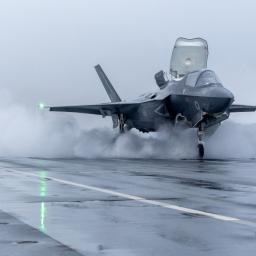 Britain's F-35 fighter fleet is set to carry US-made glide bombs as an interim measure until delayed F-35 software updates from Lockheed Martin add support for the SPEAR 3 mini-cruise missile intended for the aircraft. The news comes in an official response from the Ministry of Defence (MoD) to Parliament's Public Accounts Committee (PAC), which published a scathing report last year on the MoD's management of the F-35 program. That report noted that the stealth fighter force lacks essential capabilities, one of which is a stand-off weapon to attack ground targets from a safe distance. The SPEAR missile is intended to fulfil this requirement, but although it is ready and passed test firings in 2024, the F-35 is not currently able to operate it. This capability should have been delivered by now through the Block 4 software update from F-35 prime contractor Lockheed Martin, but this has met with a series of delays. It is now expected in 2031, five years behind schedule. One of the PAC's recommendations was that the MoD should set out in the Defence Investment Plan (DIP) how it will ensure a stand-off capability until SPEAR 3 is fully integrated onto the aircraft. Permanent Secretary at the MoD Jeremy Pocklington wrote back in a letter that approval has been given to proceed with a Foreign Military Sales (FMS) procurement of the precision-guided munition, Small Diameter Bomb (SDB II). "This acquisition will provide the F-35 with an interim stand-off capability until the introduction of SPEAR 3 into service," he stated. SDB II, designated GBU-53/B StormBreaker in US service, is a roughly 200-pound (93 kg) bomb with fold-out wings to allow it to glide to a target up to 69 miles (111 km) away. It has a tri-mode seeker in the nose that lets it use radar, infrared, or laser tracking to home in. Other criticisms leveled at the MoD were that it lacked suitably qualified engineers, and the department's pattern of delaying purchases to meet annual budget targets, which the PAC claimed has the effect of inflating total program costs while reducing operational capacity. Pocklington conceded that not enough spares were available to support the F-35 squadrons aboard aircraft carrier HMS Prince of Wales during the eight-month Operation Highmast deployment last year. "The surge to 24 F-35B aircraft during Operation HIGHMAST exceeded the Afloat Spares Pack capacity of 12. This was mitigated by supplementing with the Deployable Spares Pack [designed for land-based deployments] and taking additional spares from the RAF Marham Base Spares Pack," he wrote. "The Lightning Force is collaborating closely with the Royal Navy to optimise joint scheduling between home and embarked operations, given the current limitation of two front-line squadrons. The Department also plans to double the capacity of the Afloat Spares Pack and procure an additional Deployable Spares Pack for land operations, subject to the DIP." In response, PAC chair Sir Geoffrey Clifton-Brown MP commented on the "entirely unacceptable incompetence that flies in the face of any kind of sensible planning from the Ministry of Defence." "At the heart of any military planning is sound logistics. The UK sent an aircraft carrier with 24 F-35 fighter jets on it to the Middle East - with not enough spare parts to support them." "In an increasingly dangerous world, our military and the country need more than this half-baked approach from the MoD. Our brave fighting men and women, before being sent into potential harm's way, must have absolute certainty that they are well-supported in their equipment, with clear and reliable supply lines," he added. Pocklington's letter also said a short-term reduction in the availability of F-35 aircraft was likely due to the MoD stepping up corrosion awareness and prevention practices. While corrosion can be an issue for all aircraft, this is especially true for those operated from carriers, and it can also impact the F-35's radar-defeating stealth capabilities. The PAC report had noted that the MoD is behind in delivering a UK Aircraft Signature Assessment Facility, needed to check that the F-35's stealth technology is still doing its job and has not been compromised. On the lack of qualified engineers, Pocklington claimed that steps were being taken to address this by increasing available posts to 168. "The RAF has plans in place to fill its remaining engineering posts by 2032. This date is driven by the amount of time (up to three years) it takes to make engineers fully competent on an aircraft type," he said, adding that "the number of personnel recruited into the Engineering Profession, who are now in the training system, has already increased." However, the government's Defence Investment Plan (DIP) was due in autumn 2025, but there is currently no official publication date for it, despite the fact that many key projects are in limbo until it is delivered. (R)