Airbus gets HPC-as-a-service supercomputer from Bull
by from www.theregister.com - Articles on (#75QQ2)
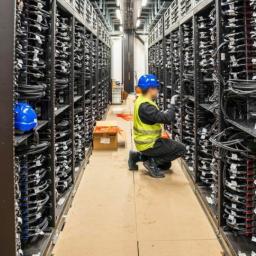 Airbus has inaugurated new supercomputing infrastructure from Bull to help the firm develop future aircraft, but is being coy about revealing how powerful the overall system is. The European aerospace giant had already taken delivery of the hardware, spread across two sites - at Toulouse in December last year and Hamburg in April this year - but today (Tuesday) marks the official inauguration of the system, with 3x the performance of its previous supercomputer. That's according to Bull, the high-performance compute biz the French state acquired from Atos a few months ago, as Airbus declined to put forward a spokesperson to answer our questions. The new system is based on a modular design, where kit was pre-assembled inside containers before being shipped to the Airbus sites. It is based on the firm's BullSequana XH3000 rack infrastructure with a mix of compute blades configured with AMD's Genoa and Turin versions of the Epyc processors, plus Nvidia GPU blades. Also part of the hardware manifest is IBM Spectrum Scale storage using Storage Scale System appliances from the firm, and the interconnect used is Nvidia's InfiniBand NDR (Next Data Rate), supporting 400 Gbps per port. However, Bull wouldn't tell us exactly how much of all this infrastructure it has delivered, as Airbus regards this as confidential information. What it did say is that the supercomputer is being supplied and supported on a HPC-as-a-service" model, whereby Airbus is paying close to 100 million ($116 million) over five years for an all-inclusive deal. Bull is understood to have won this contract from HPE, which was the previous supplier to Airbus. So Airbus was a long standing customer of HPE for around 24 years, and they were initiating a procurement to replace their existing system in order to get something like three times more performance of their existing systems, so they did a procurement, which is a classical HPC procurement, and we won on the price-performance agreement," Bull's head of HPC, AI and Quantum Computing Bruno Lecointe told The Register. While the hardware is located at two sites, Lecointe says they are connected to function as a single supercomputer, although workloads are not currently split across sites but run on one or the other, with a batch scheduler choosing which is the best based on the available resources. Airbus needed a more powerful supercomputer as it is expecting to use it for digital twins," whereby the helicopters and other aircraft it is developing will not only be designed using the system, but the entire airframe will also be simulated on the computer as well. One of the tools it is likely to be using is the CODA computational fluid dynamics (CFD) software, jointly developed by the German Aerospace Center (DLR), the French Aerospace Lab (ONERA), and Airbus itself. Lecointe hinted that Bull is also working with Airbus on some quantum and AI algorithms to meet its compute requirements, but this is highly confidential." The inauguration of this fully operational, multi-site supercomputing infrastructure comes just 14 months after contract signature, Lecointe boasted. The heat generated by the system will also be reused to supply neighboring buildings on the Airbus site. (R)