No captain, my captain: Navantia floats crewless warship
by from www.theregister.com - Articles on (#75V6D)
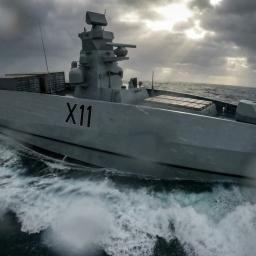 Shipbuilder Navantia has put forward a design for an uncrewed warship intended to complement existing naval vessels in what has been dubbed a "hybrid navy," although it may not be an exact fit for any current requirements. Developed by the UK arm of the Spanish firm, the Large Autonomous Surface Vessel, or LASV75, is basically a large seagoing drone that is armed like a conventional warship. As its name suggests, the LASV75 is 75 meters long, making it about half as long as one of the Royal Navy's Type 45 destroyers and closer in size to one of the River-class patrol vessels, with a displacement of about 1,000 tonnes. It is designed to be entirely uncrewed, with no bridge or crew spaces, and adaptable for different missions via a modular design. Promotional images also show the vessel carrying several shipping containers, which have become a common way for navies to quickly add extra capabilities to a vessel. According to Navantia, the design allows for construction of the drone at pace and scale, and it is expected to cost significantly less than crewed warships, although the company did not specify exactly how quickly or cheaply it could be built. The modularity extends to both mission payloads and engineering systems, Navantia told us, allowing the LASV75 to be tailored to the roles required, from installed power to weapons and sensor capability. A prominent feature is a mast designed to host a number of sensor configurations, but we were puzzled by the apparent lack of funnels for engine exhaust. The ship is equipped with Integrated Full Electric Power and Propulsion (IFEP), Navantia said, meaning it uses diesel generators to drive electric motors and power everything else aboard. It has waterline exhausts. The LASV75 was designed to meet the Royal Navy's concept of a hybrid navy, but also to serve wider demand for autonomous vessels. Its size will enable it to have the range and endurance for task group operations in the open ocean, the company claims, so it can undertake escort duties or support the Royal Navy's Atlantic Bastion strategy to protect undersea infrastructure around the UK, such as cables and pipelines, and to track Russian submarines. The vessel could potentially meet the requirement for a Type 92 sloop that the Royal Navy outlined for Atlantic Bastion, effectively an uncrewed ship that can patrol the North Atlantic looking out for submarines. This role is currently filled by the Type 23 frigate, and will be taken by the Type 26 when that comes into service, but the expectation is that a flotilla of uncrewed Type 92 vessels would allow for greater uninterrupted coverage of the ocean. "Autonomous vessels are fundamental to the future of sovereign defence capabilities. Naval capabilities of the future will comprise a hybrid mixture of crewed warships with uncrewed escorts and ancillary ships," said Derek Jones, Navantia UK chief commercial and business development officer. "At Navantia UK, we're investing heavily in our four shipyards to turn them into ideal partners to deliver this vision of the future." The company is currently building the Fleet Solid Support (FSS) vessels for the Royal Fleet Auxiliary, which will provide supplies to Royal Navy ships at sea. (R)