Broadcom's custom ASIC biz adds South Korea's FuriosaAI to its empire
by from www.theregister.com - Articles on (#75X8H)
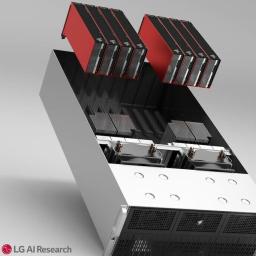 Broadcom has added FuriosaAI to its list of partners building AI accelerators atop its chip packaging tech. After years quietly serving as the connective tissue behind many modern processors, Broadcom has emerged from the shadows to bask in the glow of the AI bubble. The silicon slinger's latest tie-up aims to adapt FuriosaAI's Tensor Contraction Processor tech into a multi-die system-on-package designed for the high-volume AI inference workloads that are all the rage these days. Details on the new chip remain thin, but FuriosaAI claims that the processor will be fabbed on a 2nm process and make use of "dual layer" HBM4 or HBM4e memory made possible by Broadcom's advanced packaging tech. We've previously explored Broadcom's Extreme Dimension System in Package (3.5D XDSiP) tech, which aims to simplify the process of bringing complex multi-die accelerators similar to AMD's MI300 series to market. The tech effectively disaggregates core compute, memory, I/O, and low level logic into distinct chiplets and then assembles them using 3D packaging techniques, like hybrid bonding, into a single logical chip. Rather than having to design a full chip from the ground up, the offering allows chip designers to focus on the processor's core logic functions, reducing the time, capital, and risk associated with bringing a new part to market. Along with Broadcom's advanced packaging tech, FuriosaAI's third-gen chips will also make use of its Ethernet and PCIe products to support systems exceeding eight chips - the limit of its current lineup of parts. This implies the use of high-radix Ethernet switches, like Broadcom's Tomahawk 6 (TH6), for either conventional scale out networks or dense scale up networks. While scale up networks have been dominated by proprietary interconnects, like NVLink, Ethernet is gaining traction as an alternative. In fact, AMD is tunneling UALink, an emerging alternative to NVLink, over Ethernet, with at least some OEM implementations using Broadcom's TH6 switches. Staying in the game FuriosaAI's latest collab comes roughly a year after the South Korean startup officially launched its second-gen RNGD - pronounced "renegade" - accelerators. The PCIe-based cards were fairly modest, offering performance closer to that of high-end workstation GPUs or older datacenter chips than what you'd expect from a modern AI chip. Each RNGD chip offered up to 512 teraFLOPS of dense FP8 compute, 48 GB of HBM3 across two stacks, and 1.5 TB/s of memory bandwidth. To put that in perspective, Nvidia's B200 offered roughly 9x the FP8 FLOPS, 4x the memory capacity, and more than 5x the bandwidth. However, that Nvidia performance comes at the cost of a 1,000-watt TDP, whereas FuriosaAI claims RNGD sips just 180 watts of power from the wall. This lower power envelope meant that even with eight of the chips in a single node, FuriosaAI's systems could easily be deployed in traditional, air-cooled datacenters without needing rack modifications. So while nowhere near as powerful as Nvidia or AMD's latest chips, FuriosaAI's tech has managed to win over several key customers, including LG, which is running its Exaone family of models on RNGD. Licensing its way to AI domination FuriosaAI is only the latest chip designer to make its relationship with Broadcom public. It's an open secret that IP houses like Broadcom and Marvell have been responsible for designing large pieces of the custom AI silicon that finds its way into hyperscalers' data halls. However, the role Broadcom has played in the success of these chips has been a closely guarded secret until recently. Earlier this year, Meta became one of the first to break the silence, revealing four new AI accelerators under its MTIA portfolio designed with Broadcom's help. From images, we can tell the chips are clearly based on Broadcom's XDSiP tech and boast performance on par with or even exceeding that of Nvidia and AMD's next-gen GPUs coming out next year. The MTIA 500, for example, promises 30 petaFLOPS of MXFP4 performance, between 384 and 512 GB of HBM, and up to 27.6 TB/s of memory bandwidth. Broadcom has also made its relationship with Google official. As part of a collaboration with Anthropic in April, Google said that it would supply the US model dev with gigawatts of TPU capacity co-developed with Broadcom. Custom accelerator IP has become big business for Broadcom, accounting for 65 percent of total revenue during the company's first quarter of 2026. (R)