Putin sends submarines to survey Britain's subsea cables. UK deploys Royal Navy, mobilizes parliamentary draftsmen
by from www.theregister.com - Articles on (#760MQ)
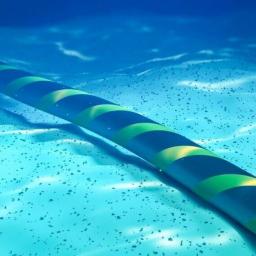 The British government wants stronger protection for subsea internet cables following a surge in Russian activity near UK waters, but its latest proposals lean heavily on fines and prison sentences rather than direct defensive action. Plans - outlined in a speech by Baroness Liz Lloyd, Minister for Digital Economy ahead of a consultation - include tougher penalties for recklessly damaging undersea cables, operator security obligations and emergency powers allowing government to compel businesses to better protect their infrastructure. In April, the Royal Navy and Royal Air Force tracked Russian submarines on a covert reconnaissance near critical undersea infrastructure. According to reports, Russia deployed an Akula-class attack submarine as a decoy while two specialist vessels from Directorate of Deep Sea Research - known as Glavnoye Upravlenie Glubokovodnikh Issledovanii (GUGI) - surveyed the UK's cable routes. Their mission was to survey our cables in peacetime, so they could more easily sabotage them in a conflict," Lloyd said in a speech delivered at the Royal United Services Institute (RUSI). They wanted this operation to be secret, but they failed." In light of this, the government is reviewing whether the UK's security and resilience arrangements are strong enough, the Defence, Science and Technology Laboratory said. UK Parliament's Joint Committee on National Security Strategy (JCNSS) last year told the government it is "too timid" in its approach to protecting Britain's cable connections, and must do a better job. Measures proposed include tightening the law so ship owners and operators that recklessly damage subsea internet cables face tougher penalties. Cable operators could be landed with extra obligations to ensure they take steps to prevent, detect and respond to security incidents in a consistent and timely manner. The UK already has strong protections in place for our subsea cables, but in a more uncertain world we cannot stand still," said Lloyd. "As hostile activity by Russia and others grows, protecting these cables matters more than ever for our economy, security and daily lives." Some 64 cables connect Britain to the global internet, and when one breaks, repair vessels are typically on scene within eight days. Historically, most cable faults have stemmed from fishing activity or dragging anchors, not sabotage. The Royal Navy unveiled its Atlantic Bastion program last year to supplement its sub-hunting ships with a force of uncrewed, autonomous vessels. The aim is that enemy submarines in the North Atlantic have nowhere to hide. This is in its early stages, with 14 million committed so far for testing and development. The latest proposals will be outlined a white paper published later this year. Separately, the UK, US, and Australia announced this weekend that their AUKUS partnership will jointly develop sensor and weapons payloads for uncrewed underwater vehicles, which is another building block for protecting seabed infrastructure. (R)