California passes bill declaring death-by-algorithm to 3D-printed ghost guns
by from www.theregister.com - Articles on (#760Q0)
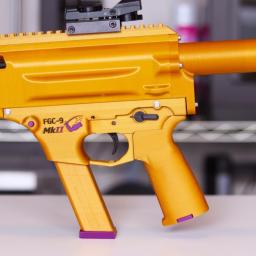 California has passed a controversial bill requiring 3D printer manufacturers to build in controls that block the production of firearm components - a move drawing sharp pushback from technologists and privacy advocates. Lawmakers approved Assembly Bill 2047 on May 26. The bill requires manufacturers to embed a firearm blueprint detection algorithm" in every model by July 2028. Printers that don't support this algorithm would be banned from sale sale in California. The bill must still pass through the California State Senate, and will pass through California governor Gavin Newsom's desk if it clears the Senate. Newsom can then either sign it into law, or veto it. What these algorithms will look like is not yet known, but the Department of Justice, and any other state agencies that get roped into the task of developing them, must publish written guidance on performance standards by January 2028. The bill sets two core performance standards: the algorithm must block so-called "ghost gun" components - untraceable 3D-printed firearm parts - with a high degree of reliability, and the safeguards must be robust enough to resist circumvention even by technically skilled users. The standards will not mandate perfect efficacy - they will allow for an acceptably low level of evasion" against a bank of identified design files. For manufacturers, this means baking the firearm-detection tech either into firmware or pre-print splicer software. The algorithms must be able to detect firearms or firearm parts from printing files, including stereolithography (STL), computer-aided design (CAD), and geometric code formats. Lawmakers updated the bill's wording for users of open source splicers on May 18, following wider criticism about how these third-party providers would be allowed to continue operating while preserving user privacy. Splicers will be subject to technical measures including, but not limited to, handshake authentication. The exact mechanism is yet to be determined, but will likely involve the third-party splicer software engaging in an encrypted exchange with an approved algorithm to ensure the same safety guardrails apply to it, while keeping the 3D printing open source ecosystem alive. A central concern raised during debate was whether the bill would require 3D printers to transmit user activity to an external party before each print job, effectively opening the door to surveillance of everyday printing. An amendment preserving access to popular open-source splicers was likely a concession to those who warned the bill would lock users into specific vendors, but it has done little to win over the printing community, whose reaction since passage has been just as hostile as when the bill was first introduced. Many remain skeptical about how the law is enforced, how the algorithms will be able to discern benign tubes and rectangles from those used to build guns, and how it will prevent people from finding workarounds. Retailers also need to take note, since those caught selling non-compliant hardware could face civil penalties of $25,000 per violation. The bill requires the state to publish a list of manufacturers and their models declared compliant with the law and are eligible for sale in California. The bill further defines a requirement for the state to update this list no less frequently than every quarter. Additionally, anyone caught trying to knowingly disable, deactivate, uninstall, or otherwise circumvent any firearm blocking technology" could face misdemeanor charges. Should the bill be signed into law, becoming the Firearm Printing Prevention Act, the key timeline of events would look like this: January 1, 2028: State must publish guidance on algorithm performance standards March 1, 2028: State must publish guidance on how manufacturers can implement this firearm-blocking technology, and make the standards publicly available online July 1, 2028; Manufacturers must submit an attestation for each make and model of printer they want to sell in California, and confirm that each of these is compliant with the new law September 1, 2028: State must publish a list of these attestations and begin updating them no less frequently than quarterly March 1, 2029: Ban on the sale of non-compliant hardware begins Domino effect Beyond the 3D printing community's doubts about technical feasibility, privacy bods at the Electronic Frontier Foundation (EFF) previously raised broader concerns about the potential ramifications of the proposed law. As The Register previously reported, the EFF's Cliff Braun and Rory Mir echoed the points raised by 3D printer users, saying it would be trivial to alter design files to evade firearm-blocking algos, but went further and said the same legal principles could be used to curtail other issues, such as copyright infringements. Mir, who works in tech community engagement, said if companies like Nintendo get a whiff of these algorithms working as intended, they may wish to enforce similar technology to prevent people from printing their own Pikachu keyrings, for example. He warned this could be taken further and used by oppressive regimes to ban the production of symbols deemed extreme or offensive, or the manufacture of devices such as the whistles that have become popular in the US for alerting communities to ICE officers' presence. Scale of the issue The production of 3D-printed ghost guns across the US has increased sharply in recent years. Individuals in most states are legally allowed to 3D-print components that can be used to assemble working firearms that are often untraceable, given the lack of a serial number. According to an Everytown for Gun Safety research report, police departments across the US saw a 1,000 percent increase in the number of 3D printed ghost guns appearing in crime scenes between 2020 and 2024. For criminals, another draw of printing firearms is that some can pass through metal detectors undetected. (R)