'Resistance is futile,' says Qualcomm CEO. AI agents will be become invisible, inescapable, follow you across devices
by from www.theregister.com - Articles on (#761GS)
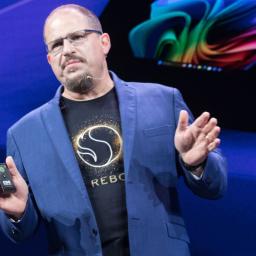 COMPUTEX 2026 In his Computex keynote speech this week Qualcomm CEO Cristiano Amon offered a glimpse of an AI-augmented future straight out of an episode of Black Mirror. According to Amon, agents - automated systems which harness AI models to automate complex tasks without the need for human supervision - will fundamentally change humanity's relationship with technology. The phone, today, is at the center of your digital life and therefore everything is around the phone," he said. But in the not too distant future, Amon argues that agents will take their place. Phones, like wearables, will simply become an extension of the agent. Imagine your own personal Jarvis accessible from any connected device whether it's a pair of earbuds, smart glasses, smartphone, or notebook. These devices will be constantly feeding sensor data to an agent. The agent isn't tied to the device, it actually moves with the user. It's there with the user, regardless of the device that you have," he explained. Once you understand that change, you understand how the whole mobile industry is going to change." And of course, Amon expects, 6G networks will supercharge these sensing capabilities. If you have smart glasses, they see what you see, so the connectivity needs to enable a very fast uplink," he said. 6G is going to make all of us into walking cameras in this world." Not creepy at all then. It's no wonder Meta is so keen on making smart glasses a thing. Agentic AI adoption becomes yet another funnel by which data can be used to serve you ads. It doesn't stop there. If Amon is to be believed, realtime AI analysis of 6G radio waves will allow for even more pervasive prediction models. Each radio connection, he explains, will be like a radar, and by tracking and triangulating hundreds or millions of these connections, network operators will be able to generate a digital twin of your neighborhood, city, and eventually country. You're going to detect on every road, every car, every bicycle, every truck, every pedestrian," he explained. You can actually identify those objects." Like most things in modern society, this shift will be driven by economics. Resistance is futile," the chip exec said. That's because for this vision of the future to be economical, the agents can't just run in the datacenter. Each of these devices will be responsible for offloading varying degrees of the workload. For example, an agent harness might run on your smartphone's CPU. Smaller, less complex tasks might run on a local model on the device's NPU or GPU, while more complex tasks might run at the network edge or a neighboring datacenter. And to Qualcomm's credit, while local AI can offer greater privacy, that's only true so far as the software vendor's willingness to respect it. Last we checked, Google's business model revolves around turning telemetry gathered from your digital life into targeted advertising. Amon claims that distributing the load can drive down costs by as much as 4x. And if done right, it will be entirely transparent, much like how most users have no idea how much they already rely on cloud compute until they toggle airplane mode on their phones. Naturally, all of this is going to need new software and hardware, and according to Amon, Qualcomm is already well positioned to build it. It plans, it executes, you verify, will keep interacting with it until the task is done, and that by definition changes the hardware," Amon said. If it is challenging to make your phone last all day with you operating it, what happens when you and the agent are operating it?" We now have the ability to build systems that are sub two milliwatts from an ear bud with micro power Wi-Fi that connect to an agent for personal AI audio devices all the way to kilowatts," he said. The latter end of that refers to Qualcomm's Dragonfly datacenter-scale compute platform, which Amon teased toward the end of his keynote. Now with Dragonfly, our portfolio spans every single tier of the compute continuum, from the smallest wearables that will connect to agents to datacenters at a very high performance," he said. But for details we'll have to wait until Qualcomm's investor day on June 24. (R)