Apple's WebKit performance tax leaves iOS browsers stuck in the slow lane, says Microsoft
by from www.theregister.com - Articles on (#76CE9)
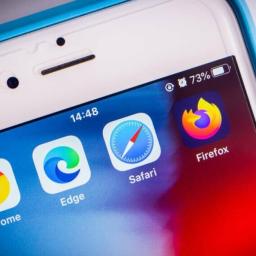 Critics and competitors have long complained about the "Apple Tax" - the sales commission developers are obliged to pay on App Store sales and in-app purchases. Now Microsoft engineers have documented a performance tax - the performance hit that iOS users today endure because Apple requires iOS browsers, with theoretical exceptions, to use the WebKit browser engine that powers Safari. The performance tax comes to 28.6 percent, almost as much as Apple's 30 percent commission rate. Browser rendering engines handle the heavy lifting for web browsers. "They determine how web standards are implemented, how security and privacy protections are enforced, and which actors ultimately shape the evolution of the web," as Mozilla recently explained. Just three major engines dominate commercial deployments: Blink, the foundation of Chrome and its Chromium-based siblings Edge, Vivaldi, Brave, and Opera, among others; WebKit, the foundation of Safari; and Gecko, the foundation of Firefox. Firefox holds about 2 percent of the global browser market share, according to StatCounter. That helps explain Mozilla's concern that the lack of browser engine diversity, a consequence of the market power of Google and Apple, threatens the open web. According to DigitalApplied, Safari owns 23.4 percent of mobile browsing on iOS globally and 51.2 percent of mobile browsing in North America. But due to Apple's platform rules, every browser that runs on iOS is WebKit-based, so there are few opportunities for competitive differentiation outside of interface elements. Browser rivals, advocacy groups, and web developers have argued that Apple should relax its platform rules and improve its web technology for years. Europe's Digital Markets Act (DMA), plus regulatory action in Japan and elsewhere, have amplified hope that Apple will allow more competition on its mobile OS. The latest such investigation comes from the Italian Competition Authority. Microsoft has now highlighted the cost of the iOS browser engine monoculture - time lost to Safari's slowness. On Monday, Kyle Pflug, group product manager for the Microsoft Edge Web Platform, published benchmark test results using Apple's Speedometer 3.1 and other test tools that show how a Chromium-based iOS browser using the open source Blink rendering engine compares to Apple's Safari browser, which relies on the open source WebKit rendering engine. Edge is a Chromium-based browser, and if it were implemented for iOS using BrowserEngineKit, a framework Apple introduced in March 2024 to comply with Europe's Digital Markets Act (DMA), it would score 28.6 percent better (49.27 vs 38.3 on Speedometer 3.1) than Apple's Safari browser under iOS 26.5.1. It would also outperform Safari on the JetStream 3 benchmark (JavaScript and Wasm performance) by 13.1 percent (306.35 vs 270.9) and on the MotionMark 1.3.1 benchmark (graphics rendering) by 2.1 percent (4,773.52 vs 4,673.68). "To be clear, this is a research prototype, not a product announcement; and these are preliminary numbers from my own device, not lab results," said Pflug. "But it does prove out the opportunity to close real capability gaps and deliver new competition on performance." Rick Byers, principal Chrome engineer at Google, took note of the results. "Given how Chromium and WebKit are always vying for the top spot in Speedometer on macOS, it's really striking how big the gap is on iOS!" he said in response to Pflug's post. "And we haven't even really tried to optimize performance for that platform yet! IMHO this is what you should expect to see when there's a lack of competition!" Apple did not immediately respond to a request for comment. The EU has enforced competition through browser selection screens, with some success. In theory, the bloc's rules should promote browser engine competition on iOS. The DMA allows EU-based developers to build browsers with rendering engines other than WebKit. Since March 2024, Apple has provided tools to do so. Yet more than two years later, no browser maker has launched an alternative browser. As Microsoft has done with Edge, Google and Mozilla have prototyped Blink and Gecko-based versions of their respective browsers for iOS. But no such browser has been released. That may be because building a new browser means scaling considerable technical hurdles that Apple hasn't rushed to lower, such as BrowserEngineKit bugs. Browser makers therefore consider the Apple rule compliance process too onerous. For example, if Microsoft were to release a Blink-based version of Edge on iOS, it would have to be a separate app from the WebKit-based version of Edge - leaving Redmond to reacquire its entire iOS user base. Alex Moore, executive director of Open Web Advocacy, a group that has lobbied on behalf of web developers against Google and Apple's platform rules, pointed to citations [PDF] in US court filings (the US 2024 antitrust case against Apple is ongoing) and UK regulatory documents that highlight the problem posed by Apple's platform power. In February 2020, these documents say, Apple's vice president of iPhone marketing proposed that the company should "set a stake in the ground for what features we think are 'good enough' for the consumer" rather than investing and innovating. "This is a clear example of the costs Apple imposes on consumers and businesses worldwide, costs created by its 17-year ban on competing browser engines," Moore told The Register. "Even in the EU and Japan, where Apple is now required to allow browser vendors to use their own engines, the barriers it has put in place ensure browser vendors are prevented from porting their own engines to iOS. Given that Apple has now had more than two years to produce a compliant solution, the European Commission needs to open a specification proceeding to instruct Apple, in precise terms, how these barriers must be removed." "If Apple can restrict browser engines on iOS, it can limit what the mobile web is capable of, and keep businesses dependent on native apps and app store rules. This is, in our view, the most critical intervention the EU could possibly make, and the one most likely to reshape the entire mobile ecosystem. No other intervention comes close." (R)