David Potter, the man who put Psion in the palm of your hand, logs off at 82
by from www.theregister.com - Articles on (#76RA3)
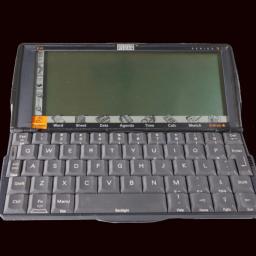 OBITUARY South African-born pioneer of the British tech industry David Potter, the man behind the iconic Psion pocket computers, passed away on 28th June, six days before his 83rd birthday. Potter was the founder of the company of the same name, a pivotal firm in the British technology industry from the 1980s to the 2000s. Psion supplied software for the early computers from Sinclair Research, the ZX80 and the ZX81, including a Flight Simulator that you can play online. In 1982, Psion supplied the bundled software with the Sinclair ZX Spectrum, and the later, the XChange suite for the Sinclair QL, later available for DOS under the name PC-Four - a deal The Register reported in detail for the QL's 30th anniversary. In 2016, Potter was interviewed by the Archives of IT, which you can watch online: There's also a corrected transcript [PDF], plus some edited highlights of the interview. A bold 1983 advertisement claimed: The best software on earth comes from Psion." However, Potter realized early on that the instability of the rapidly moving home computer market posed a problem for the company, as he explained in a 1991 interview in Personal Computer World: What's the longevity of this market, what's the utility of these products, where's it going to? And the more we asked these questions the fewer answers we could get. And we came to the conclusion that these products were of tremendous educational value, a lot of fun, but there was no real long-term utility and the market was not long term because of that. So we decided to diversify and put a lot of our development resources into two very new areas for us. One was applications software. The second area was quite a new, radical concept of a handheld computer". This led it to create the first of the multiple ranges of pioneering hand-held pocket computers for which it is better remembered today. In 1984, Psion launched the Organizer range, and in 1986, its successor the Organizer II, which came with two slots for what were arguably the computer industry's first replaceable SSDs. In 1989, Psion introduced all-solid-state MC laptops. Although unsuccessful, the MC's hardware was miniaturized to create the pocket-sized Psion Series 3 in 1991, and Psion's bespoke GUI OS became EPOC16. The machines sold in the millions, which in turn led to the Psion 5 and netBook. The Register's magisterial history of the development of the Series 5, Psion: the last computer, covers this evolution in depth. For the Series 5, Psion designed and implemented EPOC32, a realtime-capable 32-bit Arm OS in C++. Later, EPOC32 was renamed Symbian and powered the first wave of smartphones, as The Reg covered in depth in 2010 in a two-part history: Symbian, The Secret History: Dark Star, followed by Symbian's Secret History: The battle for the company's soul. The Reg has reported on Potter too many times to link. We first quoted him in 1998, and most recently in 2017 when he invested in Planet Computers, becoming Honorary chairman of the company. Planet produced the Gemini pocket computer whose keyboard was licensed from Psion. In 2000, Potter sold 12.6 million worth of Psion shares, only to see them quadruple in value within months. In an interview with Management Today, he said he had a knack for badly timed share deals: It's always the case. I always joke that the best buying signal for Psion shares is when I sell. If you look back over the years there is a correlation between my selling and the price going up." Reg readers would have already had an inkling: the year before, he had told us that he thought Amazon might flop, but that he was bullish about Psion's future. By 2004, Psion sold its stake in Symbian to Nokia. Some shareholders were unhappy, but he told them Linux was a growing threat. (He certainly got that right.) Subsequently, Microsoft bought Nokia's phone unit - then killed it as a tax write-off. Its outstanding and unique OS is FOSS now. Dr David Edwin Potter was born in East London on July 4, 1943 - but not the East London that Psion enthusiasts might expect: the East London in the Eastern Cape Province of South Africa. His father died when he was young, and as his mother had to work, he and his sister were raised by their grandmother. By the time Potter was 10, their mother remarried, and the family moved to what is now Zimbabwe. After a year (two terms) at the University of Cape Town, at 18, Potter went to Cambridge University thanks to a Beit scholarship. There he studied the Natural Sciences Tripos, followed by a PhD in Mathematical Physics at Imperial College. In 1969, he married a fellow South African, journalist Dr Elaine Goldberg [PDF]. He stayed on at Imperial, and from 1970 taught applied physics. This led him towards develop software to model non-linear phenomena on the university's early mainframes: I began to use these behemoths, these ludicrous machines, which didn't remotely have the power of Psion Revo, for example. And they cost millions of pounds. I became something of an expert in them and designed substantial software systems." This led to his interest in the then-new microprocessors: If there are opportunities in the world you need to grasp them. I was fortunate enough to be in an area that was really going to change the world in a huge way." In 1974, he and Elaine moved to Los Angeles, where he became an Assistant Professor at UCLA. From there, they watched the British economy go into a massive decline. He told the Archives of IT: I saw this happening from afar, and thought, this is mad... So somebody said recently, you know, when there's a sale on, it's quite a good idea to buy things. So I had savings of about 3,000, and I wrote to my bank manager and I said, Please invest them in the following six companies,' which I didn't know very much about - but I knew about Racal Electronics, about GEC, Arnie Weinstock's great company. And anyway, four others. And, then I forgot about them, went on with my academic business. In 1975, with Elaine expecting their first child, they came back. When I returned to Britain everything had more than doubled, and of course there was the beginning of the recovery in 1975. So, that taught me a little bit about, if you research things enough, and I was capable of research, maybe there were opportunities." Emboldened, he moved to his next investment effort: We had our first child in 1975. And, just to have a break I went skiing - on a packet tour down to Austria I think, and I had a very pleasant four or five days. I came back on a newish aeroplane carrying people - I used to go by train. And I looked around as we were flying back, and I thought to myself, all these Brits have been skiing, and sleeping under duvets. And so, clearly they're going to come home, they're going to throw away their blankets and buy duvets... So I researched whether there was a duvet supplying company in Britain, and I found one... The company was called E Fogarty." E Forgarty & Co was a major employer in Boston, Lincolnshire, but after a hot summer, went under in 2018. I researched it and found it had just built a new factory, and then I had the chutzpah to go and interview the chairman. I told him I was a potential investor but not how little I was planning to invest. Then I sat in the pubs outside the factory in the evening and chatted to the workers about overtime etc, and got a complete picture of what was going on. I could see the opportunity and put 40 per cent of my capital into Fogarty. The price tripled in 18 months. That was how I got my education in business and company matters, and some of the capital to start Psion." In 1980, he bought an off-the-shelf company called Red Cheer and renamed it. He wanted to call it Potter Scientific Instruments", whose initials spell the Greek letter PSI (). However, the acronym was already taken, so he added Or Nothing" to yield the name PSION. Potter was awarded [PDF] the Mountbatten Medal by the Institution of Engineering and Technology in 1994. In the 1996 New Year Honours, he was awarded a CBE - Commander of the Order of the British Empire - for services to the manufacturing industry." He served on the Dearing Committee for its 1997 report on Higher Education. In 2001, he became a Fellow of the Royal Academy of Engineering, and that year was also a notable Labour Party donor. He also held multiple honorary doctorates. In 2009, Potter retired from the company he founded. His other efforts have included with the charity the couple started, The David and Elaine Potter Foundation. One aspect of his activities we did not know about - apart from being a duvet entrepeneur - was that he not only contributed to the openDemocracy organization, but that in 2013, he saved it from bankruptcy. OpenDemocracy published an obituary for him before any tech industry outlet: Remembering David Potter: Industrialist, physicist, philanthropist. The Register received plaudits from a number of ex-Psion people. Psion was a company that had a tremendous and friendly culture. It was a joy to build new technology products that were at the forefront of innovation. All Psion handhelds included their own software, apps and operating system developed in-house from the ground up. This is extremely unusual. The devices also usually included custom silicon to improve power efficiency and performance. The teams developing these products knew they were at the leading edge, and this attracted the best talent which stayed because of the highly collaborative and friendly culture." - Ian Fogg At the peak of his powers, David Potter was the man who kept Microsoft's Bill Gates awake at night. Psion started in a small office above an estate agent in Maida Vale and grew rapidly into a FTSE-100 company. On a personal level, David was a deep thinker, a good listener, and a genius. It was a pleasure simply to be in his orbit and he inspired a generation of leaders who are still at the top of their game." - Anthony Garvey (R) Bootnote In February this year, East London was officially renamed KuGompo City.