Intel knows it needs to ‘leapfrog’ ARM and AMD, says CEO Lip-Bu Tan
by from www.theregister.com - Articles on (#776RS)
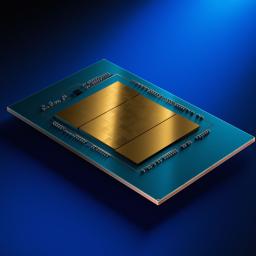 Intel CEO Lip-Bu Tan has acknowledged that the semiconductor giant must catch up to rivals AMD and Arm, and said it now assumes edge AI and robotics will be a business as big as PCs. Tan made those remarks during Intel's Q2 earnings call, which saw the company report $16.1 billion revenue - a 25 percent year-on-year increase. Q2 was another quarter of solid execution," the CEO said. Revenue, gross margin, and earnings per share were above our guidance. This marks the seventh consecutive quarter of exceeding our financial expectations." Yet it didn't deliver a profit as Intel reported a GAAP loss of $11 billion (and a non-GAAP loss of $2.2 billion). Tan remained optimistic about Intel's prospects, thanks to the AI boom spurring demand for many of its products, and its foundry service. Our core server CPU franchise is growing faster than ever," the CEO said, before observing the Xeon 6 range continues to be one of the fastest-ramping products in Intel's history." That may be the case, but Intel's hyperscale customers have designed their own Arm-powered CPUs and are deploying so many that analyst firm IDC recently found non-x86 servers now account for almost half of all sales. Intel's great rival, AMD, has grown its market share to a third of the x86 server market. During the earnings call, Morgan Stanley analyst Joe Moore asked Tan how he plans to regain market share. Tan pointed to Intel's forthcoming Clearwater Forest, Diamond Rapids, and Coral Rapids processors as evidence the company is creating products that can compete with anyone. Some areas we are still behind," he admitted, but we are catching up very fast and we try to leapfrog some of the CPU architecture, and we are putting major effort into it. Time will tell." Tan is also pondering time in terms of how component shortages impact the company's sales and revenue. The industry is facing one of the most severe supply constraints in its history, across leading-edge logic silicon wafers, memory, and substrates," he said. These shortages will persist for the foreseeable future." Intel is of course a big player in the semiconductor supply chain, and Tan offered the happy news that wafer output across its major manufacturing nodes exceeded expectations from 90 days ago, and that yields from its leading-edge 18A process are trending ahead of targets." The CEO also said, supply remains very tight and the near-term linearity of our supply growth is more skewed towards the end of Q3 and into Q4, especially for servers." He had slightly better news about Intel's foundry business, which is developing an advanced manufacturing process called 14A that could make Chipzilla a more formidable competitor to TSMC. We remain on track for 14A risk production for our internal products in the second half of 2027, and we made the decision in Q2 to fully commit to high volume ramp in 2028," Tan said. Intel's current flagship 18A process is also going well. In our core PC client segment, Intel 18A is now in volume production across multiple commercial and consumer products," Tan said. Our factory output continues to increase sequentially every month. The successful high volume ramp of 18A for our internal products provides important validations as Intel Foundry engages with external customers." The CEO added his view that We still have work to do to establish a strong footprint in the edge and physical AI ecosystem but see this opportunity as an important future growth driver." So important that Intel recently renamed its PC business the Client Computing and Physical AI Group" (CCPG). That change is more than cosmetic, because CFO David Zinsner said Intel believes the edge and physical AI opportunity is likely to at least match the client TAM [total addressable market] over time." That would make edge and physical AI an $8 billion business, given that in this quarter Intel said ten percent of CCPG's $8.9 billion revenue came from edge products. Overall CCPG revenue rose 13 percent year-over-year, growth that Intel found pleasantly surprising. Zinsner said the PC market is softer" in part due to the memory dynamics in the marketplace," and predicted Q3 performance will fall. (R)