Google meets the neighbors and gets both barrels over its new UK datacenter
by from www.theregister.com - Articles on (#776SS)
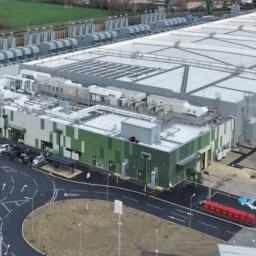 EXCLUSIVE Google invited residents living near its newly built datacenter north of London to meet the team at the local council offices on Wednesday evening - and was met with a barrage of complaints about poor consultation, noise, and light pollution. The Waltham Cross Datacenter (WXT), which was officially opened last year, sits on a 33-acre (133,546 m^2) site north of the M25 motorway that encircles London. It is expected to provide up to 77 MW of IT capacity when full, but it is currently nowhere near this level, according to Google. Given the site is now operational, the event was intended to introduce the team managing what Google touts as the cloud and search giant's first UK-owned and operated facility. But in somewhat shambolic and often rowdy proceedings, it was clear that some residents were not happy with the datacenter on their doorstep, and many had misgivings about the effect it may have on their area. One complaint raised several times was that locals felt there had been poor communication about the project, and that they had not been sufficiently consulted about it before approval was granted for construction to go ahead. This was directed at representatives present from the local Broxbourne Borough Council as much as Google, with one resident claiming: "We haven't had the opportunity to object," and "if you'd listened to people, we wouldn't be here right now." The council and Google maintain that all proper procedures were followed. It is understood that a planning application for a datacenter on the land was filed as far back as 2018, but that was before Google acquired the land for 33 million ($44 million) in 2020. The final reserved-matters application was approved on November 30, 2023. However, one attendee at the meeting offered his opinion that "the council didn't maybe advertise the consultation process vigorously," adding: "I don't think anything was done effectively. If you're working in planning, you would have planned this better." As one of the council representatives revealed that only 12 people showed up to the previous public meeting regarding the Waltham Cross facility, perhaps the locals have a point about poor communication. Another complaint was about noise, with one resident saying they could hear a distinct hum coming from the site, particularly in the evening. Others agreed, and it seems to be a common issue with datacenter sites around the world, with cooling infrastructure often blamed. Also earning the ire of people in the packed room at Broxbourne Council Offices was the lighting, which one local said was shining right into their bedrooms all night. Again, this is a recognized downside for people living close to bit barn facilities. Dan Dale, server operations site manager for Google, explained that the company was in the midst of certain projects related to lighting, "so that they won't be on all the time. They will be on when needed and when access is required." Dale said he expects the situation to improve and Google had tried to angle lighting down as much as possible at the site. One attendee asked about effects on the environment, particularly heat from the datacenter. A University of Cambridge-led preprint earlier this year claimed that datacenters create heat islands, raising surrounding temperatures by several degrees at distances up to 10 km (over 6 miles). Had there been an environmental impact study? Yes, that was submitted as part of the planning application. "We are constantly monitored to make sure that we are in line with environmental permits and that we do meet what we set out to meet in the very beginning," Dale said. With parts of southern, central, and eastern England close to drought conditions this summer, water consumption is on many people's minds. Google's datacenter team were clearly prepared for this one, and came ready with slides detailing the new facility's closed-loop chiller system, which they insisted means that "water consumption is not a concern." "So, with our datacenter, what we have is a closed-loop cooling," explained Tihomir Lazic, DCOps site manager. "It's a system of cooling where we have a loop of water pipes which run the same amount of water around. The cooling is provided by chillers, so we have big refrigerant machines, basically that chill the water, and it's in a continuous loop, so we don't add water in the system." Dale said water consumption at the site is largely due to the office space there, and put a figure to it of about 60 cubic meters per month, claiming this is the equivalent of about five houses. But the concerns kept coming thick and fast, with the Googlers at times struggling to make themselves heard over the hubbub of multiple residents talking loudly at the same time. Some questions demonstrated the level of mistrust that ordinary people now have about datacenters and the megacorps that operate them. One local asked if there was any danger from radiation, and another if there were high levels of electromagnetic emissions from the site. Others questioned why Google has been allowed to site a massive server farm in an urban area in the UK, when in America, "they build them out in the Utah desert and that sort of thing." One man insisted the presence of the Waltham Cross datacenter was already affecting house prices, and asked if Google was prepared to buy his house off him so he could move somewhere else. Throughout all this, the datacenter team gamely tried to talk up their work with community partners to bring benefits to the area, but the residents did not seem in a mood to hear it. Google's team promised further meetings with the residents and better communication. They can at least take comfort in not being in America, where gunshots were fired at the home of an Indianapolis councilor over his support for a local datacenter project, or in the Netherlands, where activists recently threw balloons containing an acidic mixture at a facility there. The Register asked Google and Broxbourne Borough Council to comment on the concerns residents raised at the meeting. A Google spokesperson said public consultation took place before Broxbourne Council granted planning permission, while engagement with the nearest neighbors and the local authority continued throughout construction. "We're committed to ongoing dialogue with residents and community leaders to address concerns and foster a positive relationship," the spokesperson said. On water use, Google said the facility relies on air-based cooling, meaning consumption is largely limited to domestic uses such as toilets and showers, as well as fire protection systems. The company said it considers local water risk, geography, energy use, and emissions when selecting cooling systems for its campuses. Google also pointed to its agreement with Shell to support grid stability and add clean power to the UK grid, claiming its UK operations are projected to run at or near 95 percent carbon-free energy in 2026. Broxbourne Borough Council had not responded by the time of publication. (R)