Skylab completists, clear some shelf space for 26 DVDs
by from www.theregister.com - Articles on (#77VX7)
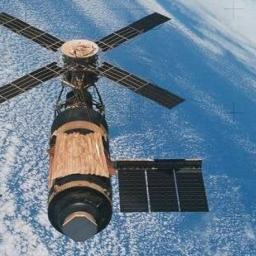 The team behind the Searching for Skylab documentary is releasing almost every surviving piece of video it could find from the mission. The collection will span three volumes and 26 DVDs, including an updated version of Searching for Skylab, which we reviewed in 2019. It gathers almost everything the team could find that was downlinked from the station or returned to Earth aboard the three Apollo spacecraft that visited it. Interested in the prelaunch preparations, briefings, and launch itself? It's all there. How about the efforts to make the station habitable after a solar array and shield were torn off during launch? Yep - that's there too. That time the crew tested maneuvering equipment inside Skylab that would become the Manned Maneuvering Unit used during early Shuttle missions? Also there. Skylab was NASA's first space station. Launched in 1973 aboard the final Saturn V to fly, its orbital workshop was based on the S-IVB rocket stage. The mission almost ended in disaster when one solar array and the station's micrometeoroid shield, which also served as a sunshade, were torn away during launch. The first crew deployed a parasol to protect the station from the Sun and freed the remaining solar array, which had been pinned down by debris. Three crews visited the station, with the last returning to Earth in 1974. Skylab re-entered in 1979, scattering debris across a sparsely populated part of Western Australia. Rather than an expanded cut of Searching for Skylab, the collection is a companion archive aimed squarely at completists. Those seeking an accessible introduction to the missions should start with the documentary; these discs are for viewers who want the surviving footage in all its raw detail. The collection is a labor of love for Dwight Steven-Boniecki, who told The Register that material gathered for Searching for Skylab supplied about half of its footage. "Intense searches uncovered a lot of previously forgotten footage. Things like rollout and launch TV were a crucial discovery to round out the sets. As it turns out, some of the footage comes exclusively from kinescopes in my possession." Steven-Boniecki recalled tracking down footage of a tour conducted by the SL-2 crew during the first crewed mission. "I located the footage but sans audio," he said. "I got in touch with a collector who had a copy of the downlink, but no technical means of recording the audio, other than recording it on their mobile phone. "So I had them point their iPhone at the screen and hold it near the loudspeaker from the projector. Using the off-the-screen footage, I was able to synchronize the audio with the pristine footage I had. I had to apply noise reduction using a learned noise print of the projector to eliminate as best as possible all extraneous noise. To top it off, the audio was already bad when it was sent down in 1973, due to signal strength during the telecast. "I opted to have subtitles for that particular segment, as understanding what the crew were saying proved to be difficult." Most experiments aboard Skylab were recorded and transmitted later. Conferences, spacewalks, and the crews' initial entry and setup tended to be broadcast live, while film canisters containing several reels from each mission returned with the astronauts. "One instance for SL-2 had me dancing for joy," recalled Steven-Boniecki. A set of observations from the Apollo Telescope Mount did not show up on any data cards in any of the official archives he searched. "It turns out a kinescope I had won in an auction years earlier contained nearly 30 minutes of solar observation TV. It was silent, so I used mission audio recorded on the same day, that closely matched the point at which this TV feed was recorded. "A similar situation arose with one of the training films where tests were done transporting items via an EVA. This reel has not been located anywhere, and I suspect the film is the only surviving master, as the reel specifically states 'Do not Project' on it." Indeed, some clips lack audio, and the video quality reflects the era. Blu-ray would have required fewer discs, but, as Steven-Boniecki noted, "the benefit of HD is lost on the sequential color TV kinescopes." We looked at Volumes 1 and 2, which cover SL-1 (the launch), SL-2 (the first crew, comprising Pete Conrad, Joseph Kerwin, and Paul Weitz), and SL-3 (the second crew, which consisted of Alan Bean, Owen Garriott, and Jack Lousma). The forthcoming Volume 3 covers the final Skylab crew, SL-4 (Jerry Carr, Ed Gibson, and Bill Pogue). A physical copy of Searching for Skylab can be found in the Volume 1 case. Steven-Boniecki isn't quite done with the story of Skylab. After plans to use the Space Shuttle to boost Skylab's orbit came to nothing, controllers reactivated the station and attempted to control its attitude ahead of re-entry. "The planned Vol. 4 set will cover the reactivation and subsequent re-entry of Skylab over Western Australia," he said. "There is some outstanding footage, including the Channel 9 Australia TV of Skylab breaking up in the night sky!" Volume 4 is still several months away while Steven-Boniecki transfers the footage and masters the discs. "Plus," he added, "it will give people time to save for it." An important factor: the sets are not cheap, although they contain a great deal of material. Each physical DVD volume costs 89.99 plus postage. Digital editions cost $69.99 for Volume 1 and $79.99 each for Volumes 2 and 3. As the team notes, this is very much for "hardcore space fans." After Volume 4, Steven-Boniecki plans to gather footage from another often-overlooked mission and Apollo's last hurrah: the Apollo-Soyuz Test Project (ASTP). "Work has already begun," he said. "There is a LOT of unseen footage there!" (R)