IBM announces chip that natively executes Arm and Z instructions concurrently
by from www.theregister.com - Articles on (#77XKF)
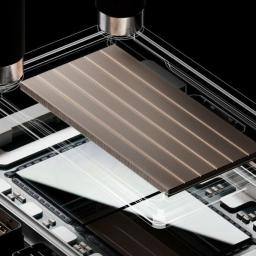 IBM has revealed it is working on a chip with processor cores that can execute instructions for its own mainframe chips and for the Arm architecture - and for the LinuxONE architecture too for good measure. Big Blue says the unnamed chip will be built on a two-nanometer technology node, include 11 high-performance cores operating at more than 5.7 GHz, plus AI inference accelerators for in-transaction fraud detection, a dedicated on-chip data processing unit for I/O acceleration, and a large cache architecture for demanding enterprise workloads. Each processor core can natively execute Arm and IBM Z, or Arm and LinuxONE, instructions concurrently," the computing veteran promises. In a blog post, IBM's Vice President for the zSystems Ecosystem Meredith Stowell pointed out that The Arm ecosystem includes more than 22 million developers worldwide and supports a rapidly growing portfolio of cloud-native, AI, analytics, infrastructure, and enterprise applications." IBM's Z platform is powerful and very well suited to demanding applications. But while mainframes are a big business for IBM, the overall market is small. Rocket Software, a vendor that provides mainframe modernization tools, yesterday told The Register that it is aware of 42 IBM mainframe users in Australia - and that the land down under is therefore a market it needs to prioritize. Commercial application vendors therefore won't rush to prioritize z/OS and IBM knows it. Big Blue also knows that major hyperscalers have introduced their own Arm processors and that customers are flocking to them in part because almost all major open source infrastructure, cloud-native, and AI tools run on the architecture. George Cozma, an analyst at TechInsights, told The Register that while the mainframe market is small in unit terms" it remains strategically important." Customers do not casually replace these systems because core applications, decades of operational practice, and data gravity make migration expensive and risky," he wrote. But while Z is important, the analyst feels it sits outside the mainstream software targets that define modern cloud and AI infrastructure." This new chip, Cozma said, represents ending the platform's historical isolation from the broader computing mainstream. While IBM Z's core strengths - reliability, security, and virtualization - remain the gold standard for mission-critical operations, they are tethered to an architecture that has increasingly diverged from the modern software development lifecycle." IBM is therefore trying to get the best of all possible worlds: continuity for the small group of ISVs that currently make mainframe products and their customers, expanded software choice for existing IBM customers that also makes Z a more interesting choice for the mainframe-curious, and the nine-nines resilience of the mainframe for more workloads. IBM suggested the new chip will arrive in 2028. Big Blue released its most recent generation of mainframes, the z17, in 2025, and typically delivers new models every three years. The chip therefore looks a good candidate to power z18 machines. One last thing: Cozma pointed out that IBM has form developing dual-architecture chips. Back in the deep, dark annals of the mid-1990s, IBM developed the PowerPC 615, a chip that could run both PowerPC and x86 code, with the active ISA selected at boot," he wrote. The chip was reportedly intended for Apple during the clone era, but it was never sold publicly." (R)