Windows XP was released to manufacturing a quarter of a century ago
by from www.theregister.com - Articles on (#77XYJ)
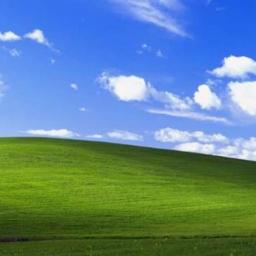 It is a quarter of a century since Microsoft packed Windows XP off to manufacturing, finally drawing a line under the Windows 9x codebase (behind Windows 95, 98, and Me) and making Windows NT something for consumers. Before Windows XP, consumers and businesses lived in two different software worlds. XP was released to manufacturing on August 24, 2001, succeeding Windows 2000 for professionals and Windows ME (Millennium Edition) for home users. Compared to Windows ME, XP was rock solid (although, to put things in perspective, compared to Windows ME, an elephant perched on a traffic cone is rock solid.) Codenamed Whistler, the operating system marked the start of Microsoft's relentless tinkering with the Start Menu it introduced in Windows 95. With XP, the Windows maker moved to a two-column layout, and took the chance to overhaul the user interface entirely. Redmond engineers tweaked the taskbar too, and introduced grouping by application. As many will fondly remember, they also brought in plenty of visual effects and new icons. And Microsoft made an effort, although this was not always successful, to make backward-compatibility a viable option for that one, weird application that could not be ditched. At launch, there were two editions: Home and Professional. While Windows 98 and ME could be upgraded to Home or Professional, Windows NT 4 and 2000 users were limited to the Professional edition. The latter included features aimed at corporate environments, such as domain account support, and functionality for power users, such as support for more than one processor. Over the years, Windows XP became the cockroach of the IT industry, refusing to die no matter how much it was stomped on. Extended support for the operating system ended on April 8, 2014, more than 12 years after its debut, and XP could still be found lurking under the cover of Windows Embedded POSReady 2009, which came to the end of Extended Support on April 9, 2019. That wasn't quite the end of the road, as in May 2019, Microsoft issued a patch for XP, aimed at warding off malware targeting a flaw in Remote Desktop Services. As late as 2024, Microsoft was still issuing security updates for Windows XP SP3. Famously, many organizations found Windows XP a hard habit to break. 90 percent of the UK's National Health Service (NHS), for example, was still relying on the operating system at the end of 2016, and in 2018 the Reserve Bank of India gave the country's banking sector a 2019 deadline to get XP out of its ATMs. Users also still find the predecessor of Windows XP, Windows 2000, lurking in ticket machines if they look hard enough. Several years ago, a since-departed Microsoft employee told The Register that a chunk of the global banking sector continued to ron on the server version of Windows XP - Windows Server 2003. Windows XP was made available in retail channels in October 2001, but arguably represented peak Windows for many. While for this writer the earlier versions of Windows NT were superior, for consumers Windows XP ushered in a new era of stability (at least compared to Windows 9x), and its user interface and the iconic Bliss wallpaper remain familiar decades on. It was a shame that Windows Vista was lurking just around the corner. (R)