Pentagon blacklisted Anthropic over Claude powers it didn't have
by from www.theregister.com - Articles on (#780HH)
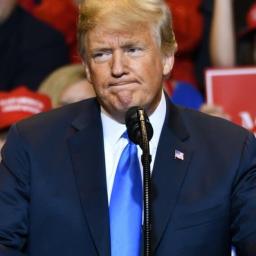 The Pentagon illegally blacklisted Anthropic as a national security threat based partly on things Claude couldn't actually do, a US federal judge has ruled. US District Judge Rita Lin found that the government illegally retaliated against Anthropic for speaking out, denied the company due process, and unlawfully branded it a supply-chain risk. In a 59-page ruling, she repeatedly picked apart the Pentagon's national security case and found some of its central claims about Claude "entirely unfounded." The dispute erupted in February after Anthropic refused to remove safeguards preventing Claude from being used for certain military applications, including fully autonomous weapons and mass domestic surveillance. At a meeting with Anthropic, Defense Secretary Pete Hegseth called Claude's capabilities "exquisite" and said the company's concerns were "understandable," but gave it three days to agree to "all lawful uses" or face being designated a supply-chain risk. Hegseth also floated invoking the Defense Production Act to declare Anthropic essential to national security and compel it to provide Claude. He then announced that Anthropic would be designated a supply-chain risk, while President Trump ordered federal agencies to stop using its technology. One problem: the Pentagon hadn't yet written the assessment explaining why Anthropic supposedly posed that risk. When that assessment arrived, it suggested Anthropic could interfere with Claude during military operations by altering or disabling models, allowing them to "drift," or introducing hidden biases or backdoors. According to the court, Anthropic couldn't actually do those things to Claude models already deployed inside Pentagon systems. Those models are static, and Anthropic cannot remotely access, modify, update, or disable them. The government didn't dispute that evidence, leading Lin to call the alleged danger "entirely unfounded." Years of government records also contained no previous Anthropic supply-chain concerns, said the judge's order. Lin said the chronology suggested the Pentagon assembled its case "after the fact to justify the foreordained conclusion." The government also did not behave as if Anthropic were an intolerable national security threat. Even after the designation was finalized, Under Secretary of Defense Emil Michael was still negotiating contract language with the company. "I think we are very close here," he wrote in an email. The government later continued working with Anthropic around Project Glasswing and its Mythos cybersecurity model. According to the ruling, the NSA and NASA began deploying Mythos, while senior White House officials held what Anthropic described as "productive and constructive" talks with CEO Dario Amodei. Lin instead found substantial evidence that Anthropic had been punished for publicly disagreeing with the administration. Her order cited Trump branding it a "RADICAL LEFT, WOKE COMPANY" staffed by "Leftwing nut jobs," adding that Hegseth spoke of its "Silicon Valley ideology." The Pentagon's own internal memo complained that Anthropic had behaved in an "increasingly hostile manner through the press." Lin said announcing Anthropic's punishment before the formal designation process had begun appeared designed to "make a public example of Anthropic for daring to criticize the Administration." The judge also rejected the idea that being a difficult supplier makes a company a security threat. "An IT vendor does not become a potential adversary of the United States whenever it asks probing questions," she wrote, warning against blacklisting companies simply because officials considered them "too arrogant or difficult to 'trust.'" The consequences went well beyond losing a Pentagon contract. Hegseth's directive sought to prevent Pentagon contractors and suppliers from doing business with Anthropic, even for work unrelated to defense. More than 100 enterprise customers contacted Anthropic with concerns about continuing to work with it, and the company estimated the measures could knock multiple billions of dollars off its 2026 revenue. Lin stressed that the Pentagon remains free to stop buying Anthropic's technology through lawful procurement processes. It couldn't, however, use a contracting dispute to punish a government critic. "The empty invocation of national security is not a blank check to punish and retaliate against government critics," she concluded. (R)