Whitehall's latest plan to get things done: Less Whitehall
by from www.theregister.com - Articles on (#7884R)
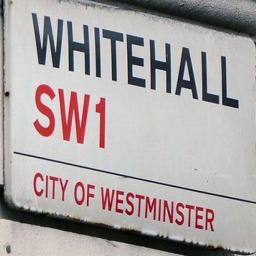 The UK government has considered the evidence and concluded that it spends far too much time considering the evidence. In a letter sent to all ministers on Monday, Chancellor John Healey, First Secretary of State Louise Haigh, and Attorney General Ellie Reeves said "consultation culture" had become an "industry of dither and delay" and told departments that the default should be to make a decision and get on with it. The ministers argued that formal consultations too often fail to reach those with the most relevant perspectives and can drag policies towards a "lowest common denominator outcome." The proposed cure is fewer formal consultations. These should generally take place only when legally required, when not holding one would be "conspicuously unfair," or when ministers decide there is a good reason to seek outside input that way. Previous promises to consult aren't necessarily safe either. Departments have been told to consider each case afresh rather than assume that past consultations or commitments require another. The government also wants to start removing what it says are thousands of unnecessary consultation and reporting requirements from the statute book. Its starting position is that these requirements should be repealed and retained "only by exception," with departments asked to look for opportunities to bin them through legislation already in the works. This is separate from Whitehall's other effort to wean itself off consultants, although the timing invites comparison. The government promised in 2024 to tighten controls on consultancy spending and deliver annual savings of 1.2 billion by 2026. As The Register reported in July, that didn't stop the Home Office from awarding Deloitte and PA Consulting contracts worth up to 200 million and 150 million respectively for data and analytics services. The National Audit Office also warned last year that the Treasury lacked comprehensive data on consultancy spending, while Parliament's Public Accounts Committee said in March that departments weren't complying with Cabinet Office controls designed to rein it in. Consultations aren't consultancies, of course. One involves asking interested parties what they think before making policy; the other can involve paying them rather a lot of money for their advice. Whitehall appears keen to cut down on both. The new drive doesn't stop at consultation. Ministers are also being encouraged to accept a higher risk of legal challenge when pushing ahead with policy. The letter says that where there is a "tenable legal argument," ministers can choose to proceed even when government lawyers assess the legal risk as high. Guidance for government lawyers is due to be updated this week to make that explicit. Judicial review is getting attention too. The government wants to extend reforms limiting challenges to nationally significant infrastructure projects beyond energy schemes to transport, water, and other major developments. Having identified consultation, legal caution, and judicial review as obstacles, Whitehall will now begin the traditionally straightforward business of changing Whitehall. (R)