Floating nuclear startup Bluecore lands $50M funding before setting sail
by from www.theregister.com - Articles on (#788C5)
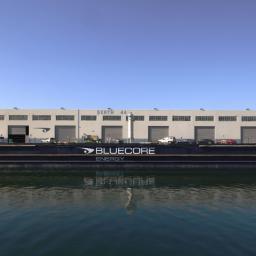 Startup Bluecore Energy has raised $50 million in seed funding to develop floating nuclear power plants intended to supply ports and other locations with rapidly growing energy demands. The California-based company said the Silverton Partners-led round, which includes $10 million in previously announced pre-seed funding, brought in several new investors. It plans to use the money to engineer and test its compact nuclear power system and pursue regulatory approval and maritime classification. Its initial design is intended to generate about 10 MWe - megawatts of electrical output - continuously using light-water reactor technology. Bluecore says the maritime system would be able to operate for years at a time and require refueling only once every few years. The company has secured its first barge and is developing a non-fueled, electrically heated reactor module prototype at its Port of Long Beach headquarters to test monitoring, sensor, and control systems. Bluecore is targeting ports, AI datacenters, and coastal infrastructure, with the reactors potentially deployed offshore and connected to customers by subsea cables. Remote islands and coastal settlements in places such as Alaska may also lack practical connections to a wider electricity grid. Bluecore claims its approach could provide reliable, zero-emission power to energy-intensive locations and open additional markets for nuclear generation. "Six months ago, we were building the foundation. Today, we have the capital, the team, the hardware, and some of the most important institutions in nuclear and maritime working alongside us," said Bluecore founder and CEO Kofi Asante. "Our focus now is simple: create and deliver zero-emission energy as safely and quickly as possible." The move follows the launch of the International Atomic Energy Agency's (IAEA) Atomic Technologies Licensed for Applications at Sea (ATLAS) initiative in the US capital last month. Secretary of Energy Chris Wright linked that event to the Department of Energy's own efforts to rapidly expand the provisioning of atomic energy generating capacity in order to meet the requirements of AI datacenters and other industries. Bluecore has begun discussions with the US Nuclear Regulatory Commission (NRC) and Coast Guard. The two agencies recently signed a memorandum of understanding to coordinate oversight of the design, construction, and operation of civilian floating nuclear power plants. The NRC says it is ready to license maritime reactors under existing federal regulations, while it develops an additional framework for microreactors and similarly low-risk designs. Bluecore remains years from commercial deployment. It has yet to build a fueled reactor or apply for the approvals required to operate one, and its Long Beach proposal must also navigate California's restrictions on new nuclear power plants. While some may have concerns about waterborne atomic power plants, America has a long history of maritime nuclear generation. All of the US Navy's active aircraft carriers are nuclear-powered, but the technology first went to sea aboard the submarine USS Nautilus in 1955. USS Enterprise became the first nuclear-powered aircraft carrier in 1961, while the cruiser USS Long Beach, commissioned the same year, was the first nuclear-powered surface combatant. Bluecore says its team includes former US Navy nuclear submarine officers and leaders with experience across organizations including SpaceX, Northrop Grumman, Toyota, Rivian, and Uber. Russia currently operates the world's only floating nuclear power plant. The barge-like Akademik Lomonosov is considerably larger than Bluecore's proposed design and can generate up to 70 MWe. (R)