Chinese researchers find egg-cellent way to keep space debris from scrambling craft
by from www.theregister.com - Articles on (#789GP)
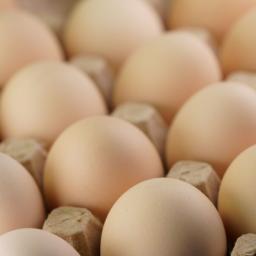 There's a lot of garbage floating around in low Earth orbit that threatens both crewed and uncrewed spacecraft, but a new idea based on one of nature's enduring shapes could offer better protection against debris impacts that's no yolk. Bad puns aside, and we do beg your forgiveness, Chinese researchers at Dalian University of Technology have developed a new spacecraft armor design that, according to a research paper published on Tuesday, offers considerably more protection by taking inspiration from the shape of a typical egg. Natural biological structures have evolved to demonstrate excellent energy absorption performance over long-term adaptation," lead author Yuxin Wang told the American Institute of Physics, whose journal published his team's results. Debris in orbit poses serious risks to spacecraft and satellites: Even a tiny piece can cause massive damage, as chunks of metal and other spacecraft debris travel at blistering speeds. Debris in low Earth orbit typically travels at around 7 to 8 kilometers per second, while impacts between orbiting objects can occur at relative velocities approaching 15 kilometers per second. For reference, even the most high-powered military rifles struggle to achieve a muzzle velocity over 1.45 km/s. According to orbital debris tracker Orbital Radar, a 1 cm aluminum sphere traveling at 10 km/s packs the same amount of kinetic energy as a hand grenade. With so many satellites in orbit, collision risks are rising. Starlink is lowering its orbit, while SpaceX has separately proposed launching up to one million satellites for an orbital datacenter system. Things are getting crowded and better spacecraft protection is definitely needed. Wang's team's design is simple: Sandwich a bunch of 3D-printed aluminum eggs between two aluminum plates, fill the shells with water, and model what happens when fake space debris smacks into them at hypervelocity. The researchers also produced 3D-printed structures for testing. Several designs were compared: one with the pointy ends of the shells against the faceplate, an inverse of that design, a mix of shell configurations, and one with spheres instead of eggshells. The design with the pointy ends against the faceplate performed best in the simulations, reducing projectile velocity by 64.9 percent. For comparison, a single aluminum plate reduced projectile velocity by 51 percent under the same simulated conditions. The eggshells don't have to be large, either: The design tested by Wang's team used water-filled eggs that were just 12 mm high (around half an inch), with aluminum plates a single millimeter thick on either side. Weight is still likely to be a concern, as covering a spacecraft in half an inch of water-filled eggshells will likely make it considerably heavier. We asked Wang if his team had considered that, but didn't hear back. Per the AIP, the group is now working to optimize their design and conduct further tests. Regardless, Wang told AIP Publishing the results show that better spacecraft protection is possible. This work demonstrates that bionic, lightweight metastructures are a promising route for hypervelocity-impact protection," Wang said. We hope this research can attract more attention to bio-inspired protective structures." No matter how the protection ends up being designed, it's sorely needed. ISS residents have had to shelter in place on multiple occasions due to the potential of space junk collisions, and the growing number of satellites and debris in orbit raises the risk of further collisions, moving some orbital regions closer to conditions associated with Kessler syndrome, where collisions create more debris that can trigger further collisions and potentially make heavily affected orbits unusable. It's either eggshells, or someone really quickly figures out how to develop spacecraft shields akin to those from Star Trek. My money's on the shells, but in this case, I'd love to end up with egg on my face. (R)