Nvidia's Groq acquihire is on the DOJ's radar, but it's already too late
by from www.theregister.com - Articles on (#78BEK)
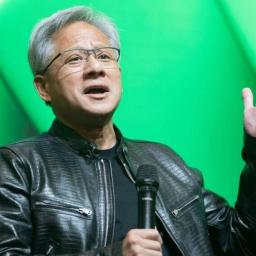 Nvidia spent a whopping $20 billion late last year to license Groq's AI accelerator tech and hire away key members of its engineering team in an everything-but-the-kitchen-sink deal. The acquihire technically left Groq's core inference-as-a-service business intact, but was clearly architected in such a way as to fly under regulators' radar. Only it didn't. This week, The New York Times reported that the US Department of Justice had launched an antitrust probe into the deal. It's hard to argue that Nvidia didn't strip the startup for parts. It may not have been a merger in the traditional sense, but without its engineering staff, Groq may as well be Nvidia's puppet at this point. Despite this, Nvidia contends the deal is a great American success story. The Groq story is a prime example of the American system working as designed to promote innovation, reward entrepreneurs, and benefit consumers. The law is designed to encourage America's startup ecosystem and promote the fundamental rights of inventors and workers to pursue their dreams," an Nvidia statement provided to El Reg and other media reads. Whether the acquihire of Groq actually harmed competition is another matter entirely. But, even if the Justice Department did force Nvidia to unwind the team, it's probably too late. What exactly did Nvidia buy? Nvidia's Groq acquihire bought it two key assets: mature silicon and the talent necessary to continue its development. Groq - which, by the way, is completely unrelated to Elon Musk's Grok model series - made a name for itself using SRAM-heavy dataflow accelerators to speed up LLM inference to hundreds and now thousands of tokens a second, something that GPU-based systems from Nvidia had struggled to do on their own. But while faster than GPUs, the accelerators couldn't achieve rapid throughput. Think of it this way: If Groq's LPUs were the F1 cars, Nvidia's GPUs were more like a city bus. But combine the two and you get something more akin to a sport pickup. At GTC in March, Nvidia unveiled its LPX racks, which are powered by 256 Groq-3 accelerators. As we understand it, they are really lightly modified versions of the startup's existing Groq-2 chip designs, which makes sense, because three months is absurdly fast to tape out new silicon. Nvidia CEO Jensen Huang promised Groq-3 combined with its Vera Rubin GPU racks would deliver optimal performance across the entire spectrum of inference workloads. But, as we've discussed at length now, disaggregated compute architectures are not unique to Groq. Nvidia rival Cerebras is building similar systems with AWS and AMD, SambaNova is working with Intel, and d-Matrix and its partners are combining its in-memory compute platform with Nvidia GPUs to the same end as Nvidia's Vera Rubin-LPX rack combo. The damage, if any, has been done Deals of this sort that are engineered to avoid regulatory scrutiny should get it anyway, several US senators have argued. While Nvidia didn't outright buy Groq on paper, it may as well have. However, the real question for the DOJ is whether the deal was harmful to competition, and given the competitive landscape, proving harm may be easier said than done. But even if the DOJ found reason to litigate and was successful in unwinding the deal - it certainly wouldn't be the first time regulators had torpedoed an Nvidia deal - it probably wouldn't change much. Before Nvidia and Groq announced their licensing deal, the GPU giant was already laying the foundations for an ecosystem with its networking business at its center. In late 2024, the company contributed its MGX rack designs to the Open Compute Project (OCP) making it possible for any chipmaker to put their chips in racks originally designed for Nvidia GPUs. Then in mid-2025, GPUzilla opened its high-speed interconnect tech - the secret sauce that makes six dozen GPUs behave as one - to the broader industry through a licensing scheme called NVLink Fusion. As we recently discussed, the combination of open racks and Nvidia networking effectively meant that any chipmaker licensing the tech could slot their designs directly into Nvidia's racks. If the DOJ blocked the acquihire and unwound the deal, Nvidia might lose direct control of LPU development and any revenues from the sale of the chips, but it wouldn't necessarily be the end of its Groq LPX racks. Groq would just join the growing number of Nvidia hardware partners designing around the company's AI factory ecosystem. In fact, if anything, the acquihire ensures that even if regulators eventually derail the deal, there will be plenty of alternatives lined up and ready to fill the void. (R)