Uncle Sam coughs up $1.9B for grid upgrades as datacenters hit a power wall
by from www.theregister.com - Articles on (#78MWD)
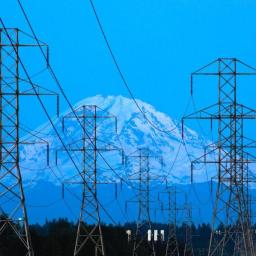 Bit barn builders can rejoice, because this week the US Department of Energy (DoE) announced $5.25 billion - including $1.9 billion of federal funds and $3.35 billion in cost-share funding - to support dozens of grid improvements across the nation expected to unlock an additional 23 gigawatts of capacity. The program, which spans 31 specific projects in 26 states, is part of the department's Speed to Power through Accelerated Reconductoring and other Key Advanced Transmission Technology Upgrades (SPARK) initiative with federal funding made available under the Grid Resilience and Innovation Partnerships (GRIP) program. Uncle Sam sure does love his acronyms. These investments will get more out of the infrastructure we already have, move more electricity across the grid, and help deliver affordable, reliable, and secure power that will fuel American prosperity for decades to come," US Secretary of Energy Chris Wright said in a statement. Rather than bringing new power generation capacity online, the projects aim to unlock additional capacity by reconductoring or rebuilding more than 1,500 miles of transmission lines and deploying grid-enhancing technologies (GETs), like sensors, power flow control devices, and analytical tools across 21,000 miles of American grid infrastructure. Additionally, participants working in areas prone to natural disasters will work to improve grid resilience and mitigate wildfire risks. The agency claims the program will help improve reliability and lower electricity costs for roughly 100 million Americans. And, to quote former Senator Mitt Romney, corporations are people, my friend." And, of course, bit barns are run by corporations. While the program should help to address power constraints faced by datacenter operators as they attempt to cash in on the AI boom, it may not be enough. Earlier this month, financial services biz Moody's warned that the pace of datacenter construction exceeds the speed at which the US grid can add the required capacity. By 2030, Moody's estimates US datacenter electricity consumption will reach 426 TWh, nearly double the 2025 figure. This reality has prompted a flurry of investment in alternative energy technologies, including small modular reactors, geothermal generation, and even the recommissioning of aging nuclear plants. Meanwhile, chipmakers like Nvidia are pushing hard for smarter, more connected, and by extension more efficient datacenters that can release capacity back to the grid when necessary. (R)