From reactive to proactive: How endpoint monitoring is fixing broken meeting rooms
by from www.theregister.com - Articles on (#78WNM)
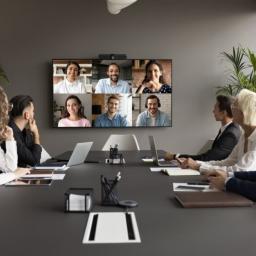 The role of meeting rooms is changing. Traditionally, they were formal spaces built around a large central table and inflexible physical setup, reserved primarily for board meetings, client presentations, or official status updates. The rise of hybrid work and advances in collaboration technology have made that approach increasingly obsolete. Employees now come into the office to connect, collaborate, and brainstorm with colleagues rather than to undertake the solo, focused work they can do better at home. The upshot is that many meeting rooms have transformed into fluid, digitized, data-enabled hubs. With modular partitions, movable furniture, and casual seating, they are designed to adapt to whatever task is at hand. As digital nodes, they also bridge the gap between remote and office workers, so remote and in-person participants get a consistent experience regardless of location. That shift is only possible because of the convergence between IT and audio-visual (AV) equipment, explains Yannic Laleeuwe, marketing director for Barco's ClickShare visualization, collaboration, and networking platform. Cameras, microphones, and wireless conferencing, collaboration and presentation tools, such as ClickShare can now connect to enterprise networks. That allows management through centralized cloud-based systems, so IT teams can monitor, update, secure and tune these systems in ways they could not before. "Historically, meeting rooms have sat in a gray zone between facilities management, AV and IT," Laleeuwe points out. "They were physical spaces first with technology added into them over time, so they were rarely managed by IT departments with the same level of telemetry as laptops, servers or network infrastructure." The impact of reactive tech support IT professionals could often tell whether a device was connected to the network, but struggled to see how the room was being used or whether it delivered a reliable user experience. That lack of visibility explains why meeting room tech support has often been reactive, with staff only intervening once something breaks. "A room was assumed to be working until someone complained that a call wouldn't start, the audio was poor, a display failed, or remote participants couldn't follow the conversation," Laleeuwe says. "Without reliable data on usage, performance and failure patterns, IT had limited ability to predict issues, prioritize investments or optimize rooms before users were affected." The situation had knock-on effects at various levels. For employees, faulty technology creates immediate friction: meetings start late, participation becomes difficult, and unsecured personal devices get pressed into service as a fallback. An additional challenge in a hybrid world is that meeting room technology acts as a bridge between remote and in-office colleagues, so when it fails, the meeting fails with it. For IT teams, poorly maintained technology produces operational inefficiency. Rather than working to make collaboration environments more effective, they end up firefighting individual incidents. For the business itself, a lack of activity data makes facilities planning considerably harder. "Some spaces may be over-engineered with technology that's barely used, while others are under-equipped for the way people actually collaborate," Laleeuwe points out. "This leads to wasted investment, inconsistent user experiences, and missed opportunities to design rooms around real behavior rather than just assumptions." The value of telemetry Endpoint monitoring technology, such as ClickShare's XMS Cloud Management Platform, changes that picture. Organizations can measure occupancy patterns and how their meeting rooms are used in practice, track equipment uptime, connection quality, and software and firmware status, and follow adoption levels alongside the volume and type of support incidents raised. The data helps IT professionals judge not only whether a room is operating effectively in a technical sense, but whether it is delivering the experience employees expect. As Laleeuwe explains: "Telemetry changes meeting room management from a reactive discipline into a proactive one. Instead of waiting for users to report problems, IT can identify patterns, spot underperforming rooms, detect device issues, plan maintenance and make investment decisions based on evidence." In other words, meeting rooms can be treated as managed endpoints, with IT monitoring, patching, securing, supporting, and assessing them against clear performance indicators. That matters because meeting rooms are now hubs where business-critical work happens, not just spaces where calls take place. "They influence productivity, employee experience, meeting equity, collaboration culture, and return on workplace investments," Laleeuwe adds. "When IT has better visibility and control, employees get more reliable rooms, IT teams reduce support overhead, and the business can make smarter decisions about workplace design, technology standardization, and future upgrades." IT shapes organization-wide collaboration While the benefits of such technology are clear, the approach requires IT teams to develop a broader range of skills than traditional device support. Endpoint management, networking, security, and lifecycle management all remain essential, but that expertise must now be combined with AV knowledge, an understanding of acoustics, data analysis, workplace experience design, and change management. This mix of skills "changes IT's role", Laleeuwe indicates, because teams are no longer just fixing what has broken. "They're helping shape how collaboration happens across the organization," she explains. "That means interpreting room data, understanding user behavior, working more closely with workplace, HR, facilities and sustainability teams, and influencing standards for how meeting spaces are designed and used." These skills are best developed through cross-functional collaboration and closer partnerships with AV specialists and vendors, Laleeuwe advises. Rather than regarding room analytics as isolated device data, she recommends treating them as part of a broader palette of workplace intelligence. That makes it easier to improve business performance by understanding how physical spaces, digital tools, people, and their daily tasks interact. AI takes meeting rooms to a new level The introduction of AI-driven meeting environments is expected to reshape meeting room experiences further still. Laleeuwe explains: "AI is moving beyond novelty features, such as basic transcription, and becoming part of the operational layer of collaboration. In the room, this can include intelligent camera framing, noise reduction, audio calibration, live transcription, translation, automated notes, action item tracking, room diagnostics and performance optimization." The real value of the technology is that it reduces user friction while improving outcomes. Better audio and video input, for instance, makes AI-generated summaries and follow-up actions more accurate. Room-level intelligence helps meetings start more quickly and become more inclusive, while giving IT teams insight into where collaboration is working well and where it is breaking down. Return on technology, Laleeuwe advises, is better measured through outcomes than by counting the number of AI features a particular room can boast. Those outcomes include adoption rates, employee feedback, fewer support requests, improved uptime, time saved, and meeting effectiveness. Another consideration is that AI can support organizations' sustainability and "doing more with less" agendas by turning room and device data into a tool for practical decision-making. IT as a key source of ESG intelligence That is because meeting room analytics reveal which devices consume resources without delivering value, where standardization could reduce duplication, and whether longer lifecycle planning could avoid unnecessary replacements. In other words, sustainability becomes more measurable. "Instead of relying only on high-level ESG [environmental, social and governance] commitments, organizations can look at concrete indicators, such as energy-related behavior, consolidation opportunities, and the environmental impact of technology choices across many rooms," Laleeuwe says. "AI can help surface patterns that would be difficult to see manually, giving IT and workplace teams a stronger basis for decisions that reduce waste, extend product lifecycles, and improve operational efficiency." She believes AI and telemetry will strengthen the strategic position of IT leaders in ESG discussions. As connected devices, collaboration platforms, and workplace systems generate more sustainability data, "IT becomes one of the few functions able to connect operational technology choices to measurable environmental outcomes", Laleeuwe says. That in turn creates a political shift inside the organization. IT is no longer viewed as an implementation function that simply responds to procurement, facilities management, or business requests, but as a key source of ESG intelligence. That intelligence will help executives understand how everyday technology decisions affect energy use, device lifecycles, electronic waste, workplace efficiency, and long-term resilience. It will also push IT leaders to work more closely with sustainability, finance, workplace and procurement colleagues to turn insight into strategic outcomes. As Laleeuwe concludes: "Their influence will grow, but so will the expectation that technology investments are justified not only by performance and cost, but also by measurable contributions to both business and sustainability goals." Sponsored by Barco.