Starlink's plan to avoid orbital near-misses: Ephemeris sharing
by from www.theregister.com - Articles on (#78X6M)
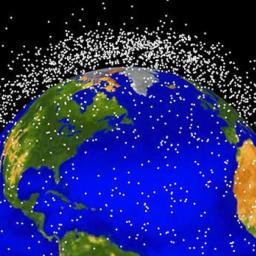 SpaceX has acknowledged the need for satellite operators to collaborate to avoid collisions and has taken the unusual step of sharing imagery showing how close spacecraft are coming to each other. The company has called on other operators to share their satellites' ephemeris (a set of parameters describing the position and velocity of a spacecraft over time) to facilitate timely avoidance maneuvers. "In 2026," the company wrote, "Starlink encountered conjunctions with about 650 unique maneuvering third-party satellites, with only about half of them actually sharing ephemeris. "Some operators don't share ephemeris out of a concern that sharing upcoming maneuvers gives away proprietary information. In other circumstances, operators are willing to share data, but are unable to receive permission from the government to do so. "Such policies are counterproductive, and largely only serve to create preventable collision risk between satellites." "Over six months," the company went on, "Starlink observed ~164,000 conjunctions where time of closest approach (TCA) was within four hours after an unannounced manoeuvre. "While not all of these conjunctions were high-risk, they represent cases where Starlink would not have sufficient information to reliably avoid the other vehicle if the other operator's action created a high-risk conjunction. "In many cases, the lack of high-accuracy post-manoeuvre trajectory information can cause such conjunctions to go unnoticed, giving operators a false sense of confidence and not realising how much risk their actions are creating." How many sats is that again? It's all worthy stuff, until you consider that SpaceX has applied for permission to operate 100,000 Starlink satellites and up to 1 million Starmind AI satellites. Arguably that is a substantial contribution to orbital overcrowding. Not to worry though - space isn't really getting crowded, according to SpaceX. "A good analogy is air travel," the company wrote. "Airspace around the world has grown more congested since aviation began. Yet air travel is the safest form of transport on Earth in part because every aircraft publishes a flight plan and then continuously broadcasts its position during flight." Er, kind of. Although if aircraft collide, the debris falls rapidly to Earth, rather than lingering in the sky and potentially striking more aircraft weeks or months later. Plus, SpaceX is helpfully not counting other debris, from spent rocket casings to flakes of paint, that also pose a hazard in orbit. The company noted its successes, where Starlink satellites successfully dodged other vehicles. One in October 2025 occurred when the other satellite made an unexpected maneuver, reducing the predicted miss distance from 9 km to a bottom-clenching 57 meters. Another example happened in August 2026, when the risk was identified too late for the Starlink satellite to move out of the way, and the satellite had to "duck" instead, slewing to present a narrower profile. "The vehicles ultimately passed within 134 metres of each other," the company said. "This approach could have been prevented if the other object shared its manoeuvre ahead of time." SpaceX was keen for operators to connect to sites such as space-safety.com and talked up its Stargaze service, which uses star trackers on the Starlink fleet to observe nearby objects in orbit. A far cry from 2019, when a Starlink satellite failed to move out of the way of the European Space Agency's (ESA's) Aeolus Earth-observation satellite due to a bug in SpaceX's on-call paging system. There is no shortage of companies with capabilities to monitor and advise on traffic in orbit. Neuraspace, for example, springs to mind. As the company's CEO Chiara Manfletti observed, humanity has not done a particularly good job of looking after the space above the planet. While the technology used to prevent satellite collisions is impressive, and data sharing should be encouraged, we can't help but wonder whether another solution might be to not launch tens of thousands more satellites into orbit in the first place. Manfletti told The Register that the problem was very real. She said, "As the number of satellites increases, knowing where an object is today is no longer sufficient. Manoeuvrability is becoming essential, and operators increasingly need timely, accurate information about where other spacecraft intend to be, including planned manoeuvres." "Initiatives such as SpaceX's space-safety platform are certainly welcome. But the long-term solution cannot depend on every operator joining a single company's system. What we ultimately need is a federated and interoperable space-traffic ecosystem in which operators can securely exchange trusted trajectory and intent information across different platforms, organisations and national systems. "Neuraspace has reached out to SpaceX to enable such coordination on behalf of our customers. We have extended an open hand, and it would be a strong sign of leadership for SpaceX to take it - demonstrating that improving safety in orbit ultimately requires cooperation not only within individual platforms, but across them." (R)