Crook turns free trials into phishing factory, as LearnWorlds sends 13,000 fake YouTube copyright notices
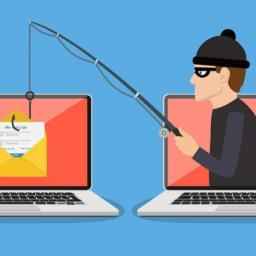
LearnWorlds, a software and learning course platform, says an attacker sent 13,000 phishing emails to customers over seven days by using automated tools to open free trial accounts. The company insists its systems were not breached.
Panos Siozos, Co-founder and CEO at LearnWorlds, said the miscreant created around 570 free trial accounts on the platform between November 7-14, which they used to issue fake copyright infringement notices to customers.
"We have found no evidence of unauthorized access to existing customer schools or personal data held for our customers and their end users," he told The Register.
According to Siozos, the attacker bypassed the platform's per-customer limit on trial subscriptions and exploited its welcome email feature to send the phishing emails.
"In each trial they added their own list of target addresses and rewrote the standard welcome email as a fake copyright notice," he said. "Adding those users triggered the welcome email from our sending address."
The first email was sent on November 7, after which the company detected the suspicious signups and blocked the first sender on November 9, although the attacker returned to send a second wave of emails within 40 minutes.
LearnWorlds removed all the trial accounts by November 10 and one paid account, which was used to launch more emails, on November 14.
"In total, around 13,000 emails were sent to addresses on external recipient lists supplied by the sender," said Siozos. "The trial accounts sent 9,853 between November 7-9, and the paid account sent 3,723 on November 14.
"We can't tell how many people clicked, because the link was disguised to hide clicks. The recipient addresses were the sender's own list."
The CEO confirmed that LearnWorlds has since enhanced its bot checks and is placing holds on new accounts if their emails trigger fraud flags.
"We have also examined the novel patterns the attackers used to create more advanced scoring mechanisms. We have reported the phishing website so it can be taken down. Further measures are currently being examined.
"Anyone who signed in on the fake page should change their Google password and review their account's recent security activity."
The company's confirmation follows suspicions of foul play aired by users on social media. User reports included copies of the emails they received, which demanded urgent responses to fake copyright infringement claims related to YouTube content.
Among the more prominent recipients of the copyright infringement email notices was Marcus Hutchins, of WannaCry fame, who claimed he received an email from the company's official mail server.
The email, a copy of which Hutchins posted to X, referenced general intellectual property and copyright infringements but failed to specify any specific issues. The email prompted the recipient to click a YouTube link to see the supporting documentation submitted by LearnWorks."
The link predictably turned out to be a YouTube redirect link, taking recipients to a separate website that presents them with a real Google OAuth page. If the user completed the authorization flow, it would have handed attackers control of the target's Google and YouTube accounts.
The site is designed to look like an official YouTube webpage that enables users to review copyright claims against their channel," Hutchins wrote. It contains both the YouTube and Google branding, as well as a very similar theme to the official YouTube one."
According to Hutchins' screenshots, and those posted by others, the attacker was actively tweaking the email style and format, although the underlying lure and authentication mechanisms remained the same.
Hutchins didn't specify exactly how the phishing page steals access to targets' Google accounts, although his description aligns with the steps often seen in OAuth consent phishing attacks.
These involve malicious websites serving victims genuine OAuth pages, into which unwitting victims enter their credentials and pass the relevant MFA tests. Typical scenarios see permission pages appear immediately after, and if the user accepts, the malicious website is handed OAuth access tokens to the victim's account, effectively the keys to control it.
LearnWorlds, based in Cyprus, claims to have two million active monthly learners on its platform accessing 900,000 courses and more than 14,000 business customers. Since launching in 2014, it claims to have generated more than $1 billion in revenue.
The business focuses on white-label courses - training programs developed by one business and sold to another, assuming the buyer will change the branding and present the course materials as their own. (R)