Software issues have even reached Mercury as BepiColombo probe arrives in uncertain state
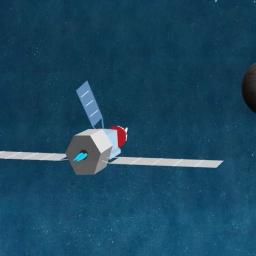
Humanity's third-ever mission to Mercury has arrived, but a last-minute software issue" has complicated matters.
The BepiColombo mission is a joint effort by the European Space Agency (ESA) and Japan's Aerospace Exploration Agency (JAXA). Reaching Mercury is not easy because its gravity is weak and its orbit is fast. The tiny planet's proximity to the Sun further complicates matters, because our star's gravity accelerates everything that falls towards it.
BepiColombo's journey has therefore seen it whiz past Earth once, Venus twice, and Mercury six times on a complicated path the two space agencies designed to slow it down sufficiently to be captured by mercurial gravity, while also keeping up with its rapid orbit.
In 2024, the craft's thrusters underperformed, leading the ESA and JAXA to re-plot the planned trajectory and reschedule its arrival at Mercury from mid-2025 to this past weekend.
The ESA's operations team sent the commands to insert BepiColombo into orbit on Friday. On Sunday the craft phoned home with news that it entered orbit. A little later, however, the ESA revealed the thruster burn was shorter than planned following a software issue."
The spacecraft is safe, but the ESA says it is working to understand what happened" and promised updates early this week.
Readers may recall that a pair of NASA missions to Mars are also experiencing software glitches, which have in recent weeks become all-too-prevalent on Earth, too.
Fingers crossed
If all is well, BepiColombo will deploy two orbiters.
The ESA's craft is called the Mercury Planetary Orbiter (MPO), which the ESA says will map the planet, assess the composition of its surface and interior, measure its magnetic field, and even gather data that scientists hope will test Einstein's theory of General Relativity to an unprecedented level of accuracy."
JAXA's Mercury Magnetospheric Orbiter (MIO) will also investigate the planet's magnetic field, plasma, dust, and atmosphere.
Both orbiters are extraordinary feats of engineering. As JAXA explains, MIO is solar-powered but the sunlight it will receive at Mercury is around ten times as powerful as on Earth. Mercury itself is also sufficiently hot that the orbiter needs protection from heat radiated from the planet's surface. ESA's MPO keeps itself cool with three to four insulating blankets comprised of layered titanium, aluminum, and a ceramic fabric called Nextel. The blankets alone weigh 94kg.
The two space agencies expect to start science operations in April 2027 but haven't yet said if the two orbiters are in peak condition.
JAXA, sadly, last week revealed that its Hayabusa2 probe has deteriorated to the point at which it can no longer make its planned landing on asteroid 1998 KY26. JAXA scheduled that for the year 2031, but problems with the probe's thrusters mean the agency will instead attempt a high-speed fly-by of asteroid 2015 BM510 in 2028. Hayabusa2 launched in 2014, so is rather older than BepiColombo.
Humanity has visited Mercury twice before. Mariner 10 made three rapid passes across 1974 and 1975, when it managed to map less than half of the planet's surface. Messenger made it to Mercury in 2011 and spent more than four years in orbit before crashing into the planet's surface. The probe mapped the entire planet and even spotted ice near its poles. (R)