New giant viruses suggest their genomes expanded like an accordion
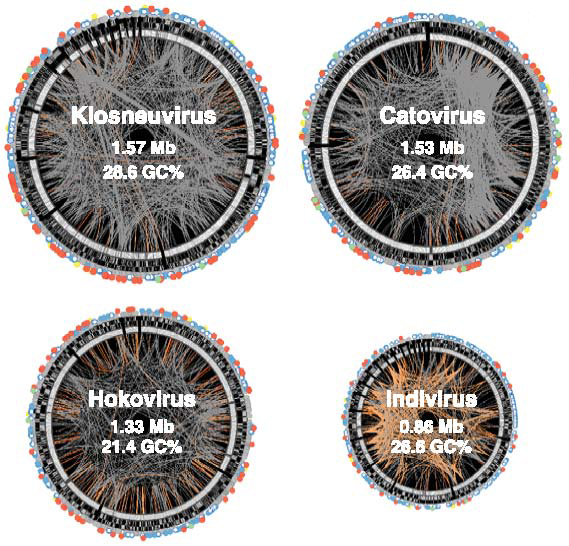
(credit: Schultz, et. al., Science)
Viruses tend to have stripped-down genomes, carrying just enough genes to take over a cell and make lots more copies. Ebola, for example, carries a total of just seven genes, allowing new copies to be made with little fuss. There are a few exceptions-viruses like herpes with complex life cycles-but even the biggest of the viruses we knew about had only a few hundred genes.
All that changed a bit more than a decade ago, when researchers discovered the Mimivirus, which had a genome bigger than some bacteria and carried many genes for functions that are normally provided by host proteins. The huge genomes and strange behavior of the viruses led their discoverers to propose that they weren't just odd offshoots that preyed upon life-rather, they might have played a critical role in boosting life's complexity.
Now, researchers have discovered a new family of giant viruses, related to the Mimiviruses but distinct in a number of ways. And a careful analysis of their genes suggests they, and all other giant viruses, have been put together through relatively recent evolution. The work argues very strongly against these viruses playing a key role in life's diversification.
Read 13 remaining paragraphs | Comments