The human sacrifice diet
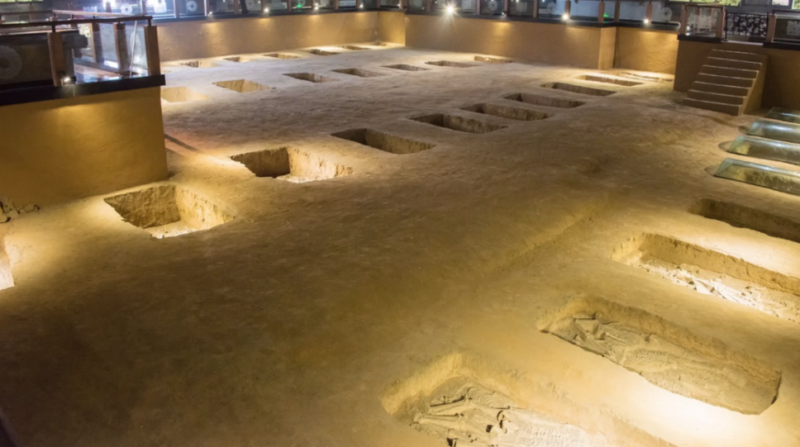
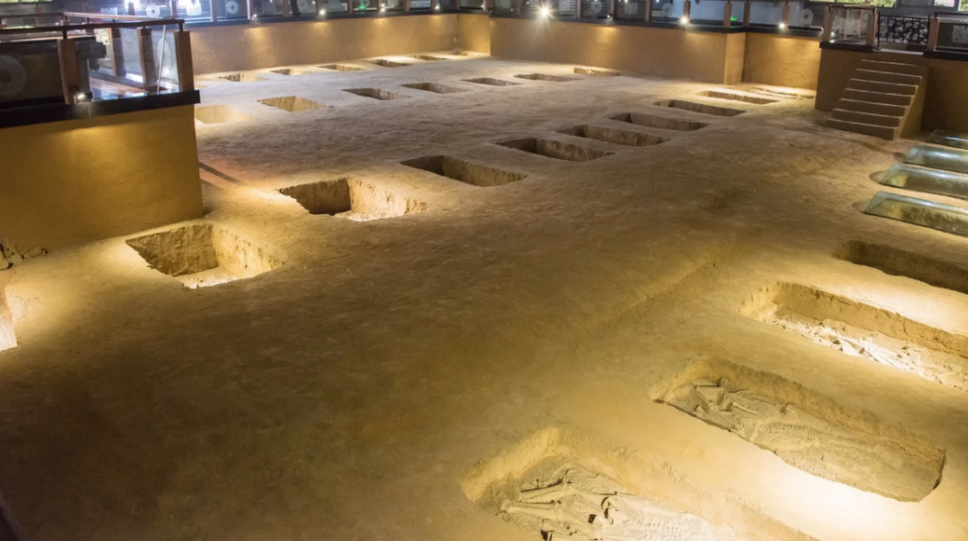
Enlarge / Royal graves at the site of Yinxu. (credit: beibaoke/Shutterstock)
During the final two centuries of the Shang Dynasty (1600-1046 BCE) in China, thousands of people were sacrificed at the state capital of Yinxu. Some were dispatched with great fanfare, buried with rich grave goods, while others appear to have been sacrificed with extreme prejudice and mutilated after death. Now, a new study sheds some light on these victims. Simon Frasier University bioarchaeologist Christina Cheung and her colleagues reconstructed these ancient people's' lives by discovering what they ate and when, based on chemical signatures left in their bones.
Human sacrifice was a common ritual among the people of almost every ancient civilization, from China and Europe, to Mesopotamia and the Americas. Though archaeologists have analyzed the graves of these sacrifices, they have many questions about the victims' lives. Were they revered and celebrated before death, or were they outcasts? Were they prisoners from far away, or were they the sons and daughters of their executioners?
Cheung and her team answered a number of these questions with a chemical analysis of the bones of 68 sacrificial victims at Yinxu, which were compared with the bones of 39 locals. All of the victims were male, and most were young.
Read 13 remaining paragraphs | Comments