Researchers optimize a powered exoskeleton to cut energy used in walking
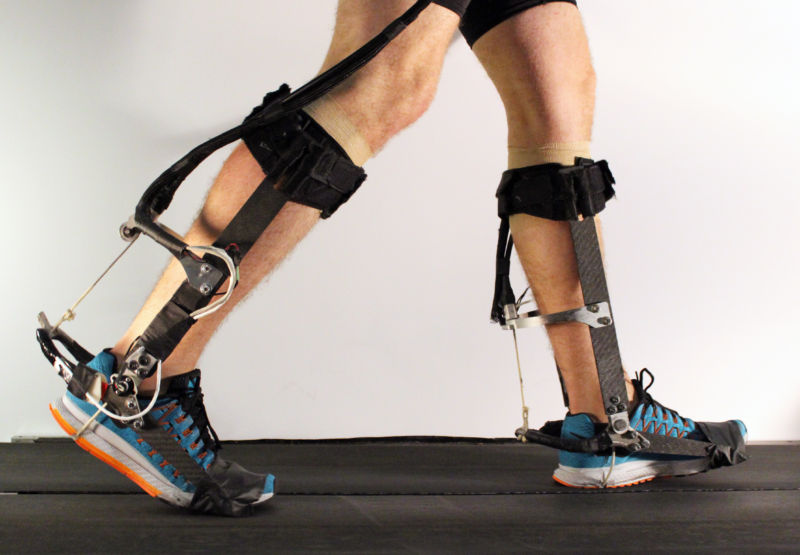
Enlarge / This is what the exoskeleton looks like when it's worn on both legs. The magic, however, is in the control software. (credit: Kirby Witte, Katie Poggensee, Pieter Fiers, Patrick Franks and Steve Collins)
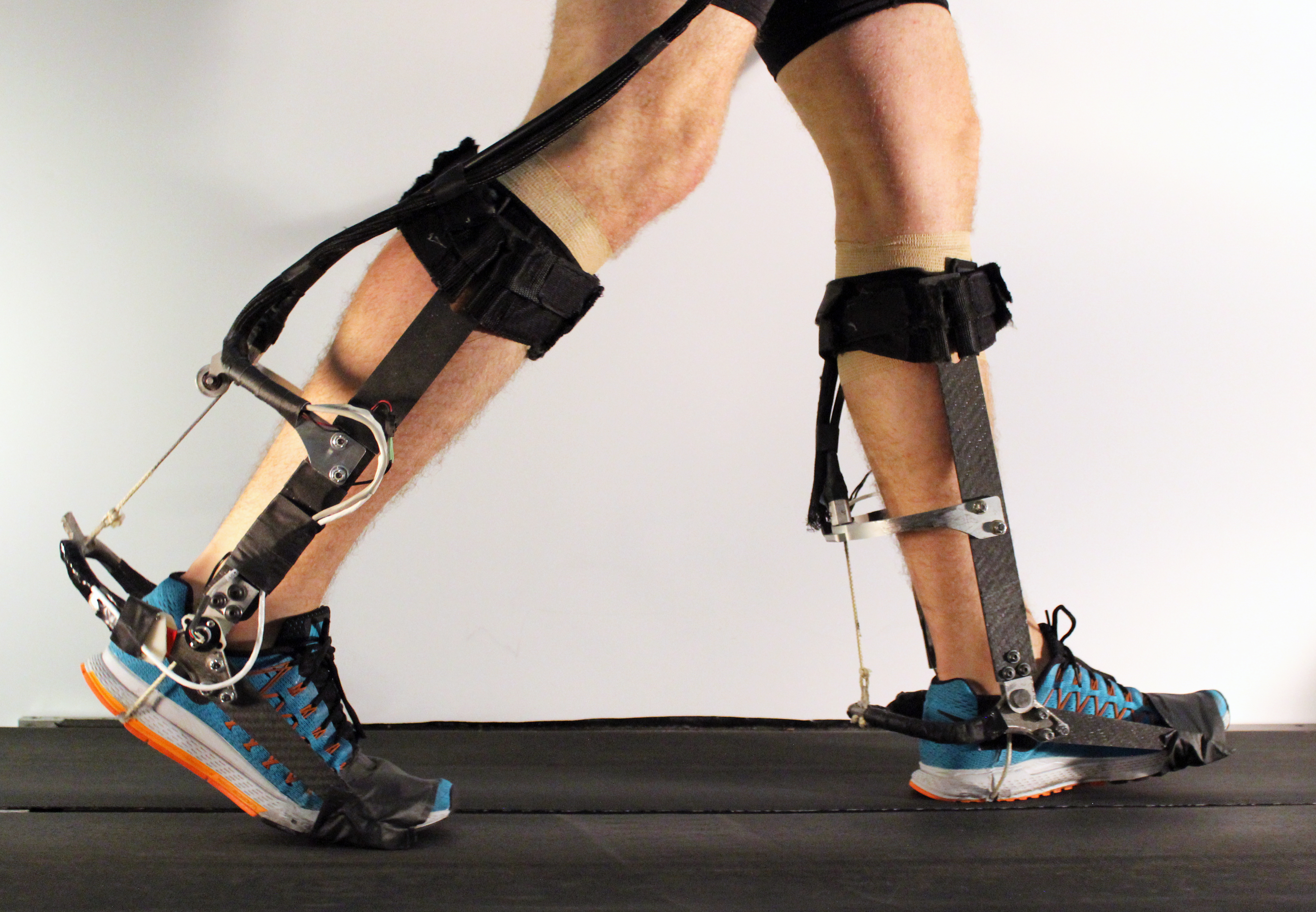
Exoskeletons are a common feature in the natural world. But in recent years, scientists have started experimenting with adding them to humans. Powered exoskeletons hold the prospect of helping people with mobility problems resume a normal life. And there's always the prospect of giving ourselves super-human strength, like Ripley in Aliens. Even without power, an exoskeleton can redistribute the energy from our normal motions more efficiently.
But no two people are quite the same-they differ not only in physical proportions, but also in strides or styles of walking. So how do you match your exoskeleton to a user's peculiarities?
The answer, according to a team at Carnegie Mellon University, is the combination of a genetic algorithm and a treadmill. After a few rounds of optimization, a powered ankle assist had most users walking in an energy-efficient manner. And, by changing the conditions, it learned how to help people walk uphill or carry heavier loads, too.
Read 11 remaining paragraphs | Comments