A brief history of quantum alternatives
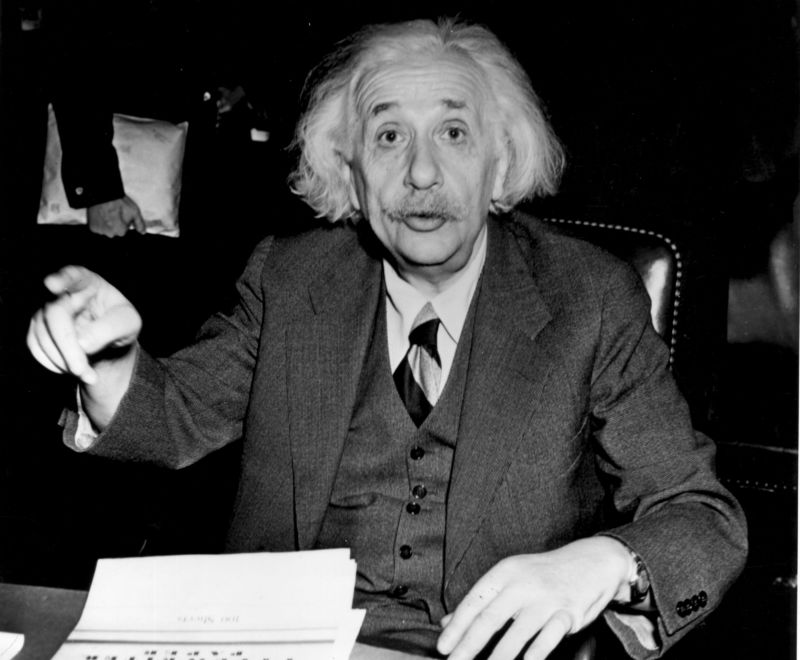
Enlarge (credit: Central Press/Getty Images)

In 1915, Albert Einstein, with a ee pittle help from his friends, developed a theory of gravity that overturned what we'd thought were the very foundations of physical reality. The idea that the space that we inhabit was not perfectly described by Euclidean geometry had been inconceivable-so much so that the philosopher Immanuel Kant, a radical thinker in so many ways, proclaimed that it was not possible for any theory of physics to dispense with it.
The physicist Werner Heisenberg later pointed out the implications of Kant's mistake. The great philosopher had posited that our intuitions about the ancient geometry of Euclid meant that it was the necessary foundation for physical reality. The fact that this turned out to be false called the integrity of Kant's entire philosophical edifice into question.
Despite their radical break with past ideas of space and time, Einstein's theories would soon end up lumped in with Newton's as part of "classical physics." We needed to do so because there was a revolution in scientific thought so profound that it created a bright line in the history of science: the development of quantum physics.
Read 51 remaining paragraphs | Comments