New gravitational wave detector almost immediately spots black hole merger
Today, a huge scientific team announced that humanity has added a third gravitational wave detector to its arsenal. And, only two weeks after Europe's VIRGO detector joined forces with the two LIGO detectors, the three combined to pick up a new black hole merger. While the three have worked together for less than a month so far, there are plans for a substantial observation run next autumn.
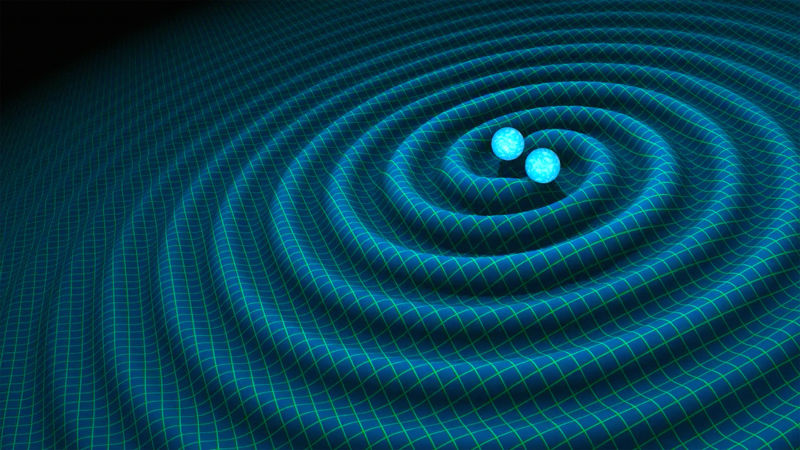
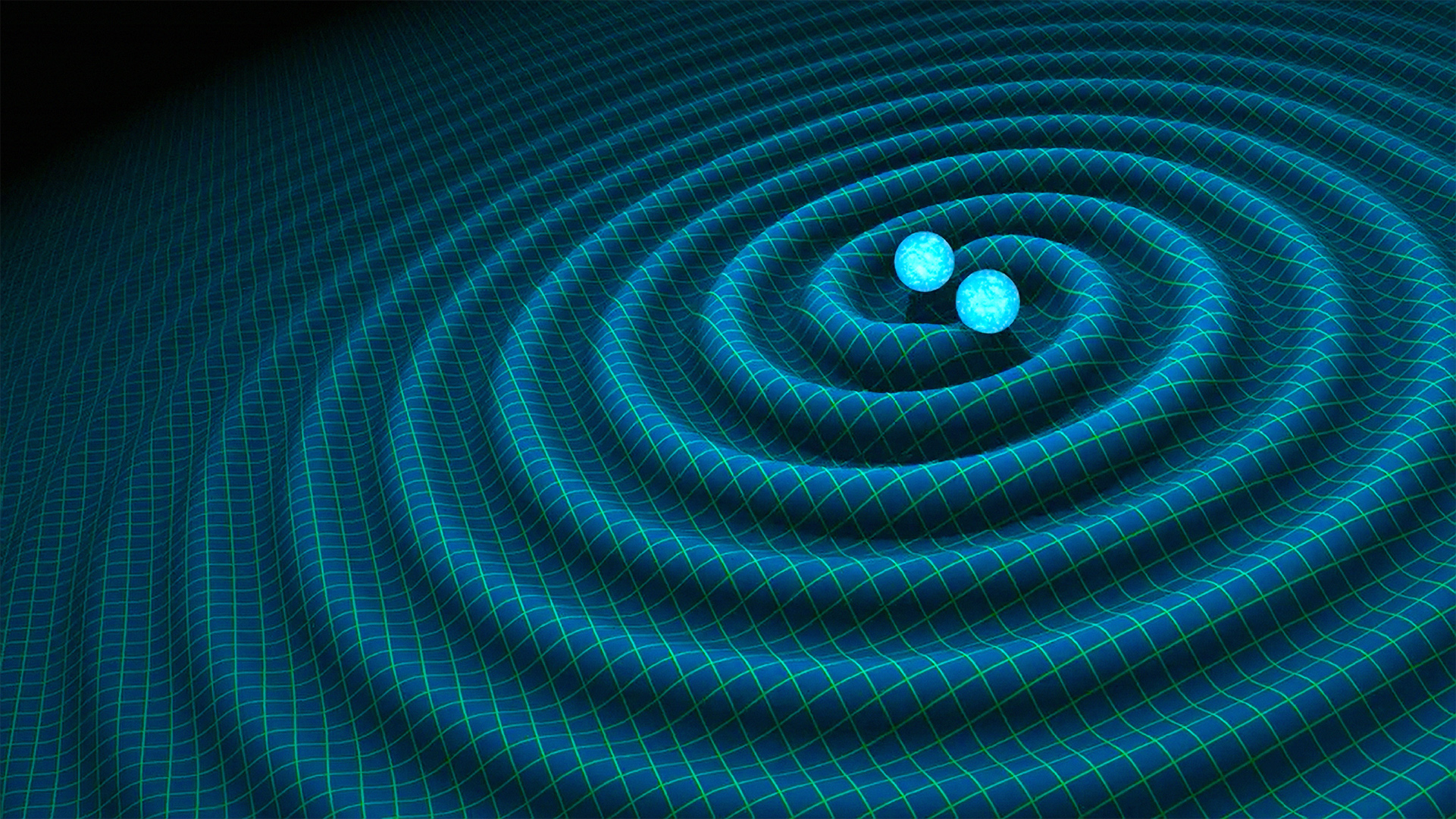
Waves in spaceGravitational waves are produced as two massive objects spiral inward toward a collision. Once they get close enough, their rapid circling distorts space itself, sending gravitational waves rippling out. Immediately after their collision, the object formed by their merger vibrates like a bell, briefly producing a different pattern of waves. These ripples in space will alternately expand and contract the distance between two objects by an infinitesimal amount-but one sufficient for our most sensitive instruments to pick up.
The new event, GW170814, is similar to the ones detected earlier. It involves stellar-mass black holes, 31 and 25 times the mass of the Sun. Those are heavier than theoretical work indicates should be possible to form through the collapse of stars. This suggests that either these were formed through earlier mergers or some alternate route of formation exists. The resulting black hole is 53 times our Sun's mass. The missing material-three solar masses' worth of black hole-was converted to energy in the form of gravitational waves. The event occurred about 1.8 billion light years away, though, so don't be surprised that you didn't notice anything.
Read 9 remaining paragraphs | Comments