Japanese coastal species rode tsunami debris to the US
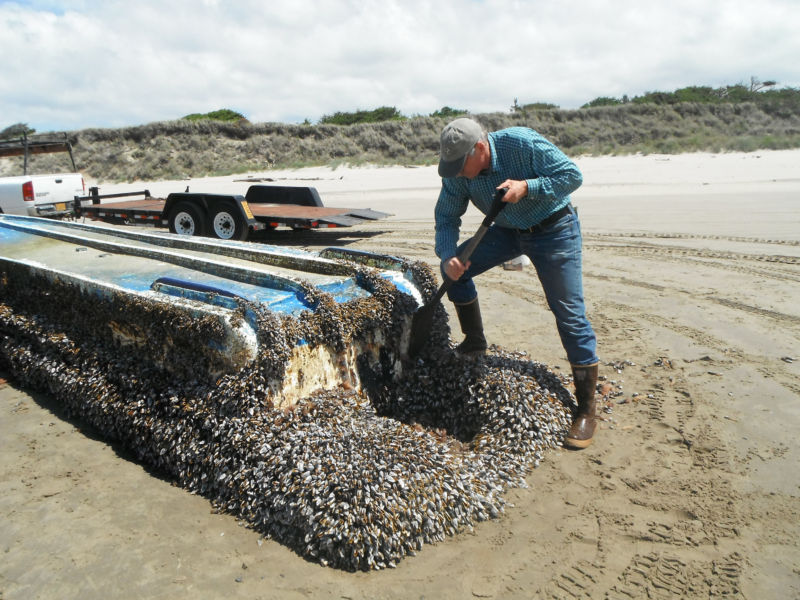
Enlarge / A mussel-covered vessel that washed ashore in Washington. (credit: Russ Lewis)
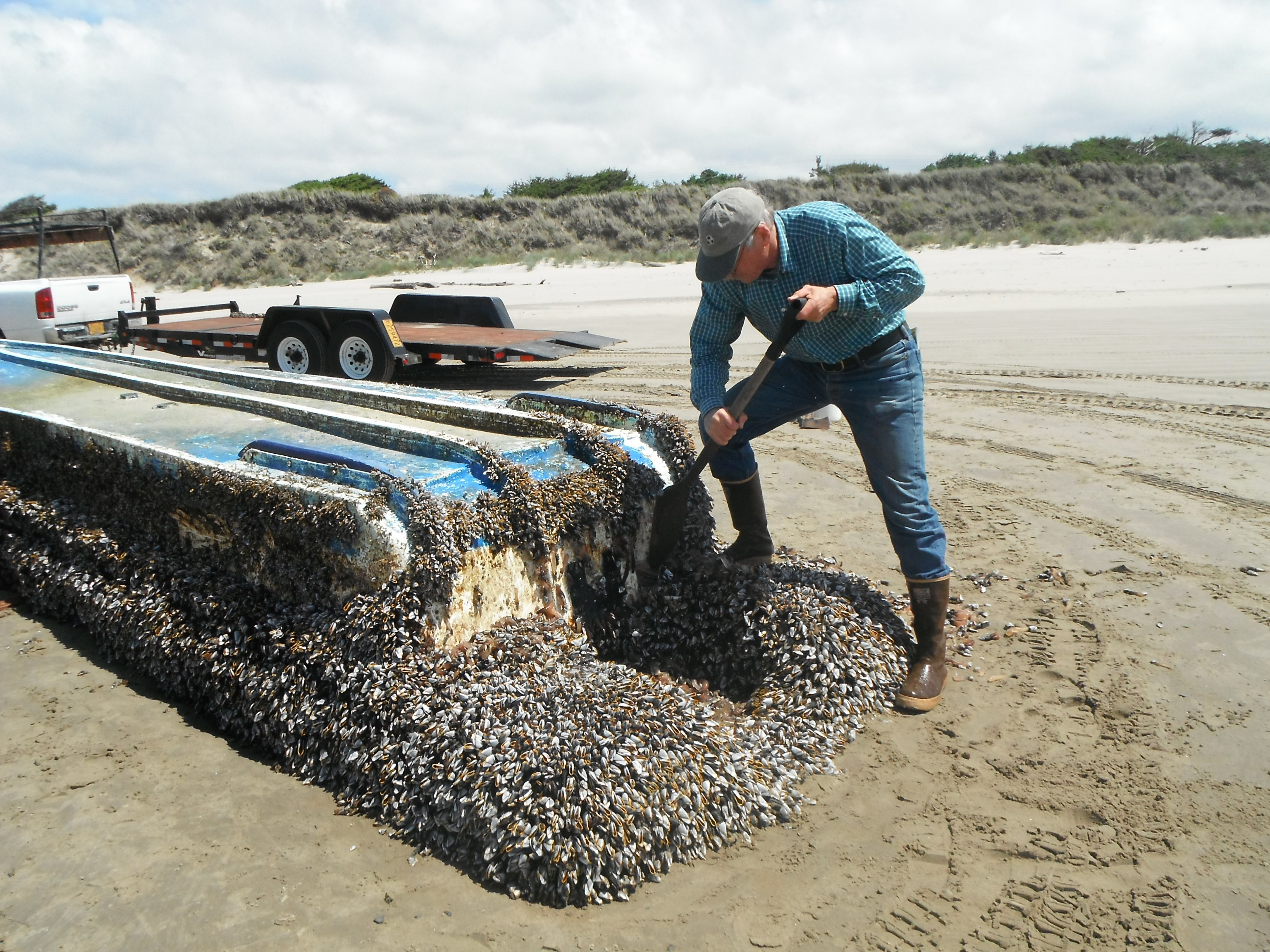
Well after the massive 2011 tsunami that swept across the Japanese coast, reminders of the event started appearing on the US-side of the Pacific. Various forms of debris, ranging from small hunks of plastic up to entire boats, made appearances on the US West Coast. Now, a team of researchers has found that the floating debris carried hundreds of potentially invasive species across the vast ocean with it, including a couple of species of fish.
While large tsunamis have occurred frequently, even in historic times, there's no indication of anything like this before. The difference, according to the researchers, is humanity's ability to make materials that can remain afloat in the open ocean for years.
It may seem a bit surprising that marine species couldn't just introduce themselves, given that they already live in the ocean. But coastal habitats are very distinct from those of the open ocean, and many species couldn't survive an ocean crossing on their own even if currents were favorable. While there are coastal environments across the Pacific Rim, they occur at very different latitudes, meaning the temperature conditions and nutrient availability can provide barriers to any species that might migrate around the edges of the open ocean.
Read 8 remaining paragraphs | Comments