Lucky 13: SpaceX aims for July 16 Starship flight test
by from www.theregister.com - Articles on (#76YSR)
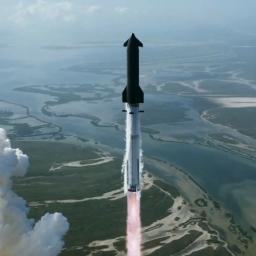 UPDATED: SpaceX is scheduling another test flight of its monster Starship rocket later this week. Flight test 13 will carry 20 Starlink satellites and, hopefully, will not repeat the anomalies seen during the previous test. The mission is set to launch on Thursday, July 16, with a 90-minute launch window opening at 2245 UTC. It will carry next-generation Starlink V3 satellites for the first time, deploying them during the vehicle's sub-orbital lob. The plan is for the 20 satellites to extend their solar arrays and antennas, and connect with Starlink's constellation via high-capacity lasers. Six of the satellites will have a suite of cameras to take a look at Starship's heat shield and, according to SpaceX, some of the tiles on the vehicle have been painted white to simulate missing tiles and serve as targets during the test. Since the satellites will be on the same sub-orbital trajectory as Starship, they will burn up in the atmosphere approximately 20 minutes after deployment. The previous flight test in May was mostly a success. However, there were problems, notably with the Super Heavy Booster, which failed to perform a "soft" touchdown in the Gulf of Mexico. SpaceX provided more details on what happened to the booster. "Slight differences in engine startup on the ship caused the directional flip of the booster to be off by approximately 90 degrees," it stated. Then, after the flip, five of the 33 booster engines failed to relight, and the boostback burn ended early. The result was a mishap, which prompted the US Federal Aviation Administration (FAA) to require an investigation before the Starship-Super Heavy could launch again. Starship also lost one of its three Raptor engines following stage separation, but still managed to reach its planned suborbital trajectory. SpaceX opted to not relight one of the Raptor engines during the suborbital flight, which is essential for showing that the vehicle can be trusted to enter orbit. The company intends to try again on Flight 13. "Several hardware and operational modifications have been made to address the interconnected causes with additional reliability improvements planned in upcoming versions of the Raptor engine," said SpaceX. It did not, however, elaborate on those "interconnected causes" nor what it had done to avoid a repeat of the booster flip incident. It only added: "The startup sequence has been modified to be more robust to timing variability and more reliably flip in the desired direction," and noted hardware modifications "to improve re-light reliability." Neither the booster nor Starship will be recovered on this flight. The booster is expected to make a controlled descent in the Gulf of Mexico, while Starship will again attempt a controlled re-entry and splashdown in the Indian Ocean, as on previous flights. An in-space reignition of one of Starship's Raptors is essential before SpaceX can send Starship to orbit, deploy Starlink satellites using the vehicle, or meet NASA's requirements for the Artemis III and IV lunar landers. (R) Updated to at 1531 UTC, July 13: The FAA got back to The Reg to explain that the "investigation of the SpaceX Starship Flight 12 launch mishap is closed. There are no reports of public injury or damage to public property." The administration added that it had overseen and "accepted the findings and corrective actions of the SpaceX-led investigation." "The final mishap report cites two most probable root causes for the loss of the Super Heavy booster as heat effects on propulsion system components during the ascent and erroneous engine alarm system settings. SpaceX identified four corrective actions, including vehicle hardware and software configuration updates to prevent a reoccurrence of the event. "SpaceX can proceed with Starship Flight 13 launch operations provided all safety and other licensing requirements are met."