EU telcos ask: Huawei going to afford to replace Chinese equipment?
by from www.theregister.com - Articles on (#776XX)
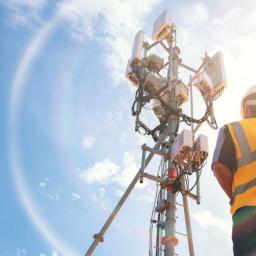 Replacing telecoms kit supplied by so-called high-risk vendors could cost European telcos up to 40 billion ($45.5 billion), with additional impacts on network performance and future investment plans. This is the warning in a report from GSMA Intelligence, the research arm of the mobile comms industry's global trade body, the GSMA. It refers to plans by the European Commission to address potential threats to EU security posed by IT and telecoms kit from third-country sources. The proposed Cybersecurity Act 2 (CSA2) regulatory framework includes provisions requiring member states to rip out and replace critical equipment supplied by designated high-risk vendors (HRVs) in their telecoms infrastructure, as reported by The Register earlier this year. When the Commission says "high-risk vendors," it means China-based suppliers such as Huawei and ZTE, as identified in a speech by former European Commissioner Thierry Breton several years ago. According to the GSMA, it comes down to the increasing importance of digital infrastructure to economies and life in general, and so the Brussels policymakers are placing a greater emphasis on security and resilience. However, huge uncertainty remains over the cost of replacing HRV equipment - hence the mobile trade body's decision to investigate. There's also the challenge of doing it on a large scale within a tight timeframe: mobile operators would have just three years to remove the targeted equipment, while deadlines for other networks and assets could differ. The GSMA's own figures, based on a survey of seven EU operator groups, produce an estimate of 30 billion to 40 billion. This includes costs for mobile networks, fixed networks, and transport networks, such as optical backbones and subsea cables. Taking a midpoint estimate of 35 billion, mobile networks would account for 19 billion, fixed infrastructure for 5 billion, and transport elements for 11 billion. The report also warns of impacts beyond just the rip-and-replace cost. Banning those high-risk suppliers will restrict competition in the telecoms equipment marketplace, likely resulting in higher costs for operators. The GSMA says its analysis uses an approach favored by the European Commission itself, which relies on diversion ratios, measuring the proportion of sales lost by one firm that might be captured by another, combined with information on margins. Cutting to the chase, it believes that equipment prices could rise 24 percent - in part because the market for mobile kit is already highly consolidated, with Huawei accounting for a sizable chunk of it. Fixed network gear could see increases of up to 19 percent, and GSMA estimates transport network equipment prices may go up by a more modest 10 percent. Based on anticipated investment between 2027 and 2030, this would result in an incremental cost to network operators of about 8.5 billion ($9.7 billion), according to the report. Facing these additional costs, network operators will review their investment and market strategies and respond by either increasing access charges for customers or scaling back spending on network upgrades and service improvements - possibly both. The GSMA warns that the broader economic costs to the European economy would likely be wider than its estimated impact on the telecoms businesses. "High-quality, affordable network infrastructure serves as a foundational, general-purpose technology that underpins productivity gains, innovation and economic growth. Slower or more expensive 5G/6G deployment will hinder the EU's ability to meet its ambitious Digital Decade 2030 targets," it states. The GSMA references a KPMG study (caveat: produced in collaboration with the China Chamber of Commerce to the EU) that claims these policies could lead to cumulative economic losses of up to 370 billion ($422 billion) across the EU region between now and 2030. But if you need other evidence, just consider the UK's situation. It forced operators to remove Huawei kit from the country's 5G networks in response to pressure from the first Trump administration, which threatened to cut Britain out of intelligence sharing if it didn't comply. This was despite an investigation finding no technical justification for such a ban. The result is that the UK's 5G networks are among the worst in Europe when it comes to performance and quality of service. This has been directly linked with the decision to replace Huawei kit, when British operators should instead have been putting cash toward ramping up their 5G rollouts. To add insult to injury, some telecoms networks in the US itself are still using Huawei equipment, refusing to replace it unless the government coughs up the cash. And just a few years ago, it was reported that Huawei was the supplier of nearly 60 percent of the installed network kit operating Germany's 5G infrastructure. Some may argue that it is long overdue for EU member states to bite the bullet and purge their national networks of any potential security threat. But the question is, how much is Europe prepared to pay for it? (R)