Nailed it: Toolstation gives its store IT an ASUS NUC refurb
by from www.theregister.com - Articles on (#77MDE)
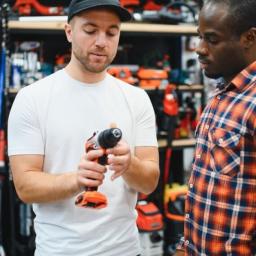 When Toolstation's customers walk into a branch, work has usually paused somewhere else. A plumber, decorator or electrician is there because a plug won't fit, a roller has worn out, or the van needs restocking with brushed-steel double sockets. It is a place where trades and dedicated DIYers go when they need to get on with the job. Toolstation's point-of-sale terminals therefore need to keep pace with staff answering questions, checking stock and closing the sale before a quick visit turns into a long wait. "We know that we can provide top-quality, industry-leading customer service, but we need the IT functionality behind that to back us up," says Simon Marshall, store manager at Toolstation's Bridgwater branch. Founded in 2003, the retailer has grown to more than 550 UK branches stocking over 25,000 products for trade and DIY customers. The newer Toolstation GO format pushes the convenience model further, with smaller high-street locations, digital kiosks and local ranges shaped by store-level insight. That growth, online and in stores, has strained parts of the technology estate. Some in-store systems still ran on aging Linux-based hardware that had become slow, difficult to patch and awkward to support across a large branch network. At the Bridgwater store, close to head office, manager Simon Marshall says the old terminals were "very slow, very clunky". They had been fine for a smaller business, he says, but "due to our rapid growth, they quickly became unsuitable" for the role. The legacy PoS running on a custom Linux build was one instance of hardware no longer up to the task. "We had a struggle with our legacy equipment. We were unable to support the operating systems with security patches, which then became an operational inefficiency for our support teams. This then created security concerns, where we were unable to manage our antivirus and any other support around that which again, in turn, created an operational overhead," explains Corron Mlcak, IT end user technology lead, Toolstation. Toolstation concluded it needed to refresh the entire technology estate, from contact centers, warehouses and distribution hubs to its countrywide network of branches. The first decision was to build on the Google Chrome ecosystem already in use elsewhere in the business. The second was to find hardware that could run that model at the till without reintroducing the size, support and peripheral problems of the old estate. Retail wants better IT, but not more mess Retailers keep investing in technology even as store IT teams are asked to support more devices and software with limited local help. Gartner forecasts global enterprise IT spending in the retail market will grow 7.4 percent in 2026 to $233 billion. That spend reflects a shift in operational priorities: staff need reliable PoS systems with instant access to product and HR data, while head office wants tighter reporting and standardized processes. Security teams, meanwhile, are prioritizing device protection and patching, and finance is keen to avoid the ongoing expense of dispatching IT engineers to update individual branch devices by hand. Given that online sales still only account for a quarter to one-third of total UK retail spend, according to the ONS, stores remain a focal point for technology investment. A Business Research Insights report estimated that one-fifth of retail tech investment goes into improving in-store technology, while smart PoS accounts for over one-third of retail store tech deployments because integrated payment systems can speed up transactions and improve the customer experience. ASUS echoes this sentiment. "Retailers are trying to control IT overheads and support costs while modernizing aging infrastructure for newer software requirements," says Chris Davies, ASUS Country Product Manager for the NUC Mini PC Division. "At the same time, they need to strengthen cyber resilience and reduce hardware downtime, because both have a direct effect on costs and customer experience." The UK 2025/26 Cyber Security Breaches Survey found that 31 percent of retailers and wholesalers had experienced a breach or attack during the previous year. In the most extreme attacks, such as those experienced by M&S and Co-Op, breaches can cost hundreds of millions and significantly impact day-to-day operations such as getting stock into store and serving customers. Customer comes first "Customer service is at the core of our business model," explains Bridgwater branch manager Simon Marshall. "Customers do like to come in and out as quickly as possible... so having a system that keeps up with the speed of staff is integral to that." The old Linux systems were capping Toolstation's ambitions. The retailer wanted a counter terminal that could do more than open a cash drawer, process card payments, and print receipts: a device that could run web apps, check stock, pull customer information, support new sales processes and, increasingly, sit inside a managed cloud environment. "Retailers aren't really buying PCs, they're buying uptime," adds ASUS' Davies. "Every minute a till isn't working impacts customers, colleagues and revenue." Mini PC offers more from less "Being a retail environment, space is a premium, so we needed to make sure it could be tucked away, hidden away, so users didn't interfere with it while they were pulling stock out or doing their day-to-day business, but packed the punch that it needed," adds Mlcak. The ASUS NUC 13 is a mini-PC that fit the brief. It was compact enough to mount under the counter but still delivered the Intel-powered performance store workflows required. Mlcak says Toolstation was focused on performance after the legacy estate's slowness, and that the 13th Gen Intel Core i3 processor was its "optimal choice". He adds: "With the Intel chipset, it meant that we could be more optimal and we could expand our software choices. From that, we built upon a workstation environment as opposed to just a typical till environment." Marshall's store was one of the trial sites. "I was very impressed with the speed. As soon as I booted it up in the morning, it loaded straight away, no connectivity issues, everything fired up nice and quick." The newer software build also gave staff more functionality at the frontline tills, so that fewer tasks required leaving the counter for the manager's laptop. The size mattered too. "With the ASUS NUC 13 being much more compact than the old system, it saves a lot of space under the counter," Marshall says. That freed room for catalogs and other useful items, and cut the footprint occupied by a freestanding machine. A mini PC's compact form allows it to sit behind monitors, inside kiosks or under desks, which tidies cable runs and keeps hardware away from accidental knocks. ASUS claims the ASUS NUC form factor can cut idle power consumption by up to 50 percent compared with traditional desktops, and that a tool-free chassis simplifies replacement and upgrades. Market researchers expect demand for compact systems to continue growing. Global Market Insights valued the global mini PC market at $24.7 billion in 2025 and forecasts annual growth of 6.6 percent through 2035. The forecast covers a broader market than retail alone, but identifies commercial applications including kiosks, digital signage and other space-constrained systems as contributors to that growth. The operating system is part of the hardware decision Toolstation's rollout was more than a swap from one physical box to another. The ASUS NUC was configured to run ChromeOS Flex, fitting into a wider Google environment the retailer had already adopted: Google Workspace, Chromebooks in contact centers and ChromeOS tablets in warehouses, yards and on the road. Mlcak says Chrome Enterprise and enrollment tokens helped accelerate the rollout. Because the ASUS NUCs were certified and could be enrolled with enterprise licenses, Toolstation gained reporting, usage visibility, automated OS updates and patch management. "Without Chrome Enterprise and having the Enterprise enrollment tokens, I think that would have slowed us down dramatically," he says. ASUS argues the same pressure now defines much of the retail IT landscape. "IT teams are under pressure to support more stores with fewer resources. They need technology that's easy to deploy, simple to manage and reliable enough that they rarely have to think about it," says Davies. Toolstation's deployment of ASUS NUCs and other Chrome devices has produced a more consistent estate. Mlcak says: "By bringing all of the ecosystem into one place, it means that everything just works together with very minimal impact and/or support needed from any of my team." Support teams could write simpler guides, know what they were supporting and avoid maintaining a knowledge base spanning too many different operating systems. That matters because store staff are not IT technicians and should not have to be running Device Manager to update faulty drivers. Rolling out without closing the counter Toolstation avoided a big-bang change in stores. The team replaced thousands of units in phases, taking one device off, swapping it, checking it worked, then moving to the next. Mlcak says the team continued that model with "a bit of hyper-care behind it". Marshall says the Bridgwater store carried on trading while the work happened. "It didn't affect the store operation at all in a negative way," he says. The team changed part of the till estate, came back to change the rest, and kept the old system running until the new one was ready. The wider deployment ran in phases across the UK store estate alongside refreshes and infrastructure upgrades. ASUS says the return rate during the rollout was below 0.5 percent, against an industry average of three percent for a similar deployment. With the new environment fully operational, Mlcak says the IT team has seen "a significant drop" in support tickets around the devices, especially break-fix. "The overall concern about [till] slowness has definitely vanished," he says. "We don't have any tickets that are coming in around slowness anymore." He credits an 80-90 percent operational efficiency gain largely to the ASUS NUC deployment, spanning reduced downtime, low return rates, faster replacement, less support effort and better operational availability. Branch manager Marshall says staff now have confidence that when they approach the till, "it's going to work first time for them." Building out the branch Toolstation used ASUS NUCs as its store PoS endpoints, but retailers planning a broader branch refresh should also consider the display and network around the computer. ASUS groups those elements into a commercial portfolio of ASUS NUC mini PCs, monitors, and ExpertWiFi networking products, giving IT teams a common supplier for the principal components of the branch setup. This can result in simpler procurement, deployment, integration and operations. At the counter, an ASUS NUC can be mounted under a desk or using a suitable VESA mount. A conventional business monitor may suit a staff workstation, while a touchscreen can support a kiosk or assisted-service point. ProArt displays address design, signage, and catalog work where color accuracy is required. Compatible ASUS NUCs and monitors also support ASUS Power Sync over HDMI CEC, allowing staff to control both devices from the monitor when the computer is mounted out of reach. ExpertWiFi provides the network connecting those endpoints. The EBM68 can create up to five SSIDs, with VLANs used to separate PoS, staff, guest, IoT, and VPN traffic. It also supports backup internet connections and centralized administration through the ExpertWiFi app. ASUS's proposition therefore covers the compute running retail applications, the display used by staff or customers, and the network connecting them, with a more consistent procurement, deployment, warranty, and support model across sites. De-fragging the IT estate Refreshing the PoS with mini PCs was the headline part of the project, but Toolstation was also trying to make its wider IT estate less fragmented. It worked with ASUS and Google on a "grand design" across branches, distribution centers and contact centers, following the adoption of Google Chrome during COVID. The aim was not uniformity for its own sake, but a smaller ecosystem of hardware and software combinations to maintain. For stores, the ASUS NUCs running ChromeOS Flex became the PoS endpoint. Elsewhere in the business, ASUS Chromebook Plus devices and Chrome tablets extended the same Google-centered model to managers, contact center staff, warehouse teams and drivers. The point was not to make every device identical, but to reduce the number of hardware and software combinations Toolstation had to support. "The biggest benefit of having the ASUS devices and the Google ecosystem means that it's coherent across the organization," says Mlcak. "Previously, we had a lot of tech debt, and we supported many different operating systems." The unified environment has cut the range of hardware and software combinations Toolstation supports. It has also given the retailer a simpler model for procurement, deployment, installation, warranty and support. Toolstation's business is built around giving customers the right tool quickly, and its store IT refresh followed the same principle by getting the right technology tools into people's hands. Sponsored by ASUS.