(View this graphic as a huge PDF)ABSTRACTIt’s always about the candy. The Candy Hierarchy is full up with this “joy induction†measurement, this thing that the co-principle investigators (PIs) Cohen and Ng go on about each year. From 2006 to 2013, the PIs conducted a longitudinal study, more or less guided by PI expertise and whim (or whimsical expertise) and possible corporation sponsorship. Research by others in the field sought to refute the findings, obviously unsuccessfully. Yet the PIs were so moved by the yearly outpouring of commentary that they opened up the study to additional data sources, namely people. People who the PIs surveyed. Or is it whom? Anyway, nobody cares - this is about sugar. The 2014 Candy Hierarchy was thus defined by data analysis of 43,767 votes obtained from 1286 individuals. Good for them. But not good enough for science. Because the 2015 Candy Hierarchy doubled down and reworked the whole thing with all kinds of more stuff. This hierarchy therefore presents the newly calculated 2015 rankings, based on a total of 518,605 data points obtained from 5459 individuals in a randomized fashion. It also provides the raw data from a secondary study that sought to understand the character of the survey takers, or rather how character affects joy induction. It’s all in there, just go check out the figures.TRANSCRIPTION OF THIS MORNING’S CONFERENCE PROCEEDING DISCUSSION, WITH DR. COHEN AND DR. NG.BC: Don’t you love how they call us Dr.?DN: I don’t mind.BC: Well, sure. But you don’t struggle with the medical doctor/PhD doctor thing?DN: Nope. I’m cool with it.BC: DN: You’re not?BC: No, no I’m not. DN: BC: DN: Something more you wanted to say?BC: Listen, I’m squeamish, so even the possibility that someone might ask me for medical help, help that could involve blood, it makes me light headed.DN: It happens.BC: DN: Are we gonna talk candy or do this all morning?BC: We’re gonna talk candy.BC: Go. DN: I’m going.BC: DN: The hierarchy kind of went through the roof this year.BC: Way more votes than we knew what to do with, like an order of magnitude more.DN: Yeah. And the data is open for others to dig into. BC: Right. More so because there’s so much that we didn’t have time for.DN: BC: Did you see anything surprising?DN: Meh. I’m not surprised by how the bigger data set (see Figure 1) finally showed dominance of full-sized candy bars over everything else. Proving once again that more is better for trick-or-treaters, gluttons all.BC: I’m not surprised Dots secured their position in the lower tier.DN: Right, a lot of chatter on the boards about that too. Dots bring out the kind of anger we used to see with Candy Corn.BC: DN: BC: But you know what was weird?DN: Do tell.BC: People prefer Vicodin to Dots.DN: Not weird at all, Ben, totally unweird. You know what I did think was weird?BC: The floor is yours.DN: You still can’t accept peanut butter’s ascendancy in the past few years.BC: It’s a matter of principle. The public’s duped by Big Peanut. Big Mint and Big Caramel need to lobby more.DN: What?BC: Mint > Caramel > Peanut Butter. It goes in that order. All are chocolate combinations, but it’s the right combo that matters.DN: Twix and Snickers were pretty high up. Both caramel-laden.BC: But Peppermint Patties? Junior Mints? Give them their due. Somehow Nerds were higher than Junior Mints, Dave. Nerds. DN: So you’re disagreeing with 518,605 votes?BC: It would seem so, Doctor. DN: BC: DN: Let me reset things, this is taking too long. I’ve got two points: one is the change in the Petersen Inflex (where votes for Joy and Despair cancel each out), which hits right about, ahem, at Vicodin. What does that mean? The other is the ranking pulled from the extra character data.BC: Did we find anything interesting there?DN: Maybe? Take a look yourself (Table 1A). You can totally see that the data pulled from kids actually trick or treating provide some interesting insight.BC: As in the kids really hate kale smoothies. That ranked last.DN: And also the prominence of fruity chewy things. My God, Skittles is near the top!BC: It looks like adults hate broken glow sticks the most.DN: They want ones that work.BC: That’s the only viable conclusion we can reach. DN: Check out Table 1B too. It kind of looks like joy induction is similar regardless of whether a person chose Betty or Veronica.BC: Or Friday or Sunday. I’m especially interested in that one. It’s a big topic in my circles.DN: Or even those that listed comic sans as their favourite font, despite prior evidence from this report.BC: DN: It’s as if Candy Joy Induction is this universal or primal thing.BC: DN: BC: I have no response to that.DN: BC: DN: Can we go now?BC: I didn’t know I was keeping you. (more…)
Al Molinaro, most famous for playing Al Delvecchio, proprietor of Arnold's Drive-In on TV sitcom Happy Days (1974-1984), has died. He was 96. Yeppp, Yep, Yep, Yep, Yep... Prior to his role on Happy Days, Molinaro starred on The Odd Couple as Murray the Cop. (The Hollywood Reporter)https://youtu.be/uC2BMBdul0o
I've been following news about a company called Steorn for many years now. They claim to have developed a technology that generates more energy than it consumes. Every time they've had a public demonstration, it doesn't work. I'm not surprised.I thought they'd given up, but they are back. And they have a new video, which appears to be a webinar for investors. The person who runs a blog about Steorn has a good recap:Description of the Orbo PowerCube internals[Steorn CEO Shaun McCarthy] showed the internal components of a PowerCube, described how the energy generating Orbo power pack works, and even demonstrated the process of manufacturing a simple device of this kind.The Orbo battery (or power pack) is made up of three components: two dissimilar magnets and a layer of chemical gel that sits between them. The two magnets can be in "basically any physical format." Shaun compares the resulting combination of components to a galvanic cell. However, in a galvanic cell, the chemical agent would be chemically eroding the other components; but in the Orbo battery, the chemical layer is completely inert and has no chemical interactions with the magnets.The process of producing an Orbo battery involves taking these three layers, two dissimilar magnets separated by a chemical (the formula of which is "not that simple"), heating them up to just beyond melting point, and then very slowly cooling them, which allows them to retain an electric field. The result is that permanent electric fields are "frozen" into the two magnets. These two electric fields then interact with one another to generate an electric current, in a way that is analogous to how the magnetic fields in the "classic" perpetual motion machine Orbo interacted with one another to generate force. The electric fields frozen into the magnets work in a way that parallels the frozen magnetic fields of permanent magnets. The term for a device with this sort of permanently frozen electric field is "electret", a portmanteau of "electric" and "magnet".Shaun states that when polarized the right way, "what you end up with is something that is positive and negative." "It doesn't matter what you do to me, I will always polarize." The Orbo battery is thus an electric field version of the original magnetic Orbo. "So it is consistent, similar, and in many ways an incredibly simple piece of technology."According to Shaun, Steorn's first battery prototypes were built approximately 2 years ago, and are still outputting power 24/7. Shaun says, "we know theoretically these materials will hold an electric field for circa 800 years."
The jewelry looks just as good as these pieces but their production doesn't harm any octopuses; they're made from high-quality Sterling and the rings come with three different finishes. The earrings are $20 and are through-the-ear/wrap around; the $40 rings can be easily adjusted for different-sized fingers. Both get top marks from reviewers.
New Mexico Second Circuit Court Judge Christina Argyres told an 18-year-old first time offender who'd pleaded guilty to burglary that she would grant him probation because if he went to prison he'd be "someone's bitch" and be "raped every day." (more…)
https://youtu.be/VZIK5g1n3igWhen I think of torture devices, my mind flashes back to Mel Brooks singing about The Inquisition in The History of the World, Part I.Others might focus on Italian horror films from the 1960s, where a spike piercing an eyeball seemed to be a favorite pastime. However, no matter how stout your character, or how un-squeamish you think you are, I dare you to watch this video and not squirm. There's nothing evil at work, though, just the clever use of a small device to help with ingrown toenails (and we all know how painful those little buggers are).
Forebears.io charts the worldwide prevalence of your surname and offers interesting stats on its distribution. [via]Pictured above is "Beschizza," which originates in northern Italy (allegedly a locally-assimilated Roma name, it has splendid connotations in German of crappiness and drunkenness, a la "shitfaced" or, more literally, "beshitted") but everyone went to Brazil and England about a century ago.
The team behind Macaw is changing the way we design websites with their powerful, one-of-a-kind image editor and code generator. With Macaw on the market, suddenly writing flawless HTML from scratch isn’t essential to designing amazing responsive websites. With an interface similar to Photoshop, you will style and manipulate elements to look and feel as you please by hand—then let Macaw work its magic and generate the HTML and CSS that fuels your site’s presence. It’s the future of web design, and it’s going to change your life.Manipulate elements in a manner similar to Adobe PhotoshopConvert your design into legible HTML & CSSCreate responsive sites for access on any device typeAccess web or system fonts to utilize your typography of choiceApply styles to multiple elements from one place & conveniently modify them at any timePreview your designs remotely by broadcasting your design to any device on the networkSet variable names & add scripts for fast prototypingShare assets between pages & save them all in one documentUtilize static, absolute & fixed positioning for dynamic layoutsSave 72% on the Macaw code-savvy web design tool today in the Boing Boing store.
Reviews of the app-capable, Siri-equipped new Apple TV box are filtering in, and the consensus is that it's … OK.Walt Mossberg writes that it's a much "smarter" box, but one that lacks vision—and has UI flaws.I don’t know when, if ever, Apple will reinvent TV. But this isn’t the moment. I can say that, if I were buying a streaming box right now, this is the one I’d buy, if only for the promise of lots of apps.By making the set-top box a part of its giant app and services ecosystem, the company is moving Apple TV into a future that’s much broader and bigger than Roku’s or Amazon’s. And that makes the case. In effect, while it may not have reinvented all of TV, Apple has reinvented the streaming set-top box.The Wall Street Journal calls it "a giant iphone for your living room," though, and likes it a lot.Ultimately, the Apple TV’s advantage is that it isn’t tied to the idea of channels, live TV or even streaming. It’s the place where developers are able to do the most cool interactive stuff for the widest audience. There’s already a workout show on the Apple TV that’s smart enough to know if you’re really working out.The TV of the future needs to be as powerful and easy to use as an iPhone, and this Apple TV is the first box—and the first Apple TV—to achieve that.Siri is now present, but she's not the Siri you're used to. Nilay Patel likes the new box, but……limitations are everywhere. Only a small handful of apps work with Siri search right now — iTunes, Netflix, Hulu, HBO, and Showtime — so finding something in, say, the ESPN or CBS apps isn’t possible. Siri can’t find you a funny YouTube video, which seems like a shame. Tim Cook says a Siri search API is coming, but I get the feeling Apple wants Siri search to be a differentiator for the more premium services, so we’ll see how wide open that API is when it gets here.Rounding up the competition, CNET provides all the details you could ever want on what you can watch on each box.The New York Times' Brian X. Chen reports "a plethora of innovations." Of the options, available, it's his favorite, but here comes the "but…"… there are some weaknesses.Setting it up can be tedious. When you install streaming apps like Hulu and Netflix from the App Store, you type in your login credentials by swiping left and right with the remote to select letters of the alphabet one at a time — you have no option to do this by speaking into the microphone or using a keyboard on a smartphone.The Apple TV may also not be the best streaming device for everyone because of one missing feature: the ability to stream content available in Ultra HD 4K TV, the latest high-definition resolution supported by some of the newest TV sets.Apple TV is $149 for the 32GB version, and $199 for the 64GB model.
Frequent Boing Boing contributor Bill Barol has a new podcast, called Home: Stories from L.A., and it's about the concept of "home." Within his broad definition of the word, Bill reports on stories about interesting people in Los Angeles. It's well produced and fascinating. The first episode is called "The House on the Hill." (more…)
A lesbian couple were arrested after kissing in a grocery store, and now the Hawaii cop who targeted them is the target of a lawsuit.The Honolulu Police Department has also opened an internal investigation into the conduct of officer Bobby Harrison, who allegedly punched one of the women in the face after they ignored his objections to their public display of affection.Courtney Wilson and Taylor Guerrero were taken into custody in March after the incident, at a Foodland store on Oahu's North Shore. They were charged with felony assault on an officer and spent three days in jail. The charges were dropped after five month in which the women were forced to remain on the islands.Foodland apologized to the women, according to their Honolulu attorney Eric Seitz, but did not otherwise comment on the lawsuit. Store staff reportedly helped the officer, who was in uniform but off-duty, restrain the women during the encounter.According to the lawsuit, Harrison saw the women kissing and "in a loud voice, ordered plaintiffs to stop and 'take it somewhere else.'" Though the women walked away, Harrison followed them and "ordered Plaintiffs to stop, and threatened to have them thrown out of the store."In the checkout line, according to the lawsuit, Harrison told them they were trespassing, and ordered them to "move out of the cashier line." Wilson started to call 911, but Harrison grabbed Wilson by the wrist to prevent her doing so and told them "you girls don't know how to act." When Guerrero tried to separate the two, she told reporters, Harrison shoved her then punched her in the face. A Hawaii News Now report says Foodland staff helped Harrison zip-tie the women.The women said Foodland employees were then instructed to hold them down until someone found zip ties."They took us down to the basement of Foodland where they continued to harass us about our conduct in the store, asking us if it was worth it, if we were happy where we are," Wilson said. "We were just shocked that it all happened." …Wilson also told reporters that she was denied medical treatment at the scene and after she was arrested. Pictures of her injuries weren't taken until two days after the assault.Police at first told the Associated Press they would not comment on the pending litigation, but soon announced the internal investigation. Harrison, reportedly a 26-year veteran, remains on full active duty.
Lisa Rein writes, "While the San Francisco Aaron Swartz International Hackathon is going on downstairs at the Internet Archive, we're having a little privacy-enabling mini-conference upstairs." (more…)
I've written about my enthusiasm for melamine sponges before. I used one on Sunday to remove some stubborn rust stains from a plastic table. They are amazing tools. Right now, Amazon is selling a 4-pack of Mr. Clean Extra Power Magic Erasers for $2.23 when you use click "Clip This Coupon" on the product page.
Out of the Abyss, the new mega-adventure for Dungeons and Dragons, came out in September. It’s part of the Rage of Demons multi-product launch, which includes board and video games, novels and an officially sanctioned “play season,†all tied to the same storyline.It’s probably the best adventure we’ve yet seen for the new edition of D&D, improving in many ways upon Princes of the Apocalypse, the previous adventure release, which in itself was a marked improvement over the Tyranny of Dragons story. While Tyranny suffered from railroading, Princes of the Apocalypse compensated by laying out a large sandbox-style world composed almost fully of hack-and-slash dungeon crawl, with a few side treks for breaks — kind of like a 16-bit Final Fantasy game, not that that’s bad!Out of the Abyss, which was created as a collaboration with independent games company Green Ronin Publishing, looks to be the first adventure that truly gets the play balance right. There’s dungeon crawl galore, but there’s also a compelling, over-arching plotline, with lots of atmosphere and role-playing opportunities. Whereas the previous two campaigns felt like old-school D&D adventures, Out of the Abyss feels a lot more cinematic and maintains an actual story arc with rising tension and plot development rather than just a series of progressively harder dungeons. It’s a lot like the R. A. Salvatore novels that the campaign draws inspiration from (Salvatore’s characters Drizzt Do’Urden and Bruenor Battlehammer make appearances in the book and related media; Salvatore also wrote novels that tie into the Rage of Demons storyline).Escape From the UnderdarkFor prospective DMs, I’ll lay out the basic plot arc of the campaign below. Obviously, spoilers ahead; don’t read this section if you’re planning on playing Out of the Abyss as a PC at any time.The campaign opens with your freshly-created Level 1 characters waking up in cages, been captured by the drow, taken into the Underdark (the vast underground world that lays below the Forgotten Realms, inhabited by duergar, deep gnomes, mind flayers and all kind of other underground critters) and stuck in slave pens. Because this is D&D, they’re all being lorded over by a drow dominatrix, that torments the characters with a whip made of Cthulhoid tentacles, a hentai-and-“Gor†stereotype that will surely be a hit on 4chan.org/tg/. The characters are imprisoned along with a whopping ten NPCs — I say whopping because when the characters break free, the game recommends transferring control of all ten of them to the player characters themselves. In an average four-player game, that may mean that PCs are managing three to four characters apiece (including their own) for the first seven chapters of the adventure.For a benchmark, in my current 5th edition D&D game, we have six players controlling one character each (their own), and it’s already getting frustrating, because each player has to wait a long time for their turn. Escalate this to each player having to manage three characters, and good luck keeping people away from their phones. The alternative is to have the DM manage the glut of NPCs, but then the DM is overburdened with a tedious and time-consuming task, and the players will still be waiting forever for their turn. The adventure recommends having PCs simply decide what the NPCs are doing, with the DM having final say; additionally, multiple of the NPCs may die, get lost or betray the party. Still, that’s a lot of extra paperwork, which a wise DM may want to modify in the interest of game enjoyment.After the characters escape their pens, they find themselves lost deep in the Underdark, and now must spend the majority of the campaign trying to find their way out. It’s equal parts “Alice in Wonderland†and “Diablo,†and players can expect to be confronted with strange fungi, hook horrors, gnolls, derro, undead, kuo-toa, duergar, myconids, oozes, slimes, gelatinous cubes and the rest of the Underdark denizens from the Monster Manual, all the while being relentlessly pursued by their dominatrix-led drow captors. Along the way, they’ll encounter some wonderfully imaginative settings, from duergar cities to underground lakes. This initial story arc comes to an end at Chapter 7, as the player characters confront their drow pursuers and escape to the surface world. This conveniently splits the adventure into two halves. The second arc picks up three months later, when the characters are summoned by Bruenor Battlehammer to explain what they’ve seen in the Underdark, and then return underground once again to face a new threat: A drow sorcerer has opened a dark portal that the Demon Lords have been pouring through. (For those old enough to remember: Yep, those are the very same Demon Lords from the first edition Monster Manual. The ones that helped provoke the 1980s Satanic Panic.)By the time your group completes the session — if they survive, that is, as this has been hyped as “D&D on hard mode†— they’ll have outlived the worst the Underdark has to throw at them, plus toed off with the worst fiends in the Multiverse. And it should all have held together as a single, satisfying story — the equivalent of an enjoyable graphic novel series or a TV show binge-watch on Netflix, but actively created and enjoyed with your friends. And that’s what I love most about role-playing games.Quibbles & QuipsOverall, I’m very, very happy with the job that Wizards of the Coast is doing—not just with the new edition of Dungeons & Dragons, but with pushing D&D into mainstream culture. (I wrote about the new edition of D&D here.)In the context of that broader enthusiasm — as well as in the context of thinking this is the best D&D 5e adventure yet — I do have a few comments on Out of the Abyss, beyond my previous note about NPC glut.Most noticeably, while the actual artwork in the book is quite good, a lot of it has been very, very poorly laid out: Blurry, unlinked Photoshop work, with bad clipping paths around images that look like they were stuck in last minute in a rush job by an intern using Adobe Creative Suite for the first time ever. That’s unfortunate for such a quality product with such a gigantic and expensive marketing push behind it. RPG books have always suffered from sloppy design, but this is an embarrassment, particularly as it’s a core release in the flagship line of the industry’s biggest company. On the other hand, the players need never see the art, so this will only annoy the actual purchaser of the book. But annoy it will.My second comment is not a criticism but an open suggestion to Wizards of the Coast, if I may wear my professional marketer hat (psst, I’m on LinkedIn). I’m assuming that WotC has clear business analytics on who’s buying their product, but I’m wondering how clear their data is on how people are playing D&D, and how much of RPG adventure design is simply inherited thinking from the 1980s and 90s. Either through surveys, or possibly partnering with Roll20, I think WotC needs to get some clear data on how D&D is played in 2015, and to start tailoring adventures to the average play session. My guess is that people may well want adventures structured in shorter, punchier segments with a quick challenge/reward cycle.Case in point: Back in junior high and high school, my friends and I could afford the time to play long adventures all night, pausing only for Pop-Tarts, watching “Heavy Metal†on VHS, and dueling each other with hand-made foam axes. We didn’t have responsibilities or girlfriends. These days, carving out D&D time is hard — with jobs, relationships, marriages, children and community activities to contend with, getting a group to commit to just four hours a week of D&D time on Roll20 takes considerable effort. That means that we can start to lose steam on adventures that are clearly meant to be played in long sessions on a regular schedule, and even with an experienced and mature group of players, it may take up to a month to complete a single chapter.I also have no idea if D&D’s current target market is young people, or people my age. If RPGs are anything like the comic book industry, their core audience may still be people who aged along with their product and never grew out of it, while the younger demographic the product is theoretically designed for tends to stay away.Visiting San Francisco last month, however, one of the first things I saw driving into town was a ten-year-old girl walking with her dad, carrying the 5th edition Player’s Handbook — what is this Age of Enlightenment??? And while that may wall be more indicative of Bay Area culture than American culture in general, it was still a clear sign of how much traction the new D&D is getting. Wizards of the Coast is really pushing the idea of D&D adventures as cultural events, and opening the social experience RPGs can provide to as many people as possible, making the game inclusive instead of frightening and arcane. As D&D lead designer Chris Perkins said in a recent VICE interview, “Geek culture and nerd culture is now just culture.†That’s actually the most succinct, clear description I’ve seen of the overall cultural changes America has been through over the last two decades.In that context, I suspect that RPGs may again become vitally important in our culture, particularly when people realize that they can be a non-threatening way of taking breaks from the electronic communication blizzard. Traditional RPGs are easier than meditation, less strenuous than hiking, and less expensive than socializing over drinks or food—making them, potentially, one of our best sanctuaries from our own culture.Follow me for epic Inspiration. @jasonlouv
A plagiarist was caught after eagle-eyed readers spotted the novel Coming Home Texas was nearly identical to My Kind of Trouble, by New York Times bestseller Becky McGraw.Author Laura Harner's trick, allegedly, was to change a heterosexual romance to a gay male one—hoping, perhaps, that the lack of overlap between the two audiences would be enough to escape notice. In the age of book search, though, that's not how these things go down: despite changing words, ages, names and descriptors, even the most superficial comparison demonstrates the lifting. In one scene, "Since she’d gotten the call from Imelda, the closest thing to a mother that Cassie had known since her own mother died when she was ten" becomes "Since he’d gotten the call from Isabella – the closest thing to a mother that he’d known since his own mom died when he was nine." The Guardian's Alison Flood reports that legal action is pending, and that the plagiarist has admitted mistakes were made. The astonishing speed at which Harner's novels are published suggests many more of them may have been made.“Her book was almost a word-for-word, scene-for-scene duplication of my book, except the characters’ names had been changed, and short M/M love scenes had been inserted,†said McGraw. “The only scene she didn’t include was the epilogue, which couldn’t be altered to an M/M scene. It involved the heroine in labour and the hero having sympathetic labour pains.â€In a better world, we learned of this because the final birth scene had remained in the plagiarized M/M version of the story. This would also have been the best plagiarized book ever—and, perhaps, the best book ever.
A few weeks ago I was on a plane flying to Oakland and the guy sitting next to recognized me. He told me he liked Boing Boing and, after chatting with him for a while, I learned that his name is Woodrow White and that he's the son of cartoonist Mimi Pond and painter Wayne White. I'm a big fan of both his parents, and in fact I interviewed Mimi for an episode of Gweek.Woodrow is an excellent artist himself, and he told me I could feature some of his work here on Boing Boing. Enjoy!
Dave Maass from the Electronic Frontier Foundation writes, "Earlier this year, security researcher John Matherly alerted us to potentially massive vulnerabilities in a certain vendor's automated license plate reader systems. We dug into the data and found that, sure enough, hundreds of LPR systems were potentially vulnerable, with many openly accessible online." (more…)
This creepy crocodile-buffalo hybrid turned up in High Rock, Thailand this month. The beast bears a striking resemblance to the half-aquatic, half-terrestrial Hindu god Makara, and is now on display in the village! According to Mysterious Universe, the creature may actually be a calf with a skin disorder. Sure it is....Related, off the west coast of Greece, tourist Harvey Robertson snapped the following photo of this bizarre crocodile-hippo-dolphin that could be the earthly incarnation of the Egyptian demon Ammit, seen in illustration below!
Political scientists and economists who've undertaken peer-reviewed research into policy outcomes have concluded that all over the world, and at every level of government, wealth inequality is correlated with corrupt policy-making in which politicians create laws and regulations that favor the rich at the expense of the wider public. (more…)
Ben Fields, the South Carolina sheriff’s deputy who was video-recorded beating up a black schoolgirl who was sitting peacefully at her desk, has been fired. (more…)
Amir Meshal, an America, claims the FBI falsely imprisoned and tortured him for months, but on Friday the U.S. Court of Appeals for the District of Columbia Circuit said he can't sue the FBI because it happened in Ethiopia, not the United States. (more…)
The Wah Wah Machine translates your text into the unintelligible trombone vocalizations of all adults in the Peanuts movies. It's a very clever promotion for The Peanuts Movie out next month. (Bonus special message when it catches what may be profanity!)
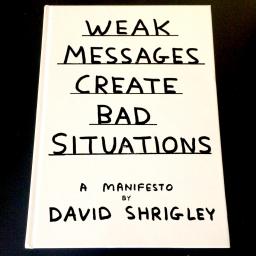
See sample pages at Wink.According to artist David Shrigley’s message on the back cover of his book, Weak Messages Create Bad Situations, “We are in a bad situation and weak messages are to blame. Lots of individuals in society today are feeble-minded. They don’t know what the hell is going on ... It’s alright. I am here to help you.â€Weak Messages is an over-sized satirical “manifesto†or collection of Shrigley’s deep dark thoughts on all the little and big things that drive our world. Divided into eight chapters (Politics and Opinions, The Arts, Bugs and Insects, The World Explained...), each page contains a child-like drawing along with a hand-written simple opinion or declaration – one-page cartoons that can seem primitively funny at first glance. But read them as a collection and you suddenly find yourself in the depths of Shrigley’s mockingly blunt subconscious where truth, horror, and nervous chuckles abound. But fear not. Shrigley assures us that “If you listen to what I say things will quickly improve.â€Weak Messages Create Bad Situations: A Manifestoby David ShrigleyCanongate 2015, 384 pages, 8.2 x 11.2 x 1.1 inches$35 Buy a copy on Amazon
The Kentucky county court clark who refused to issue marriage licenses to same-sex couples sent email on the matter using her work address, and the AP gained access to it under that state's freedom of information act.It's "exactly what you would imagine them to be", in a battle-for-eternity kind of way, writes Mark Joseph Stern.The battle has just begun…It has truly been a firestorm here and the days are pretty much a blur, but I am confident that God is in control of all of this!! I desire your prayers, I will need strength that only God can supply and I need a backbone like a saw log!!…They are going to try and make a whipping post out of me!! I know it, but God is still alive and on the throne!!! He IS in control and knows exactly where I am!!…September 1 will be the day to prepare for, if the Lord doesn’t return before then. I have weighted the cost, and will stay the course.Obviously just doing her job there.
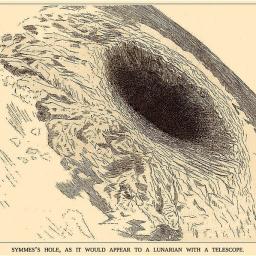
The shell of the Earth is about 800 miles thick before it opens up to a massive hollow containing its own sun. Entry points are at the North and South Poles. The residents include the Lost Ten Tribes of Israel, led inside by God, where they live for hundreds of years and enjoy such advances as "flying saucer technology." This according to Rodney Cluff, author of World Top Secret: Our Earth IS Hollow!: The Scientific, Scriptural and Historical Evidence that Our Earth Is Hollow! Over at Atlas Obscura, Eric Grundhauser interviewed Cluff for a wonderful feature about the fictional and non-fictional (?) history of the hollow Earth:One of the most popular pieces of evidence for Hollow Earth is a supposed secret journal entry by Admiral Richard Byrd, who claimed to be the first person to fly over the North and South pole. According to believers, Byrd’s secret journal from 1947 included a report of flying into one of the Symmes Holes, and making contact with the race that lives inside the Earth.Of course this too, has supposedly been covered up.Through the mid-2000s and into the early 2010s, Cluff was actually a part of a long-gestating expedition known most recently as the North Pole Inner Earth Expedition. Unfortunately after a number of setbacks including backers and members of the team falling victim to calamities ranging from cancer to fatal plane crashes, the expedition was put on hiatus. Had the expedition been successful, the team would have chartered one of the world’s largest ice breaking ships straight to the North Pole, where they would have attempted to contact the denizens of the Hollow Earth through the hole they believed they would find. Cluff believes that the various setbacks to the project are the work of the international banking conspiracy, but is hopeful that they will someday be able to get funding, and a new expedition leader to help continue the project."The Hollow Earth is filled with giants, Germans, and a little sun"
In the Mexican state of Zacatecas, authorities announced today they have found the severed heads of four men. The heads were left in Styrofoam coolers, along with gang messages that appear to have been written by members of one drug cartel, directed at a rival cartel. (more…)
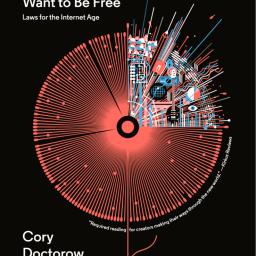
We're launching the new paperback edition of "Information Doesn't Want to Be Free, my book of practical advice and theory for artists trying to make sense of the net (it features intros by Neil Gaiman and Amanda Palmer, too!) at Santa Monica's Diesel Books. (more…)
Last night at midnight, Halo 5 launched. Will this be the last epic adventure for video gaming's mightiest champion? The Master Chief is back, but all the cockamamie advertising colors our hero as the bad guy. I wish I could tell you if this game is any good! I've certainly been waiting a long time to play it! I purchased my Xbox One at launch, anticipating that Halo 5 would shortly follow. My Xbox has been around for two years now, with nary a Chief sighting. I could have played the Master Chief collection, but I heard poor reviews of its translation to the Xbox One. The only game I've really enjoyed in the interim has been Destiny, which was developed by Halo creators Bungie. There is no small amount of question, in my online Destiny circles, around Halo killing Destiny. Destiny has also felt like Halo, without the amazing backstory and hero. Bungie is creating a backstory, and thus far it is pretty much a dud. The game play, and its mesh of FPS with MMO queues, like farming (sigh) are addictive but it is not Halo. I miss stickies. I long to gloriously dual wield the needler, or have a hell bent for leather Warthog chase! Will Halo 5 kill Destiny?Large online teams of 12 players, mashed with an insane gameplay frame rate, and 4 player campaign mode all sound wonderful! I'm far more interested in the story, however. I have not read any Halo fiction, I have simply played the games, and the Master Chief is my ultimate video game hero. His relationship with his A.I. Cortana is legendary. I like him better than Max Payne, and 343 Studios, the developer Microsoft created to manage the franchise, is setting him up as the bad guy? Come on. It is clear 343/MSFT want to introduce us to some new SPARTANs to carry the franchise forward, Jameson Locke and Nathan Fillion. Jameson Locke is a fictional character, Fillion I am not sure. It also seems Fillion can't decide between Destiny or Halo, he voices characters in both. Anyhow, I can only hope 343 gets the story right, because it looks like they're just going for an obvious 'Chief-gone-rogue then saves us all' story line. We all know what the Chief went through to save humanity 4 times already! I'd say trust him.I'm still waiting for the game to install! I went with the CD/DVD-less version and selected a digital downloaded copy. I didn't get the email with my pre-order code until 10pm last night, and I guess the rush of folks installing tied me up! I'm still downloading and appear to have a few more hours wait.I've heard a few early reports that the game is beautiful, and that the soundtrack brings you right back into the Halo Universe. If you already have installed Halo 5, please let us know in the BBS how you like it. Halo 5 via Amazon
The Orwell estate filed a bogus copyright and publicity right theft against an inactive Cafepress store where no one had ever bought one of the "1984 is already here" shirts or tea-towels on offer from film critic Josh Hadley. (more…)
"For great art, you have to perceive the object, the situation, and watch the everyday lighting," 3D painter Stefan Pabst told Booooooom. "You have to see something like you did the very first time you saw it, with a complete open mind, like a child."More on Pabst's Facebook page.
The only thing that Disney seems certain about regarding any future Indiana Jones films is they don't plan on subbing in another actor as Indy. “There are a lot of rumours,†the franchise's producer Frank Marshall says. “We haven’t even sat down to talk about Indy yet… at some point we’ll sit down. But there’s a bunch of people who could probably take the baton. … We’re not doing the Bond thing where we’re going to call somebody else Indiana Jones … we have to figure this out.â€Sorry, Chris Pratt. Mr. Ford, please put down the blaster and grab the bullwhip.(Comic Book Resources)
https://youtu.be/gEC0pKHJKNMI love Qawwali music, and I am really loving this cute viral Qawwali-themed ad for India dating service TrulyMadly. (more…)
Mars is currently 2.24 astronomical units away.We tend to think of places as being a fixed distance from one another, and this works on scales terrestrial (it's 3,459 miles from London to New York) and cosmic (it's 4.36 light years to Alpha Centauri). But within the solar system, things change quicker. John D. Cook offers the code to let you calculate Mars' distance from Earth at any given time. [via Hacker News]Some interesting take-home facts for the laymen among us: the two worlds orbit anticlockwise; Martian years last 687 days, and the is Earth traveling about 20% faster to boot; and there is no evidence that Mars needs women, though it does show evidence of running water.Here's code for all the planets, sans the useful explanation.Make it easy on yourself with this solar system visualizer.
https://youtu.be/APLz2bTprMAThe Idaho beaver population explosion of 1948 was a big problem. Sarah Palin was still just a twinkle in her father-to-be's eye, so she couldn't be hired to shoot them from a helicopter. So Idaho's Fish and Game department resorted to Plan B: catching the critters, stuffing them into boxes, flying them to remote areas, and dropping them by parachute to their new home. The plan worked! (more…)
Bill Boegeman racked up a student loan debit of $82,961.02 to get a B.S. in social studies education from Minnesota State University, Mankato. It's going to take a very long time to pay it off. (more…)
Expensive fountain pens are lovely, but I want to cry when I lose them. This $15 Metropolitan by Pilot does a nice job of bridging that gap.The weight of its brass barrel gives the Metropolitan a feeling of gravitas. I am using the, impressively for a $15 pen, included converter to fill the pen with Noodler's Heart of Darkness, and the pen flows smoothly. The fine stainless steel nib a pleasure. Overall construction is exactly what I expect from a Pilot pen, it is quite pretty. You may also fill it with a standard Pilot cartridge.As a first fountain pen, or just one you won't terribly mind losing, I highly recommend the Pilot Metropolitan.Pilot Metropolitan Collection Fountain Pen via Amazon
I was raised to play chess in the most boring way imaginable, with both sides developing their pieces into a big symmetrical knot before anything even gets taken. Worse, most chess books basically imagine you to play like a master, preparing your openings and exulting them on the basis of their success and failure at the international level. Instead, everyday players should learn the flawed but brutal attacks of their ancestors, dashing gambits, and all the dirty tricks.https://www.youtube.com/watch?v=Ib8XaRKCAfo&ab_channel=thechesswebsiteHere's a video of the Top 7 Aggressive Chess openings. The "unfashionable" King's Gambit comes in at #4 and is a great place to start for people wanting to rediscover chess as a brutal game of wits. It's the chess equivalent of kicking down a door and dashing in, arms windmilling at the enemy.The first thing to know in being a chess troll, though, is to avoid the two tricks usually associated with cheap victories: Fool's Mate and Scholar's Mate. These don't even happen in pubs, are no fun at all, and the attempt is liable to make you the fool.https://www.youtube.com/watch?v=jrUalgPaiPQIf you just want a ploy to get hated for, instead learn the Fried Liver Attack. This is your One Weird Trick for getting into fights at the kind of fancy parties where chess boards come out. https://www.youtube.com/watch?v=yPAuO4MqaM0(If you're playing black and looking to deal with white smugly trying to Scholar's mate you, here's how to nail them.)Now, here's a favorite. The Halloween Gambit is a good one to play in those generic "everyone calmly develops their knights" chess games that happen when all either player really knows are the rules.But you know something else, you hustling fucker! All white has to do is "blunder" away a knight a couple of moves in to gain tempo (see pic), then pawn rush the enemy in the face. It's the sort of thing competent players look down on, but what's great about it is you never do anything that makes you look like a competent player, so the inevitable victories are maximally humiliating for one's opponent.https://www.youtube.com/watch?v=roz1YeJjvUY&ab_channel=thechesswebsitePretend to be a cautious newbie with the Cabbage Attack, nudging all your pawns forward one square at a time until your frustrated enemy makes a stupid mistake. I really love this one and the general principle: be a giant, irritating hedgerow. Good players are not fooled but it's so very annoying for everyone else. The Creepy Crawly Formation is a particularly effective way to make your foe think you're completely dumb:This is the exact opposite of a cheap trap, but it's a super hustle for intermediate players. "Instead of memorizing move after move, sometimes it's good to remember core principles" such as playing slowly and annoyingly and pretending to be a creepy crawly thingy. Works great with the white pieces and the black pieces. (The Hippo runs along similar lines but is less ostentatiously daft and perhaps a bit too legit for blog posts about chess shenanigans.) A great way to be the most annoying chess player anyone you know has ever met is to get good at bringing out the queen early and marauding around with it without doing any significant development. Here's a grandmaster, Hikaru Nakamura, trolling at the highest level.https://www.youtube.com/watch?v=CK-AjbDv0O8&ab_channel=kingscrusherThe Monkey's Bum is not something that you'll get a chance to play much, but the name is so good it has to get mentioned. A weak-looking but fine opening to lure opponents into bad play is the Hillbilly Attack, though if they ignore it you're liable to end up in the same old boring midgame knot. If you've got 15 minutes and are sufficiently interested in chessing, International Master Veliri Lilov offers a tour of some "DEVASTATING" opening traps:https://www.youtube.com/watch?v=lDNMAqvc9ic&ab_channel=iChess.netThe Ponziani Opening is another one that looks like clueless beginner play, and useless against good players, but sharp in pub play, where it's been a classic for centuries. It's not very dashing, though.https://www.youtube.com/watch?v=MaF_o3YOTW0A useful YouTube playlist to continue your studies is GJ_Chess's "Dirty Chess Tricks."
For generations, members of the Kashia band of the Pomo people have been landlocked. For the first time in 200 years, the coastal tribe will once again have unmitigated access to the sea. (more…)