 |
by Lawrence Bonk on (#6JTKH)
AT&T has resolved a widespread outage that had affected over 70,000 customers by 8AM ET, according to tracking site Downdetector. Most of these issues were centered in Houston, Chicago, Dallas, Los Angeles and Atlanta. This impacted cellular service and data connections, with many customers noting that they couldn't even contact 911.It's still unclear as to what caused the service interruption. In a brief statement to CNBC,AT&T said it is working urgently to restore service." The company encouraged customers to make use of Wi-Fi calling until the problem is handled.Thousands of Verizon and T-Mobile customers also reported outages, but both companies said that those impacted had been trying to contact AT&T numbers. The market has declared this a serious problem, as AT&T shares were down nearly three percent as of this story's original publish time.Cellular interruptions are a regular part of life, but the fact that many impacted customers cannot contact 911 and other emergency services is particularly worrisome. The San Francisco Fire Department has urged city residents to try calling 911 from a landline or to get ahold of a friend or family member" who has signed up for a different carrier.
|
 Engadget - Technology News & Expert Reviews
| Link | https://www.engadget.com/ |
| Feed | https://www.engadget.com/rss.xml |
| Updated | 2026-09-20 03:02 |
 |
by Karissa Bell on (#6JTRS)
Google has struck a deal with Reddit that will allow the search engine maker to train its AI models on Reddit's vast catalog of user-generated content, the two companies announced. Under the arrangement, Google will get access to Reddit's Data API, which will help the company better understand" content from the site.The deal also provides Google with a valuable source of content it can use to train its AI models. Google will now have efficient and structured access to fresher information, as well as enhanced signals that will help us better understand Reddit content and display, train on, and otherwise use it in the most accurate and relevant ways," the company said in a statement.Access to Reddit's data became a hot-button issue last year when the company announced it would start charging developers to the use its API. The changes resulted in the shuttering of many third-party Reddit clients, and a sitewide protest in which thousands of subreddits temporarily went dark." Reddit justified the changes, in part, by saying that large AI companies were scraping its data without paying. In a statement, Reddit noted that the new arrangement with Google does not change Reddit's Data API Terms or Developer Terms" and that API access remains free for non-commercial usage."The deal comes as Reddit is expected to go public in the coming weeks. Neither Google or Reddit disclosed the terms of their arrangement but Bloomberg reported last week that Reddit had struck a licensing deal with a large AI company" valued at about $60 million" a year. That amount was also confirmed by Reuters, which was first to report Google's involvement.This article originally appeared on Engadget at https://www.engadget.com/reddit-is-licensing-its-content-to-google-to-help-train-its-ai-models-200013007.html?src=rss
|
 |
by Kris Holt on (#6JTPJ)
Framework is all about modular, upgradable laptops and now the company is offering people a more-cost effective entry point. It has dropped the price of its B-stock Factory Seconds systems (which are built with excess parts and new components). As such, it's now offering a Framework Laptop 13 barebones configuration for under $500 for the very first time.The 13-inch machine comes with an 11th-gen Intel Core i7 processor with Iris Xe graphics. So the CPU should be sufficient for most basic tasks and some moderate gaming. Here's the catch: Frameworks' barebones laptops don't include RAM, storage, Wi-Fi connectivity, power adaptor or even an operating system.Tinkerers (i.e. folks who likely would be most interested in playing around with a Framework system) are likely to have some spare parts kicking around anyway. You can buy whatever other components you might need from the Framework Marketplace. To that end, Framework says it's selling refurbished DDR4 memory at half the price of new.One other thing worth noting is that Framework's B-stock systems have an original display with "slight cosmetic issues." The company notes that these can range from things like fine lines that can be seen from a certain angle or a lack of backlight uniformity that may be seen on a white screen. A-stock systems have a matte display, but they're a little more expensive. Factory Seconds laptops are available in the US, Canada and Australia for the time being.This article originally appeared on Engadget at https://www.engadget.com/frameworks-new-sub-500-modular-laptop-has-no-ram-storage-or-os-184711789.html?src=rss
|
 |
by Lawrence Bonk on (#6JTPK)
The little console that could, Playdate, is getting a developer's showcase on February 28 at 12PM ET. Manufacturer Panic promises a 14-minute presentation chock full of new games that may or may not make use of the console's weird little crank.We only know one game that'll be featured at the event, but it's a doozy. Lucas Pope, the creator behind Papers, Please and Return of the Obra Dinn, has been busy prepping a Playdate title called Mars After Midnight. We'll likely get a new trailer for the game, which was first revealed back in 2021. Panic also says the event will include a release update" on the title. So, the long wait is nearly over.Mars After Midnight has been called a spiritual sequel" to Papers, Please, though one set on an alien world and not in a fictional cold-war era country. You play as a door guard of an alien colony tasked with letting people in. That certainly sounds a whole lot like Papers, Please to me. As you can see, the graphics look absolutely gorgeous and the game certainly makes use of that crank.Panic hasn't teased any other games that will take center stage during the showcase, so its anyone's guess. This is a quirky console that practically requires unique gameplay elements, so we could be in for some nifty surprises. The company has said the event will not feature any updates on hardware, for those looking for a Playdate 2.To that end, the console is nearly two years old but only recently became readily available for purchase. Before last week, customers would have to wait months upon ordering the console before shipment. Now, you'll get one within two to three days.For the uninitiated, Panic has whipped up a really distinctive and magical portable gaming console. The bright yellow Playdate boasts a traditional D-pad, two buttons and, most importantly, a crank-based control mechanism. The console costs $200 and each purchase gets you 24 free games, with two unlocking each week for 12 weeks. This is the first developer's showcase for Playdate since November of last year.This article originally appeared on Engadget at https://www.engadget.com/theres-a-playdate-games-showcase-on-february-28-183125090.html?src=rss
|
 |
by Mariella Moon on (#6JTKF)
Google has added an experimental generative AI feature to its browser with the launch of Chrome M122. The new AI tool is called "Help me write," because it can literally help you write more descriptive sentences or even full paragraphs from a short prompt. Google says the tool uses its Gemini models to understand the context of the web page you're on so that it could generate appropriate suggestions. If you're on a review page, for instance, it can give you a suggestion that reads like a review instead of a sales copy.GoogleIn one of Google's examples, the tool was able to spit out a decent description of what the person was selling with a prompt that simply read: "moving to a smaller place selling air fryer for 50 bucks." The tool suggested a full paragraph that was able to better communicate the user's message. "I'm moving to a smaller place and won't have room for my air fryer. It's in good condition and works great. I'm selling it for $50. Please contact me if you're interested," the suggestion read.In another example, the user asked the tool to write them a request to return a defective bike helmet and to communicate that the product developed a crack, which isn't mentioned in the product warranty. As you can see in Google's examples, you can change the length and tone of the suggestion if the first thing the writing aid comes up with isn't good enough to serve your needs. Once you're done, you can click the Replace button to switch your prompt with the suggested writeup.GoogleTo activate the experimental tool, you have to go into Settings in Chrome's three-dot drop-down menu. There, you can find the Experimental AI page where you can activate "Help me write." To use the feature, just highlight the text you want to rewrite and then right-click on it to summon the "Help me write" box. Take note that it's only available for Chrome browsers on Macs and Windows PCs in the US at the moment. It can also only understand prompts and write suggestions in the English language.Google first announced the arrival of the writing tool back in January, when it revealed that it was going to start integrating AI features into its Chrome browser. In addition to "Help me write," Google said that it's also giving the browser an AI-powered tab organizer and the ability the generate customized themes.This article originally appeared on Engadget at https://www.engadget.com/chromes-latest-experimental-ai-feature-can-help-you-write-170014645.html?src=rss
|
 |
by Kris Holt on (#6JTKG)
It's been a big few months for fighting games between the likes of Mortal Kombat 1, Street Fighter 6 and Tekken 8 all popping up. There's another would-be major player sitting in the wings though, as Riot is preparing to enter the fray. The publisher has provided an update on Project L, the long-awaited League of Legends spin-off it announced in 2019. The fighting game now has an official name: 2XKO.Let's be honest, that's a real stinker of a name, It's isn't exactly going to roll off the tongue. Some of those commenting on a YouTube video in which Riot made the announcement suggested that "Double KO" would have been better. It's hard to disagree.The name stems from the format of 2XKO. It's a 2 vs. 2 tag-based fighting game, borrowing an idea popularized by the Marvel vs. Capcom series. You can play solo or, in a nice touch, recruit a friend as your tag partner and battle another duo. Riot also says 2XKO will have streamlined controls and mechanics to help players jump in, but notes that there will be a "high level of depth and mastery."In the gameplay teaser, 2XKO looks pretty solid. It appears to have Riot's trademark level of polish with smooth animations and distinct, eye-catching looks for each of the LoL characters. It's just a pity about that name.Riot plans to release 2XKO on PC, PlayStation 5 and Xbox Series X/S in 2025. As with its other tentpole titles, 2XKO will be a free-to-play game.The publisher will set up demos at fighting game events throughout this year, starting at Evo Japan in April. Riot is also hoping to run at-home playtests and you can sign up at the game's website.This article originally appeared on Engadget at https://www.engadget.com/riots-project-l-fighting-game-is-officially-titled-2xko-165335886.html?src=rss
|
 |
by Kris Holt on (#6JTKJ)
8Bitdo makes some of the best third-party game controllers around, and one of them is now on sale for close to a record low price. TheUltimate C controller has dropped from $30 to $25.49 today only as it's an Amazon lightning deal. It's only a few cents more than the lowest price we've seen for the peripheral to date.The Ultimate C is compatible with a wide range of devices and platforms, including Windows PC, Steam Deck, Android and Raspberry Pi. It's a cheaper version of some of 8BitDo's other peripherals.It doesn't rely on Bluetooth or a 2.5GHz connection. Instead, the Ultimate C connects to your gaming system via a 2.4GHz USB dongle. 8BitDo was also able to reduce costs by opting for a charging cable instead of a dock and removing the profile toggle seen in pricier models. There's no support for 8BitDo's Ultimate customization software either, but the firmware is upgradable.The tradeoffs may just be worthwhile for an inexpensive gamepad from a well-known peripheral maker. The controller will run for up to 25 hours on a single charge, according to 8Bitdo, and there's support for asymmetrical rumble when playing games on Windows (where you can plug-and-play via a wired connection as well). The field green and lilac purple colorways are quite fetching too.Follow @EngadgetDeals on Twitter and subscribe to the Engadget Deals newsletter for the latest tech deals and buying advice.This article originally appeared on Engadget at https://www.engadget.com/the-8bitdo-ultimate-c-controller-is-on-sale-for-25-today-only-160914390.html?src=rss
|
 |
by Lawrence Bonk on (#6JTKK)
Arturia just announced the KeyLab Essential 88 mk3, a larger sibling to the previously-released Essential 49 and 61 MIDI keyboards. As the name implies, this is a full-size 88-key controller that allows you to play the entire note range of a piano at the same time. There's no need for changing octaves here.Just like the other entries in the KeyLab Essential line, the 88 mk3 is intended to be a budget-friendly alternative to the flagship KeyLab controllers. The build is solid, with semi-weighted keys, though slightly less premium than the standard KeyLab 88. There's also a reduced number of hands-on controls when compared to the flagship, though there's still plenty to tinker around with.To that point, the KeyLab Essential 88 mk3 includes the same screen as the smaller keyboards, for navigating presets. There are also nine knobs and nine faders for controlling parameters across Arturia's line of softsynths.Additionally, you get built-in control scripts that work with a number of popular DAWs, like Ableton Live. This allows you to do things like mix tracks using the built-in faders or stop and start recordings from the controller itself.There's also a contextual button below the screen that offers even more control over your plugins and virtual instruments. You may notice there's only eight drum pads, but the KeyLab Essential line lets you switch to a second bank for the full 16. The keyboard features a hold function, new scale and chord modes and an arpeggiator.Finally, this keyboard comes with plenty of software to get started with. The included bundle features Native Instruments' iconic The Gentleman piano, the UVI Model D recreation, a two-month subscription to Loopcloud and a subscription to the Melodics tutoring software. Like always, you also get Ableton Live Lite and Arturia's Analog Lab V.We don't know how much this will cost yet, but we reached out to Arturia for pricing information. As a comparison, the 61-key KeyLab Essential mk3 costs $249 and the 49-key version comes out to $199. Also, last generation's KeyLab Essential 88 costs $379, so expect it to fall somewhere in that range. The KeyLab Essential 88 mk3 will be available in both black and white.This article originally appeared on Engadget at https://www.engadget.com/arturia-adds-an-88-key-option-to-its-keylab-essential-mk3-line-of-midi-controllers-160017251.html?src=rss
|
 |
by Kris Holt on (#6JTGC)
Sony is looking to make its latest PlayStation virtual reality headset more useful by allowing folks to run PC games on it. The company said that it's "currently testing the ability for PS VR2 players to access additional games on PC to offer even more game variety in addition to the PS VR2 titles available through PS5." Sony hopes to roll out PC support for PS VR2 later this year and said to stay tuned for more updates.Official PC support is something many enthusiasts have been hoping for, since the PS VR2 is, for the most part, a great virtual reality headset. Modders have been working on ways to make the device work with the likes of SteamVR, but official support will make things much easier.Despite Sony announcing PC support plans in a blog post detailing some of the titles that are on the way to PS VR2 on PS5, it's hard to argue that the headset has an especially strong library of games as things stand. Sony itself has only released three VR experiences for the platform since it debuted a year ago. In fact, the company has not announced any future first-party games for PS VR2. The lack of backward compatibility with PS VR titles limits the current headset's library too.Some notable developers also have cold feet about making PS VR2 versions of their projects. The eponymous studio behind popular VR social space Rec Room says porting the game to PS VR2 would be too expensive.So, enabling folks to more easily use PS VR2 for virtual reality experiences on PC is a smart idea. They'll be able to tap into a wider selection of games, including big hitters like Half Life: Alyx, on a headset that has excellent dual OLED displays. That could help Sony shift more PS VR2 units. It also gives Sony more of a reason to release Horizon: Call of the Mountain on PC so that the entire Horizon series is available on that platform.Meanwhile, if Sony enables virtual desktop support, there's the possibility that PS VR2 users will be able to access Xbox Cloud Gaming through a web browser. Wouldn't that be something?This article originally appeared on Engadget at https://www.engadget.com/sony-is-working-on-official-pc-support-for-the-ps-vr2-150632224.html?src=rss
|
 |
by Cheyenne MacDonald on (#6JTGD)
Maybe you've seen the ads on social media: Crush depression with Animal Crossing"; Meet with a therapist while playing Stardew Valley."Advertisements for Hero Journey Club's gamer-focused mental health support groups have flooded the internet in recent months, drawing a mix of skepticism and enthusiastic intrigue from those who have been targeted by them. Struggling with loneliness? Come join us," the ads beckon. For some people who already turn to video games as an antidote to the difficulties of everyday life, Hero Journey Club's promises of community and a safe space to do inner work really hit home.But while Hero Journey Club may be a lot like therapy, the service it provides is not therapy, technically. It's not licensed healthcare, a point that anyone who signs up is told from the outset and must consent to before proceeding. The Journey Guides, however - as the session leaders are called - are qualified mental health professionals.To be hired, one must have at least a master's degree from an accredited graduate program in clinical psychology, mental health counseling, marriage/family therapy or licensed social work, says CEO and Hero Journey Club co-founder Brian Chhor. They must be either licensed or in the license-eligible phase of obtaining their credentials. And, of course, they should be passionate about gaming.Hero Journey Club, which launched in 2022, offers support for people dealing with loneliness, depression, anxiety, addiction and other issues. Journey Guides do not dispense diagnoses or treatment, but lead group discussions under the framework of some of the most common psychotherapy approaches. That includes acceptance and commitment therapy (ACT), dialectical behavior therapy (DBT) and cognitive behavioral therapy (CBT).A subscription costs $30 per week, which gives participants (Journeyers) access to weekly sessions held over Discord voice chats, each lasting about 80 minutes. New users are matched with a group of up to five people based on information they provide during the onboarding process, but Journeyers' identities are kept completely anonymous beyond their Discord handles and the names they've chosen to have others call them by. Each group has its own private server, where users can stream gameplay.Hero Journey ClubThe gaming element is meant to serve as both a means to help people relate to one another and to give them something to do with their hands, Chhor told Engadget. Some groups play cozycore" games like Stardew Valley or Animal Crossing: New Horizons, while others may play Valheim, Red Dead Redemption 2 or something else. The game doesn't have to be multiplayer; in some groups, everyone might be playing different games. Journey Guides sometimes plan in-game activities for their groups to work on - like decorating a space in Animal Crossing based on one's inner-child - or just let everyone play their own way.Chhor, who started working with digital health startups after studying regenerative medicine and biodesign at Stanford University, told Engadget the mission behind Hero Journey Club is one he has a personal connection to. He grew up in a family that often used video games as a way to cope through stress and to escape," and gaming over Discord is how they came together during the pandemic to support a cousin who was struggling with loneliness and suicidal ideation but didn't have immediate access to therapy.Mental illness, I've seen, primarily impacts people who are the most vulnerable in our society," Chhor told Engadget. That got him thinking about creating a community-first model," one that can take therapy out of the clinic, and into the spaces where people already spend time and feel connected."The cost of one-on-one therapy can be a huge barrier for those seeking help, on average falling somewhere between $100-200 per session in the US without insurance, which many therapists do not accept. For people who don't live in a major city, the availability of practitioners can be extremely limited, while therapists in dense metropolitan areas are overloaded with bookings amid soaring demand for mental health services.And people of color, LGBTQIA+ people and others from marginalized communities remain underserved, often facing biases and discrimination that lead to inadequate care or prevent them from getting any care at all. Even group therapy in its more traditional forms, while significantly more affordable at an estimated one-third to one-half the price of individualized treatment, can seem daunting for people with social anxiety.Hero Journey Club aims not only to foster a sense of belonging through community," Chhor said, but also, using evidence-based techniques, to help people get the tools they need." For one, the sessions give Journeyers a place to work on interpersonal skills and, ideally, learn how to structure healthy relationships and set boundaries that serve their needs, HJC's Chief Clinical Officer Derrick Hull told Engadget. Hull holds a PhD in clinical psychology from Columbia University and has been in the psych tech space for over a decade, most recently working for Talkspace and, previously, Noom.
|
 |
by Lawrence Bonk on (#6JTD0)
The Thermapen One instant-read meat thermometer is on sale for $79, which is $30 off the MSRP of $109. This is an Engadget exclusive and the sale runs from February 22 through February 28, or whenever the stock runs dry. In other words, move quickly if you want to snag one of these.There are plenty of meat thermometers out there, but this is our favorite. The Thermapen One made our list of the best grilling gear for several reasons. It's incredibly fast, offering precise temperature calculations in under a second. The display is bright and easy to read, with an auto-rotating screen that makes the numbers easy to see no matter how you hold it.At the end of the day, speed and precision are what you want with a meat thermometer. The Thermapen One kicks it up a notch, however, by including a sleep/auto-wake feature that preserves battery life and an IP67 rating to protect it from accidental spills. Gravy and sauce will always find a way to get on just about everything.The Thermapen One also made our list of the best small kitchen gadgets, as you can't get much smaller than a thermometer. We called it the best your money can buy." As a matter of fact, the only bad thing you can say about this thing is that it costs more than rival products. This sale helps offset that. Again, the deal disappears into a puff of smoke on February 28 or when supplies run out.Follow @EngadgetDeals on Twitter and subscribe to the Engadget Deals newsletter for the latest tech deals and buying advice.This article originally appeared on Engadget at https://www.engadget.com/our-favorite-instant-read-meat-thermometer-is-on-sale-for-79-140045704.html?src=rss
|
 |
by Lawrence Bonk on (#6JTD1)
NVIDIA is testing out a new unified app that lets users adjust GPU settings, install software and fine-tune gameplay, all from the same place. Currently, you have to access the dated Control Panel app and do some heavy menu diving to do stuff like configuring G-Sync. There's also an entirely separate "user-friendly" app called GeForce Experience for basic GPU adjustments, driver updates and quick settings. So this collapses two different things into one.The appropriately-named NVIDIA app is just a beta for now, but seems to do a whole lot. You can use it to update drivers, discover and install standalone applications like GeForce Now and make all kinds of GPU adjustments. To further simplify things for PC gamers, you can also use it to fine-tune both game settings and driver settings. It's pretty much a one-stop shop.There's a redesigned in-game overlay for easier access to recording tools and performance monitoring. The overlay also lets you apply various gameplay filters, including AI-powered filters available to GeForce RTX users. The app looks to be squarely aimed at those who balk at the perceived complexity of PC gaming. You can even use it to redeem bundles and rewards and opt into experimental features and new RTX capabilities.Speaking of new RTX capabilities, the app lets users easily experiment with that new remix tool that adds AI-optimized upscaled textures to older games. The celebrated Half Life 2 is getting an unofficial RTX remaster thanks to this technology. The app will also have access to a new feature called RTX Dynamic Vibrance that beefs up visual clarity and improves upon the current Digital Vibrance feature found in the current Control Panel app.To celebrate this beta release, NVIDIA has unveiled a new Game Ready Driver for the survival crafting game Nightingale. This driver optimizes the game with DLSS 3 and adds the company's Reflex latency-reducing tech. As for the beta, it's available for download right now. So go ahead and give it a shot.This article originally appeared on Engadget at https://www.engadget.com/nvidia-is-testing-an-app-that-unifies-geforce-experience-and-control-panel-140037038.html?src=rss
|
 |
by Mat Smith on (#6JTD2)
I'm not sure if there's a good way to name the second part of a trilogy of games based on an original title that's the seventh in a series of games. But this one is called Final Fantasy 7 Rebirth.Rebirth takes the characters and world reintroduced with Remake and does a better job at scaling it all up. Instead of one single metropolis, Midgar, this time, it's a world tour. There's also an expanded roster of playable characters almost doubling Remake's total, each with a unique playstyle once again.The expansive new world finally takes advantage of the PS5 hardware. Rebirth feels like a fantasy world and Square Enix has successfully combined exploration in a Final Fantasy title with rich, dense cities and settlements, more like its golden era RPGs. Sure, Final Fantasy XVIgave me world to explore, but there wasn't much in a lot of it. (Even if it had the narrative excuses for why.)The Gold Saucer is a multi-story Disneyland with mogs and chocobo characters emblazoned everywhere, theme park rides, travelators, holograms and glossy surfaces. Meanwhile, Cosmo Canyon looks like a tree house that took a hundred years to make, filled with tourists and woo-woo hippies. There is even a hippie circle where you can share your truth. (Funnily enough, there's an Ayahuasca-style vision sequence in the game, which has nothing to do with Cosmo Canyon - which is a bit of a waste.)The story of Rebirth follows protagonist Cloud and the rest of his party as they chase antagonist Sephiroth, getting sinister mega-corporation Shinra riled up along the way.Cloud seems increasingly unhinged as Sephiroth seemingly worms his way into his head. It is a slightly different route to the original game, adding an extra layer on top of the missed memories and his unusual origins. In fact, in the second half of Rebirth, not only does Cloud become increasingly unlikeable, but I start to dislike the rest of the party for not calling him out on his poor decisions and weird behavior. Childhood friend Tifa? You're an enabler. My unease with the main characters persists through to the end, unfortunately.The party hops between towns, boarding ships, or finding different breeds of giant rideable birds that can traverse mountains or shallow water. It's these areas outside of the city hubs where the exploration, the battles and the side quests happen. So many side quests.Remake had some dull side quests - a lot of fetch quests seemingly there to eke out the playtime. Rebirth suffers from this too - this isn't quite Witcher-level side quests - and I think it's exacerbated when you're playing a game whose story beats you kinda know, as you're going to feel diverted from them.As you enter new regions, new points of interest will populate your map. These can range from natural springs to artifact hunts (featuring an iconic Final Fantasy series mainstay) that could include holographic battles, a new tower defense game and a card game that I was more than willing to invest a little too much time into.There's also a lot of items to pick-up, reminding anyone of the gathering-and-crafting headaches of many current-gen games, from Baldur's Gate 3 to Horizon to... most open-world games, to be honest. Fortunately, despite my trepidation, you don't have to collect everything. The game provided enough items just through my normal exploration to make the items I wanted. Particularly potent accessories and items are usually locked behind an item that only the strongest monster in a certain region drops.Square EnixAt least the lion's share of side quests, games and challenges are optional. If you're not interested in figuring out a route to a rocky outcrop to defeat a monster, then you really don't have to. You can just make a beeline for the next primary objective and see where the story goes.Rebirth doesn't address all the questions you may have about this Remake trilogy. You'll have to wait for the third part of the story, and I also don't want to ruin the story for fans who waited decades for this project.There are occasional flash... sideways, to an alternate timeline where most of the original party died in an accident, but spin-off protagonist, Zack, another SOLDIER like Cloud, is still alive. His death in the original game was a major story beat, alongside another: the death of main party member Aerith. Does she survive Chapter 2? Will this be Final Fantasy 7's The Empire Strikes Back? I can't say but there is one particularly satisfying final battle.Some side quests held my attention. If anything, sometimes I got so distracted that I lost track of the story's twists and turns. Rebirth benefits from a rich collection of characters both from Remake and the original, helping to add interest to what are sometimes merely item-collecting quests.More often than not, I was happy to be distracted because the art direction and environment design were just so gorgeous. It all looks bigger and better than Remake, no more two-dimensional wallpaper skies and horizons. From the top of Cosmo Canyon, you can still see the fans of the Cosmo area, there for your flying bird exploration.During my playthrough, there were some questionable graphic textures, especially in the overworld, but Square Enix launched a patch to correct most of this a day before this review's embargo. While I'm no pixel peeper or FPS obsessive, before the patch I did find Performance mode (FF7 Rebirth once again offers a high-frame option and a high-res option to play in) a little too blurry. I hope future updates address that. Despite all that, this is often the prettiest PS5 game since Horizon Forbidden West.Once again, Square Enix has folded in a soundtrack filled with new melodies and even more remixes and reimaginings of the basic MIDI originals from 1997. My pick: the new Cosmo region overworld theme, which screams Beck. A music reference also from 1997.Square EnixThis game is delightfully stupid in places, intentionally. There's a sense of humor that gets as ridiculous as any Like a Dragon sidequest. Segways? Yes. Ninja clones of the most annoying character, yes, a catdog riding a giant bird, yes.The battle system takes what Remake introduced and adds further cooperative attacks and skills. There are synergy skills, instant, no-cost attacks and defensive moves that combine your controlling character with party allies. Then there are synergy abilities (completely different) that build up over a battle, as you use your more typical attacks and spells. These are more like special attacks, often ensuring you can beat tricky enemies. Alongside damage, they'll offer a buff, like faster attack gauges, unlimited MP or raising the limit levels of characters to even more powerful ultimate moves.Square EnixIt seems, at the start, excessive, and I am someone who owns a $150 polygon figurine of Cloud in a dress. The whole system (including pressuring and staggering, the elemental weaknesses, status effects, buffs, debuffs, limit breaks, and an active time battle (ATB) gauge needed to do anything substantive with your players) is a lot.Even if you're coming from Remake, as I did, Rebirth's battle system can overwhelm at the start. While the game introduces these new synergies in simpler two-party battles, it never quite offers a good enough explanation for utilizing it in early battles. As I mentioned in my preview, there's a new aerial combat system, but aside from Cloud, I have no idea how to launch other characters into the air without tapping into dedicated synergy abilities.Fortunately, the battle system as a whole, muddy learning curve aside, is fun. And extremely satisfying once you figure out the patterns and behaviors of certain bosses. I'll admit: I died a few times. But I never felt frustrated by it.I really enjoyed the battle challenges in Remake, and Rebirth has seemingly just shy of a hundred of them, spread across battle arenas, holodeck fights and rare monsters in the wild. I'm already fascinated with the card game Queen's Blood. Card games have their own entire side-story, but the best parts are the card puzzles' where you have to really understand how the more unique cards work to win.Square EnixOther highlights include a bunch of reimagined minigames beyond the Queen's Blood, though. So. Many. Minigames. There's a new Fort Condor tower defense game, the bike ride battle from Remake, a holographic Super Punch-Out-styled game, a Star Fox-style shoot-em-up - in fact Super Nintendo seems to have heavily inspired the game selection at Rebirth's Gold Saucer amusement park. There's a lot to do, and while there are certainly repetitive elements, it feels like the game is providing them for completionists, not everyone else.I completed all the side quests in two areas, playing the game in a new dynamic difficulty setting, where enemies won't scale down their levels as you play, but they will scale up, meaning you're not going to steamroll the game if you've grinded for a few levels before. Of course, there's standard difficulty too. It will definitely be a challenging playthrough if you haven't played Remake. And don't worry if you haven't the original 1997 game: Rebirth ensures die-hard fans and newcomers can follow along, with many easter eggs for the former if they pay attention.Rebirth is the difficult middle chapter. Remake on the PS4 showed it was possible to imagine a PlayStation game for the modern era, with deeper combat, and beautiful graphics, but perhaps not quite the heft to create FF7, the world. That's what Rebirth seems to achieve. Looking back on Remake now, entirely set in the city of Midgar, it seems claustrophobic by comparison.This article originally appeared on Engadget at https://www.engadget.com/final-fantasy-7-rebirth-review-a-whole-new-world-140018063.html?src=rss
|
 |
by Sarah Fielding on (#6JTD3)
Paint might not seem like the heaviest component to consider when building a large device like an airplane, but its mass can add up. Now, a new and lightweight substance could provide a welcome substitute: Two material scientists from Kobe University, Fujii Minoru and Sugimoto Hiroshi, have discovered nanospheres that are near-invisible silicone crystals. The particles can reflect light thanks to very large and efficient scattering, research published in the journal of ACS Applied Nano Matter details. The result could mean covering a surface in vibrant color while only adding 10 percent of the weight that paint would bring, Fast Company reports.This reduction could have a tremendous impact on factors such as cost and carbon dioxide produced. Simply put, a plane must use more fuel as its weight goes up, thus directly increasing the amount of money airlines spend (and then charge customers), along with the quantity of fuel burned as carbon dioxide into the atmosphere.Minoru and Hiroshi's discovery focuses on structural rather than pigment color to exhibit and maintain hues. The former absorbs wavelengths while reflecting the ones the human eye picks up. Structural colors, on the other hand, are "intense and bright colors result from the interaction of light with periodic micro- and nanostructures that cause color by interference, coherent scattering, or diffraction," according to the Encyclopedia of Nanotechnology.The team's work follows previous research in which they were able to build nanocrystals to a specific size. Then came the creation of colloquial suspension, which keeps the crystalline silicon nanoparticles mixed with supporting liquid rather than separating. At present, the color of the nanosphere-based ink varies as the team changes the nanocrystals' sizes. Larger particles create warm hues like red, while smaller particles display cooler tones like blue. These shades should remain identical no matter the angle at which a person sees them.This article originally appeared on Engadget at https://www.engadget.com/scientists-develop-nanosphere-paint-that-could-reduce-planes-carbon-dioxide-emissions-134733040.html?src=rss
|
 |
by Richard Lai on (#6JTD4)
Xiaomi just couldn't wait until MWC to unveil its latest Leica-endorsed flagship phone. Following the 12S Ultra and 13 Ultra, Xiaomi is finally catching up with the competition by picking up Sony's second-gen 1-inch mobile camera sensor, the LYT-900, for its brand new 14 Ultra flagship phone. This marks the second device to don this creme de la creme of imaging silicons, after Oppo's Hasselblad-tuned Find X7 Ultra from early January. That said, the Xiaomi 14 Ultra does have a slight edge with its faster main variable aperture at up to f/1.63, beating the Find X7 Ultra's f/1.8 - on paper, at least.With the exception of the faster f/2.5 aperture on the new 120mm periscope shooter, the remaining three Summilux rear cameras are almost identical to the previous set, and they are still powered by a Sony IMX858 sensor each. The biggest change in this field is the new Xiaomi AISP neural chip, which claims to be the world's first AI large-model computational platform for photography. This leverages four large models - "FusionLM," "ToneLM," "ColorLM" and "PortraitLM" - to fine-tune results, especially with digital zoom at 30x or more.XiaomiThe 14 Ultra also packs some surprises in the battery, durability and connectivity categories. As seen in the super-slim Mix Fold 3 and Honor Magic V2, the 14 Ultra is Xiaomi's first candybar to jump onto the silicon carbon cell bandwagon, in order to pack 5,300mAh of juice into a space that's 8 percent smaller. Xiaomi claims that compared to the previous model, you get 17-percent more stamina with this battery upgrade. To replenish the battery, you get both 90W of wired fast charging and 80W of wireless fast charging - these take 12.5 minutes and 20 minutes to reach 50 percent, respectively.Going along with the "Year of the Dragon" theme, Xiaomi claims that the 14 Ultra's "Dragon Armor" structure has double the bending resistance, thanks to its special "6M42" aluminum alloy mid-frame (supposedly crafted with a better grip as well). The Chinese brand even claims that this part is 8-percent stronger than the iPhone 15 Pro's titanium frame." aluminum alloy mid-frame (supposedly crafted with a better grip as well). The Chinese brand even claims that this part is 8-percent stronger than the iPhone 15 Pro's titanium frame, but it decided to offer a more premium titanium version as well.XiaomiThis metallic frame is complemented by a "Dragon Crystal" glass - shielding the 6.73-inch AMOLED screen (3,200 x 1,440 120Hz; made by TCL CSOT) - with apparently 10 times more drop resistance. Xiaomi also touts its new vegan leather material, which has been certified by SGS to have six times more wear resistance, has more dirt resistance and is less prone to yellowing due to ultraviolet rays - an important breakthrough particularly for the white version. But if you prefer something shiny, the 14 Ultra is also available in a blue "Dragon Crystal" ceramic flavor, which resembles ceramic but isn't as heavy - it only weighs 5 grams more than its vegan leather counterpart. Regardless of the cover material, this device has IP68 rating for dust and water resistance.Much like the 14 and 14 Pro from October (and the SU7 electric sedan's in-car entertainment system), the 14 Ultra runs on Xiaomi's Android-based HyperOS, and it's powered by Qualcomm's latest Snapdragon 8 Gen 3 processor. This is cooled by a dual-loop vapor chamber, which also sucks heat out of the camera modules. The processor is backed by Xiaomi's new proprietary chip, the Surge T1, which apparently boosts cellular connectivity by up to 37 percent, as well as Wi-Fi and Bluetooth connections by up to 16 percent.XiaomiThis device also supports two-way satellite calling and texting, now with 60-percent faster satellite locking and 29-percent faster satellite connection. As a bonus, when you're lost, you can send your location data along with vital signs from your wearable device - presumably exclusive to one of the latest Xiaomi watches or smart bands. Sadly, these satellite features are likely limited to China for now.We'll likely be hearing about the Xiaomi 14 Ultra's global launch at MWC next week, but for now, we can refer to the Chinese pre-order pricing. The vegan leather and ceramic variants all start from 6,499 yuan (about $900) for the 12GB of RAM and 256GB of storage configuration, and max out at 7,799 yuan ($1,080) with 16GB of RAM and 1TB of storage. These will be available for retail from February 27. The titanium version with dark gray vegan leather is based on the top configuration but costs an extra 1,000 yuan ($140), and it won't be available until March 12.XiaomiLikes its predecessor, the 14 Ultra has an optional photography kit with a shutter button grip that adds an extra 1,500mAh of power. The upgrade this time is the new video recording button, along with a customizable jog dial. You can get this accessory for 699 yuan ($100) as a bundle with the phone.This article originally appeared on Engadget at https://www.engadget.com/xiaomi-14-ultra-combines-a-1-inch-camera-sensor-with-four-ai-imaging-models-131127654.html?src=rss
|
 |
by Karissa Bell on (#6JTD5)
Meta's Oversight Board is expanding its purview to include Threads. The group announced that Threads users will now be able to appeal Meta's content moderation decisions, giving the independent group the ability to influence policies for Meta's newest app.It's a notable expansion for the Oversight Board, which up until now has weighed in on content moderation issues related to Facebook and Instagram posts. Having independent accountability early on for a new app such as Threads is vitally important.," board co-chair Helle Thorning-Schmidt said in a statement.According to the Oversight Board, user appeals on Threads will function similarly to how they do on Instagram and Facebook. When users have exhausted" Meta's internal process, they'll be able to request a review from the Oversight Board. Under the rules established when the board was formed, Meta is required to implement the board's decisions regarding specific posts, but isn't obligated to adhere to its policy recommendations.Adding Threads' content moderation to the board's scope underscores the growing influence of the Twitter-like app that launched last summer. Threads has already grown to 130 million users and Mark Zuckerberg has speculated that it could one day reach a billion users.Officially, Threads has the same rules as Instagram. But Meta has already encountered some pushback from users over its policies for recommending content. Threads currently blocks search terms related to COVID-19 and other potentially sensitive" topics. The company also raised some eyebrows when it said last week that it wouldn't recommend accounts that post too much political content unless users choose to opt-in to such suggestions.Regardless of whether the board ends up weighing in on those choices, it will likely be some time before Threads users see any changes as the result of the board's recommendations. The Oversight Board only accepts a tiny fraction of user appeals, and it can take several weeks or months for the group to make a decision, and many more months for Meta to change any of its rules as a result of the guidance. (The board can, in some cases, expedite the process.)This article originally appeared on Engadget at https://www.engadget.com/metas-oversight-board-will-now-hear-appeals-from-threads-users-too-130003273.html?src=rss
|
 |
by Mat Smith on (#6JTAY)
In the big Nintendo Direct presentation yesterday, we learned of two of the four Xbox titles Microsoft said would appear on the other consoles." One of them is Pentiment, coming to Nintendo Switch, PS4 and PS5, well, today.MicrosoftThe critically acclaimed Pentiment has been an Xbox, PC and Xbox Cloud exclusive since launch in late 2022. It has an eye-catching animated historical art style - and is delightfully niche. The game's director, Josh Sawyer, said creating and launching a game like this would never have been possible without Game Pass, which, as Kris Holt notes, makes it an unusual pick to be transferred to other platforms. Xbox boss Phil Spencer said earlier this month the titles hopping platforms had all been on Xbox and PC for at least a year and had hit their full potential" on those platforms.The other game coming to other consoles is Grounded - pretty much Honey I Shrunk the Kids, the game - and will land April 16. Microsoft also later confirmed that Hi-Fi Rush and Sea of Thievesare coming to PlayStation 5.- Mat SmithThe biggest stories you might have missedThe best laptops for 2024Appeals court overturns $1 billion copyright lawsuit against CoxElden Ring expansion Shadow of the Erdtree arrives on June 21You can get these reports delivered daily direct to your inbox. Subscribe right here!Watch the first Borderlands movie trailerIt stars Cate Blanchett, Jamie Lee Curtis, Kevin Hart and Jack Black.YouTubeThere's a Borderlands movie coming out, and we have our very first teaser trailer. This footage gives us a glimpse of all of the major characters. Cate Blanchett is taking a nice fat paycheck starring as the famously short-tempered Lilith, who's searching for a mysterious vault. Comedian Kevin Hart portrays the mercenary Roland, and Jamie Lee Curtis plays the scientist Dr. Tannis, who featured in all three games. Also, you can't have a video game adaptation without Jack Black, it seems.Continue reading.Apple Sports puts real-time scores on your iPhone lockscreenIt's a smoother way to follow your favorite teams.AppleApple has launched a new iPhone app, offering real-time stats for a number of major sports leagues. Once you've installed Apple Sports, you can set your favorite team and get a trove of data on your lock screen in the live activities box when the team is playing. The app is free and available in the US, UK and Canada for basketball, hockey and soccer. The company said other sports, including baseball and football, will debut when new seasons kick off.Continue reading.FTC concludes Twitter didn't violate data security rules, in spite of Musk's ordersStaff disregarded Musk's directive to provide outsiders with full access to everything."The Federal Trade Commission (FTC) concluded Elon Musk ordered Twitter (now X) employees to take actions that would have violated FTC rules on consumer data privacy and security. Twitter security employees took appropriate measures to protect consumers' private information," likely sparing Musk's company from government repercussions. FTC chair Lina Khan wrote: Ultimately, the third-party individuals did not receive direct access to Twitter's systems, but instead worked with other company employees who accessed the systems on the individuals' behalf."Continue reading.This article originally appeared on Engadget at https://www.engadget.com/the-morning-after-these-are-the-first-xbox-exclusive-games-heading-to-switch-and-ps5-121538895.html?src=rss
|
 |
by Sarah Fielding on (#6JTAZ)
X, formerly Twitter, is once again restricting content in India. The company's Global Government Affairs account announced that the Indian government had issued an executive order mandating that X withhold specific accounts and posts or face penalties such as "significant fines and imprisonment." X further stated that it doesn't agree with the order and is challenging it.The designated posts and accounts will only be blocked within India, however, there's no clear list of those affected. "Due to legal restrictions, we are unable to publish the executive orders, but we believe that making them public is essential for transparency," the Global Government Affairs post stated. "This lack of disclosure can lead to a lack of accountability and arbitrary decision-making." X claims to have notified all affected parties.The posts likely center around the ongoing farmers' protest, which, since February 13, has seen multiple farmers' unions on strike in a bid to get floor pricing, or a minimum support price, for crops sold. Violent clashes between protesters and police have already resulted in at least one death, AP News reports. Mohammed Zubair, an Indian journalist and co-founder of Alt News, shared purported screenshots of suspended accounts belonging to individuals critical of the current government, on-the-ground reporters, prominent farm unionists, and more.This forced blocking is far from the first incident between X and India. In 2022, X sued the Indian government for "arbitrarily and disproportionately" applying its IT laws passed the year prior. The law required the company to hire a point of contact for the local authorities and a domestic compliance officer. Prior to this concession, in early 2021, the Indian government had threatened to jail X's employees if posts about the then occurring farmers' protest stayed live on the site. Shortly after, the country mandated that X remove content criticizing its COVID-19 response.India dismissed X's suit in June 2023, claiming the company didn't properly explain why it had ever delayed complying with the country's IT laws. The court also fined X 5 million rupees ($60,300), stating, "You are not a farmer but a billon dollar company." The order followed shortly after Twitter co-founder Jack Dorsey claimed that India had threatened to raid employees' homes and shut down the site if the company hadn't taken down posts during the farmers' protest.This article originally appeared on Engadget at https://www.engadget.com/indias-government-is-forcing-x-to-censor-accounts-via-executive-order-amid-the-farmers-protest-112617420.html?src=rss
|
 |
by Steve Dent on (#6JTB0)
After teasing it for the past couple of weeks, Google is rolling out a new sign-in page with a slightly cleaner design. The changes are small and don't affect functionality, but it's something that users encounter often, and Google has been using the previous version since it changed its logo, as far as I can see.The refresh puts the sign-in (and sign-up) page more in line with the company's Material Design ethic introduced back in 2014. To that end, it's now aligned left (instead of centered) and features an orientation that automatically adjusts to your screen's size - so it's wider on PC screens and narrower on smartphones. It shows up on all types of devices, but may not appear on older browsers, the company said.The biggest previous change Google made to its sign-in page was putting password entry onto a second page back in 2015. That update was made "in preparation for future authentication solutions that complement passwords," and to reduce confusion among people who have multiple Google accounts, it said at the time.Google emphasized that the change will be permanent, much like the switch to Gmail's integrated view. The rollout will be fairly gradual, starting on February 21 and set for completion by March 4, 2024.This article originally appeared on Engadget at https://www.engadget.com/googles-sign-in-and-sign-up-pages-have-a-new-look-111546179.html?src=rss
|
 |
by Mariella Moon on (#6JT8C)
You don't have to type in your password every time you log into your PlayStation account anymore. Sony Interactive Entertainment (SIE) has launched passkey support for PlayStation accounts, which means you can simply sign in through your mobile device or computer and use its screen unlocking method to log in. If you use a PIN, your fingerprint or your face to unlock your phone, for instance, that's also how you'll be able to get into your PlayStation account. On desktop, we were easily able to link our account with 1Password and use its passkey capability.In its official page for the update, the company touches on the benefits of using passkeys, such as reducing account vulnerability. Passkeys can't be reused or given away, whether it's inadvertently or on purpose as SIE explains, making them resistant to phishing and data breaches.To set up a passkey, you simply have to go to Security under Account Management. There, you can activate the option and create a passkey by following the on-screen instructions. The company warns that some hardware security keys could cause issues, and it might be better to use synced passkeys on mobile devices instead. It also cautions against the use of mobile PIN codes as passkeys on Android and recommends iCloud Keychain, Google Password Manager, 1Password and Dashlane as a passkey provider. After setting up the option, you'll be prompted to use your passkey whenever you need to sign in on a PlayStation 5 or a PlayStation 4 console. You can deactivate the option anytime, though, if you want to go back to signing in with a password.
|
 |
by Mariella Moon on (#6JT6Q)
Google's Gemini chatbot, which was formerly called Bard, has the capability to whip up AI-generated illustrations based on a user's text description. You can ask it to create pictures of happy couples, for instance, or people in period clothing walking modern streets. As the BBC notes, however, some users are criticizing Google for depicting specific white figures or historically white groups of people as racially diverse individuals. Now, Google has issued a statement, saying that it's aware Gemini "is offering inaccuracies in some historical image generation depictions" and that it's going to fix things immediately.
|
 |
by Richard Lai on (#6JT5A)
Intel's relatively new Foundry division - formerly known as Intel Foundry Services until earlier today - has just landed a notable order from a big name. According to Bloomberg and The Wall Street Journal, Microsoft CEO Satya Nadella announced that his company will be tapping into Intel's latest 18A (1.8nm) fabrication process for an upcoming in-house chip design. But given Intel's process roadmap, this means we likely won't be seeing Microsoft's new chip until 2025.While neither company disclosed the nature of said silicon, Microsoft did unveil its custom-made Azure Maia AI Accelerator and Azure Cobalt 100 CPU server chips last November, with an expected rollout some time "early" this year to bolster its own AI services. The Cobalt 100 is based on Arm architecture, and it just so happens that Intel has been optimizing its 18A process for Arm designs since April last year (it even became an Arm investor later), so there's a good chance that this collaboration may lead to the next-gen Cobalt CPU.In addition to the usual efficiency improvements as node size decreases, Intel 18A also offers "the industry's first backside power solution" which, according to IEEE's Spectrum, separates the power interconnect layer from the data interconnect layer at the top, and moves the former to beneath the silicon substrate - as implied by the name. This apparently allows for improved voltage regulation and lower resistance, which in turn enable faster logic and lower power consumption, especially when applied to 3D stacking.IntelIn Intel's Q4 earnings call, CEO Pat Gelsinger confirmed that "18A is expected to achieve manufacturing readiness in second half '24." Given that Intel's very own 18A-based processors - "Clearwater Forest" for servers and "Panther Lake" for clients - won't arrive until 2025, chances are it'll be a similar time frame for Microsoft's next chip.At Intel's event earlier today, the exec shared an extended Intel Foundry process technology roadmap, which features a new 14A (1.4nm) node enabled by ASML's "High-NA EUV" (high-numerical aperture extreme ultraviolet) lithography system. According to AnandTech, this 14A leap may help Intel play catchup after its late EUV adoption for its Intel 4 (7nm) node, though risk production won't take place until the end of 2026.Intel Foundry is the brainchild of Gelsinger, who launched this department right after he assumed the CEO role in February 2021, as part of his ambitious plan to put Intel up against the likes of TSMC and Samsung in the contract chip-making market. Before Microsoft, Intel Foundry's list of clients already include MediaTek, Qualcomm and Amazon. The company still aims to become "the second largest external foundry by 2030" in terms of manufacturing revenue, which it believes is achievable as early as this year.This article originally appeared on Engadget at https://www.engadget.com/microsofts-upcoming-custom-chip-will-be-made-by-intel-063323035.html?src=rss
|
 |
by Will Shanklin on (#6JT2N)
Samsung said Wednesday that the Galaxy S24's AI features will arrive on last year's phones (including foldables) and tablets in late March. In January, Engadget's Sam Rutherford reported that the AI suite would soon be available on the Galaxy S23 series, Z Fold 5, Z Flip 5 and Tab S9. Today's announcement makes that device list official while adding the more specific arrival window of late March 2024.That group of 2023 devices will receive a software update next month with the AI features from the S24 series. Those include communication-based AI tricks like Chat Assist (adjusts message tone and translates messages), Live Translate (real-time voice and text translations) and Interpreter (split-screen translation for in-person conversations).They'll also get the productivity-based AI features Circle to Search (search for anything on your screen by drawing a ring around it), Note Assist (formatting, summaries and translations of notes), Browsing Assist (summaries of news articles) and Transcript Assist (transcribe and summarize meeting recordings).Finally, image-based AI features coming to those devices include Generative Edit (reframe shots, move subjects around or delete and replace them), Edit Suggestion (recommended image tweaks), and Instant Slow-Mo (generate extra frames to transform a standard video into a slow-motion one).Photo by Sam Rutherford / EngadgetThe full list of devices receiving the update starting in March includes the Galaxy S23, Galaxy S23+, Galaxy S23 Ultra, Galaxy S23 FE, Galaxy Z Fold 5, Galaxy Z Flip 5 and Galaxy Tab S9. But Samsung says you can expect more devices to join them later. This is only the beginning of Galaxy AI, as we plan to bring the experience to over 100 million Galaxy users within 2024 and continue to innovate ways to harness the unlimited possibilities of mobile AI," Samsung President TM Roh wrote in a press release.We were mostly impressed with the AI features in our Galaxy S24 Ultra review. While harnessing AI might not be a super exciting development now that everyone and their grandmother is trying to shoehorn it into everything, it does make the S24 Ultra a more powerful and well-rounded handset," Engadget's Sam Rutherford wrote in January.Although he noticed a few hiccups in the AI tools at launch, he found most of them to be a genuinely helpful complement to the phone's high-end hardware. Samsung finally has an answer to the sophisticated features that were previously only available from the Pixel family," he wrote. Sure, the S24's tools aren't quite as polished as Google's offerings, but they get you 80 to 90 percent of the way there."This article originally appeared on Engadget at https://www.engadget.com/your-older-s23-phone-will-get-samsungs-galaxy-ai-suite-in-late-march-030016691.html?src=rss
|
 |
by Pranav Dixit on (#6JT1B)
Electric car maker Rivian announced on Wednesday that it's laying off 10 percent of its salaried workforce to cut costs after facing a quarterly loss. The Amazon-backed company reported that it lost $1.5 billion in the fourth quarter of 2023 and said that it expects to build 57,000 electric vehicles in 2024, the same number it built last year.
|
 |
by Pranav Dixit on (#6JSZN)
The Food and Drug Administration on Wednesday issued a safety communication warning people to stay way from smartwatches and smart rings that claim to measure blood sugar levels without pricking the skin. The FDA has not authorized, cleared, or approved any smartwatch or smart ring that is intended to measure or estimate blood glucose values on its own," the agency wrote in the communication, and asked consumers, patients, and caregivers to stay away from such devices.
|
 |
by Kris Holt on (#6JSTQ)
Despite quickly amassing more than 100 million users, Meta's Threads hasn't exactly broken through to the zeitgeist the way its main rival, X/Twitter, did. It's arguably still awaiting its plane-on-the-Hudson moment. Nevertheless, Meta is doing what it can to bring attention to and keep eyes on the text-based platform, including by displaying popular threads on Facebook and Instagram.Its latest test is out of a previous playbook too. The company is toying with letting users cross post from Facebook to Threads with ease. That could eventually make it easier for heavy Facebook users and/or content creators to share their thoughts, videos and photos on Threads without much more effort. As it stands, some users can share text and link posts from Facebook to Threads. There's no guarantee that Meta will deploy the feature in the long term or expand it to include images.It makes sense for Meta to at least try this. Users have long been able to post stories and Reels to Facebook and Instagram simultaneously, so adding Threads to the mix is a logical step. Meta confirmed to TechCrunch that it's running the test, which is limited to iOS and isn't available in the EU.The opt-in approach is far more sensible than automatically sharing a user's Threads posts on Facebook, which Meta was doing for a while to boost awareness of the former. People often have different identities on Facebook and Instagram/Threads, even if they're tied to the same account. They might not want a highly political Threads post or dirty joke to show up in their friends' and family's Facebook feeds. At least this way they'll have the option to share a post on both platforms.This article originally appeared on Engadget at https://www.engadget.com/meta-is-testing-cross-posts-from-facebook-to-threads-193038834.html?src=rss
|
 |
by Will Shanklin on (#6JSTR)
The Federal Trade Commission (FTC) concluded Elon Musk ordered Twitter (now X) employees to take actions that would have violated an FTC consent decree regarding consumers' data privacy and security. The investigation arose from the late 2022 episode informally known as The Twitter Files," where Musk ordered staff to let outside writers access internal documents from the company's systems. However, the FTC says Twitter security veterans took appropriate measures to protect consumers' private information," likely sparing Musk's company from government repercussions by ignoring his directive.FTC Chair Lina Khan discussed the conclusions in a public letter sent Tuesday to House Judiciary Committee Chair Jim Jordan, as reported by The Washington Post. Jordan and his Republican colleagues have tried to turn the FTC's investigation into a political wedge issue, framing the inquiry as a free speech violation - perhaps to shore up GOP support from Musk's legion of rabid supporters. Jordan and his peers previously described the investigation as attempts to harass, intimidate, and target an American business."Khan's response to Jordan adopts a tone resembling that of a patient teacher explaining the nuance of a complicated situation to a child who insists on seeing simplistic absolutes. FTC staff efforts to ensure Twitter was in compliance with the Order were appropriate and necessary, especially given Twitter's history of privacy and security lapses and the fact that it had previously violated the 2011 FTC Order," Khan wrote.When a firm has a history of repeat offenses, the FTC takes particular care to ensure compliance with its orders," she continued.House Judiciary Chair Jim Jordan (R-OH)Tom Williams via Getty ImagesThe FTC's investigation stemmed from allegations that Musk, newly minted as Twitter's owner, ordered staff to give outside writers full access to everything" in late 2022. Had staff obeyed Musk's directive, the company likely would have violated a settlement with the FTC (originally from 2011 but updated in 2022) requiring the company to tightly restrict access to consumer data.In November 2022, the FTC said publicly it was monitoring Twitter's developments following Musk's acquisition with deep concern." That followed the resignation of chief information security officer Lea Kissner and other members of the company's data governance committee. They expressed concerns that Musk's launch of a new account verification system didn't give them adequate time to deploy security reviews required by the FTC.Ultimately, Twitter security veterans ignored Musk's full access to everything" order. Longtime information security employees at Twitter intervened and implemented safeguards to mitigate the risks," Khan wrote in the letter. The FTC's investigation confirmed that staff was right to be concerned, given that Twitter's new CEO had directed employees to take actions that would have violated the FTC's Order."FTC Chair Lina KhanSlaven Vlasic via Getty ImagesRather than supplying outside writers with the full access" Musk wanted them to have, Twitter employees accessed the systems and relayed select information to the group of outsiders. Ultimately the third-party individuals did not receive direct access to Twitter's systems, but instead worked with other company employees who accessed the systems on the individuals' behalf," Khan wrote.The FTC says it will continue to monitor X's adherence to the order. When we heard credible public reports of potential violations of protections for Twitter users' data, we moved swiftly to investigate," FTC spokesman Douglas Farrar said in a statement to The Washington Post. The order remains in place and the FTC continues to deploy the order's tools to protect Twitter users' data and ensure the company remains in compliance."This article originally appeared on Engadget at https://www.engadget.com/ftc-concludes-twitter-didnt-violate-data-security-rules-in-spite-of-musks-orders-191917132.html?src=rss
|
|
by Kris Holt on (#6JSR0)
One of the worst-kept secrets in gaming is now official. Former Xbox exclusive Hi-Fi Rush is coming to PS5 on March 19. Many expected the announcement to come during Wednesday's Nintendo Direct, which focused on third-party games, but Bethesda confirmed the news a few hours later.It emerged during the Direct that Pentiment and Grounded were Switch-bound. Both titles are also coming to PS4 and PS5 on February 22 and April 16, respectively. Grounded will have cross-play support between Xbox, PlayStation, Nintendo Switch and PC.Meanwhile, Microsoft revealed that the fourth game making the jump to other platforms is Sea of Thieves, which is coming to PS5 on April 30. It will support cross-play between PS5, Xbox and PC.Hi-Fi Rush debuted in early 2023 when Microsoft announced and released the game on Xbox and PC on the same day. The rhythm-based beat-'em-up quickly found a fan base in large part thanks to its killer visuals and soundtrack - the fact it was immediately available on Game Pass at no extra cost helped too.The PS5 version will include all content, including the two extra modes from the Arcade Challenge update. A digital deluxe edition will include more cosmetics and grant you additional Gears to splurge on upgrades.Microsoft is looking to improve the bottom line of its gaming division. In recent months, the company has carried out mass layoffs and folded in Activision Blizzard revenue to help it do that.Perhaps in line with that strategy, Xbox leaders recently confirmed rumors that they were going to release some more first party games on "the other consoles." They revealed earlier this month that four games would cross the great divide but declined to mention their titles, other than to confirm Starfield and Indiana Jones and the Great Circle would not be among them.The four games have all been out on Xbox and PC for at least a year and have reached their "full potential" on those platforms, Microsoft Gaming CEO Phil Spencer said. Two (Grounded and Sea of Thieves) are community-driven/multiplayer games. The others are "smaller games that were never really meant to be built as kind of platform exclusives." Hi-Fi Rush fits in the latter category, given that it was in development long before Microsoft bought ZeniMax Media, the parent of both studio Tango Gameworks and publisher Bethesda Softworks.This article originally appeared on Engadget at https://www.engadget.com/xboxs-hi-fi-rush-is-coming-to-ps5-on-march-19-182218568.html?src=rss
|
 |
by Lawrence Bonk on (#6JSR1)
There's a Borderlands movie coming out, and now we have our very first teaser trailer. This footage gives us a glimpse of all of the major characters, most of which are sourced from the game, and the tone that director Eli Roth is going for.There's a definite Guardians of the Galaxy vibe running throughout. Maybe it's the heavy use of an iconic Electric Light Orchestra song, or maybe it's the ragtag group of adventurers or the mix of action and humor. In any event, director Eli Roth seems to be channeling his best James Gunn. All things considered, that seems to be the right tone for a Borderlands movie. Color us cautiously optimistic.Now onto the cast and the characters that franchise fans know and love. Cate Blanchett plays the famously short-tempered Lilith and the actress certainly looks the part. Just look at that hair and outfit. The film follows Blanchett as she looks for a mysterious vault rumored to be stuffed to the brim with sweet, sweet loot. It's just like the game!Jamie Lee Curtis plays the scientist Dr. Tannis, an NPC in all three of the mainline Borderlands games. Comedian Kevin Hart portrays the mercenary Roland, a playable soldier in many of the games. Jack Black, following his turn as Bowser in the Super Mario Bros. Movie, plays the robot Claptrap. The well-meaning robot is considered a mascot for the franchise and often acts as comic relief. Black seems well-suited to the role. The cast is rounded out by Ariana Greenblatt as the demolitionist Tiny Tina, star of the spinoff game Tiny Tina's Wonderlands, and Florian Munteanu as her enforcer Krieg.Of course, it remains to be seen if Roth can pull off this kind of big-budget adventure spectacle. The director's mostly known for horror films. One thing's for certain, however, the trailer actually looks and feels like Borderlands. The big and bright color palette recalls the cel-shaded aesthetic from the games. The movie hits theaters on August 9.This article originally appeared on Engadget at https://www.engadget.com/the-borderlands-movie-trailer-has-all-the-nuance-of-a-borderlands-game-181156113.html?src=rss
|
 |
by Amy Skorheim on (#6JSMY)
We often recommend Logitech gear in our guides and right now, a number of the brand's keyboards, webcams and mice are discounted up to 25 percent. The sale puts the Pebble 2 Combo keyboard and mouse at $50, which is $10 off and matches its all time low. You can get the deal from Amazon or directly from Logitech. The Pebble mouse is the newer model of a recommendation in our guide to productivity mice and the keyboard is the next generation of a callout from our MacBook accessories article. Both Bluetooth accessories are compact, portable and quickly swap between devices with a button press. Plus this new generation is made from around 50 percent recycled plastic.Elsewhere in the Logitech sale, the Brio 301 webcam is down to $45, which is a 25 percent discount and matches the low it hit a few times over the past few months. We named it a less-expensive alternative to our overall pick in our guide to webcams. It shoots 1080p video, has a noise cancelling mic and uses auto light correction to make up for a dimly lit room. It doesn't support HDR or have an adjustable field of view, but at just $45, it offers a lot of features at a low price.The Signature M650 mouse, which we recommend in our gift guide, is down to $35 (instead of the $40 list price) for a few different configurations, including a left-handed version. Logitech is running the same sale price. The mouse is lightweight, made from recycled materials, and has a SmartWheel that lets you swap between precision and super fast scrolling, depending on what you're working on. And it'll run for two years on a single AA battery.Follow @EngadgetDeals on Twitter and subscribe to the Engadget Deals newsletter for the latest tech deals and buying advice.This article originally appeared on Engadget at https://www.engadget.com/logitech-keyboards-mice-and-webcams-are-up-to-25-percent-off-165536053.html?src=rss
|
 |
by Kris Holt on (#6JSMZ)
Elden Ring fans who have been itching for a reason to return to the Lands Between (y'know, other than it being one of the best-received games in recent memory) will soon have one. Publisher Bandai Namco and studio FromSoftware revealed in a gameplay trailer that the Shadow of the Erdtree expansion will arrive on PC, PlayStation and Xbox on June 21. The studio announced the DLC one year ago.The three-minute trailer is suitably epic in scope. It features new locales and more devious bosses to take down. One looks like a giant burning Wicker Man, while another has a horn-headed, lion-esque visage and lightning powers. We also got a look at a gross, worm-like enemy that can almost swallow the player character.It seems there will be new hand-to-hand combat options as the protagonist is shown attacking an enemy with a combination of kicks. At the end of the clip, our hero sprouts wings for what appears to be an aerial attack.According to Bandai Namco, players will be entering "the Land of Shadow to explore a new adventure full of mysteries and danger," where they'll "unravel the dark side of the Elden Ring story." Pre-orders for the $40 expansion are open and newcomers will be able to pick up a bundle that includes the base game. Various special editions include extras such as an artbook, soundtrack and a figure of Messmer the Impaler, who appears to be the expansion's big bad.This article originally appeared on Engadget at https://www.engadget.com/elden-ring-expansion-shadow-of-the-erdtree-arrives-on-june-21-160953368.html?src=rss
|
 |
by Kris Holt on (#6JSHG)
During today's Nintendo Direct Partner Showcase, several Rare more titles were revealed for Switch Online. NES titles Snake Rattle 'n' Roll and R.C. Pro-Am are coming to the base tier today, along with SNES games Battletoads in Battlemaniacs and classic beat-'em-up Killer Instinct. Switch Online + Expansion Pack members will also get access to Nintendo 64 game Blast Corps.However, there was a more interesting Switch Online announcement for those in Japan: Mother 3. The game debuted on the Game Boy Advance in 2006 at the end of that console's lifespan and as Nintendo was turning its attention to the DS. The company never released the sequel to Mother (aka EarthBound Beginnings) and Mother 2 (EarthBound) outside of Japan, despite Western fans of the series long yearning to play it.
|
 |
by Devindra Hardawar on (#6JSHH)
Google doesn't have the best track record for naming its products, especially when it comes to messaging and video chat apps, and it looks like that trend is continuing into its AI apps. After announcing its new lightweight AI model Gemma earlier today, Google is also revealing that its Duet AI for enterprises using Workspace has also been rebranded to Gemini. If you'll recall, that's the next-generation AI model Google announced late last year, a name which also ended up being used for its Bard AI chatbot too. What's next, an AI model for smartwatches called Gem?Businesses will have two Gemini for Workspace plans to choose from: Gemini Business, a new option for $20 a month that's available to organizations of all sizes, and Gemini Enterprise, a $30 a month offering for larger companies and "heavy uses of generative AI." Just like before, consumers will also have access to the AI features in Workspace apps by subscribing to a Google One AI Premium plan, which starts at $20 a month.Consumers and businesses subscribed to these plans will also be able to use the Gemini chat experience at gemini.google.com. The company says it has "enterprise-grade data protections" and copyright indemnification, so it won't use your conversations for ads, AI training or data sharing. "By leveraging Gemini 1.0 Ultra, one of our largest AI models, we are able to provide insighul and expert responses to help people at work," Aparna Pappu, General Manager and Vice President of Google Workspace, said in a blog post. "Now, diverse teams in SMBs to large enterprises can use Gemini in more sophisticated ways with confidence that their interactions can be kept private."This article originally appeared on Engadget at https://www.engadget.com/googles-duet-ai-for-businesses-is-now-called-gemini-too-150030242.html?src=rss
|
 |
by Kris Holt on (#6JSHJ)
Thanks to today's Nintendo Direct focused on third-party games, we now know the identity of two of the four Xbox titles that Microsoft pledged to release on "the other consoles." One of them is Pentiment, which is coming to Nintendo Switch, PS4 and PS5 on February 22 (i.e. tomorrow). Physical copies will be available. The other is multiplayer title Grounded, which will arrive on those three consoles on April 16.Pentiment debuted on Xbox, PC and Xbox Cloud Gaming in late 2022, and it was well received by critics. The RPG has an eye-catching historical art style that fits the story a small team at Obsidian wanted to tell. Still, it's a bit of a niche game and one that game director Josh Sawyer admits would never have been possible without Game Pass."The old mentality of publishers and developers is generally focused on larger investments with higher [return on investment], and that's not the point in this environment, in this ecosystem," Sawyer told Waypoint Radio, as noted by Eurogamer. "[Game Pass] is the only way in which I conceive of [Pentiment] being viable."That makes it particularly intriguing that Xbox picked Pentiment as one of the four games it's bringing to other consoles (it's worth noting that the number of Game Pass subscribers hasn't actually grown much over the last couple of years). Microsoft Gaming CEO Phil Spencer said earlier this month the titles in question had all been on Xbox and PC for at least a year and that they had reached their "full potential" on those platforms.Two of the games are community-driven (i.e. multiplayer titles), and Grounded is clearly one of those. The Honey, I Shrunk The Kids-inspired survival game has been around for a few years. It debuted in early access in July 2020 before its full release in September 2022.The other two games crossing the great divide are "smaller games that were never really meant to be built as kind of platform exclusives and all the fanfare that goes around that, but games that our teams really wanted to go build," Spencer said. Pentiment more or less falls into that category and had been rumored as one of the games to hit Switch and/or PlayStation.Microsoft confirmed later on Wednesday that Hi-Fi Rush and Sea of Thieves are coming to PlayStation 5.Update 2/21 1:28PM ET: Noting that Pentiment and Grounded are also coming to PlayStation, along with Hi-Fi Rush and Sea of Thieves.This article originally appeared on Engadget at https://www.engadget.com/former-xbox-exclusive-pentiment-is-coming-to-switch-on-february-22-143345195.html?src=rss
|
 |
by Steve Dent on (#6JSEV)
Nintendo's about to kick off its first event of the year with the Direct Partner Showcase focused on upcoming third-party games for Switch. We could see the first news about Xbox titles like Pentiment coming to other platforms and maybe, hopefully more about the much-delayed Hollow Knight sequel, Silksong. The 25-minute presentation kicks off at 9AM ET today (February 21) and you can watch it below.As mentioned, today's Direct could be more significant than a typical showcase. Last week, Microsoft announced that it would begin bringing some of its exclusive titles to "other consoles," likely meaning the Switch and Sony's PlayStation 5.Microsoft didn't elaborate much more than that, but rumors cite Hi-Fi Rush, Pentiment, Sea of Thieves and Grounded as likely first titles moving to other platforms. The only thing we know for certain, though, is that Starfield and Indiana Jones and the Great Circle will remain Xbox exclusives for now.Apart from that, there are a few upcoming third-party games without release dates including Contra: Operation Galuga and Penny's Big Breakaway, so Nintendo might give us more info about those. We're also hoping to hear about Hollow Knight: Silksong which, last we heard in May 2023, was delayed and had no updated release window.This article originally appeared on Engadget at https://www.engadget.com/watch-the-first-nintendo-direct-of-2024-here-at-9am-et-133026295.html?src=rss
|
 |
by Daniel Cooper on (#6JSHK)
Apple has today announced Sports, a new iPhone app offering real-time stats for a number of major leagues. Once installed, users can set their favorite team and get a trove of data on their lock screen in the live activities box when the team is playing. Available free from today in the US, Canada and the UK, the app presently supports Basketball, Hockey and Soccer Football. The company added that other sports, including Baseball and American Football will debut for their upcoming seasons.There are plenty of reasons you might not be able to watch your team of choice play live. You may have a prior engagement, the game may not be televised, or Todd Boehly has done so much damage to the club you can't bear to look at it any more. In those situations, push alerts from major sports apps has been a lifeline, but it's not always entirely reliable.Now, it has been possible to get this working since iOS 16, if you fancied messing around in the depths of the Apple TV app. And some third-party platforms, like MLB's homegrown app, would put this data in your lock screen or Dynamic Island. But Apple says that its own setup offers a simple and fast way to stay up to speed on the teams and leagues they love." The setup will also sync up with any sports preferences already stored in the Apple TV or Apple News apps.Of more concern is that Sports will also offer up live betting odds for the games as they're in play. It's worth noting it will be possible to deactivate the live odds feature in settings, but it seems like it would have been smarter and less potentially harmful to make that opt-in, rather than opt-out.Apple Sports is available to download right now, with support for English, while French and Spanish are supported where available.This article originally appeared on Engadget at https://www.engadget.com/apple-sports-puts-real-time-scores-on-your-iphone-lock-screen-140050382.html?src=rss
|
 |
by Steve Dent on (#6JSEW)
An appeals court has blocked a $1 billion copyright verdict from 2019 against US internet service provider Cox Communications and ordered a retrial, Arts Technica has reported. A three-judge panel ruled unanimously that Cox didn't profit directly from its users' piracy, rebutting claims from Sony, Universal and Warner.The judges did affirm the original jury's finding of willful contributory infringement from the trial, first announced back in 2018. To that effect, they ordered a new damages trial that may reduce the size of the award."We reverse the vicarious liability verdict and remand for a new trial on damages because Cox did not profit from its subscribers' acts of infringement, a legal prerequisite for vicarious liability," the panel wrote. It added that "no reasonable jury could find that Cox received a direct financial benefit from its subscribers' infringement of Plaintiffs' copyrights."Cox allegedly refused to take "reasonable measures" to fight piracy, according to the original allegations. Internet providers are supposed to terminate the accounts of offending users, but the ISP only conducted temporary disconnections and warned some users more than 100 times. The labels claimed it even instituted a cap on accepted copyright complaints and cut back on anti-piracy staffers.However, the judges said that Sony offered no causal connection between infringement and higher revenues for Cox. "No evidence suggest that customers chose Cox's Internet service, as opposed to a competitor's, because of any knowledge or expectation about Cox's lenient response to infringement."Under the US Digital Millennium Copyright Act (DMCA) and EU rules, ISPs enjoy "safe harbor" protections that shield them from liability for user actions. However, that only holds if they comply with specific requirements and address copyright violations promptly - and in this case, Cox didn't do that, the judges said."The jury saw evidence that Cox knew of specific instances of repeat copyright infringement occurring on its network, that Cox traced those instances to specific users, and that Cox chose to continue providing monthly Internet access to those users... because it wanted to avoid losing revenue," the ruling states. The case is now headed back to a US District court.This article originally appeared on Engadget at https://www.engadget.com/appeals-court-overturns-1-billion-copyright-lawsuit-against-cox-130810427.html?src=rss
|
 |
by Mariella Moon on (#6JSEX)
Google has released an open AI model called Gemma, which it says is created using the same research and technology that was used to build its Gemini AI models. The company says Gemma is its contribution to the open community and is meant to help developers "in building AI responsibly." As such, it also introduced the Responsible Generative AI Toolkit alongside Gemma. It contains a debugging tool, as well as a guide with best practices for AI development based on Google's experience.The company has made Gemma available in two different sizes - Gemma 2B and Gemma 7B - which both come with pre-trained and instruction-tuned variants and are both lightweight enough to run directly on a developer's laptop or desktop computer. Google says Gemma surpasses much larger models when it comes to key benchmarks and that both model sizes outperform other open models out there.In addition to being powerful, the Gemma models were trained to be safe. Google used automated techniques to strip personal information from the data it used to train the models, and it used reinforcement learning based on human feedback to ensure Gemma's instruction-tuned variants show responsible behaviors. Companies and independent developers could use Gemma to create AI-powered applications, especially if none of the currently available open models are powerful enough for what they want to build.Google has plans to introduce even more Gemma variants in the future for an even more diverse range of applications. That said, those who want to start working with the models right now can access them through data science platform Kaggle, the company's Colab notebooks or through Google Cloud.This article originally appeared on Engadget at https://www.engadget.com/google-introduces-a-lightweight-open-ai-model-called-gemma-130053289.html?src=rss
|
 |
by Mat Smith on (#6JSEY)
Fujifilm's X100V was, for some reason, a huge hit on TikTok. This made it hard to buy, despite its tiny form factor and retro Fuji appeal. Fortunately, the company is here to make money offer an improved update, the 40.2-megapixel X100 VI. While keeping the same retro form, it has much faster shooting speeds, in-body stabilization, 6.2K 30p video and more. Video-wise, it can also capture at 4K at 60 fps and 1080p at 240fps.FujifilmFujifilm's X100VI is now on pre-order for $1,600 in silver or black, with shipping slated for early March 2024. Money to burn? Desperate for the TikTok cachet? The company is also offering a special edition version engraved with the corporate brand logo from Fujifilm's founding in 1934" for $2,000.- Mat SmithThe biggest stories you might have missedOnePlus rejoins the smartwatch scene with the promise of a 100-hour battery lifeApple Music debuts a monthly version of its annual Replay featureTinder is bringing its advanced ID verification system to the US and UKYou can get these reports delivered daily direct to your inbox. Subscribe right here!Dr. Garmin will see you nowCan a smartwatch free up doctors' time?A project in the UK has explored if a Garmin Venu 2 wearable (and dedicated companion app) could free up doctors and nurses, six minutes at a time. The six-minute walk test (6MWT) can diagnose and monitor a number of cardiovascular maladies. This includes conditions, like pulmonary hypertension, which, if untreated, are eventually fatal. This project, however, crunches the test down to a simpler one minute.Because the research was funded by a charity, the British Heart Foundation, the watch had to offer good value for money, and Garmin, with its established health research division, gave the team confidence in the accuracy of the sensors." The study suggests cutting the test to one minute has no detrimental effect on its outcome or accuracy, and patients are far more likely to run the test regularly if they can do so at home.Continue reading.Walmart is buying smart TV maker Vizio for $2.3 billionThe retailer plans to boost its ad business with Vizio's TV systems.Walmart is buying Smart TV manufacturer Vizio for $2.3 billion, the retail giant announced as part of its latest earnings report. While Walmart has long been one of the major sellers of Vizio TVs, the company says the acquisition enables a profitable advertising business that is rapidly scaling" via the company's SmartCast OS. The companies plan to combine their ad businesses, with Vizio increasing Walmart's access to more consumer info, like viewing data. The deal is subject to regulatory approval.Continue reading.Apple says the iPhone 15's battery has double the promised lifespanAll four models can retain 80 percent of their original charge after 1,000 cycles.EngadgetApple announced on Tuesday that its latest iPhones can retain 80 percent of their original charging capacity after 1,000 cycles - double the company's previous estimate - without new hardware or software updates. And because timing is everything, the change will arrive in time for upcoming EU regulations that will assign an energy grade for phones' battery longevity.Continue reading.Twitch is increasing channel subscription prices for the first timeSome tiers will soon be more expensive in the UK, Canada, Australia and Turkey.After laying off around 500 workers and reducing how much streamers make from Prime subscriptions, Twitch is increasing the price of its subscriptions for the first time. The service says it's updating prices in several countries to help streamer revenue keep pace with rising costs and reflect local currency fluctuations." The first markets to feel the impact of those changes are the UK, Canada, Australia and Turkey. On the plus side, streamers will have the same revenue share, so they'll earn more from subscriptions in those regions.Continue reading.This article originally appeared on Engadget at https://www.engadget.com/the-morning-after-fujifilm-updates-its-tiktok-famous-compact-camera-121509964.html?src=rss
|
 |
by Richard Lai on (#6JSB7)
Following its autonomous food delivery launch in Miami and Fairfax, Virginia, Uber Eats will soon be offering the same robotic service in Japan - its first outside the US. It is once again collaborating with Google alum startup Cartken, with local compliance help from Mitsubishi Electric, to bring a fleet of Model C sidewalk delivery robots to select areas in Tokyo in March. Uber Eats Japan CEO Shintaro Nakagawa says the autonomous delivery service will solve the local labor shortage issue, while complementing the existing human delivery methods "by bicycle, motorbike, light cargo, and on foot."Cartken's six-wheeled Model C uses six cameras and advanced AI models for autonomous driving plus obstacle detection, and remote control mode is available when needed. With guidance from Mitsubishi, the robot has been modified to suit local needs in Japan. For one, its speed is capped at 5.4 km/h or about 3.36 mph as per local regulation, which is a lot slower than the 6 mph top speed it's actually capable of. The loading capacity has also been reduced from 1.5 cubic feet to about 0.95 cubic feet (27 liters), likely due to the extra thermal insulation in the compartment. Uber Eats adds that for the sake of privacy, people's faces are automatically masked in footage captured by the robots.While this is Uber Eats' robotic delivery debut in Japan, Cartken already has a presence there thanks to Mitsubishi. Since early 2022, the duo has worked with Starbucks, local e-commerce giant Rakuten and supermarket chain Seiyu in some parts of Japan. In the US, Cartken also has a partnership with Grubhub to provide autonomous food delivery service on college campuses, including the Ohio State University and the University of Arizona.Even though Uber Eats has yet to share which Tokyo restaurants will be tapping into its robotic delivery service, it should have no problem seeking partnership given Cartken's prior local experience. That said, I highly doubt that the pair would risk trialing their robots through a crowd of drunkards in Shibuya just yet.This article originally appeared on Engadget at https://www.engadget.com/uber-eats-expands-its-autonomous-food-delivery-service-to-japan-092727592.html?src=rss
|
 |
by Mariella Moon on (#6JS8C)
FuboTV, a streaming platform dedicated to live sports, has filed an antitrust lawsuit against Disney, Fox and Warner Bros. Discovery, accusing the companies of staging "a years-long campaign" to hamper its business. The company's lawsuit comes shortly Disney-owned ESPN, Fox and Warner Bros. Discovery announced that they're launching a sports streaming service in the fall of 2024, which will give subscribers access to sporting events from the networks they own. FuboTV's complaint argued that the companies are stealing its playbook and that the launch of their joint venture will destroy competition and lead to price inflation for consumers.Further, FuboTV alleged that the launch of the defendants' streaming service is but "the latest coordinated step" in their "campaign to eliminate competition in the sports-first streaming market" and in their effort to block its business. The streaming service said the defendants charge it content licensing rates that are 30 to 50 percent higher than the rates they charge other distributors. They also allegedly force FuboTV to bundle "dozens of expensive non-sports channels" that "customers do not want" with their sports offerings as a condition of licensing their content. All these increase the costs FuboTV must pass onto its customers, the company explained.FuboTV also claimed that the companies in question have prevented it from being able to offer streaming products subscribers would like, including content available on Hulu. Plus, the defendants allegedly impose a limitation on how many subscribers can buy their content package, ensuring that FuboTV can't make a dent in the market."Each of these companies has consistently engaged in anticompetitive practices that aim to monopolize the market, stifle any form of competition, create higher pricing for subscribers and cheat consumers from deserved choice," FuboTV CEO David Gandler said in a statement. "By joining together to exclusively reserve the rights to distribute a specialized live sports package, we believe these corporations are erecting insurmountable barriers that will effectively block any new competitors from entering the market. This strategy ensures that consumers desiring a dedicated sports channel lineup are left with no alternative but to subscribe to the Defendants' joint venture."Engadget has reached out to all three defendants: ESPN has declined to comment, while Fox and Warner Bros. Discovery have yet to get back to us. FuboTV is asking the court to prohibit the joint venture's launch or to impose restrictions, such as economic parity of licensing terms, on the defendants.This article originally appeared on Engadget at https://www.engadget.com/fubotv-accuses-disney-fox-and-warner-bros-of-antitrust-practices-over-joint-streaming-service-064140676.html?src=rss
|
 |
by Richard Lai on (#6JS73)
Instant messaging app Signal is best known for its privacy-related settings, though with phone numbers being the heart of the platform since its inception, there was no way to fully hide your own number until now. Earlier today, Signal announced that you'll soon be able to create a unique username (not to be mistaken with your profile name), which you can share with others via a link or QR code - as opposed to sharing your number. You'll be able to change your unique username as often as you want, but it needs to contain two or more numbers at the end, as part of Signal's anti-spoofing efforts. You can even delete your username entirely, as it is an optional feature.Naturally, you'll still need a phone number to sign up for Signal, but note that with the new default, your number will no longer be visible to everyone (you can change this setting manually, if needed). There will also be a new option which prevents people from finding you by your number; they will need to have your exact unique username to do so. In other words, people who already have your number won't necessarily know that you are also on Signal, which is a good thing if you prefer to stay anonymous in this platform's public groups.As is the case with any new feature, the likes of spammers and scammers will eventually find a way to abuse usernames, as you won't be able to verify their numbers instantly. Pro tip: when you see new contacts that appear to be your acquaintances, always double check with them through other means - preferably in person, or at least via a phone call. You may look out for these new Signal features in a few weeks' time, or you can get an early taste in the beta release.This article originally appeared on Engadget at https://www.engadget.com/signal-usernames-will-keep-your-phone-number-private-050008243.html?src=rss
|
 |
by Will Shanklin on (#6JS14)
Apple has updated the iPhone 15's battery lifespan. The company said on Tuesday its latest iPhones can retain 80 percent of their original charging capacity after 1,000 cycles -double the company's previous estimate -without any new hardware or software updates. Not so coincidentally, the change will arrive in time for upcoming EU regulations that will assign an energy grade for phones' battery longevity.Before today, Apple's online support documents quoted iPhone batteries as maintaining 80 percent of their original full charge after 500 cycles. But after the company retested long-term battery health in its 2023 smartphones - iPhone 15, iPhone 15 Plus, iPhone 15 Pro and iPhone 15 Pro Max -it found they can retain 80 percent capacity after at least 1,000 cycles. The company said its support documents will be updated on Tuesday to reflect the new estimate.Apple says its testing involved charging and draining the batteries 1,000 times under specific conditions and a suite of tests reflecting common uses. As for how the estimate doubled without any physical or software changes, the company attributes the upgrade to continual improvements to its battery components and iOS power management.For older (pre-2023) iPhones, the original estimate of retaining 80 percent capacity after 500 charge cycles still stands -at least for now. Apple said it's looking into whether older models' estimates need to be updated.AppleStarting in June 2025, smartphone and tablet manufacturers doing business in the EU will be assigned a grade (A to G) indicating their energy efficiency, battery longevity, protection from dust and water and resistance to accidental drops. The battery longevity portion of the grade requires at least 800 charging cycles while retaining at least 80 percent of their original capacity, helping explain why Apple began retesting its devices' long-term health.For ideal battery longevity, Apple recommends keeping your phone in temperatures between 62 and 72 degrees Fahrenheit when possible. You'll also want to avoid charging or leaving your handset in hot environments (95 degrees or warmer) while trying to avoid much direct sun exposure. In addition, if you're storing an old iPhone long-term, it's best to leave it half-charged.In addition, Apple will soon move one of your phone's most essential battery metrics to a different part of iOS settings. Beginning in iOS 17.4, currently in beta, the battery cycle count will move from Settings > General > About to a more logical home under Battery Health (under Settings > Battery). Apple introduced the battery cycle count to its mobile software in iOS 17, which was launched last fall.This article originally appeared on Engadget at https://www.engadget.com/apple-says-the-iphone-15s-battery-has-double-the-promised-lifespan-213736866.html?src=rss
|
 |
by Will Shanklin on (#6JRVG)
Acer unveiled a pair of AMD Ryzen 8040 series laptops on Tuesday. Unsurprisingly, given their chips' dedicated neural processing units (NPU), the company is marketing the 2024 Acer Swift Edge 16 and Swift Go 14 as AI workhorses. The Windows 11 machines support OLED displays, Radeon 780M graphics and 32GB of RAM.The Ryzen 8040 chip series, revealed in December, has a dedicated AI Engine that AMD claims makes it up to 1.4 times faster than its predecessors in Llama 2 and AI vision model performance. Acer says the Swift Edge 16 and Swift Go 14 will deploy the NPU for AI-related tasks like PurifiedVoice (remove background noise in calls and recordings) and PurifiedView (blurring backgrounds in images and correcting your eyes' positioning on video calls).AcerLike most new Windows machines (including Acer's models launched at CES 2024), the laptops have a dedicated Microsoft Copilot button on their keyboards for quick ChatGPT-like AI queries. (Copilot taps into Microsoft and OpenAI's servers through the cloud rather than using the machines' on-device NPU.)Both machines' AMD chips include Microsoft's Pluton security co-processor. Introduced in 2020 through a partnership with AMD and Intel, it bakes security directly into the processor, helping protect your credentials, encryption keys and personal data from hackers.Acer Swift Edge 16AcerAcer markets the Acer Swift Edge 16 as optimizing performance without sacrificing portability. All device variants have a 16-inch OLED panel with WQXGA (3200 x 2000) resolution and a 120Hz frame rate with less than a 0.2ms response time. It supports 100 percent of the DCI-P3 color gamut and VESA DisplayHDR True Black 500 certification for (what should be) accurate and nuanced visuals.The laptop's Ryzen 7 8840U processor is joined by AMD Radeon 780M integrated graphics. The notebook has up to 32GB of LPDDR5 RAM and 2TB PCIe 4.0 SSD storage. Depending on your configuration, it supports Wi-Fi 7 or Wi-Fi 6E.The Swift Edge 16 weighs 2.71 lbs and is 12.95mm tall. It's encased in a magnesium-aluminum alloy chassis and has a 54 Wh battery. It includes two USB-C ports (with USB4 speeds of up to 40Gbps), two USB-A, one HDMI 2.1 and a microSD slot.Acer Swift Go 14AcerThe smaller of the pair, the Acer Swift Go 14, has up to an AMD Ryzen 9 8945HS octa-core processor with AMD Radeon 780M graphics. (Cheaper configurations will trade that for a Ryzen 7 8845HS or Ryzen 5 8645HS.) The machine maxes out at 32GB LPDDR5X RAM and up to 2TB PCIe Gen 4 SSD.The top-shelf 14-inch variant will have a WQXGA (2880x1800) OLED display with a 90Hz refresh rate. Another version will swap that for a 1920 x 1200 IPS panel with touchscreen capabilities. The device's hinge can extend to 180 degrees, and its glass trackpad is 44 percent larger than the previous model's. It supports Wi-Fi 6E.Thanks to its smaller footprint, Acer markets the Swift Go 14 as the more portable version. However, it's about seven percent heavier than its 16-inch counterpart - at 2.91 lbs. It ships in configurations with either a 65 or 50 Wh battery.Both models have 1440p QHD webcams, although only the Swift Go 14 is listed as having a privacy shutter. The smaller model is lighter on ports than the 16-inch model, forgoing the pair of USB-A connections in the larger one. The Swift Go 14 has two USB-C ports (both supporting USB4 speeds), an HDMI 2.1 connector and a microSD slot.Pricing and availabilityThe Swift Edge 16 launches in March in North America, starting at $1,300. Meanwhile, the Swift Go 14 follows in April, starting at $700. Apart from their entry-level models, Acer hasn't yet detailed how pricing will break down across various configurations.This article originally appeared on Engadget at https://www.engadget.com/acers-latest-swift-laptops-have-amd-8040-chips-with-ryzen-ai-support-182942352.html?src=rss
|
 |
by Kris Holt on (#6JRVH)
Amazon has been looking to bolster Twitch's bottom line for a while. After laying off around 500 workers and reducing how much streamers make from Prime subscriptions, the streaming service is increasing the price of its subscriptions for the first time.Twitch says it's "updating prices in several countries to help streamer revenue keep pace with rising costs and reflect local currency fluctuations." The first markets to feel the impact of those changes are the UK, Canada, Australia and Turkey.As of March 28, Tier 1 subscriptions and gift subs will be more expensive in the UK, Canada and Australia. A base/gift sub is going up from 5 to 6 in the UK, $7 CAD to $8 in Canada and $8 AUD to $9 in Australia. Tier 2 and 3 prices will remain the same in those countries.In Turkey, Twitch is significantly increasing the price of all three tiers. For instance, a Tier 1 sub will soon cost 43.90 lira ($1.42) instead of 9.90 (32 cents) - the value of the Turkish lira has plummeted over the last 15 years.These price changes only apply to subscriptions bought on the web. Twitch says it will update prices on its mobile apps in the coming months. It's currently more expensive to buy a sub on the Twitch iOS app. The service also expects to update pricing in other countries later this year.On the plus side, streamers will have the same revenue share, so they'll earn more from subscriptions in the UK, Canada, Australia and Turkey. Twitch recently announced changes to streamer payouts from Prime subscriptions. They'll soon earn a (generally lower) fixed amount for each Prime sub, dispensing on the subscriber's location. Meanwhile, it'll soon be easier for smaller streamers to qualify for the Partner Plus program and benefit from a better subscription revenue split.This article originally appeared on Engadget at https://www.engadget.com/twitch-is-increasing-channel-subscription-prices-for-the-first-time-181202078.html?src=rss
|
 |
by Lawrence Bonk on (#6JRVJ)
The Pokemon Company is hosting a morning livestream on February 27 at 9AM ET to share exciting Pokemon news" on its official YouTube channel. The yearly stream, appropriately named Pokemon Presents, will provide a bunch of info about what's coming down the pike throughout 2024.The company does this stream every year, but this one could be special. After all, it happens to fall exactly on the totally not made-up holiday Pokemon Day, which celebrates the original Japanese release of Pokemon Red and Pokemon Green back in 1996.We don't know exactly what will be shown, but we have some informed guesses. Given previous Pokemon Presents streams, we'll likely get updates on live-service hits like Pokemon Go, the MOBA Pokemon Unite and the recently-released tracking app Pokemon Sleep.Dollars to doughnuts, we'll also get something more substantial to chew on. Most of these streams feature the announcement of an actual Pokemon RPG. Chronologically speaking, it's too soon to expect a reveal for the true next-gen Pokemon game, as Scarlet and Violet just launched in 2022. The mainline entries typically follow a three-year release cycle.That leaves remakes and spinoffs. Pokemon Brilliant Diamond and Shining Pearl released in 2021 so it's high-time for remakes of the beloved Pokemon Black and White fifth-gen titles. This is just a guess, but it's not like the Pokemon Company is gonna skip a generation in its remake-a-palooza. It's Black and White's turn to shine.There's also a chance we'll get a new Let's Go title set in another region of the Poke-verse. We could even get a new action RPG like Pokemon Legends: Arceus. There's always going to be some oddball announcements, like a new Pokemon Mystery Dungeon or even a new Pokemon Art Academy that integrates the Switch's touchscreen.
|
 |
by Kris Holt on (#6JRVK)
After months of rumors, OnePlus has announced its second smartwatch. It will formally debut the OnePlus Watch 2 at Mobile World Congress in Barcelona later this month. The company is notorious for drip feeding details about its products and while it has yet to reveal some key information about the wearable, OnePlus has offered up a few juicy morsels.For one thing, the company has made the lofty claim that the OnePlus Watch 2 will run for up to 100 hours on a single charge. That's with full Smart Mode" enabled rather than a battery saver mode, according to OnePlus.Obviously, we'll need to see how well the OnePlus Watch 2 actually fares in the wild, but that purported battery life far exceeds that of most mainstream smartwatches, such as the Apple Watch Series 9 (18 hours) and Pixel Watch 2 (24 hours with always-on display enabled). OnePlus president Kinder Liu says the company's goal for the device is to "win the title of the Best Flagship Smartwatch of the year with its market-beating battery life."
|
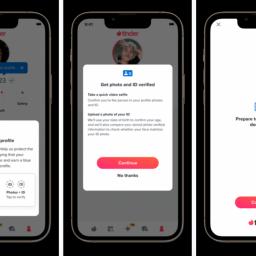 |
by Lawrence Bonk on (#6JRR9)
Tinder has announced it's bringing an advanced ID verification system to the US, UK, Brazil and Mexico. This is part of an ongoing effort to reduce the number of catfish swimming around the old dating pool. The new system requires that users take a video selfie and upload a valid driver's license or passport.Tinder has long required users to take photos or video selfies as part of its verification process, which would provide a blue checkmark to illustrate authenticity. So the passport and driver's license stuff is new. Once you upload the ID, Tinder will check to see if it lines up with your video selfie and the photos on your profile. It'll also look at the date of birth on the license or passport to confirm your age.If the idea of uploading your ID to a dating app gives you an icky feeling, you can still get verified with just a video selfie. However, your profile will get a blue camera icon badge, and not a blue checkmark.Tinder started testing this system last year in New Zealand and Australia, and it must have worked out just fine, given the broader roll-out. The updated verification tool is coming to the UK and Brazil by spring and the US and Mexico by summer. In other words, catfish only have a few more months left to do their thing. That includes you, AI catfish.This shouldn't be confused with Tinder's recently-abandoned background check feature, which was powered by the non-profit Garbo. Tinder and Garbo paired up to provide a robust background check tool on the app in 2019, to check users for histories of violence.Garbo ended up breaking it off with Tinder's parent company, Match Group, after disagreements over payments and how to best use the tool. Garbo's CEO said she'd rather leave the partnership instead of allowing "the vision of Garbo to be compromised and relegated to a piece of big corporations' marketing goals."This article originally appeared on Engadget at https://www.engadget.com/tinder-is-bringing-its-advanced-id-verification-system-to-the-us-and-uk-164353306.html?src=rss
|
 |
by Daniel Cooper on (#6JRRA)
There's a reason smartwatches haven't replaced clinically validated gear when you visit the hospital - accuracy and reliability are paramount when the data informs medical procedures. Even so, researchers are looking for ways in which these devices can be meaningfully used in a clinical setting. One project in the UK has explored if a Garmin Venu 2 and dedicated companion app could be used to free up doctors and nurses, six minutes at a time.The Six Minute Walk Test (6MWT) is used to diagnose and monitor a number of cardiovascular maladies. This includes conditions like Pulmonary Hypertension that, if left untreated, are eventually fatal. [The test has been] a cornerstone of hospital practice and clinical trials for decades all around the world as [...] a marker of how well the heart and lungs are working," project leader Dr. Joseph Newman told Engadget. While a change in a blood test marker might be clinically relevant, he said it's probably more important to someone that they can walk to the shop and back."The test requires a patient walk on a flat, hard surface for six minutes straight, which stresses the heart enough to measure its capacity. A professional tests the patient's heart rate and blood oxygen levels at the start and end. While it's simple and reliable, "it's not perfect," according to Dr. Newman. This is why we've looked to change it in two important ways," he said, "can we make it shorter [...] and digitize it for remote use?"After all, six minutes is a lifetime in a clinical setting, and patients dislike having to schlep all the way to their hospital just to walk up and down a corridor. It's why Newman and Lucy Robertson - both researchers at the Royal Papworth Hospital in Cambridge - began looking for ways to revolutionize the test. They wanted to see if the test could be shortened to a single minute, and also if it could be carried out by a patient at home using a Venu 2.The watch was connected to a secure and dedicated clinical trial platform built by Aparito - a Wrexham-based developer - for testing. This was then sent out to patients who were instructed to wear the watch and walk outdoors to complete their own tests. They're asked to walk on flat, even, dry, relatively straight roads rather than in laps or circuits," Dr. Newman said, with patients walking at their own natural pace.We carried out a product appraisal early on in the research process and were open-minded as to the brand or model," said Dr. Newman. Garmin came out on top for a few reasons; we can access raw data as well as Garmin's algorithmically-derived variables," he said. Because the research was being funded by a charity, the British Heart Foundation, the watch had to offer good value for money. It helped that Garmin, with its established health research division, gave the team confidence in the accuracy of the sensors," not to mention the fact that Aparito feels that the Garmin SDK is relatively easy to work with," he added.But while Garmin is in use right now, there's no reason this setup couldn't eventually work with a number of other brands. As long as the technology works, it's accurate, reliable and patients accept it, then we're not tied to any brand," he said.There are several benefits in giving patients the ability to run the tests at home: it's more representative of the demands of their actual life, and patients can retake the test at regular intervals, making it easier to track that person's health over time. We can see real value in providing patients with pulmonary hypertension with an app and smartwatch to monitor their progress," Dr. Newman said. It's unlikely to ever fully replace the need for in-person hospital reviews, but it will likely reduce their frequency."The results of the study right now suggest cutting the test to one minute has no detrimental effect on its outcome or accuracy, and that patients are far more likely to run the test regularly if they're able to do so at home. It's likely that the upfront costs of wearables [to a hospital] may be offset by the longer term reduction in hospital visits," Dr. Newman said. If that turns out to be right, it means clinicians can better focus their time and efforts where their expertise is more valuable.This article originally appeared on Engadget at https://www.engadget.com/dr-garmin-will-see-you-now-160013340.html?src=rss
|
 |
by Kris Holt on (#6JRRB)
The PlayStation Portal has turned out to be a bit of a surprise hit for Sony. The portable peripheral is often out of stock and hard to come by, even though it does just one thing: stream games from your own PlayStation 5. The device does not run games locally - unless you find a way to modify it to do so.Two Google engineers claim to have done just that by getting PPSSPP, a PlayStation Portable emulator, to work natively on the Portal. A photo shows Grand Theft Auto: Liberty City Stories running on the system. Andy Nguyen, one of the engineers, says that no hardware modifications were required to make the emulator run and that the project took more than a month of hard work" to see through.
|