 |
by Katie Malone on (#6JRN9)
International law enforcement, led by the UK's National Crime Agency, have disrupted ransomware gang Lockbit's operation. The group behind notable hacks against aircraft manufacturer Boeing, chip giant Taiwan Semiconductor Manufacturing Company, sandwich chain Subway and thousands more had its site taken offline on Monday while authorities arrested major players behind the gang. "This site if now under the control of law enforcement," the website reads. According to malware repository Vx-underground, law enforcement took down at least 22 Lockbit-affiliated Tor sites."Through our close collaboration, we have hacked the hackers; taken control of their infrastructure, seized their source code, and obtained keys that will help victims decrypt their systems," National Crime Agency Director General, Graeme Biggar, said in a statement. As of today, LockBit are locked out. We have damaged the capability and most notably, the credibility of a group that depended on secrecy and anonymity."Lockbit admitted defeat, too. In a statement to Vx-underground, the group said "FBI pwned me." Operation Cronos, the name law enforcement used for their efforts, also resulted in the seizure of source code and other useful data related to Lockbit's operations. At the same time, authorities in Poland, Ukraine and the US arrested key members of the ransomware operation. There are sanctions out for two more Lockbit affiliates in Russia.There's more good news for Lockbit victims, too: The operation obtained keys from Lockbit to create a decryption tool for victims to get their data back, according to US Attorney General Merrick Garland. The free decryptors can be found via the No More Ransom project.Since 2019 when Lockbit first entered the scene, it's squeezed victims for more than $120 million in ransomware payments, according to acting assistant AG Nicole Argentieri.This article originally appeared on Engadget at https://www.engadget.com/members-of-ransomware-gang-lockbit-arrested-by-law-enforcement-144245076.html?src=rss
|
 Engadget - Technology News & Expert Reviews
| Link | https://www.engadget.com/ |
| Feed | https://www.engadget.com/rss.xml |
| Updated | 2026-09-20 03:02 |
 |
by Kris Holt on (#6JRNA)
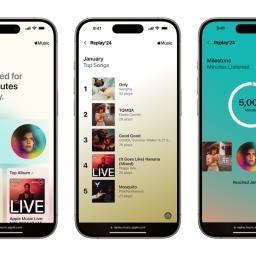
Apple Music is building on its annual Replay feature by offering a monthly version. The annual Replay playlist will still be available, but the monthly option should offer a more granular look at your listening history.Simply visit replay.music.apple.com and sign in with the same Apple ID you use for Apple Music. You'll be able to view your top songs, albums and artists, as well as your personal milestones for each month. Apple will archive these stats as well, so you can revisit them later.I don't exactly need Apple to tell me that I spent much of the last few weeks listening to Deacon Blue, Charlotte Cardin and Gang of Youths' blistering cover of LCD Soundsystem's "All My Friends" on repeat. Still, being able to revisit my February 2024 replay years from now should provide a nice little reminder as to what I was absorbing in this period of my life.This article originally appeared on Engadget at https://www.engadget.com/apple-music-debuts-a-monthly-version-of-its-annual-replay-feature-140042667.html?src=rss
|
 |
by Mariella Moon on (#6JRNB)
Samsung has announced a variety of updates designed to give its devices' audio capabilities a boost, starting with a Galaxy Buds' capability that could make it easier to communicate in another language. The company launched a new feature called Live Translate with its Galaxy S24 series, which people can use as an interpreter for phone calls to, say, a restaurant in a foreign country they're visiting. Soon, Galaxy S24 owners will be able use their phones as a real-time translation tool for in-person conversations if they pair their devices with their updated Galaxy Buds.When users listen to the other person through their earbuds, they'll hear the words translated into their own language. Meanwhile, the other person can hear them in their language through the phone speaker. The user can also swap the order of speech during the conversation by tapping on their Galaxy Buds. Samsung says this eliminates the need to pass a phone back and forth when trying to converse in two different languages. When we tested out Live Translate on the Galaxy S24 with a phone call, though, we experienced a noticeable lag before Samsung's computerized system interpreted our words. Still, this could be a valuable tool for travelers visiting foreign countries.The company has also revealed that it's expanding Auracast support to its phones and tables, including the Galaxy S24 series. Auracast is a Bluetooth technology that allows users to broadcast audio from devices, such as phones and TVs, to an unlimited number of nearby headphones, speakers and earbuds. Samsung initially made the technology available for its smart TVs only. With this Galaxy Buds update, owners will be able to use Auracast to transmit audio from their mobile devices to multiple earbuds.In addition, Galaxy Buds2 Pro and Buds2 users will be able to enjoy 360 Audio if they pair their earbuds with certain Samsung Neo QLED, QLED and OLED TV models. By doing so, their earbuds will be able to track their head movements for an immersive watching or listening experience. Finally, Galaxy Buds2 Pro users will be able to use Samsung's Auto Switch feature to automatically switch their connection between the company's tablets, Galaxy Books and TVs and its phones if they need to take a phone call. These features are making their way to Galaxy Buds2 Pro, Buds2 and Buds FE users starting in late February.This article originally appeared on Engadget at https://www.engadget.com/samsung-is-upgrading-a-bunch-of-audio-capabilities-on-its-phones-tablets-and-earbuds-133533584.html?src=rss
|
 |
by Steve Dent on (#6JRJV)
Walmart is buying Smart TV manufacturer Vizio for $2.3 billion, the retail giant announced as part of its latest earnings report. While Walmart has long been one of the major sellers of Vizio TVs, the company says the acquisition "enables a profitable advertising business that is rapidly scaling" via the company's SmartCast OS. The deal is still subject to regulatory approval.Vizio sells solid mid-range TVs, most equipped with its SmartCast operating system that supports free ad-supported content. The company recently refreshed its lineup with a more intuitive user interface and faster startups and app switching.Walmart, meanwhile, prominently features the brand on its shelves (along with TCL), as anyone who has gone there lately has probably noticed. The retailer already has its own TV house brand, ONN, but those sets are very much on the low end, usually selling for under $500.More importantly, the companies plan to combine their respective ad businesses. Walmart already has a $2.7 billion ad business, but Vizio would increase its access to key consumer info like viewership data. It would also effectively give Walmart more eyeballs for its ads - for instance, companies that sell goods at Walmart could also run ads on Vizio TVs, all of which could be tracked by the retailer."We believe the combination of these two businesses would be impactful as we redefine the intersection of retail and entertainment," said Walmart VP Seth Dallaire. "Our technology will help bring a scaled, connected TV advertising platform to Walmart Connect," added Vizio CEO William Wang.The acquisition may also be a counter to Amazon's in-house Fire TV business, both in terms of television retailing and advertising, as The Wall Street Journal reported last week. Amazon has one of the largest ad businesses in the US behind Alphabet and Meta, and smart TVs help it gather personalized consumer data for targeted advertising.This article originally appeared on Engadget at https://www.engadget.com/walmart-is-buying-smart-tv-maker-vizio-for-23-billion-130725953.html?src=rss
|
 |
by Mat Smith on (#6JRJW)
Nintendo's Switch 2 (not its official name) was widely expected to arrive sometime this year, but that may not happen. Now, the company is reportedly telling publishers the next-gen console is slated for release in the first quarter of 2025.If that did happen, it would mimic the release of the original Switch, which was announced in October 2016 and came out in March 2017.What can you expect from Nintendo's next console? We don't know much yet, including the name. Rumors suggest it'll have backward compatibility with Switch, along with 4K capabilities and visual quality similar to that of the PS5 and Series X. It could use NVIDIA's DLSS upscaling tech to ramp up the graphics of older games, too.In the interim, there's a Nintendo Direct tomorrow that will focus on new third-party games.- Mat SmithThe biggest stories you might have missedThe world's thinnest foldable phone gets a Porsche Design makeoverThe 12 best things on sale for Presidents' DayWednesday's Nintendo Direct will focus on upcoming third-party releasesYou can get these reports delivered daily direct to your inbox. Subscribe right here!The EU opens a wide-ranging probe into TikTokIt's looking into addictive algorithms, harmful content, privacy and more.TikTok is in the EU's crosshairs over potential Digital Services Act (DSA) breaches around the safety of minors and other matters. The formal proceedings will focus on addictive algorithms, the rabbit-hole effect, age verification issues and default privacy settings. It's getting into it: The European Commission will also probe ad transparency and data access for researchers.The safety of young users seems to be a major driver: It will force the social media site to ensure high levels of privacy, safety and security for minors with default privacy settings - like it did for Meta's Instagram and Facebook.Continue reading.Sony A9 III camera reviewThe future of cameras is fast.EngadgetSony laid down a gauntlet with the 24.6-megapixel A9 III. It's the world's first mirrorless camera with a global shutter, a much-awaited holy grail feature. It completely eliminates rolling shutter distortion found on CMOS cameras by reading the entire sensor at once. It also boosts speed and removes the need for a mechanical shutter. However, as the first of its kind for Sony cameras, it's expensive ($6,000) and has a reduction in still image quality, due to the nature of a global shutter. But the benefits far outweigh those - this is one fast, accurate camera. Check out the full review.Continue reading.The UK moves another step closer to banning phones in schoolsFrance and Italy already restrict phones during class.Experts and regulators have expressed concerns about children's wellbeing and distraction due to their phones while at school. The UK government has become the latest to announce guidance for banning the use of phones during school. It follows other European countries, like France and Italy, which prohibit phones in classrooms.Some schools in the UK already have no-phone policies in place, but these guidelines could bring widespread adoption and uniformity. This is about achieving clarity and consistency in practice, backing headteachers and leaders and giving staff confidence to act," Gillian Keegan, the UK's secretary of state for education, said in a press release.Continue reading.This article originally appeared on Engadget at https://www.engadget.com/the-morning-after-nintendos-next-console-may-not-arrive-until-2025-121556644.html?src=rss
|
 |
by Mariella Moon on (#6JRJX)
Anker has an ongoing sale for Presidents' Day at Amazon, and you can grab a bunch of charging accessories you may need at a discount. If you want a 20,000mAh portable charger that's noticeably smaller, slimmer and easier to carry than its peers with the same capacity, there's the Anker Power Bank Battery Pack with a built-in USB-C cord that doubles as a carrying strap. The power bank measures 4.5 x 2.8 x 1.2 inches and isn't only available in black and white, but also in green, pink and purple. It has a 22.5W output, can charge a phone three to four times - or charge up to three devices at once - and even has an integrated phone stand for when you want to watch videos while charging. The model originally sells for $45, but you can get it for $33.74 from this sale.Need a wall charger that's fast and compact? You can get the Anker Prime 100W GaN Wall Charger for only $68 instead of $87. It has two USB-C ports and one USB-A port, and you can use up to two of them with a max output of 100 watts. The model is less than half the size of a MacBook charger, making it easier to pack and carry for your laptop, though you can also use it to charge your phones and tablets. If you don't need a GaN charger with a 100W output, you can get the Anker Nano 65W GaN II Charger instead. It has a smaller output and only one USB-port, but it's also much cheaper: You can get it from the sale for $28, down 44 percent from its $50 retail price. Like the Prime 100W, you can use the Nano 65W for your laptops, tablets and phones.Anker also has a 100W MacBook charger on sale. It works even with a 16-inch MacBook Pro, but you can also use it to power various devices. While it's built like a typical MacBook charger, it's smaller, has a foldable plug and comes with a 5-foot USB-C-to-USB-C cable. This model typically sells for $38, but you can grab one from the sale for only $25.49.If what you need is a charger with multiple ports, though, you may want to take a look at Anker's 240W 4-Port GaN Charger. It has three USB-C ports and one USB-A port, so you can plug in multiple devices at once. One of those USB-C ports can provide an output of 140W, while the other three ports share a 100W output. While Anker's 4-Port GaN charger typically costs $200, you can get it right now for only $130. And in case all you need is a new iPhone charging cable, you can take this chance to grab a two-pack at a discount. Anker is selling its two-pack six-foot USB-A-to-Lightning cables that use premium nylon material for only $17.09 instead of $20.Follow @EngadgetDeals on Twitter and subscribe to the Engadget Deals newsletter for the latest tech deals and buying advice.This article originally appeared on Engadget at https://www.engadget.com/anker-battery-packs-and-charging-accessories-are-up-to-44-percent-off-113301650.html?src=rss
|
 |
by Steve Dent on (#6JRGW)
Fujifilm's X100V was the toy to have over the last couple of years (thanks, TikTok) and the company has now released its successor, the 40.2-megapixel X100 VI, with large improvements across the board. While keeping the same retro form, it offers much faster shooting speeds, in-body stabilization, 6.2K 30p video and more.The X100VI looks identical to the previous model, with the same styling and control positions. The series was conceived as a street photography camera, borrowing a lot of styling cues from Leica's famous rangefinder cameras. As such, it doesn't have the world's great ergonomics, but is light at 521 grams, discreet for shooting and can slide into a jacket pocket.FujifilmFujifilm elected to go with the same 40.2-megapixel (MP) APS-C sensor as the much bigger X-H2, significantly boosting resolution over the X100V. I think that's a wise choice as it gives the camera - which has a wide-angle fixed 23mmm f/2.0 lens (35mm full-frame equivalent) - more cropping options. The price for that is likely a small drop in low-light sensitivity.Another big new feature on the X100VI is built-in 5-axis stabilization with up to 6 stops of shake reduction. Given the X100VI's small body, it's an unexpected but welcome feature, and will be a big help to street photographers taking candid shots on the fly.The X100V keeps the same 3.69-million dot hybrid optical viewfinder and 1.62-million dot LCD display, but the latter now tilts downward an extra 15 degrees to make shooting from above easier. It retains the same battery as before (CIPA rated for 300 shots), and unfortunately, the same slow UHS-I card slot.FujifilmThe X100VI still shoots at 11fps with the mechanical shutter and 20fps in electronic mode, but autofocus is quicker and more capable, according to Fujifilm. It now offers the company's latest tracking and face/eye detection, along with animal/vehicle and other types of subject detection.Image quality should be improved as well with the extra resolution and a lower native 125 ISO. And since a lot of the newfound social media popularity of this camera is based on the film simulation modes, the camera comes with 20 built-in, including a new one called Reala Ace, designed to offer "faithful color reproduction and contrast tonality."FujifilmFinally, one usually doesn't think of video when it comes to this series, but the X100VI is surprisingly capable for a tiny compact. It can shoot 6.2K video at up to 30fps, 4K at 60 fps and 1080p at 240fps. You also get 10-bit F-log and F-Log2 recording, shockingly good for a small, photo-centric camera with a fixed lens. The only downside is relatively low data rates (200Mbps max) due to the slow cards, but you can capture ProRes to an external recorder.Fujifilm's X100VI is now on pre-order for $1,600 in silver or black, with shipping slated for early March 2024. The company is also offering a special edition version "engraved with the corporate brand logo from Fujifilm's founding in 1934" for $2,000. It has vowed to reduce the long lead times of the previous model by manufacturing it in China like other recent models.This article originally appeared on Engadget at https://www.engadget.com/fujifilms-x100vi-is-a-big-step-forward-for-the-tiktok-famous-compact-camera-100918040.html?src=rss
|
 |
by Nathan Ingraham on (#6JR7C)
The next Nintendo Direct is scheduled for this Wednesday, the company just announced. It's being billed as a "partner showcase," with Nintendo saying it'll show off Switch games coming in the first half of this year from "our publishing and development partners." It'll kick off on February 21, bright and early at 9AM ET.While Nintendo holds these showcases on a regular basis, this one is potentially more significant than usual. Last week, Microsoft made an expected but still surprising announcement that it would begin bringing some of its titles to "other consoles," a phrase that's hard not to interpret as games coming to the Switch (and Sony's PlayStation 5 as well).Nintendo says it'll be a 25-minute presentation, so there's a chance we'll hear about some games from other developers, as well. But we're all expecting to see some news about what games Microsoft is going to bring over to the Switch. Microsoft only said that it would be bringing four games to other platforms but didn't name them; the latest rumors cite Hi-Fi Rush, Sea of Thieves, Halo and Gears of War as likely options to make the move.This comes at a time when Nintendo doesn't have a lot of its own first-party games scheduled for the platform (that we know of, anyway). There's also the looming specter of a Switch 2 console; reports just said that the hardware is getting pushed back to 2025 after an expected launch at some point this year.
|
 |
by Kris Holt on (#6JR2H)
The Biden administration is granting $1.5 billion in funding to GlobalFoundries to bolster semiconductor production under the CHIPS Act. The company, which spun out from AMD in 2009 and also has access to $1.6 billion in loans from the CHIPS Program Office, will split the cash between three projects.First, GlobalFoundries will build a new fabrication facility in Malta, New York, where it aims to produce "high value technologies not currently available in the US," the Department of Commerce said in a statement. GlobalFoundries says it will use the facility to build chips for a range of industries and applications, including the automotive, aerospace, defense and AI spaces. Construction is expected to start in 2025.Secondly, GlobalFoundries plans to expand its existing facility in Malta by incorporating tech from its Singapore and Germany plants with the aim of making more semiconductors for use in cars and trucks. This expansion, combined with the new fab, will enable GlobalFoundries to triple the capacity of its Malta campus over the next decade or so. Once all phases of both projects are complete, GlobalFoundries expects to increase wafer production to 1 million per year across the plants.Last but not least, the remaining funding will go toward modernizing an existing fab in Burlington, Vermont. The aim is to build the first US plant capable of high-volume manufacturing of next-generation gallium nitride on silicon semiconductors for electric vehicles, smartphones, the power grid and other key technologies. The plant will use entirely carbon-free energy, while an on-site solar system will provide up to nine percent of annual power needs.Through public-private partnerships, GlobalFoundries plans to invest more than $12 billion into the sites over the next 10-plus years. New York is also supporting the Malta projects with $575 million in performance-based Green CHIPS tax credits, while the New York Power Authority is investing at least $30 million.The Department of Commerce says the three projects are expected to create 1,500 manufacturing positions and around 9,000 construction jobs over the next 10 years. The positions are slated to pay fair wages and offer benefits including childcare.Aligned with the broader aims of the CHIPS Act, the investment is designed to improve domestic semiconductor supply chains. GlobalFoundries says that there are only four companies that can deliver "current and mature foundry capabilities" at its scale outside of China, and it's the only one of those based in the US.Last year, the company reached a direct supply agreement with GM to provide the automaker with US-built processors and help it avoid the kinds of chip shortages that caused a significant slowdown in car manufacturing in the midst of the COVID-19 pandemic. GlobalFoundries agreed to create an exclusive capacity corridor for GM chips. GlobalFoundries struck a chip deal with Ford in 2021 as well.This article originally appeared on Engadget at https://www.engadget.com/globalfoundries-secures-15-billion-in-chips-act-funding-for-us-expansion-172754429.html?src=rss
|
 |
by Kris Holt on (#6JR0H)
It's rarely a bad idea to have an extra controller on hand. Being able to switch to another gamepad when the battery runs out is always welcome, and you don't want to be caught short when a buddy wants to hop into a local multiplayer game with you. Being able to toss an extra controller and a phone clip into your bag for cloud gaming is useful too. So you may be pleased to find out that the official Xbox Wireless Controller is on sale. It's down to $44 in its white, black and red variants, and it's available in other colorways for $49.The price hasn't quite hit the previous record low of $39, but it's still a decent deal. The peripheral usually retails for $60.The latest version of the controller is designed for the Xbox Series X/S. It retains the layout that Xbox fans have become used to over the last two decades. The face buttons and triggers are responsive and the joysticks are smooth. While it doesn't have the adaptive triggers and immersive haptics of Sony's PS5 gamepad, the Xbox Controller's d-pad is clickier than the one on the DualSense.The peripheral also pairs easily with Windows PC, phones and tablets via Bluetooth, while the dedicated Share button for capturing screenshots and gameplay clips is handy. One thing worth bearing in mind is that the Xbox controller runs on AA batteries. So, unless you want to be regularly swapping out batteries, it may be worth picking up a set of rechargeable AAs or a rechargeable battery pack.Follow @EngadgetDeals on Twitter and subscribe to the Engadget Deals newsletter for the latest tech deals and buying advice.This article originally appeared on Engadget at https://www.engadget.com/the-official-xbox-controller-is-on-sale-for-44-160020348.html?src=rss
|
 |
by Jeff Dunn on (#6JPAT)
While most of the Presidents' Day sales happening today are more focused on appliances and home goods than tech, we've still found a few gadget deals worth noting. If you need a new set of headphones, for example, the excellent Anker Soundcore Space A40 earbuds are on sale for $59, while Apple's noise-canceling AirPods Max are $69 off at $480. An Xbox Series S console bundle is $30 off, while the ASUS ROG Ally is down to a low of $600 for those interested in a more portable gaming machine. We're also seeing deals on Samsung OLED TVs, the Apple Pencil and 8BitDo's Retro Mechanical Keyboard. Here are all of the best Presidents' Day 2024 sales on tech we could find, updated for the holiday itself.Best Presidents' Day sales on headphonesBest Presidents' Day sales on TVsBest Presidents' Day sales on gaming gearBest Presidents' Day sales on other techFollow @EngadgetDeals on Twitter and subscribe to the Engadget Deals newsletter for the latest tech deals and buying advice.This article originally appeared on Engadget at https://www.engadget.com/the-14-best-presidents-day-sales-at-amazon-best-buy-target-and-others-to-shop-this-weekend-170018799.html?src=rss
|
 |
by Sarah Fielding on (#6JQY9)
Mobile phone ownership has become standard for people of most ages, and, while there's a convenience argument, experts and regulators alike have expressed concerns about children's well-being and distraction while learning. To that end, the UK government has become the latest to announce guidance for banning the use of phones during school. It follows other European countries like France and Italy, which prohibit phones in classrooms.Some schools in the UK already have no-phone policies in place, but these guidelines could bring widespread adoption and uniformity. "This is about achieving clarity and consistency in practice, backing headteachers and leaders and giving staff confidence to act," Gillian Keegan, the UK's secretary of state for education, said in a release. "Today's children are growing up in an increasingly complex world, living their lives on and offline. This presents many exciting opportunities - but also challenges. By prohibiting mobile phones, schools can create safe and calm environments free from distraction so all pupils can receive the education they deserve."While the UK government encourages schools to create their own policies, it outlines a few overarching options. The first - and most extreme - is a complete ban on mobile phones from school premises. However, the guidance acknowledges that this could create complications or risks for children when traveling to and from school. The next option takes care of that problem while still taking phones away. It suggests having students hand in their phones when arriving at school.Then there's the locker route, where phones are kept strictly in students' lockers or whatever personal storage they get at school. While this allows students to keep possession of their device, it still wouldn't be usable at any point in the day, even when accessing the locker during breaks. The final option aligns with what many schools do - let students keep their phones in their bags, but they should be turned off and never accessed.The guidance also recommends teaching students about the mobile phone's potentially harmful impact on young people. Study after study has found that social media, in particular, can negatively impact young people's mental health. The UK government argues that, in addition to combating the social media issue, restricting phone use can increase students' concentration, time being active and spending time with peers face-to-face.Parents are encouraged to contact the school directly rather than through a private phone if they need to get in touch with their child. The guidance also encourages parents to discuss the rules at home and, once again, the risks of phones and the internet.This article originally appeared on Engadget at https://www.engadget.com/the-uk-moves-another-step-closer-to-banning-phones-in-schools-132518091.html?src=rss
|
 |
by Steve Dent on (#6JQYA)
TikTok is in the EU's crosshairs over potential Digital Services Act (DSA) breaches around the safety of minors and other matters. The formal proceedings will focus on addictive algorithms, the "rabbit hole effect," age verification issues and default privacy settings. The European Commission is also probing ad transparency and data access for researchers, it said in a press release.The probe is focusing on the privacy and safety of minors. The Commission will look at the potentially negative aspects of TikTok's design and algorithms, including addictive behavior and "rabbit hole effects" that can lead to harmful content. The assessment aims to "counter potential risks for the exercise of the fundamental right to the person's physical and mental well-being [and] the respect of the rights of the child," the EC wrote.As part of that, it's also examining TikTok's age verification tools that are supposed to prevent access by minors to inappropriate content. At the same time, it will force the social media site to ensure high levels of privacy, safety and security for minors with regard to default privacy settings - much as it did for Meta's Instagram and Facebook.
|
 |
by Steve Dent on (#6JQVH)
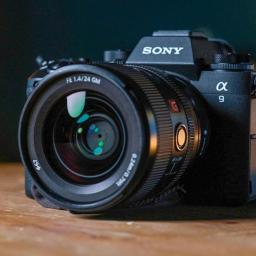
After letting rival camera companies catch up for the last few years, Sony laid down a gauntlet with the 24.6-megapixel A9 III. It's the world's first mirrorless camera with a global shutter, a much-awaited holy grail feature. It completely eliminates rolling shutter distortion found on CMOS cameras by reading the entire sensor at once. It also boosts speed and removes the need for a mechanical shutter.As a pioneering product, it's not cheap at $6,000, but you can expect the technology to come down in price in the future. And there is a downside: Image quality is reduced compared to regular cameras, due to the nature of a global shutter.Is it worth trading off image quality for extra speed and lack of distortion, especially compared to stacked sensor cameras that are already pretty quick? To find out, me and my pro photographer friends put a final production model through a variety of shooting scenarios.Body and handlingThe A9 III is Sony's best handling-camera yet, borrowing all the latest features of recent models like the A7R V. It's very light for a full-frame camera at just 617 grams. And the redesigned grip is more comfortable and secure, which is a big help to working pros, especially with heavy lenses. By comparison, Sony's A1 can be hard on one's hands over a full day, according to my photographer pals.There are three top control dials, making it easy to find primary settings in fully manual mode. It has a pair of dual dials, with one for video, photos and S&Q plus shooting modes, and the other controlling burst along with autofocus. You also get a rear joystick, control dial and no less than 5 custom buttons.With everything well-placed, it's a cinch to shoot manually. When you do need to delve into the menus, those are also well laid out. Settings are divided logically into categories, while the home menu shows key options (shutter speed, white balance, etc.) at a glance. Everything can be customized, and you can back up your settings to a memory card.The high-resolution two million dot rear display is of course touch sensitive for focus and menu control. It flips out and tilts up or down to please both photographers and creators. The viewfinder is the best on any camera, with 9.44 million dots at 120Hz, or half that at 240Hz. That level of sharpness makes it easy to check focus and colors. Again, this is Sony flexing its tech muscles as the primary camera EVF supplier.Battery life is a solid 500 shots, but you can double that with a new $400 vertical grip, which also gives you a better hold of the camera. It has a dual-card slot setup with both SD UHS II and CFexpress. As usual with Sony, the latter is the slower Type A variety, though. Those are less than half the speed of CFexpress type A, but their smaller size allows Sony to do the dual slot setup.Other key features include headphone and mic ports, with the option to add Sony brand microphones or audio accessories to the hotshoe. There's also a full-sized HDMI port, USB-C charging port, ethernet, live-streaming capability and more.PerformanceWith the global shutter, dual Bionz processors and the same dedicated AI processor found on the A7R V,, Sony's A9 III is the fastest full-frame camera in the world. Compressed RAW bursts can be shot at an incredible 120 fps with autofocus and auto-exposure, or you can dial that down to 60 fps or 30 fps.Steve Dent for EngadgetA big caveat is that the 120 fps mode only works with supported Sony lenses, while third-party lenses are all limited to 15 fps. Hopefully the company will address that in a future firmware update.The buffer holds 200 RAW frames, so it fills up in less than two seconds at maximum speed. It takes longer to clear the buffer than it should due to the CFexpress Type A cards. If you use SD UHS II cards instead, it takes about twice as long to clear.In any case, shooting at 120 fps is major overkill most of the time unless you like wading through thousands of photos later on. Sony does have a solution, though. You can shoot at, say, a still-very-fast 30 fps, then press the C5 button to enable the top speed at key moments. That way, you'll get the shot you want without wasting frames.The A9 III is also the first Sony camera to use a pre-capture mode that saves a second of photos when you half-press the shutter button. After you fully press it, those photos are saved along with any taken after.Nathanael CharpentierYour photos will usually be sharp, too. The 759 phase-detect focus points allow for extremely rapid and accurate autofocus in most situations. For regular continuous AF, it can keep up with even the fastest action.The AI-powered subject detection shines too. Face tracking works with subjects farther away and it follows someone tenaciously, even when they duck behind obstacles. Human tracking is fast and fluid, and you can easily see if it's locked onto eyes, face or body.It can detect birds, animals (or both), along with insects, cars and trains. You can also select any distinctive object and the system will usually track it reliably.The bottom line is that it rarely misses focus, so it's great for professional sports, wildlife, weddings and more. Of course it's not infallible and can mix up subjects, but is better than any camera I've tried to date.Nathanael CharpentierThe A9 III has no need for a mechanical shutter because there's no rolling shutter distortion, meaning you can shoot in complete silence at all times. With that, it's perfect for sports like golf, as you can shoot a player in mid-swing without disturbing them, and a club in motion won't be distorted.It also allows for extremely fast shutter speeds up to 1/80,000th and it can sync with supported flashes all the way up to that speed. It also eliminates the flicker and banding from venue lights, another big aid for sports photographers.Sony has also improved its in-body stabilization significantly, boosting it to 8 stops with supported lenses. That allows shots down to a quarter second or less, matching Canon's EOS R3 and besting the Nikon Z9 and Sony's own A1.Image qualityAs mentioned, the primary issue with this camera is image quality. So is how much does it fall below regular CMOS cameras? To test that, I shot in situations including gymnasiums, night scenes, bird shooting, an airport and more.There's no question that dynamic range is reduced compared to Sony cameras like the A1, at least by a stop. The reason is that the sensor has less light capacity due to the space taken up by the extra electronics.It also has a smaller ISO range, both on the high and low end. Minimum ISO is not great at 250 and at the high end, ISO is limited to 25,600, half that of the A9 II.In general, there's more noise and less dynamic range at any given ISO setting than the A9 II. At the same time, the resolution is lower than rivals like the Nikon Z9 and Sony's own A7R V and A1. So for landscapes, portraits and other types of photography where dynamic range and resolution is important (and speed isn't), the A9 III isn't the best choice.That said, you'd need to pixel peep to notice any major difference in image quality between rival 24-megapixel cameras up to about ISO 6400. For the intended audience of sports, action and wildlife shooters, it's more than sufficient.Beyond that, images are noisier, but still usable up to the maximum ISO 25,600 with noise reduction (Sony appears to have more aggressive noise reduction for JPEG images at higher ISOs). I had no difficulty extracting good shots in dark scenes at ISO 6400 or even ISO 12,800. And as mentioned, you have more control with a flash than any other camera on the market - so that's a solid option in low light.Otherwise, images are typical for Sony, with accurate colors and skin tones. The 14-bit RAW files are easy to work with and allow some pushing and pulling, particularly in highlights.VideoSteve Dent for EngadgetSony took advantage of the global shutter to make the A9 III its most capable mirrorless camera for video. 4K at up to 60 fps is supersampled using the full 6K sensor width, while 4K at 120 fps can also be shot using the full sensor, albeit with pixel binning. That mode supports full 120 fps playback as well, or slower playback modes via the slow and quick (S&Q) setting.RAW 4K capture at 60 fps is also possible using an external recorder. All of those modes are available with 10-bit S-Log 3 recording to expand dynamic range in challenging lighting conditions.That's just the start of the A9 III's video powers. Autofocus is as fast and accurate in video as stills mode and has all the same AI features. That means you'll be sure to keep even fast-moving subjects sharp, whether they're people, birds, animals or vehicles.Those who prefer to shoot manually can employ Sony's handy focus map feature. It has the auto-framing seen on previous Sony models like the ZV-E1 that lets YouTubers move around while filming themselves. You also get the digital zoom feature that reduces focus breathing for supported lenses, with some loss of quality.Steve DentAirplane propeller distortion in video is a telltale sign of a rolling shutter camera, so naturally we had to test the A9 III at an airport against Sony's stacked sensor A1. Our findings? While the A1 still produces bendy propellers, they're of course dead straight on the A9 III. That trivial test has large implications. You can shoot things like whip pans or a fast moving train that you'd never try with a rolling shutter sensor. And since everything is exposed at once like a film camera, it's more cinematic.The A9 III does have some video competition, as RED just launched a pair of full-frame global shutter cinema cameras last month.It has the same excellent video stabilization capabilities as the ZV-E1. Regular optical stabilization is good for handheld shots without much movement, or you can kick in the dynamic active mode for walking. That provides near gimbal levels of smoothness, though there's a considerable zoom and loss of sharpness.Much as with photos, video quality isn't quite up to other full-frame cameras, with more noise in general. I shot in S-Log3 most of the time to maximize dynamic range and was satisfied with the results. In low light, I was forced to use some noise reduction.Quality is still better than any APS-C mirrorless or cinema camera. I think the global shutter advantages, particularly the elimination of rolling shutter, will be worth the tradeoff in quality for a large number of videographers.Wrap-upSteve Dent for EngadgetSony launched its first full-frame mirrorless camera, the A7, years before rivals, and was first to market with backside illuminated and stacked sensors. Lately though, rivals (especially Canon) have been catching up and the field has leveled. With the first global shutter camera, Sony has taken a leap ahead once again.Image quality has held global sensor cameras back, but Sony clearly felt that the time was finally right. It was a wise calculation - the A9 III is far better than I expected for a first-gen product. It offers mind-blowing speeds and incredible video capabilities, with a relatively small cost in image quality..Its primary rivals are the $4,800 Canon R3, Sony's own $6,500 A1, the $5,650 Nikon Z9 and $3,800 Z8, all stacked sensor cameras. The latter three offer much higher resolution and better picture quality, plus shooting speeds that are still darn fast. They all have some rolling shutter, though, along with flicker and flash sync issues that don't exist on the A9 III.Whether it's worth risking that kind of money on new and unproven stacked sensor tech depends on the buyer. Action photographers and videographers won't blink at the cost if they advantages of global shutter will help them make money. Unless you really need those benefits, though, Nikon's Z9 and Z8, along with Sony's A1, are more versatile cameras - and the Z8 is significantly cheaper.This article originally appeared on Engadget at https://www.engadget.com/sony-a9-iii-review-the-future-of-cameras-is-fast-130057924.html?src=rss
|
 |
by Mat Smith on (#6JQVJ)
NASA wants volunteers for its second year-long simulated Mars mission, the Crew Health and Performance Exploration Analog (CHAPEA 2). For the mission's duration, starting spring 2025, the four selected crew members will live in a 1,700-square-foot 3D-printed habitat in Houston. It's paid, but we don't know how much. At least living costs will be nil.The Mars Dune Alpha habitat at NASA's Johnson Space Center simulates life for future explorers on the red planet, where the environment is harsh and resources limited.Applicants must be US citizens aged 30 to 55, speak English proficiently and have a master's degree in a STEM field, plus at least two years of professional experience, a minimum of one thousand hours piloting an aircraft. Or two years of work toward a STEM doctoral program.I barely qualify for two of those requirements - good luck to the rest of you.- Mat SmithThe biggest stories you might have missedThe best VR headsetsEpic plans to launch its own iOS storefront in the EU this yearMicrosoft should exit the console businessEngadget is looking for experienced writersYou can get these reports delivered daily direct to your inbox. Subscribe right here!The EU is reportedly hitting Apple with a $539 million fine in antitrust probeIt's been investigating Apple's App Store rules since a 2019 complaint from Spotify.Apple may be facing a fine of roughly $539 million (500 million) from the EU and a ban on its alleged anti-competitive App Store practices for music streaming services, according to The Financial Times. The publication cites five unnamed sources and says the European Commission will announce its ruling early next month.The investigation was prompted by a 2019 antitrust complaint filed by Spotify and focuses on App Store rules that, at the time, prevented developers from directing customers to alternative subscriptions outside the app, which could be notably cheaper as they didn't have to include Apple's 30 percent fee.Continue reading.Reddit reportedly signed a multi-million content licensing deal with an AI companyThe company will use Reddit content to train its AI models.Anadolu via Getty ImagesYour dank memes, confessional posts and excessively strong feelings on Baldur's Gate 3 couplings will soon train an artificial intelligence company's models, according to Bloomberg. The website reportedly signed a deal worth about $60 million on an annual basis" earlier this year.When Reddit started charging companies for API access in April 2023, it said pricing would split in tiers so even smaller clientele could afford to pay. Companies need that API access to train their chatbots on posts and comments. This is likely the top tier of all that.Continue reading.Intuitive Machines' moon lander sent home its first imagesThe landing attempt is scheduled for February 22.Intuitive MachinesIntuitive Machines' own attempt at the first-ever commercial Moon landing is off to a good start. After launching without a hitch on Thursday, it snapped a few incredible images of Earth. The team posted a series of updates on X at the end of the week, confirming the lander has passed some key milestones, including engine firing, ahead of its touchdown.Continue reading.This article originally appeared on Engadget at https://www.engadget.com/the-morning-after-want-to-live-in-nasas-mars-simulation-for-a-year-121543499.html?src=rss
|
 |
by Sarah Fielding on (#6JQVK)
Amazon is ringing in Presidents' Day with big sales on its Echo devices, including its fourth-generation Amazon Echo. The smart speaker is currently down to $55 from $100 - a 45 percent discount. Though released in 2020, Amazon's 4th-gen Echo is still its latest iteration and has held its weight over the years. We even named it 2024's best smart speaker under $100.So, what makes the 4th-gen Amazon Echo so great? It stands above its competitors like the Google Nest Audio and HomePod mini thanks to features like two 0.8-inch tweeters combined with a three-inch woofer. It does a nice job of filling the room and has a solid bass thump while playing music. The 4th-gen Amazon Echo also supports lossless HD audio, allows you to call other people with an Echo device and offers voice control for lights, sensors and locks.While the 4th-gen Amazon Echo is a solid buy, there are a few Echo devices also on sale that have a bit more oomph. Take the Echo Studio, which is back to its all-time low of $155, down from $200. This speaker is a great option for anyone wanting excellent sound quality. It has a subwoofer, stereo speakers and room adaptation.Anyone who prefers a screen to just the speaker can enjoy the Echo Show 15's 29 percent discount. Down to $200 from $280, the 15.6-inch smart display is just $15 more than its record-low price. It has Amazon's Fire TV built-in and can be mounted to the wall for an easy viewing experience, whether in the kitchen or a playroom. Plus, it can provide recipes, space for to-do lists and a view of the home when everyone's away.Then there's the third-generation Echo Show 10, on sale in charcoal for $195 from $250. The 10.1-inch HD device also has a screen but is still more of a speaker than a TV - though it is compatible with platforms like Netflix and Hulu. As for sound quality, the Echo Show 10 has two one-inch tweeters and a three-inch woofer. It offers many of the same things as the Echo Show 15, like a built-in camera (13MP compared to the 15's 5MP) and home monitoring.Follow @EngadgetDeals on Twitter and subscribe to the Engadget Deals newsletter for the latest tech deals and buying advice.This article originally appeared on Engadget at https://www.engadget.com/amazons-echo-speaker-falls-to-55-in-presidents-day-sale-114002696.html?src=rss
|
 |
by Steve Dent on (#6JQVM)
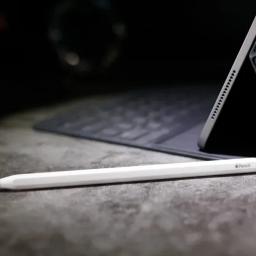
Apple's second-generation Pencil aimed at artists and creators is on sale at close to the lowest price we've seen. You can now grab one for $79, a full 39 percent ($30) off the regular price. That makes it an easy buy if you have a compatible tablet and are looking for Apple's Pencil model with the widest array of features.Apple designed the second-generation Pencil specifically to work with the iPad, and it's the best stylus you can snap up for the company's tablets. It offer low latency, along with a double-tap feature that you can customize to switch between preferred tools. Other features include tilt sensitivity, pressure sensitivity and what Apple claims is "pixel-perfect precision."One big advantage that the second-gen Apple Pencil has over its two siblings is wireless charging, as it attaches magnetically to the side of a compatible iPad while it recharges. You'll need a relatively recent iPad Air, iPad mini or iPad Pro, but the magnetic charger on the side of those tablets gives you an easy way to stow your stylus while powering it. You don't have to think about cables, or buy a case with a pen slot.If you don't need all the second-gen model's features and want to spend a bit less, Apple's Pencil (USB-C) is also on sale for $70 (11 percent off), near it's all-time-low price. It offers the same precision and magnetic mount, but lacks pressure sensitivity, wireless charging and the double tap drawing tool feature.Follow @EngadgetDeals on Twitter and subscribe to the Engadget Deals newsletter for the latest tech deals and buying advice.This article originally appeared on Engadget at https://www.engadget.com/apples-second-generation-pencil-is-just-79-right-now-112551674.html?src=rss
|
 |
by Richard Lai on (#6JQSA)
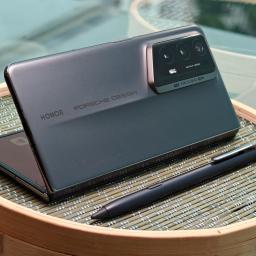
When Honor's Magic V2 first showed up some seven months ago, we were left impressed with its sub-1cm folded thickness. The company has since picked up where Huawei left off and joined forces with Porsche Design, with the first result being a special edition foldable phone, the "Magic V2 RSR" ("RSR" stands for "RennSport Rennwagen," which translates to "racing sport racing car"). Porsche fans may recognize several attributes here that pay homage to the automotive brand, including the iconic agate gray along with a flyline running down the middle of the body - supposedly resembling the Porsche 911's hood. The rear camera island has also been upgraded with a dark titanium frame to go with its bolder trapezoidal redesign.The Magic V2 RSR retains the same dimensions, measuring 9.9mm thick when folded and 4.7mm when opened, ensuring it remains the world's thinnest foldable phone. The extra decoration adds 3 grams over the base model, reaching 234 grams (about 8.25 oz) which still beats the likes of the OnePlus Open, Samsung's Galaxy Z Fold 5 and Google's Pixel Fold, largely thanks to Honor's mix of titanium alloy and proprietary steel in its hinge design - this is apparently certified to last for at least 400,000 folds. As a bonus, the Magic V2 line's 5,000mAh battery capacity is larger than the competition, thanks to its more energy-dense silicon-carbon cells. The trade-off here is the missing wireless charging, but you do get 66W of wired fast charging, which takes around 50 minutes to go from zero to 100 percent.The Magic V2 RSR is still powered by Qualcomm's Snapdragon 8 Gen 2 processor, but with storage option limited to just 1TB to go with the 16GB of RAM. The rest of the spec sheet is identical for both Magic V2 variants. For displays, you get a 7.92-inch 2,344 x 2,156 foldable OLED screen (with a barely-noticeable crease) and a 6.43-inch 2,376 x 1,060 exterior OLED display, with their brightness going up to 1,600 nits and 2,500 nits, respectively. For audio, this Android phone comes equipped with "IMAX Enhanced" stereo speakers, whereas phone calls leverage the device's three-mic system for better voice reception. As is the case with most foldables, the fingerprint reader is integrated into the side-mounted power button.The rear "Falcon Camera System" consists of a 50-megapixel main sensor, a 50-megapixel ultra-wide shooter and a 20-megapixel telephoto camera (2.5x zoom), whereas a 16-megapixel punch-hole selfie camera sits at the top of both screens. Both the rear and front cameras support up to 4K resolution for video recording.It should come as no surprise that the Magic V2 RSR boxset packs some extra goodies, namely an active stylus, its own carrying case and a spare 66W charger. The special protection case is wrapped in a stitched dark gray vegan leather, though compared to the normal version, it's missing out on a kickstand - a feature I struggle to live without when it comes to foldable phones.Photo by Richard Lai / EngadgetLike the base model, the Magic V2 RSR will also be headed to global markets, though the prices are under wraps until MWC later this month. For reference, the Magic V2 RSR retails for 15,999 yuan or about $2,220 in China, but expect a huge bump for international pricing. The regular Magic V2 - only available in 512GB flavor for international markets - is priced at 1,700 ($2,140) in the UK and 1,999 ($2,150) in Europe, but the China version and Hong Kong version (also international firmware) cost around $1,400 only. It's no wonder that some savvy consumers would rather import smartphones from overseas, despite the lack of local warranty services.This article originally appeared on Engadget at https://www.engadget.com/the-worlds-thinnest-foldable-phone-gets-a-porsche-design-makeover-104537565.html?src=rss
|
|
by Steve Dent on (#6JQQT)
Nintendo's "Switch 2" was widely expected to arrive sometime this year, but a new rumor is putting that timeline into question. Now, the company is telling publishers that the next-gen console is slated for release in the first quarter of 2025, according to VGC, Eurogamer and other sources. That would line up with the release of the original Switch, which was announced in October 2016 but came out in March 2017.Publishers were reportedly briefed recently on the launch date change from late 2024 to early 2025. Several sources said they were working on Switch 2 games with releases planned for early 2025. One key title could be the long-delayed Metroid Prime 4, which is still on Nintendo's release schedule but has no specific date attached.Earlier this month, Nintendo slightly bumped its fiscal 2024 Switch sales forecast from 15 million to 15.5 million, compared to 18 million and 23 million in 2022 and 2021. Nintendo's stock slid today based on the release delay rumors, according to Reuters.Not much is known about the future device, including the name. Rumors suggest it will have backward compatibility with Switch, along with 4K capabilities and visual quality similar to that of the PS5 and Series X. In any case, this year is bound to be a busy one for the company - if the new console does launch in Q1 2025, it'll likely be announced at a Nintendo Direct showcase later this year.This article originally appeared on Engadget at https://www.engadget.com/nintendos-switch-2-may-not-arrive-until-2025-090934042.html?src=rss
|
 |
by Cheyenne MacDonald on (#6JQHF)
The Biden administration plans to loosen the limits on tailpipe emissions proposed last year by the Environmental Protection Agency (EPA), giving automakers more time before they'll be required to sell significantly more electric vehicles than gas-powered cars, The New York Times reported this weekend. Under the proposed regulations laid out by the EPA, EVs would have to account for 67 percent of new car and light-duty truck sales by 2032.Rather than forcing manufacturers to start ramping up EV sales right away, the changes would allow them to make the shift more gradually through the remainder of the 2020s, sources told the NYT. After 2030, though, EV sales would need to drastically increase. Automakers have argued that the current cost of electric vehicles and the lack of charging infrastructure stand in the way of hitting such extreme targets as those proposed by the EPA. Last year, just 7.6 percent of new cars sold in the US were EVs, per NYT.The revision is likely a move in part to appease labor unions, which represent a demographic seen as a key area of support for Biden and have expressed a need for more time to unionize new EV plants among other concerns, according to NYT. The rules are not yet finalized, but are expected to be published in the spring.This article originally appeared on Engadget at https://www.engadget.com/biden-administration-may-give-automakers-more-time-to-shift-to-evs-215625805.html?src=rss
|
 |
by Cheyenne MacDonald on (#6JQEY)
Astroscale's ADRAS-J spacecraft, a demonstration satellite that could inform future space junk cleanup efforts, is now in orbit after a successful launch from New Zealand on Sunday. The satellite was sent to space atop an Electron rocket from Rocket Lab. Its mission, which was selected by Japan's space agency (JAXA) for Phase I of the Commercial Removal of Debris Demonstration program, will see ADRAS-J rendezvous with an old Japanese rocket upper stage that's been in orbit since 2009.
|
 |
by Cheyenne MacDonald on (#6JQD7)
Apple may be facing a fine of roughly $539 million (500 million euros) from the EU and a ban on its alleged anti-competitive App Store practices for music streaming services, according to FT. The publication, which cites five unnamed sources with knowledge of the matter, reports that the European Commission will announce its ruling early next month.The probe stems from a 2019 antitrust complaint filed by Spotify and is focused on App Store rules that at the time prevented developers from directing customers to alternative subscription options outside the app, which could be cheaper as they wouldn't have to compensate for Apple's 30 percent fee. Apple later loosened these restrictions. According to FT, the Commission will say Apple broke EU antitrust law and created unfair trading conditions" for its rivals with the App Store's anti-steering obligations."This article originally appeared on Engadget at https://www.engadget.com/the-eu-is-reportedly-set-to-hit-apple-with-a-539-million-fine-in-antitrust-probe-162106781.html?src=rss
|
 |
by Cheyenne MacDonald on (#6JQ1Y)
Intuitive Machines' lunar lander is well on its way to the moon after launching without a hitch on Thursday, but it managed to snap a few incredible images of Earth while it was still close to home. The company shared the first batch of images from the IM-1 mission on X today after confirming in an earlier post that the spacecraft is in excellent health." Along with a view of Earth and some partial selfies of the Nova-C lander, nicknamed Odysseus, you can even see the SpaceX Falcon 9 second stage falling away in the distance after separation.
|
|
by Cheyenne MacDonald on (#6JPZ4)
If extreme challenges are your cup of tea, NASA has the perfect opportunity for you. The space agency put out a call on Friday for volunteers to participate in its second yearlong simulated Mars mission, the Crew Health and Performance Exploration Analog (CHAPEA 2). For the duration of the mission, which will start in spring 2025, the four selected crew members will be housed in a 1,700-square-foot 3D-printed habitat in Houston. NASA is accepting applications on the CHAPEA website from now through April 2. It's a paid gig, but NASA hasn't publicly said how much participants will be compensated.The Mars Dune Alpha habitat at NASA's Johnson Space Center is designed to simulate what life might be like for future explorers on the red planet, where the environment is harsh and resources will be limited. There's a crew currently living and working there as part of the first CHAPEA mission, which is now more than halfway through its 378-day assignment. During their stay, volunteers will perform habitat maintenance and grow crops, among other tasks. The habitat also has a 1,200-square-foot sandbox attached to it for simulated spacewalks.To be considered, applicants must be a US citizen aged 30-55, speak English proficiently and have a master's degree in a STEM field, plus at least two years of professional experience, a minimum of one thousand hours piloting an aircraft or two years of work toward a STEM doctoral program. Certain types of professional experience may allow applicants without a master's to qualify too. CHAPEA 2 is the second of three mission NASA has planned for the program, the first of which began on June 25, 2023.This article originally appeared on Engadget at https://www.engadget.com/nasa-is-looking-for-volunteers-to-live-in-its-mars-simulation-for-a-year-172926396.html?src=rss
|
 |
by Mat Smith on (#6JPXQ)
Sometimes, timing ruins things. Take this week, instead of detailing the disgust I feel towards this 'meaty' rice, this week's Morning After sets its sights on Mark Zuckerberg, the multimillionaire who's decided to review technology now. Does he know that's my gig?The Meta boss unfavorably compared Apple's new Vision Pro to his company's Meta Quest 3 headset, which is a delightfully hollow and petty reason to 'review' something. But hey, I had to watch it. And now maybe, you'll watch me?We also look closer at Waymo's disastrous December, where two of its robotaxis collided with a truck. The ... same truck.This week:: Zuckerberg thinks the Quest 3 is a 'better product' than the Vision Pro: Waymo robotaxis crash into the same pickup truck, twice: United Airlines grounds new Airbus fleet over no smoking sign lawRead this:GLAAD, the world's largest LGBTQ media advocacy group, has published its first annual report on the video game industry. It found that nearly 20 percent of all players in the United States identify as LGBTQ, yet just 2 percent of games contain characters and storylines relevant to this community. And half of those might be Baldur's Gate 3 alone. (I half-joke.) The report notes that not only does representation matter to many LGBTQ players, but also that new generations of gamers are only becoming increasingly more open to queer content regardless of their sexual orientation. We break down the full report here.Like email more than video? Subscribe right here for daily reports, direct to your inbox.This article originally appeared on Engadget at https://www.engadget.com/the-morning-after-zuckerbergs-vision-pro-review-and-robotaxis-crashing-twice-into-same-truck-150021958.html?src=rss
|
 |
by Mariella Moon on (#6JPW6)
Some Wyze camera owners have reported that they were suddenly given access to cameras that weren't theirs and even got notifications for events inside other people's homes. Wyze cofounder David Crosby has confirmed the issue to The Verge, telling the publications that "some users were able to see thumbnails of cameras that were not their own in the Events tab." Users started seeing strangers' camera feeds in their accounts after an outage that Wyze said was caused by an Amazon Web Services problem.Crosby wrote in a post on the Wyze forum that the company's servers got overloaded, which corrupted some user data, after the outage. The security issue that resulted from that event then allowed users to "see thumbnails of cameras that were not their own in the Events tab." Users couldn't view those videos and could only see their thumbnails, he clarified, and they were not able to view live streams from other people's cameras. Wyze was able to identify 14 incidents before taking down the Events tab altogether.The company said it's going to notify all affected users and that it has forcibly logged out everyone who've recently used the Wyze app in order to reset tokens. "We will explain in more detail once we finish investigating exactly how this happened and further steps we will take to make sure it doesn't happen again," Crosby added.While the company doesn't have a detailed explanation for what happened yet, its swift confirmation of the incident is a huge departure from how it previously dealt with a security flaw. Back in 2022, cybersecurity firm Bitdefender revealed that in March 2019, it informed Wyze of a major security vulnerability in the Wyze Cam v1 model. The company didn't inform customers about the flaw, however, and didn't even issue a fix until three years later.This article originally appeared on Engadget at https://www.engadget.com/wyze-camera-security-issue-allowed-users-to-see-other-owners-homes-140059114.html?src=rss
|
 |
by Mariella Moon on (#6JPW7)
Ever posted or left a comment on Reddit? Your words will soon be used to train an artificial intelligence companies' models, according to Bloomberg. The website signed a deal that's "worth about $60 million on an annualized basis" earlier this year, it reportedly told potential investors ahead of its expected initial public offering (IPO). Bloomberg didn't name the "large AI company" that's paying Reddit millions for access to its content, but their agreement could apparently serve as a model for future contracts, which could mean more multi-million deals for the firm.Reddit first announced that it was going to start charging companies for API access in April last year. It said at the time that pricing will be split in tiers so that even smaller clientele could afford to pay. Companies need that API access to be able to train their chatbots on posts and comments - a lot of which had been written by real people over the past 18 years - from subreddits on a wide variety of topics. However, that API is also used by other developers, including those providing users with third-party clients that are arguably better than Reddit's official app. Thousands of communities shut down last year in protest and even caused stability issues that affected the whole website.Reddit could go public as soon as next month with a $5 billion valuation. As Bloomberg notes, the website could convince investors still on fence to take the leap by showing them that it can make big money and grow its revenue through deals with AI companies. The firms behind generative AI technologies are working to update their large language models or LLMs through various partnerships, after all. OpenAI, for instance, already inked an agreement that would give it the right to use Business Insider and Politico articles to train its AI models. It's also in talks with several publishers, including CNN, Fox Corp and Time, Bloomberg says.OpenAI is facing several lawsuits that accuse it of using content without the express permission of copyright holders, though, including one filed by The New York Timesin December. The AI company previously told Engadget that the lawsuit was unexpected, because it had ongoing "productive conversations" with the publication for a "high-value partnership."This article originally appeared on Engadget at https://www.engadget.com/reddit-reportedly-signed-a-multi-million-content-licensing-deal-with-an-ai-company-124516009.html?src=rss
|
 |
by Pranav Dixit,Pranav Dixit on (#6JPNV)
Amazon, a company that employs more than 1.54 million people, has claimed that the National Labor Relations Board Relations Board (NLRB), the federal agency responsible for protecting the rights of workers, is unconstitutional. Amazon made the claim in a legal document filed on Thursday as part of a case in which prosecutors from the Board have accused the e-commerce giant of discrimination against workers at an Amazon warehouse in Staten Island who had voted to unionize, according to The New York Times.
|
 |
by Will Shanklin on (#6JPGR)
A coalition of 20 tech companies signed an agreement Friday to help prevent AI deepfakes in the critical 2024 elections taking place in more than 40 countries. OpenAI, Google, Meta, Amazon, Adobe and X are among the businesses joining the pact to prevent and combat AI-generated content that could influence voters. However, the agreement's vague language and lack of binding enforcement call into question whether it goes far enough.The list of companies signing the Tech Accord to Combat Deceptive Use of AI in 2024 Elections" includes those that create and distribute AI models, as well as social platforms where the deepfakes are most likely to pop up. The signees are Adobe, Amazon, Anthropic, Arm, ElevenLabs, Google, IBM, Inflection AI, LinkedIn, McAfee, Meta, Microsoft, Nota, OpenAI, Snap Inc., Stability AI, TikTok, Trend Micro, Truepic and X (formerly Twitter).The group describes the agreement as a set of commitments to deploy technology countering harmful AI-generated content meant to deceive voters." The signees have agreed to the following eight commitments:
|
 |
by Lawrence Bonk on (#6JPGS)
Epic Games just announced that Apple has finally reinstated its iOS developer account in the European Union. This means that the developer plans to launch a digital storefront for iOS devices sometime this year. More importantly, this will allow users to easily download Fortnite on iPhones.The company revealed that it would be bringing its games store and Fortnite to iOS back in January, but it wasn't clear if Apple would grant it a developer account. This account makes it much easier for developers to distribute apps and content across Apple's various platforms.
|
 |
by Dana Wollman on (#6JPGT)
Engadget has always been a scrappy team, but there are only so many news stories, reviews, reports and buying guides our staff can write in a given week. As such, we're looking to add some reliable contributing writers to our team who know their way around the tech space and can turn around some fast, clean copy to boot. We are looking for writers across a variety of disciplines: short-form news writing, product reviews and buying guides (what some will call best lists," but frankly, we prefer the term guides).You don't have to fit all three of those boxes to apply. If you're looking to contribute to our news desk specifically, the hours we most need help are the very long stretch from 7AM ET to 7PM ET. As such, it would probably be helpful if you were based in North America, or even the UK or Europe. For reviews, features and buying guides, it really doesn't matter where you're based so long as you do great work.What we're looking for:
|
 |
by Will Shanklin on (#6JPDV)
8BitDo's Nintendo-inspired wireless mechanical keyboard is currently on sale on Amazon for up to 15 percent off. Launched in 2023, the Retro Mechanical Keyboard is an ode to Nintendo's consoles from the 1980s: the Nintendo Entertainment System (NES) and Nintendo Famicom. Right now, you can order the Fami Edition (Famicom-inspired) keyboard for $85.49 or the N Edition (NES-inspired) model for $90. Both are record-low prices for the popular accessory.The 8BitDo Retro Mechanical Keyboard has colors that match Nintendo's 8-bit consoles nearly perfectly. The N Edition samples the NES' familiar off-white, dark gray, black and red color scheme. Meanwhile, the Fami Edition draws from the Famicom's white and crimson. The latter even honors the Famicom's regional status with Japanese characters below the keys' English markings.The wireless keyboards include a separate Super Buttons" accessory -two huge red or crimson buttons just begging to be mashed. They connect to the keyboard through its 3.5mm jack and are programmable through 8BitDo's Ultimate Software.8BitDoThe keyboard's power indicator and dials fit the accessory's old-school motif, and you can even customize the keys using Kailh Box White Switches V2. You can also swap out the Super Buttons, which use Gatreon Green Switches.The keyboard has 87 keys and works in Bluetooth, 2.4GHz wireless and USB wired modes. Its 2,000mAh battery lasts an estimated 200 hours of use and takes about four hours to charge. Although the accessories are only advertised as working with Windows and Android, 8BitDo told Engadget last year that it works with macOS, too.Follow @EngadgetDeals on Twitter and subscribe to the Engadget Deals newsletter for the latest tech deals and buying advice.This article originally appeared on Engadget at https://www.engadget.com/8bitdos-nintendo-inspired-retro-mechanical-keyboard-is-cheaper-than-ever-right-now-173936701.html?src=rss
|
 |
by Kris Holt on (#6JPDW)
While it's not quite on the level of Black Friday, there are often solid bargains to be found over President's Day weekend. Case in point: several iPad models are on sale. There's a particularly good deal on the 10th-gen iPad, which is $100 off to match a record low price of $349 at both Amazon and Best Buy.We gave the 10th-gen iPad a score of 85 in our late-2022 review. This base variant does not include a cellular connection and it uses the A14 Bionic chip rather than one of Apple's more powerful silicon chipsets. It also has a relatively paltry 64GB of storage. Still, as an entry-level iPad for browsing the web, catching up on emails and watching video on that capable 10.9-inch Liquid Retina display, the 10th-gen model more than does the trick.If you have a compatible router and decent internet plan, you should get fairly zippy connectivity from this iPad thanks to its Wi-Fi 6 support. The first-gen Apple Pencil works with the tablet as well to help you sketch or doodle on the screen.If you don't mind making some tradeoffs to save some more cash, you can instead pick up the 9th-gen iPad for a near-record low of $249. This model still has a Home button (Apple moved Touch ID to the lock button on the 10th-gen tablet), meaning it has a smaller display of 10.2 inches. While it has a slower A13 bionic chip, the 9th-gen iPad is still a solid option for basic tasks.Last but not least, the fifth-gen iPad Air is on sale too. The price has dropped to a record low of $449 if you opt for the purple variant. Although the storage remains at 64GB, the iPad Air offers a significant upgrade over the standard iPads, since it uses Apple's more powerful M1 chip. It supports the more feature-filled 2nd-gen Apple Pencil as well.It's worth noting that Apple certainly has iPad upgrades in the pipeline. The company may refresh the lineup as soon as next month. But if you can't (or don't want to) wait, these are still good deals.Follow @EngadgetDeals on Twitter and subscribe to the Engadget Deals newsletter for the latest tech deals and buying advice.This article originally appeared on Engadget at https://www.engadget.com/apples-10th-gen-ipad-is-100-off-matching-a-record-low-172828162.html?src=rss
|
 |
by Lawrence Bonk on (#6JPAV)
Waiting on hold is a great way to hear the same weird instrumental song over and over again, but otherwise it's an absolute waste of time. Google originally tackled the issue on its Pixel phones back in 2020 via the Hold for Me" tool, which would wait in the queue and alert you when an actual person picked up. Now, a very similar feature is being tested on Google Search.The appropriately-named Talk to a Live Representative" will call a business on your behalf, navigate through the various phone menus, wait on hold and then notify you when an actual human is ready to talk. It's currently available as a Search Labs experimental feature and was originally spotted by an X user called Sterling.This actually goes a bit further than the Pixel-exclusive feature. Talk to a Live Representative" is available on just about any phone and most computers, whereas Hold for Me" is reserved for Pixel 3 models and newer. It'll also actually initiate the call in the first place. Pixel owners must enable Hold for Me once the call has already been initiated.Here's how it works. When you search for customer service numbers, you'll see a talk to a live representative" prompt. Once you tap the prompt, you'll be directed to answer some questions as to the purpose of the call. For instance, you might want to update an airline booking or cancel a flight. The system will ask for your number and that's that. You'll get SMS updates regarding wait times and Google will call you when it has the service rep on the line.There are some caveats. This is an experimental feature, so it's subject to bugs, and it doesn't work for every customer service number out there. It currently specializes in airlines, telecommunication companies, big-box retailers, insurance providers, mail carriers and more, according to a list obtained by 9to5Google.Talk to a Live Representative" is currently available for US residents via the company's Search Lab. If you're a Search Lab user, you can access the tool on the Google app for Android and iOS, as well as via desktop Chrome. The company hasn't said when this would get a wider rollout.This article originally appeared on Engadget at https://www.engadget.com/google-brings-a-version-of-pixels-hold-for-me-tool-to-more-phones-and-desktop-via-search-164355224.html?src=rss
|
 |
by Aaron Souppouris on (#6JPAW)
After listening to yesterday's Xbox Podcast, where the company announced it was bringing four older titles to non-Xbox consoles, a question popped into my head: Why does Microsoft, a software and services company, need a console business?The same question was asked when The Rock announced the original Xbox console in 2001, but the industry has changed a lot in 23 years, and it's worth asking again. Microsoft, after initially struggling to make an impact with the Xbox, firmly established itself as a top player with the Xbox 360, before settling for second place with the Xbox One and currently finding itself in a distant third with the Xbox Series consoles.As much as the industry has changed, no company in it has changed more than Microsoft. It is now a mega-publisher of games, with over 30 in-house studios. Many of these development teams are world-renowned, with a rich, multi-platform history. It's also the operator of one of the largest game subscription services in the world, Game Pass. Microsoft's plan has been clear for all to see: Sell a console and upsell a subscription service filled with games produced at cost by in-house studios.There's just one problem: It doesn't have the audience.Diablo IV, released June 5, 2023, will be the first Activision Blizzard game on Game Pass next month.Blizzard EntertainmentThe pandemic years saw rapid growth of Game Pass, which rose from 10 million subscribers in April 2020 to 25 million in January 2022. Since then, it's added just 9 million subscribers, with the current total standing at 34 million. The caveat to this statistic is that Microsoft rebranded its Xbox Live Gold service, which had 11.7 million subscribers in 2022, to Game Pass Core. The company told The Vergeand later confirmed to Engadget that Core subscribers were included in the 34 million, which suggests the total number of Xbox subscribers has been flat since 2022, although the mix of Ultimate and Core subscribers may be more favorable.Any thoughts that Game Pass could emulate Netflix's decade of growth are long-gone, but there's a crucial difference between the two services: Netflix doesn't try to sell its customers $400 boxes to watch Netflix.Microsoft has struggled with the duality of its gaming strategy: A subscription service requires a constant churn of content to feel worthwhile, but a console requires system sellers" that attract people to buy it over the competition. Those are very different things, with wildly different budgets and timelines. Game Pass, no matter how attractive, is not a system seller by itself.While Microsoft has balanced its dual goals of Game Pass growth and console sales, its competitors have stolen its audience. Nintendo and Sony are laser-focused on exclusive experiences for their customers, which they both see as key to selling consoles. Microsoft has once again found its hardware outsold 2:1 by Sony, and the Switch has likely outsold the Xbox One and Xbox Series consoles combined. While Sony is increasingly understanding the power of the PC market, and Nintendo is still maintaining at least a couple of its money-spinning mobile games, there is little chance of either company's overall console strategy changing.Pentiment, released November 15, 2022, is rumored to be one of the first Xbox exclusives coming to other consoles.MicrosoftMicrosoft's pledge to bring four unnamed titles to other consoles," then, is intriguing. I subscribe to Game Pass, but I'm not sure I would've paid $30 for Hi-Fi Rush or $40 for Grounded, no matter how much I enjoy either of those games. From the way Xbox chief Phil Spencer described the company's cross-platform quartet, there seems a reasonable chance that those games, together with Pentiment and Sea of Thieves, are the subject of this experiment:
|
 |
by Kris Holt on (#6JPAX)
The Xbox Series S is our recommendation for the best cheap game console for several reasons, not least because it's an excellent entry point into modern gaming. Even better, the most budget-friendly Xbox is on sale at Target. The price of a starter bundle has dropped from $300 to $220, making the Series S an even sweeter deal.The Xbox Series S Starter Bundle comes with three months of Game Pass Ultimate access (a value of $51). As such, it has pretty much everything you need to dive into modern games, save for a display and a decent internet connection. The latter is particularly key as the Xbox Series S is an all-digital console. There's no disk drive, so you won't be able to pop in an Xbox 360 or Xbox One disk and play that. Instead, the Series S relies entirely on digital downloads and cloud streaming.The Series S isn't as powerful as its sibling, the Xbox Series X. While you'll often be able to play at a resolution higher than 1080p, the Series S won't natively hit 4K visuals. The Series S has half as much built-in storage as the Series X too given its custom 512GB solid state drive.That means you'll either need to delete games often to make room for new ones or make more use of Xbox Game Pass Ultimate's cloud streaming feature. The subscription service includes access to a ton of games, from first-party titles (such as the Halo series, Starfieldand Forza Horizon 5) to blockbuster third-party games (various Assassin's Creed titles, Hitman World of Assassination, Yakuza: Like a Dragonand Star Wars Jedi: Fallen Order) to killer indies (Cocoon, Jusant, Venba and Tunic).Microsoft also just revealed when it will start bringing Activision Blizzard titles to Game Pass after completing its purchase of the publisher in October. Diablo IV is coming to the service on March 28, adding even more value to one of the best subscription services in gaming.Follow @EngadgetDeals on Twitter and subscribe to the Engadget Deals newsletter for the latest tech deals and buying advice.This article originally appeared on Engadget at https://www.engadget.com/the-xbox-series-s-starter-bundle-is-on-sale-for-220-153432765.html?src=rss
|
|
by Lawrence Bonk on (#6JP81)
Though it doesn't get the respect of Black Friday, Presidents' Day is actually a very good time for deals. Many stores have dedicated sales in place to help you celebrate George Washington and Abraham Lincoln, just like the former presidents intended. Best Buy is especially known for its robust Presidents' Day sales, and this year is no exception.
|
 |
by Devindra Hardawar on (#6JP5R)
We still can't stop thinking about the Apple Vision Pro. This week, Cherlynn and Devindra chat with CNET's Scott Stein about our post-review impressions of Apple's headset. We've got further thoughts about using it in public (maybe don't), the isolation of being sealed off from the world, and the way falling asleep with the Vision Pro on can make you lose your sense of reality. We also discuss Mark Zuckerberg's impression of the headset, and why he thinks the Quest 3 is ultimately a better product. (We agree, with caveats.) In other news, we explore how Arc's ad-stripped AI mobile search app may be good for its users, but ultimately bad for web creators.Listen below or subscribe on your podcast app of choice. If you've got suggestions or topics you'd like covered on the show, be sure to email us or drop a note in the comments! And be sure to check out our other podcast, Engadget News!Topics
|
 |
by Terrence O'Brien on (#6JP5S)
I've been using the AIAIAI Unit-4 Wireless+ studio monitors for a couple of months now. And initially, I wasn't sure what to make of them. They're solid studio monitors with 4-inch woofers and 1-inch silk tweeters. They sound good and look good. But the pitch - the reason these things cost $800 for a pair - is that they're wireless. And not, they're studio monitors that also happen to have Bluetooth" wireless, though they have that as well. They include AIAIAI's low-latency 2.4Ghz wireless tech that made its debut on the Studio Wireless+ a couple of years back. Plus they have sizable batteries, allowing them to run for up to 20 hours without any cables at all.I was skeptical of the Studio Wireless+, but was eventually won over by the surprising convenience of not being tethered to my audio interface by a 3-meter long coiled cable. The Unit-4 have a somewhat tougher case to make, though. The cables that keep my current PreSonus monitors tethered to my desk don't get in the way. I don't have to unplug them to put on my guitar and I don't trip over them while grabbing a synth from the shelf. Instead, the Unit-4 are meant to solve a very specific problem: needing studio quality monitors when you're not in your studio.As you might imagine, this is not a thing I find myself needing terribly often. I'm sure that someone out there, likely professional musicians who spend significant time on the road, would immediately see the appeal. But for a hobbyist like me, finding a use case is harder.Before we get too deep into the why," let's talk a little bit about the what." Until now AIAIAI has focused exclusively on headphones. A more conservative company might have simply made some bog-standard studio monitors and called it a day. But today you can get bog-standard studio monitors, and pretty decent ones at that, for not much money. So rather than just add more noise to an already saturated market, AIAIAI looked to see what it could do that would be unique.Terrence O'Brien / EngadgetThe somewhat surprising answer it got from some artists was wireless, battery-powered monitors. So it took the low-latency W+ Link technology it had developed for Studio Wireless+ and adapted it for use in a pair of 4-inch studio monitors. Where Bluetooth latency can be all over the map, ranging from around 40ms under ideal conditions with the latest hardware, to well over 100ms, W+ Link is a consistent 16ms. It's not zero latency, but it's close enough for a quick recording session or a casual jam.Because of their size you're not gonna get a ton of bass out of them. You get a surprising amount more low end just by jumping up to 5-inch woofers. But, it's not like the Unit-4 lack oomph. They've got a decent amount of punch and a reasonably flat frequency response. That said, as with the Studio Wireless+, I find their tone a touch on the dark side.There is an app for iOS and Android, though, where you can tune the EQ to your liking. I personally scooped the mids and cut the sub bass just a smidge to help brighten up the sound ever so slightly and keep things from getting muddy in my small attic studio. But there are also useful presets in there depending on where you are and what orientation the speakers are in, whether that's horizontal on your desktop or on a picnic blanket in a park.Terrence O'Brien / EngadgetWhile it's purely subjective and of little practical value, the Unit-4 look great in any orientation or setting. They're much better looking than most studio monitors. They're sleek, black and have a stylish metal speaker grill that attaches firmly with the help of a few magnets. A ring of white light glows around the woofer when they're powered on too. Like I said, it makes no functional difference, but they're certainly a visual upgrade from my PreSonus Eris E5s.There are a few design choices that I can quibble with, however, even if I understand the reasoning (usually to shave size and weight). First off, the Unit-4 lack XLR hookups. This isn't unheard of on portable studio monitors, and they do have balanced TRS connections, but combo XLR / TRS jacks are pretty ubiquitous at this point and wouldn't have required much more room.The power bricks for each speaker are also enormous.Obviously, putting those components inside the speaker, along with their sizable 77Wh batteries, would have dramatically increased their size and weight. But it seems odd that, what I believe are, the largest power bricks in my home currently belong to the Unit-4, while none of the other studio monitors or speakers I own have external power supplies at all, just standard AC cables. They weigh more than a pound each, which means that, despite AIAIAI bragging that the Unit-4 only tip the scales at 2.5kg (or about 5.5 pounds), if you were to hit the road with two monitors and the chargers for each you'd be looking at a total weight of close to 14 pounds.Terrence O'Brien / EngadgetThat's hardly unreasonable if your definition of portable is simply that you can move them from place to place - nobody is taking the Unit-4 with them on a whim on the off chance that they might need a studio monitor. Still, I will say that I think AIAIAI should include the carrying case if they're pitching the portability factor, rather than it being a $70 add-on.My biggest issue, though, was the decision to remove the battery from the transmitter. The X01 Transmitter that comes with the Studio Wireless+ has a built-in battery. The X02 Transmitter that is packaged with the Unit-4 does not. The perk of this is that, when used as a USB-C audio dongle with a laptop, it's nice and discrete. The downside is that if you use the minijack output you need to provide your own power, preferably via a powerbank, rather than an AC adapter to minimize opportunity for interference or ground loops.Part of AIAIAI's rationale for ditching the battery was that, well, batteries have a tendency to wear out. And this way, you don't have to chuck the whole transmitter just because it won't hold a charge anymore. But, the company has figured out how to make practically every part of the studio monitors removable and replaceable (including the battery), so it seems like doing that for the transmitter shouldn't have been too tough.Terrence O'Brien / EngadgetThe lack of a battery is a non-issue if you're primarily using the Unit-4 connected to a computer. But if you're using a standalone piece of gear like an SP-404, connecting to a mixer for a jam session or out busking it in a park, the extra cable and external power bank become something else to forget at home and kind of undermine the whole wireless" thing.I know that seems like a lot of negatives all in a row, but these are honestly pretty minor complaints. And I think that, if you are one of the people who will get a lot of use out of the Unit-4, they probably won't deter you. The audience here is undoubtedly smaller than with the Studio Wireless+, though. Where almost any bedroom producer could use a solid set of headphones that can be wired or wireless at a moment's notice, bouncing from low-latency studio mode to Bluetooth at the flip of a switch. The list of musicians that need the same from their desktop studio monitors is probably pretty short.I can imagine these being super handy on a tour bus but, I am not a touring musician. Instead where I found the wireless feature most useful was for dabbling with new musical toys from anywhere in my house. Rather than hide in my attic, I could bring one of the Unit-4s down into the living room (but not both), connect the transmitter and a powerbank to say, the Gaia 2 and get some work done while also hanging out with my kids.Terrence O'Brien / EngadgetJust for the hell of it, I took the Unit-4 to a park to shoot some review photos. I can't say that's something I'd want to do terribly often. Lugging them through the park as I looked for a decent enough place to stage my shoot got tiresome pretty quickly. But, I did put their loudness to the test by cranking the speakers all the way with my SP-404 MKII set to top volume. Quite a lot of people stopped and stared at me with open hostility. They still sounded great, with no distortion and the audio remained clear and punchy even from a few dozen feet away. But, like with the Wireless Studio+, the W+ Link does introduce some noise that becomes noticeable as you approach the 75-percent mark on the volume.They were handy as just regular ol' Bluetooth speakers. While it's been a touch too cold to throw parties in my backyard, I've set one of the Unit-4s up outside while I've raked the leaves. If I really wanted to make my neighbors hate me, I could turn the speakers all the way up and they'd even be audible over my trimmer and leaf blower.And thanks to their giant batteries they'd easily be able to last through a few hours of yard work, a raucous BBQ, some late night cleanup and then some. AIAIAI claims over 20 hours of battery life, but doesn't specify if that's over Bluetooth or W+ Link. I did a battery rundown test where I left the Unit-4 connected over W+, occasionally playing music through them from Ableton Live and djay Pro with the volume set at 75 percent. The first speaker gave up the ghost after 17 hours and 46 minutes, and the second followed 11 minutes later. Considering the Studio Wireless+ last more than four times as long when on Bluetooth versus W+ Link, it's safe to assume you'd be able to eke quite a bit more playtime out of the Unit-4 if you were using them strictly as Bluetooth speakers. Of course, if you did that you'd be missing out on the whole point of the Unit-4.Terrence O'Brien / EngadgetEven though they're pricey, perhaps the ideal customer would be a busker. The Unit-4 can cover live performances with low enough latency to not be distracting, are reliable monitors for mixing in a studio, and also loud enough fill up an apartment or yard with tunes for a party. The only thing I wouldn't want to rely on them for is DJing. While you could work around the latency by feeding both the cue and the live mix to a pair of headphones, it's just a smidge too much if you really want to make sure your transitions are 100-percent on point.One other thing worth noting is that the amount of latency you experience with the Unit-4 will vary depending on your source (USB-C vs " TRS) and even whether you're on Windows or macOS. If you intend to use the Unit-4 with a Windows PC over USB-C you absolutely need to install the ASIO4ALL driver. Built-in Windows audio drivers have improved over the years, but they still can't hold a candle to Apple's Core Audio or Steinberg's ASIO. To be clear, this isn't an issue with the Unit-4, but with Windows. For the best results and the lowest latency, your best bet is still to use a dedicated Audio interface and to connect the X02 Transmitter to that using a TRS cable. Of course, that also means you'll have to bring some way to power the transmitter, whether that's a power bank or a USB-C power adapter.Terrence O'Brien / EngadgetIf you are someone looking for a pair of portable studio monitors that let you (more or less) ditch the cables entirely, the Unit-4 are basically the only game in town. They're stylish, natural sounding and have a completely unique set of features. But they're definitely more of a niche product than the Studio Wireless+. While their $350 price tag isn't cheap, the flexibility and broader appeal make them an easier sell. The Unit-4 on the other hand are both quite expensive at $800, and trying to solve a very specific problem. At least I can say unequivocally, they solve that problem quite well.This article originally appeared on Engadget at https://www.engadget.com/aiaiai-unit-4-review-unique-wireless-portable-studio-monitors-130048854.html?src=rss
|
 |
by Mat Smith on (#6JP5T)
If the image itself isn't unappetizing enough, the description might put you off. South Korean researchers have made a hybrid rice variant, infused with cow muscle and fat cells, creating a bright pink grain that is one part plant and one part meat. The team hopes to eventually create a cheaper and more sustainable source of protein, with a much lower carbon footprint than actual beef. But please: change the color.Yonsei UniversityThe meat cells grow both on the surface of the rice grain and inside of the grain itself. After around ten days, you get the finished product. The study, published in Matter, suggests the rice grains taste like beef sushi, which is made of cow and rice. So yes, that tracks.- Mat SmithThe biggest stories you might have missedThe best robot vacuums on a budget for 2024Ayaneo's NES-inspired mini PC is more than a retro tributeMarvel's X-Men 97 will pick up from where the 90s animated series left offYou can get these reports delivered daily direct to your inbox. Subscribe right here!Bose Ultra Open Earbuds reviewFunction meets fashion.EngadgetBose's $299 Ultra Open Earbuds sit outside of your ear canal and clip onto the ridge of your ear to stay in place. Due to the open nature of the design, active noise cancellation (ANC) is moot. Open-type earbuds have become increasingly popular, mostly for the allure of all day" wear by allowing you to stay in tune with your surroundings, so Bose developed this model that fixes all the issues of its previous design. They seem more of a fashion accessory than a wearable, however.Continue reading.Xbox confirms four of its games are coming to more popular consolesNot Starfield or Indiana Jones, however.On the latest episode of the Official Xbox Podcast, Microsoft Gaming CEO Phil Spencer said the company is bringing four of its games to "the other consoles." Contrary to previous rumors, Starfield and Indiana Jones and the Great Circle are not coming to PS5 or Switch for now. Reports have suggested that Hi-Fi Rush, Sea of Thieves, Halo and Gears of War may appear on Nintendo and Sony hardware. Both of those consoles have a far larger install base than Xbox Series X/S, which are estimated to have shipped a combined 27 million units, compared with 54.8 million PS5s and nearly 140 million Switches.Continue reading.OpenAI's new model can generate minute-long videos from text promptsIt's still in testing before being offered to the public.OpenAI on Thursday announced Sora, a brand new model that generates high-definition videos up to one minute in length from text prompts. Sora, which means sky" in Japanese, won't be available to the general public any time soon. Instead, OpenAI is first offering it to a small group of academics and researchers who will assess harm and its potential for misuse. The company said on its website: The model understands not only what the user has asked for in the prompt, but also how those things exist in the physical world." Other companies including Meta, Google and Runway, have either teased text-to-video tools or made them available to the public. Still, no other tool can generate videos as long as 60 seconds.Continue reading.This article originally appeared on Engadget at https://www.engadget.com/the-morning-after-want-some-hybrid-meat-rice-121549152.html?src=rss
|
 |
by Steve Dent on (#6JP3Q)
Apple has explained why it's disabling progressive web apps (PWAs) in the EU, it wrote in updated developer notes seen by TechCrunch. The news follows users noticing that web apps were no longer functional in Europe with recent iOS 17.4 beta releases. Apple said it's blocking the feature in the region due to new rules around browsers in Europe's Digital Markets Act (DMA).Web apps behave much like native apps, allowing dedicated windowing, notifications, long-term local storage and more. European users tapping web app icons will see a message asking if they wish to open them in Safari instead or cancel. That means they act more like web shortcuts, creating issues like data loss and broken notifications, according to comments from users seen by MacRumors.The problem, according to Apple, is a new DMA requirement that it allow browsers that don't use its WebKit architecture. "Addressing the complex security and privacy concerns associated with web apps using alternative browser engines would require building an entirely new integration architecture that does not currently exist in iOS and was not practical to undertake given the other demands of the DMA and the very low user adoption of Home Screen web apps," the company wrote.However, the Open Web Advocacy organization disagrees, as it writes in its latest blog:
|
 |
by Sarah Fielding on (#6JP3R)
If you've enjoyed playing Alan Wake 2 over the last few months, you're far from alone. Remedy Entertainment announced that Alan Wake 2 had sold 1.3 million units since its October 2023 release - making it the developer's fastest-selling game. Alan Wake 2 sold three times as many digital copies over its first two months as fellow Remedy game Control did during its first four months.The high sales have been a big coup for Remedy's continued expansion. "The successful launch of Alan Wake 2 has supported our other game projects: Condor, Control 2 and Max Payne 1 and 2 remake have all increased development pace thanks to the personnel released from Alan Wake 2, and we expect these projects to reach their next development stages during the first half of 2024," Remedy CEO Tero Virtala stated.Despite the early success, the sequel has yet to turn a profit for the company: "the game has already recouped a significant part of the development and marketing expenses," Virtala noted. However, the Remedy chief expects it will "generate excellent long tail sales" like Control, which has topped 4 million units since it went on sale in August 2019.For anyone who hasn't played it yet, Alan Wake 2follows the 2010 original and delves deeper into Remedy's Connected Universe. Players encounter monsters, ghosts, demonic possession, shifting realities, rock operas and paranormal murder. The story will continue with Remedy adding two paid DLCs to Alan Wake 2 in the near future.Control 2 will likely extend that universe further, giving Remedy fans a whole lot of paranormal, inter-connected content to enjoy in the coming months and years.This article originally appeared on Engadget at https://www.engadget.com/alan-wake-2-is-remedys-fastest-selling-game-ever-105034266.html?src=rss
|
 |
by Mariella Moon on (#6JMC8)
Over the past week, an app called Kimi curiously outranked well-known streaming services, such as Netflix and Prime Video, in the App Store's list of top free entertainment apps. Now, Apple has pulled the application... most likely because it gave users access to pirated movies. As Wired reports, Kimi was disguised as an app that tests your eyesight by making you play spot the difference in similar photos. In reality, it was nothing of the sort and instead contained bootlegged shows and movies, including recent blockbusters and award-winning films.Its offerings, however, varied in quality in a way that's familiar to those who used to look for shows and movies online before the advent of streaming services. Kimi's copy of the Emma Stone-starrer Poor Things was apparently grainy and pixelated, while other movies available in high-quality copies had ads blocking the view across the top of the screen. The app was incredibly easy to use: Viewers simply had to download it and fire it up to start watching. It was similar to the now-defunct service Popcorn Time, in that it made pirating movies as easy as watching Netflix. Popcorn Time shut down for good in 2022.The company told us that Kimi presented itself as a vision testing platform during the review process. It removed the app from its store, as well as the developer from the Apple Developer program, after discovering its bait-and-switch tactics, a spokesperson told us. They added that Apple has no tolerance for scam apps and applications with hidden or undocumented features.Apple prides itself on privacy and safety and on making sure the apps it makes available for download are on the up and up. When it revealed how it would comply with the European Union's Digital Markets Act (DMA), for instance, it said any alternative app store that makes its way to the company's platforms will need to have stringent rules and moderation tools comparable to its own. Apple itself may have to start keeping an even closer eye on its App Store, though. Viewers have been expressing their discontent online on having to pay for too many streaming services to be able to watch what they want to, and it seems like more and more people are turning to piracy again.Update, February 16, 2024, 5:08AM ET: This story has been updated to add the information Apple shared with Engadget.This article originally appeared on Engadget at https://www.engadget.com/a-piracy-app-outranked-netflix-on-the-app-store-before-apple-pulled-it-132013246.html?src=rss
|
 |
by Mariella Moon on (#6JP0E)
Disney+ has released the first trailer for its upcoming animated series X-Men '97, and it feels like a blast from the past for fans of the animated series that aired in the 90s. Its story picks up from where the old series left off, with the trailer showing how the team makes an effort to work together after the death of Professor X who was seriously injured by the end of the Saturday morning cartoon. That means viewers can expect the same roster of mutants from the original show, including Cyclops as team leader, Wolverine, Jean Grey, Beast, Storm, Rogue, Gambit, Jubilee and Bishop. By the end of trailer, we also get a glimpse of Magneto, who apparently inherited everything Professor X had left behind.X-Men: The Animated Series was arguably the best adaptation of the comic books. The new show has a similar look and feel to it, but its animation quality thankfully looks a lot better. It features voice actors already known for the role, including Alison Sealy-Smith as Storm and Cal Dodd as Wolverine, but it also features new ones like Ray Chase as Cyclops. According to Entertainment Weekly, Divergent star Theo James is also part of the cast, but showrunner Beau DeMayo refused to reveal who he's voicing other than saying that it's a "fan-favorite character." Marvel Animation's X-Men '97 starts streaming on Disney+ on March 20 and will have 10 episodes in all. The streaming service has yet to reveal its release schedule, but it typically adds an episode a week for its shows - whether it'll also release an episode every Saturday morning remains to be seen.This article originally appeared on Engadget at https://www.engadget.com/marvels-x-men-97-will-pick-up-from-where-the-90s-animated-series-left-off-082615903.html?src=rss
|
 |
by Pranav Dixit on (#6JNSB)
Game Pass, Microsoft's subscription service for games, has 34 million subscribers as of February 2024. Microsoft revealed the number in a blog post where it shared its plan about the future of the Xbox business.The latest number reveals that Game Pass growth has slowed down drastically. It took Microsoft three years since Game Pass launched in 2017 to get to 10 million subscribers in April 2020. In the next five months, the company added five million subscribers, and hit 18 million subscribers by January 2021, a growth rate of nearly 90 percent per year. A year later, the company announced that Game Pass had 25 million subscribers. Over the last two years, Game Pass has added nine million subscribers, which would be an average annual increase of just 18 percent.Game Pass lets players pay a monthly fee to Microsoft for unlimited access to an evolving library of games that they can play on their consoles or PCs. In an announcement on Thursday, the brand's leaders revealed plans to bring Xbox games to more platforms including the PlayStation 5 and the Nintendo Switch, both of which have far more users than Xbox. There are currently no plans to offer Game Pass on either Sony or Nintendo's platforms.This article originally appeared on Engadget at https://www.engadget.com/xbox-game-pass-subscriptions-have-begun-to-taper-off-225335361.html?src=rss
|
 |
by Jessica Conditt on (#6JNPR)
The first Activision Blizzard game to join Xbox Game Pass will be Diablo IV, and it's due to land on March 28. The move means Diablo IV will be playable on Xbox and PC at no extra charge to Game Pass members - of which there are 34 million, Xbox announced today.This is just the first step in Xbox's broader plan to offer Activision Blizzard titles in its monthly subscription service, now that Microsoft fully owns the studio."There will be even more to play as we begin to fulfill our commitment to offer Activision and Blizzard games with Game Pass, both new releases and classic games from its legendary catalog," the Xbox Wire reads. Xbox plans to share more information about additional Activision Blizzard titles hitting Game Pass "soon."Diablo IV is a big get for Game Pass, and there are plenty of other popular franchises in Activision Blizzard's roster, including Call of Duty, Overwatch, Crash Bandicoot, Spyro, Tony Hawk, World of Warcraft and Starcraft.Microsoft acquired Activision Blizzard in October 2023, after nearly two years of antitrust investigations from authorities in the United States and abroad. The deal was worth nearly $69 billion, the largest in Microsoft's history. As part of negotiations with regulators, Microsoft agreed to offload the streaming rights for Activision Blizzard games onto Ubisoft, opening the door for their inclusion in Game Pass, Ubisoft+ and other cloud services. That deal lasts for 15 years, and Microsoft signed similar 10-year agreements with Nintendo and a few other streaming hubs.In the US, the FTC is continuing to investigate the acquisition and recently accused Microsoft of misrepresenting its plans for Activision Blizzard following layoffs in January that affected 1,900 employees across the company's gaming segments. In the process, at least one Blizzard game was canceled and Skylanders studio Toys for Bob was gutted.This article originally appeared on Engadget at https://www.engadget.com/diablo-iv-will-be-the-first-activision-blizzard-title-on-xbox-game-pass-204734655.html?src=rss
|
 |
by Kris Holt on (#6JNKY)
Times are a-changing at Xbox. The brand's leaders have confirmed plans to bring more Xbox games to other platforms - that almost definitely means PlayStation 5 and Nintendo Switch. Both of those consoles have a far larger install base than Xbox Series X/S, which are estimated to have shipped a combined 27 million units, compared with 54.8 million PS5s and nearly 140 million Switches.On the latest edition of the Official Xbox Podcast, Microsoft Gaming CEO Phil Spencer says his team is bringing four of its games to "the other consoles." He didn't name the titles, but contrary to previous rumors, Starfield and Indiana Jones and the Great Circle are not coming to PS5 or Switch for now. Reports have suggested that Hi-Fi Rush, Sea of Thieves, Halo and Gears of War would be among those crossing the great divide.Spencer did confirm that the Xbox games that are coming to PlayStation and Switch have been on Xbox and PC for at least a year already. "A couple of the games are community-driven games, new games, kind of first iterations of a franchise that have reached their full potential, let's say, on Xbox and PC - there's always growth, franchises that we obviously want to continue to invest in," he said."Two of the other games are smaller games that were never really meant to be built as kind of platform exclusives and all the fanfare that goes around that, but games that our teams really wanted to go build that we love supporting creative endeavors across our studios regardless of size," Spencer added. "And as they've realized their full potential on Xbox and PC, we see an opportunity to utilize the other platforms as a place to just drive more business value out of those games, allowing us to invest in maybe future iterations of those, so equals to those or just other games like that in our portfolio."Spencer said Xbox isn't going to commit to porting other titles to more platforms beyond those four games just yet. He urged folks who play games on "those other platforms" not to assume every Xbox game will be come to their systems, but suggested that his team is going to take notes based on the impact of the initial four games and take things from there.That said, this doesn't mark a major change in strategy, Spencer argued. Xbox's philosophy has long been about helping players access its games from anywhere, including through the cloud, and tiptoeing onto other consoles is just a part of that."By bringing these games to more players, we not only expand the reach and impact of those titles, but this will allow us to invest in either future versions of these games, or elsewhere in our first-party portfolio," an Xbox Wire blog post reads. "There is no fundamental change to our approach on exclusivity."President of Game Content and Studios Matt Booty noted on the podcast that Xbox will continue to release its first-party games on Game Pass on their release date, and that "Game Pass will only be available on Xbox." Still, Booty acknowledged that Microsoft wants to bring more of its games to more players.Meanwhile, Xbox President Sarah Bond assured fans that Microsoft isn't looking to get out of the console hardware business. In fact, the team has "some exciting stuff coming out in hardware that we're going to share this holiday." Previous leaks indicated that Microsoft was building an all-digital version of the Xbox Series X that has improved Wi-Fi connectivity and more power efficiency.Microsoft is also looking ahead to the next Xbox. "We're also invested in the next generation roadmap," Bond added. "And what we're really focused on there is delivering the largest technical leap you will have ever seen in a hardware generation, which makes it better for players and better for creators and the visions that they're building." A leak last September indicated that the next Xbox is slated to arrive in 2028 and that it will be support "cloud-hybrid games."Microsoft's gaming division looks vastly different than it did a few months ago. The company finally completed its protracted $68.7 billion takeover of Activision Blizzard in October, significantly swelling its headcount in the process. In January, Microsoft said it was laying off 1,900 people from the gaming teams. It also canceled at least one game, a survival title that Blizzard was working on.Even though the Activision acquisition immediately and significantly improved the bottom line of Microsoft's gaming division, the company is looking to make that part of the business more profitable. Reducing headcount is one way of doing that. Selling games to new audiences on other platforms is an arguably healthier approach, even though it might come at the expense of turning some former Xbox loyalists away from the brand.This article originally appeared on Engadget at https://www.engadget.com/xbox-confirms-four-of-its-games-are-coming-to-more-popular-consoles-201419203.html?src=rss
|
 |
by Pranav Dixit on (#6JNKZ)
OpenAI on Thursday announced Sora, a brand new model that generates high-definition videos up to one minute in length from text prompts. Sora, which means sky" in Japanese, won't be available to the general public any time soon. Instead, OpenAI is making it available to a small group of academics and researchers who will assess harm and its potential for misuse.Sora is able to generate complex scenes with multiple characters, specific types of motion, and accurate details of the subject and background," the company said on its website. The model understands not only what the user has asked for in the prompt, but also how those things exist in the physical world."One of the videos generated by Sora that OpenAI shared on its website shows a couple walking through a snowy Tokyo city as cherry blossom petals and snowflakes blow around them.
|
 |
by Lawrence Bonk on (#6JNM0)
The Apple Vision Pro is officially two weeks old, and the apps are starting to roll in. TikTok was conspicuously absent on launch day, but now our long national nightmare has come to an end. The Vision Pro has a native TikTok app.This isn't just the iPad app with a new coat of paint. There are some neat features here that take advantage of Apple's well-regarded and prohibitively-expensive headset. The navigation bar and like button are moved entirely off-screen, giving users an uninterrupted view of video content.TikTokThis extends to comment sections and creator profiles, as they both now appear as expansions alongside the feed, which TikTok says provides a more immersive content viewing experience." To that end, TikTok integrates with the headset's immersive environments, so people can watch short-form videos on the moon or surrounded by the lush flora of Yosemite.TikTok also works with the Vision Pro's Shared Space feature, allowing the app to exist somewhere in your peripheral as you work on other stuff. The location of the app will remain static, so it'll be in the same place every time you put on the headset (provided you are in the same room.)You may notice that these features are primarily intended for content consumers, and not creators. Engadget reached out to TikTok to ask about creator-specific features and we'll update this post when we hear back.The app's available for download right now, though it likely won't be accessible for TikTok's core userbase of 10 to 19 year olds. The Apple Vision Pro costs $3,500. That's like an entire childhood of allowances.This article originally appeared on Engadget at https://www.engadget.com/apple-vision-pro-now-has-a-native-tiktok-app-193214818.html?src=rss
|
 |
by Will Shanklin on (#6JNGS)
On Thursday, Google unveiled Gemini 1.5 Pro, which the company describes as delivering dramatically enhanced performance" over the previous model. The company's AI trajectory - viewed internally as increasingly critical for its future - follows the unveiling of Gemini 1.0 Ultra last week, alongside the rebranding of the Bard chatbot (to Gemini) to align with the new model's more powerful and versatile capabilities.In an announcement blog post, Google CEO Sundar Pichai and Google DeepMind CEO Demis Hassabis try to balance assuring their audience about ethical AI safety while touting their models' rapidly advancing capabilities. Our teams continue pushing the frontiers of our latest models with safety at the core," Pichai summarized.The company needs to emphasize safety for AI skeptics (including one former Google CEO) and government regulators. But it also needs to stress its models' accelerating performance for AI developers, potential customers and investors concerned the company was too slow to react to OpenAI's breakout success with ChatGPT.Pichai and Hassabis say Gemini 1.5 Pro delivers comparable results to Gemini 1.0 Ultra. However, Gemini 1.5 performs at that level more efficiently, with reduced computational requirements. The multimodal capabilities include processing text, images, videos, audio or code. As AI models advance, they'll continue to offer a more versatile array of capabilities in one prompt box (another recent example was OpenAI integrating DALL-E 3 image generation into ChatGPT).Google CEO Sundar PichaiALAIN JOCARD via Getty ImagesGemini 1.5 Pro can also handle up to one million tokens, or the units of data AI models can process in a single request. Google says Gemini 1.5 Pro can process over 700,000 words, an hour of video, 11 hours of audio and codebases with over 30,000 lines of code. The company says it's even successfully tested" a version that supports up to 10 million tokens.The company says Gemini 1.5 Pro maintains high accuracy in queries with larger token counts when it has more new data to learn. It says the model impressed in the Needle In a Haystack evaluation. In this test, developers insert a small piece of information inside a long text block to see if the AI model can pick it out. Google said Gemini 1.5 Pro could find the embedded text 99 percent of the time in data blocks as long as one million tokens.Google says Gemini 1.5 Pro can reason about various details from the 402-page Apollo 11 moon mission transcripts. In addition, it can analyze plot points and events from an uploaded 44-minute silent film starring Buster Keaton. As 1.5 Pro's long context window is the first of its kind among large-scale models, we're continuously developing new evaluations and benchmarks for testing its novel capabilities," Hassabis wrote.Google is launching Gemini 1.5 Pro with 128,000-token capabilities, the same number at which OpenAI's (publicly announced) GPT-4 models max out. Hassabis says Google will eventually introduce new pricing tiers that support up to one million-token queries.Google DeepMind CEO Demis HassabisJoy Malone via Getty ImagesGemini 1.5 Pro is also adept at learning new skills from information in long prompts - without additional fine-tuning (in-context learning"). In a benchmark called Machine Translation from One Book, the model learned a grammar manual for Kalamang, a language with fewer than 200 speakers globally that it hadn't previously been trained on. The company says Gemini 1.5 Pro learned to perform at a similar level as a human learning the same content when translating English to Kalamang.In a piece of the announcement that will catch developers' attention, Google says Gemini 1.5 Pro can perform problem-solving tasks across longer code blocks. When given a prompt with more than 100,000 lines of code, it can better reason across examples, suggest helpful modifications and give explanations about how different parts of the code works," Hassabis wrote.On the ethics and safety front, Google says it's taking the same approach to responsible deployment" it took with Gemini 1.0 models. That includes developing and applying red-teaming techniques,where a group of ethical developers essentially serve as devil's advocate, testing for a range of potential harms." In addition, the company says it heavily scrutinizes areas like content safety and representational harms. The company says it continues to develop new ethical and safety tests for its AI tools.Google is launching Gemini 1.5 in early access for developers and enterprise customers. The company plans to make it more widely available eventually. Gemini 1.0 is currently available for consumers, alongside a Pro variant that costs $20 monthly.This article originally appeared on Engadget at https://www.engadget.com/googles-gemini-15-pro-is-a-new-more-efficient-ai-model-181909354.html?src=rss
|