 |
by Malak Saleh on (#6HEZ9)
LG is going to start selling a compact bipedal robot that can roll around your house freely. The AI-powered robot, which will debut at CES 2024 in Las Vegas, has a wide range of capabilities - from notifying you that you left the AC on while you're away to watching your pet while you're at work. Like stationary smart home aids, like Alexa or Apple HomePod, LG's robot can also tell you the weather and remind you to take your medications on time.The robot is powered by Qualcomm's Robotics RB5 Platform, which entails a mix of hardware and software that run the bot's AI program. Some of these include its ability to recognize faces and voices, process the emotions of those around it and engage in conversation. LG says the bot will be able to greet you at your door, analyze your emotions and play music to either boost your good mood or lull you to sleep. It can even emote" by changing its posture thanks to its articulated leg joints. Although it's a cute feature, it might not have any practical use beyond making it approachable.The robot is also equipped with a camera in its face, a speaker and various sensors throughout that give it the ability to navigate, speak and listen. It can also measure indoor air quality and temperature, however, it's unclear if it can actually be linked to a smart home system and control your thermostat. LG has not yet responded to comment on this and said the price of the robot will be announced at a later time.Because the bot can move around freely, you can program it to look after your pets while you're gone and send your smartphone notifications if any unusual activity is detected." Using the same monitoring tools, the bot can act as a mobile security guard" and send you notifications if there is movement in the house while you're away. Or more likely, just let you know you left the kitchen lights on.We're reporting live from CES 2024 in Las Vegas from January 6-12. Keep up with all the latest news from the show here.This article originally appeared on Engadget at https://www.engadget.com/lg-developed-a-two-legged-ai-powered-robot-that-can-watch-your-pets-for-you-192034931.html?src=rss
|
 Engadget - Technology News & Expert Reviews
| Link | https://www.engadget.com/ |
| Feed | https://www.engadget.com/rss.xml |
| Updated | 2026-09-20 11:49 |
 |
by Lawrence Bonk on (#6HERE)
LG just announced new entries in its gram series of laptops as part of an early CES 2024 reveal. These include two new LG Gram Pro laptops and standard refreshes of the pre-existing gram line.The LG Gram Pro boasts impressive specs, with an Intel Core Ultra processor and a GeForce RTX 3050 GPU. These computers also ship with Intel's AI Boost technology. LG says this upgrade allows the laptop to handle AI workloads even without a network connection."This AI tomfoolery also extends to the company's proprietary Link app, which now automatically shares files and photos between devices. Finally, this is the first gram laptop to feature a dual-fan cooling system. AI tools are notoriously power-hungry and this will help stave off excess heat. You can choose between 16-inch and 17-inch models here.LGThe LG Gram Pro 2-in-1 offers similar specs to the standard Pro, but with a convertible form factor and a one-size-fits-all 16-inch OLED display. There's a touchscreen, a 360-degree adjustable hinge and a super-slim bezel design." This hybrid laptop comes with Intel's AI Boost tech and LG's Link app. It's also lightweight, at around three pounds, with the company boasting that it recently won the Guiness World Record for lightest 16-inch 2-in-1 laptop." Geeze. These records sure are getting highly specific.The standard LG Gram line's also getting a nice refresh, with new iterations of gram 17, 16, 15 and 14 models. Each of these comes with Intel Core Ultra processors and IPS panels with anti-glare coating. The 17 and 16 models boast WQXGA resolution displays, while the smaller SKUs get FHD or WUXGA resolution displays. These laptops are intended for regular business and school use, so they come with FHD webcams and a variety of user-friendly software." They also boast the same Mirametrix privacy tech as previous generations.If you find yourself in Las Vegas in two weeks, all of these laptops will be on display as part of LG's presence at CES 2024. The company hasn't announced pricing or availability yet, but has stated that each will show up on store shelves at some point during 2024.We're reporting live from CES 2024 in Las Vegas from January 6-12. Keep up with all the latest news from the show here.This article originally appeared on Engadget at https://www.engadget.com/lgs-latest-gram-laptops-are-predictably-stuffed-with-ai-features-163910204.html?src=rss
|
 |
by Engadget on (#6HERF)
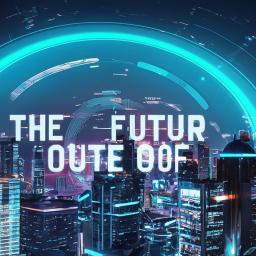
As part of our year-end story package, we tasked ChatGPT with writing a guest post about the future of generative AI. The prompt asked for a 1,200 word article (a number it undercut by quite a margin) that explored both the potential negative and positive outcomes of the technology. We then asked it to include real world examples, which is apparently beyond its capabilities. We also asked it to include a section on the recent Sam Altman debacle which, as you will soon read, was also not a topic it was particularly capable at describing. Below is the unedited output with light changes for formatting.Navigating the future of Generative AI: Balancing exciting possibilities and potential pitfallsGenerative Artificial Intelligence (AI) has emerged as a powerful force, reshaping the technological landscape with its ability to create content autonomously. From language models like GPT-3 to image-generating algorithms, generative AI holds immense promise for the future. However, this promising future is not without its challenges. In this article, we will explore the potential negative outcomes and the most exciting possibilities of generative AI, aiming to strike a balance between optimism and caution. Additionally, we'll address the recent leadership shift involving Sam Altman at OpenAI, shedding light on the ethical considerations associated with AI development.Sam Altman's Leadership Shift: Lessons in ethical AIIn recent months, the AI community witnessed a significant leadership shift at OpenAI involving Sam Altman. The CEO, known for his influential role in steering OpenAI's initiatives, faced a period of controversy surrounding his firing and subsequent re-hiring. This incident underscored the challenges associated with ethical considerations in AI development and management.Addressing ethical concerns: Sam Altman's leadership shift prompted a reevaluation of ethical considerations in AI development and organizational decision-making. The incident raised questions about transparency, accountability, and the need for robust ethical frameworks to guide the development and deployment of AI technologies.Transparency and accountability: The leadership transition emphasized the importance of transparency in organizational decision-making, especially in contexts where AI technologies with widespread implications are involved. It highlighted the necessity of holding leaders and organizations accountable for their actions and ensuring that ethical guidelines are followed.Community involvement: The controversy surrounding Sam Altman's leadership shift also brought to light the significance of involving the wider community in decisions related to AI development. The call for more inclusive decision-making processes gained momentum, reinforcing the idea that diverse perspectives are crucial in navigating the ethical challenges associated with AI technologies.Photoshop (AI prompt: "The future of generative AI in manga style")The potential negative outcomesEthical concerns and biasOne of the primary concerns with generative AI lies in its susceptibility to biases present in training data. If the data used to train these models reflects societal biases, the AI may inadvertently perpetuate and amplify those biases in its generated content. Addressing this issue is crucial to prevent AI systems from unintentionally reinforcing and spreading harmful stereotypes.Security threats and DeepfakesThe ability of generative AI to produce highly realistic and convincing content raises serious security concerns. Deepfakes, for instance, are AI-generated images or videos that manipulate and superimpose content onto real footage. This technology can be exploited for malicious purposes, such as creating fake news, impersonating individuals, or spreading misinformation. As generative AI becomes more sophisticated, the challenge of distinguishing between real and fake content becomes increasingly difficult.Privacy invasionThe advancements in generative AI also raise concerns about privacy invasion. The ability to generate realistic images and videos of individuals who never participated in such content creation poses a risk to personal privacy. Protecting individuals from the unauthorized use of their likeness in AI-generated content will be a pressing issue in the coming years.Unemployment and Economic DisruptionThe automation capabilities of generative AI may lead to workforce displacement in certain industries. Jobs that involve routine and repetitive tasks, such as content creation, could be at risk. Striking a balance between technological advancement and societal well-being will be a challenge to ensure that AI complements human labor rather than replaces it.Moral and Ethical DilemmasAs AI systems become more proficient in generating content that mimics human creativity, ethical questions arise. For instance, who owns the rights to AI-generated art or literature? Determining the legal and moral implications of creations produced by non-human entities challenges our conventional understanding of authorship and intellectual property.Photoshop (AI prompt: "futuristic AI utopia")The Most Exciting PossibilitiesEnhanced Creativity and ProductivityGenerative AI has the potential to amplify human creativity and productivity by automating mundane tasks, allowing individuals to focus on more complex and strategic aspects of their work. In fields like content creation, design, and marketing, AI can assist and inspire, leading to a surge in innovation and efficiency.Revolutionizing HealthcareThe future of generative AI promises breakthroughs in healthcare, from drug discovery to personalized medicine. AI models can analyze vast datasets, identify patterns, and propose novel solutions, significantly accelerating the pace of medical research and improving patient outcomes.Customized User ExperiencesAs generative AI continues to evolve, it can provide highly personalized and tailored experiences for users. From adaptive learning platforms to content recommendations, AI systems can understand individual preferences and behaviors, offering a more seamless and engaging user experience.Human-AI CollaborationInstead of replacing human roles, generative AI is likely to enhance collaboration between humans and machines. AI tools can serve as creative partners, aiding professionals in various fields to achieve outcomes that wouldn't be possible with traditional methods alone. This collaborative approach can lead to unprecedented levels of innovation.Innovations in Art and EntertainmentGenerative AI is already making waves in the art world, creating unique pieces that challenge traditional notions of creativity. In the entertainment industry, AI-driven content creation can open new avenues for storytelling, virtual worlds, and interactive experiences, pushing the boundaries of what is possible in these fields.ConclusionThe future of generative AI is a double-edged sword, offering both exciting possibilities and potential pitfalls. As we navigate this technological landscape, it is crucial to acknowledge and address the ethical concerns and negative outcomes associated with generative AI. Striking a balance between innovation and responsible development is imperative to harness the full potential of AI while mitigating its risks.By fostering interdisciplinary collaboration, implementing ethical guidelines, and investing in research to address biases and security threats, we can pave the way for a future where generative AI enhances human creativity, productivity, and well-being. The recent leadership shift involving Sam Altman serves as a reminder of the importance of ethical considerations in AI development, urging the industry to learn from past mistakes and collectively shape a future where AI benefits humanity responsibly.This article originally appeared on Engadget at https://www.engadget.com/this-is-the-future-of-generative-ai-according-to-generative-ai-160010937.html?src=rss
|
 |
by Andrew Tarantola on (#6HEN8)
We're just over a year since it burst onto the scene and OpenAI's ChatGPT program is somehow even more everywhere than it was in February. Our capability to regulate generative AI and mitigate its myriad real-world harms, on the other hand, continues to lag far behind the technology's state-of-the-art. That makes 2024 a potentially pivotal year for generative AI in particular and machine learning in genera. ill AI continue to prove itself a fundamental revolution in human-computer communication, on par with the introduction of the mouse in 1963?, Or are we instead heading down yet another overhyped technological dead-end like 3D televisions? Let's take a look at how OpenAI and its chatbot have impacted consumer electronics in 2023 and where they might lead the industry in the new year.OpenAI had a great year, all things consideredMeteoric" doesn't do justice to OpenAI's rise this year. The company released ChatGPT on November 30, 2022. Within five days, the program had passed 1 million users; by January, 100 million people a month were logging on to use it. It took Facebook four and a half years to reach those sorts of engagement numbers. ChatGPT outpaced the launches of both TikTok and Instagram to become the most quickly adopted program in the history of the internet in 2023. Heading into 2024, OpenAI (with billions in financial backing from Microsoft) stands at the forefront of the generative AI industry - whether the company can stay there, while billions more are being poured into its rivals' R&D coffers, remains to be seen.The company's sudden success this year also launched its CEO Sam Altman into the media spotlight, with the 38-year-old former head of Y-Combinator basking in much of the praise formerly heaped upon Elon Musk. For a while, Altman was everywhere, repeatedly making appearances before Congressional committees and attending the Senate's AI Safety Summits. He also conducted a 16-city world tour to Israel, India, Japan, Nigeria, South Korea, across Europe and to the UAE to help promote ChatGPT to developers and policy makers.
|
 |
by Steve Dent on (#6HEJZ)
LG is best known for its OLED range when it comes to TVs, but it's expanding its 2024 QNED-branded LCD lineup as well. For CES 2024, the company has unveiled a 98-inch QNED LCD TV, while updating the previous models including its 8K lineup with a new version of its webOS smart TV system, built-in Chromecast, AI-enhanced video and more.This year, LG has four QNED ranges (QNED = quantum dot and nanocell): the 8K miniLED QNED99T, 4K miniLED QNED90T, QNED85T LCD, and the QNED80T range at the bottom. The top QNED99T models will use LG's Alpha 9 processor that can enhance video and audio using AI, while the the QNED90T and QNED85T lineup will feature an updated Alpha 8 processor with improved processing, graphics and AI performance. The QNED80T will use LG's lower-end Alpha 5 Gen 7 chip.All models offer LG's webOS 24, with individual profiles that allow for personalized recommendations and voice recognition for each individual user. It also has Chromecast built in, so you'll be able to watch content from Android and iOS devices via AirPlay 2 and Chromecast, respectively. And starting next year, all of LG's QNED TVs will receive 4 years of webOS upgrades. In addition, some of its previous high-end models (namely, the 8K models launched in 2022 and some others yet to be named), will also get webOS updates for free.The 98-inch model is part of the LG QNED85T lineup, which means it's a mid-range 4K LCD set with local dimming but not miniLED tech. That means it's likely to be priced more reasonably than miniLED TVs, but will lack the precise dimming found on those models. It will have the latest webOS 24 smart TV features, but LG didn't reveal any other specs or the price. LG will also offer 50-, 55-, 65-, 75- and 86-inch models in that range.LG will offer two 8K models (QNED99T) in 75- and 86-inch sizes. No specs or prices are available, but the previous models (that are no longer stocked in the US) cost around $4,800 and $6,500 at launch, respectively. You can also expect very high brightness levels up to 3,000 nits, Dolby Vision HDR support, Dolby Atmos and 120Hz or higher refresh rates for gaming. The QNED90T 4K TVs will also use miniLED and come in 65-, 75- and 86-inch sizes.The bottom end of the lineup (QNED80T) will appeal to budget minded buyers, but still offer the latest smart TV features, Dolby Vision, etc. It'll be available in 43-, 50-, 55-, 65-, 75- and 86-inch sizes. Expect more details and pricing for the new lineup sometime next year.We're reporting live from CES 2024 in Las Vegas from January 6-12. Keep up with all the latest news from the show here.This article originally appeared on Engadget at https://www.engadget.com/lgs-2024-tv-lineup-includes-a-giant-98-inch-qned-model-123551975.html?src=rss
|
 |
by Mat Smith on (#6HEK0)
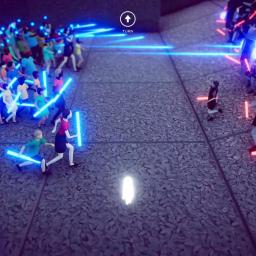
It was an amazing year for games. While there were no new consoles,we did get new VR headsets and a wave of new handheld PCs offered even more options for playing games on the go (or at least on the couch). That's reflected in many of our picks for best games of the year, with several PC-only choices.The year kicked off with a fantastic remake of space horror Dead Space and the breakout success, Pizza Tower. But there were so many more. Obvious selections? Yes: the latest Zelda epic is there, as is Baldur's Gate 3. If you've got some time between Christmas and New Year, there may be no better way to spend it than with one of these games. I've got Cocoon waiting for me.- Mat SmithYou can get these reports delivered daily direct to your inbox. Subscribe right here!The biggest stories you might have missedThe Right to Repair movement won its biggest victories in 2023Deathloop is free on PC for Amazon Prime membersThe first EV with a lithium-free sodium battery hits the road in JanuaryThe Apple Watch import ban is paused - for nowWhat happens next depends on the ITC's response.Urgh, tech news whiplash. A federal appeals court in Washington D.C. has allowed Apple to continue importing the Apple Watch Series 9 and Apple Watch Ultra 2 models. This was just a day after Apple filed its appeal against the International Trade Commission's decision to ban imports of both models of the Apple Watch due to a patent dispute. But you probably read all about that - multiple times.Continue reading.The New York Times is suing OpenAI and Microsoft for copyright infringementThe AI companies used the newspaper's articles for training.The backlash on AI companies and their tools continues to grow - these AI models need information from somewhere. The New York Times is suing OpenAI and Microsoft for using its news articles to train its artificial intelligence chatbots without an agreement that compensates it for its intellectual property. It alleges more than 66 million records, ranging from breaking news articles to op-eds, published across the NYT websites and other affiliated brands were used to train the AI models. The NYT also says these AI products can generate output that mimics its expressive style." This mirrors complaints from comedians and authors like Sarah Silverman and Julian Sancton.Continue reading.Swedish Researchers develop electronic soil' that speeds up plant growtheSoil' is here.Thor Balkhed/Linkoping UniversityResearchers from Linkoping University in Sweden have developed a bioelectronic soil'. It can apparently speed up the growth of plants in hydroponic spaces, or farms that grow plants in environments made up of mostly water. After integrating the engineered eSoil' into the framework where seedlings grow, researchers discovered that sending electrical signals through the soil made barley plants grow 50 percent more on average.This is done through a conductive polymer within the soil and applying a voltage as small as 0.5V on the eSoil to stimulate the roots electrically.Continue reading.This article originally appeared on Engadget at https://www.engadget.com/the-morning-after-the-best-games-of-2023-121548149.html?src=rss
|
 |
by Sarah Fielding on (#6HEH8)
Russia and the United States have had a strained relationship, at best, in recent years. However, the pair are still working together in one regard: getting crews to the International Space Station (ISS). Roscosmos, Russia's federal space agency, has announced that the two countries will continue partnering on "cross-flights until 2025 inclusive."Cross-flights involve putting crews from multiple countries onto the same spacecraft. Roscosmos intends always to have at least one of its own representatives in the Russia section of the ISS and at least one NASA representative in the US section. The agency added that the decision was made "to maintain the reliability of the ISS as a whole." The ISS, launched in 1998, is a symbol of US-Russia cooperation after the Cold War and the space race ended.The news follows NASA's April 2023 announcement that Russia will remain aboard the ISS until 2028. The Director General of Roscosmos, Yuri Borisov, had previously said Russia would pull out of the ISS "after 2024" to focus on creating its own space station. NASA had been preparing for Russia's departure with plans ranging from pulling astronauts from the ISS to figuring out how to control the ISS if Russia took away its thrusters. The US agency has committed to maintaining the ISS until at least 2030.This article originally appeared on Engadget at https://www.engadget.com/russia-will-assist-nasa-with-iss-space-flights-through-2025-115533326.html?src=rss
|
 |
by Mariella Moon on (#6HEH9)
A bundle of four Apple AirTags is currently on sale at Amazon for a price that's even lower than what it sold for during the website's Black Friday sale. You can get the four-pack right now for only $79, 20 percent lower than its retail price of $99 and just a few bucks more than its all-time low. It's a great buy if you've been looking to grab a few AirTags to keep track of several belongings, such as bags and suitcases that airlines could accidentally leave at your connecting airport, or your wallet and keys that you could misplace.AirTags can link up with your iPhone and iPad in one tap, and you can use it to find the items it's tracking through the Find My app. It can help you find lost items by sending out Bluetooth signals that can be tracked by nearby Apple devices also connected to the Find My network. Since some of the top-selling phones in the world are iPhones, you'll have more than a decent chance of finding any lost belongings.If you think the item you're tracking could be nearby, you can play a sound through the AirTag's built-in speaker so that you could easily locate it. On the latest iPhone models, you can even use the Precision Finding feature to get the direction to and know the distance between you and your AirTag. But if it has truly been lost or misplaced, you can put your AirTag in lost mode so that you can instantly get a notification when it's been detected by devices on the Find My network.At the moment, a single AirTag will set you back $24 at Amazon, where it's also selling for 17 percent less than its retail price. It's a good deal if you really only need one AirTag, but the bundle price is unbeatable if you think you may need a few.Follow @EngadgetDeals on Twitter and subscribe to the Engadget Deals newsletter for the latest tech deals and buying advice.This article originally appeared on Engadget at https://www.engadget.com/apples-airtag-4-pack-is-just-79-right-now-111042621.html?src=rss
|
 |
by Sarah Fielding on (#6HEFK)
The new year is almost here, and not many purchases say fresh start more than an upgrade to your smart home tech. Thankfully, getting one of the latest smart home gadgets won't cost too much right now, thanks to a 40 percent discount on Amazon's new third-generation Echo Show 8. The device is down to $90 from $150 - an all-time low.Amazon announced the third-gen Echo Show 8 at an event in September, showing off the device's new edge-to-edge front glass and nice, softer curves. The latest model has quite a few upgrades, but one of the most notable is an Adaptive Content feature. When you're far away from the device - say, sitting across the room - it will display information like the weather and time in a large font. However, the Echo Show 8 will show more personalized content like playlists or news articles when you step closer. Amazon also designed this feature for the second-gen model and other Echo Show devices.As for the third-gen Echo Show 8, it has spatial audio and room calibration, which should be especially obvious through bass and clarity. It also handles Alexa requests on-device with a new processor and should give you a 40 percent faster response time. Amazon also gave the device a 13MP camera and microphones that are more effective at minimizing background noise.Follow @EngadgetDeals on Twitter and subscribe to the Engadget Deals newsletter for the latest tech deals and buying advice.This article originally appeared on Engadget at https://www.engadget.com/amazons-third-generation-echo-show-8-falls-to-a-new-all-time-low-of-90-100547738.html?src=rss
|
 |
by Richard Lai on (#6HEFM)
Xiaomi, a Chinese brand once synonymous with affordable smartphones, is now attempting to make an even bigger splash with its first-ever electric car. Unveiled at a Beijing event earlier today, the Xiaomi SU7 - pronounced "soo-chee" in Chinese - is a sedan based on the company's very own Modena Architecture with HyperEngine electric motors of up to 21,000rpm, as well as chassis stamped by its die casting machines with a clamping force of 9,100 tons - beating that of Tesla's apparently. The line will come in two flavors: the dual-motor all-wheel-drive SU7 Max, and the single-motor rear-wheel-drive SU7.It'll be a few more months before Xiaomi announces the prices, but it's already claiming that the SU7 Max has a range of up to 800km (497 miles; according to China Light-Duty Vehicle Test Cycle aka CLTC), as well as a 0-100km/h acceleration of just 2.78s, both of which apparently beating Tesla's Model S and Porsche's Taycan Turbo. This is partly thanks to battery maker CATL's generous 101kWh 800V high-voltage platform, which offers a 220km range with just a 5-minute charge, or 390km in 10 minutes, or 510km in 15 minutes. The base model, however, only supports 400V charging for its smaller 73.6kWh battery, which has a range of up to 668km or 415 miles.XiaomiXiaomi hired talents from the auto industry to realize this project. Most notably, CEO Lei Jun claimed that Tianyuan Li, formerly of BMW's iX series and iVision concepts, offered himself to Xiaomi's auto design team. Li was also joined by James Qiu, who had previously worked on Mercedes-Benz's Vision EQXX design. They later recruited Chris Bangle, a BMW veteran, to be their design consultant.The SU7 is about the same size as the BMW 5 series, coming in at 1,440mm tall, 1,963mm wide and 4,997mm long. You get three color options: the signature "aqua blue," gray or olive green. In his event, Lei highlighted the seemingly generous leg room as well as trunk spaces - 517L in the back and 105L in the front.At the launch event, Lei highlighted details like the "water droplet" head lamps, each of which resembled the Chinese character for "rice" (which is the "mi" in "Xiaomi"), as well as the halo rear brake light consisting of 360 LEDs. The exec also pointed out that his team went with the half-hidden door handles, because the more flush handles are apparently harder to use in cold weather.XiaomiJust as Xiaomi teased earlier, the SU7 offers a HyperOS in-car entertainment system, which is powered by Qualcomm's Snapdragon 8295 processor and takes just 1.49 seconds to boot. You can access your media, adjust your seats or even control your Xiaomi appliances via the 16.1-inch 3K central screen, as well as optional Xiaomi Pad tablets which can be mounted on magnetic ports (up to 22.5W output) behind the two front head rests. The UI on the central screen allows for up to three split windows for multitasking, and you can even cast your Xiaomi phone's screen to it for a seamless experience. As for music and video entertainment, it'll be complemented by the 23 internal Dolby Atmos speakers.Lei also mentioned opening up the Xiaomi CarIOT ecosystem to third parties, with one example being a smart booster car seat which can remind you if its seat belt isn't fastened. The exec added that even iPhone users can tap into some of the Xiaomi car features, with support for wireless CarPlay and AirPlay connectivity, as well as iPad-mounting for rear passengers.Much like Volkswagen, Xiaomi already knows that car owners still prefer to have some physical buttons, so it's kept a few for climate control, as well as two extra buttons - one for toggling the spoiler (Lei said this is largely for showing off), and one for adjusting the body height (to avoid scratching the bottom, if needed). You can also get an optional row of buttons mounted beneath the central display.XiaomiThe SU7 will have autonomous driving capabilities, too, thanks to its Xiaomi Pilot platform powered by up to two NVIDIA Drive Orin processors (the base model only has one) and an array of sensors. These include a top-mounted Lidar, with a visual range of up to 200m and pixel accuracy of down to 0.1m - the latter meaning better detection for thinner and smaller obstacles. In a series of video demos, Xiaomi showed how the SU7 could navigate through a busy live street with mixed obstacles, as well as performing valet parking on its own, and even parking itself in a robotic car park with tight spaces. Being a Beijing-based company, Xiaomi claims that the SU7's sensors can cope with snowy and rainy climates, too.Lei added that his company aims to complete autonomous driving tests in 100 cities across China by the end of 2024, though it's unclear how soon the local authorities will open up autonomous driving nationwide.In addition to future software updates, Xiaomi also teased its upcoming HyperEngine V8s with a record-breaking 27,200rpm, all tucked inside a stronger silicon steel housing to keep the motor in check. This is apparently already mass-production-ready, with plans to equip this in cars by 2025. The company then teased further with a next-gen electric motor tech based on carbon fiber, which will apparently be capable of a whopping 35,000rpm, but this won't be ready any time soon, apparently.XiaomiXiaomi has yet to share prices for the SU7 line, though Lei already hinted that they will be expensive - which is subjective, of course. We shall find out in a few months' time, and hopefully by then we'll know about availability outside China as well, but we wouldn't count on a US launch any time soon, if ever. Meanwhile, you can get the Xiaomi 14, 14 Pro smartphones and the Xiaomi Watch S3 eSIM in their limited edition colors - either aqua blue or olive green - to match the upcoming SU7.This article originally appeared on Engadget at https://www.engadget.com/xiaomi-says-its-su7-ev-can-outperform-porsche-and-has-more-tech-than-tesla-095637762.html?src=rss
|
 |
by Mariella Moon on (#6HEE4)
Indian authorities allied with Prime Minister Narendra Modi have questioned Apple on the accuracy of its internal threat algorithms and are now investigating the security of its devices, according to The Washington Post. Officials apparently targeted the company after it warned journalists and opposition politicians that state-sponsored hackers may have infiltrated their devices back in October. While Apple is under scrutiny for its security measures in the eyes of the public, the Post says government officials were more upfront with what they wanted behind closed doors.They reportedly called up the company's representatives in India to pressure Apple into finding a way to soften the political impact of its hacking warnings. The officials also called in an Apple security expert to conjure alternative explanations for the warnings that they could tell people - most likely one that doesn't point to the government as the possible culprit.The journalists and politicians who posted about Apple's warnings on social media had one thing in common: They were all critical of Modi's government. Amnesty International examined the phone of one particular journalist named Anand Mangnale who was investigating long-time Modi ally Gautam Adani and found that an attacker had planted the Pegasus spyware on his Apple device. While Apple didn't explicitly say that the Indian government is to blame for the attacks, Pegasus, developed by the Israeli company NSO Group, is mostly sold to governments and government agencies.The Post's report said India's ruling political party has never confirmed or denied using Pegasus to spy on journalists and political opponents, but this is far from the first time its critics have been infected with the Pegasus spyware. In 2021, an investigation by several publications that brought the Pegasus project to light found the spyware on the phones of people with a history of opposing and criticizing Modi's government.This article originally appeared on Engadget at https://www.engadget.com/apple-reportedly-faces-pressure-in-india-after-sending-out-warnings-of-state-sponsored-hacking-073036597.html?src=rss
|
 |
by Will Shanklin on (#6HE4X)
JAC Motors, a Volkswagen-backed Chinese automaker, is set to launch the first mass-produced electric vehicle (EV) with a sodium-ion battery through its new Yiwei brand. Although sodium-ion battery tech has a lower density (and is less mature) than lithium-ion, its lower costs, more abundant supplies and superior cold-weather performance could help accelerate mass EV adoption. CarNewsChina reports that the JAC Yiwei EV hatchback deliveries will begin in January.Yiwei is a new brand in 2023 for JAC. Volkswagen has a 75 percent stake in (and management control of) JAC and owns 50 percent of JAC's parent company, Anhui Jianghuai Automobile Group Holdings (JAG). The Chinese government owns the other half of JAG, making for one of the auto industry's stranger pairings.The Sehol E10X, which the new Yiwei EV appears to be a rebranded version of.JAC via CarNewsChinaThe Yiwei EV appears to be a rebranded version of the Sehol E10X hatchback (above), announced earlier this year. CarNewsChina describes the Sehol model as having a 252 km (157 miles) range with a 25 kWh capacity, 120 Wh / kg energy density, 3C to 4C charging, and a HiNa NaCR32140 cell. When JAC revealed the Yiwei brand in May, it said it would drop the Sehol label and rebrand all its vehicles to either JAC or Yiwei, leading us to this week's EV reveal. JAC hasn't yet said whether the Yiwei-branded model will keep the E10X moniker.In April, JAC showcased a separate EV called the Yiwei 3 at the Shanghai Auto Show. That model launched in June with an LFP lithium battery, promising the sodium-ion variant would launch later.JAC via CarNewsChinaThe new Yiwei EV reportedly uses cylindrical sodium-ion cells from HiNA Battery. JAC assembles the batteries in the company's modular UE (Unitized Encapsulation) honeycomb structure, similar to CATL's CTP (cell-to-pack) and BYD's Blade. The layout can provide for greater stability and performance.This article originally appeared on Engadget at https://www.engadget.com/the-first-ev-with-a-lithium-free-sodium-battery-hits-the-road-in-january-214828536.html?src=rss
|
 |
by Malak Saleh on (#6HE4Y)
Researchers from Linkoping University in Sweden developed a bioelectronic soil' that can speed up the growth of plants in hydroponic spaces, or farms that grow plants without soil in environments made up of mostly water and a place for roots to attach. After integrating the engineered eSoil' into the framework where seedlings grow, researchers discovered that sending electrical signals through the soil made plants grow 50 percent more on average.The eSoil is made up of organic substances mixed with a conductive polymer called PEDOT, which can be found in things like sensors and OLED displays. Eleni Stavrinidou, the supervisor of the study, told Engadget that the soil's conductivity was necessary for stimulating the plant roots. In this particular study, the researchers examined the effect of sending signals to barley seedlings over the span of 15 days before harvesting them for analysis. Applying a voltage as small as 0.5V on the eSoil electrically stimulates the roots, Stavrinidou explained. This, in turn, resulted in a recordable increase in the biomass of the electrically stimulated plants when compared to the non-stimulated seedings.The stimulation's effect on the barley seedlings was described as steady" and transient." Stavrinidou told Engadget that nitrogen, one of the main nutrients involved in plant growth, was processed more efficiently through the stimulation. "We found that the stimulated plants could process the nutrients more efficiently however we don't understand how the stimulation is affecting this process," Stavrindou explained, adding that the reason behind the growth process will be a focus of future studies.PNASWhile hydroponic techniques are mainly used to grow leafy greens and some vegetables like cucumbers and tomatoes, the eSoil could offer a solution to create new ways to increase crop yields in commercial settings and especially in places where environmental conditions impact plant growth. The study highlights that this technique could minimize the use of fertilizers in farming.The opportunity for technological innovation in farming is huge considering the number of US farms has steadily declined since 1982, according to the Department of Agriculture. Last year, the number of US farms reached 2 million, down from 2.2 million in 2007. Not only are farms on the decline, but the US is losing acres of land due to a host of reasons that range from climate change to worsening economic outlook for farmers due to inflation, making farming in controlled environments more popular.But beyond improving crop yield, the implementation of eSoil in hydroponic farms could make them more energy-conscious. While traditional hydroponic farms use up less water, they require more energy to run. The eSoil consumes very little power in the microwatt range," Stavrinidou said. Before this technology can be applied to large-scale agriculture and other types of crops, more studies need to be conducted to observe how electrical stimulation can impact the whole growth cycle of a plant throughout its entire lifespan and not just in the early stages of seedling maturation. Stavrinidou also said that her team plans on studying how the technique affects the growth of other plant species.This article originally appeared on Engadget at https://www.engadget.com/swedish-researchers-develop-electronic-soil-that-speeds-up-plant-growth-205630538.html?src=rss
|
 |
by Pranav Dixit on (#6HE34)
A federal appeals court in Washington D.C. has allowed Apple to continue importing the Apple Watch Series 9 and Apple Watch Ultra 2 models on Wednesday. The court's decision comes a day after Apple filed an appeal against a decision by the International Trade Commission (ITC) to ban imports of both models of the Apple Watch, which are at the heart of a patent dispute.The court's ruling is temporary. It has given the ITC until January 10 to respond to Apple's motion for a longer-term pause on the ban during the appeals process, Reuters reported. This means that Apple should be able to resume Apple Watch sales on its website and in Apple Stores in the US, something that the company had stopped doing last week.Hours after this story was published, Apple told Engadget that the company would, indeed, start selling the Apple Watch in the US again. We are thrilled to return the full Apple Watch lineup to customers in time for the new year," an Apple spokeswoman said in a statement. "Apple Watch Series 9 and Apple Watch Ultra 2, including the blood oxygen feature,will become available for purchase again in the United States at Apple Stores starting today and from apple.com tomorrow by 12pm PT. Apple's teams have worked tirelessly over many years to develop technology that empowers users with industry-leading health, wellness and safety features and we are pleased the U.S. Court of Appeals for the Federal Circuit has stayed the exclusion order while it considers our request to stay the order pending our full appeal."The Watch side of Apple's business generates about $17 billion a year, according to Bloomberg. In October, the ITC determined that Apple violated two patents belonging to another California-based company called Masimo. Both patents revolved around the blood-oxygen sensor that Apple has included in most models of the Watch since 2020. The ITC denied Apple's appeal against its decision, sending the case all the way to the White House for a Presidential Review. President Biden, however, did not veto the ITC's decision, which meant that the ban officially went into effect last week.In its appeal filed on Tuesday, Apple claimed that the company will suffer irreparable harm" if the ban continued. The company is currently exploring redesigning the blood oxygen sensors in its smartwatch after both the ITC and Masimo said that a software fix, which the company is scrambling to issue, would be insufficient to resolve the patent dispute.Update, December 27 2023, 5:49PM ET: This story was updated with a statement from Apple.This article originally appeared on Engadget at https://www.engadget.com/the-apple-watch-import-ban-is-paused--for-now-183332952.html?src=rss
|
 |
by Malak Saleh on (#6HE0G)
The New York Times is suing OpenAI and Microsoft for using published news articles to train its artificial intelligence chatbots without an agreement that compensates it for its intellectual property. The lawsuit, which was filed in a Federal District Court in Manhattan, marks the first time a major news organization has pursued the ChatGPT developers for copyright infringement. The NYT did not specify how much it seeks in payout from the companies but that this action seeks to hold them responsible for the billions of dollars in statutory and actual damages."The NYT claims that OpenAI and Microsoft, the makers of Chat GPT and Copilot, seek to free-ride on The Times's massive investment in its journalism" without having any licensing agreements. In one part of the complaint, the NYT highlights that its domain (www.nytimes.com) was the most used proprietary source mined for content to train GPT-3.It alleges more than 66 million records, ranging from breaking news articles to op-eds, published across the NYT websites and other affiliated brands were used to train the AI models. The lawsuit alleges that the defendants in the case have used almost a century's worth of copyrighted content," causing significant harm to the Times' bottom line. The NYT also says that OpenAI and Microsoft's products can generate output that recites Times content verbatim, closely summarizes it, and mimics its expressive style." This mirrors other complaints from comedians and authors like Sarah Silverman and Julian Sancton who claim OpenAI has profited off their works.
|
 |
by Lawrence Bonk on (#6HDX7)
Arkane Lyon's time-bending FPS Deathloop is free on PC for Amazon Prime members. You have until January 10 to download the game. Additionally, you'll need to link an active Epic Games Store account, but Amazon has made it simple to do that right on the download page. This isn't a rental. The game is yours to keep.This isn't the first time Amazon has given gamers a holiday treat. Last year, it was Dishonored 2, another Arkane classic. The company also tends to give away games to coincide with its Prime Day events.As for Deathloop, it's a fantastic title that marries the harried frenzy of a first person shooter with the intrigue of an old-school adventure title like Myst. We compared it to an escape room in our official review, and that pretty much sums it up. You're trapped on an island in a Groundhog Day-esque time loop and have to figure a way out. The game's filled with thoughtful puzzles and the combat is satisfying, which is no surprise coming from the folks behind Dishonored.In other words, this is one of the most unique and flat-out fun releases of the current generation. It's a steal at full price, so free is a no-brainer. Deathloop is also available on Game Pass, if that's your bag. Developer Arkane is currently busy working on a game based on Marvel's resident vampire hunter, Blade.This article originally appeared on Engadget at https://www.engadget.com/deathloop-is-free-on-pc-for-amazon-prime-members-161153013.html?src=rss
|
 |
by Engadget on (#6HDX8)
It's been a terrible year for game developers, but an amazing year for games. 2023 kicked off with a fantastic remake of Dead Space and the breakout success that was Pizza Tower, and by the end of the year we had dozens more games vying for our attention. There were some missteps along the way - if you'd asked me to predict this list a year ago, I would've mentioned both Redfall and Starfield - but overall it's been a packed year unusually low on disappointment.We've never tried to name a single title as "the Game of the Year." Instead, it's become a tradition to get the whole team together to talk about our individual favorites. So here are those games, presented in alphabetical order to avoid hurting any of our writers' feelings. Feel free to sound off about what your favorites are in the comments; there are no wrong answers. Except maybe The Day Before.Alan Wake 2I rarely have time to finish games these days, but I devoured Alan Wake 2 in just a few weeks. For me and my limited gaming time, that felt miraculous.I'll admit, I'm a mark for Remedy Entertainment. I've been following its work since the first Max Payne arrived on PCs in 2001, right as I was gearing up to head to college and building my first desktop PC. (It had a 1.3GHz AMD Athlon Thunderbird and an ATI All-in-Wonder Radeon GPU with a TV tuner. Yah, I was one of the cool kids on campus..)Max Payne blew me away with its fluid slow-motion gunplay mechanics and immersive narrative. As a lifelong console gamer until then, it was a big step forward from something like Tomb Raider. Playing Alan Wake 2 brought me right back to my college days: Its storytelling is far more mature than Max Payne, but leagues more ambitious. I spent much of the game with a big stupid grin on my face, marveling at how the game balanced two different leads (Saga Anderson and Mr. Wake himself), an array of quirky characters, and some of the boldest gaming narrative choices in the last decade.As Jessica Conditt said in her review, Alan Wake 2 works best when you're not in combat. I enjoyed chatting with the locals and digging up background details more than I did shooting a repetitive array of baddies. It also helped that I was playing it on LG's massive 49-inch UltraGear monitor, which at times made it feel like I was completely immersed in the game. It made the more idyllic environments in the Pacific Northwest seem all the more beautiful, while the scarier bits felt even more nightmarish. Get you a game that can do both.Over two decades after I became a fan of the studio, I'm just as excited to see what Remedy is cooking next. It feels like college all over again. Maybe time really is a flat circle. Or maybe, as Alan Wake would say, it's a spiral towards something greater, the accumulation of everything we've learned and all the mistakes we've made as we pursue the specter of perfection. Anyway, good game. - Devindra Hardawar, Senior ReporterArmored Core 6Elden Ring was my first foray into the FromSoftware universe since Chromehounds for the Xbox 360. Elden Ring is an all-timer and no more needs to be said about it, but coming off that I was a bit trepidatious about whether the developers could apply their learnings and innovations to something with a legacy like Armored Core. Silly me to ever doubt FromSoft, because they delivered a game worthy of their developer pedigree. While AC6 doesn't feel like Elden Ring with mechs" I'm honestly glad it doesn't. The developers have done a masterful job of blending classic Armored Core depth, customization and combat with the scale, bombast and world-building they are known for.Some of the bosses in this game felt impossible, like many of the best FromSoft bosses do, but as always there is a tweak to your gameplay style or strategy that can turn the tables in the end. The first actual boss fight with Balteus had me questioning if I was ever good at video games in the first place, and when I finally adjusted to beat him I had that same triumphant feeling of beating the best FromSoft bosses from games past. Something else less discussed, but still worthy of praise as well, is how FromSoft finds a way to make what is basically a radio play story feel important and impactful when mixed with the heavy action of the actual gameplay. In a game where you wouldn't expect story or characters to have an impact, FromSoft does an excellent job making you care about its dystopian Mecha pilots and their handlers in a way I never expected.AC6 is a game I couldn't stop thinking about, and the one I probably felt the most fulfilled by following each session, after my heart rate dropped and my vice grip on the controller loosened. FromSoftware continues to prove that it's in a league of their own. - Justin Vachon, Lead DesignerBaldur's Gate 3The Game of the Year is my game of the year. I've dabbled with Dragon Age, spent a few nights trying to unravel 2002's Neverwinter Nights, but Baldur's Gate 3, while still unapologetically Dungeons and Dragons, smooths out the procedural part while still deciding the fates of heroes, villains and the world on the roll of a die. Plus modifiers.The rules and numbers of D&D are all baked into BG3, but you can also just play it and let the rules take care of themselves. Even when I failed dice rolls (how things are decided in D&D games, pitting your character's stats against skill check" numbers), I was happy to see how this affected the story. Sure, you can save-scum (quicksave, fail, quickload and try again), but it eventually feels hollow when there are so many decisions to make.I talked to a colleague about the game and he was leery about a game with so many options. He'd have to play, replay, choose different options, and feel short changed if he didn't eke every plot twist of a game like BG3.The game, the options, the side quests are all so dense with choices and branching paths that there are (almost) countless permutations, distractions and bad decisions to make. I found that oddly freeing. The game, divided into three parts, does block out parts of the world from act to act, but I never found that particularly limiting. In fact, it ensured I tied up the most exciting plot points or destinations before plowing further into the story.Two tips: being evil is very much an option (as is a mid-game redemption arc) and be careful when you rest overnight, as that will tick the game's internal clock over and could mess up your plans. Invaders, unsurprisingly, don't wait. - Mat Smith, UK Bureau ChiefCocoonMy day-to-day job is mostly behind the scenes, editing stories and scripts, dealing with technical issues and managing a fantastic group of reporters. All of which is to say I actually only have five bylines on the site this year. Two of them are about Cocoon - 40 percent, baby! It stands to reason, then, that it's my personal game of the year.You can read my review of the game for some expanded thoughts, but here's the summary, at least: Cocoon is a near-perfect puzzle game in which you play a bug and who has to jump between worlds to progress. It's a laser-focused experience that only lets you play around with one or two mechanics at a time, but stretches each of its ideas to its natural conclusion. It's also dirt cheap and on Game Pass, so what do you have to lose? - Aaron Souppouris, Executive EditorThe Cosmic Wheel SisterhoodThe Cosmic Wheel Sisterhood is sexy, well-written and replayable, and it's one of my favorite games of the year, from one of my favorite studios of all time. Deconstructeam is responsible for Gods Will Be Watching and The Red Strings Club, two vibrant titles about the limits of humanity and society, and The Cosmic Wheel Sisterhood brings these themes to a new plane.The Cosmic Wheel Sisterhood is about building tarot decks, manipulating an election from afar, betraying a coven of witches, gaining power and seducing everyone. It's bigger than anything Deconstructeam has ever made, with layered characters, branching narratives and strangely beautiful art. The witches, behemoths and otherworldly creatures in The Cosmic Wheel Sisterhood fill the game with life and interwoven relationships, while the deck-building mechanic is surprisingly dense and designed to encourage creativity. The game pulled me in and didn't let go until it was done with me, and even still, I find myself happily returning to it. - Jessica Conditt, Senior ReporterDave the DiverNo matter if Dave the Diver is an indie game or not, it's still one heck of a good time. The pixel-soaked adventure breaks down into two main gameplay mechanics that shouldn't mix at all, but somehow do. During the day you explore the sea, hiding from (or fighting) sharks and catching gobs of fish. At night, you run a sushi restaurant to sell those fish.Each of these mechanics are completely different. When you're under the water, it's exploration all the way, with mysteries around every reef and a constantly-shifting landscape. Running the restaurant is both a management sim, as you have to develop recipes and hire staff, and a fast-paced minigame that resembles the iconic arcade cabinet Tapper. This dichotomy is similar to another recent gem, Moonlighter. I loved Moonlighter, but Dave the Diver is even more addictive.Both primary elements of the game are polished to a Nintendo-like sheen. In other words, it kept me up, night after night, as one last run" turned into two and then three. But that's just the beginning. As you progress through the occasionally hilarious story, Dave the Diver keeps adding new gameplay mechanics. Without giving too much away, there are mid-game additions that draw inspiration from Cooking Mama, Stardew Valley and others. Each of these elements are always a treat and never get in the way of the main gameplay loop. Also, you can hire a velociraptor as a server and Jason Vorhees as a sous chef. Good times. - Lawrence Bonk, Contributing ReporterDead SpaceOne of the best games of 2023 actually came out in 2008. The Dead Space remake landed in January and it stayed at the top of my GOTY list for the ensuing 11 months, slowly covering every other entry in globs of bile and blood. Developers at EA brought the terror and tension of the original Dead Space to modern platforms with thoughtful gameplay tweaks and a layer of visual polish, and in the process, they cemented the game's reputation as an action-horror classic.Dead Space spawned in an era of limitations. It was built for the Xbox 360 and PlayStation 3, consoles that were powerful, but still constrained in terms of processing power and graphics; they couldn't support massive, open-world games filled with procedural generation and AI-powered encounters. Innovation at the time had to stem from a game's mechanics, and Dead Space was the first action-horror blockbuster to remove the HUD and the power of a headshot, creating an immersive and terrifying combat rhythm.The remake paid tribute to everything that made the original Dead Space a living legend. The USG Ishimura was cold and maze-like, with a few more mysteries added to its corridors, and some boss fights were updated to take advantage of high-fidelity mechanics, but it still felt like the Dead Space I remember. It felt better, even. In an age of living games and open-world blandness, the Dead Space remake showcased the supreme power of restraint in game design. - Jessica CondittDiablo II: ResurrectedAside from the quick turnaround following the original, the wait time between new Diablo games is more than a decade. So to my surprise, in a year when we got Diablo IV, I found myself spending more time playing Diablo II: Resurrected. That's not to say that the latest entry is a failure, because despite a drop in players and cratering views on Twitch, Diablo IV's story is the franchise's best yet and Blizzard nailed the look and feel of the game. Unfortunately, despite having faced similar issues with Diablo III, its endgame still needs a lot of work. This is why in 2023 I've had much more fun playing Diablo II, or more accurately Diablo II: Resurrected.Thanks to a superb graphical overhaul, the game looks how I remember it in my head instead of the chunky low-res textures it actually had back in 2001. But more importantly, Blizzard fixed a ton of annoying glitches from the original (like enemy mana drain being way too strong) while implementing a bunch of handy quality-of-life upgrades such as automatic gold pickup and the shared stash. But the thing I like the most is that, since it came out in 2021, Blizzard has expanded upon the core game with additional patches and balance changes that have injected new life into the game while preserving its spirit. This year, specs like elemental druid and martial arts assassin suddenly went from being underpowered niche playstyles to top-tier builds, essentially undoing 20 years of neglect. The addition of Sunder Charms also made a ton of single-element specs way more viable and the addition of Terror Zones turned item farming into less of a grind while increasing the challenge.Sure, melee classes still need a bit of love (maybe recalculate how attack rating works or add some more AOE abilities) and the cadence of new content has ground to a halt in the run-up to and subsequent release of Diablo IV. But for an update to a two-decade-old game, Diablo II: Resurrected feels like a great homage to an all-time classic and a wonderful example of a remake done right. Now I'm just hoping Blizzard finds some time to finally finish Act IV or maybe even add a brand new chapter onto the best ARPG ever. - Sam Rutherford, Senior EditorF-Zero 99Nintendo has carved out a little legacy of remixing gaming staples with its 99 (or 35) series, and F-Zero 99 is one of its most thoughtful battles royale yet. (I'd put it second behind Tetris 99.) From afar, it looks simple: the SNES arcade racer, but with 98 other people. But the addition of a persistent boost meter (which doubles as a health bar) and the ability to bank Super Sparks" that you can spend to access a limited-time Skyway" fundamentally changes how you play.Do you throw caution to the wind, use more power this lap and try to hold on from the front? Do you hang back, try to increase your meter by knocking out other players and risk an insurmountable deficit? Where exactly on the track should you activate the Skyway? Winning still requires skill and track mastery - it's F-Zero, after all - but there's a new layer of strategy and resource management. What was once a sprint now becomes a horse race. You make more moment-to-moment decisions each time out. And decisions are what makes a game interesting.All the other things that made F-Zero great 30 years ago still apply. The Mode 7 style. That iconic music. The distinction between the four supercars. The honest test of skill - this entry is a little more forgiving, but if you screw up, no Mario Kart shenanigans are going to come and save you. The course selection still has clear peaks and valleys, but F-Zero 99 doesn't try to revise the past: It honors its source material, then makes considered changes that present it in a new light. In an industry that is constantly rehashing old ideas, that's commendable. - Jeff Dunn, Senior Commerce WriterHumanityIn Humanity, you play as a ghostly Shina Ibu who barks directions at a horde of humans to guide them toward a goal. That all seems simple enough, but like all great puzzle games, developer tha LTD plays around with the concept and keeps building on it until the very end. What starts as a fairly peaceful rumination about the controlled movement of humans soon segues into imaginative boss battles and mammoth lightsaber brawls.There's a deeper story than you might expect from a game that's ostensibly about sheep herding mindless drones. What will stick with me from playing Humanity is a sense of optimism, an idealism that our species can achieve anything if we work together toward a common goal. That, and having the chance to take control of an adorable ethereal pup. - Kris Holt, Contributing ReporterThe Legend of Zelda: Tears of the KingdomThe Legend of Zelda: Tears of the Kingdomis a perfect game blending exploration, action, adventure, combat and puzzle solving. It looks and sounds beautiful, with Hyrule a wonderful clockwork world you just want to spend your days hiking through without a care in the world. The title's standout feature, Ultrahand, enables players to construct anything they can imagine to help get them through tricky puzzles. Its technological prowess, given the limited hardware it runs on, has made it the envy of the game development and player world. I started 2023 having never played a Zelda title, and by the end, I'd sunk about 1,000 hours combined into Breath of the Wild and Tears of the Kingdom.I don't think it's unfair to say that the game is also a lot.Nintendo's more-is-more approach means the triple-digit play times are a bug as much as they are a feature. This goes hand-in-hand with the freedom you're given, which lets you play the game any way you choose. The two extra environments may have headed off complaints that it was a glorified DLC, but you can feel the stretching. The Depths is little more than a repetitious traversal zone while the Sky Islands are five puzzles repeated over and over. The company has found the limit of what a coherent single player experience can be, and then just wandered beyond it.And then there's the grinding, which extends well beyond the usual gripes around weapons degradation. If you want to reach the end game, you'll need more than a wooden sword and shield, which means endlessly beating the mid-size bosses. Plus, you'll need to put a shift in down the mines Depths to gather enough Zoanite to make Autobuild worthwhile. I kept my Switch offline ever since Nintendo nerfed the easy duplication glitch because I don't have enough hours in the day to play. In fact, I'd pay good money for a Grown Adult" version of the game where it respects your time more than the existing version does.While I'm moaning, I might as well add that I hate how Lynels and Ganondorf can destroy your Zonai weapons during combat. If you're not a gifted sword-fighter, and you've never quite got your parrying skill perfect, then crafting robot weapons was a neat workaround. The game lets you pick your preferred way to succeed, except when it really matters, when it eliminates all but the most tedious. I don't think, after spending so long getting everything else done, I can be bothered to go back and defeat Ganondorf despite pledging to do it before the end of the year.Still, perfect game, 10/10. - Daniel Cooper, Senior ReporterMario Kart 8 Deluxe Booster Course PassEven though Mario Kart 8 Deluxewill be seven years old next April, we don't need a new Mario Kart game. The title is still just as entertaining as it was brand new, thanks in large part to the massive expansion of new tracks Nintendo began dropping in March 2022. And while the waves have been slightly annoying, mostly due to the constant questions about their release dates from my nine year old, the steady cadence that wrapped up last month meant new challenges were arriving regularly for over a year.The Booster Course Pass is well worth the money at $24.99. It's less than a new game would cost and you get a new game's worth of tracks (48) for that price. Not to mention added characters like Kamek, Petey Piranha, Diddy Kong and Peachette - all Steele family favorites. But for me, the best part is revisiting modernized versions of tracks from older Mario Kart games, the ones that endeared me to the series.Rainbow Road from Wii is an all-time favorite and one course that I'll go straight to when I only have a few minutes to play. Courses like Waluigi Pinball and Peach Gardens from DS are a lot more fun expanded to a big screen and I've enjoyed the road trip through major cities from Mario Kart Tour, a game I never played as karting on my phone didn't really appeal to me. There are duds, of course, like Mario Circuit 3 from SNES that don't really translate as well to modern racing.Maybe there will be a new game that flexes the muscle of the new Switch, but I'm not sure what there is to improve. I'd be perfectly happy to keep paying $25 every few years for a collection of new tracks, whether entirely new or inspired by the past, as this is a perfectly fine way to keep the game fresh for those of us who still really enjoy it. - Billy Steele, Senior ReporterMarvel's Spider-Man 2Like a lot of recent PlayStation sequels, Spider-Man 2 takes everything that worked about the original game and gives us more. There's more of New York City to explore, two characters that you can swap between at almost any time, more moves and suits and superpowers to take on the many enemies you'll encounter throughout the adventure. It feels like the kind of game that easily could have gotten overstuffed and collapsed under the weight of what Insomniac Games was trying to pull off.Fortunately, that didn't happen, thanks in large part to some of the best mechanics in recent gaming. Swinging around the city remains an absolute delight, and the fluid fighting really makes you feel like a superhero. The new web wings give you another new way to navigate Manhattan and its boroughs, and getting your hands on the fabled symbiote suit opens up yet another new set of battle mechanics. Similarly, the open world map feels vibrant and alive, with tons to do when you're ready to give the main story a break.Naturally, the symbiote also takes center stage in the storytelling, as Kraven the hunter gives way to Venom throughout the game as the two main villains you'll contend with. It makes sense to have two main baddies since there are two Spider-Men in this game, OG Peter Parker as well as his new protege Miles Morales. Each Spider-Man gets plenty of story development and heroic action sequences, and the roster of supporting characters has been fleshed out as well.Ultimately, Spider-Man 2 is pretty easy to sum up. It's just plain fun, with a great story, delightful mechanics and a wonderfully detailed NYC to explore. Whether or not you played the original game, it's easy to get sucked right into this one and feel like a superhero. - Nathan Ingraham, Deputy News EditorMoonstone IslandMoonstone Island asks the question, what if Stardew Valley, but with Pokemon?" It's the same kind of farming and dating sim you know and love, but with turn-based battles instead of manually swinging a pickaxe. Any creature you encounter can be captured and forced to fight in your stead, and there's an element-based weakness mechanic pulled straight from Nintendo's iconic pocket monsters.They already had me with that Stardew meets Pokemon hook, but the developers didn't stop there. This is a legitimate open world game with a large map that resembles the sky islands from The Legend of Zelda: Tears of the Kingdom. There are dozens upon dozens of these islands and I had an absolute blast sequence breaking my way to dangerous locations in the early parts of the game, only to have my butt handed to me by high-level monsters. That's my jam, right there.I also love the art style and, in particular, the NPCs. The romanceable characters here are top-tier and, in my opinion, more interesting than rival farming sims. I want to be friends with the blacksmith Ferra and town scientist Zed. However, my heart belongs to the punk rock herbalist Gaiana. If anyone messes with Gaiana, they are gonna get a visit from a trio of level 99 Pikachus, er, I mean Capacibees. - Lawrence BonkNot finishing gamesFinish a videogame? In this attention economy?! I honestly couldn't tell you the last time that I actually made it to a game's end credits. For as much as I enjoy the PS5 games I buy, there's inevitably some real-life commitment that draws me away from them, or an unconquerable in-game skill challenge that saps my interest. Doesn't matter if it's an indie like the therapeutically smashy Dysmantle or a AAA adventure franchise like Horizon and Assassins Creed - don't even get me started on Seikiro or Elden Ring - I will invariably get bored at some point before the final boss and wander off towards whatever new shiny title comes out next.As such, my 2023 GOTY is a toss up between Armored Core 6 and Baldur's Gate 3, having played roughly the first half of each (multiple times, in BG3's case). Sure, one is a frantic shooter pitting players against superior armed forces in high speed mobile gun battles, and the other is an inclusive high fantasy dating sim wrapped in an epic adventure RPG. They both offer me an opportunity to tinker, futz, fiddle and otherwise experiment with the physical rules and social mores of the in-game universe without demanding I clear the endgame content first.In this way, every game becomes a Choose-Your-Own-Adventure game (my absolute favorite genre growing up) and I get to assuage the FOMO anxiety I experience while playing titles with linear storylines. I'm not reverting to a previous save because I realize I messed up an earlier quest or accidentally closed off a storyline, I'm reloading just so I can figure out what all the other buttons and switches I didn't push and pull also do. I find that freeing. There's no pressure to get it right," only the opportunity to see what might happen.Between AC6's mission-based format and the ease at which I can manage save instances in BG3, I can load up any scenario I've played so far and try it again differently - maybe see how well an energy weapon-based loadout would work or what would happen if I fought with different companions or modified spell lists. Even though I know that there is a climactic endgame struggle (that the dev team worked really hard to produce) to get to and all the new game+ rewards that come with beating it, neither title really pressures me into getting there.If I want to go off on a tangent and try my hand at pickpocketing an entire town, I absolutely can - then Groundhog Day the timeline back to before I started and do it all again, this time maybe wearing a different hat. Each gives me the flexibility to interact with their content as I have time and interest. - Andrew Tarantola, Senior ReporterNYT ConnectionsNew York TimesWordle, the little word game that could, took over the first half of 2022. Every day, we had a new puzzle to look forward to - and potential bragging rights that would connect us with friends, family and strangers on the internet. Though Wordle fever subsided in 2023, my thirst for a daily word game remained. Yes, I could keep playing Wordle, but just one game wasn't enough. Even as a subscriber and active user of the New York Times' Games app, I needed more.I didn't want something as time-consuming as the full crossword each day, nor something as involved as getting to the Genius level on Spelling Bee. I wanted to be done in 5 minutes or less, which is why Wordle and the daily Mini crossword were perfect. In June, the New York Times introduced Connections, and it hit that sweet spot of being challenging enough to engage my brain but remaining casual enough that I didn't need to derail my work day to finish it.Connections' mechanics are simple. Every day, you're presented with sixteen tiles, each containing a word. You have to group those words into four sets of four based on what they have in common. And, like the app cautions, these categories are always more specific than 5-letter words" or names" or verbs." At first, the game was straightforward and almost too easy. A few weeks in, though, and I've found the puzzles can get challenging, thanks to devious setups. For example, one time the grid included words like Apple," Dell" and Intel," which tricked my tech-obsessed brain into thinking they were company brand names. It turned out that they belonged to other groups like Synonyms for information" or Fruit," instead.I would be remiss if I didn't point out that Connections isn't a unique idea that the New York Times thought up. Various iterations of a similar word game have existed before. Redditors pointed out its likeness to an app called Red Herring, while the host of a British television quiz show called Only Connect asked if the Times was aware this has been a TV show in the UK since 2008?"Sadly, though, if not for the Times adding Connections to its slate of word games, I would never have come across Red Herring. And because so many of the puzzles I play daily are in the NYT Games app, it's much easier to check out all of them in the same place instead of installing a new app.My daily routine now involves opening NYT Games, finishing Wordle, Connections, the Mini crossword, getting the Pangram on Spelling Bee and then bragging to anyone who will listen. That way, I feel like I'm giving my brain a bit of fun exercise before I drag my attention to my inbox or Slack for the real work of the day. - Cherlynn Low, Deputy Reviews EditorPizza TowerThe best Nintendo platformer" of the year didn't involve Mario, Kirby or Donkey Kong. It wasn't even made by Nintendo. Instead, it stars a balding pizza chef named Peppino Spaghetti, and its development was led by a guy who goes by the pseudonym McPig. It's called Pizza Tower - and while you could crudely describe it as Wario Land 4 on cocaine," it is one of the most refreshing and joyously creative games I've played in recent memory.I waxed poetic about Pizza Tower in a write-up earlier this year, so go read that for a more complete picture. The big thing is that it understands how every platformer is fundamentally about movement. For a platformer to be fun, that movement needs to grab you from the off, then give you the space to explore where it could go. Mario games know this. Sonic games often forget that last part. Pizza Tower gets it right. Little Peppino dashes like a freight train teetering off the tracks, slamming through (not around) every enemy and obstacle in sight. You can Do Poorly, but you can't die, so you have freedom to push the limits. It's a constant kinetic thrill.But it's more than that. In that charming Nintendo way, every level in Pizza Tower presents new ideas, so it never gets stale. The music is incredible. The animation is both grotesque and immediately expressive. (How many other games look like this?) The boss fights actually respect you. The ending sequence might be the best I've played in a decade. It all makes for a game with a distinct sense of character and identity; it has clear inspirations, but it's not pastiche. It is completely in tune with itself, both in aesthetics and design. And it's fun as hell. - Jeff DunnStar Wars Jedi: SurvivorJedi: Survivor is a game that the best sequels aspire to be. It improves on every single aspect of the original and pushes its systems to new heights while introducing many others that only enhance the base game. Like the greats of Mass Effect 2, Assassins Creed 2, Half-Life 2, Portal 2, Jedi: Survivor never stops upping the ante and pushing what a game like this can achieve.In an age where there is far too much Star Wars content for any normal human to consume, from movies, TV, books, etc. Jedi: Survivor represents an experience you can hop into with only knowledge from Fallen Order at your disposal, and even that can be recapped for you in a nice short video within Jedi: Survivor itself. Your experience will only be further improved by a greater knowledge of the Star Wars landscape, new and old, but it isn't a prerequisite to have a great time with this game.The story of Cal Kestis and his group of rebels grows larger and makes the universe and world you inhabit feel big in a way the first game didn't. The souls-like combat of the first game returns here and is improved upon in every conceivable way. The Jedi power fantasy that I've always dreamed about in Star Wars games has finally been realized within Jedi: Survivor. Many times I ended a fight in a flurry of saber swings and force powers and resolved feeling like I could conquer the world. There's one sequence in particular involving a towering Imperial walker that is one of the most exhilarating and well-executed set piece moments in gaming since the days of Uncharted 2's campaign. I had to put the controller down for 10 minutes after just to sit in awe and process what I had seen Respawn pull off.At the core of Jedi: Survivor is a story and experience that feels more emotionally deep and original than Fallen Order did. Respawn hits their stride with this game from a writing and especially performance perspective that makes its best characters shine and its most impactful story moments hit that much harder. By the end, you'll be pining for the conclusion to the trilogy in a way that few Star Wars properties have been able to elicit in years. - Justin VachonSuper Mario Bros. WonderThere are a few sure things when it comes to me and Mario games: I prefer 2D over 3D, and Super Mario World is my all-time favorite. As such, Super Mario Wonder was high on my list of games to try this year - the first new side-scrolling Mario game in over a decade. And while I really enjoyed the new" Super Mario Bros. entries for the Wii and Wii U, those games were also a little too slavishly devoted to Mario's past. Not so with Super Mario Wonder.Between the entirely redesigned and more involved character animations (Mario grabbing his cap when he goes through a pipe is particularly cute) and wild level designs that feel entirely unique to the series, Super Mario Wonder feels like the first side-scrolling Mario game to really do something new in decades. That's largely thanks to the Wonder flowers that twist every single stage into a psychedelic version of itself, but the level design is inspired even before you find that flower.Nintendo also shook up the overall world map a bit, letting you pick your way through stages instead of putting you on a mostly linear path. And as you're in the Flower Kingdom, not the familiar Mushroom Kingdom, there's a lot more variety in the themes for each world. (No, world two isn't the desert this time!) There are plenty of familiar enemies - what would a Mario game be without red and green Koopa Troopas? - but almost every level has a particular baddie that requires you to reshape your approach. And the badge system is a great take on the familiar power-ups, letting you choose a boost best suited to either the stage you're on or the way you like to play the game. Also, Elephant Mario!I feel like I've barely scratched the surface of what makes Super Mario Wonder work so well, but hopefully it's sufficient to say that it's Nintendo at its best and most creative. That's something I didn't expect to see in a Mario game again. I can see myself playing Wonder for the next 30 years or so, just like I've played Super Mario World for the last 30 years. - Nathan IngrahamTchiaTchia was the right game at the right time for me. As I sailed toward the sunset on a makeshift raft with rousing music filling my ears, I was filled with a sense of calm that I'd been seeking for quite some time. That was my favorite moment of any game this year, but the rest of Tchia isn't exactly lacking.You play as a young girl who scours a New Caledonia-inspired archipelago in search of her kidnapped father in this open-world exploration game. While titles like The Legend of Zelda: Tears of the Kingdom aim to push the boundaries of the genre, Tchia is content to stay in its lane, albeit with some mechanics that provide plenty of opportunity to play as you wish.Tchia can transform into a variety of fauna and inanimate objects thanks to her soul jumping ability. After you unlock the ability to summon a bird, you can take to the skies from almost anywhere in mere seconds. Each animal you can jump into has an ability, such as dogs digging, sharks biting and birds, uh, pooping.There's not much in the way of combat. The only enemies you'll encounter are monsters made of fabric, and you'll need to use elements such as fire to dispose of them. But I didn't have a problem with that. Tchia is far more about the notion of discovery than slashing away at countless baddies.This seems like a perfect introduction to open-world adventures for younger gamers out there. While there are some fairly bleak plot points, Tchia is a real charmer. It's an ideal length too, as a playthrough will take between around six and eight hours unless you go hunting for all the secrets and collectibles. Or you decide to spend a few extra hours simply sailing around these beautiful islands. - Kris HoltThis article originally appeared on Engadget at https://www.engadget.com/engadgets-games-of-the-year-2023-150053925.html?src=rss
|
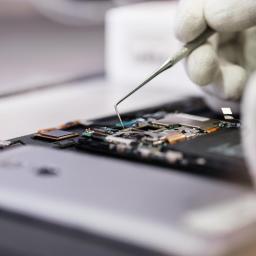 |
by Daniel Cooper on (#6HDTF)
It's been a banner year for the Right to Repair movement as supportive bills are signed into law across the US and abroad. Apple shocked the world, too, as it backed California's bill and urged for a countrywide equivalent. In the EU, regulators mandated the use of USB-C as a standard charging socket for most small devices, and are now turning their attention toward anti-repair tactics. But, while the movement's leaders should enjoy a glass or two of the good stuff, these victories aren't total, despite how hard-won they were. To misquote Winston Churchill, this isn't the beginning of the end, it's very much the end of the beginning.In the last year we've seen bills enacted in New York, Colorado, Minnesota and California. New York's was famously watered down by late-in-the-day politicking which neutered some of its key provisions. That included protections for existing devices (instead, it kicks in for hardware made after July 1, 2023), obligations to supply individual parts rather than bundles and it now omits any coverage for enterprise-grade electronics like those used in schools and hospitals. Minnesota's survived with more teeth, albeit with generous carve-outs to manufacturers of farm equipment, games consoles and cars.NICOLAS TUCAT via Getty ImagesCalifornia's bill which, interestingly, won Apple's backing, kicks in next year with the company saying it'll support its provisions countrywide. And given that support, you should expect to see this bill pushed as the model for any future federal legislation. It broadly covers consumer tech and appliances, but exempts games consoles and security equipment. Key provisions require companies to sell components under fair and reasonable terms" to owners and third-party repair shops long after the last model leaves the factory. Devices with a wholesale price between $50 and $99.99 need to have parts, tools and repair guides available for at least three years after the last new model is made. For gear costing more than $100, the parts need to stick around for at least seven years" regardless of individual warranty periods. Similarly, tools and documentation need to be made available on a similarly "fair and reasonable" basis. There are carve-outs, including protections on trade secrets and source code, but the bones of the bill are solid enough.Elizabeth Chamberlain, Director of Sustainability at iFixit, told Engadget it's the strongest'' bill passed in the US, and one of the most comprehensive. (That's less of a compliment given the paucity of alternative legislation also enacted.) The requirements for parts to remain available for so long after purchase ensures people have the repair materials they need when they need them." Not to mention enabling independent repair stores to get original parts for a huge range of things without having to sign up for invasive and limiting manufacturer programs." Nathan Proctor of the Public Interest Research Group, before the bill passed, said it would also end the onerous conditions Apple used in its Independent Repair Program. An Engadget investigation showed that while Apple's IRP looked like a good idea on the surface, it was full of hidden charges and restrictive clauses. And as much as the iPhone 14 won plaudits for being far more repairable than its predecessors, it also used parts pairing - is a process of locking a part to a specific device, preventing users from swapping it out without the manufacturer's approval. Sadly, California's bill also does nothing to prevent parts pairing, which may explain why it won Apple's backing in the first place.In the last few years, the European Union has assumed the mantle as the major regulator of big tech, albeit with many critics. The bloc has now mandated a common charger, USB-C, for all mobile devices sold by the end of 2024, and all laptops by spring 2026. In November, regulators began looking at ways to encourage repairs and refurbishment over replacement for new gear. That includes people's right to access spare parts, documentation and tools at a reasonable cost" - even when the device is outside its warranty period. More importantly, the draft seeks to prevent manufacturers using contractual, hardware or software technique" to block repairs which would seem to indicate parts pairing.Anyone feeling triumphant about these wins should bear in mind the broad latitude these terms offer tech companies. Last year, Apple enabled end users to repair their own devices, but not in a way that made it easy, affordable or worthwhile. As The New York Times found out, replacing a component required flight cases full of factory-grade hardware and a hefty deposit. It's a lot better now, but you'll still need to pay to loan the high-end gear and shoulder the risk if any of it goes missing.Similarly, these bills do nothing to prevent the company's replacement-as-default strategy when you visit a store. After a bike accident this summer, the front and back glass of my iPhone 11 Pro Max was smashed, but it was otherwise functional. Sadly, my local Genius Bar told me the only thing I could do was... buy a replacement at full cost. That's before we mention the iPhone 15 which, despite Apple's pledges to be more repair-friendly, is still loaded with parts pairing. It means that, despite all of the sweet words about sustainability in the last few years, you can still only fix a part with Apple's direct and explicit blessing. As Elizabeth Chamberlain said, upselling is such a ubiquitous problem and really hard to stop," but noted that the EU may have a fix for it. Its draft rules would require manufacturers to offer repair first, before replacement, as long as it's cheaper" (for the consumer).Upton Sinclair once wrote that a person won't grasp something if their salary relies upon them not understanding it. The tech industry's organizing principle, after all, is to sell you a new piece of gear every few years to keep its profits high. Stretching out the life of a device is bad for their bottom line (at least in the short term) which explains much of their resistance. It's why, as much as we can hope for better terms and more repairable devices, we must also be vigilant and not rest upon our laurels. The risk is that people get the right to repair their devices, but no way to actually exercise it.This article originally appeared on Engadget at https://www.engadget.com/the-right-to-repair-movement-won-its-biggest-victories-in-2023-143010331.html?src=rss
|
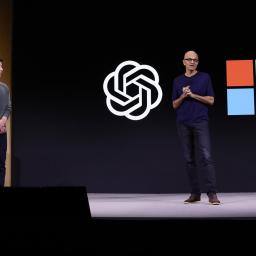 |
by Mat Smith on (#6HDRJ)
Microsoft, a notoriously conservative and slow-moving giant, is bringing artificial intelligence right into the heart of Windows. But. after investing a total of $13 billion in ChatGPT-maker OpenAI (and acquiring a 49 percent stake in the process), will AI actually make its products better?Microsoft went to town. Bing Chat officially kicked off its year of AI, while Copilot, assisting with its AI smarts, subsequently launched on Edge, Microsoft 365 products like Word and Powerpoint and eventually Windows 11.While the AI interactions aren't perfect, the one constant around AI is that everything is changing incredibly quickly. Microsoft has already announced Copilot will be upgraded with the more powerful GPT-4 Turbo and Dall-E 3 models.- Mat SmithThe biggest stories you might have missedHow the EU forced tech companies to change in 2023The best Xbox Series X and Series S accessories in 2024CBS and Paramount's parent company reports hack affecting over 80,000 peopleYou can get these reports delivered daily direct to your inbox. Subscribe right here!Amazon's Prime Video will start serving ads on January 29, 2023You'll have to pay $3 a month on top of your subscription to get rid of commercials.Amazon is telling its Prime Video subscribers that they have to pay extra if they don't want their viewing experience interrupted by commercials. It will start showing "limited advertisements" with its service's movies and shows starting on January 29. If they want to keep it ad-free, they'll have to pay an extra fee of $3 a month on top of their Prime subscription or their standalone $9-a-month Prime Video membership. The company says it's all for increasing investment" in its shows and movies. Lord of the Rings doesn't pay for itself.Continue reading.Apple appeals ban on Watch Series 9 and Ultra 2It went into effect today, but the company says it's taking all measures" to reverse course.EngadgetApple filed its appeal to the International Trade Commission (ITC), attempting to reverse a ban on US sales of the Apple Watch Series 9 and Ultra 2, according to court records. The company's also requesting an emergency stay on the ban until a decision is reached regarding proposed redesigns of both smartwatch models. The matter even went before President Biden, with Apple hoping in vain for a veto. The ban officially goes into effect today, though Apple started pulling smartwatches from its digital and physical storefronts last week.Continue reading.Fan-made Fallout: London is finally coming this AprilIt has been described as a DLC-sized mod for Bethesda's Fallout 4'.Team FolonAn impressive-looking Fallout: London mod has been on our radar for a couple of years, and now the fan-made adventure has an official release date of April 23. The team behind it claim it's a DLC-sized mod" for Bethesda's Fallout 4, built from the bones of the 2015 sequel. The trailer shows off a post-apocalyptic London, with iconic locations like Big Ben, Shakespeare's Globe and Trafalgar Square,Continue reading.This article originally appeared on Engadget at https://www.engadget.com/the-morning-after-microsofts-big-bet-on-ai-in-2023-121555490.html?src=rss
|
 |
by Sarah Fielding on (#6HDPT)
The holidays are over and all those great digital Nintendo Switch games you got aren't going to store themselves, especially if you've maxed out your Switch storage. Fortunately, a well-timed sale has you covered, with SanDisk's 1TB microSD currently on sale for $90 from $150 - a solid 40 percent discount. It's designed specifically for the Nintendo Switch and features a Legend of Zelda design.SanDisk's 1TB microSD is Nintendo Switch system's official licensed microSD card, meaning you don't have to worry about any issues with compatibility. It offers write speeds of up to 90MB per second and read speeds up to 100MB per second. The Nintendo Switch only comes with 32GB of storage (part of which the system uses), so an extra 1TB can go a long way toward saving all your gaming data.If you're in need of a whole lot more storage, Western Digital's 4TB SN850X NVMe Internal Gaming SSD is also on sale. The Windows computer drive is currently down to $230 from $286 - a 19 percent discount. The WD_Black SSD offers speeds up to 7,300MB per second while regularly monitoring the drive's health. It also controls your RGB style and uses tools like predictive loading. Keep in mind this deal is available on the model without heatsink.Follow @EngadgetDeals on Twitter and subscribe to the Engadget Deals newsletter for the latest tech deals and buying advice.This article originally appeared on Engadget at https://www.engadget.com/sandisks-1tb-microsd-is-just-90-in-amazons-storage-sale-103521798.html?src=rss
|
 |
by Steve Dent on (#6HDNK)
Apple's designer exodus continues as product design chief Tang Tan is leaving the company and joining Jony Ive's design firm LoveFrom, according to Bloomberg's Mark Gurman. There, he'll reportedly work on a new artificial intelligence hardware project backed by OpenAI's Sam Altman with aim of creating devices deploying the latest deep learning technology.Tan was in charge of design for Apple's main products including the iPhone, Watch and AirPods, so his departure leaves a sizable hole. As part of LoveFrom, Tan will act as hardware design lead for the new AI project, with Altman providing the software running underneath. All products are supposedly in the early concept phases, with a focus on devices for the home. None of the parties (OpenAI, LoveFrom or Apple) have commented on the news.It was already known that Tan would be likely be leaving Apple, but it hadn't yet been revealed where he'd go. Earlier this year, Jony Ive's successor Evans Hankey left the company after just a few years in the product design chief role. In all, about 14 members of Ive's former team have left Apple since 2019, with only a half dozen or so remaining. Ive worked as a consultant for Apple until 2022, and more than 20 former Apple employees have joined Ive under LoveFrom.Altman was recently fired (and then rehired) by OpenAI, in part because he was raising funds for other endeavors. One of those was the team-up with Ive to create AI hardware backed by Softbank, according to a previous Bloomberg report.This article originally appeared on Engadget at https://www.engadget.com/apples-iphone-designer-is-leaving-to-work-with-jony-ive-and-sam-altman-on-ai-hardware-093028794.html?src=rss
|
 |
by Mariella Moon on (#6HDJG)
Amazon has started notifying Prime Video subscribers that they have to pay extra if they don't want their viewing experience interrupted by commercials. In an email the company has sent to customers, it said that it will start showing "limited advertisements" with its service's movies and shows starting on January 29. Those who want to keep their accounts ad-free will have to pay an extra fee of $3 a month on top of their Prime subscription or their standalone $9-a-month Prime Video membership.The company first announced that it was going to serve ads with its content - and that the initial regions to be affected are the US, UK, Germany and Canada - back in September. Customers in France, Italy, Spain, Mexico and Australia will have to make the decision whether to endure the advertisements it serves or pay extra by late next year. Amazon mentioned back then that it's aiming to "have meaningfully fewer ads than linear TV and other streaming TV providers." While "meaningfully fewer" is pretty vague, Variety said at the time that four minutes per hour seemed to be the lowest amount of ad time for a streaming platform.Amazon reiterated that goal in the email it sent to subscribers. It also explained that introducing ads to its service and charging more for an ad-free viewing experience will help it invest "in compelling content and keep increasing that investment over a long period of time." The company told subscribers that they'll automatically start seeing ads by the end of January and linked to a website where they can pay for ad-free viewing. In an information page about the change, Amazon clarified that it will not be showing ads with rented or purchased content. It also said that Puerto Rico, the US Virgin Islands, Guam, the Mariana Islands and American Samoa are excluded from the rollout for now.This article originally appeared on Engadget at https://www.engadget.com/amazons-prime-video-will-start-serving-ads-on-january-29-unless-you-pay-extra-040529534.html?src=rss
|
 |
by Will Shanklin on (#6HDFQ)
National Amusements, CBS and Paramount's parent company, reported a year-old hack this month affecting 82,128 people. TechCrunch first covered the breach, revealed in a company legal filing with Maine's Attorney General under a 2005 state digital privacy law. National Amusements hasn't commented publicly on the intrusion outside of the legal filing, and it isn't clear if customer (or only" employee) data was stolen.Maine's data breach notification says the hack occurred over a year ago, from December 13 to 15, 2022. It states 82,128 people were affected, 64 of whom were Maine residents. National Amusements' senior vice president of human resources filed the notice, which may suggest (but not confirm) that it revolved largely or entirely around internal employee data. The filing says the company began notifying customers in writing on December 22, 2023 - 372 days after the breach.On or about December 15, 2022, National Amusements became aware of suspicious activity in our computer network," the notification letter to victims reads. We immediately took steps to secure our network and minimize any disruption to our operations."However, that last sentence contains an inconsistency, as the notice posted by Maine's Attorney General's office lists the date breach discovered" as August 23, 2023. That suggests the company didn't know about the intrusion until eight months after the incident, hardly qualifying as immediately" taking steps.The filing says hackers accessed financial information, including account number or credit/debit card number (in combination with security code, access code, password or PIN for the account)." National Amusements wrote in Maine's notice that it's offering victims 12 months of Experian credit monitoring and identity theft services to customers whose social security numbers were taken.Engadget contacted National Amusements for confirmation or additional info. We will update this article if we hear back.National Amusements gained a controlling stake in Paramount and CBS in 2019 following the Viacom-CBS merger. This hack appears separate from one Paramount disclosed in August through Massachusetts' Attorney General's Office. The company listed that breach's date as between May and June 2023."This article originally appeared on Engadget at https://www.engadget.com/cbs-and-paramounts-parent-company-reports-hack-affecting-over-80000-people-213459711.html?src=rss
|
 |
by Lawrence Bonk on (#6HDCS)
If you've been planning on spending the tail-end of your holiday break revisiting the original Splatoon for Wii U or Super Smash Bros. for Nintendo 3DS, you could be out of luck. It looks like Nintendo has already begun to restrict the Wii U and 3DS's ability to play online, according to multiple users and media outlets like Nintendo Life.This started just before Christmas Eve, which is a real Bowser move.We knew this was coming, but Nintendo originally said the shutdown wouldn't happen until early April. This may not impact every player just yet, so head online with your console to give it a shot. Jonathan Barrow of Pretendo, an open-source Nintendo Network replacement," wrote that this is part of a slow rollout" of Nintendo's April plans. Pretendo hopes to eventually bring the two consoles back online.To be fair, Nintendo never actually said that the April end-date was set in stone, as the company suggested that it could discontinue online services earlier than planned." It could've warned folks, however, so they could get one last round of multiplayer Kid Icarus: Uprising in.This news follows Nintendo closing its 3DS and Wii U eShops back in March. So, now, you can't buy new games or go online with your old games. The company's silly-yet-engaging Miiverse social network, which operated on both consoles, was shut down in 2017, though there's a post archive.This is sad, but it happens. Out with the old and in with the new, and all of that. Being a gamer is weird that way. Entire generations of games simply disappear, like Goomba tears in the rain. On the plus side, maybe we'll be able to shell out full-price for some more remakes, with a Luigi's Mansion: Dark Moon refresh coming to the Switch next year.This article originally appeared on Engadget at https://www.engadget.com/nintendo-starts-shutting-down-online-play-for-wii-u-and-3ds-months-ahead-of-schedule-191720412.html?src=rss
|
 |
by Lawrence Bonk on (#6HDAP)
Apple has filed an appeal to the International Trade Commission (ITC) attempting to reverse a ban on US sales of the Apple Watch Series 9 and Ultra 2, according to court records. The company's also requesting an emergency stay on the ban until a decision is reached regarding proposed redesigns of both smartwatch models.The company spoke to Reuters and said it's taking all measures to return" the smartwatches to US store shelves. The appeal is just one part of that. The matter even went before President Biden, with Apple hoping in vain for a veto. The ban officially goes into effect today, though Apple started pulling smartwatches from its digital and physical storefronts last week.In today's filing, Apple claims it will suffer irreparable harm" if the ban continues. The Exclusion Order Enforcement Branch of U.S. Customs and Border Protection is scheduled to make a decision on Apple's redesigned versions of the smartwatches on January 13.This all started when the ITC ruled that Apple infringed on blood oxygen saturation tracking technology patented by a health tech firm called Masimo. This led to Apple scrambling to issue a software fix before a ban went into effect. However, the ITC and Masimo agreed that this is a hardware issue involving the actual sensor, so software fixes wouldn't cut it. As such, Apple is busy redesigning the sensors for the two smartwatch models. The Apple Watch SE doesn't have a blood oxygen sensor, so it remains unimpacted by the ban.Masimo sued Apple back in 2021 over the aforementioned patient violations and even alleged that the company poached employees with high-level knowledge of blood oxygen monitoring capabilities. It's still possible the two companies will come to a financial agreement, putting this issue to bed.So what does this mean for consumers looking for a bit of wrist candy? You can still buy the Apple Watch Series 9 and Ultra 2 in other parts of the world, as the ban only impacts the US. You can also buy the watches from third-party retailers in the US until the stock dries up. You cannot, however, purchase one of these smartwatches directly from Apple.Apple Watch sales account for around half of the entire smartwatch market. So when the company says the ban will cause irreparable harm", it isn't kidding.This article originally appeared on Engadget at https://www.engadget.com/apple-appeals-ban-on-watch-series-9-and-ultra-2-174046101.html?src=rss
|
 |
by Malak Saleh on (#6HDAQ)
Microsoft's Copilot tool, the company's AI chatbot that can do everything from help you write code to draft a marketing email, has made its way onto Android mobile devices. Copilot, which is powered by OpenAI's latest models GPT-4 and DALL-E 3, can also be used to generate images from simple text descriptions and requests. The app is available on the Google Play Store, is free to download and does not require a Microsoft account to sign in.The rollout of a mobile version of Microsoft's Copilot (formerly Bing Chat) was quiet - with little buzz and no formal announcements, unlike what we saw with the release of Bing Chat on mobile devices. The new Copilot app was released earlier this month and was initially spotted by Neowin when X users noticed it in the Play Store. Copilot is still not available on iOS though, and the company has yet to make any promises for a release date.It only makes sense that Copilot has made its way to mobile devices (or at least on Android to start). Microsoft's previous move to bring Copilot to Windows 10, after launching on Edge, Microsoft 365 products and Windows 11 - added an additional 1 billion devices that are eligible to use the AI assistant, signaling Microsoft's deadset view on expansion. This coincides with the company's recent updates to Copilot which include its video summarization capability and song creation feature.This article originally appeared on Engadget at https://www.engadget.com/microsofts-copilot-ai-assistant-arrives-on-android-170729243.html?src=rss
|
 |
by Lawrence Bonk on (#6HD8G)
The impressive-looking Fallout: London mod has been on our radar for a couple of years, and now the fan-made adventure has an official release date of April 23. The development team says the game's already finished, but it requires these last few months for testing, according to Eurogamer.This is a DLC-sized mod" for Bethesda's Fallout 4, so it was built from the bones of the 2015 sequel. As you can guess, it gives players free rein over a post-apocalyptic London. The release date trailer shows iconic locations like Big Ben, Shakespeare's Globe and Trafalgar Square, among others. Of course, these areas have been warped by nuclear fallout and decades of chaos. You know the drill.Developer Team Folon says the game's European location isn't just window dressing. The mod will lead players down story paths that explore pre-war European history" and take a look at how Fallout's Resource Wars impacted the class structured society" of the region. It's also a direct sequel to Fallout 4, being advertised as a continuation of the base game." So you'll need a PC version of the original title to play the mod.Fallout: London has been in development for more than three years and was expected to launch in 2022 or 2023. Team Folon says the delay was unavoidable, as many team members come from a region affected by conflict", potentially referring to Ukraine.While the release date may have little significance to those of us in the good ole USA, April 23 is St. George's Day across Britain. It's a day filled with celebrations and parades, though not an official bank holiday. It's also just a week after that Fallout show drops on Amazon Prime Video. In other words, April's a big month for fans of Vault Boy.This article originally appeared on Engadget at https://www.engadget.com/fan-made-fallout-london-is-finally-coming-this-april-161548854.html?src=rss
|
 |
by Karissa Bell,Pranav Dixit on (#6HD8H)
This year, tech companies have made concessions that would have once been unthinkable. Apple agreed to adopt the RCS protocol, allowing for text message interoperability with Android devices, and, after more than a decade it ditched the lightning port in its latest iPhone. Meta offered some users the choice to opt out of targeted advertising for a monthly subscription. TikTok, Meta, and Snap allowed some users to opt out of their recommendation algorithms entirely.None of these concessions would have happened without pressure from the European Union. The bloc has long taken the lead in regulating Big Tech" (or attempting to), but 2023 saw some of those efforts finally come to fruition.The most immediate result of increased EU regulations this year came with the arrival of the iPhone 15 lineup, which was the first phone from Apple to support USB-C rather than its proprietary lightning port. The company may have eventually made the switch on its own, but it came in 2023 as a direct result of a European law that made USB-C the common charging standard."We have no choice as we do around the world but to comply to local laws," Apple exec Greg Joswiak said about the rules last year. (The regulation requires all new phones and other mobile devices to adopt USB-C by the end of 2024.)Likewise, it's widely believed Apple's decision to finally agree to support the RCS standard in iMessage was the result of political will within the EU. Apple had long been resistant to supporting RCS, which would finally modernize text messages between iPhone owners and their green bubble" friends.Apple hasn't publicly said why it changed its stance. But Google and other companies were pressuring EU authorities to regulate iMessage like other gatekeeper" services that fall under its authority thanks to the Digital Markets Act (DMA). Apple's surprise announcement that it would support RCS after all came on the same day as the deadline for companies to challenge the EU's gatekeeper rules. So Apple's about face on RCS could reasonably be interpreted as an attempt to pacify EU regulators who could have taken more aggressive measures, like requiring iMessage to be fully interoperable with other chat apps like WhatsApp.Notably, both of these changes will also benefit US users, even though they are a consequence of EU-specific regulations.There's definitely a higher degree of protection to the consumer in Europe than there is in the US," Carolina Milanesi, a consumer analyst with Creative Strategies, told Engadget. Those protections, she noted, often cascade down" to other regions because it can be impractical to implement different standards across geographies.In addition to the gains made under the DMA, most of the major social media apps - including Facebook, TikTok, Twitter, YouTube, Snapchat and Instagram - fall under the purview of another EU law that went into effect this year, the Digital Services Act. Under this law, these companies are required to make detailed disclosures about disinformation and other harmful content, and explain how their recommendation algorithms work.If you force the social media industry to explain itself, to reveal to some degree its inner workings, it will have an incentive to not misbehave and/or incentive to self regulate more vigorously" explains Paul Barrett, deputy director of NYU's Stern Center for Business and Human Rights.Whether these measures will actually make these services better for those using them, however, is less clear. There are still open questions about how the rules will be enforced. But there have been a few notable changes for EU-based social media users.Snapchat, Meta and TikTok all now allow European users to opt out of their recommendation algorithms entirely. Snapchat also ended most targeted advertising for 13- to 17-year-olds in the bloc. Additionally, Meta was forced to allow EU users to opt-out of targeted advertising or choose no advertising at all (in exchange for a hefty monthly subscription.)While these may not seem like monumental changes, they do strike at the heart of all of these companies' business models. And it's unlikely, if left to self-regulate as US policymakers have been content to allow them to do, that any of these companies would have voluntarily acted against their own self-interest.This article originally appeared on Engadget at https://www.engadget.com/how-the-eu-forced-tech-companies-to-change-in-2023-153023033.html?src=rss
|
 |
by Devindra Hardawar on (#6HD6B)
Every time Microsoft launched a major AI feature this year, I couldn't help but feel more skeptical about the company's new direction. Here's Microsoft, a notoriously conservative and slow-moving giant, reshaping its products around artificial intelligence not long after most people learned generative AI existed. The last time it made such a dramatic shift we got Windows 8, a failed attempt at making its flagship OS tablet and touchscreen friendly.Now, the company is bringing AI right into the heart of Windows and I'm left wondering: Is Microsoft jumping into artificial intelligence to actually make its products better? Or is it just trying to stake a claim as an AI innovator and pray that the technology actually lives up to the hype? At this point, it's genuinely hard to tell.As the Zune, WebTV and Windows Phone have shown, Microsoft isn't so great at timing. Its products often either land too early to be useful (as in the case of the sluggish WebTV), or arrive far too late to make an impact (like the genuinely great Zune HD). But when the company unveiled its AI-powered Bing Chat earlier this year, it was perfectly positioned to coast on the success of ChatGPT, which by then had reportedly reached 100 million users in just two months. According to UBS analysts, that would have made ChatGPT the fastest growing consumer application in history. What better time to mate the power of generative AI with one of its notoriously beleaguered products? Microsoft had nothing to lose.OpenAI CEO Sam Altman and Microsoft CEO Satya Nadella at the first OpenAI DevDay in November 2023.Justin Sullivan via Getty ImagesAfter investing a total of $13 billion in ChatGPT-maker OpenAI (and acquiring a 49 percent stake in the process), Microsoft was probably eager to show off its shiny new toy ahead of Google and others. The introduction of Bing Chat officially kicked off Microsoft's year of AI: Copilot launched on Edge, Microsoft 365 products like Word and Powerpoint and eventually made its way to Windows 11. Even more surprising, the company recently announced that Copilot is coming to Windows 10 - a sign that it wants AI features in front of as many people as possible. (Windows 11 reportedly accounts for 26 percent of Windows installations, while Windows 10 still has 69 percent. By targeting both platforms Copilot could potentially reach up to 1.4 billion users.)There's no doubt that Copilot makes a great first impression. Type in a few words (or speak them aloud), and it returns with direct answers to your questions, like a whip-smart assistant. There are no ads to wade through, and you only have to engage with additional links if you want. It's a glimpse at a world beyond search engines, one where AI could help guide us through an increasingly chaotic media landscape. Microsoft's Copilots can also help out in specific applications: In Edge it can summarize the webpage you're looking at; it can help to transcribe and generate action points in Teams Meetings; and it can help unearth hard to find settings in Windows (for example, you could just type "How do I turn on Night Mode?" to flip that on).But Copilot's confident veneer hides the fact that it often makes errors and can occasionally misunderstand your questions entirely. It's far less responsive than using a typical search engine, as there's a lot of opaque AI processing happening in the background. And in my testing, it also crashes more often than you'd think, which requires a reboot" of your session (but at least it doesn't flash a blue screen like Windows).MicrosoftIn an effort to temper our expectations, Microsoft has a helpful note emblazoned atop Bing's AI chat: "Bing is powered by AI, so surprises and mistakes are possible. Please share feedback so we can improve!" Microsoft appears to show a bit of humility here by acknowledging that its AI chat isn't perfect, and it's trying to earn some brownie points by saying it's listening to your feedback. Mostly, though, that warning serves as a way out for Microsoft. It can tout Copilot's ability to write essays for you and hold vaguely realistic conversations, but the minute it screws up, the company can just say, "It's just a beta, LOL!"The big test for Microsoft's Copilots and other generative AI tools comes down to one thing: trust. Can a user trust that it'll deliver the relevant information when it asks a question? Can we be sure Copilow will even understand our query correctly? Aaron Woodman, Microsoft's VP of Windows Marketing, tells us that trust will ultimately come down to users "kicking the tires" for themselves and seeing how well Copilot performs. "I think that type of organic growth is one that we're going to see over time," he said in an interview with Engadget at the Windows Copilot launch in September. "And I bet it'll be explosive because the value is there, and I think customers will see that very quickly."MicrosoftWoodman also believes that users will understand that Copilot won't always be perfect, especially during these early days. "I weirdly think we're probably more empathetic with people and understand where they're at with growth than we are with technology," he said. "I think the best thing that we can do is honestly own that, be transparent about it. At some level, every conversation we're in, we're trying to lean into [that] this is a growth process. We want to make sure you understand reference materials. I think people will understand that we're trying to accelerate bringing [new] technology to them."I've been using Microsoft's AI solutions since Bing Chat launched earlier this year, and while it's helpful for simple tasks, like creating a specification table comparing two products, it hasn't exactly changed the way I work. Microsoft also had to seriously restrict Bing Chat's capabilities early on after it started arguing with users and issuing disturbing responses. In Windows 11, Copilot can sometimes help me find settings like dark mode, but it can't always pull up the controls within the Copilot pane, and sometimes it just sends me to general settings menus if it can't figure out what I'm asking for.More recently, I've had disappointing conversations with Bing when I asked if it was a good time to buy a Nintendo Switch (it took some prodding for it to bring up rumors of a potential Switch follow-up coming next year), and its ability to answer questions around images is still less useful than Google's image search.When I took a photo of my kid's baby monitor and asked What is this?," Bing was aware of its function, but it got the actual model and manufacturer wrong. That query also took five seconds to complete. The Google Image Search took half a second and correctly identified it as the Eufy Space Monitor. Score one for traditional search (and yes, I know it's also powered by its own set of computer vision models).MicrosoftWe can look to Microsoft's Github Copilot, which launched in November 2021, as one way users can learn to work with AI. It's mainly meant to serve as a partner alongside an experienced programmer: It'll look out for potential issues and it can even whip up some simple code.According to developer Aidan Tilgner, Github Copilot can be genuinely useful for coders, so long as you keep your expectations in check. In the paper "GitHub Copilot AI pair programming: Asset or Liability?" authors Arghavan Moradi Dakhel, Vahid Majdinasab, Amin Nikanjam, Foutse Khomh, Michel C.Desmarais, and Zhen Ming Jiang found Github Copilot similarly useful, but note "it can also become a liability if it is used by novices, those who may not be familiar with the problem context and correct coding methods.""Copilot suggests solutions that might be buggy and difficult to understand, which may be accepted as correct solutions by novices," the authors add. "Adding such buggy and complex code into software projects can highly impact their quality."By leaning so much on Copilots in the future, Microsoft may also be tying itself too closely to OpenAI, a young company that recently went through one of the most volatile weekends in Silicon Valley history. OpenAI's board fired CEO Sam Altman, but after a significant amount of internal pressure (and some cajoling from Microsoft CEO Satya Nadella), it ultimately re-hired him a few days later. If OpenAI goes through another tumultuous event, it won't just be Microsoft's $13 billion investment in danger: It'll be the company's future plans for practically all of its products.According to Windows Central, Microsoft's next major Windows update, Hudson Valley," may arrive next year with a slew of AI enhancements in tow. That includes the ability to analyze content being displayed in video chats, an improved Copilot that can remember everything you've done on your PC, and better system-wide search. Some features may also require CPUs with NPUs, like AMD's last batch of chips and Intel's new Core Ultra hardware. That's similar to the Windows Studio Effects features like background blurring and auto-framing, which also require NPUs.The one constant around AI these days is that everything is changing quickly. Since I started writing this piece, Microsoft announced Copilot would be upgraded with the more powerful GPT-4 Turbo and Dall-E 3 models, which will make them even more capable. Perhaps Microsoft and OpenAI will eventually be able to fix all of the issues I've seen with Copilot so far, and ultimately deliver a transformative AI tool that's easily available to everyone. But I also hoped for the best when it came to the company's dual-screen Duo and Neo plans, and all I got in return was disappointment.This article originally appeared on Engadget at https://www.engadget.com/microsoft-bet-big-on-ai-in-2023-but-its-ai-future-is-still-unclear-143055721.html?src=rss
|
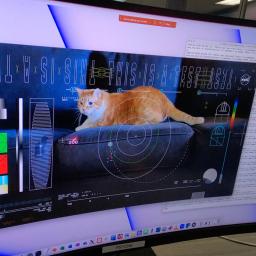 |
by Mat Smith on (#6HD4C)
A video of Taters the cat beamed across 19 million miles of space because NASA had to try it. It was a successful demonstration of new laser communication technology, through which NASA beamed an ultra-high-definition video across deep space, from the Psyche spacecraft back to Earth. The signal from the video, sent on December 11, made it to Earth in 101 seconds.That data speed - through space - is faster than most broadband connections on Earth.- Mat SmithYou can get these reports delivered daily direct to your inbox. Subscribe right here!The biggest stories you might have missedHow we built a less-explodey lithium battery and kickstarted the EV revolutionThe best books we read in 2023Engadget Podcast: Diving into the Apple Watch sales banThe best budgeting apps to replace MintApple reportedly wants to team up with news publishers to train its AIIt's offering publishers deals worth at least $50 million, according to The New York Times.Apple has apparently started negotiating with major publishers and news organizations to use their content to train its generative AI system. The company doesn't expect to get its hands on content for free, though, and The New York Times says it's offering them multi-year deals worth at least $50 million. While some of the publishers are reportedly concerned about the repercussions of letting Apple use their news articles throughout the years, the company is building goodwill simply by asking for permission and showing willingness to pay.Continue reading.Humane Ai Pin orders will start shipping in MarchThe next-gen wearable, which taps into artificial intelligence, starts at $699.HumaneThe Humane Ai Pin is expected to start shipping in March. On Friday, the company posted on X that those who placed priority orders will receive their Ai Pins first when we begin shipping in March." The company previously gave an early 2024" estimate for the screen-less, $66 wearable device, which Humane believes is the next-gen hardware to replace smartphones.Instead of a screen, the Ai Pin relies on voice cues and a projector that beams info onto the user's hand.Continue reading.Mint Mobile says hackers accessed customer information during a security breachAffected customers have been notified by email.Mint Mobile, the prepaid mobile carrier backed by Ryan Reynolds, notified customers via email this weekend that their information may have been stolen in a security breach. That information includes names, phone numbers, email addresses and SIM and IMEI numbers. Hackers did not access customers' credit card information, which Mint says is not stored, nor were passwords compromised.Continue reading.This article originally appeared on Engadget at https://www.engadget.com/the-morning-after-nasa-beamed-a-cat-video-from-deep-space-to-earth-121540007.html?src=rss
|
 |
by Engadget on (#6HCS9)
With El Nino slated to drop a warm, wet winter on most of the US in the coming months, everybody's going to need something good to read while the weather outside is frightful. Engadget's well-read staff have some suggestions: our favorite books of 2023! We've got a phenomenal assortment of genres and titles for you this year, from horror and true crime to rom-coms and fantasy adventures, here to provide months of entertainment for even the most voracious reader.BerkleyFinal Girl Support Group by Grady Hendrix (Karissa Bell - Senior Reporter, Social Media)I love horror movies but horror novels are kind of hit and miss for me. I was immediately pulled into Final Girl Support Group, though, which does a lot of winking and nodding at classic slasher flicks while creating a completely unique story.If you're a fan of horror, then you're already familiar with the trope of the final girl." Grady Hendrix's novel doesn't satirize the final girl, but imagines what life might be like for them after the end of their movie. Each of the main characters is (loosely) based on the final girl of a classic slasher, though their storylines don't feel contrived or predictable. It reads like a fast-paced thriller but, like so many of the best horror movies, it's also a poignant reflection on trauma. It's also the rare thriller where I found myself wanting more at the end of the story. Luckily, HBO has signed on to develop a series based on the book, so I may soon get my wish.The Chromatic Fantasy by H. A. (Avery Ellis - Deputy Editor, Reports)2023 was the year I undertook to read a lot more books written by or centering characters who were like me: which is to say, trans. I tore through Nevada and Dream of a Woman, recognizing bits of myself reflected back and seeing versions of me that could exist in the future; I just barely slogged through Testo Junkie, cringed with Tiny Pieces of Skull, gravely nodded along with Whipping Girl and sobbed as Stone Butch Blues kicked me in the heart over and over again. (There's more. Ask me for recommendations!) The canon of trans literature is unfortunately not huge, and I speedran a good portion of it, always interleaving comics, zines or manga between novels.Enter The Chromatic Fantasy.It popped up in the new releases section of the newsletter from comics mainstay Silver Sprocket, which was all I knew going in. What I got, in what I assumed would be a break from often-heavy trans narratives, was... the most adorable T4T romance I've ever read?? Jules and Casper have some truly cute us-against-the-world chemistry, which is only further heightened by their status as literal outlaws - get in loser, we're robbing rich jerks at swordpoint. The fantastical setting is best described as polychronistic: while mostly hewing to gorgeously rendered high fantasy aesthetics, there are, for example, landline telephones (such the better to flirtatiously twirl a finger through the wire of), and seemingly the corporation Starbucks, none of which is explained or needs to be.The Chromatic Fantasy slips effortlessly between swashbuckling glibness (benefits of a protagonist who literally cannot die) and genuine emotion. And did I mention it's gorgeous? No really, it's jaw-droppingly pretty. Congratulations to H. A. on joining Leslie Feinberg in the hall of Authors Who Made Me Cry Ugly Tears This Year.Tor NightfireNestlings by Nat Cassidy (Valentina Palladino - Senior Commerce Editor)Nat Cassidy hooked me last year with his excellent novel Mary: An Awakening of Terror, and his sophomore release is certainly not a slump. Nestlings follows Ana and Reid, a couple with a new baby who move into the Deptford, an ancient, revered Manhattan apartment building overlooking Central Park. It seems almost magical that they even won the competitive lottery to move to this otherworldly place. Both Ana and Reid believe their new home could be the answer to their problems: Reid, a struggling musician with a lackluster day job trying to care for his new daughter and his wheelchair-bound wife; Ana, a voice actor with bubbling resentments toward her baby after a traumatic childbirth left her paralyzed from the waist down.But there's no peace for the little family once they move in. Disturbing events leave Ana paranoid and wanting to get out, while Reid dismisses her concerns as he dives deeper into learning about the gothic building's history. Baby Charlie never sleeps and constantly fusses, and things go from bad to worse when the young parents discover needle-like bite marks on their daughter.What follows is an absolute rollercoaster of terror, filled with gargoyles, vampiric creatures, sore-infested, suicidal neighbors, cockroach-chomping real estate agents and lots and lots of bugs. Cassidy does a great job of drawing readers in with questions about what the hell is going on in this apartment building that's so hard to move into but also seems to have no one living in it aside from Ana and Reid. The plot is enough to keep readers guessing, but you really stay for the tension Cassidy builds between these complicated characters. Ana and Reid's relationship is put through every test, and I found myself loving each of them and hating them both at various points of the novel. Cassidy thoughtfully explores a lot of topics in Nestlings through the struggles of his characters: marriage, parenthood, postpartum depression, ableism, antisemitism, grief and much more.I particularly enjoyed the nuanced discussions around being a caretaker, being a mother and all of the other things that can suck the life out of a person. There are many complicated ideas surrounding motherhood in this book: What does motherhood give to you, and what does it take away? How much control does a mother have over their child? Where does a mother's influence end? Even with all of those heavy themes running throughout this book, Nestlings, in my opinion, is even more fun than Mary thanks to its consistent pacing, complicated characters, creepy setting and downright disgusting imagery. - Valentina Palladino, Senior Commerce EditorWilliam MorrowAlex Carter #3: A Ghost of Caribou by Alice Henderson (Valentina Palladino - Senior Commerce Editor)I watched Animal Planet like it was my job when I was a kid. So my inner child was thrilled to discover Alice Henderson's Alex Carter series last year. The books follow wildlife biologist Alex Carter as she monitors near-extinct animal species in the field, while also encountering a new unsolved murder in each sleepy town she resides.The latest installment, A Ghost of Caribou, takes our hero to the mountains of northwestern Washington state to track a single mountain caribou believed to have wandered down from Canada into the contiguous United States. But she's quickly met with hostility and violence: activists and loggers are duking it out over protected lands and the townspeople are on edge after the murdered body of a forest ranger is discovered in a local park. On top of that, Alex learns a hiker went missing a year prior in the same forest in which she's conducting her research. Alex is soon forced to fight for her life, while also trying to solve at least two murders that may or may not be connected.I love a good cozy mystery, and this series feels like one step up from those genre staples. It's a little more serious with more threatening baddies, but you still get a hint of a cozy vibe thanks to the very careful choice of setting and the wildlife element. You actually end up learning quite a lot about the star animals in these books, thanks to the author's experience as a wildlife researcher herself. Alex is a well-realized protagonist with a clear moral compass and a deep devotion to the protection of animals and the environment, but she's also entertaining to follow. And while each book takes her to a different locale to study another species, there are throughlines in the series that make you want to pick up the next installment to see what's going to happen. The side characters (recurring ones like Alex's father and her best friend, along with single-book individuals) are also colorful and engaging. I can't think of a better series to pick up if you love mysteries and suspense novels, and also have a fascination with the animal world.St MartinsAdelaide by Genevieve Wheeler (Sarah Fielding - Contributing Reporter)At the center of Genevieve Wheeler's debut novel is the titular character Adelaide, a 26-year-old American living in London who believes she's found her very own prince charming in Rory. She's sure he's the love of her life, regardless of his complete disregard for her feelings throughout their relationship. Wheeler remarkably brought me deep inside Adelaide's consciousness while seamlessly adding depth and a fuller story by jumping into the perspectives of both Rory and his ex-girlfriend Nathalie.On the surface, it's easy to put Adelaide strictly into the romance box, another story of girl meets boy. But, to do so belittles the nuanced experience of what it's like to live a life of incredible moments of joy and piercing episodes of despair - namely to be human.Adelaide deals with themes of trauma, friendship, heartbreak, mental health and, critically, the desire we all have to not just be loved, but to be understood. As a mid-to-late 20-something American living in London, it would've been difficult not to relate to Adelaide. But, these aspects of Wheeler's novel made me reckon with the way I move through life and drove home the fact that - cheesy or not - we're each the greatest love of our life.Penguin RandomhouseProject Hail Mary by Andy Weir (Cherlynn Low - Deputy Editor, Reviews)Project Hail Mary may not have been released this year, but I only came across it in one of my numerous attempts to read more books in 2023. Try as I might, I just had a hard time concentrating, and nothing managed to hold my attention. On Libby, I borrowed and skimmed titles by authors like Blake Crouch and Stephen King - people whose work I always liked. And nothing took. I'll admit it took me more than 10 pages to really get hooked on PHM, too. But once I began to absorb the premise, I devoured the book in two days.In PHM, Weir tells the tale of a man in space, off to investigate a mysterious substance that not only proves that life exists outside of Earth, but also might lead to the destruction of our planet. His is on a suicide mission, with not enough fuel for a return trip. Yeah, the stakes are high.I'm not a scientist, so I can't vouch for the accuracy of the book's finer details, but Weir's evocative descriptions helped paint a rich mental image of the spacecraft. And though one of the characters in the story remained an amorphous blob in my mind, I still formed an inexplicable emotional bond with them, the way you might grow to love a boisterous pet.As with most space adventures, PHM's characters encounter numerous challenges and setbacks, making for a gripping read. Throw in likable characters, an emotional turn of events and a somewhat satisfying end, and PHM easily nabbed the title of my favorite book all year (not to mention a spot in my heart).Simon & SchusterThe Future by Naomi Alderman (Lawrence Bonk - Contributing Reporter)Naomi Alderman's last book, The Power, was a very big deal. It made both Barack Obama's and Bill Gates' best-of lists for 2016, and it even spawned an Amazon Prime Video show. All of the accolades were well-deserved, as I had never read something quite like it. The book examined the corruptible nature of power and how it impacts gender, all while remaining a rip-roaring yarn about women who have the ability to control electricity.Alderman's latest and greatest, The Future, isn't going to set the world ablaze quite like its predecessor, but that doesn't mean it's not an absolute page-turner. This is for one simple reason. There are already a ton of speculative fiction books that examine near-future technology and how it could impact humanity. It's a whole genre unto itself. Still, The Future is a fantastic example of this type of book, and manages to fold in recent events, from COVID to Elon Musk and the rise of AI platforms.To that end, the novel revolves around proxy versions of many of our big tech companies (Apple, Meta, Microsoft, OpenAI etc.) and boasts a sprawling narrative with multiple protagonists, including a tech vlogger that hits a bit too close to home. There are doomsday cults, narcissistic billionaires, depression-inducing social media algorithms and, of course, plenty of technological advancements. The tech in this book isn't pie in the sky. It's stuff that's five or 10 years out. Alderman is careful not to give a year for when the story takes place, but she does refer to actor Ryan Reynolds as a silverfox" and, well, he's 47 right now.The story is fast-paced and involves, surprise, a potentially game-changing AI. There's also more biblical allegory than you can shake a stick at. Alderman, after all, previously wrote a book that examined the life of Jesus Christ. The Future is tough to put down and well worth reading, even if Bill Gates didn't put a review up on his blog. Yes, Bill Gates has a blog.MacmillanThis Thing Between Us by Gus Moreno (Cheyenne MacDonald - Weekend Editor)Every time I recommend this book to someone, which is fairly often, I usually throw in a small apology for what it's going to put them through. Here's me doing that now: sorry, this one's pretty heavy! But damn, is it a powerful read.This Thing Between Us is often described as being about a haunted Alexa-style smart speaker called Itza, but that's only partially true. Really, it's about grief, cultural identity and inescapable cycles of hardship. It's told from the perspective of Thiago, who seems to be recounting for his late wife, Vera, the increasingly bizarre and horrifying experiences he's faced after her sudden death from a freak accident. The apparent supernatural possession of Itza is initially positioned as the catalyst for the horrors that play out across the novel.Thiago's unraveling mental state as he grapples with the loss of his wife and a haunting that starts to take on a more cosmic quality builds into a frantic sense of dread. It'll break your heart over and over. There are some pretty solid scares, too, with more than a few deeply unsettling moments that have lingered in my memory, popping back up when I'm driving alone on a dark country road or taking my dog out at night. While This Thing Between Us didn't come out in 2023 (it was published in 2021), I didn't get around to reading it until this year, and it's probably the book I've thought about most since.Simon & SchusterDon't Fear the Reaper by Stephen Graham Jones (Cheyenne MacDonald - Weekend Editor)Stephen Graham Jones is one of those authors who is just so good, you end up wanting to inhale his entire body of work immediately after finishing whichever book first got you hooked. At least, that's how it went for me. I read one, and I needed infinitely more. So, I was beyond excited to find out that 2021's My Heart is a Chainsaw - a love letter to slasher films and social misfits - was not only getting a sequel, but would ultimately be spun into a trilogy. Don't Fear the Reaper, which came out in February 2023, is the second book in that series and it's got all the heart of the first one, if not more.Don't Fear the Reaper continues the story of slasher-obsessed Jennifer Jade" Daniels and the residents of Proofrock, Idaho, who four years prior endured a town-wide tragedy that irrevocably changed their lives. This time, because they cannot catch a break, a convicted serial killer known as Dark Mill South is on the loose after he managed to escape from a prison convoy nearby during a blizzard. And bodies are starting to pile up. In the first book, Jennifer/Jade's acute knowledge of final girl survival skills took center stage as she tried to make people see the signs of a slasher in their midst before it was too late. Now, she's repressed that part of herself and her protege, a survivor of the previous book's climactic event, has taken the torch.It has all the elements of a good slasher story and tons of movie references for genre fans to latch onto. There are twists that will put your brain to work, plus a few moments that are purely supernatural. Like Graham's other works, it also contains a lot of important subtext about being an American Indian. Jade, the final girl to end all final girls, is Native. So is the killer, Dark Mill South. In the end, Don't Fear the Reaper is a surprisingly beautiful narrative about trauma (personal and generational), perseverance and healing. The third and final book in The Indian Lake Trilogy comes out in March 2024 - so you have just enough time to catch up with the first two before then.FSGBirnam Wood by Eleanor Catton (Amy Skorheim - Commerce Reporter)I didn't know much about Birnam Wood before picking it up - just that it had a Booker Prize winner for an author and a Shakespearean title that made me feel smart for vaguely remembering Macbeth. Turns out, it's about the clash between an anarchist New Zealand gardening collective and a doomsday-prepping American tech-bro billionaire, which, had you given me a million guesses...The story has plenty of meat on its bones, grappling with the Big Issues of environmentalism, capitalism, class struggles and the absurd ineffectuality of grassroots action in the face of unfathomable wealth. The main players in the gardening collective are idealistic but erratic Mira, her dissatisfied second in command, Shelly, and Tony, a Bernie-bro trust-funder with a self-righteous inflexibility that butts up against his desire for glowing recognition.When Mira scouts out a vast plot of land the collective could potentially borrow" for some guerilla farming, she meets billionaire Robert Lemoine who has already earmarked the property for his luxury end-time bunker. When he impulsively (sociopathically) decides to bank roll the gardening collective, the group has to make a decision. And at least one of them has to figure out what Lemoine is really doing out in the pristine lands of New Zealand's South Island.To talk too much more about the machinations of the plot is to give away some of the joys. But I will say that I ripped through the book's 400 pages. Birnam Wood manages to meld the breath-holding pace of a genre thriller with the psychological archaeology of the best literary reads. And no other novel in recent memory has presented a better thesis as to what it may take to derail the runaway train of resource exploitation.WW NortonGirlfriend on Mars by Deborah Willis (Nathan Ingraham - Deputy Editor, News)Girlfriend on Mars tells the story of a train wreck that I just couldn't look away from. Told in both the first-person view of complacent stoner Kevin and in third-person of his girlfriend of 14 years, Amber, the story bounces between their two perspectives as Amber tries to win a reality show that'll send her and another contestant on a one-way trip to Mars. The whole time, I was fascinated by whether Amber would win the contest and really walk away from Earth forever and equally engaged in watching Kevin's descent into full-on agoraphobia as the one person he cares about essentially tells him she's willing to leave the planet and him forever.The two main characters are massively flawed, something that's obvious right from the start, but you care about them finding some measure of peace and happiness regardless. Amber's side of the story is a scathing critique of multiple parts of American culture, with the Elon Musk-esque billionaire funding the trip to Mars cutting corners and disregarding safety at every turn just to make a profit. Takedowns of the influencer world and the reality show obsession with watching beautiful people duke it out are well-trodden territory, but there's an extra bit of grotesqueness to these proceedings, since the people flying to Mars are assuredly going to die there, sooner or later, and probably on camera.Kevin's story is a lot smaller, but the effects of his proximity to Amber's growing fame are tough to watch - everyone wants a piece of her, which means they want a piece of him, all the while knowing that her success in the contest makes it more and more likely she'll never see him again. The book is extremely readable, almost fluffy with its reality show tropes, but the last third is quietly devastating in a way that stuck with me more than I expected when I started. At first, Girlfriend on Mars feels as light as the image on the cover, but there's surprising depth and darkness in these pages.Counterpoint PressTime's Mouth by Edan Lepucki (Nathan Ingraham - Deputy Editor, News)As the title suggests, Time's Mouth has some elements of time travel to it, but it's decidedly not science fiction - or at the very least, it's not just science fiction. Edan Lepucki has some experience straddling genres, as her 2014 novel California deftly straddled a post-apocalyptic setting with literary fiction musings on family and environmental breakdown. In the same vein, Time's Mouth focuses on a woman who can revisit any time in her past and the effects it has on both her and future generations of her family. Like any good time travel story, moving back and forth in time ends up having unexpected repercussions, and they come together in a very satisfying way as, years later, her son discovers his daughter can do the same thing.It's not an easy story to put into words, involving a sinister California commune of mamas" who worship Ursa and her time-travel gift. Being brought up in such an environment makes her son Ray want a totally different life, but he's drawn back to her world when his daughter Opal independently realizes she has the same skill as her unknown grandmother. At first, I thought the story would deal with Opal and Ray's life without intersecting back with Ursa, who Ray has completely distanced himself from. But when the two worlds collide again after decades apart, it leads to a stunner of a reckoning for the family. Time's Mouth made me both wish I could revisit my past and see it from a different light while also making me thankful that I'm stuck firmly in the present, aside from my memories.PodiumBeware of Chicken by Casualfarmer (Andrew Tarantola - Senior Reporter, AI)It's the same reason I don't watch prestige dramas: The world's on fire and everything is already terrible, why would I watch rich and powerful people be horrible to one another as entertainment? I simply don't have the emotional bandwidth these days to follow along the intricacies of courtly intrigue, betrayals and political maneuvering among competing noble houses, but I will spare an afternoon to read a wholesome isekai progression fantasy like Beware of Chicken.Set in an alternate universe of Qi cultivation (wherein its practitioners meditate and partake in vigorous training to achieve superhuman powers and godlike immortality), the story follows Jin Rou, an initiate cultivator who is having a very bad day. First our protagonist finds themself isekai'd from a previous life in modern day Canada into the body of a Warring State period initiate cultivator - one who was just severely beaten by his fellow disciples. Not about to hang around the jerks who just bludgeoned the last version of him into putty, Jin Rou picks up, leaves his sect behind and hightails it to the most remote, least magical (and therefore least dangerous) region he can find in his new world, intent on living out the quiet life of a hermit farmer. Too bad for Jin, the universe has other plans.In this three-book continuing series, Jin Rou's efforts to remain anonymous prove comically ineffective - whether due to his steadily growing menagerie of human and spirit animal disciples or his inexplicably fertile farming efforts - especially after members of his former sect come sniffing around. If you're a fan of massively OP protagonists like John Sutton from Battlemage Farmer and Saitama of One Punch Man, or are into LitRPGs like Path of Ascension, Mark of the Fool and Unbound you're going to love Beware of Chicken.SphereOnce Upon a Crime by Fergus Craig (Daniel Cooper - Senior Reporter, UK)It's always fun watching a professional pretend to be bad at their job, because it requires so much effort. There's an art to doing something badly in an entertaining way that doesn't just spill over into tragedy, or worse. Now imagine how hard it is to write a book that's intentionally bad that never wears out its welcome, and you'll see why I'm in awe of Once Upon a Crime.Once Upon a Crime is written by Fergus Craig, but it's really the debut novel from Craig's comic character Martin Fishback. Fishback is a middle-aged, middle-of-the-road middle-Englander who, after his forced early retirement, aspires to becoming a crime writer. His lowbrow taste may far exceed his talent, but that's not going to stop him writing his own crime novel, damnit.Fishback's main character, Detective Roger Le Carre, is the most obvious case of self-insert fic you'll see all year. He's a sprightly all-star police officer with an old school sensibility (read: He share's Fishback's provincial tastes and attitudes) and a knack for romance. Le Carre is also the only man who can tackle the grand criminal conspiracies on the mean streets of... rural Exeter.As well as the general bathos of trying to pass off a sleepy cathedral city as a criminal hotbed, Fishback is prone to a tangent. Not to mention needing to pad some sections of his book where he's gone to Wikipedia to help add ballast to the word count. All of this may sound bad, but in the hands of a master like Craig, it threads the needle to perfection.I didn't even know the book existed until I saw it on a table in a book store in London, clocked the name and reflexively started reading. In about three hours, I'd devoured it, hooting with glee to the great annoyance of my children and the other passengers on the train.Hay House Inc.The Year of Less by Cait Flanders (Malak Saleh - Health & Fitness Reporter)The Year of Less is a biography of a woman in her late twenties stuck in a cycle of accumulating debt. She decides to make a complete life change after racking up nearly $30,000 in credit card debt. Looking back, she can't even recall most of the things she's mindlessly purchased. Flanders decides to challenge herself and not shop for an entire year. For 12 consecutive months, she only purchases absolute necessities like groceries and gas for her car. Her endeavor starts small, with a ban on things like takeout coffee and new books. By the end she's gotten rid of 70 percent of her belongings and saved more than half of her income. She keeps her readers looped in through her online blog the entire way. By the end of her project, she achieves her goal of only making purchases that are in alignment with her bigger life goals. Flanders' story might make you want to create your own version of a personal shopping ban. Though you might not feel compelled to make such drastic cuts in every aspect of your life, The Year of Less could inspire you to spend more consciously.This article originally appeared on Engadget at https://www.engadget.com/the-best-books-we-read-in-2023-163028702.html?src=rss
|
 |
by Cheyenne MacDonald on (#6HCCC)
Mint Mobile, the prepaid mobile carrier backed by Ryan Reynolds, notified customers via email this weekend that their information may have been stolen in a security breach, according to BleepingComputer. That information includes names, phone numbers, email addresses, plan descriptions, and SIM and IMEI numbers - which could be used for SIM swap attacks.After a Reddit user posted a screenshot of the email and questioned if it was a scam, the Mint account responded to confirm its validity and said a customer support number has been set up to handle questions about the breach. Hackers did not access customers' credit card information, which Mint says is not stored, nor were passwords compromised, BleepingComputer reports. The company also said it has since resolved the breach and customers do not need to take any action.This article originally appeared on Engadget at https://www.engadget.com/mint-mobile-says-hackers-accessed-customer-information-during-a-security-breach-185215800.html?src=rss
|
|
by Cheyenne MacDonald on (#6HCCD)
In a successful demonstration of new laser communications capabilities, NASA beamed an ultra-high definition video across 19 million miles of space from its Psyche spacecraft to Earth earlier this month. It's the first time a UHD streaming video has been sent from deep space via laser. The history-making video? A 15-second clip of an orange cat named Taters chasing a laser dot.The signal from the video, sent on December 11, made it to Earth in 101 seconds from Psyche's location at the time, which was about 80 times as far as the distance between Earth and the moon. It was uploaded before the mission launched, and sent back home by a flight laser transceiver aboard Psyche at a rate of 267Mbps. The spacecraft, which set off on its journey in October, is on its way to study a metal-rich asteroid in the main asteroid belt between Mars and Jupiter.Despite transmitting from millions of miles away, it was able to send the video faster than most broadband internet connections," said Ryan Rogalin, the receiver electronics lead for the project at NASA's Jet Propulsion Lab. In fact, after receiving the video at Palomar, it was sent to JPL over the internet, and that connection was slower than the signal coming from deep space."This article originally appeared on Engadget at https://www.engadget.com/nasa-beamed-a-video-of-a-cat-named-taters-from-deep-space-to-earth-175814869.html?src=rss
|
 |
by Cheyenne MacDonald on (#6HCAS)
Ubisoft's internal services were compromised in a security breach this week when hackers attempted to steal 900GB of data, including Rainbow Six Siege user data, according to VX-Underground. Ubisoft spotted the breach 48 hours later, and was able to revoke the hackers' access before they could successfully exfiltrate the data.In a statement to BleepingComputer, Ubisoft said, We are aware of an alleged data security incident and are currently investigating. We don't have more to share at this time." VX-Underground posted redacted screenshots shared by the attacker that allegedly show they accessed Microsoft Teams conversations, the Ubisoft SharePoint server, Confluence and MongoDB Atlas. The Threat Actor would not share how they got initial access," VX-Underground wrote in a post on X. Upon entry they audited the users access rights and spent time thoroughly reviewing Microsoft Teams, Confluence, and SharePoint."
|
 |
by Andrew Tarantola on (#6HC9N)
Sand, salt, iron, copper, oil and lithium - these foundational materials are literally what the modern world is built on. Without sand for glass, say goodbye to our fiber optic internet. No copper means no conductive wiring. And a world without lithium is a world without rechargeable batteries.For the final installment of Hitting the Books for 2023, we're bringing you an excerpt from the fantastic Material World: The Six Raw Materials That Shape Modern Civilization by Ed Conway. A finalist for the Financial Times and Schroders Business Book of the Year award, Material World walks readers through the seismic impacts these six substances have had on human civilization throughout history, using a masterful mix of narrative storytelling and clear-eyed technical explanation. In the excerpt below, Conway discusses how the lithium ion battery technology that is currently powering the EV revolution came into existence.Thanks very much for reading Hitting the Books this year, we'll be back with more of the best excerpts from new and upcoming technology titles in post-CES January, 2024!Penguin Random HouseExcerpted from Material World: The Six Raw Materials That Shape Modern Civilization by Ed Conway. Published by Knopf. Copyright (C) 2023 by Ed Conway. All rights reserved.A Better BatteryThe first engineer to use lithium in a battery was none other than Thomas Edison. Having mastered the manufacture of concrete by focusing religiously on improving the recipe and systematising its production, he sought to do much the same thing with batteries. The use of these devices to store energy was not especially new even when he began working on them at the dawn of the twentieth century. Indeed, the very earliest days of the electrical era were powered almost exclusively by batteries. Back before the invention of the dynamos and generators that produce most of our electricity today, the telegraphs and earliest electric lights ran on primitive batteries.Their chemistry went back to Alessandro Volta, an Italian who, at the turn of the nineteenth century, had discovered that by stacking layers of zinc and copper discs separated by cardboard soaked in brine, he could generate an electric current, flowing from one electrode (in this case the metallic discs) to the other. His pile of electrodes was the world's first battery - a voltaic cell - or as it's still sometimes called, a pile (since a pile is precisely what it was). That brings us to the prickly question of what to call these things. Purists would argue that a single one of these units, whether it was Volta's first effort or the thing you find in your smartphone, should be called a cell. A battery, they say, is a word only to be used about an array of multiple cells. But these days most people (including this author) use the words interchangeably.Half a century later the French physicist Gaston Plante came up with the first rechargeable battery using a spiral of lead electrodes bathed in acid, housed in a glass container. Lead-acid batteries, versions of which are still used to help start car engines today, could provide quick bursts of power, but their relatively low energy density meant they were not especially good at storing power.In an effort to improve on the chemistry, Edison began to experiment his way through the periodic table. Out went lead and sulphuric acid and in came a host of other ingredients: copper, cobalt and cadmium to name just a few of the Cs. There were many false starts and one major patent battle along the way but eventually, after a decade of experimentation, Edison landed upon a complex mixture of nickel and iron, bathed in a potassium hydroxide solution and packed into the best Swedish steel.The only Storage Battery that has iron and steel in its construction and elements," read the advertising.Edison's experiments underlined at least one thing. While battery chemistry was difficult, it was certainly possible to improve on Plante's lead-acid formula. After all, as Edison once said, If Nature had intended to use lead in batteries for powering vehicles she would not have made it so heavy." And if lead was a heavy metal then there was no doubt about the lightest metal of all - the optimal element to go into batteries. It was there at the opposite end of the periodic table, all the way across from lead, just beneath hydrogen and helium: lithium. Edison added a sprinkling of lithium hydroxide to the electrolyte solution in his battery, the so-called A cell, and, alongside the potassium in the liquid and the nickel and iron electrodes, it had encouraging results. The lithium lifted the battery's capacity by 10 per cent - though no one could pin down the chemistry going on beneath the surface.In the following years, scientists followed in Edison's footsteps and developed other battery chemistries, including nickel-cadmium and nickel-metal hydride, which are the basis for most consumer rechargeable batteries such as the AA ones you might have at home. However, they struggled to incorporate the most promising element of all. Decade after decade, scientific paper after paper pointed out that the ultimate battery would be based on a lithium chemistry. But up until the 1970s no one was able to tame this volatile substance enough to put it to use in a battery. Batteries are a form of fuel - albeit electrochemical rather than fossil. What occurs inside a battery is a controlled chemical reaction, an effort to channel the explosive energy contained in these materials and turn that into an electric current. And no ingredient was more explosive than lithium.The first breakthrough came in the 1970s at, of all places, Exxon-Mobil, or as it was then known, Esso. In the face of the oil price shock, for a period the oil giant had one of the best-funded battery units anywhere, staffed by some of the world's most talented chemists trying to map out the company's future in a world without hydrocarbons. Among them was a softly spoken Englishman called Stan Whittingham. Soon enough Whittingham had one of those Eureka moments that changed the battery world forever.Up until then, one of the main problems facing battery makers was that every time they charged or discharged their batteries it could change the chemical structure of their electrodes irreversibly. Edison had spent years attempting to surmount this phenomenon, whose practical consequence was that batteries simply didn't last all that long. Whittingham worked out how to overcome this, shuttling lithium atoms from one electrode to the other without causing much damage.At the risk of causing any battery chemists reading this to wince, here is one helpful way of visualising this. Think of batteries as containing a set of two skyscrapers, one of which is an office block and the other is an apartment block. These towers represent the anode and cathode - the negative and positive electrodes. When a rechargeable smartphone or electric car battery is empty, what that means in electrochemical terms is that there are a lot of lithium atoms sitting in the cathode - in the apartment block - doing very little.But when that battery gets charged, those atoms (or, as they're technically called, since they hold a charge, ions) shuttle across to the other skyscraper - the anode or, in this analogy, the office block. They go to work. And a fully charged battery is one where the anode's structure is chock-full of these charged lithium ions. When that battery is being used, the ions are shuttling back home to the apartment block, generating a current along the way.Understand this shuttling to and fro between cathode and anode and you understand broadly how rechargeable batteries work. This concept - the notion that ions could travel across from the crystalline structure of one electrode to nest in the crystalline structure of another - was Whittingham's brainwave. He called it intercalation, and it's still the basis of how batteries work today. Whittingham put the theory to work and created the world's first rechargeable lithium battery. It was only a small thing - a coin-sized battery designed for use in watches - but it was a start. Per kilogram of weight (or rather, given its size, per gram), his battery could hold as much as 15 times the electrical charge of a lead-acid battery. But every time Whittingham tried to make a battery any bigger than a small coin cell, it would burst into flames. In an effort to tame the inherent reactivity of lithium, he had alloyed it with aluminium, but this wasn't enough to subdue it altogether. So Whittingham's battery remained something of a curio until the following decade, when researchers working in the UK and Japan finally cracked the code.The key figure here is an extraordinary man called John B. Goodenough, an American physicist who, as it happens, was born in Jena, the German city where Otto Schott and Carl Zeiss first perfected technical glassmaking. After studying at Yale, Chicago and the Massachusetts Institute of Technology, Goodenough eventually found himself in charge of the inorganic chemistry lab at the University of Oxford in the late 1970s and early 1980s, where he played the pivotal role in the battery breakthrough. Among his team's achievements - commemorated today in a blue plaque on the outside of the lab - was the discovery of the optimal recipe for the cathode (that apartment skyscraper) in a lithium-ion battery. The material in question was lithium cobalt oxide, a compound that improved the safety and the capacity of these batteries, providing them with a stable cathode matrix in which the lithium ions could nest. It wasn't that battery explosions could be ruled out, but at least they were no longer inevitable.The final intellectual leaps occurred a few years later in Japan, where a researcher called Akira Yoshino perfected the other ingredients. He paired Goodenough's lithium cobalt oxide cathode with an anode made from a particular type of graphite - that very variety they still make from the needle coke produced at the Humber Refinery - and the combination worked brilliantly. Lithium ions shuttled safely and smoothly from one side to another as he charged and discharged the battery. He also worked out the best way to fit these two electrodes together: by pasting the materials on to paper-thin sheets and coiling them together in a metal canister, separated by a thin membrane. This final masterstroke - which meant that if the battery began to overheat the separator would melt, helping to prevent any explosion - also evoked those first cells created in France by Gaston Plante. The rechargeable battery began life as a spiral of metal compressed into a canister; after more than a century of experimentation and a complete transformation of materials, it came of age in more or less the same form.But it would take another few years for these batteries to find their way into consumers' hands, and it would happen a long way from either Esso's laboratories or Oxford's chemistry labs. Japanese electronics firm Sony had been on the lookout for a better battery to power its camcorders, and came across the blueprints drawn up by Goodenough and adjusted by Yoshino. Adapting these plans and adding its own flourishes, in 1992 it created the first production lithium-ion battery: an optional power pack for some of their Handycam models. These packs were a third smaller and lighter than the standard nickel-metal hydride batteries, yet they carried even more capacity. In the following years, lithium-ion batteries gradually proliferated into all sorts of devices, but it wasn't until the advent of the smartphone that they found their first true calling. These devices, with their circuitry, their semiconductors, their modem chips and bright displays, are incredibly power hungry, demanding the most powerful of all batteries. Today, almost all smartphones run on batteries derived from the discoveries of Whittingham, Goodenough and Yoshino. The trio was awarded the Nobel Prize in Chemistry in 2019.That this invention - first prototyped in America and then mostly developed in England - only came to be mass produced in Japan is one of those topics that still causes frustration in the Anglophone world. Why, when so many of the intellectual advances in battery design happened in Europe and the Americas, was production always dominated by Asia? The short answer was that Japan had a burgeoning market for the manufacture of the very electronic goods - initially video cameras and Walkmans - that needed higher-density batteries.As the 1990s gave way to the 2000s, lithium-ion batteries became an essential component of the electronic world, in laptops, smartphones and, eventually, electric cars. Smartphones could not have happened without the extraordinary silicon chips inside, powering the circuitry, housing the processing units and bestowing memory storage, not to mention providing optical sensors for the camera. But none of these appliances would have been practical without light, powerful batteries of far greater energy density than their predecessors.All of which is why demand for lithium has begun to outstrip our ability to extract it from the earth. And unlike copper or iron, which we have many centuries' experience producing, the lithium industry remains in its infancy. Up until recently there were few mines and the pools in the Salar de Atacama were still relatively small. Today they are big enough to be easily visible from space, a gigantic pastel paint palette smack bang in the middle of the desert.This article originally appeared on Engadget at https://www.engadget.com/hitting-the-books-material-world-ed-conway-knopf-153010572.html?src=rss
|
by Cheyenne MacDonald on (#6HC0N)
GM has issued a stop-sale order for the Chevy Blazer EV just weeks after its release following reports of software problems that made the vehicle undrivable. Edmunds, which received confirmation on Friday night that the company is halting deliveries, previously documented 23 issues during tests of the SUV, including the infotainment system repeatedly crashing and displaying a multitude of error messages. Inside EVs writer Kevin Williams also tested the Blazer EV and not only encountered similar problems with the display, but was left stranded after the car broke down while charging.In a statement to Edmunds, Chevrolet said, We are aware that a limited number of Blazer EV owners have experienced some software quality issues. To ensure our customers have a great experience with their vehicle, we are temporarily pausing sales of Blazer EVs." All new deliveries are on pause, VP Scott Bell said.The Chevrolet Blazer EV is powered by GM's Ultium battery system, which is being used in a slew of other vehicles including the GMC Hummer EV and the Cadillac Lyriq. Those, too, have been the subject of plenty of complaints, as Inside EVs reported. A spokesperson for GM told TechCrunch the Blazer's problems are not safety related nor related to Ultium or Google Built-In."This article originally appeared on Engadget at https://www.engadget.com/gm-halts-sales-of-its-new-chevy-blazer-ev-amid-reports-of-major-software-issues-214225984.html?src=rss
 |
by Cheyenne MacDonald on (#6HBWJ)
Bluesky, the invite-only decentralized social network, is taking baby steps towards opening up to the public. CEO Jay Graber announced this week that Bluesky posts are now viewable whether a person is logged in or not, meaning you can directly share content with your friends who don't have Bluesky accounts. While Bluesky has about 2.6 million users so far, that pool is still relatively small as it remains closed off to wider public signups.The new public web interface, which the company teased last month, will make Bluesky posts accessible to a bigger audience. To mark the shift, Bluesky has also adopted a blue butterfly as its new logo - gone is the stock photo-style cloudy sky. Like a butterfly emerging from its chrysalis, we are starting to open up," Graber wrote in a blog post about the changes. Graber also notes that many Bluesky users were already using the butterfly emoji as a symbol for the social network. We loved it," Graber wrote, and adopted it as it spread."This article originally appeared on Engadget at https://www.engadget.com/bluesky-changed-its-logo-and-now-lets-everyone-view-posts-even-without-an-account-172649141.html?src=rss
|
 |
by Mat Smith on (#6HBV0)
It's Christmas Eve Eve, so I've phoned in this week's TMA and shouted "Lost In Space!" to myself. What a time to be alive. I'm also stoking the flames of the console wars in 2023. Yes, Sony announced its sold 50 million PS5 consoles so far. Xbox doesn't offer its own official figures (because of this eventuality?) but analysts say, during this year, Sony outsold Microsoft consoles three to one.There's also an outright ban on Apple Watches - at least the two newest models - over patent issues. Apple needs President Biden himself to turn the ban around, but it doesn't look like he will before the ruling come into power.This week:The Apple Watch ban is hereSamsung adds foldables to its self-repair program for the first timeSony has sold 50 million PS5 consoles over three yearsAnd read this these:We're wrapping up our year with a barrage of features and editorials on the year that was 2023. Want to know how X declined and declined and declined? How about the sudden pause on autonomous taxis and the many disasters in the last 12 months? Or how about a year of layoffs and acquisitions across a lot of gaming industry? There are more stories, of course, but you'll have to wait for next week to read those.Like email more than video? Subscribe right here for daily reports, direct to your inbox.This article originally appeared on Engadget at https://www.engadget.com/the-morning-after-the-apple-watch-ban-and-sony-seems-to-be-winning-the-console-war-140001621.html?src=rss
|
 |
by Mariella Moon on (#6HBP1)
Apple has been noticeably missing in the list of companies with their own generative AI product, but based on a new report by The New York Times, it's looking to change that real soon. In recent weeks, Apple has reportedly started negotiating with major publishers and news organizations to ask for permission to use their content to train the generative AI system it's developing. The company doesn't expect to get its hands on their content for free, though, and The Times says it's offering them multi-year deals worth at least $50 million for access to their news archives.Apparently, some of the publishers it approached are concerned about the repercussions of letting Apple use their news articles throughout the years. They think a broad licensing deal for their archives could lead to legal issues along the way. The publishers are also concerned about the potential competition that may arise from Apple's efforts.That said, the iPhone-maker also reportedly built goodwill simply by asking them for permission and showing willingness to pay. The Times says the company's higher-ups have been in discussion over where to get data for generative AI development for years now. Due to its commitment to privacy, they've been hesitating to use information collected from the internet.Other companies with generative AIs of their own had been accused of stealing content and using it to train their products without express consent from creators and rights holders. OpenAI, for instance, is contending with several lawsuits that accuse it of using other people's intellectual properties. One of those lawsuits was filed by novelists that include George R.R. Martin and John Grisham, while another was filed by nonfiction authors who said OpenAI and Microsoft have built a business valued into the tens of billions of dollars by taking the combined works of humanity without permission."This article originally appeared on Engadget at https://www.engadget.com/apple-is-reportedly-looking-to-team-up-with-news-publishers-to-train-its-ai-074348010.html?src=rss
|
 |
by Will Shanklin on (#6HBD8)
The Humane AI Pin is expected to start shipping in March. On Friday, the company posted on X (Twitter) that those who placed priority orders will receive their Ai Pins first when we begin shipping in March." The company had previously given an early 2024" estimate for the screen-less wearable device designed to replace a smartphone.Humane, founded by former Apple employees Bethany Bongiorno and Imran Chaudhri, views the smartphone (still their ex-employer's bread and butter) as on its last legs. The last era has plateaued," TechCrunch reported Chaudhri as saying in a November press briefing. He views the AI-powered wearable product as a new way of thinking, a new sense of opportunity."
|
 |
by Will Shanklin on (#6HBAN)
Insomniac Games has weighed in publicly for the first time since hackers leaked over 1.3 million of the publisher's private files. The studio posted on X (Twitter) that it's saddened and angered" by the cyberattack, describing the internal aftermath as extremely distressing." Insomniac indirectly alluded to the publication of gameplay footage from an upcoming Wolverine game, assuring fans that Marvel's Wolverine continues as planned."The publisher began by thanking supportive fans, many of whom rallied around the hacking victim in the thread's comments, before relaying the burden the cyberattack inflicted on its employees. We're both saddened and angered about the recent criminal cyberattack on our studio and the emotional toll it's taken on our dev team," the studio wrote. We have focused inwardly for the last several days to support each other."Insomniac acknowledged some of the stolen content currently making the rounds on social media and the dark web. We are aware that the stolen data includes personal information belonging to our employees, former employees, and independent contractors," it posted. It also includes early development details about Marvel's Wolverine for PlayStation 5. We continue working quickly to determine what data was impacted."
|
 |
by Jeff Dunn on (#6HBAP)
While it's a bit too late to receive most gifts in time for Christmas, there are still a handful of good gadget deals floating around if you're shopping for yourself. If you need a new laptop today, for instance, multiple configurations of the 13-inch MacBook Air are $200 off Apple's list price. The 15-inch Air, meanwhile, is available for as low as $999, a $300 discount. A bundle of Apple's AirTags is down to $79, while a pack of Tile trackers is down to $50. The Xbox Series X is still $150 off, and the major video game storefronts have kicked off their annual winter sales, with sweeping discounts across Steam, the Nintendo eShop, the PlayStation Store and the Microsoft Store. We're also seeing price drops on recommended gaming mice, wall chargers, wireless earbuds and more. Here are the best tech deals from this week that you can still get today.A configuration of the 13.6-inch MacBook Air with an Apple M2 chip, 16GB of RAM and a 512GB SSD is down to $1,299 at B&H. That's $200 off Apple's list price. If you can live with less storage and memory, a variant with 8GB of RAM and a 256GB SSD is also $200 off at $899. A version of the 15.3-inch Air with the same specs, meanwhile, is $300 off and down to an all-time low of $999. The M2 MacBook Air is the top pick in our guide to the best laptops, and both models earned a score of 96 in their respective reviews.That said, you should only grab one of these if you need a notebook right away, as a recent report from Bloomberg's Mark Gurman said that Apple plans to launch updated MacBook Airs in the coming months. If you absolutely can't wait, however, the current models remain supremely well-built and should perform well for everyday tasks for years to come.If you want a more affordable desktop PC, the M2 Mac mini is also on sale for an all-time low of $479. That's about $30 off its usual street price, though, again, it's likely just a matter of time until we see a refresh with Apple's new M3 chip.It's a great time to pick up a new video game, as Steam, Nintendo, PlayStation and Xbox have all kicked off their respective holiday sales. There are simply too many deals for us to list them all here, but one highlight is Baldur's Gate 3 for $54. That's only $6 off its usual price, but it's the first discount to date for the recent game of the year winner and recommendation in our guide to the best couch co-op games. The PS5 version of the RPG is also on sale for $63, another 10 percent discount.Beyond that, other notables include the sweeping open-world RPG Elden Ringfor $36, the stylish roguelike Hades for $12.49 and the superb 3D platformers Super Mario 3D World + Bowser's Fury for $35. Mass Effect Legendary Edition,which compiles three classic action-RPGs, is available for just $6, while Halo: The Master Chief Collection, which includes six entries in the Xbox's premier FPS series, is back down to $10. A few more personal recommendations: the all-time great puzzler Portal 2for a buck, the frantic 2D platformer Pizza Towerfor $15, the wonderfully kinetic FPS Titanfall 2 for $4 and the ultra-stylish third-person shooter Max Payne 3 for $6. Outside of these sales, the intense mech-action game Armored Core VI: Fires of Rubiconis down to a new low of $40 at Amazon.There are hundreds more deals beyond those, so it's worth perusing the sales for yourself if you're looking to pad your backlog. (Use sites like Deku Deals and IsThereAnyDeal to ensure you're getting a good price.) All of these promos will run into 2024, so even if you don't want anything right now, you'll have time to apply any gift cards you may receive over the holidays. PC gamers should note that the Epic Games Store is still running its holiday sale, which includes a recurring 33 percent coupon that makes many games cheaper than they are on Steam and other storefronts.The Apple AirTag is the top pick for iPhone owners in our Bluetooth tracker buying guide, as it can utilize Apple's giant Find My device network to locate lost items with impressive accuracy. Right now you can get a single AirTag for $24, which is $6 off Apple's list price, or a four-pack for $79, which is $20 off. The former is about $1 off the lowest price we've tracked; the latter is a deal we've seen for much of the past few weeks, but it still comes within $5 of its all-time low. Just be aware that you'll need an extra accessory or two if you want to attach an AirTag to a particular item, as it lacks any keyring holes or built-in adhesive. These deals are available at several retailers, including Amazon, Walmart and Best Buy.Tile's trackers are among the better AirTag alternatives for Android users, and right now a four-pack that includes two Tile Mates, a Tile Slim and a Tile Sticker is down to a new low of $50. Normally, this bundle costs about $75. Tile's devices generally aren't as precise as AirTags, but its feature set is mostly similar and its crowd-finding network is still decently large. The varying designs here are more convenient, too - you can easily slip a Tile Slim into a wallet and attach a Tile Mate to a keyring without any third-party accessories. None of these devices have replaceable batteries, however, and Tile locks separation alerts (which let you know when you've travelled too far from a tracked item) behind a subscription fee.The Xbox Series X is still $150 off and down to $350 at Best Buy, Walmart and Target, though the latter two may require in-store pickup. If those offers run dry, you can still get a bundle that pairs the console with the action-RPG Diablo IV for $50 more. While the console briefly dipped to $340 earlier this week, these are still nice entry points to Microsoft's highest-end game console, which can play many games at a steady 4K/60 fps. The hardware also includes a disc drive, unlike the lower-cost Xbox Series S. And while the Xbox library is a bit light on top-tier exclusives, it still includes a diverse range of games we like. There's a chance Microsoft launches an all-digital Series X refresh at some point in 2024, but the existing model is an easier buy at this price.The Ultimate Ears Wonderboom 3 is down to $60 at Amazon and Target, which is a little more than $20 off the compact portable speaker's typical street price. To sweeten the deal, both retailers are throwing in $10 of store credit alongside the purchase. That'll come in the form of an e-gift card at Target, while Amazon says it'll apply the credit to your account 30 days after shipment. We recommend the Wonderboom 3 in our guide to the best portable Bluetooth speakers, praising its rugged, waterproof design and punchy-for-the-size sound quality. Battery life should last between 14 and 20 hours depending on how much you crank the volume.The Razer Basilisk V3 is on sale for $40 at Amazon, Target and Best Buy, a $10 discount that matches the deal price we saw on Black Friday. This is the top pick in our gaming mouse buying guide. It's not especially light at 100 grams, but it performs reliably, and its sturdy, contoured shape should be comfortable for any grip type. It comes with 11 customizable buttons, and its scroll wheel is impressively versatile, as it can tilt left or right and utilize a free spin mode for faster scrolling. Though the design looks "gamer-y," its RGB lighting isn't overly aggressive, either.The Anker 735 Charger is down to $30 at Amazon, which is about $10 off its typical street price. This is a fairly compact wall charger with two USB-C ports and a USB-A port. It can supply up to 65W of power, which is enough to refill many smartphones at full speed and charge some smaller laptops. If you need more juice, the Anker 736 Charger is a bit larger but can deliver up to 100W; that one is $15 off and down to $45 with an on-page coupon.The Bose QuietComfort Ultra Earbuds are back on sale for $249 at several retailers, which isn't an all-time low but still takes $50 off the pair's usual going rate. It also ties the deal we saw on Black Friday. The QuietComfort Ultra Earbuds earned a score of 88 in our review this past September, and they're currently the "best for noise cancellation" pick in our wireless earbuds buying guide. If you just want the strongest active noise cancellation (ANC) possible in a true wireless form factor, they're better at muting the outside world than any earbuds we've tested. Their default sound goes heavy on the bass, which should please fans of hip-hop and EDM, but you can customize the EQ curve if needed. The design is on the larger side, however, and their battery life and call quality are just OK.Sony's WF-1000XM5, the top pick in our guide, is currently available for a dollar less, though that discount has been available for most of the past two months. The WF-10000XM5 is still a more well-rounded option on the whole, but the QuietComfort Ultra Earbuds' ANC is more adept at muting low-end noises like the rumble of a plane or bus engine.The Beats Fit Pro is the "best for workouts" pick in our wireless earbuds guide, and it's now on sale for $160 at Amazon, Walmart and others. We've seen this deal several times in the past year, but it's a decent $20 less than the pair's typical street price. The Fit Pro packs many of the Apple-friendly conveniences of the AirPods Pro - hands-free Siri, easy pairing and audio switching, spatial audio, etc. - in a sportier and more stable design. It sounds nice, too, plus it uses physical buttons instead of touch controls. That said, it lacks wireless charging, it can't connect to multiple devices simultaneously and its ANC can't really touch the better options on the market. We gave the Fit Pro a score of 87 in our review. A few other Beats models are also on sale, including the more basic Studio Buds for $80.The 55-inch version of Hisense's U6K TV is back down to $350 at Amazon and Best Buy, tying the all-time low we saw around Black Friday. Normally, it retails for $50 to $100 more. Though we don't review TVs at Engadget, the U6K has received positive reviews from other sites we trust for delivering better-than-usual picture quality for a budget-level TV. It's one of the few sets in this price range to use mini-LED backlighting, quantum dots and full-array local dimming, which collectively improve its color volume and contrast performance. Reviews say it can't get as bright as more expensive models, so it won't be great for HDR content, and its image will wash out when viewed from an angle. It's also not ideal for gaming, as it's stuck at a basic 60Hz refresh rate and lacks HDMI 2.1 ports. But if you don't have tons of cash to burn, it should provide strong value.If you're willing to pay a little extra and don't mind dropping down to a 48-inch TV, the LG A2 is also worth noting at its current price of $550 at Best Buy. This is another deal we've seen numerous times, but it ties the best price we've tracked. The A2 is LG's entry-level OLED TV from 2022, but simply being an OLED set means it produces superior contrast, bolder colors, wider viewing angles and smoother motion than most options in this price range. It can't get especially bright, so it's best suited away from glare, and like the U6K it lacks HDMI 2.1 features for gaming like VRR. Still, it should be a nice step-up option for smaller or secondary rooms.The 8BitDo Ultimate Bluetooth Controller is on sale for $56 at Best Buy. That's a few bucks higher than the lowest price we've tracked but still $14 off the device's typical going rate. The Ultimate Bluetooth Controller is a comfortable and deeply customizable wireless gamepad for Switch and PC that we've highlighted before. The big advantage it has over most official controllers is its Hall effect joysticks, which use magnets to read inputs instead of contact-based potentiometers. That means it should be less susceptible to wear over time and avoid the dreaded stick drift" we often see with traditional gamepads. An accurate d-pad, a nifty charging dock and a pair of customizable back buttons are all nice to have as well.The latest Amazon Fire HD 10 tablet is on sale for $90, which is $10 more than the all-time low we saw on Black Friday but still $50 off its usual going rate. At this price, the Fire HD 10 is one of the better values for those who just want a cheap slate for media consumption. Its 10.1-inch 1080p display is decently sharp and bright, its battery lasts a solid 10-ish hours per charge and it performs fine for simple web browsing and video streaming. This model only comes with 32GB of storage, but you can expand that with a microSD card. Its matte plastic design is still a far cry from an iPad's build quality, and Amazon's Fire OS is still a bit of a mess, with lock-screen ads, a limited app store and a general tendency to push you toward the company's own services. But if you really can't spend more than $100 on a new tablet, the Fire HD 10 should be an acceptable compromise.The 32-inch Samsung Smart Monitor M80C is back down to $400 at Amazon, B&H and other retailers. That's a roughly $100 discount and the best price we've seen outside of education-related special offers. This is one of the more versatile monitors on the market, as it comes with the Tizen platform you'd find on Samsung's smart TVs built-in. This allows the device to access various streaming services without having to connect to a PC. It's a decent 4K monitor in its own right, with a VA panel that delivers high contrast, though it's limited to a 60Hz refresh rate and will look washed out from an angle. You'd buy it for the extra functionality first: Apart from the built-in app support, it can function as a smart home hub, it supports Apple AirPlay and it works with both Alexa and Bixby. There are built-in speakers and a dedicated webcam as well.Follow @EngadgetDeals on Twitter and subscribe to the Engadget Deals newsletter for the latest tech deals and buying advice.This article originally appeared on Engadget at https://www.engadget.com/apples-macbook-air-m2-is-up-to-300-off-plus-the-rest-of-the-weeks-best-tech-deals-165034046.html?src=rss
|
 |
by Devindra Hardawar on (#6HB81)
Right as we're heading into Christmas, Apple has been forced to stop sales of the Apple Watch Series 9 and Ultra 2 in the US, due to an ongoing patent dispute with Masimo over pulse oximeters. To break down what's going on, Devindra and Ben chat with Christina Farr, a health tech investor at OMERS Ventures and author of the newsletter Second Opinion. It turns out Apple has made a habit of tempting people away from competing companies, and that includes Masimo's former chief medical officer. Did Apple really steal trade secrets? Or does it just look very guilty since it had the means and motive to copy Masimo's technology?Listen below or subscribe on your podcast app of choice. If you've got suggestions or topics you'd like covered on the show, be sure to email us or drop a note in the comments! And be sure to check out our other podcast, Engadget News!Topics
|
 |
by Katie Malone on (#6HB82)
First American, a real estate and mortgage financial firm, experienced a "cybersecurity incident" impacting operations, the company posted on its website on Thursday. The company has not released any details about what happened, but as of the time of publication, its website remained down."First American has experienced a cybersecurity incident," says a statement on its website. "In response, we have taken certain systems offline and are working to return to normal business operations as soon as possible." First American did not immediately respond to a request for comment.In 2019, First American came under fire for its handling of sensitive information. It paid a $1 million fine to the New York State Department of Financial Services after a vulnerability in its proprietary "EaglePro" application left data like social security numbers and bank information exposed.This article originally appeared on Engadget at https://www.engadget.com/first-american-discloses-a-cybersecurity-incident-a-few-years-after-its-major-leak-145141277.html?src=rss
|
 |
by Mat Smith on (#6HB3H)
Along with a countdown showing the next Unpacked will be on January 17, leaker Evan Blass shared a spec sheet that purports to break down the components of the Galaxy S24 lineup. Just like the S23 (pictured above), expect three Galaxy devices: the regular model, an S24+ and an S24 Ultra. All three are slated to run on Qualcomm's Snapdragon 8 Gen 3.The leak suggests Samsung will offer Space Zoom of up to 30x and dual telephoto zoom of up to 3x in the Galaxy S24 and S24+, while Ultra will probably have a beefier camera system. If the leak proves true, it will have a 200MP main lens, with up to 10x quad telephoto and 100x Space Zoom.So far, the Samsung S24 lineup isn't likely to have any terribly exciting upgrades in designs and pure specs. These are likely to include the company's own Gauss generative AI systems, so as with Google's Pixel series, the hardware may only tell half the tale. Let's see what appears next year.- Mat SmithThe biggest stories you might have missedHow China's chip production boomed in 2023 despite sanctionsNetflix milks Squid Game again with a $39 in-person experience'Why Apple is no longer selling the Watch Series 9 and Watch UltraYou can get these reports delivered daily direct to your inbox. Subscribe right here!Hyperloop One is shutting downNo high-speed transportation system between Europe and China.David Becker via Getty ImagesHyperloop One had once dreamed of building a high-speed freight link between Europe and China, one that could take cargo from one end to the other in a single day. But the dream is pretty much dead. Hyperloop One is shutting down, a staff member has confirmed to Engadget after Bloomberg reported its closure. Which Hyperloop company was this again? From 2017 until 2022, it was known as Virgin Hyperloop One due to an investment from Richard Branson's Virgin Group. Virgin quietly pulled its branding last year when the company abandoned its plans to transport passengers to focus on a cargo-only service. The company couldn't secure a contract to build a working hyperloop system.Continue reading.Beeper says it's done playing cat and mouse with Apple over its iMessage appIt issued one last fix for current users.Beeper versus Apple has been our own little David and Goliath matchup, but it looks like the saga's coming to a close. The Beeper Mini chat app, which lets Android users send iMessage missives to its iOS buddies, has issued yet another fix after Apple once again disabled access to the iMessage platform. The company says this will be the last fix released. Beeper wrote in a blog post today that it's done playing a cat-and-mouse game with the largest company" on the planet. Be warned: It's... convoluted.Continue reading.GTA 6 hacker sentenced to an indefinite hospitalization after mental health assessmentHe hacked Rockstar Games from a hotel with a Fire TV stick.RockstarA London judge has sentenced the teenage hacker who infiltrated Rockstar Games, leaking Grand Theft Auto VI footage, to an indefinite hospitalization. Arion Kurtaj breached Rockstar's servers from a Travelodge hotel while under police custody, using only an Amazon Fire TV Stick, smartphone, keyboard and mouse. (He was promptly re-arrested.) Kurtaj was a central member of the Lasus$ international hacking group.The two accomplices (the other is 17 so can't be named) are the first Lapsus$ members to be convicted. Authorities believe others in the group (suspected to be primarily teenagers in the UK and Brazil) are still at large. It isn't clear what kind of payoff the hackers got from the ransom requests, if any, as none of the affected companies have admitted to ponying up.Continue reading.Microsoft is nixing its Windows mixed-reality platformThis shouldn't impact the Hololens 2.Microsoft is shutting down its Windows Mixed Reality platform, according to an official list of deprecated Windows features. This includes the garden variety Windows Mixed Reality software, along with the Mixed Reality Portal app and the affiliated Steam VR app. The platform isn't gone yet, but Microsoft says it'll be removed in a future release of Windows."Microsoft first unveiled Windows Mixed Reality back in 2017 as its attempt to compete with rivals in the VR space, like HTC and Oculus (which is now owned by Meta.) We were fascinated by the tech when it launched as it offered the ability for in-person shared mixed reality. But uptake seemingly wasn't big enough. Thank goodness I can still use MS Office on my Quest headset...Continue reading.This article originally appeared on Engadget at https://www.engadget.com/the-morning-after-samsungs-galaxy-s24-specs-leaked-121424289.html?src=rss
|
 |
by Kris Holt on (#6HB3J)
Tesla has issued a second recall in the US in as many weeks. This time around, it's recalling 120,423 Model S and X vehicles made between 2021 and 2023 due to an issue that may result in an unlocked door unlatching and opening during a crash. According to the National Highway Traffic Safety Administration (NHTSA), this increases the risk of injury and means that the EVs fail to comply with a federal safety regulation. The automaker has already issued a free over-the-air (OTA) update to resolve the problem and owner notification letters are expected to go out in February.Earlier this month, Tesla recalled more than 2 million EVs over Autopilot safety concerns. The company issued a free OTA update with features that aim to make sure drivers are paying attention while using the system.This article originally appeared on Engadget at https://www.engadget.com/tesla-is-recalling-120000-vehicles-in-the-us-over-a-door-safety-issue-114540716.html?src=rss
|
 |
by Kris Holt on (#6HB16)
Motorsport fans who yearn for juicy behind-the-scenes insights might want to circle January 2 on their 2024 calendar. The third season of Formula E's unscripted reality show Unplugged will hit the Roku Channel on that date. It's the first time that the show will be available on Formula E's new streaming home, while fans around the world will be able to check it out on YouTube.Unplugged will arrive on Roku just 11 days before the motorsport's tenth season starts with the Mexico E-Prix on January 13. That race will also stream on Roku as the platform ventures into live sports.The latest season of Unplugged follows the events of the 2022-23 Formula E campaign, including a title race that was only decided on the final weekend. Along with the twists and turns and personal drama, the eight-episode season will also highlight some of the motorsport's tech advancements, such as the new Gen3 racecar that drivers had to get to grips with.In case you need a refresher of what happened in Formula E's last campaign (or you just want to rewatch all the action), it's worth noting that every race from the motorsport's first nine seasons is available to stream on its website. Every Season 10 race will be available on that platform too, albeit one week after each event. Along with Roku, races will air live on Paramount+ and CBS this season.This article originally appeared on Engadget at https://www.engadget.com/formula-es-version-of-drive-to-survive-will-hit-roku-in-january-102516767.html?src=rss
|
 |
by Mariella Moon on (#6HAZX)
If you'd previously purchased Discovery shows from the PlayStation Store, you can breathe easily now. Sony has announced that it's no longer removing shows from the network by December 31 like it had previously planned, thanks to updated licensing agreements. Earlier this month, the company said that it's pulling Discovery shows from PlayStation and is even removing any purchased title from your library due to content licensing agreements with its providers. The Discovery shows available on the PlayStation Store include MythBusters, Deadliest Catch and Cake Boss.In all, around 1,200 titles would've been affected by the change, and you wouldn't have gotten a refund for any of them. The announcement came shortly after Warner Bros Discovery, the owner of Discovery Channel, had revealed in an earnings report that its flagship streaming service Max lost 2.5 million subscribers over a six month period.Both of Sony's announcements were brief and didn't elaborate on its licensing troubles with the network. As The New York Times said when the company published the warning that it was going to remove any Discovery show you'd purchased in the past, though, the situation raised questions about the meaning of ownership in the age of digital goods. Supposedly, buying digital would give you access to a piece of content forever, since there's no physical medium that could break or get lost. As this incident demonstrates, that's not true at all, and you could only hope that networks and providers never change their licensing deals.This article originally appeared on Engadget at https://www.engadget.com/sony-wont-take-away-your-playstation-bought-discovery-shows-after-all-083239866.html?src=rss
|
 |
by Mariella Moon on (#6HAW9)
Hyperloop One had once dreamed of building a high-speed freight link between Europe and China, one that could take cargo from one end to the other in a single day. That will, however, remain one of the many goals the company won't be able to fulfill. Hyperloop One is shutting down, a staff member has confirmed to Engadget after Bloomberg published a report about its closure. It was founded in 2014 following the release of Elon Musk's paper about his vision for hyperloop transportation technologies.The company originally aimed to provide transportation for both cargo and people in the form of pods traveling through sealed metal tubes across long distances in airplane-like speeds. From 2017 until 2022, it was known as Virgin Hyperloop One due to an investment from Richard Branson's Virgin Group. But Virgin quietly pulled its branding last year when the company decided to abandon its plans of transporting passengers to focus on building a cargo-only service. Hyperloop One laid off over 100 staff members early last year due to its change in priorities.According to Bloomberg, the company has been having financial troubles for a while and has notably never secured a contract to build a working hyperloop system. It has now laid off most of its remaining employees, the news organization said, and the ones left will be let go on December 31. Until then, they're reportedly overseeing the sales of Hyperloop One's assets, including its machineries and test tracks.This article originally appeared on Engadget at https://www.engadget.com/hyperloop-one-is-shutting-down-030049106.html?src=rss
|
 |
by Malak Saleh on (#6HAQN)
The Federal Trade Commission (FTC) is proposing changes to the Children's Online Privacy Protection Rule (COPPA) to make it harder for tech companies to track and monetize children's data. Some of the proposed changes include placing limits on how long companies can retain data they collect from minors and forcing parents to consent to, or opt out of, targeted marketing.COPPA has been around since April 2000 and currently requires some level of transparency from online services and websites. Before collecting data from minors, providers need to obtain verifiable parental consent." In 2013, the FTC tried to narrow the definition of what a provider is to any digital service that weaves an advertising network into its platform and collects personal data - regardless of whether or not a website or online service is particularly directed toward children. At the time, they also expanded the scope of what constitutes personal information' to include geolocation and any photos or videos that depict a child's image, among other things.In its new proposal, the FTC wants to expand the scope of personal information in COPPA again to include biometric data. The proposal will also scrutinize digital service providers for sending push notifications that encourage kids to keep using their service and attempt to close any loopholes for data collection to support for internal operations."
|