 |
by Lawrence Bonk on (#6H377)
Capture One's eponymous photo-editing software suite is ending the free Express tier, effective on January 30. The popular Adobe Lightroom alternative will be fully pay-to-play, with a number of Pro tiers to choose from. The company says ending the free tier was necessary to focus on our main products."Once January 30 hits, you won't be able to download or use Express from the website and license keys will expire. Additionally, any saved images and edits will go the way of the dodo, so get in there and finish up before next month. You can, however, quickly transfer images and edits from Express to Pro, which is something Capture One would very much like you to do.To that end, Pro subscriptions range from $24 to $34 each month, depending on if you choose a desktop client or a combo pack that adds a smartphone app. You can also buy the desktop client outright for $300, but you won't get any updates or access to the smartphone app. There's a 30-day free trial for those on the fence.Capture One has become a crucial tool for digital photographers, as it allows you to connect an external camera and shoot images directly to the desktop software or app. The algorithm automatically applies edits as the photos come in. Capture One works with more than 500 cameras, including models by Canon, Sony, Nikon, Fujifilm, Leicia and Sigma, among others.The software also handles RAW conversion, color processing and general editing tasks, just like Lightroom. You can even share a live link of a shoot with colleagues, to allow for speedy and efficient collaborations. This is serious photo-editing software made primarily for professionals or those serious about the craft. Still, it's sad to see the free version sail away into that color-corrected sunset. If the Pro version's cost has you wavering, the iPhone app by itself costs $5 each month.This article originally appeared on Engadget at https://www.engadget.com/capture-one-is-axing-the-free-tier-of-its-photo-editing-software-on-january-30-162035781.html?src=rss
|
 Engadget - Technology News & Expert Reviews
| Link | https://www.engadget.com/ |
| Feed | https://www.engadget.com/rss.xml |
| Updated | 2026-09-21 13:50 |
 |
by Terrence O'Brien on (#6H378)
Arturia V Collection X is one of the biggest updates to the virtual synth library in quite some time. Six new instruments have been added (though, most have been available separately before) and two have been rebuilt from the ground up. That brings the grand total number of instruments in V Collection to 38, and over the last few years at least six of those have been completely revamped with dramatic improvements.MiniFreak V, Acid V, Augmented Brass and Augmented Grand Piano were all available previously as standalone instruments, but now they are joining the V Collection proper. Two completely new instruments are also entering the fold. Augmented Woodwinds and CP-70 V. Augmented Woodwinds is, as you might have guessed, a take on Arturia's Augmented series, except here the synths are paired with woodwind samples. CP-70 V is an emulation of Yamaha's electric piano from the late 70s and early 80s used most notably by The Grateful Dead and Genesis.Augmented Woodwinds, Brass and Grand PianoTerrence O'Brien / EngadgetI'll admit to being somewhat skeptical of Augmented Woodwinds at first. I think Augmented Strings and Grand Piano are excellent, but have found little use for Brass and Voices so far, and woodwinds often feel like some of the most difficult acoustic instruments to get right in a sample library. Yet, Arturia pulls it off, largely by leaning into the synth side of things pretty strongly. You're never going to convince anyone that the sounds coming out of it are from a flesh-and-blood woodwind ensemble, but the soft cinematic pads and leads you can coax out of it are compelling, especially when paired with an MPE controller like the Push or Seaboard Rise 2. (With the exception of a few presets that seem to come undone when faced with MPE input, at least.)Like the rest of the Augmented series, Woodwinds, Brass and Grand Piano feel built especially with scoring in mind. That's not to say you can't find a use for them in a pop song or jazz arrangement, but these are all about atmosphere and texture, and there's a healthy dose of sounds that would only be appropriate in the tensest moments of a cosmic horror film.They all have a suite of advanced controls where you can build almost any sound you want from its four layer engine (two samples and two synths). You can even completely disable the sample layers and go woodwind-less, though, you might as well use one of the other plugins at that point.CP-70 VTerrence O'Brien / EngadgetThe other completely new instrument, CP-70 V, is a lot more straightforward. It's an electric piano. A very specific one that hasn't enjoyed the same level of reverence as the Rhodes or Wurlitzer, but isn't without its merits. The CP-70 used strings like a real piano, instead of the metal reeds and tines found in Rhodes in Wurlitzers. It also used piezo pickups instead of magnetic ones, resulting in a sound that is significantly closer to an actual acoustic piano. That was definitely a huge selling point for touring acts in the 70s and 80s that wanted the sound of a grand piano, but didn't want to lug one on the road.The result though, is less characterful than those other electric pianos. It's brighter and there's less room for shaping the sound without adding effects. Arturia seems to do an admirable job of capturing the spirit of the CP-70, but it comes close enough to sounding like a real piano, I'd be far more likely to reach for the regular ol' Piano V plugin in most cases.MiniFreak VTerrence O'Brien / EngadgetAcid V and MiniFreak V both launched earlier this year. And frankly, nothing has changed with Acid V in the roughly four months since I wrote about it, so I won't say much beyond, it's an excellent TB-303 emulator. It does what you expect it to and not much else, but with about one-tenth of the headaches of the real thing.MiniFreak V, on the other hand, got a major update yesterday with a new wavetable engine, new super unison effect and some improvements to the LFO. The 32 wavetables are pretty solid and modern sounding. And perhaps, best of all, they seem to be able to handle bass better than some of the other oscillators - an area the Freak line has always felt a little weak in. There are 64 new presets designed to show off the strength of the wavetable engine and there's some real winners in there. Yes, there are plenty of weirdo sound effects and dubstep bass wubs, but there are also some lovely chilly pads and delicate keys.Additionally, Arturia is finally adding preset packs for the MiniFreak and MiniFreak V to its store. There are two paid soundpacks, but also three free ones and, well, I can't recommend that you download Deserted Lands from Oscillator Sink enough. It's basically just one gorgeous broken patch after another. This was sort of a running theme, though. With MiniFreak 2.0, Augmented Woodwinds and the rebuilt Mini V4, Arturia really improved the quality of its presets. Whether they were designed in house or by an artist they worked with, most felt designed to show off what the plugins were capable of musically, as opposed to technically. That wasn't necessarily the case with the MiniFreak, the MicroFreak or even Pigments.Mini V4Terrence O'Brien / EngadgetThis was the single biggest shock of the lot, honestly. Mini V was also a decent enough Minimoog Model D emulation, but the world is filled with those. It was never the reason to seek out V Collection specifically, but it was good enough that you didn't need to go find an alternative. Mini V4, however, is incredible. The difference is subtle, but definitely noticeable if you load up the default template in both Mini V3 and V4 and play them side by side. For one, the V4 is a touch louder, but it's also fuller. Part of that, I think, is there's more inherent instability in the new oscillator model. As you start playing at the lower reaches of the keyboard you can hear it more clearly.You can also play lower notes. Where V3 simply doesn't work below A-1, V4 will let you get all the way down to C-2, though, there's very little musical reason for you to go down that far.The differences become more apparent when you start messing with the filter. More bass is retained as you start turning up the resonance in the new version, and it remains usable even with it pinned. The frequency cutoff is also smoother with a bit more of a guttural growl as you start isolating those lower frequencies.While the Minimoog obviously excels at bass, and Arturia makes sure to showcase that, there are also a lot of presets that push the sound in different directions. The benefit of a plugin over the actual vintage synth is that you can have eight notes of polyphony here. That gives this virtual Model D the freedom to play unstable pads and electric-piano style keys.The addition of a vintage" knob is also quite welcome here. While I love things being ever-so-slightly out of tune and for there to be a gentle whisper of white noise in the background, others might want a more buttoned up sound.It's also worth pointing out that Arturia didn't go too overboard with the features here. There's no modulation matrix or sequencer or motion recording. There's a handful of useful effects, an arpeggiator and MPE controls, and not much else beyond what you'd find on the original.Wurli V3Terrence O'Brien / EngadgetSimilar to the Mini V, Arturia took its Wurlitzer plugin and decided to start over agin. The results are excellent, if a touch less dramatic than with the Moog emulation. The general tone is brighter and it sings a bit more in the lower registers. There also seems to be a wider stereo field than before as well. The cumulative effect is something a bit more inviting.The new mic and amp simulations help it feel more alive and like you're actually in a room with a Wurli instead of just playing one through your computer. And the age parameter adds instability to the sound, allowing you to get that "just found this keyboard in my uncle's basement where it's been sitting untouched for 30 years" sound. Not to mention it absolutely nails the sound of Supertramp's "The Logical Song."The Wurli isn't a plugin I reach for terribly often, but I appreciated the improved tone that should help it cut through a mix a bit better. It's also far more versatile than the CP-70 V, though even with the improvements I'm far more likely to reach for a Rhodes.Arturia V Collection X is available now and existing Arturia customers will get a discount, depending on what software they already own. If you're new, the full price of $599 might be a bit tough to swallow, but it still represents one of the better deals in soft syths.This article originally appeared on Engadget at https://www.engadget.com/arturia-v-collection-x-is-its-biggest-upgrade-in-years-160015345.html?src=rss
|
 |
by Kris Holt on (#6H342)
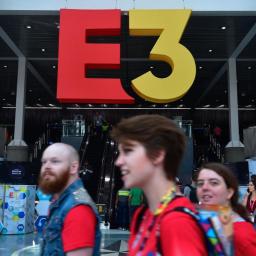
The Electronic Entertainment Expo, better known as E3, is officially dead. "After more than two decades of E3, each one bigger than the last, the time has come to say goodbye. Thanks for the memories," the Entertainment Software Association, E3's organizer, wrote on X. The industry trade group wrote closed out the statement with "GGWP" or "good game, well played."E3's troubles have been well documented in recent years, with the pandemic arguably exacerbating the video game expo's demise. There hadn't been an in-person E3 since 2019. The 2021 edition took place virtually, but the ESA canned the 2020, 2022 and 2023 events entirely.
|
 |
by Billy Steele on (#6H343)
Grill companies have chosen CES to announce their latest Wi-Fi-enabled innovations in the past and 2024 will be no different. Middleby Outdoor, parent company of Kamado Joe and Masterbuilt, plans to debut two new models at the show, and it's offering an early preview today. For the first time in Las Vegas, the company will show off the all-new Masterbuilt AutoIgnite Series 545 and the Masterbuilt Gravity Series XT, a revamped take on the gravity-fed charcoal grills that debuted in 2020.The AutoIgnite Series 545 offers a so-called QuickStart Auto-Ignition that's similar to the Automatic Fire Starter on the Konnected Joe. Here, you press the ignitor button and set the temperature on the control panel. Then you load the internal hopper with up to five pounds of lump charcoal (or seven pounds of briquettes) and stick a fire starter into its holder. The grill's fan and digital controller will do the rest for everything from low-and-slow smoking at 250 degrees Fahrenheit up to searing at 650 degrees.Unlike the Gravity Series, the charcoal hopper here is inside the cooking chamber. Middleby has given the hopper a cast iron lid so you can use the top of it for high heat searing, but its location limits its capacity. The company says the amounts of charcoal mentioned above are enough for eight hours of cooking, depending on your temperature. This means if you're cooking larger cuts like brisket or pork shoulders you'll have to refill the hopper at some point. It also takes up some of the grilling space. As the name implies, the grill has 545 square inches of cooking area.The AutoIgnite Series 545 includes some other niceties such as a folding side shelf on the right and an enclosed cart design for storage of grilling tools and accessories. It also comes with cast iron cooking grates and folding chrome wire warming racks. The 545 will be available in February at Home Depot for $499.Middleby says the Gravity Series XT is "the largest and most advanced Masterbuilt to date." With up to 1,260 square inches of cooking capacity, there's plenty of room to maneuver. Just like previous Gravity Series models, the key aspect is the gravity-fed charcoal hopper on the right side. It can hold up to 12 pounds of lump charcoal or up to 18 pounds of briquettes, which the company says is enough for 14 hours of cooking (again, depending on temps). Like before, you load the hopper from the top and place a fire starter underneath. You'll have to manually light this one, but then the fan takes over and gets the grill to your selected temperature.While the overall construction looks similar to the existing versions, the Gravity Series XT has a redesigned control panel that's been relocated to the right side of the grill on the frame of the charcoal hopper. The company explains that the new digital controller is similar to what's on the Konnected Joe, with the primary benefit being temperature graphs directly on the display.The "XT" in the name refers to the "extra-tough build" that includes dual-wall insulation and porcelain coating for the interior. What's more, the grill has a so-called fuel saver design and a fiberglass mesh gasket around the lid that are said to be more efficient with heat, moisture and smoke retention. Middleby says these design elements will lead to 33-percent longer burn time compared to the other Gravity Series models.There are four levels of cooking space inside the XT thanks to three removable racks. A full-body grease tray in the bottom should improve the chore of clean up. A new U-shaped manifold is designed to reduce flareups as you cook. The left side shelf now houses a towel rack for paper towels or butcher paper as well as a storage drawer and tool hooks. The Gravity Series XT will be available in April from the Masterbuilt website for $1,499.Both the AutoIgnite Series 545 and the Gravity Series XT are compatible with the Masterbuilt app. The software allows you to control and monitor your grill from anywhere thanks to the grills' Wi-Fi connectivity. That includes being able to watch food and grill temperatures, with both grills accommodating up to four wired probes. Only one is included with the 545, but the XT comes with two. The app can be used to keep tabs on multiple Masterbuilt grills from the same device and you can shut them down from your phone when the time comes. While there is a library of recipes for inspiration, this app doesn't have the deep integration or step-by-step guidance with those that Traeger, Weber and others offer.This article originally appeared on Engadget at https://www.engadget.com/masterbuilt-autoignite-545-gravity-series-xt-141512415.html?src=rss
|
 |
by Sarah Fielding on (#6H31B)
Apple is attempting to avoid a fine and ongoing legal battle with the European Union. The company is allegedly offering its rivals access to its Near-Field Communication (NFC) technology, used for tap-and-go payments, Reuters reports. The update follows the European Commission's May 2022 charge and ongoing probe into Apple's potential antitrust Apple Pay practices.The Commission has been investigating Apple since 2020, with Executive Vice-President Margrethe Vestager previously stating there were "indications that Apple restricted third-party access to key technology necessary to develop rival mobile wallet solutions on Apple's devices."While Apple's current proposal could get it out of a hefty fine and settle the case against it, it's not guaranteed to move forward. The Commission will likely confer with Apple's rivals and customers in the next month or so to determine if it should accept the offer. More than 2,500 banks across Europe use Apple Pay.Apple also faces a lawsuit in the United States, brought in July 2022 by Iowa's Affinity Credit Union. Similarly, it accuses Apple of engaging in anti-competitive behavior by illegally restricting iOS users to Apple Pay for any contactless payments.In September 2023, a US District Court Judge Jeffrey S. White of California ruled that the case would move forward, stating: "Plaintiffs have plausibly alleged that Apple Pay charges arbitrary and inflated fees to issuers, and that competition in the tap-and-pay iOS mobile wallet market would spur innovation and lead to lower prices." In his decision, White also explained that the plaintiffs properly demonstrated Apple's alleged and attempted monopolization.This article originally appeared on Engadget at https://www.engadget.com/apple-may-lift-nfc-restrictions-in-europe-to-escape-antitrust-fines-131004981.html?src=rss
|
 |
by Mat Smith on (#6H2YZ)
Apple is now rolling out iOS 17.2 to all compatible devices, as well as iPadOS 17.2 and macOS 14.2 Sonoma. The biggest addition in all those is the introduction, finally, of the long-teased Journal app.Journal differs from third-party apps like Day One by offering journaling suggestions based on your iPhone activity. That can range from photos taken through to locations reached on maps or even what you're listening to. Your device might also suggest creating a journal entry after things like workouts or a finished podcast episode. Apple's hope with the app is to help iPhone users reflect and practice gratitude through journaling." So, thank you, Apple, for the iOS update.- Mat SmithYou can get these reports delivered daily direct to your inbox. Subscribe right here!The biggest stories you might have missedThe best white elephant gift ideasBeeper Mini is back, promising iMessage access on Android if you sign in with an Apple IDHow a social engineering hack turned these Facebook pages into a dumping ground for spamThe best fast chargersApple tvOS 17.2 has a redesigned TV experience and no iTunes Movies or TV Shows appsTimeSplitters studio Free Radical Design has shut downThe best iPad for youHow to pick the best from a confusing lineup.EngadgetJust in time for that OS update. Between the 10th-generation iPad, the iPad Air and the M2 iPad Pro, Apple sells three tablets with roughly 11-inch screens and broadly similar designs, but there are key differences in internal components and accessory support. We can, though, pick a certain iPad that's best for most of you.One warning: Apple will likely introduce new iPads early next year. The company did not release any new tablets in 2023, but Bloomberg reports Apple plans to update its entire lineup throughout 2024.Continue reading.The ultra-customizable Arc browser is now available on Windows in betaInvites have already started going out to Windows users from the waitlist.Arc, a formerly Mac-only internet browser from The Browser Company, is coming to Windows. In a post on X, the company today announced its first Windows beta invites are already hitting inboxes. Its unique features include the ability to customize (or vandalize) any website. There's also a sidebar for your bookmarks and tabs. It's still a work in progress: We know features like Peek (which lets you preview a link before opening it in its own tab) and Little Arc (a lightweight browser window meant for quickly viewing something) are currently being ported across.Continue reading.How to get a refund for The Day Before, the game canned in just four daysThe studio's sudden closure remains suspicious.The Day BeforeThe Day Before was a much-hyped (much-delayed) zombie shooter game that launched on Steam on December 7, only to be widely criticized for failing to deliver an MMO (massively multiplayer online) experience as advertised - not to mention the bugs and severe lack of originality. Four days later, Fntastic, the studio behind this controversial title, abruptly announced its closure as the $40 game has failed financially," despite having apparently sold over 200,000 copies before refunds. Fortunately, Steam offers a two-week refund window, so long as the game has only been played for less than two hours. Give that a try.Continue reading.This article originally appeared on Engadget at https://www.engadget.com/the-morning-after-apple-launches-its-long-awaited-journal-app-121550393.html?src=rss
|
 |
by Will Shanklin on (#6H2Z0)
BeReal is launching new features for its app, which won Apple's 2022 iPhone App of the Year. The company tries to differentiate its platform by prompting spontaneous authenticity via randomly timed two-minute windows to take selfies. Now, it's adding a feature similar to Apple's Live Photos. In addition, invite-only groups, tags and 2023 recaps are on their way to the Your friends for real" platform.Behind the Scenes (BTS) is BeReal's branding for its Live Photos-esque feature. Like Apple's version, BTS captures a video for a few seconds before taking a static shot. After posting, your friends can long-press on the shot to see the short video clip. BTS is an opt-in feature, so nobody should be sucked into it unwillingly, and you can toggle it anytime.Meanwhile, RealGroups are invite-only groups that will be available by the end of the year. In the new communities, group creators can manage the Time to BeReal" notification (alerting you it's time to say cheese), offering users a degree of control over the app's core gimmick for the first time. RealGroups will also support private chat and private BeReals between group members. The company says its Live Photos clone and groups have been the platform's most community-requested features."Like Apple, Spotify, YouTube Music and various social platforms, BeReal will offer a 2023 recap. It sounds like it doesn't stray far from the beaten path, with the company pegging it as a custom experience that users can record and share anywhere they want," alongside promotional hashtags.Finally, the app's new tagging feature lets you cc your friends to ensure they catch your daily selfies. There should be plenty of people to choose from, as BeReal says its platform now has over 25 million daily active users.This article originally appeared on Engadget at https://www.engadget.com/bereal-which-still-exists-gets-tags-private-groups-and-a-2023-recap-120041785.html?src=rss
|
 |
by Steve Dent on (#6H2Z1)
Samsung's 32-inch Smart Monitor M8 (M80C, 2023 refresh) can act not only as a monitor with a webcam, but a smart TV as well thanks to the built-in speakers and support for cloud gaming and streaming platforms. The main drawback is the $700 price, but right now it's back down to an all-time low of $400 at Amazon, netting you savings of $300 or 43 percent.The refreshed Smart Monitor M8 has the same features as the previous model, but is slimmer and rotates 90 degrees for a document view. It offers UHD (3,840 x 2,160) resolution at up to 60Hz, along with HDR10+. With a VA panel, it's decently bright at 400 nits, offers a 4-millisecond response time and displays up to a billion colors, with 99 percent sRGB coverage. Input-wise, you get USB-C and Micro HDMI 2.0 inputs, along with a USB-C charging interface. Finally, it has a a detachable SlimFit Cam for video calls, making it a solid choice for work or light content creation.That's just the half of it, though. It's a WiFi-capable smart TV that supports Netflix, Amazon Prime Video, Disney+ and Apple TV, as well as cloud gaming platforms. It comes with built-in dual 5W speakers and a home hub that allows you to use it to control SmartThings-compatible IoT devices like lights and thermostats. It even has built-in support for Microsoft 365, so you can edit documents or browse the web without having to connect it to a computer.Other features include the ability to change the angle and position with the high-adjustable stand, along with a game bar that makes it easy to switch between cloud services. Normally it sells for $700, making the $400 sale price a particularly good deal - so it's best to act fast while it's in stock.Follow @EngadgetDeals on Twitter and subscribe to the Engadget Deals newsletter for the latest tech deals and buying advice.This article originally appeared on Engadget at https://www.engadget.com/samsungs-smart-monitor-m8-falls-back-to-a-low-of-400-110550058.html?src=rss
|
 |
by Steve Dent on (#6H2X1)
If you've been thinking about hosting your own mini data center or need to stream 1,333 Netflix 4K programs at once, Google Fiber has the answer. The Alphabet-owned ISP will launch it's 20Gbps service with Wi-Fi 7 in select cities early next year for $250 a month (plus taxes and applicable fees) - not that ridiculous of a price for such ridiculous speed."We're starting in Kansas City, North Carolina's Triangle Region, Arizona, and Iowa," the company wrote. "As we continue to roll out Nokia's 25G PON across our network, we'll open up invitations in new areas, so make sure you've let us know if you are interested in being the one of the first to have this in your home."As with Google's other Fiber offerings, the 20Gbps speeds are symmetrical, so you'll see them whether you're uploading or downloading. Google notes that Wi-Fi 7, which offers peak wireless speeds of 40Gbps, is so bleeding-edge that it hasn't even been fully certified yet. The service is being offered through Google's GFiber Labs division, and is made possible by new Nokia 25G PONs (passive optical networks) installed as part of last-mile infrastructure upgrades.While obviously expensive, the new plan allows for some interesting possibilities. For instance, Google promises multi-gig internet speeds on multiple floors of your house, for example, thanks to the custom Wi-Fi 7 router co-created with Actiontec. That could let plan buyers amortize the price across multiple users - 20 people could have 1Gbps connections for $12.50 per month each, for instance.The new plan offers four times the speed of AT&T's Elite 5Gbps fiber offering for the same $250 per month. However, Google Fiber's problem has never been the technology or value proposition, but the availability. The company's 5Gbps and 8Gbps plans only just got off the ground and are still only available in a few regions. While available in some major cities (San Franciso, Atlanta, San Antonio), Google Fiber is notably absent in key markets like New York City and Los Angeles.The 20Gbps plan will start rolling out in the above-mentioned cities in the first quarter of 2024. Just be aware that you'll need the fastest Wi-Fi possible on your computer (currently Wi-Fi 6E and Wi-Fi 7 on select models) to even get a fraction of that maximum speed.This article originally appeared on Engadget at https://www.engadget.com/googles-superfast-20gbps-wi-fi-7-fiber-plan-costs-250-a-month-095511377.html?src=rss
|
 |
by Mariella Moon on (#6H2VE)
Google has been working to phase out the Play Movies & TV brand and services ever since it launched its standalone TV app a few years ago. Now, the company seems to be making the last preparations for when Google Play Movies & TV goes away for good in January. As The Verge reports, the company has released detailed instructions on how long-time customers can continue accessing the content they'd already purchased. Admittedly, it can be a bit confusing, since access depends on what device the viewer is using.Starting on January 17, 2024, viewers will be able to access the movies and shows they'd purchased in the "Your Library" row under the Shop tab in Google Play... if they're watching on TVs and streaming devices powered by Android TV. If they're on Android TV cable or set-top boxes, they'll be able to access their old content through the YouTube app, where they could also continue buying and renting movies and shows. On browsers, they will have to fire up the YouTube website to see their old purchases and borrow or buy new ones.These changes will be complete over the next few weeks, but we can confirm that they've already started rolling out, as we're already seeing old movie buys on the YouTube website.This article originally appeared on Engadget at https://www.engadget.com/google-begins-shifting-users-from-play-movies--tv-ahead-of-its-january-shutdown-085837698.html?src=rss
|
 |
by Mariella Moon on (#6H2VF)
Tesla could sue at least some Cybertruck owners who flip their vehicles too soon, but it's unclear if the rule applies to all customers who buy the pickup truck and if it will remain in place for future buyers. A few weeks before the first deliveries for the Cybertruck went out, Tesla updated its purchase agreement to add that it could seek injunctive relief to prevent owners from transferring their vehicle's title if they attempt to sell it within one year of buying it. Further, the company said it could seek "liquidated damages" from customers worth "$50,000 or the value received as consideration for the sale or transfer, whichever is greater."Shortly after the information made the rounds on social media, though, Tesla removed the clause as quietly as it had added it. Now, as Electrek reports, Cybertruck customers who have managed to put in an order for the $120,000 Foundation Series configuration have received an order agreement with the controversial clause still clearly in place. Based on the copy posted by customers on the Cybertruck Owners Club forum, buyers are agreeing not to sell their vehicles within the first year of purchase. If owners must flip their vehicles before the year is up, Tesla is asking them to notify the company, which will then purchase it back for retail minus 25 cents per mile driven and minus the cost of wear and tear, as well as the cost to repair any damages.. They could only sell their Cybertruck without getting in trouble with Tesla if the automaker declines to buy their vehicle and gives them written consent to sell it to a third party.Other automakers, particularly luxury brands like Ferrari and Porsche, enforce a similar rule. In Tesla's case, the company has yet to clarify whether it will apply to all Cybertruck buyers or if it will only enforce the rule for Foundation Series owners. Regardless, fans may want to look over their purchase agreements if they buy a Cybertruck, because Tesla may refuse to sell them any more vehicles in the future if they break the rule.This article originally appeared on Engadget at https://www.engadget.com/tesla-could-still-sue-cybertruck-owners-if-they-flip-their-vehicles-too-soon-075724926.html?src=rss
|
 |
by Richard Lai on (#6H2RW)
The Day Before was a much-hyped zombie shooter game which, after multiple delays, launched on Steam on December 7th, only to be widely criticized for failing to deliver an MMO (massively multiplayer online) experience as advertised, let alone its bugginess, lack of originality and seemingly intentional slow in-game progress. Four days later, Fntastic, the studio behind this controversial title, abruptly announced its closure as this $40 game "has failed financially," despite having apparently sold over 200,000 copies before refunds, according to PC Gamer."We did everything within our power, but unfortunately, we miscalculated our capabilities," added Fntastic, which has since removed all of its over-promising trailers from its YouTube channel.
|
 |
by Mariella Moon on (#6H2QD)
Epic Games' lawsuit against Google has had a much different turnout from its courtroom battle with Apple. A federal jury has sided with the video game developer and has found Google to be in violation of US antitrust laws when it comes to how it runs the Play Store. According to The Verge, the jury has unanimously agreed that Google held an illegal monopoly on app distribution and in-app billing services for Android devices. Further, it found the company's distribution agreements with other video gaming companies, as well as its deals with device manufacturers to pre-install its apps on Android devices, to be anticompetitive.In its complaint, Epic said that Google had silently paid game developers hundreds of millions of dollars to make their titles downloadable from the Play Store in an initiative that was originally known as "Project Hug." It alleged that the company had paid Activision Blizzard $360 million to abandon its plans of creating a competing app store, which the game developer subsequently denied. Google, which Epic said came up with the incentive program after it released Fortnite outside of the Play Store, also reportedly inked deals with Nintendo, Ubisoft and Riot Games.The jury has come to the conclusion that Epic Games has been negatively affected by Google's actions, but we've yet to know how its victory will change the latter's practices. In a statement posted on X, Epic Games CEO Tim Sweeney said the court will start "work[ing] on remedies" in January. Judge James Donato, who's overseeing the case, will be making the decision whether to order Google to give developers the freedom to introduce their own app stores and billing systems for Android devices. In the case of Epic's lawsuit against Apple, the court ruled that the iPhone-maker didn't violate US antitrust laws, but it ordered the company to allow App Store developers to direct customers through third-party payment systems.
|
 |
by Kris Holt on (#6H2HV)
Alongside iOS, iPadOS and watchOS updates, Apple has rolled out the latest version of tvOS. The main change this time around is a redesign of the core Apple TV app.You'll now see a sidebar that blends content from Apple's own services (such as Apple TV+, MLS Season Pass and a Store where users can buy and rent popular movies) with access to third-party channels and apps such as Disney+ and Max. It seems that Apple is aiming to improve navigation and discoverability without straying too far from the industry standard tile browsing format on the homepage.On living room devices (i.e. Apple TV hardware and the eponymous app on smart TVs and other devices), the sidebar will include profiles. Apple says this will allow you to swiftly switch between users for more personalized recommendations across the app and in the Up Next section. Meanwhile, Watch Now has been rebranded as Home.AppleThe Apple TV app's Store tab is where you'll want to go to buy or rent movies and TV shows. Starting today, the iTunes Movies and TV Shows apps on Apple TV 4K and HD devices will redirect users to the Apple TV app's Store tab to find and manage their purchases. The same goes for the iTunes Store app on iPhone and iPad.Meanwhile, you'll now be able to answer FaceTime calls directly on Apple TV 4K devices. Apple has added support for FaceTime audio calls as well.This article originally appeared on Engadget at https://www.engadget.com/apple-tvos-172-has-a-redesigned-tv-experience-and-no-itunes-movies-or-tv-shows-apps-211732163.html?src=rss
|
 |
by Stephanie Barnes on (#6H2FH)
Arc, a formerly Mac-only internet browser from The Browser Company, is coming to Windows. In a post on X, the company today announced that its first Windows beta invites are already hitting inboxes. This comes after months of requests from Windows users who want to give Arc a shot. Back in September, the company said it already had over 500,000 signups on the Windows waitlist, and that number is expected to grow as the waitlist remains open for new users looking to check out the Arc experience.According to TechCrunch, The Browser Company plans to continue its onboarding process throughout the month before rapidly" increasing invitation roll-outs in the new year. While the company didn't say whether the Windows version will have all the same standout features of the Mac, we do know features like Peek (which lets you preview a link before opening it in its own tab) and Little Arc (a lightweight browser window meant for quickly viewing something) are currently being ported. Since the Windows version is still in beta, users may notice several missing features but those will likely come with updates along the way.
|
 |
by Lawrence Bonk on (#6H2FJ)
Free Radical Design, the company tasked with making a TimeSplitters reboot, has closed its doors, according to employee statements acquired by Eurogamer. Additionally, the developer's official website now redirects to a 404 error, along with text reading company not found" and a sad face. Ex-staffers have also taken to social media to announce the closure.The company was reformed back in 2021 specifically to develop new games based on the long-defunct TimeSplitters franchise. However, parent company Embracer Group has been on a cost-cutting spree these past few months, reducing its overall headcount by more than 900 people. At that time, we noted that Free Radical Design was likely in trouble, putting the TimeSplitters reboot in limbo.Embracer CEO Lars Wingefors addressed the closure in an email to staffers, expressing gratitude" for the remarkable work" the team has done. Wingefors went on to say that the parent company looks to support laid-off employees as much as we can during this transition." There are no details, however, regarding severance pay or anything like that. It looks like more than 50 people lost their jobs due to the closure, which is a monumental bummer.Another bummer is that this likely means the death of the TimeSplitters franchise for the time being, though maybe another company will snap up the IP at some point. The original incarnation of Free Radical went bankrupt in 2008 before being temporarily revived to handle the reboot.This isn't the only company that Embracer sent packing this year. It abruptly closed Saints Row developer Volition back in August and is reportedly looking to sell Borderlands developer Gearbox. Embracer previously acquired Gearbox for around $363 million as part of a larger deal valued at $1.4 billion.This article originally appeared on Engadget at https://www.engadget.com/timesplitters-studio-free-radical-design-has-shut-down-194718243.html?src=rss
|
 |
by Kris Holt on (#6H2CP)
After several weeks of testing the latest version of its iPhone operating system in public, Apple is now rolling out iOS 17.2 to all compatible devices. In addition, iPadOS 17.2 and macOS 14.2 Sonoma, which boast many of the same features, are here as well. Finally, watchOS 10.2 is also available for download. The biggest change this time around is the introduction of a new core app called Journal.Apple's hope with the app is to help "iPhone users reflect and practice gratitude through journaling." It differs from third-party offerings like Day One, as Apple is able to offer suggestions for journal entries based on activity in other apps. Your iPhone might suggest logging a trip populated by photos from your camera roll, accompanied by a writing prompt such as "what will you remember most about your day out?" Your device might also suggest creating a journal entry after a workout or even to note a podcast episode you listened to.Third-party developers can tap into a Suggestions API to nudge users to create journal entries based on activity in their apps. Apple says the Journal app is end-to-end encrypted and all information is stored locally (though you can sync everything to iCloud if you wish). Users will have control over which apps can offer Journal suggestions too.The Journal app isn't all that's new in iOS 17.2. You'll be able to set up the Action button on iPhone 15 Pro and iPhone 15 Pro Max to act as a quick translation tool for spoken phrases. You could even use it to have a conversation with someone who doesn't speak the same language as you.Apple is rolling out support for Qi2 charging on all iPhone 13 models and iPhone 14 models (it's already present on iPhone 15 models). Qi2-certified chargers are said to match the 15W wireless charging speeds of MagSafe. As Qi2 chargers become more widespread, it should be easier for both iPhone and Android users to top up their phones' batteries quickly.Elsewhere, iPhone 15 Pro users can capture spatial video that can be viewed in 3D in Apple Vision Pro's Photos app (once you're eventually able to try out the headset, that is). You'll now be able to access and log Health data with your voice thanks to a Siri update. The Apple Music, Messages and Weather apps are getting a few new features too, while an AutoFill upgrade for PDFs and other forms could prove very useful.In addition, Apple is rolling out watchOS 10.2. Apple Watch Series 9 and Apple Watch Ultra 2 can now log and access Health app data through Siri (both devices process Siri requests on-device for greater privacy). You can ask Siri for information on things like how much you slept the night before, your step count and whether you've closed your exercise ring for the day. You can also instruct Siri to log data such as your weight, medications that you've taken and your body temperature. These requests are available in English (US) and Mandarin Chinese for now, with support for more languages to follow.Other new Apple Watch features include the ability to automatically view what's Now Playing from a nearby 2nd-gen HomePod or HomePod mini that's playing something from Music or Podcasts. You can enable a setting that'll let you swipe to change watch faces. You'll also be able to choose whether to prioritize the volume of the music or a trainer's voice in most Fitness+ workouts.This article originally appeared on Engadget at https://www.engadget.com/ios-172-and-apples-new-journal-app-are-now-available-181348877.html?src=rss
|
 |
by Lawrence Bonk on (#6H2CK)
Arturia just launched a massive firmware update for its MiniFreak hybrid hardware synthesizer. Firmware version 2.0 brings a host of improvements and new features for avid fans of Arturia's weird-but-powerful instrument. The biggest news here is a brand-new wavetable sound engine, boasting 32 wavetables and 64 patches. However, the engine's only available on one of the oscillators, which does slightly decrease sound design options. Still, more engines are never a bad thing.There's also a new Super Unison effect, which is basically a souped-up chorus that increases stereo width by stacking up to six copies of a sound on top of the dry signal. The MiniFreak has some high-quality effects, so this should be fun to fool around with. Arturia says this effect will transform a simple patch into a supersaw monster."LFO modulation has gotten a bit more useful with this update. Users can now adjust the LFO rate to correspond to a single step or even the entire curve, encouraging more nuanced, evolving and expressive modulations." For those with active sound design aspirations, Arturia is adding an easily-accessible favorites panel to the MiniFreak to store and bring up custom-made patches.MiniFreak owners can now also access a dedicated store to purchase sound banks. There are three free banks at launch, with 32 patches, and two paid banks, with 64 patches. These sound packs are available for both the hardware MiniFreak and the affiliated software plugin. Arturia-branded sound packs typically cost $10 to $15. The company promises this is just the beginning, with more MiniFreak sound packs to come.Other minor enhancements include more control over the Macro Edit mode and increased volume options. MiniFreak Firmware 2.0 is available now as a free update to current owners.This article originally appeared on Engadget at https://www.engadget.com/arturias-minifreak-synthesizer-gets-a-firmware-update-with-new-engine-and-effects-185416143.html?src=rss
|
 |
by Pranav Dixit on (#6H2CM)
Apple will reward record labels and artists who offer their music in spatial audio, a relatively new audio format that is more immersive than regular stereo. According to a Bloomberg report, artists who release their music in spatial audio will receive added weighting" starting next year. That, Bloomberg speculates, could mean higher royalties.Nearly all of Apple's audio hardware such as AirPods, HomePod, the iPhone and the upcoming Vision Pro headset, support playback in spatial audio, so the company's move to incentivize artists is almost certainly to ensure that most music available on Apple Music is available in a format that Apple has positioned as a selling point. Notably, Bloomberg notes that Apple Music listeners wouldn't necessarily have to stream a song in spatial audio for artists to be rewarded. Simply having their music available in the format would be enough.Apple added spatial audio, which is powered by technology from Dolby Atmos, to Apple Music in 2021. Most of the company's original shows and movies on Apple TV+ are also offered in the format. Artists also have the option of mixing their older music in the new format, something that bands from all decades are already doing. Mixing music in the format isn't wildly expensive, according to Bloomberg; if true, this push could help get independent musicians and smaller acts on board.Some Apple Music competitors like Amazon Music and Tidal also offer spatial audio on their services. But Spotify, Apple's biggest music stream rival, is a notable exception, even though rumors about a high-quality music format on the service have swirled for years.This article originally appeared on Engadget at https://www.engadget.com/apple-will-reportedly-reward-artists-for-offering-music-in-spatial-audio-183713277.html?src=rss
|
 |
by Kris Holt on (#6H2CN)
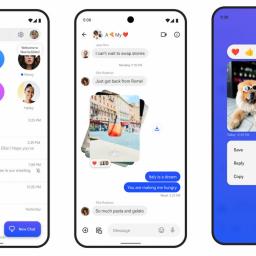
A battle to bring iMessage access to Android is not yet over, even though Apple recently closed a loophole that seemingly allowed Beeper and other third-party apps to tap into the service. The latest version of the Beeper Mini app for Android once again allows users to send and receive messages.Beeper says its team has been working around the clock to restore iMessage functionality after Apple shut down the app's access to the service. Now, Beeper cofounders Eric Migicovsky and Brad Murray say the team has found a solution. There's one key caveat, however: phone number registration isn't working and you'll need to sign in with an Apple ID. You'll send and receive iMessages via your email address instead of your phone number. The Beeper team says it's working on a phone number fix.In the meantime, the team says it's not comfortable with charging users while its service remains in flux. As such, Beeper is free to use for the time being. "As soon as things stabilize (we hope they will), we'll look at turning on subscriptions again," Beeper wrote in a blog post.Migicovsky and Murray added that, despite Apple's assertions to the contrary, messages sent via Beeper Mini are end-to-end encrypted and secure. In fact, they suggest that Beeper is a more secure way for iOS and Android to communicate with each other than regular SMS. Apple does not yet support the more secure RCS standard Google has embraced, but it plans to start doing so in 2024.This article originally appeared on Engadget at https://www.engadget.com/beeper-mini-is-back-promising-imessage-access-on-android-if-you-sign-in-with-an-apple-id-182924774.html?src=rss
|
 |
by Lawrence Bonk on (#6H2CQ)
Microsoft has agreed to union contract language regarding its use of artificial intelligence, which should give workers a voice when challenging how the technology's deployed, as reported by Bloomberg. This is the first US instance of collective bargaining in Microsoft's history and could be a huge step for those employed with the tech giant.This came to pass as part of negotiations with the Communications Workers of America (CWA) union and involves contract language that covers a few hundred staffers at Microsoft's game studio ZeniMax, which includes well-known subsidiaries like Bethesda and Arkane, among others.The gist here is that the contract language incorporates Microsoft's previously-announced AI principles, sort of a ten commandments type deal. The language dictates that AI systems will treat all people fairly" and empower everyone." To that end, it will give employees covered under the contract an avenue of recourse should they feel that Microsoft isn't holding up its end of the bargain. Microsoft even hired dozens of ZeniMax contract workers as full-time employees, potentially as a show of good faith.The goal is to ensure tools and technologies benefit rather than harm workers," the contract states. The language stipulates that Microsoft must inform the CWA whenever AI or related automation technology is implemented in a way that could impact workers. If requested, the company must enter into good-faith negotiations regarding the change. This is a big first step, considering Microsoft's massive play into the AI space via integration with OpenAI products.This would be news on its own, given Microsoft's former hesitance to engage with unions in any way, shape or form. However, there's more. The company also entered into a partnership with the AFL-CIO, the country's largest federation of unions. The entities struck a deal that ensures Microsoft will remain neutral in efforts by unions to encourage workers to join up.The partnership also creates an open dialogue" to discuss AI and how it impacts workers. The AFL-CIO calls this team-up the first of its kind between a labor organization and a technology company." Microsoft has committed to share information with labor leaders regarding impactful AI trends and consider worker perspectives" when developing new technologies.Why the about face? There's a whole lot of uncertainty out there regarding artificial intelligence and how it will impact workers across multiple industries. It looks like Microsoft is setting itself up to be the adult in the room" when compared to rival entities. It's worth noting, though, that Microsoft shareholders rejected a proposal last week that would slow down AI spending until a risk-assessment project could be conducted.This article originally appeared on Engadget at https://www.engadget.com/microsoft-agrees-to-union-contract-terms-involving-the-use-of-ai-173354643.html?src=rss
|
 |
by Jeff Dunn on (#6H29E)
If you're looking to grab a wallet-friendly pair of wireless headphones or restock your charging gear for the holidays, a few recent Amazon sales on Anker accessories may be of interest. Several of Anker's Soundcore headphones, including a couple of top picks from our guide to the best budget wireless earbuds, are currently down to the lowest prices we've tracked, as are a handful of charging stations, cables, power banks and similar accessories. There's a decent amount of discounts between the sales, but we'll run through the highlights below.This deal has been available for the past few days, but it brings the the top recommendation in our budget wireless earbuds guide back down to the all-time low we saw on Black Friday and Cyber Monday. The Soundcore Space A40 delivers a number of features we'd expect from more expensive pairs, including wireless charging, multi-device pairing, eight- to 10-hour battery life and, most notably, genuinely useful active noise cancellation (ANC). Its warm sound profile isn't the most accurate we've tested, but it should be pleasing to most, and you can customize the EQ curve through the Soundcore app. Call quality is just OK, however, and playback won't automatically pause when you remove an earbud.The Soundcore Liberty 4 NC is the runner up in our budget earbuds guide, as it offers a highly similar feature set to the Soundcore Space A40 but comes in an AirPods-style "stem" design. It's bulkier as a result, but some may find this shape easier to remove. It supports auto-pausing and has slightly more extensive touch controls as well, though the former can be finicky, and its more bass-heavy sound may not be to everyone's liking. Right now the Liberty 4 NC is $30 off and down to $70, which is another all-time low we previously saw on Black Friday and Cyber Monday.While the Soundcore Space Q45 isn't a formal pick in any of our guides, it's worth considering at this price if you want a set of over-ear noise-cancelers for less than $100. This $50 discount matches the best deal we've seen. The Space Q45's adaptive ANC system can't top the best wireless headphones on the market, but it's good for the money, and its lively V-shaped sound should be fun for pop music. A comfy design and multi-device pairing also help. Mic quality is mediocre, however.If you want a more affordable set of over-ears, the Soundcore Life Q30 is also worth a look at $56, though that pair isn't as sturdily built and its default sound might be too bass-heavy for most tastes.Moving onto to charging gear, the Anker 335 Wireless Charger is down to $17, which matches the lowest price we've seen. This is a three-in-one wireless charging station that can partially fold up and lets you refill a smartphone, Apple Watch and set of wireless earbuds at the same time. It's not as fast as the best wireless chargers we've tested - maxing at 10W for Samsung phones, 7.5W for iPhones, and 5W for other devices - and you need to supply your own USB-A charging puck to use an Apple Watch. Larger iPhone 15 models may not fit, either. But if you can live with all of that and just want a way to passively top up your devices throughout the day, this is an affordable and travel-friendly way to make it happen.A pick from our power bank buying guide, the Anker Nano is an ultracompact portable battery that can connect directly to a device through its built-in, foldable USB-C port. It has a capacity of 5,000mAh and supplies up to 22.5W of power - though some devices will get a bit less - so it's best suited for emergency situations where you might need a quick refill but don't want to carry around a heftier power bank. You'll want to be gentle when attaching the connector, though. Right now the "shell white" version of the Nano is on sale for $21, which ties its best price to date.If you have an older iPhone, the Lightning-based version of this charger is also discounted to a low of $20.Among the rest, a two-pack of 10-foot USB-C to Lightning cables is down to a low of $20 for those willing to pay extra for a braided model. The compact 20W Anker 511 Charger is available for $12.59 with a 10 percent coupon, which is about a dollar more than the lowest price we've seen. And the 65W Anker 735 Charger can be had for $34 with a 15 percent coupon; that's about $6 more than its best-ever price, but it's a more powerful multiport model we recommend in our fast charger buying guide.Follow @EngadgetDeals on Twitter and subscribe to the Engadget Deals newsletter for the latest tech deals and buying advice.This article originally appeared on Engadget at https://www.engadget.com/anker-headphones-and-charging-accessories-are-up-to-43-percent-off-right-now-165634084.html?src=rss
|
 |
by Lawrence Bonk on (#6H29F)
You can pick up Blink 4 security cameras for up to 53 percent off, via Amazon. The most notable deal here is a combo pack that includes both the fourth-gen Blink Outdoor camera and the Mini indoor camera. That comes out to $72, a discount of 53 percent or a whopping $83 slashed from the MSRP of $155.The Blink Outdoor 4 is the crown jewel in the company's lineup. There's a reason, after all, why it made our list of the best smart home devices. The camera may have outdoor" right in the name, but this is a fantastic option for both indoor and outdoor use. They run on AA batteries and last up to two years before those cells need replacing. These cameras are weather-resistant and offer support for night vision, motion detection and two-way audio.This is a wireless camera and clips are stored in the cloud if you have a Blink Subscription Plan, but you can also store them locally via a USB flash drive. The camera works with Alexa, but just Alexa, so other digital assistants are left out in the cold. The Blink Mini, which also ships with this set, is a decent indoor camera for keeping an eye on things, like which cat is stealing all the food.Amazon is also selling other Blink products at deep discounts. If a combo pack isn't your bag, the Blink Outdoor 4 by itself costs $72, which is a discount of 40 percent. The Blink Mini Pan-Tilt is on sale for $30, a discount of 50 percent and a record-low. This is an upgraded version of the Mini that ships with the combo pack, as it can pan and tilt for 360-degree coverage.Follow @EngadgetDeals on Twitter and subscribe to the Engadget Deals newsletter for the latest tech deals and buying advice.This article originally appeared on Engadget at https://www.engadget.com/amazon-knocks-up-to-53-percent-off-blink-outdoor-4-security-camera-packs-161447084.html?src=rss
|
 |
by Kris Holt on (#6H29G)
Android users may soon be able to edit texts after they're sent via the Google Messages app. TheSpAndroiddug around in an APK for a recent beta version of Messages and found multiple references to a message-editing feature.The publication unearthed flags concerning aspects such as a message-editing UI, loading the edit history and processing incoming and outgoing edits. For the time being, enabling these flags doesn't seem to do anything, as The Vergenotes. TheSpAndroid also found code suggesting that message editing would work with the RCS protocol.Were Google to enable this feature (which users would surely appreciate), it would follow the footsteps of WhatsApp and iMessage. Over the last year or so, those services each added the ability to edit messages within a certain timeframe after they're sent.Google recently introduced some other handy features to Messages, such as the ability to turn photos into reactions and for users to create a profile with their name and photo that's attached to their phone number. Users can also change the color of text message bubbles, including making them blue.This article originally appeared on Engadget at https://www.engadget.com/google-messages-apk-suggests-you-may-soon-able-to-edit-messages-after-theyre-sent-155244187.html?src=rss
|
 |
by Katie Malone on (#6H267)
Hannah Shaw, better known as the Kitten Lady," teaches people how to care for neonatal cats, and has raised more than $1 million for animal shelters and rescues. Her Facebook page has gained over a million followers since she began making cat content, but she almost lost it all to a social engineering hack that took over access to her Meta business account.I built that community for more than a decade. Thinking that I might lose it was pretty devastating," Shaw said.Influencers rely on platforms like Facebook, Instagram and YouTube for their income. These sites have evolved from side project enablers to the sole source of income for some content creators. However, bad actors have found ways to also take a piece of the piece from those earning an honest living there. Yes, high-level hackers tend to seek entities with deep pockets, targeting them with highly complicated attacks. But much of the cyber criminality today is social engineering jobs, ripping off mid-level creators with much fewer resources than a multinational corporation, but also significantly less technical know-how.A creator who goes by Hobby Bobbins - who gained a cult following within her niche of vintage clothing restoration - walked me through how all of this happened to her. The attack occurred in almost the exact same steps that led to Shaw's account takeover. It started with an interview request from an individual going by Rex Hall, who claimed to be a manager for the show Podcast and Chill with MacG." This appears to be a real podcast, although no one named Rex Hall seems to be publicly associated with it. (We reached out to the podcasters to determine if they're aware their brand is being used to perpetrate a social engineering scheme and have not heard back.) "Podcast and Chill" is based in South Africa, and according to its Twitter bio, its purpose is in part for "documenting black excellence." It doesn't specifically focus on the topics Shaw or Bobbins cover, like animal wellness or vintage clothing. But influencers receive these requests constantly, the podcast hosts had a digital footprint and "Rex" was able to answer any questions that Bobbins had.The malicious actor asked their targets to hop on a Zoom call for pre-interview prep, including setting up Facebook Live to bring in revenue. Everything seemed normal at first, the only odd thing was his camera was not on. But even that is not too odd, a lot of people don't want to be on camera," Shaw said. After a labyrinth of back and forth over backend settings, the scammer leads their targets to a backend setting called datasets." It's an obscure page, often used to give people admin access to a business account. But victims thought it was a normal part of setting up for Facebook Live because it does include event management options.Both Shaw and Bobbins pushed back on the request to access datasets and turned off their screen sharing to avoid giving too much away. But the hackers still got in by insisting they help with setup, saying that they needed to view one seemingly innocuous link. In datasets, creators generated a unique URL that the scammers could use to get into the account. When he captured that direct URL, it basically generated that email invite for him without ever having to access my email without him even needing to know a password or anything," Bobbins said. All he had to do was put in the link and accept the invite and then it automatically added his own personal Facebook to my page."After gaining access, "Rex" was able to make themself an admin of the page. With that power, they could remove Bobbins' ability to log in. Support tickets with Meta sent her in circles trying to get her account back. Bobbins' lost her way to communicate with her 400,000 followers, and hackers deleted years of content she had dedicated her career to making.The scammers cleaned the page to make room for bogus links that led to ad-filled sites to generate easy revenue. They put in a list of about 100 blocked words so that followers couldn't flag to each other that the account had been hacked. Anybody who commented on my page that said stolen' or hacked' or scam' or whatever would be automatically blocked out. So, none of my other followers could see the people who knew that my account was hacked," said Bobbins. She lost an unknown number of views and hundreds of dollars" worth of sales each day that her account had been taken over.Shaw and Bobbins both went to Meta for help, but it was fruitless. There is zero support for a problem like this with Facebook," Bobbins said. Resetting her password went nowhere, because it couldn't change the admin settings that the hackers had changed. When Bobbins finally figured out how to contact the help desk at Facebook with a support ticket, it was closed out almost instantly" with no help received, she said. In response to our questions about this attack vector or what they're doing to help creators keep accounts secure, Meta recommended users implement multifactor authentication and report any issues to its support center. But Shaw and Bottoms both have two-factor authentication turned on, and their accounts still got taken over. Meta did, however, introduce better customer service as a feature in its paid verification package earlier this year, another way social media platforms are charging for security features.Shaw got her account back in about 72 hours from the initial attack by using her following to find a person who could help, but Bobbins wasn't as lucky. She's still struggling with access today, over a month since the hack occurred. She briefly got back in and was able to begin manually reuploading her past content. Beyond that, those who accessed the accounts changed location permissions, turned off messaging capabilities, removed her shop from her page, blocked certain followers and took away her $5 per month subscribers. The web of damage became so widespread, Bobbins created a list of the footprints left by the attacker to help others undo the changes. Since the account takeover, Bobbins has struggled to keep access to her account, with unusual flags on seemingly unwarranted copyright violations and other issues kicking her out.There's no extra step that can be taken right now to protect somebody from the thing that I just went through," Bobbins said. The only prevention for a crime like this is spreading the word, so that others don't fall for the same social engineering trick. That's why Shaw is helping bring together more than a dozen of other victims of the same scam to minimize damage and call for greater creator security.Still, there's no real solution without the platforms creating major change. Platforms should do a better job of quickly investigating complaints from followers because right now the onus is on the page owners to figure it out, said Eva Velasquez, president and CEO of the Identity Theft Resource Center. While there are a lot of prescribed processes for traditional identity theft, like freezing your credit, there aren't well-defined practices for social media account takeovers because creators are at the mercy of these platforms.If you stumble upon what appears to be an account takeover as a follower, Velasquez recommends getting in touch with the creator outside of that specific platform to let them know a hack is occurring. Victims of an account takeover can also alert the Internet Crimes Complaint Center about the incident, but there's not much else they can do. Or, creators can avoid using the platform altogether. At this moment in time, I don't recommend that anybody accepts Facebook Live interviews," Shaw said.This article originally appeared on Engadget at https://www.engadget.com/how-a-social-engineering-hack-turned-these-facebook-pages-into-a-dumping-ground-for-spam-143010079.html?src=rss
|
 |
by Mat Smith on (#6H23S)
According to Bloomberg's Mark Gurman, Apple is planning big hardware announcements for early 2024. In his Power On newsletter, Gurman predicts the company will release the next iPad Pro and iPad Air generation in March. Gurman says the M3 MacBook Air will also likely come in March, in the usual 13- and 15-inch configurations. And Apple may kill off the 2020 M1 MacBook Air at that point too.The company is also reportedly planning to make more apparent distinctions between its iPad families. The iPad Pro is expected to get Apple's new M3 chip, an OLED display and come in two sizes: 11 and 13 inches. Meanwhile, the iPad Air will come in a 10.9-inch and a new 12.9-inch version and use the M2 chip.If you're waiting for a new Mac Studio and Mac Pro, those will land later.- Mat SmithYou can get these reports delivered daily direct to your inbox. Subscribe right here!The biggest stories you might have missedOffworld company towns' are the wrong way to settle the solar systemThe EU has reached a historic regulatory agreement over AI developmentThe FTC is reportedly looking into Microsoft's $13 billion OpenAI investmentThreads countdown hints at EU launch on December 14Researchers made VR goggles for miceFor science, not a bet.Dom Pinke/ Northwestern UniversityScientists have been using virtual reality setups to study brain activity in lab mice for years. In the past, they surrounded the mice with flat displays, with obvious limitations for simulating a realistic environment. Now, a team at Northwestern University developed tiny VR goggles to fit over a mouse's face. Like you see above.In their tests, the researchers say the mice appeared to take to the new VR environment more quickly than they did with the past setups. To recreate overhead threats, like birds swooping in for a meal, the team projected expanding dark spots at the tops of the displays. The way they react to threats is not a learned behavior; it's an imprinted behavior," said co-first author Dom Pinke.Continue reading.Alex Jones and his conspiracy theories are back on XJones' account was reinstated after users voted in a poll this weekend.Alex Jones is back on X, five years after then-Twitter decided to permanently ban him and his show, Infowars, for violating the site's policy on abusive behavior." Elon Musk created a poll on X over the weekend asking users to vote on whether to reinstate Jones. Jones won the vote.Musk wrote, I vehemently disagree with what he said about Sandy Hook, but are we a platform that believes in freedom of speech or are we not? That is what it comes down to in the end. If the people vote him back on, this will be bad for X financially, but principles matter more than money." Principles? On X?Continue reading.Fortnite Festival tries to bring back the heyday of music gamingIt helps that it's free.Epic GamesEpic has launched an entirely new mode called Fortnite Festival, a social space where players can team up to perform their favorite songs or jam together on new mixes, all within Fortnite. The main stage, or championship stage, is basically the Rock Band experience recreated in Fortnite. You form a band with friends and choose a song to perform. Then you play the song using the standard music game format where notes slide down vertical bars, hitting the correct button when the note reaches the bottom. Meanwhile, the jam stage draws from Harmonix's more recent (and less popular) mixing titles, Dropmix and Fuser.Continue reading.This article originally appeared on Engadget at https://www.engadget.com/the-morning-after-apple-may-launch-an-m3-macbook-air-in-march-121532447.html?src=rss
|
 |
by Cheyenne MacDonald on (#6H1Q6)
Believe it or not, scientists have been using virtual reality setups to study brain activity in lab mice for years. In the past, this has been done by surrounding the mice with flat displays - a tactic that has obvious limitations for simulating a realistic environment. Now, in an attempt to create a more immersive experience, a team at Northwestern University actually developed tiny VR goggles that fit over a mouse's face... and most of its body. This has allowed them to simulate overhead threats for the first time, and map the mice's brain activity all the while.The system, dubbed Miniature Rodent Stereo Illumination VR (or iMRSIV), isn't strapped onto the mouse's head like a VR headset for humans. Instead, the goggles are positioned at the front of a treadmill, surrounding the mouse's entire field of view as it runs in place. We designed and built a custom holder for the goggles," said John Issa, the study's co-first author. The whole optical display - the screens and the lenses - go all the way around the mouse."Dom Pinke/ Northwestern UniversityIn their tests, the researchers say the mice appeared to take to the new VR environment more quickly than they did with the past setups. To recreate the presence of overhead threats, like birds swooping in for a meal, the team projected expanding dark spots at the tops of the displays. The way they react to threats like this is not a learned behavior; it's an imprinted behavior," said co-first author Dom Pinke. It's wired inside the mouse's brain."With this method, the researchers were able to record both the mice's outward physical responses, like freezing in place or speeding up, and their neural activity. In the future, they may flip the scenario and let the mice act as predators, to see what goes on as they hunt insects. A paper on the technique was published in the journal Neuron on Friday.This article originally appeared on Engadget at https://www.engadget.com/researchers-made-vr-goggles-for-mice-to-study-how-their-brains-respond-to-swooping-predators-215927095.html?src=rss
|
|
by Cheyenne MacDonald on (#6H1Q7)
Apple is planning some big hardware drops for early 2024, according to Bloomberg's Mark Gurman. In the Power On newsletter, Gurman predicts the company will release the next generation of iPad Pro and iPad Air in March - each of which is expected to come in two sizes - and the new M3-powered MacBook Air. The Mac Studio and Mac Pro will likely be much later to the M3 party; Gurman writes that Apple won't have these ready for release until at least the end of 2024, and they could even slip into 2025.With the release of its new iPads, Apple is planning to make clearer distinctions between the models so the choices are less confusing for consumers, according to Gurman. The iPad Pro is expected to get Apple's new M3 chip, an OLED display and come in two sizes: 11 and 13 inches. Apple will also release a new Magic Keyboard just for the Pro, Gurman says. The iPad Air, on the other hand, will come in a 10.9-inch version and a new 12.9-inch option, and use the M2 chip. The changes should make the differences between the high-end, midrange and standard iPads more obvious so people can more easily decide what fits their needs.As for the M3 MacBook Air, Gurman says it'll also likely come in March, in the usual 13- and 15-inch configurations. At that time, Apple may also kill off the 2020 M1 MacBook Air. Its higher-end models, the Mac Studio and Mac Pro, will be last to get the M3 upgrade.This article originally appeared on Engadget at https://www.engadget.com/apple-may-release-m3-macbook-air-in-march-and-refine-its-ipad-lineup-with-new-ipad-pro-and-ipad-air-205425798.html?src=rss
|
 |
by Cheyenne MacDonald on (#6H1M4)
Apple's third-generation AirPods are back down to their record-low Black Friday price. The discount on Amazon shaves $30 off the AirPods' normal price of $170, making them just $140 right now. Given that this is the lowest we've seen these AirPods go for, they're likely to sell out. Amazon is also running a deal on Apple's second-generation AirPods Pro, or the latest version of the Pro earbuds, which are down to $200. The 20 percent discount isn't the lowest they've ever dropped, but it's still $50 off the usual price and only $10 more than the all-time low.The third-generation AirPods were released in 2021 and completely refreshed the design. Apple shortened the stem, making the regular buds look more like the AirPods Pro, and tweaked the fit to make them more comfortable to wear. They're lighter and angled in a way that's meant to better hug the ear and deliver sound more effectively. In our review, we gave the third-gen AirPods a score of 88.Apple's third-generation AirPods also brought durability improvements to the non-Pro model. These AirPods and the charging case are IPX4 rated for water and sweat resistance, which is especially helpful for anyone using them during workouts. They feature Apple's H1 chip, offering Adaptive EQ - which Apple says automatically tunes music to your ears" - and spatial audio for more immersive listening. The AirPods also support fast pairing, and automatic switching between Apple devices. There's also easy, hands-free access to Siri using the Hey Siri" command.The third-gen AirPods also have better battery life than earlier models. On their own, the earbuds last about six hours before needing to be charged again, and up to 30 hours with the charging case. In Engadget's tests, we found the AirPods' battery could actually be pushed to seven hours. They offer quick charging too, with about an hour of battery life after just five minutes in the MagSafe case.Follow @EngadgetDeals on Twitter and subscribe to the Engadget Deals newsletter for the latest tech deals and buying advice.This article originally appeared on Engadget at https://www.engadget.com/apples-third-generation-airpods-are-back-on-sale-for-140-174333053.html?src=rss
|
 |
by Cheyenne MacDonald on (#6H1J3)
Alex Jones is back on X five years after then-Twitter made the decision to permanently ban him and his show, Infowars, for violating the site's policy on abusive behavior." Elon Musk - who last year said he wouldn't unban Jones because of the conspiracy theorist's insistence on calling the Sandy Hook massacre a hoax - created a poll on X over the weekend asking users to vote on whether Jones should be reinstated.The poll closed with a majority vote for Yes." As of Sunday, Jones' personal account was once again active, and already retweeting Andrew Tate.
|
 |
by Andrew Tarantola on (#6H1GF)
Company Towns - wherein a single firm provides most or all necessary services, from housing and employment to commerce and amenities to a given community - have dotted America since before the Civil War. As we near the end of the first quarter of the 21st century, they're making a comeback with a new generation of ultra-wealthy elites gobbling up land and looking to build towns in their own image.And why should only terrestrial workers be exploited? Elon Musk has long talked of his plans to colonize Mars through his company SpaceX and those plans don't happen without a sizeable - and in this case, notably captive - workforce on hand. The same Elon Musk who spent $44 billion to run a ubiquitous social media site into the ground, whose brain computer interface company can't stop killing monkeys and whose automotive company can't stop killing pedestrians, wants to construct entire settlements wholly reliant on his company's largesse and logistics train. Are we really going to trust the mercurial CEO with people's literal air supplies?In this week's Hitting the Books, Rice University biologist and podcaster Kelly Weinersmith and her husband Zach (of Saturday Morning Breakfast Cereal fame) examine what it will actually take to put people on the red planet and what unforeseen costs we might have to pay to accomplish such a goal in their new book A City on Mars: Can we settle space, should we settle space, and have we really thought this through?Penguin Random HouseExcerpted from A City on Mars: Can we settle space, should we settle space, and have we really thought this through? by Kelly and Zach Weinersmith. Published by Penguin. Copyright (C) 2023 by Kelly and Zach Weinersmith. All rights reserved.On the Care and Feeding of Space EmployeesOne of the first things to know about company towns is that companies don't appear to want to be in charge of housing. In our experience, people often think housing was an actively pursued control tactic, but if you look at the available data and the oral histories, companies often seem downright reluctant to supply housing at all. In Dr. Price Fishback's economic analysis of coal towns in early-twentieth-century Appalachia, Soft Coal, Hard Choices, he found that companies able to have a third party supply housing typically did. This is hard to square with the idea that housing was built specifically with sinister intentions.There are also good theoretical reasons to explain why companies build housing and rent it out to workers. Suppose Elon Musk is building the space city Muskow. Having wisely consulted the nearest available Weinersmith, he decides he shouldn't own employee housing due to something or other about the risks of power imbalance. He looks to hire builders, but immediately runs into a problem: very few companies are available for construction on Mars. Let's consider the simple case where only one company is willing to do it.Well, guess what. That company now has monopoly power. They can raise home prices or lower home quality, making Muskow less attractive to potential workers. Musk can now only improve the situation by paying workers more, costing him money while lining the pockets of the housing provider.If he wants to avoid this, Musk's ideal option is to attract more building companies, so they can compete with each other. If that's not possible, as was often the case in remote company towns, then the only alternative is to build the housing himself. This works, but the tradeoff is that he's now managing housing in addition to focusing on his core business. He's also acquired a lot of control over his employees. None of this setup requires Musk to be a power-hungry bastard - all it requires is that he needs to attract workers to a place where there's zero competition for housing construction.Historically, where things get more worrisome is in rental agreements, which often tied housing to employment. Even these can partially be explained as rational choices a non- evil bastard might non- evilly make. Workers in mines were often temporary. Mines were temporary, too, existing only until the resources were no longer profitable. This made homeownership a less compelling prospect for a worker. Why? Two reasons. First, if a town may suddenly fold in fifteen years because a copper mine stops being profitable, buying a house is a bad investment. Second, if you own a home, it's hard for you to leave. This is a problem because threatening to leave is a classic way to enhance your bargaining position as a worker.Once you have people whose housing is tied to their job, the potential for abuse is enormous - especially during strikes. Rental agreements were often tied to employment, and so striking or even having an injury could mean the loss of your home. When your boss is also your landlord, their ability to threaten you and your family is tremendous, and indeed narrative accounts refer to eviction of families with children by force. If employees either owned their homes or had more secure rental agreements, power would have run the other way. They could have struck for better wages or conditions and occupied those homes to make it harder for their employer to bring in replacements.It may be tempting to see this as a purely capitalist problem, but very similar results occurred in Soviet monotown housing. Employees tended to get reasonably nice company-town housing; if they lost their jobs, they had to go to the local Soviet, which provided far worse accommodations. As one author put it, Thus, housing became the method of controlling workers par excellence." This suggests that there's a deep structural dynamic here - when your employer owns your housing, they're apt to use it against you at some point.In space, you can't kick people out of their houses unless you're prepared to kill them or pay for a pricey trip home. On Mars, orbital mechanics may preclude the trip even if you're able to afford it. In arguing with space-settlement geeks, housing concerns are often set up as binaries - Look, they're not going to kill the employees, so they'll have to treat them well." In fact, there's a spectrum of bastardry available. A company-town boss on Mars could provide lower-quality food, reduce floor space, restrict the flow of beet wine, deny you access to the pregnodrome. They could also tune your atmosphere. We found one account by a British submariner, in which he claimed to adjust the balance of oxygen to carbon dioxide depending on whether he wanted people more lethargic or more active. Whether it'll be worth the risk of pissing off employees who cost, at least, millions to deliver to the settlement is harder to say.This overall logic - companies must supply amenities, therefore companies acquire power - repeats across contexts in company towns. To attract skilled employees who may have families, the company must supply housing, yes, but they also must supply other regular town stuff - shopping, entertainment, festivals, sanitation, roads, bridges, municipal planning, schools, temples, churches. When one company controls shopping, they set the prices and they know what you buy. When they control entertainment and worship, they have power over employee speech and behavior. When they control schools, they have power over what is taught. When they control the hospitals, they control who gets health care, and how much.Even if the company does a decent job on all these fronts, there may still be resistance, basically because people don't love having so much of their lives controlled by one entity. Fishback argued that company towns, for all their issues, were not as bad as their reputation. In theorizing why, he suggested one problem you might call the omni-antagonist effect. Think about what groups you're most likely to be angry at during any given moment of adult life. Landlord? Home-repair company? Local stores? Utility companies? Your homeowners association? Local governance? Health-care service? Chances are you're mad at someone on this list even as you read this book. Now, imagine all are merged into a single entity that is also your boss.In space, as usual, things are worse: the infrastructure and utility people aren't just keeping the toilet and electricity running; they're deciding how much CO2 is in your air and controlling transportation in and out of town. Even if the company is not evil, it's going to be hard to keep good relations, even at the best of times.And it will not always be the best of times.When Company Towns Go BadUnionization attempts on September 3, 1921, reporting on the then ongoing miners strike in West Virginia, the Associated Press released the following bulletin:
|
 |
by Cherlynn Low on (#6H18C)
It was never going to last. Ever since it was launched this week, the Beeper Mini app, which let Android users get iMessage text support, was expected to be in trouble as soon as it caught Apple's attention. And catch Apple's attention it has. Yesterday, the entire Beeper platform appeared to be on the fritz, resulting in speculation that the iPhone maker had been shutting down the iMessage workarounds. As of this morning, Beeper Mini was still posting on X (formerly Twitter) that it was working on and potentially fixing the outage, but with an announcement from Apple today, all that may be for naught."We took steps to protect our users by blocking techniques that exploit fake credentials in order to gain access to iMessage," Apple said. "These techniques posed significant risks to user security and privacy, including the potential for metadata exposure and enabling unwanted messages, spam, and phishing attacks. We will continue to make updates in the future to protect our users."Though Apple does not mention any apps by name, it stands to reason that, given the timing of Beeper Mini's launch and recent troubles, that this refers to the loophole the platform was using.Beeper's method sent users' texts to Apple's servers before moving on to their intended recipients, and was thought up by a high-school student. Would-be messengers wouldn't even need an Apple ID to access iMessage via Beeper Mini, though the Android app did offer end-to-end encryption for conversations between those on both operating systems.Apple also said today that it's unable to verify that messages sent through unauthorized means that pose as having valid credentials can maintain end-to-end encryption. Beeper had anticipated that this workaround might one day be shut down, and it looks like the Android-iOS messaging divide remains intact. For now.This article originally appeared on Engadget at https://www.engadget.com/apple-confirms-it-has-blocked-imessage-exploit-012015485.html?src=rss
|
 |
by Cheyenne MacDonald on (#6H162)
Amazon filed a motion on Friday in the Western Washington district court asking a judge to dismiss the Federal Trade Commission's (FTC) antitrust lawsuit against it. The FTC along with 17 state attorneys general sued Amazon in September, alleging the company uses monopolistic practices that are unfair to both its competitors and consumers. Amazon is now arguing that the FTC did not provide evidence that its practices have driven up prices or harmed consumers, according to Bloomberg.The FTC's lawsuit claims Amazon uses illegal tactics to crush its competition - like punishing sellers who list their products for better prices elsewhere by burying them in search results, and coercing sellers into using Amazon's own fulfillment service by tying it to Prime eligibility. It also accuses Amazon of inflating prices from 2016-2018 using an algorithmic tool codenamed Project Nessie. These increases added up to more than $1 billion, according to the suit.In Amazon's motion for dismissal, per AP, Amazon said it's only engaging in common retail practices" that benefit consumers and are the essence of competition." Amazon attorney Heidi Hubbard wrote that the suit implausibly, and illogically, assumes that Amazon's efforts to keep featured prices low on Amazon somehow raised consumer prices across the whole economy," according to Bloomberg.This article originally appeared on Engadget at https://www.engadget.com/amazon-asks-court-to-dismiss-ftc-lawsuit-that-accuses-it-of-monopolistic-practices-220546149.html?src=rss
|
 |
by Cheyenne MacDonald on (#6H14T)
OctoML says it has ended its business relationship with Civitai days after an investigation by 404 Media revealed the text-to-image platform was being used to generate images that could be categorized as child pornography." Civitai previously relied on OctoML's OctoAI for image generation. While OctoML initially indicated it would continue working with Civitai and introduced new measures to curb the creation of harmful images, 404 Media reported on Saturday that it has now decided to cut ties with the platform altogether.According to 404 Media's December 5 report, internal communications showed that OctoML was aware some Civitai users were creating sexually explicit material that included nonconsensual images of real peopleand pornographic depictions of children. In a followup report this weekend, the publication noted that OctoML rolled out a filter to block the generation of all NSFW content on Civitai before announcing its decision to pull out. Civitai also added new moderation methods in response to the investigation earlier this week, including a mandatory embedding called Civitai Safe Helper (Minor) that bars the model from generating images of children if a mature theme or keyword is detected," according to 404.Andreessen Horowitz-backed Civitai has previously come under scrutiny for its bounties" feature that challenges users to generate realistic images of real people for rewards. In November, 404 Media found it was being used to make nonconsensual deepfakes of celebrities, influencers and even a private citizen that were, in many cases, sexual in nature. The subjects were primarily women. According to 404 Media, Civitai has since added a filter to prevent the creation of NSFW content featuring certain" celebrities.Nevertheless, OctoML - which uses Amazon Web Services' servers - no longer wants to be involved. In a statement to 404 Media on Saturday, OctoML said, We have decided to terminate our business relationship with Civitai. This decision aligns with our commitment to ensuring the safe and responsible use of AI."This article originally appeared on Engadget at https://www.engadget.com/controversial-ai-image-platform-civitai-has-been-dropped-by-its-cloud-computing-provider-195530538.html?src=rss
|
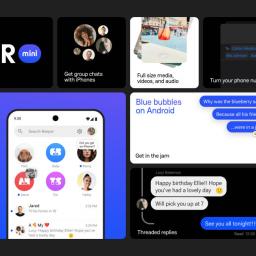 |
by Cheyenne MacDonald on (#6H11C)
The Beeper Mini team has apparently been working around the clock to resolve the outage affecting the new iMessage on Android" app, and says a fix is very close." And once the fix rolls out, users' seven-day free trials will be reset so they can start over fresh. Beeper Mini was released earlier this week, and seemed an especially promising entrant due to its unique approach to bridging the iMessage-Android gap. The app, reportedly the result of a 16-year-old's work to reverse-engineer iMessage, routes messages directly through Apple's own servers, making it more secure than some of the other options out there.But, only days after its release, Beeper Mini users on Friday found that they could no longer send and receive messages, sparking questions about whether Apple intervened and put a stop to it. In an update posted on social media, the team said it's deregistered users' phone numbers from iMessage while it works to fix the issue. That may not be the end of the immediate headaches caused by the outage, though. Annoyingly, the iPhone Messages app remembers' that you were a blue bubble for 6-24 hours before falling back to SMS," the Beeper Mini team wrote, so it's possible that some messages will not be delivered during this period."
|
 |
by Kris Naudus on (#6H11D)
Between Fortnite's propensity for big-name concerts and Epic's purchase of Harmonix two years ago, the inclusion of some kind of music-making feature in the game was inevitable. What Epic is releasing today is actually far grander: an entirely new mode called Fortnite Festival, a social space where players can team up to perform their favorite songs or jam together on new mixes.There are two options, or stages, for users to play in the new mode. The main stage, or championship stage, is basically the Rock Band experience recreated inside Fortnite. You'll form a band with friends and choose a song to perform. Then you play the song using the standard music game format where notes slide down vertical bars, hitting the correct button when the note reaches the bottom. Players can, of course, hear the song as they play it, which can be embarrassing if you're not that good. Each performer earns points, which in turn leads to XP and character progression in the greater Fortnite ecosystem.While the main stage may be old-hat to anyone present during the zenith of music games in the 2000s, the jam stage draws from Harmonix's more recent (and less popular) mixing titles, Dropmix and Fuser. While both of those games had competitive modes, they were a lot more fun as music-making toys, where players could just throw different parts of popular songs together and see what comes out. Jamming in Fortnite Festival is pretty much that, but collaborative.Epic GamesWhen you first drop into a jam, your avatar will be standing in a virtual world full of stages, clubs and green spaces. It has an amusement park-like feel, similar to Disney World's long-gone Pleasure Island. Despite the world's appearance, you don't have to climb on stage to play music, you can start jamming wherever you want by pulling up the emote wheel. The actions here have been replaced with song options. Just pick a song and instrument, and your character will start playing. It's not the entire song, but rather one particular piece of it. To assemble something more complete, you need to collaborate with other players.Jamming with other players is incredibly easy. All you need to do is walk up to someone who's already playing (helpfully indicated by a wavy circle) and activate your own emote wheel. The system will automatically mix the two songs together no matter the genre or style. You want to add the vocals from The Killers' Mr. Brightside" to the synth from Gangnam Style?" Go right ahead, and don't be surprised when someone else drops in the beat from The Weeknd's Blinding Lights."Instruments can be swapped out on the fly, and the key and tempo can also be tweaked to make a slow song fast or vice versa. There's a lot of room for creativity here, as well as cacophony as the levels fill up.While Fortnite Festival draws heavily on Dropmix and Fuser it has one key advantage over those two titles, one that could lead to success where its predecessors failed: it's free. All three of the new Fortnite modes will be free, but Festival is a standout since it relies so heavily on licensed music. One huge barrier to entry for music games has always been the additional costs, especially the song packs. $2 for your favorite Nirvana or Bad Bunny tracks might not seem like much at first, but it adds up, and any online cost can be insurmountable to a kid without a credit card. The fact that this is a music game that anyone can download for free on their computer, console or mobile device without being bombarded with ads means it has the potential to make music games popular again.This article originally appeared on Engadget at https://www.engadget.com/fortnite-festival-tries-to-bring-back-the-heyday-of-music-gaming-153624729.html?src=rss
|
 |
by Mat Smith on (#6H0ZM)
Good morning. Do you want this customized PS5? You'll have to work the sunset years of your career at Sony then. That is, apparently, the only way. I'm also taking bets on which chatbot will be the chatbot we all depend on. It's like Yahoo (our parent company) or Google or Facebook. Who's going to get there first? This week's YouTube-coated cry for help features two of the biggest chatbot competitors, Google and Microsoft. And some Engadget editorial team in-fighting.This week:Google's Gemini is the biggest threat yet to ChatGPTMicrosoft upgrades its chatbot, tooLenovo's huge handheld PC is here And read this:Researchers have made an under-the-skin implant to treat Type 1 diabetes. The new implantable device could change the way Type 1 diabetics receive insulin without the need for needles or pumps. A thread-like implant is an islet device" derived from the cells that produce insulin in our bodies naturally. This secretes insulin through islet cells that form around it, while also receiving nutrients and oxygen from blood vessels to stay alive.However, the devices eventually need to be removed, so researchers are still working to extend their longevity before testing the devices, eventually, in patients. No sassy quip here - just pretty cool news?Like email more than video? Subscribe right here for daily reports, direct to your inbox.This article originally appeared on Engadget at https://www.engadget.com/the-morning-after-battle-of-the-chatbots-part-two-140059376.html?src=rss
|
 |
by Andrew Tarantola on (#6H0NF)
Following a marathon 72-hour debate, European Union legislators Friday have reached a historic deal on its expansive AI Act safety development bill, the broadest-ranging and far-reaching of its kind to date, reports The Washington Post. Details of the deal itself were not immediately available."This legislation will represent a standard, a model, for many other jurisdictions out there," Drago Tudorache, a Romanian lawmaker co-leading the AI Act negotiation, told The Washington Post, "which means that we have to have an extra duty of care when we draft it because it is going to be an influence for many others."
|
 |
by Will Shanklin on (#6H0KY)
Beeper Mini, the chat app that reverse-engineered Apple's iMessage for Android, is having problems. 9to5Google reported Friday the entire Beeper platform is seemingly broken right now, leading to the obvious speculation that Apple has stomped on the bootleg iMessage workaround. Beeper posted on X that it's investigating reports that sending/receiving is not working in Beeper Mini."Engadget contacted Beeper co-founder Eric Migicovsky by email to ask whether the outage could have been triggered on Apple's end, and he suggested it's possible. We had overwhelming interest and excitement in Beeper Mini this week!" Migicovsky wrote to Engadget. As I tweeted, Beeper Mini is experiencing an outage - sending and receiving is not working right now."If it's Apple, then I think the biggest question is - if Apple truly cares about the privacy and security of their own iPhone users, why would they try to kill a service that enables iPhones to send encrypted chats to Android users?" the founder and former Pebble CEO wrote to Engadget. With their announcement of RCS support, it's clear that Apple knows they have a gaping hole here. Beeper Mini is here today and works great. Why force iPhone users back to sending unencrypted SMS when they chat with friends on Android?"
|
 |
by Malak Saleh on (#6H0HB)
In a landmark decision, the FDA greenlit two new drugs for the treatment of sickle cell disease in patients 12 and older, one of which -Vertex's drug Casgevy - is the first approved use of genome editing technology CRISPR in the US. Bluebird Bio's Lyfgenia also is a cell-based gene therapy, however, it uses a different gene modification technique to deliver tweaked stem cells to the patient.Both approvals cultivate new pathways for the treatment of sickle cell disease, which is an inherited blood disorder that is characterized by red blood cells that can't properly carry oxygen, which leads to painful vaso-occlusive crises (VOCs) and organ damage. The disease is particularly common among African Americans and, to a lesser extent, among Hispanic Americans. Bone marrow transplants are currently the only cure for sickle cell disease, but they require well-matched donors and often involve complications.
|
 |
by Lawrence Bonk on (#6H0HC)
Alan Wake 2 won big at last night's The Game Awards and the developer wasted no time to capitalize on that momentum. Remedy just announced that the game is getting free DLC next week, December 11, in the form of a New Game Plus mode. This has been a long-requested feature for fans of the title. Well, if by long-requested you mean within the past two months.Alan Wake 2: The Final Draft will include a brand-new ending for the story, though you must first beat the game in the traditional way to access it. Remedy says this ending will spark speculation and theories from dedicated fans." The updates go beyond the last act, however, as The Final Draft will feature new lore videos and manuscript pages and, of course, tougher enemies.These enemies will populate a new Nightmare difficulty level. The baddies in the original game were already notorious bullet sponges, so we'll see what happens with the DLC. Once you beat the game, you'll be able to access New Game Plus. Also, you'll have all of your weapons, charms and character upgrades from the first playthrough.Alan Wake 2: The Final Draft will be available on all platforms, including PS5, Xbox X/S and PC. Set your calendars for December 11 and get ready to venture back into Bright Falls. In related news, the titular hero recently popped up in Fortnite as part of a cross-promotional campaign.This article originally appeared on Engadget at https://www.engadget.com/alan-wake-2-to-dispatch-a-new-game-plus-mode-on-december-11-193451922.html?src=rss
|
 |
by Will Shanklin on (#6H0HD)
OpenAI's recent drama hasn't only caught UK regulators' attention. Bloomberg reported Friday that the Federal Trade Commission (FTC) is looking into Microsoft's investment in the Sam Altman-led company and whether it violates US antitrust laws. FTC Chair Lina Khan wrote in a New York Times op-ed earlier this year that the expanding adoption of AI risks further locking in the market dominance of large incumbent technology firms."Bloomberg's report stresses that the FTC inquiry is preliminary, and the agency hasn't opened a formal investigation. But Khan and company are reportedly analyzing the situation and assessing what its options are." One complicating factor for regulation is that OpenAI is a non-profit, and transactions involving non-corporate entities aren't required by law to be reported.In addition, Microsoft's $13 billion investment doesn't technically give it control over OpenAI in the eyes of the law, another factor in determining what action a governmental agency might be able to take. However, the recent ousting and re-hiring of Altman - and the integral role Microsoft played in reverting those chess pieces to its preferred positions - suggests the lack of control over the nonprofit is more a technicality than the relationship's underlying essence.OpenAI CEO Sam Altman (left) and Microsoft CEO Satya NadellaJustin Sullivan via Getty ImagesThe UK's Competition and Markets Authority (CMA) wrote earlier today that it's considering investigating the relationship between AI's two dominant players. It said it's weighing recent developments," referring obliquely to the Altman-Microsoft drama. The CMA will review whether the partnership has resulted in an acquisition of control - that is, where it results in one party having material influence, de facto control or more than 50% of the voting rights over another entity," the CMA wrote in its news release.Khan, also challenging Microsoft's $69 billion Activision Blizzard acquisition, has previously sounded the alarm about the need for AI regulations.As these technologies evolve, we are committed to doing our part to uphold America's longstanding tradition of maintaining the open, fair and competitive markets that have underpinned both breakthrough innovations and our nation's economic success - without tolerating business models or practices involving the mass exploitation of their users," the youngest-ever FTC chair wrote in May. Although these tools are novel, they are not exempt from existing rules, and the F.T.C. will vigorously enforce the laws we are charged with administering, even in this new market."This article originally appeared on Engadget at https://www.engadget.com/the-ftc-is-reportedly-looking-into-microsofts-13-billion-openai-investment-185201614.html?src=rss
|
 |
by Lawrence Bonk on (#6H0E8)
After much speculation and waiting, Threads is finally launching in Europe. Meta's social media app will likely release in the EU on December 14, just in time to post photos of holiday dinners or whatever. There's no official announcement by Zuck and the gang, but there is a countdown timer on Instagram appearing for EU users. These users will find a ticket within the app that advertises the pending release for the Twitter-like platform.The timer is also available on the Threads website, but only for those clicking from EU-based IP addresses, as reported by The Verge. Finally, European Instagram users can simply search for ticket" to find a scannable QR code that announces the forthcoming launch. We don't know, however, which countries in the EU will get the app on December 14. Engadget reached out to Meta and will update this story if we hear back.So what's been the holdup? Meta has had trouble complying with the EU's Digital Markets Act (DMA). Meta and other tech giants were designated as platform gatekeepers back in July, forcing stricter rules regarding user consent and data protection. It looks like the company worked everything out in time for this release, though it remains unclear if the app itself would change to accommodate the regulations. We'll find out next week.Threads has certainly had a topsy-turvy year, launching to much fanfare amidst the dumpster fire that is X. However, user engagement fell sharply once people realized there wasn't that much to do on the platform. Meta, to its credit, has been quickly adding features and tools to the app. In the past few months, Threads has gotten searchable topics, also known as hashtags, and an edit button that doesn't cost $8 per month, among other upgrades.This article originally appeared on Engadget at https://www.engadget.com/threads-countdown-hints-at-eu-launch-on-december-14-183053910.html?src=rss
|
 |
by Kris Holt on (#6H0E9)
Game studios and publishers have collectively laid off an estimated 9,000-plus workers this year. Microsoft (which itself has laid off workers from Xbox teams in 2023) is bucking the trend to a certain extent by hiring dozens of ZeniMax quality assurance contractors as unionized employees.The company agreed at the beginning of this year to formally recognize a union representing around 300 QA workers at ZeniMax Media, the parent company of Bethesda that Microsoft bought in 2021. As part of bargaining talks that have been ongoing since April, Microsoft has agreed to hire 77 temporary workers and incorporate them into the ZeniMax Workers United-CWA (Communications Workers of America) union.Microsoft is hiring 23 of the workers as full-time, permanent employees with a pay increase of 22.2 percent. The other 54 workers are getting an immediate pay bump from $18 per hour to $20.75 an hour. Once the collective bargaining agreement is ratified, Microsoft will hire those workers as temporary employees.According to the CWA, the new employees will now receive paid holidays and sick leave. The latter was previously only available if contractors lived in a jurisdiction that requires paid time off for illness. In addition, all of the workers will receive a copy of Starfield, the blockbuster game they had worked on. The CWA says it was not standard practice for contractors to get copies of the games they help to ship.The CWA says the union will keep fighting for more contractors to have a pathway to permanent roles. We look forward to continued good faith negotiations as we work towards a collective bargaining agreement," Microsoft vice president Amy Pannoni told Bloomberg.We are now stronger at the bargaining table and are working to secure a fair contract for all workers - direct employees and contractors," Chris Lusco, associate QA tester and a member of ZeniMax Workers United-CWA, said in a statement. "We are all a part of ZeniMax Studio's success and we all deserve our fair share. We hope to set a new precedent for workers across Microsoft and the entire gaming industry so that all workers, regardless of their employment status, are able to improve their working conditions through collective bargaining."Last year, while Microsoft was attempting to win regulatory approval to buy Activision Blizzard, the company said it would remain neutral when the publisher's employees wished to unionize. A pact it reached with the CWA to that effect is set to come into force on December 12, 60 days after the Activision deal closed.This article originally appeared on Engadget at https://www.engadget.com/microsoft-is-hiring-dozens-of-zenimax-qa-contractors-as-unionized-employees-180047283.html?src=rss
|
 |
by Amy Skorheim on (#6H0EA)
Depending on what you buy and where you shop, many online purchases should arrive before December 25th, so if you're still working through your gift list, it might not be too late. Even if you're just looking for deals in general, there are plenty out there. Despite the fact that the official "shopping holidays" have ended, retailers and brands are still discounting many gadgets and devices at prices that meet their Black Friday lows. Right now, you can save on Sonos speakers, Tile trackers, Google phones and tablets, and Amazon's most popular Echo device. We also found discounts on Xbox gift cards, a Nintendo Switch bundle and noted that a PS5 bundle was still selling for it's Cyber Monday low. Here are the best tech deals from the week that you can still get today.Sonos Era 100As part of a larger sale, the Sonos Era 100 smart speaker is back down to $199 from the manufacturer's store front. That's $50 of the list price and matches the price we saw during Black Friday and Cyber Monday. We named it the best midrange smart speaker in our guide and gave it an 88 in our review when it debuted earlier this year. It's an improvement over its predecessor, the Sonos One, which was in itself already pretty great.Upgrades include a new speaker array with two tweeters instead of one plus a woofer that's 25 percent bigger. That lends the speaker impressive bass, a clear high-end and big volume. It connects via Wi-Fi, Bluetooth and now also has a line-in USB-C port to directly connect a player (though you'll need an adapter to hook up a turntable). And the smart assistant duties come courtesy of Alexa or the music-focused Sonos assistant, unfortunately it doesn't support the Google Assistant.The Ray soundbar and the Sonos Move are also part of the Sonos sale with discounts of up to 25 percent off.Echo Show 5 + smart bulbAmazon kicked of Black Friday early this year with discounts on their own devices. Many of the deals on Echo speaker and displays bundled with a free smart bulb didn't end with Cyber Week and are still live today. So you can save on an Echo Show 5 and smart bulb combo - and depending on where you're shipping, it should arrive by Christmas. The Echo Show 5 was refreshed in June and has a list price of $90. The Sengled light is $20 on its own. While both of them go on sale often, the bundle represents a 63 percent discount over buying them at full price. The set makes a nice smart home starter kit, as the Echo Show 5 gives you voice and touchscreen control over smart home devices like the Sengled bulb.Kobo Clara 2eThe best ereader, according to our guide is the Kobo Clara 2E. It's currently selling for $20 off the list price of $140, a discount it hit for Black Friday. It rarely goes on sale so this is a good chance to save on an ereader with a crisp 300 ppi screen with a waterproof build and warm LED front lights. Setting the device up is easy, even for those new to ereaders and the Kobo store is nearly as vast as Amazon's Kindle store, though without the Kindle Exclusive titles. You can also easily borrow books from your local library and read them on your Kobo for free.Tile Tracker SaleAmazon is selling a two-pack of Tile Mate Bluetooth trackers for $33, which matches the record low the set hit for Prime Day in October. Or you can grab a four-pack of Tile Mates in grey directly from the manufacturer for 40 percent off. These handy fobs attach to your keys, backpack, or anything else you don't want to lose. The app works with both iPhone and Android and uses the community of other Tile users to locate items that you misplace out in the world. The smaller Tile Sticker is also on sale, currently 33 percent off, making it just $20. Or you can get our top pick for Androids in our Bluetooth tracker guide is the Tile Pro. It's down to $25, which is just $2 more than the record low it hit for Prime Day in July.Roku UltraThe Roku Ultra is our recommendation for a set-top box in our guide to the best streaming devices. Right now it's down to $67 at Amazon and at Walmart. That's only about a dollar more than the lowest price it has sold for. It's been on sale for $70 for much of the past few weeks, so this is a chance to save a little more. While it's our favorite set-top streamer, it's not necessarily as good of a value as our top pick for a streamer, the Roku Streaming Stick 4K. That model is down to $39, which is a full $10 more than it went for during Black Friday but still $28 less than the Ultra.Anker Soundcore Space A40The overall pick in our guide to the best budget earbuds is Anker's Soundcore Space A40 and right now they're on sale at Amazon for $54. That ties the all time low the buds hit for Black Friday. We like the light, evenly balanced design that's comfortable to wear for long sessions and the sound profile is warm and pleasant. We also think the active noise cancellation is great for the price. Just note that they don't auto pause when you remove a bud and the mic quality for calls could be better.Google Pixel 8 and Pixel 8 ProAn unlocked Pixel 8 with 128GB of storage is back down to $549 at Amazon. That's a $150 discount and matches its Black Friday low. You can get the same deal from Amazon and at the Google Store. For a larger screen, you can get the Pixel 8 Pro, which is $200 off at Amazon, Best Buy and the Google Store, bringing the base configuration with 128GB down to $799. We named these phones the best Android handsets you can buy and gave them a 90 in our review, calling them "Google's most compelling phones in years."Xbox and Nintendo gift cardsIf you know someone who plays games on an Xbox or Switch, these two deals may make great gifts. Right now, Target is selling $50 Xbox or Nintendo eShop gift cards for $45. Both cards are delivered electronically to an email address and can be transferred to the user's balance as soon as they get the message. They can then use the funds to buy games and add-ons through their console.Switch gamers can also get a digital code for an individual annual Switch Online membership for $18, or a family membership for $31.50. Both are 10 percent off the going rate for a 12-month subscription.Google Pixel TabletRight now at Amazon, Target and directly from the Google Store, you can get the latest Google Pixel Tablet for $100 off the list price. That brings it to $399, which is a discount we've seen a few times previously and matches the low it went for during Black Friday sales. The standout feature for the slate is its ability to function as a smart display, as it comes complete with a stand that doubles (triples?) as a charging base and a much fuller speaker than any tablet can muster on its own. We gave the Pixel Tablet a review score of 85 when it debuted back in June and mention it as an alternative in our buyer's guide to tablets - noting that it's a good pick if you think you'll make use of the smart display option.MasterClass BOGOMasterClass is offering two annual memberships - one for yourself and one to give away as a gift - for the price of one. If you're unfamiliar, MasterClass offers courses taught by famous people - like Spike Lee teaching directing, Aaron Sorkin teaching screenwriting and Alicia Keys teaching songwriting. Memberships start at $120 per year, which lets you watch on one device at a time and go up to $240 per year for download permissions and access on six devices simultaneously. The free membership will be at the same level you buy for yourself. The deal ends December 12th.Google Pixel Watch 2Google's Pixel Watch 2 just came out in October but we're already seeing a substantial discount of $50 off, making the Wi-Fi model just $300 at Amazon and from the Google Store. The LTE model is also $50 off and down to $350. The Pixel Watch 2 is an improvement over the previous model, with a longer-lasting battery that goes for 24 hours between charges. The Fitbit integration is even deeper this time, with a focus on stress levels using a new body-response sensor. We did find some flaws, however, such as the Fitbit branding throughout that felt like a disconnect from the Pixel brand. There were also software quirks and confusing data presentation that prevented us from giving it a glowing review.Apple iPad (10th gen)The tenth generation iPad is on sale for $349 at Amazon, which is $100 off the list price and the same price it hit for Black Friday. It often sells for $399, so this is and additional $50 off the going rate. In our review we didn't call it a wild improvement over the previous generation, but we did appreciate that it orients the camera to the landscape edge, which is much better for video calls. The USB-C charging is more modern than the Lightning connector on the 9th gen iPad, but for some reason this model still works with the first generation Apple Pencil (even though the slate came out after the second-gen stylus).Sonos RoamThe Sonos Roam is 25 percent off and down to $134, which is price it went for during Black Friday and has remained there since. It happens to be our top pick for a portable smart speaker thanks to its versatility as an indoor or outdoor smart speaker you can plonk down anywhere. You can control it with Alexa or the Google Assistant it and works on Wi-Fi or via Bluetooth. The sound isn't as big as from larger speakers, but it still packs a surprising amount of bass and distinct highsAmazon Echo DotAmazon's best selling speaker - and our top pick for a smart speaker under $50 - is the Echo Dot and it is still down to $23, the low price it hit for Black Friday and Cyber Monday. The sound is surprisingly good for the size and price and it brings Alexa's weather-forecasting, timer-setting, joke-telling abilities into whatever room you set it in. I use it to control our smart plugs and my kid uses it to play "The Wellerman" for the 900th time.Google Pixel BudsLast week, Wellbots sold the Google Pixel Buds Pro earbuds for $120 with a code. This week you can get the same $80 discount, no special letters and numbers required. That makes the buds just $3 more than their all-time low. We called these earbuds the company's best effort to date in our official review, praising the deep and punchy bass, the useful touch controls, wireless charging options and more. They're currently our top pick for Android users in our guide to the best wireless earbuds.PS5This bundle has been on sale for a few weeks now. It pairs the $500 PS5 console with the new Spider-Man 2 game for no extra cost. We named the latest PlayStation one of the best gaming consoles you can get right now. We also liked the game, and called it better than its predecessor in our review.Meta Quest 2The Meta Quest 2 bundled with a $50 store credit at the Meta Quest store is now $249 from Walmart. The headset by itself retails at $300 so this is essentially a $100 discount and matches similar discount-and-gift card combos we saw for Black Friday. Now that the improved Quest 3 is out in the world, this is harder sell. The new headset goes for $500 and isn't on sale at the moment, but if you can swing it, you'll get a better VR experience along with mixed reality improvements. That said, we're still impressed with the bargain the Quest 2 provides and named it our pick for those on a budget in our VR headset buying guide.
|
 |
by Lawrence Bonk on (#6H0EB)
The Game Awards is over and done with, leaving an empty theater in Los Angeles and plenty of happy game developers placing pointy statuettes on their mantels. To that end, Larian Studios and its massively successful RPG Baldur's Gate 3 was the big winner of the night, taking home the prize for game of the year, player's choice, best multiplayer game and more.Remedy's Alan Wake 2 was also on fire, winning best game direction, best narrative and best art direction, among others. The Legend of Zelda: Tears of the Kingdom paraglided away with the statue for best action/adventure and the RPG Sea of Stars won for best indie game, with Cocoon being awarded best debut indie game.Okay. Now that the actual awards are out of the way, let's get to the good stuff. The main reason people watch The Game Awards is for reveals and trailers, and this year didn't disappoint. There were over a dozen announcements, and here are the best and brightest of the bunch.Light No FireBoy oh boy, a new title from Hello Games, the makers of a little-known space sim called No Man's Sky. The studio has finally announced a follow up, which has been in development for five years. Light No Fire, another three-word monosyllabic game name, is being billed as the the first real open world" title, a lofty promise that Hello may be able to pull off. The world is allegedly the same size as Earth, with secrets and mysteries around every corner. It's also multiplayer, which is neat. Who knows when this one will come out, but it looks gorgeous.Jurassic Park: SurvivalIt's been a couple of years since a new Jurassic Park game, and more than that for a proper adventure title. Jurassic Park: Survival actually takes place one day after the events of the first film, and looks to feature plenty of stealthy action as you hide from hungry dinos. There's no release date, but it's launching on Xbox X/S, PlayStation 5 and PC.ODDid you think Hideo Kojima would be spending all of his time on Death Stranding 2? Heck no. The legendary developer has also been busy preparing the cinematic horror game OD, previously called Overdose. It's described as something no one has ever experienced or seen before," which is entirely possible, given Kojima's pedigree. Filmmaker Jordan Peele is also on board, as are actors Sophia Lillis, Hunter Schafer and Udo Kier. Details are scant, as it's a Kojima joint, but the game will release for Xbox X/S and PC at some point.Marvel's BladeThat's right. Everyone's favorite vampire hunter is getting his own video game. Even better? It's being developed by Arkane Lyon, the talented team behind Deathloop and Dishonored 2. Sure, the dev also made Redfall, but maybe Arkane can take some of the best parts of that vampire shooter and translate it to Marvel's hero. There's no release date and no announced platforms for this one.ExodusThis is the first game from Archetype Entertainment, a studio staffed by former developers from Bioware, Naughty Dog and other AAA developers. Exodus is a sci-fi RPG that deals with the effects of time dilation, the notion that time passes more slowly to those experiencing high-velocity space travel. It looks cinematic and gorgeous, with a major emphasis on player choice. Exodus has no release date, but it's in development for PlayStation 5, Xbox Series X/S and PC.Monster Hunter WildsCapcom is busy working on a new Monster Hunter entry. Monster Hunter Wilds is a direct followup to Monster Hunter World and it looks to feature all of the big, bad beasties you can shake a sharpened stick at. It's on the way to PS5, Xbox Series X/S and PC, with more information coming this summer.WindblownMotion Twin, the developer of Dead Cells, is back with another roguelike. Windblown looks to be a fast-paced release that promises a whole new level of speed to the action rogue-like genre." It's also not a sidescroller, which is a definitive break from the Dead Cells formula. Windblown launches in 2024 for PC, though consoles are likely to follow.Big WalkLooking to relax? House House, the developer behind Untitled Goose Game, has got you covered. Big Walk is, well, a multiplayer walking sim with plenty of secrets to uncover. Cooperation is a major part of the game as you and your friends work to explore the wilderness. Big Walk is slated to arrive on Steam and the Epic Game Store in 2025.No Rest for the WickedNo Rest for the Wicked is the new project from Moon Studios, the team behind Ori and the Blind Forest and its sequel. It's a top-down action RPG, departing from Ori's metroidvania roots, set during the middle ages. The graphics are stunning, which is no surprise considering the developer. It's due to hit early access on Steam in the first quarter of 2024, and will eventually launch on PlayStation 5 and Xbox Series X/S.Pony Island 2: Panda CircusIndie developer Daniel Mullins made a name for himself with Inscryption and the original Pony Island. Now he's back with Pony Island 2: Panda Circus, a game that's not actually about ponies. The trailer is weird and creepy, as one would expect, with sudden shifts from a 3D adventure to a 2D point-and-click and back again. Voice actor SungWon "ProZD" Cho is also on board. The game may not be released until 2026, so put on your waiting cap.Sega Embraces its RootsSega dropped a trailer for not just one game, but a whole bunch of games based on classic IPs. You can look forward to forthcoming reboots of Crazy Taxi, Jet Set Radio, Golden Axe, Streets of Rage and Shinobi. Everything old is new again. But, where's Seaman?Final Fantasy XVI and God of War Ragnarok get DLCThe DLC faeries were good to us this year. There's a God of War Ragnarok update launching next week, bringing a new roguelite game mode to Sony's hit adventure. We also got a surprise drop for the first Final Fantasy XVI DLC. Echoes of the Fallen, set before the base game's final battle, is available now, with a second DLC planned for next year. To that end, Square Enix dropped a trailer for next year's installment, The Rising Tide.Everything elseThose were the biggest reveals, but not all of them. The Game Awards also saw a title reveal and trailer for Supermassive's Dead by Daylight spinoff, The Casting of Frank Stone. There was an announcement trailer for a remake of Brothers: A Tale of Two Sons and one for the music-tinged VR title Thrasher, by the makers of Thumper. Finally, we got an actual release date for Ubisoft's Skull and Bones, February 16, and a surprise launch for Baldur's Gate 3 on Xbox systems.This article originally appeared on Engadget at https://www.engadget.com/heres-everything-that-was-announced-during-the-game-awards-173051610.html?src=rss
|
 |
by Will Shanklin on (#6H0EC)
Hideo Kojima said his documentary, Hideo Kojima: Connecting Worlds, will be distributed exclusively by Disney+. The legendary game designer posted Thursday on X (formerly Twitter) that the film, which premiered at the Tribeca Film Festival this summer, will launch globally in the spring of 2024.Hideo Kojima: Connecting Worlds tracks the pioneering auteur during the development of Death Stranding while providing a rare glimpse into his creative process as he launched his studio, Kojima Productions. The film also includes shots from the early days of our independent studio, memories from my childhood and my creative journey," as the designer said. The film strives to capture the artistic side of gaming, which Kojima embodies as well as anyone.Kojima ProductionsThe documentary announcement follows the official reveal of Kojima's next game, OD. Although we don't know much about it yet, its trailer blends a cinematic art style with horror, aligning with previous leaks. Director and comedian Jordan Peele is even involved. Xbox Game Studios is publishing the title, which Kojima has said will lean heavily on Microsoft's cloud technology.Video gaming is an art," director Guillermo del Toro summarizes in the documentary trailer (below) about the Metal Gear creator. But the only person in charge of the orchestra is the auteur."This article originally appeared on Engadget at https://www.engadget.com/hideo-kojimas-documentary-will-be-a-disney-exclusive-171555906.html?src=rss
|
 |
by Jeff Dunn on (#6H0BC)
If you've been thinking of grabbing or gifting a new Echo device for the holidays, here's a quick PSA: A number of Amazon's smart speakers and displays are currently on sale for the lowest prices we've tracked, and many of them can be bundled with a Sengled smart light bulb for no extra cost. An Echo Show 5 bundle is down to $40, for instance, while one for the Echo Dot is available for $23. Beyond that, the latest Echo Show 8 is available for a low of $105, albeit without any extras. A bundle with the full-size Echo is also $40 off at $60, though that's a few bucks higher than its all-time low. Most of these deals have been lingering since around Black Friday, but each still represents a good chance to save.We recommend the Echo and Echo Dot in our guide to the best smart speakers, while the 8-inch Echo Show 8 and 5.5-inch Echo Show 5 are picks in our guide to the best smart displays. If you can afford the higher-end model of each pairing, they should be worth it: The Echo sounds decidedly fuller than the Echo Dot, while the Echo Show 8 has a better display, richer speakers and a much sharper camera than the Echo Show 5. But the Dot still performs well for its size and remains a good value for those looking to see if they'd get any use out of an Alexa speaker in the first place, while the Echo Show 5 can be useful on a bedside table as a sort of smart alarm clock.Amazon's Alexa assistant still has plenty of deficiencies - and all Alexa-based devices carry inherent security and privacy concerns - but for simpler requests and controlling other compatible smart home gear hands-free, each of these devices generally work well. The Sengled bulb, meanwhile, is a fairly simple color model that's compatible with the new Matter standard and normally costs around $20 on its own.If you want the absolute cheapest Echo speaker, the Echo Pop is also on sale for $17 with the same smart bulb, but most people should get the superior-sounding Echo Dot when it's only a few dollars higher. The Echo Dot with Clock, which includes an LED display for showing the time and other basic info, is worth a longer look at $40, though that's $10 more than the lowest price we've tracked. On the smart display side, the Echo Show 10 is $80 off and down to $170, but we found that auto-rotating display to offer little extra value over the Echo Show 8 in our review.Follow @EngadgetDeals on Twitter and subscribe to the Engadget Deals newsletter for the latest tech deals and buying advice.This article originally appeared on Engadget at https://www.engadget.com/amazon-device-deals-include-an-echo-show-5-and-smart-bulb-bundle-for-40-160851722.html?src=rss
|
 |
by Kris Holt on (#6H0BD)
Google's NotebookLM, a note-taking app that's infused with a large language model, is now available to everyone in the US. The company built NotebookLM to only pull information from a custom dataset. So you might use it, for instance, to help write a paper based on a specific set of PDFs and only rely on details from those documents.The idea is that, by sticking to a custom dataset, the information NotebookLM handles will always be relevant to your specific needs as opposed to a more general chatbot that might draw from the entirety of the public internet. Google debuted NotebookLM as Project Tailwind at I/O this year before rebranding it and it says the tech is based on its Gemini Pro model.Google also notes that personal data isn't used to train NotebookLM, so any sensitive or private details in your sources will remain hidden. That is, unless you share the sources with collaborators.Along with making NotebookLM more broadly available (Google has been granting access based on a waitlist over the last five months), Google has announced a string of new features for the software. It plans to roll these out over the next few weeks with the aim of easing the transition between reading, taking notes and writing.Among other things, the chatbot can format your notes into a newsletter, script outline or a marketing plan draft and export everything to Google Docs with one click. You'll be able to pin notes to a Noteboard space above the chat box, save and pin responses from the chatbot as notes and hide the source material if you want to focus on jotting down your thoughts with fewer distractions. You'll soon be able to ask the AI to focus on certain sources (of which you'll be able to have up to 100 in total) or jump to a citation from a chat response or saved note.NotebookLM will also suggest some actions based on selected text or notes. At the outset, you'll be able to combine notes, summarize several of them or create an outline or study guide.This article originally appeared on Engadget at https://www.engadget.com/googles-ai-infused-notebooklm-note-taking-app-is-open-to-everyone-in-the-us-155239999.html?src=rss
|
 |
by Pranav Dixit on (#6H0BE)
Genetic testing company 23andMe changed its terms of service to prevent customers from filing class action lawsuits or participating in a jury trial days after reports revealing that attackers accessed personal information of nearly 7 million people - half of the company's user base - in an October hack.In an email sent to customers earlier this week viewed by Engadget, the company announced that it had made updates to the Dispute Resolution and Arbitration section" of its terms to include procedures that will encourage a prompt resolution of any disputes and to streamline arbitration proceedings where multiple similar claims are filed." Clicking through leads customers to the newest version of the company's terms of service that essentially disallow customers from filing class action lawsuits, something that more people are likely to do now that the scale of the hack is clearer.To the fullest extent allowed by applicable law, you and we agree that each party may bring disputes against the other party only in an individual capacity and not as a class action or collective action or class arbitration," the updated terms say. Notably, 23andMe will automatically opt customers into the new terms unless they specifically inform the company that they disagree by sending an email within 30 days of receiving the firm's notice. Unless they do that, they will be deemed to have agreed to the new terms," the company's email tells customers.23andMe did not respond to a request for comment from Engadget.In October, the San Francisco-based genetic testing company headed by Anne Wojcicki announced that hackers had accessed sensitive user information including photos, full names, geographical location, information related to ancestry trees, and even names of related family members. The company said that no genetic material or DNA records were exposed. Days after that attack, the hackers put up profiles of hundreds of thousands of Ashkenazi Jews and Chinese people for sale on the internet. But until last week, it wasn't clear how many people were impacted.In a filing with the Securities and Exchange Commission, 23andMe said that multiple class action claims" have already been against the company in both federal and state court in California and state court in Illinois, as well as in Canadian courts.Forbidding people from filing class action lawsuit, as Axios notes, hides information about the proceedings from the public since affected parties typically attempt to resolve disputes with arbitrators in private. Experts, such as Chicago-Kent College of Law professor Nancy Kim, an online contractor expert, told Axios that changing its terms wouldn't be enough to protect 23andMe in court.The company's new terms are sparking outrage online. Wow they first screw up and then they try to screw their users by being shady," a user who goes by Daniel Arroyo posted on X. Seems like they're really trying to cover their asses," wrote another user called Paul Duke, and head off lawsuits after announcing hackers got personal data about customers."This article originally appeared on Engadget at https://www.engadget.com/23andme-frantically-changed-its-terms-of-service-to-prevent-hacked-customers-from-suing-152434306.html?src=rss
|