 |
by Kris Holt on (#6GRJW)
Google won't block news links in Canada in response to new legislation after all. The company pledged earlier this year to pull links to Canadian news stories from Search, News and Discover when the country's Online News Act (Bill C-18) takes effect in December. However, Google has reached a deal with the country's government that will see it continuing to serve users there with Canadian news."Following constructive discussions, our government and Google have reached an agreement - they will contribute to the Online News Act. We worked hard to make this possible," Minister of Canadian Heritage Pascale St-Onge wrote on X. "This Act is good news for journalism, for online platforms and for Canadians."Google has agreed to pay news publishers in Canada around $100 million CAD per year, according to the CBC. That's significantly less than the government's previous estimate that Google's annual payments should be around $172 million. The $100 million figure is in line with Google's own estimates of how much it should pay.The company will still need to sign an agreement with the media after negotiations. Google had demurred over a mandatory negotiation model that would have seen it hold talks with media organizations. Instead, the CBC reports that Google will only need to negotiate with a representative group, which is said to limit the company's risk of arbitration."We thank the Minister of Canadian Heritage, Pascale St-Onge, for acknowledging our concerns and deeply engaging in a series of productive meetings about how they might be addressed," Kent Walker, Google and Alphabet's president of global affairs, told Engadget in a statement. "Following extensive discussions, we are pleased that the Government of Canada has committed to addressing our core issues with Bill C-18, which included the need for a streamlined path to an exemption at a clear commitment threshold. While we work with the government through the exemption process based on the regulations that will be published shortly, we will continue sending valuable traffic to Canadian publishers."Google's arrangement with the government will be factored into the Bill C-18 legislative framework, which must be finalized by the middle of December. Although Google said in June that it would remove links to Canadian news stories from several of its key services, it never followed through on that threat.Meta, on the other hand, has blocked Canadian news links on Facebook and Instagram since June. According to the CBC, Meta has not returned to the negotiating table with the government. Google and Meta are the only companies that meet Bill C-18's legislative criteria.Updated 11/29 2:08PM ET: Added statements from Pascale St-Onge and Kent Walker.This article originally appeared on Engadget at https://www.engadget.com/google-wont-block-news-links-in-canada-after-all-180258909.html?src=rss
|
 Engadget - Technology News & Expert Reviews
| Link | https://www.engadget.com/ |
| Feed | https://www.engadget.com/rss.xml |
| Updated | 2026-09-20 13:34 |
 |
by Lawrence Bonk on (#6GRJX)
Sony has revealed the PlayStation Plus monthly games lineup for December, and it's a doozy. There's no clear headliner here, but a trio of interesting games are about to drop, including the gorgeous open-world exploration game Sable and the cleaning-based tour de force Powerwash Simulator.First up, there's Sable, a game that was on everyone's radar for years before an official release, thanks to the eye-catching graphical style. The "coming-of-age adventure and exploration game" casts you as the titular hero Sable as you ride a hoverbike through vast deserts and mysterious landscapes, encountering the remains of spaceships and other ancient artifacts. The art style is incredible and the soundtrack is by Japanese Breakfast, if that's your bag (and it should be.) The game's only available for PS5.Powerwash Simulator, as the name suggests, is a cleaning sim that has you clearing grime from just about anything you can think of, from Back to the Future's Delorean to Final Fantasy VII's Midgar. Most of the game, however, takes place in the town of Muckingham and boasts plenty of upgrade options for your power washer and the ability to play with friends via online co-op. The gameplay is relaxing, though more complex than it lets on at first. It's available for both PS4 and PS5.Finally, there's Lego 2K Drive. This is an open-world driving game comprised entirely of Lego vehicles. There are races just about everywhere you look and, of course, the ability to make your own vehicles by connecting virtual blocks. There's local couch co-op and online play, with the latter allowing access to the entire game map. Both PS4 and PS5 players can access this game.It's also worth noting that some games are about to leave the service, so get those downloads ready. PlayStation Plus members have until December 4 to snag Mafia II: Definitive Edition, Dragon Ball: The Breakers and Aliens Fireteam Elite.This article originally appeared on Engadget at https://www.engadget.com/decembers-playstation-plus-monthly-games-include-sable-and-powerwash-simulator-174319553.html?src=rss
|
 |
by Lawrence Bonk on (#6GRJY)
GM is massively slashing spending on its self-driving vehicle subsidiary Cruise after a string of debilitating setbacks, according to a conference call by company executives transcribed by TechCrunch. GM Chair and CEO Mary Barra said that operations would resume in some capacity, but that any plans for Cruise moving forward would be more deliberate."To that end, the cuts will amount to hundreds of millions of dollars in the next year. This is expected to result in widespread layoffs at the San Francisco-based company that currently employees nearly 4,000 people. Earlier this month, Cruise CEO Kyle Vogt told staffers at an all-hands meeting that he'd have information regarding layoffs in the coming weeks, but he resigned shortly thereafter along with co-founder Dan Kan.It looks like the entire company may get an overhaul, with CFO Paul Jacobson saying in today's conference call that there would be specific restructuring information in the coming weeks after two independent safety and incident review boards finish their work. These boards were instituted after a collision between a Cruise robotaxi and a pedestrian. It was also found that the company's driverless algorithm had trouble recognizing children, which is never good.GM has invested billions of dollars in Cruise since acquiring the company in 2016. This spending has increased in recent years as the company had planned an aggressive launch in more than a dozen cities throughout the US before everything fell apart. To that end, GM's latest earnings report indicates that Cruise spent $732 million in the first three quarters of 2023.The point of today's call wasn't just to offer ill tidings for Cruise. Barra and Jacobson also noted that the recently-penned labor deal with United Autoworkers would cost GM $9.3 billion in the long-term, but the company remains optimistic about future growth, noting an adjusted earnings of $12.7 billion in 2023 and an accelerated $10 billion share buyback program.GM has also named new executives to run Cruise. Mo Elshenawy was promoted from VP of engineering to co-president, with GM's previous EVP of legal and policy taking up the other co-president role. GM's CEO said that the company has a lot of confidence with what the two co-presidents will do," but notes that GM will be leaning in to make sure that it meets our strict requirements from a safety perspective."This article originally appeared on Engadget at https://www.engadget.com/gm-to-cut-spending-on-cruise-driverless-vehicles-by-hundreds-of-millions-of-dollars-170857644.html?src=rss
|
 |
by Sarah Fielding on (#6GR92)
Over a year after Capcom first confirmed a sequel was coming for Dragon's Dogma, there's finally a release date. Capcom has announced Dragon's Dogma 2 will arrive on March 22, 2024, on the Xbox Series X and Series S, the PlayStation 5 and PC. There's also a new trailer to give you a better look at what to expect from the sequel.
|
 |
by Billy Steele on (#6GR93)
As December nears every year, Spotify reveals all of the artists, genres, songs and podcasts you listened to most in the last 12 months. The 2023 installment of the streaming service's Wrapped year-in-review debuts today on the Spotify app with an all-new design alongside the familiar story-style format. For the first time in a while, you can also view your streaming stats on desktop via the web. As always, the company gives you a look at what you listened to most during the year with a few new additions to freshen up the annual tradition.Spotify has been giving you a list of your top artists, genres, songs and podcasts for a while now, but this year the company will assign one of 12 "listening characters" that best fits your streaming habit. The feature is called Me in 2023 and those "characters" range from the Shapeshifter, someone who moves from one artists to another quickly, to the Alchemist, someone who's more prone to create their own playlists. Another new tool called Sound Town matches you to a city based on your listening and top artists. For example, if you stream a lot of Bad Bunny and Peso Pluma, the app will pair you up with Mexico City.SpotifyIn terms of the usual lists, Spotify has given them a refresh to make things a bit more interesting. Your top five artists will now also show you when your listening peaked for each one and next week Spotify's AI DJ will to give you commentary about those top artists, genres and songs on your lists. Spotify has also integrated its Blend tool with Wrapped so you can easily see how you match up with friends with a mix all of the music you listened to most. Artist Messages also return, with over 40,000 of them giving users shout-outs if they're one of your top listens.Of course, Spotify is also using Wrapped to reveal the platform's most-streamed artists, songs, albums and podcasts - both globally and in the US. 2023 was truly the Taylor Swift era as she took the stop spot on both the global and US artist charts. "Flowers" by Miley Cyrus was the most popular song globally while Morgan Wallen's "Last Night" was tops in the States. Un Verano Sin Ti by Bad Bunny was the most-streamed album around the world, but Wallen's One Thing At A Time was the biggest in the US. And in the least surprising development ever, Joe Rogan's podcast was once again the most popular on both the global and United States charts. It's the fourth year in a row The Joe Rogan Experience has been the top show of the year on the global chart. That's a stat the polarizing host is sure to mention as his current contract with the service is almost up.Spotify Wrapped is now available inside the company's iOS and Android apps as well as the desktop and mobile web. As is typically the case, a lot of the content is shareable, so get ready for your social channels to be flooded with Wrapped lists and graphics for the rest of the week. If you're an Apple Music listener, that service's Replay tool is already available reliving 2023 on that platform.Update, November 29, 12:10PM ET: This post has been updated to clarify Apple Music's year-end feature is called Replay, not Rewind. We regret the error.This article originally appeared on Engadget at https://www.engadget.com/spotify-wrapped-returns-to-reveal-your-2023-streaming-stats-130006797.html?src=rss
|
 |
by Steve Dent on (#6GR94)
Unity Software is eliminating 3.8 percent of its global workforce and terminating an agreement with VFX company Weta as part of a "reset," Reuters has reported. The news follows some severe turbulence in the company, after it imposed and then partially walked back a controversial runtime fee for its game engine. Last month, John Riccitiello stepped down as president and CEO of the company after nine years in leadership.Some 265 employees will be laid off, all related to Unity's professional services agreement struck as part of its purchase of Weta Digital's technology and engineering division back in 2021. Employees will have only a week to wrap up before their positions are fully terminated, according to FX Guide - a tough blow just before Christmas. In a statement, Weta FX said it will extend offers to as many affected employees as possible.Unity will close offices in up to 14 locations including Berlin and Singapore, pending consultation with employees in some locations, while reducing its office footprint in San Francisco and Belleview, Washington. The company will no longer require that employees work from offices three days a week and will reduce "full in-office services" to three days a week.After Unity's acquisition, Weta FX (the film industry VFX division) split off into a new and separate company. Unity, meanwhile, acquired Weta engineers along with tools for pipelines and FX, Weta's data platform, a library of assets and more. "Unity will retain ownership of the technology it acquired from Wt in December 2021 and will be evaluating the best way to enhance its offerings with it over time. The technology will also remain fully available to Weta FX," Weta said in a statement.Just a month ago, Unity rolled out some significant concessions to its developer pricing model after widespread backlash over its plan to charge developers for game installations. The move will directly impact developers, publishers and distributors. The upheaval of Unity's business model came at the same time as a series of massive layoffs. In 2023, the company reduced its headcount three times in an attempt to cut costs. CEO John Riccitiello, who took much of the brunt of the criticism, stepped down last month and was replaced by former IBM president James Whitehurst, who is serving as an interim CEO.This article originally appeared on Engadget at https://www.engadget.com/unity-cuts-265-jobs-as-part-of-a-company-reset-123511764.html?src=rss
|
 |
by Daniel Cooper on (#6GR95)
Eduards Sizovs is the founder of DevTernity, a software development conference that had to cancel its most recent event. Mostly because the lineup included female speakers who, under closer inspection, turned out to be fictional. But this may not be the first time Sizovs has invented a woman, and he might also be behind a massively popular coding influencer.Coding_Unicorn has over 115,000 Instagram followers and purports to be run by Julia Kirsina, who shares tips on software development below her selfies. 404 Media has posted evidence connecting her to Sizovs, suggesting the account is a sock puppet. Evidence includes images from a YouTube video showing Sizovs logged in to her email account, and that a lot of her posts mirror ones posted by Sizovs.- Dan CooperYou can get these reports delivered daily direct to your inbox. Subscribe right here!The biggest stories you might have missedOur favorite Cyber Monday deals for 2023: These are the 37 still leftThe best Cyber Monday deals on Amazon devices still live todayThe best Cyber Monday laptop deals still live todayThe best Cyber Monday TV deals still available: Save hundreds on sets from Samsung, Sony, LG and moreNintendo Switch Cyber Monday deals you can still get on consoles and gamesThe best Chromebooks you can buyGoogle's first geothermal energy project is up and runningIt produces 3.5 megawatts of electricity.Google / Fervo EnergyGoogle is showing off a first-of-its-kind enhanced geothermal energy plant in Nevada, which is now operational. The search giant, in partnership with clean power startup Fervo Energy, dug a pair of narrow wells in the desert, 8,000 feet deep. When filled with cold water, the resulting steam is powerful enough to run a turbine generating 3.5 megawatts around the clock.Continue Reading.Ayaneo's Macintosh-inspired mini PC starts at $149 with internals to matchIt makes no sense, but that doesn't stop me wanting one.AyaneoAyaneo's next project is the AM01, a small form factor PC with a case that sorta looks like an original Apple Mac. The handheld gaming pioneer isn't going to blow too many socks off with the specs, with the $149 base model packing a Ryzen 3 3200U, 8GB RAM and 256GB storage. But, and I cannot stress this enough, it does look cute.Continue Reading.IKEA's new smart home sensors focus on safety and avoiding water damageYes, even IKEA makes a water leak sensor now.IKEAIKEA may not be the first name you think of in the smart home space, but it has quietly built up an impressive suite of tools. The latest additions to its range include window and door sensors as well as a water leak detector, all of which are compatible with its most recent hub. And while the US pricing hasn't been announced, all the units are so cheap in Europe they're a no-brainer.Continue Reading.Meta pauses Quest 3 Elite Battery Strap sales, reportedly due to a charging flawIt also had issues with the Quest 2 Elite strap.MetaMeta has paused sales of its Elite Strap with Battery for the Quest 3, citing a firmware-related charging defect. It says, when fixed, it'll replace already-sold units, as and when buyers contact the company. The strap is meant to boost battery life by two hours on the standalone VR headset, but users have found it stops charging earlier than expected.Continue Reading.This article originally appeared on Engadget at https://www.engadget.com/the-morning-after-is-a-famous-coding-influencer-fake-121545348.html?src=rss
|
 |
by Sarah Fielding on (#6GR96)
There's a lot of bad stuff on the internet, but memes tend to be a bright, silly light in digital interactions. Now, they might be even easier to access and create thanks to Google Registry launching a new top-level domain type: .meme. That's right, forget .com or .org, you can lean right into the jokes and get a meme-centric domain. According to Google, ".meme domains are meant to spread humor, ideas, style, and culture. Use it to show your audience that you're in the present." The whole idea feels reminiscent of the early days of Tumblr.Google has teamed up with six companies and individuals to showcase options for using .meme. These include Know Your Meme (which highlights trending memes and history) and Tenor (for searching and creating new memes). Plus, there are another four sites devoted entirely to cat memes, including dedicated domains for both Nyan Cat and Grumpy Cat. Basically, if you want to create a lighthearted, meme-filled website, this is your chance.The Early Access Period (EAP) for registering a .meme domain has begun, but it includes an extra one-time fee. That additional cost will be reduced every day until December 5 at 11AM ET when .meme domains become available for a base annual price. If you're interested in buying a domain, search the name's availability at get.meme. If it's available, Google will show you a range of partners that you can purchase the domain from, such as GoDaddy.This article originally appeared on Engadget at https://www.engadget.com/googles-new-domains-can-really-put-a-price-on-a-meme-115542941.html?src=rss
|
 |
by Sarah Fielding on (#6GR6E)
Apple and Goldman Sachs are potentially ending their partnership four years after joining forces on an Apple credit card, The Wall Street Journal reports. The companies recently extended their agreement until 2029, but Apple proposes ending the contract in the next 12 to 15 months.Although the pair launched a high-yield savings account in April of this year, it's likely that Goldman won't be too upset by a possible breakup. Last month, reports suggested the bank was aiming to get out of the consumer lending business. It had gone as far as to tell Apple earlier this year that it would like to get out of the agreement and approached American Express to take over its side of operations.Goldman also recently made arrangements to sell home improvement loan company Green Sky and plans to end its other credit card partnership with General Motors. Basically, Goldman tried to diversify outside of corporate and very wealthy clients, potentially writing off billions of dollars before returning to basics. The bank told employees that any layoffs would include one year's salary.In a statement to CNBC, an Apple representative said: "Apple and Goldman Sachs are focused on providing an incredible experience for our customers to help them lead healthier financial lives. The award-winning Apple Card has seen a great reception from consumers, and we will continue to innovate and deliver the best tools and services for them."Apple and Goldman's partnership was never a match made in heaven for the companies or consumers. Goldman employees were frustrated with aspects such as the payment schedule and a push for mass application approval. Customers, on the other hand, reported that the bank's customer service was a nightmare, including delayed transfers and lectures from representatives, according to The Information.The future of Apple's credit card and high-yield savings account is uncertain. The pair are part of Apple's services sector, which is seeing growing revenue compared to reductions in its general sales. Synchrony Financial, which works with Amazon and PayPal, has been exploring the possibility of taking over Goldman's role. The company originally bid against Goldman for the program.This article originally appeared on Engadget at https://www.engadget.com/apple-is-reportedly-ending-its-partnership-with-goldman-sachs-104511694.html?src=rss
|
 |
by Steve Dent on (#6GR6F)
Do you have a Google account you haven't checked for awhile but still want to keep? You'd better log in soon before it gets purged. Starting December 1st, 2023 (Friday), Google will begin deleting accounts that have been inactive for at least two years. The company says it's doing so for privacy reasons and no doubt to free up quite a bit of space on its servers."If an account hasn't been used for an extended period of time, it is more likely to be compromised," Google noted in May 2023. "This is because forgotten or unattended accounts often rely on old or re-used passwords that may have been compromised, haven't had two factor authentication set up, and receive fewer security checks by the user." It added that abandoned accounts are "at least 10 times less likely than active accounts to have 2-step-verification setup."Google will warn users before deletion via emails sent to the inactive account and another email, provided one has been set up. The policy only applies to personal and not business or education accounts, Google said. Some accounts will be exempt from deletion, including those with YouTube videos uploaded, an active paid subscription or holding gift cards. Deletion will start with accounts that have never been used, it said in May.To stop deletion, you'll need to sign into the inactive account and access some of the services (read or send an email, use Google Drive, watch a YouTube video, etc.). If you have anything saved in Google Photos, you'll want to access that content specifically, as Google has a separate policy for that service. "If you're inactive in Google Photos for two years or more, all of your content may be deleted," it states.Google isn't alone with this policy, as since 2019, Microsoft has deleted Outlook (or related Hotmail) accounts that have been inactive for two years. In any case, it's always a good idea to backup your Google accounts using the company's Takeout feature and have a backup email for any important accounts.This article originally appeared on Engadget at https://www.engadget.com/psa-your-inactive-google-account-could-be-deleted-on-december-1-100515990.html?src=rss
|
 |
by Malak Saleh on (#6GQXD)
HTC released the Vive Ultimate Tracker, which when paired with one of the company's virtual reality headsets, delivers multi-point body tracking for users for everything from first-person shooter gaming to soccer skills training. The new tracker follows HTC's Vive Tracker 3.0 line and will cost $199 per unit. HTC is also selling a three-pack that comes with the required wireless dongle and other accessories for a bundle price of $599.You can use up to five six degrees of freedom" (6DoF) Ultimate Trackers simultaneously and connect to a single headset to collectively support multi-point full-body tracking. Each tracker relies on two wide field-of-view cameras to precisely locate the wearer's motions in 3D spaces, which ultimately gives it those self-tracking capabilities. The Global Head of Product at HTC, Shen Ye, said the technology built into the Ultimate tracker will enhance the virtual reality experience, making sessions a lot more realistic and immersive." Previous models relied on a base station for its tracking capabilities.The lightweight positional trackers, weighing in at 94 grams a unit, can be attached to a variety of accessories, like a racket sports set, which expands its usability for things like VR training and dancing in VRChat. For example, the Vive Ultimate Tracker can be used specifically for foot tracking, which can be used to gauge passing skills during drills for soccer players. From elite athletes to casual gamers, it's extremely versatile and easy to set up anywhere," Adam Dickinson, director of Rezzil, a tech company focused on training athletes using VR, says on using the new tracker.
|
 |
by Tim Stevens on (#6GQVC)
Hyundai is on a design roll these days. Everything that's coming out of the brand's South Korean design studios looks fresh and interesting, and that's very much the case with the new Santa Fe. Dropping next year, the 2024 Santa Fe looks nothing like the current car. In fact it looks more like a Land Rover, but still has a look all its own.It has a selection of great tech, too, like dual wireless chargers, dual 12.3-inch displays and wireless Android Auto/Apple CarPlay. Plus, with three rows of seating, the Santa Fe hauls more folks and more cargo than ever before. Two engines will be on offer: a 2.5-liter, turbocharged four-cylinder making 277 horsepower and a 1.6-liter hybrid, with 232 ponies.But what's it like to drive? And is that third row actually usable? We headed to South Korea to find out. Watch the video below for the full story.This article originally appeared on Engadget at https://www.engadget.com/the-2024-hyundai-santa-fe-adds-edge-to-a-comfortable-family-cruiser-230146510.html?src=rss
|
 |
by Will Shanklin on (#6GQVD)
Amazon has revealed more about its upcoming Fallout series on Prime Video. The company shared the first images from the show and gave Vanity Fair a sneak peek ahead of its April debut. Based on the game franchise, it stars Ella Purnell (Yellowjackets) as a naive newcomer to the post-apocalyptic surface world she's spent her comfortable life hiding from underground.The series takes place in the year 2296. That's 219 years after nuclear war ravaged the Earth, driving deep-pocketed survivors into subterranean bunkers, leaving everyone else to fend for themselves above ground. Lucy is the daughter of Overseer Hank" (Kyle MacLachlan, Twin Peaks), the mayor-like figure of Lucy's Vault 33.Vanity Fair says Vault Boy, the iconic game logo, appears as the mascot for Lucy's underground dwelling. We'll even hear about its origin story. That was something that they came up with that's just really smart," Bethesda's Todd Howard said, describing the series' creative take on Vault Boy's genesis.Walton Goggins as The GhoulAmazon / BethesdaThe Ghoul, familiar to fans of the games, will be played by the scene-stealing Walton Goggins (Justified, The Hateful Eight) in a role that sounds tailored to the wry character actor. Walton's equally adept at drama and comedy, which is so difficult," creator Jonathan Nolan told Vanity Fair. There is a chasm in time and distance between who this guy was and who he's become, which for me creates an enormous dramatic question: What happened to this guy? So we'll walk backwards into that."Nolan says The Ghoul represents all sides of Fallout's world. He's got a lot of mileage on him, but he's still got a swagger and kind of a charm to him," Nolan said. The series' take on the character strikes a balance between using prosthetics and makeup to show his disfigured face while still giving Goggins room to find the half-dead, half-immortal character's humanity. I need to be able to see Walton and his performance, he needs to look like a Ghoul from the game, and he needs to be kind of hot," Nolan said.The series was created by Westworld creators Nolan and Lisa Loy. They describe the story as hitting similar notes as the games, including its retrofuturistic stylings, biting social commentary and themes of gray morality. We had a lot of conversations over the style of humor, the level of violence, the style of violence," Bethesda's Howard, an executive producer on the show, said. Look, Fallout can be very dramatic, and dark, and postapocalyptic, but you need to weave in a little bit of a wink.... I think they threaded that needle really well on the TV show."Fallout premieres on April 12, 2024, on Amazon Prime Video.This article originally appeared on Engadget at https://www.engadget.com/amazons-new-fallout-series-will-reveal-the-origins-of-vault-boy-221607044.html?src=rss
|
 |
by Kris Holt on (#6GQS7)
The Embracer Group has been on an intense cost-cutting drive as part of a major restructuring over the last six months, as it has canceled games, laid off workers and shut down studios. The company confirmed that in the three months to September 30, it reduced its headcount by around 900 people, some five percent of the workforce. The cuts didn't end there, as it emerged on Tuesday that Embracer laid off around 50 workers from Chorus developer Fishlabs.Free Radical Design, which was reformed a couple of years ago to work on a TimeSplitters revival, is in trouble too. The studio could be shut down as soon as December 11. That's according to an internal email from Embracer CEO Lars Wingefors that VGC obtained.As we move through the consultation process and face the potential closure of Free Radical Design on 11 December 2023, I want to express my gratitude for your commitment and the remarkable work you've done and still keep doing," Wingefors is said to have told staff. This is a challenging time for all of us but especially for you, and our focus is to support you as much as we can during this transition."The studio is based in Nottingham, England. Under UK law, a consultation period of at least 30 days has to take place before Plaion (the Embracer-owned publisher that runs the studio) can lay off any Free Radical workers. During the consultation period, Plaion is required to look at ways of avoiding layoffs. As such, there's a chance that Free Radical may stay open if a new owner takes over.According to VGC, which initially reported earlier this month that the studio was at risk of closure, many Free Radical workers have updated their LinkedIn profiles to indicate that they're looking for work. Other studios are said to have offered interviews to Free Radical employees too.Free Radical, the original developer of the TimeSplitters series, went bankrupt in 2008. Founders Steve Ellis and David Doak revived the studio two years ago under Plaion division Deep Silver to make a new TimeSplitters game. It's unclear what will happen with the current TimeSplitters project should Free Radical shut down.Embracer has closed other studios in recent months, including Saints Row developer Volition. Others are said to be for sale, such as Gearbox, which Embracer bought in 2021 in a deal worth up to $1.4 billion.This article originally appeared on Engadget at https://www.engadget.com/the-timesplitters-revival-may-be-in-limbo-as-its-developer-faces-potential-closure-210033609.html?src=rss
|
 |
by Will Shanklin on (#6GQS8)
Apple Music's full year-end Replay experience has arrived. Although elements of the personalized recap are available year-round (including a continually updating playlist), the company spruces up its web interface this time of year for a sleeker presentation as you reflect on your 2023 listening habits. Apple Music also announced its Artist of the Year (Taylor Swift, who you may have heard of) and subscribers' top choices in various categories.If you listened to Apple Music this year, you can head to the service's Replay 2023 website and log into your account to view a rundown of the music you enjoyed during the last 12 months. It lists your most-streamed artists, songs, albums, genres, playlists and stations.It also includes a highlight video summarizing your habits, which you can share with friends and family or on social channels. If you reach any milestones, like listening to 25,000 minutes of music, it will reveal exactly when you hit them. Apple says Replay 2023 will also tell you if you rank among an artist's top listeners.AppleTaylor Swift had a busy year, and her Apple Music streams unsurprisingly reflect that. The platform's Artist of the Year had 65 songs reach its Global Daily Top 100, more than any other artist. The pop icon was also the most streamed artist on the platform in 2023, setting a record for the most listeners in a single year. Meanwhile, Morgan Wallen's Last Night" took the top spot in Apple Music's Top Songs of 2023: Global list. It was the first country song to top that chart since Old Town Road" four years ago. Last Night" enjoyed the most days at number one on the service's Global Daily Top 100 chart.World music has grown in popularity on the platform. Nigerian breakout artist Rema had the most Shazam'd song of the year with the Afrobeats tune Calm Down." Meanwhile, Idol" by J-Pop duo Yoasobi was the most popular karaoke song using Apple Music's Sing feature, and it also hit number seven on the year-end top songs chart, joined by fellow J-Pop track Subtitle" by Official Hige Dandism. Musica Mexicana also did well, with four tracks on the top 20 global songs list. These include Ella Baila Sola" by Peso Pluma and Eslabon Armado, un x100to" by Grupo Frontera and Bad Bunny, PRC" by Peso Pluma and Natanael Cano and Bebe Dame" from Fuerza Regida and Grupo Frontera.Year-end rewinds have become a popular feature for streaming services, as people enjoy the self-expression and comedy that can come from sharing their tastes on social media. If recent years are any indication, you can expect Spotify and YouTube to reveal theirs within the coming days.This article originally appeared on Engadget at https://www.engadget.com/apple-musics-year-end-rewind-is-here-to-expose-your-listening-habits-204548370.html?src=rss
|
 |
by Lawrence Bonk on (#6GQS9)
Amazon Web Services (AWS) just kicked off its Las Vegas-based re:Invent conference with a stream of announcements, most of which involve the year's most popular technology, AI. These news items, taken as a whole, give us a sneak peek at the company's long-term goals for artificial intelligence platforms.First of all, AWS unveiled its latest-generation of AI chips intended for model training and for running trained models. Trainium2, which is obviously for model training, has been designed to deliver up to 4x better performance and 2x energy efficiency when compared to its forebear. Amazon promises these chips will allow programmers to train models quickly and at a lower cost, due to a reduction in energy use. Anthropic, an Amazon-backed OpenAI competitor, has already announced plans to build models using Trainium2 chips.Graviton4, on the other hand, is more for general use. These processors are based on Arm architecture, but consume less energy than Intel or AMD chips. Amazon promises an increase of 30 percent in general performance when using a trained AI model embedded within a Graviton4 processor. This should lower cloud-computing costs for organizations that regularly employ AI models and offer a slight uptick in speed for regular users just looking to make some fake photos of Harry Potter at a rave or whatever.All told, Graviton4 should allow AWS customers to process larger amounts of data, scale their workloads, improve time-to-results and lower their total cost of ownership." It's available today in preview with a wider release planned for the coming months.Typically, when a company announces new in-house chips, that spells trouble for current third-party providers like NVIDIA. The company is a huge player in the enterprise AI space, thanks to companies using its GPUs for training and its Arm-based datacenter CPU Grace. Instead of eschewing the partnership in favor of proprietary chips, Amazon is further cementing the relationship by offering enterprise customers cloud access to NVIDIA's latest H200 AI GPUs. It'll also operate more than 16,000 Nvidia GH200 Grace Hopper Superchips expressly for NVIDIA's research and development team. This is a similar approach to its chief AI rival, Microsoft, which also announced an enhanced partnership with NVIDIA at the same time it revealed its proprietary AI chip, Maia 100.Amazon also announced a new business-focused AI chatbot called Q, a name that was likely inspired by the Star Trek demigod and not the Trump-adjacent conspiracy peddler. It's described as a new type of generative AI-powered personal assistant" and is specifically designed to help streamline work projects and customer service tasks. It can be tailored to suit any business and offers relevant answers to commonly-asked questions. Amazon Q can also generate content on its own and take actions based on customer requests. It'll even customize interactions based on a user's role within a company.It'll exist on communication apps like Slack and in text-editing applications commonly-used by software developers. To that end, Q can actually change source code and can connect to more than 40 enterprise systems, including Microsoft 365, Dropbox, Salesforce and Zendesk, among others. Amazon Q is currently available in preview, with a wider release coming soon. It'll cost anywhere from $20 to $30 per user each month, depending on available features.So what have we learned here? Amazon is betting big on AI, like everyone else. More specifically, it's battling with old cloud rival Microsoft to be the go-to company for enterprise-based AI. It's also using AI to continue its dominance in the cloud computing space, hoping to minimize any increase in market share for Microsoft and other players like Google and Alibaba.This article originally appeared on Engadget at https://www.engadget.com/amazon-says-its-next-gen-chips-are-four-times-faster-for-ai-training-200028416.html?src=rss
|
 |
by Will Shanklin on (#6GQSA)
Cyber Monday may be over, but there are still a few deals on the PlayStation 5 lingering on the internet today. You can save $50 on the console by itself, or about $60 if you pick up the PS5 with the latest Spider-Man game. Color options are slim, but you can still save upwards of $25 on PS5 controllers today, and there are a number of PS5 game deals still to be had as well. Here are the best PS5 games you can still get even now that Cyber Monday has come and gone.Sony PS5 Slim console with Spider-Man 2If you're happy to go disc-free, Amazon has the month-old PS5 Slim console bundled with a digital code for Marvel's Spider-Man 2, which Engadget found to be bigger and better" than the 2018 original, for $499 ($60 off). Sony's Slim" PS5 console (officially called the PS5 Digital Edition) removes the system's disc drive but lets you change your mind later. Unlike previous digital variants, the disc drive is a modular attachment you can add later as a separate $80 purchase.Sony PS5 console with Call of Duty: Modern Warfare IIIYou can also get the console with Call Of Duty: Modern Warfare III for the same price. This is the latest version of the gaming system with its removable disc drive already included and mounted. You also get a digital copy of the newest Call of Duty game, which includes remastered versions of all 16 maps from Call of Duty: Modern Warfare 2 (2009).Sony PS5 console (with disc drive)A GameStop Cyber Monday deal has the PS5 console on sale for $450 ($50 off). This standard model includes a built-in disc drive that lets you choose between physical discs (without any extra purchases) or digital downloads of your favorite games.Cyber Monday PS5 game dealsUnfortunately, most of the best deals we saw on PS5 games over the weekend are gone now. However, you can still get the dramatic action-RPG Final Fantasy XVI is still down to $35. The well-reviewed turn-based RPG Octopath Traveler IIis still available for $30 and Assassin's Creed Mirageremains $20 off at $40. Sony has also started an "End of Year Deals" sale with a few OK discounts on first-party games, including the wholesome action game Ratchet & Clank: Rift Apartand the open-world samurai game Ghost of Tsushima: Director's Cutfor $30 each.Your Cyber Monday Shopping Guide: See all of Yahoo's Cyber Monday coverage, here. Follow Engadget for Cyber Monday tech deals. Learn about Cyber Monday trends on In The Know. Hear from Autoblog's experts on the best Cyber Monday deals for your car, garage, and home, and find Cyber Monday sales to shop on AOL, handpicked just for you.This article originally appeared on Engadget at https://www.engadget.com/ps5-cyber-monday-deals-2023-you-can-still-get-50-off-the-playstation-5-195013341.html?src=rss
|
 |
by Kris Holt on (#6GQP5)
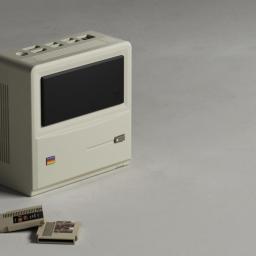
Ayaneo has been teasing its Macintosh-inspired PC for a few weeks. Now that the AM01 is available for pre-order, the company has revealed the prices and specs. While some had been hoping Ayaneo would use similar chipsets to those found in its powerful handheld gaming devices, it has opted to use older AMD APUs. On the plus side, the company has priced the various AM01 configurations pretty fairly.The mini PC starts at $149 for a configuration with an AMD Ryzen 3 3200U, 8GB of RAM and 256GB of storage. That's an early bird price, and this version will later retail for $199. Configurations with a Ryzen 7 5700U APU start at an early bird price of $219 for a barebone unit and stretch up to $379 for a model with 32GB of RAM and a 1TB SSD. Ayaneo notes that the AM01 is expandable up to 64GB of dual-channel DDR4 RAM and 2TB of M.2 solid state storage. There's also a SATA 3.0 interface that supports a 2.5-inch SDD or HDD.The Ryzen 7 5700U variants have Wi-Fi 6 and Bluetooth 5.2, compared with Wi-Fi 5 and Bluetooth 4.2 on Ryzen 3-powered units. Ayaneo keeps the AM01 cool with the help of a large fan and four copper heat pipes.On the connectivity front, there's one USB-C 3.2 Gen1 port, three USB 3.2 Gen2 ports and one for USB 2. There's a 3.5mm headphone jack, while the machine runs on DC power. There are also gigabit Ethernet, DisplayPort 1.4 and HDMI 2.0 ports. Ayaneo says the AM01 can output video in 4k at 60fps and it's compatible with dual-screen setups.All of this comes in a compact case that measures just over 5 inches (132mm) wide and tall and just over 2.5 inches (64.5mm) thick. Adding to the AM01's portability, it weighs slightly over a pound (486g).You can personalize the mini PC with magnetic decorative elements. In other words, you'll be able to swap out the badge on the bottom left of the machine (the same spot where the Apple logo is on the Macintosh). Ayaneo will include a bunch of stickers too, so you can decorate the non-functional "screen."The AM01 comes with Windows 11 Home Edition pre-installed, as long as you opt for a configuration with RAM and an SSD. Ayaneo says the Ryzen 7 APU can handle mainstream online games and "mild" AAA titles. Its AYA Space tool can handle tasks like bringing all of your games from different storefronts together in one place, limiting the framerate and adding a performance overlay.Although it's generally worth exercising caution when it comes to products promoted on crowdfunding platforms, Ayaneo effectively uses Indiegogo as a storefront. It's not looking to crowdfund the AM01. In fact, the mini PC is pretty much ready to roll. The company says the AM01 is slated to ship in December, so the mini PC should start reaching customers over the next few weeks.This article originally appeared on Engadget at https://www.engadget.com/ayaneos-macintosh-inspired-mini-pc-starts-at-149-with-internals-to-match-184717612.html?src=rss
|
 |
by Will Shanklin on (#6GQP6)
Meta has temporarily stopped selling the Elite Strap with Battery for the Quest 3, reportedly because of a firmware-related charging defect. The $130 accessory, which extends the standalone VR headset's runtime by up to two hours while providing a counterweight for comfort, is currently unavailable from Meta and third-party retailers. Short of conducting a recall, the company told Road to VR, which first reported the story, that it's currently manufacturing a new batch that fixes the firmware issues allegedly behind the defect. Meta told the publication it plans to replace the headsets on a case-by-case basis for buyers who contact customer support.Owners have reported that the Elite Strap's battery typically works at first but stops charging the headset earlier than expected. Informal polls, anecdotal social media comments and a separate report from Road to VR earlier this month suggest the issue may be at least somewhat common. Meta hasn't stated whether the defect is universal, but chalking it up to firmware that requires newly manufactured units suggests it may be. I own a Quest 3 with the battery accessory and haven't noticed any charging issues, but I also don't remember if I've run its battery down enough to have noticed.Engadget contacted a Meta spokesperson, and we're still waiting for confirmation and any extra details about what to look for. We'll update this article if we learn more.MetaThe company told Road to VR it's working to stock fixed units as soon as possible." Meta's product page for the accessory says it's out of stock, and its listing has been pulled entirely from the websites of retail partners Best Buy and Target. Amazon's product page says currently unavailable."In addition to that model, Meta makes a $70 Elite Strap without a battery focused solely on ergonomics. The company also had early troubles with its Elite Straps for the Quest 2, as both versions of the 2020 accessory were prone to cracking. Meta paused sales of that model and extended the accessory's warranty after issuing a fix for subsequent batches.This article originally appeared on Engadget at https://www.engadget.com/meta-pauses-quest-3-elite-battery-strap-sales-reportedly-due-to-a-charging-flaw-183018925.html?src=rss
|
 |
by Lawrence Bonk on (#6GQP7)
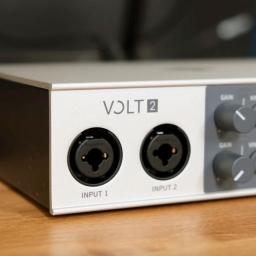
Many companies give away free plugins in honor of the holiday season, but Universal Audio is taking things a step further. The audio giant is giving away free Volt 2 hardware interfaces with the purchase of a yearly subscription to its Spark plugin platform. These interfaces typically cost $170, so this is a pretty great deal for beginners, as the hardware plus the Spark software is pretty much everything you need.Spark subscriptions are also on sale for the holidays, at $150 instead of $240, though this price point is fairly common. The end result? You pay $150 and you get a year of access to every available plugin on the service, plus the Volt 2. Not bad. The company's subscription-based Spark platform allows access to dozens of popular UAD plugins, from iconic compressors like the 1176 to virtual instruments like the company's Minimoog reproduction.As for the Volt 2, this diminutive audio interface features a pair of TRS / XLR inputs on the front and associated gain control knobs. There's a phantom power button for condenser mics and a proprietary Vintage Mode that runs the signal through a simple tube preamp emulation. These interfaces are powered via USB-C, though ship with a 5V jack for when you're plugged into an iPad or another mobile device.In our official review, we praised the Volt 2 audio interface for its low noise floor, simple controls and low latency, particularly when compared to rival Windows-based products. The biggest con was the price, which is normally the case for UAD products. Now that it's down to $0 for this promotion, that worry has dissipated.This isn't the first time that UAD has leveraged the holiday season to give away free hardware. The company used to hand out free Satellite DSP accelerators to run its plugins with the purchase of higher-priced hardware items like the multi-channel 4-710d preamp and compressor.Follow @EngadgetDeals on Twitter and subscribe to the Engadget Deals newsletter for the latest tech deals and buying advice.This article originally appeared on Engadget at https://www.engadget.com/universal-audio-is-giving-away-volt-2-audio-interfaces-with-spark-subscriptions-182131900.html?src=rss
|
 |
by Jeff Dunn on (#6GQFR)
Cyber Monday is officially in the rear view mirror, but if you're still looking to pick up a new TV at a discount, it's not too late. While some of the best Cyber Monday TV deals we could find are no longer available, a handful are still live, including discounts on both premium OLED TVs and more budget-friendly sets from Samsung, LG, Sony, Hisense and TCL. To help make sure you get a TV that's worth your money, we've rounded up the best of the bunch below. And if you're already happy with your set, we've also included a few good Cyber Monday deals for Roku and Chromecast streamers that are still kicking.Best Cyber Monday OLED TV deals55-inch Samsung S90C OLED TVA 55-inch model of Samsung's S90C OLED TV is still available for $1,298 at Amazon, Walmart and B&H. Samsung itself has it for $2 more. This has been the S90C's price for the last few weeks but, outside of a brief drop to $1,098 at B&H earlier this month, it matches the lowest rate we've tracked. The S90C has received near-universal praise for its QD-OLED panel, which uses quantum dots to boost its peak brightness and color saturation while retaining the high contrast and deep black tones of a typical OLED display. Put another way: It looks great, and it should hold up better than most OLED TVs in a bright room. It's also an ideal gaming TV, as it has four HDMI 2.1 ports that support up to a 144Hz refresh rate in 4K. The main drawback is that, like all Samsung TVs, it doesn't support the popular Dolby Vision HDR format.48-inch LG A2 OLED TVThe 48-inch LG A2 OLED TV is now available for $600 at Best Buy. That's $50 higher than the all-time low we saw during Cyber Monday, but if you want to step up to an OLED TV at a reasonably affordable price, it's still a solid value. The A2 is an entry-level model from 2022, so it's limited to a 60Hz refresh rate, lacks HDMI 2.1 ports and doesn't support other gaming-friendly features like VRR. It has noticeably lower peak brightness than higher-end OLEDs like the S90, too, so it won't pop as much with HDR content. That said, it's still an OLED TV, so it still delivers deep contrast, bold colors, wide viewing angles and low input lag for the money. At this price, it should be a nice step-up option for smaller or secondary rooms.55-inch Sony A95L OLED TVIf money is truly no object, the 55-inch Sony A95L is $300 off and down to a new low" of $2,498 at Amazon and B&H (and $2,500 at Best Buy). That's far from cheap, but this ultra-premium QD-OLED TV has received wide praise for delivering perfect black levels, superb image processing, particularly punchy colors, and high brightness levels relative to other OLED sets. It's another Google TV and, unlike the Samsung S90C, it supports Dolby Vision HDR. It can even play games at 4K/120Hz with Dolby Vision, and several reviews praise the quality of its built-in speakers. The main negative, apart from its eye-watering price, is that it only has two HDMI 2.1 ports. The S90C should be a better value for most, particularly gamers, but this deal makes the A95L at least a little cheaper than usual.Best Cyber Monday 4K LED TV deals55-inch Samsung The Frame LED TV (LS03B)The 55-inch version of Samsung's The Frame TV is still down to $978 at Amazon and B&H, which is nearly $400 off its average street price in recent months. It's available for a couple bucks more at Samsung and Best Buy. This LED TV lacks contrast-boosting features like local dimming and mini-LED backlights, so its picture quality, while good, can't match the best sets in its price range. Instead, you'd buy a Frame TV for its style. The whole thing is designed to look like a mountable piece of wall art, and when you aren't watching something, you can use it to display artwork and photos. The TV comes with a few pieces by default, while others are available with an optional subscription.55-inch Hisense U8K LED TVThe 55-inch Hisense U8K remains available for $698 an Amazon and Walmart, which is an all-time low and $50 less than its typical street price in recent months. Best Buy has it for $700. The 65-inch model is still a decent value at $900 - though that's $30 higher than the low we saw on Cyber Monday - while the 75-inch set is at a low of $1,290. Several reviews have praised the U8K as one of the year's best values among midrange TVs, one that gets impressively bright and delivers strong contrast for an LED display. It comes with two HDMI 2.1 ports that play 4K video up to 144Hz, it supports all the major HDR formats and its Google TV platform is easier to use than most smart TV UIs. Its motion and color performance will still trail a good OLED TV, though, and reviews say it'll wash out much more heavily when viewed from an angle. But if you want to stay under $1,000 for a 65-inch model or smaller, it should be a good value.65-inch Hisense U6K LED TVThe Hisense U6K is down to $350 for a 55-inch model and $498 for a 65-inch model, both of which represent all-time lows. The U6K is a well-reviewed option for those on a tighter budget, as it's one of the few affordable sets to use quantum dots, mini-LED backlights and full-array local dimming. All of that helps it deliver better contrast and color volume than most TVs in this price range. It can't get as bright as the U8K or TCL QM8, so it won't exactly sparkle with HDR content, and its picture will degrade when viewed at an angle. Its 60Hz refresh rate and lack of HDMI 2.1 ports mean it's not ideal for gaming, either. But trade-offs are to be expected for less than $500; if you don't want to pay up for a higher-end model, this looks to be a solid compromise.65-inch Hisense U7K LED TVWe'll also note the Hisense U7K, which is down to a low of $900 for a 75-inch set at Amazon and Best Buy. The 65-inch and 55-inch models are also available for lows of $700 and $480, respectively. As its name suggests, this TV sits between the U8K and U6K in Hisense's lineup: It doesn't look as rich or bright as the former, but it's a step up over the latter if you can afford to stretch your budget a little more.65-inch TCL QM8 LED TVThe TCL QM8 is generally regarded as a close rival to the Hisense U8K in the same price bracket. Its 65-inch model is still down to $900 at Amazon, which is only $2 higher than lowest price we've tracked. Like Hisense's set, the QM8 uses quantum dots, mini-LED backlights and an expansive local dimming feature to deliver strong contrast for a non-OLED TV and enough brightness to overcome glare in any room. It, too, runs Google TV, and it has two HDMI 2.1 ports that can play in 4K/144Hz.The QM8 isn't available in a size lower than 65 inches, so those who don't have the space for a larger TV should get the U8K. But TCL's TV does have one advantage for gamers: Its eARC port is separate from its HDMI 2.1 ports. That means those with a PS5, Xbox Series X and eARC-enabled soundbar can have all three hooked up at once and enjoy 4K/120Hz gaming on the two consoles without having to change inputs. One of the U8K's HDMI 2.1 ports, on the other hand, doubles as the eARC port, so it might cause a little extra hassle. Otherwise, the two sets appear to offer similar performance.65-inch TCL Q6 LED TVThe 65-inch TCL Q6 is available for $500 at Amazon and Best Buy, which is $20 more than its all-time low but still $50 below its usual street price. The 75-inch set is also on sale for $650, which is an all-time low. The Q6 is another budget-level TV released in 2023. Most reviews we trust say it lags well behind the Hisense U6K when it comes to contrast and HDR performance, but it's worth highlighting because it supports a faster 120Hz refresh rate - so long as you play at a 1080p or 1440p resolution instead of 4K. If you're a competitive-minded gamer who doesn't want to spend a ton on a new TV, that extra smoothness might be worthwhile. Note that this set runs Amazon's Fire TV platform, which'll work best if you often use Amazon services like Prime Video.Best Cyber Monday streaming dealsRoku Streaming Stick 4KThe Roku Streaming Stick 4K is still down to $30 at Amazon, Target, Walmart, Best Buy and Roku's online store, among others. That's $5 more than its all-time low but still $14 off the average street price we've seen in recent months. The Streaming Stick 4K is the top pick in our guide to the best streaming devices: It runs quickly, it supports the major HDR formats and streaming services (Twitch excluded) and it has useful features like AirPlay support and a private listening mode. The Roku OS platform isn't the sexiest piece of software design, but it's a breeze to navigate and its search tool does well to find shows across disparate apps.Roku Express 4K+A couple other Roku streamers of note remain on sale as well. The Roku Express 4K+, for one, is within a dollar of its all-time low at $25. That dongle can't plug directly into an HDMI port, lacks Dolby Vision support and has slightly slower Wi-Fi than the Streaming Stick 4K, but it offers the same general experience otherwise. This deal is available at several stores, including Amazon, Home Depot, Best Buy and Roku.com.Roku UltraThe Roku Ultra, meanwhile, is down to $69 at various retailers. That's a $30 discount. The Ultra is the best set-top box" pick in our media streamer guide; it's pricier than the Streaming Stick 4K, but it adds an Ethernet jack and a microSD slot for expanding storage. It also comes with Roku's Voice Remote Pro, which has a rechargeable battery, two programmable shortcut buttons, a remote finder function and a built-in headphone jack for private listening. Just note that you can buy the Voice Remote Pro separately and use it with most other Roku streamers if you don't want to buy a whole new device.Google Chromecast with Google TVThe Google Chromecast is on sale for $38 at Amazon, Walmart, Target and others. This deal doesn't represent an all-time low, but it's still $12 off Google's list price. The Chromecast is the runner up in our streaming device guide: It was released way back in 2020 and doesn't support Wi-Fi 6, but it still performs competently and supports the major apps. Its biggest selling point is the Google TV interface, which does well to proactively suggest shows you might like based on your viewing history and has a genuinely convenient voice search function. If the idea of a streamer that adjusts to your viewing habits sounds appealing, it might be worth grabbing over one of the Roku players above.If you're shopping for an older TV, meanwhile, the 1080p version of the Chromecast offers most of the same benefits and is on sale for $20.Hulu and Paramount+If you're happy with your TV setup but need new things to watch, Hulu and Paramount+ are still running Cyber Monday sales for new and returning subscribers. The former is offering a year of its with ads" tier for $12 total, down from $80. At the latter, you can get that three months of the ad-supported Essential" tier for $6 instead of $18. Neither service is essential, but if there's a show you've been meaning to watch on one, offers like these at least make the barrier of entry a bit less imposing. Just remember that your subscription will be set to auto-renew in most cases, so you'll have to cancel manually if you don't want to pay full price after the discounted period ends.Your Cyber Monday Shopping Guide: See all of Yahoo's Cyber Monday coverage, here. Follow Engadget for Cyber Monday tech deals. Learn about Cyber Monday trends on In The Know. Hear from Autoblog's experts on the best Cyber Monday deals for your car, garage, and home, and find Cyber Monday sales to shop on AOL, handpicked just for you.This article originally appeared on Engadget at https://www.engadget.com/the-best-cyber-monday-tv-deals-that-are-still-available-save-hundreds-on-sets-from-samsung-sony-lg-and-more-160503246.html?src=rss
|
 |
by Jeff Dunn on (#6GP8X)
Cyber Monday is behind us, and while many of the best Cyber Monday laptop deals we could find are no longer available, we're still seeing a handful for notebooks that are worth your money. If you're looking to gift a new notebook this holiday season or just upgrade your own aging device, there's still time to save on top picks from our guides to the best gaming laptops, MacBooks, Chromebooks and Windows laptops and others. Here are the best Cyber Monday laptop deals that are still live today.Best Cyber Monday MacBook dealsApple MacBook Air (13-inch, M1)The older 13-inch MacBook Air that was released in 2020 and uses Apple's M1 chip is still on sale, with an entry-level config available for $750 at Amazon and Best Buy. We've seen this deal a handful of times over the last few months, but it matches the lowest price we've seen. It's really worth stepping up to the newer M2 MacBook Air if you can: It'll get you a more modern design, a faster chip, a sharper webcam and improved speakers. The 8GB of RAM and 256GB SSD in this config is only suitable for casual use, and this model will almost certainly be discontinued whenever we get the inevitable MacBook Air refresh that will reportedly include Apple's M3 chip next year. But if you're on a stricter budget and really want a MacBook, the M1 Air is still well-built, long-lasting and fast enough for the essentials. We currently highlight it in our guide to the best budget laptops.Best Cyber Monday Chromebook dealsLenovo IdeaPad Flex 5i Chromebook PlusThe Lenovo IdeaPad Flex 5i Chromebook Plus is down to $379 at Best Buy, which is $120 off its list price. This is the latest iteration of the top pick in our Chromebook buying guide. Its 14-inch, 1,920 x 1,200 IPS touchscreen is good for the money, and it's plenty fast for the web browsing and light work you'd do with Chrome OS. Both its keyboard and trackpad are comfortable, plus it comes with a decent 1080p webcam. This model comes with an Intel Core i3-1315U processor, 8GB of RAM, 128GB of eMMC storage, one USB-A port, two USB-C 3.2 ports and a microSD card slot. The chassis isn't especially light at 3.6 pounds, and we found the battery to last roughly seven hours in testing, which is just OK. But for less than $400, this is a strong value.Best Cyber Monday Windows laptop dealsDell XPS 13 (9315)Dell's XPS 13 is down to $799 for a configuration with a Core i7-1250U processor, 16GB of RAM, a 512GB SSD and a 13.4-inch, 1,920 x 1,200 resolution display. That's $300 off Dell's list price and only a little bit higher than the lowest price we've seen. The XPS 13 is the top pick in our guide to the best Windows laptops thanks to its svelte design, dependable keyboard and trackpad, lengthy battery life and solid display. You're not getting the latest processor here, but this model is still performant enough for everyday work. The main issue here is port selection: There's only two Thunderbolt 4 ports and no dedicated headphone jack. Still, if you can tolerate using a dongle every now and then, this is a good price for a high-quality ultrabook.Dell XPS 15 (9530)If you want a larger Windows workstation, the 15.6-inch Dell XPS 15 is also on sale. One variant with a Core i7-13700H processor, 16GB of RAM, a 1TB SSD, an Intel Arc 370M GPU and a 1,920 x 1,200 IPS display is available for $1,099. That's $500 off Dell's MSRP and the lowest historical price we could find for this config. Performance in this model should be good for most, though other versions with a richer 3.5K OLED panel, stronger GPUs and extra RAM and storage are similarly discounted.We gave the 2022 version of the XPS 15 a review score of 93, calling it the best 15-inch Windows laptop" in the process. This latest iteration uses a newer generation of Intel chips, but it doesn't make too many changes in terms of design, which is largely a good thing. It still looks sharp and feels well-made, with slim bezels, an aluminum chassis and a soft carbon fiber deck. Its memory and storage are user-replaceable, and it's not crazy huge for a 15-inch machine, either. Its webcam is still limited to a measly 720p, however, and it doesn't offer a 120Hz display option. It doesn't have any USB-A ports, either, though it does include two Thunderbolt 4 ports alongside a USB-C 3.2 Gen 2 port and a headphone jack.HP Pavilion Aero 13The HP Pavilion Aero 13 is down to $530 for a model with an AMD Ryzen 5 7535U processor, 16GB of RAM and a 256GB SSD. This notebook goes on sale fairly often, but this is the lowest price we've seen for this config. It's also $20 lower than the deal we saw on Black Friday.The Pavilion Aero 13 is the top Windows pick in our budget laptop buying guide. It's impressively light (2.2 pounds) and slim (0.67 inches) for the money, while its 13.3-inch, 1,920 x 1,200 IPS display is sufficiently bright and colorful. It comes with a solid backlit keyboard and the essential ports as well. It's still a budget laptop, so it doesn't have the sturdiest chassis, and it's saddled with a 720p webcam. You'll also have to navigate some bloatware. But if you want a cheaper notebook that doesn't totally sacrifice aesthetics, it's a decent option.Microsoft Surface Laptop Studio 2The Microsoft Surface Laptop Studio 2 is down to $2,043 at Amazon for a configuration with a Core i7-13700H, 16GB of RAM, a 512GB SSD and an Nvidia GeForce RTX 4050 GPU. We gave the Surface Laptop Studio 2 a score of 85 in our review. The big hook is its hinged touch display, which lets the bottom of the screen pivot and tilt over the keyboard like an easel for digital artists. We found the 14.4-inch, 2,400 x 1,600 resolution panel to look great more generally, while its battery life, build quality and overall performance all impressed as well. It's slightly bulkier than competing models, and it's still expensive even at this price, but this deal makes it a little more approachable for those who want a laptop for media editing and like the hinged design.Microsoft Surface Pro 9A configuration of Microsoft's Surface Pro 9 with a Core i5-1235U processor, 16GB of RAM, a 256GB SSD and Microsoft's Surface Pro Keyboard is down to $1,000 at Best Buy. That's $540 off Microsoft's list price. If you don't need the keyboard, a variant with a stronger Intel Core i7-1255U chip is down to $1,097 at Amazon (or $1,100 at B&H and Best Buy). That's an all-time low and roughly $200 off the config's usual street price. Another Core i7 model with 512GB of storage is on sale for $300 more.The Surface Pro 9 tops our guide to the best 2-in-1 tablets. While its 12th-gen chip is about to be two generations old, this is still the device to get if you want the functionality of a laptop in the slim design of a tablet. We're past the point of the year when Microsoft would normally announce a refresh, but the current model should still be useful if you're coming from an older Surface in desperate need of an upgrade.Best Cyber Monday gaming laptop dealsASUS ROG Zephyrus G14The ASUS ROG Zephyrus G14 is still available for $1,200 at Best Buy for a configuration with a Ryzen 9 7940HS processor, 16GB of RAM, a 512GB SSD and a GeForce RTX 4060 GPU. That matches the lowest price we've seen and takes $400 off ASUS' list price. This model also has a 14-inch 1440p display with a 165Hz refresh rate. The ROG Zephyrus G14 is the top overall recommendation in our guide to the best gaming laptops. It's a compact notebook that's plenty capable for triple-A gaming but doesn't totally sacrifice the laptop" part of the phrase gaming laptop." It's relatively light and portable at 3.6 pounds, and its keyboard and trackpad both work well. Its 720p webcam could stand to be sharper, though.MSI Stealth 14 StudioThe MSI Stealth 14 Studio is another gaming laptop we like, and right now Best Buy has it for $1,100. This model includes a Core i7-13620H chip, 16GB of RAM, a 1TB SSD, an RTX 4060 GPU and a 14-inch 1,920 x 1,200 display with a 165Hz refresh rate. We gave the Stealth 14 Studio a score of 87 in our review this past June; like the ROG Zephyrus G14, it's light for the category at 3.75 pounds and it offers capable performance for everyday gaming. This config is a lower-end model than the one we reviewed - it has a slightly slower CPU and its display isn't as sharp or fast - but the gist is the same. Its biggest flaws are its middling 720p webcam and the fact that it can run hot under load. It's still a gaming laptop, so battery life isn't amazing either.Whether you should get this config over the ROG Zephyrus G14 deal above comes down to whether you can sacrifice a higher-res display for more storage space. The G14 has more ports as well, though the Stealth 14 Studio includes a Thunderbolt 4 port, which may be important if you ever plan on connecting an external GPU.Razer Blade 15The Razer Blade 15 is down to $2,100 at Amazon and B&H for a config with a Core i7-13800H, 16GB of RAM, a 1TB SSD, an RTX 4060 GPU and a 15.6-inch IPS display with a 1440p resolution and a 240Hz refresh rate. That's $400 off and the lowest price we've seen for this 2023 model. The Blade 15 is the high-end pick in our gaming laptop buying guide. This model is powerful enough to play most modern games at high settings in 1080p or 1440p, but the main reason to buy any Blade is its design, which is slimmer and generally more premium than most gaming notebooks. Just don't expect it to last super long on a charge or stay especially cool under load. We gave the 2022 version of the Blade 15 a review score of 86 last year.Your Cyber Monday Shopping Guide: See all of Yahoo's Cyber Monday coverage, here. Follow Engadget for Cyber Monday tech deals. Learn about Cyber Monday trends on In The Know. Hear from Autoblog's experts on the best Cyber Monday deals for your car, garage, and home, and find Cyber Monday sales to shop on AOL, handpicked just for you.This article originally appeared on Engadget at https://www.engadget.com/the-best-cyber-monday-laptop-deals-that-are-still-live-today-153010578.html?src=rss
|
 |
by Lawrence Bonk on (#6GQFS)
Casio's instrument division has been around a long time, as anyone who got into music as a kid by making fart noises into an SK-1 knows. However, the company is mostly known for entry-level digital pianos that get the job done, but don't offer much by way of modern conveniences. In recent years, Casio has been dipping its toes into the waters of high-end instruments like the Privia PX-S7000. The latest Privia entry is a sizable leap over most starter pianos. This is a serious instrument for serious players, with that quad-speaker system, 88 hybrid hammer action keys that feel fantastic, plenty of high-tech bells and whistles and, most importantly, access to three realistic-sounding piano models, along with 400 other instruments. Oh, and it has a hefty $2,400 price tag to match.All of that is well and good, but let's talk about why I really decided to splurge on this thing over the myriad of other digital pianos out there - it's absolutely gorgeous. It hits that sweet spot between a musical instrument and a piece of high-end furniture. I fell in love pretty much instantly when I saw it online. I wasn't able to try it out ahead of time, as my options here in Minnesota are limited when it comes to testing synths and digital instruments, so I just went for it. My plan was to return the thing if it was a lemon but, as you can see, it's still there. It's not a lemon. Maybe it's a strawberry? Those are pretty.I had just moved into a mostly-bare new home and had an entire house to fill for the first time in my life. I wanted something that tied the living room together and I don't really understand visual art, so I went with what I know: expensive musical instruments. It did the trick. It looks stunning sitting there and almost makes up for the lack of wall art.The piano itself has elegant spruce sides, and it ships with a sleek and sturdy wooden beech stand. There's also a nice-looking three-pedal unit that attaches near the bottom, providing yet another feature that makes this digital piano feel, well, not-so digital. It weighs just 60 pounds, so it was easy for me to try out different placements on the fly without destroying my back. Real pianos weigh hundreds and even thousands of pounds - I've ruined enough friendships in my life asking people to help me move them around, thank you very much.I ended up with the black model, though it's also available in white and harmonious mustard." Personally, I think the mustard is the most attractive option, but the eye-popping paint job adds another $200 to the price. I'm financially irresponsible, but even I have my limits. I still lust over that warm and luscious yellow, though.Photo by Lawrence Bonk / EngadgetThe Privia PX-S7000 is not just a conversation piece, it also sounds and feels eerily similar to playing the real thing. The three primary piano models are excellent, but digital recreations of classic instruments are nothing new. This instrument combines those excellent piano models with a realistic-sounding speaker system and a keybed that's incredibly satisfying to play.The keybed feels great, with a textured surface on each key that calls to mind, you guessed it, an actual piano. There's a proprietary technology here, called Smart Hybrid Hammer Action, but I don't really understand the specifics. All I know is that the keys spring back nicely and do their part to keep the illusion going that you're playing an analog instrument. There's a heaviness to the key presses and an oh-so-satisfying thunk as each press returns to the resting position. It's just plain fun to play. (Though I'm not exactly Rachmaninoff. I'm more of a dime-store Paul McCartney.)Another proprietary system, Casio's Multi-Dimensional Morphing AiR Sound Source, helps increase the fun factor by adding a bit of damper, string and aliquot resonance with each press. This tech is based on the sound engine from the even more expensive Celviano line of digital pianos, so it's nice to see it pop up in a cheaper model. There's also some counterweight and damping voodoo going on underneath the hood. This is the closest I've ever felt to the real thing" with a digital instrument, though I haven't spent any time with ultra-high-end digital pianos as a comparison point. I have, though, spent hundreds and hundreds of hours playing real pianos, starting in my grandmother's den as a wee tyke.When I'm playing the Privia SX-7000, it sounds like the tones are coming from everywhere at once, thanks to the quad-speaker spatial sound system. They really put me in the center of the action and, believe it or not, this actually makes me play better, especially when compared to my caveman plunks on a MIDI controller.The main draws here are the three piano models, but this is a digital instrument in the year 2023, so there's some high-tech fun to be had. Casio has introduced a new feature that pairs analog piano sounds and electric tones with on-board effects to recreate the vibe of classic songs. For instance, you can tap away at a piano that sounds like John Lennon's Imagine, Queen's Bohemian Rhapsody, Stevie Wonder's Superstition and dozens more. There's even a microphone input and 25 vocal effects options for sing-alongs. I've used both to great effect. Starting with a famous piano sound helps me drum up song ideas and plugging a mic in lets me hear my vocals at a decent volume without having to emote like Whitney Houston during the last key change of I Will Always Love You.All modern digital pianos have a few hundred additional sounds for those times you want to hear an average-sounding bass, and the Privia's no different. There are 400 sounds to choose from, ranging from good to barely OK. All of the usual bases are covered here, from synth-heavy pads to drum kits and woodwinds. None of these sounds are truly mind-blowing, but they can help generate ideas in a pinch. If I'm recording, however, I prefer a virtual instrument with more control options.One modern convenience that I enjoy is the included Bluetooth adapter. This is only for incoming sounds, but it's still pretty cool. I've spent many hours streaming music from my phone to the piano and playing along with it. It's an efficient way to learn new songs.The piano integrates with a Casio app that offers piano lessons and the like, which I haven't tried because I like learning in my own way. The app also displays PDF scores on your phone or tablet that you can play along to, though I haven't experimented much with this feature because I (ducks) can't read music.The added features are cool - it's 2023 after all - but the true draw of the Privia SX-7000 is three-fold: it looks great, it sounds great and it feels like playing a real piano. It's also really expensive, costing around $2,400, so this isn't for casual hobbyists. I bought it fully expecting to regret my purchase, but that regret never came. Instead, I feel a spark of joy whenever I see it sitting there, inviting me to play Imagine until I'm blue in the face.This article originally appeared on Engadget at https://www.engadget.com/what-we-bought-casios-latest-flagship-digital-piano-doubles-as-drool-worthy-furniture-150038288.html?src=rss
|
 |
by Amy Skorheim on (#6GM81)
Cyber Monday might be over, but you can still get discounts on many Amazon devices. The online retailer seems to reserve its best deals for three events: its two Prime Day sales and Black Friday/Cyber Monday. Today, Echo speakers, Fire TV devices and other gadgets remain on sale in the post-Cyber Monday haze, and the good thing is that anyone can grab these discounts - you don't have to be a Prime member like you do for Amazon's own shopping events. Here are the best Cyber Monday deals on Amazon devices that are still available now.Amazon Echo and Echo Show Cyber Monday dealsEcho DotAmazon's most popular smart speaker is the baseball-sized Echo Dot. It's now down to $23 which matches the all-time low it hit for the last two Prime Days. It's one of our favorite smart speakers because it pumps out good sound and volume for its size and adds Alexa's helpful AI assistance to your home. Use it to set timers, tell you the weather and remind you about stuff you need to do and when to do it. It's also a convenient way to control your other smart home devices, from light bulbs in the ceiling to robot vacs on the floor.Echo Dot KidsThe Echo Dot for kids has the same general design as the regular Dot, but has a cute owl or dragon exterior. It also comes with a free year of Amazon Kids+, which lets young folk access age-appropriate audio books, morning routines and Alexa's educational skills. The speaker is currently 53 percent off and down to $28. That matches the low it hit for both Amazon Prime sales this year.Echo PopAmazon's smallest smart speaker is the Echo Pop, which came out earlier this year. It's currently down to $18, which matches its all-time low. The colorful half-sphere is perfect for stashing in a corner of a room where you don't have much space. It'll let you ask Alexa the time, weather news and more, while also directing the voice assistant to remind you when it's time to leave for an appointment or shut off the holiday lights. It can also play music, but the sound won't be as good as it would be with a larger Echo speaker.Echo Pop with free Sengled smart bulbThe Echo Pop is a great candidate for a voice-operated smart home controller, which is probably why Amazon is bundling it with a Sengled Smart Bulb. The set costs $18, which is 70 percent off their full prices. The Sengled bulb earned an honorable mention in our guide to smart bulbs for its easy, if slightly unpolished app, and the fact that it outputs millions of colors on any schedule you'd like.EchoThe Echo is the original Amazon smart speaker and has been refreshed four times since its launch. The latest model updated the shape from a puck to a globe, which makes room for a three-inch woofer and two 0.8-inch tweeters. The result is quality audio with plenty of bass. The highs could be more crisp but overall it's noticeably louder than its two closest competitors, the Nest Audio or HomePod mini and can fill a room with sound. The Echo is now down to $60, which $5 more than what it went for during both 2023 Prime sales and about $10 more than its all-time low. It's currently our favorite smart speaker under $100 because it combines great sound with all that Alexa can do.Echo Show 5The Echo Show 5 is Amazon's smallest smart display and was completely refreshed back in May of this year. The processor and audio quality were improved, but the device is largely the same, acting as a screen-enabled bedside alarm clock or a handy kitchen display for recipe videos and the like. It's currently down to $40 which is $50 off and a discount it has hit twice in the past couple months.Echo Show 5 with Blink MiniThe Echo Show 5 is the perfect size for keeping an eye on your Alexa-enabled smart cameras and doorbells, so this Blink Mini bundle makes sense. For $60, you get the 5-inch Echo Show and the wired indoor security cam from Blink. Separately and at full price, you'd pay $125.Echo Show 8The mid-sized Amazon smart display, the Echo Show 8 is on sale for $105 instead of $150 and represents its first discount. We did a hands-on with the new Echo Show 8 during Amazon's devices event this September and were impressed by the new Adaptive Content feature. Depending on how far away from the display you are, the information changes, with simple time and weather info when you're across the room and more detailed and personalized info, like a playlist or news articles when you're closer.Echo Show 10Do you want a smart display that can track you as you move around the room? The Echo Show 10 with a pivoting base can do just that. The ability should keep you in frame for video calls and make sure you can always see your recipe as you move around the kitchen. The 10-inch screen will keep tabs on your connected cameras and doorbells and the large base housing two one-inch tweeters and a three-inch subwoofer, will deliver quality sound.Echo BudsAnother entry in our affordable earbuds guide are the Echo Buds made by Amazon. They're down to $35, which matches their all-time low. If you don't like the style of buds that go into your ear canal, and would prefer the type that rest on the concha (the bowl next to the canal) these are a worthy compromise to Apple's more expensive AirPods.Amazon Cyber Monday Fire TV dealsFire TV Stick 4K MaxThe new Fire TV Stick 4K Max is on sale for $40, which is a 33 percent discount and its lowest price since its debut in September. This new model has a faster processor than the previous 4K Max dongle, and is the first stick to support Amazon's Ambient Experience, which was previously limited to the Fire TV sets. When you're not watching, the screen can display art, along with widgets for weather, calendar and smart home devices. The Alexa remote lets you search for and play shows and movies just by talking, and also supports Wi-Fi 6E, letting those who've upgraded to take advantage of that tri-band connection.Fire TV Stick LiteWe found Amazon's Fire TV Stick Lite to be the best budget streaming device you can buy - which goes double now that it has dropped to $16. The deal represents a 46 percent discount off the $30 list price (though it often sells for $20). It's also just a dollar more than its all-time low. The Fire TV Stick Lite doesn't stream content in 4K and can't control a TV's volume or on/off functions, but lets you use all the streaming platforms you subscribe to, presenting them in an interface that's easy enough to navigate, but we do wish that it didn't favor and promote Amazon content quite as much as it does.Fire TV StickThe standard Fire TV Stick is down to $20, which is 50 percent off the $40 list price (though it's often on sale for $25). The standard stick offers HD content and, unlike the Lite, has the ability to control your TV's volume and power.Fire TV CubeThe Amazon Fire TV Cube has dropped to $110 for Cyber Monday, which is $30 off and ties its all-time low. It's the most powerful streaming device in Amazon's lineup, with a 2.2GHz octa-core processor, 2GB of RAM and 16GB of storage. It streams 4K HDR content with Dolby Vision and Atmos, works with picture-in-picture live view, and supports hands-free Alexa commands. You can also connect other devices like your cable box or game console directly to the unit.Fire TV 40-inch 2-SeriesMany of Amazon's Fire TVs are discounted, including models from Toshiba and Insignia, but the arguably better sets are the Amazon-built" ones the company manufactures. The Fire TV 65" Omni QLED Series 4K TV is now $200 off and down to $600, the same price it hit in October for Prime Day. It supports 4K content with Dolby Vision, adaptive brightness and includes hands-free Alexa both through built-in speakers on the TV itself, no remote required (though it does come with one).Amazon Kindle Cyber Monday dealsKindle UnlimitedAmazon is also offering Prime members three months of Kindle Unlimited for 99 cents. It's usually $12 per month and will auto-renew once the trial is over (so set a reminder if you don't want that to happen). A subscription lets you read as many ebooks as you want from a selection of around four million ebooks. Bigger new releases and some of the more popular bestsellers aren't included. It also includes a few thousand audiobooks, which all models of Kindle support via Bluetooth and headphones.Your Cyber Monday Shopping Guide: See all of Yahoo's Cyber Monday coverage, here. Follow Engadget for Cyber Monday tech deals. Learn about Cyber Monday trends on In The Know. Hear from Autoblog's experts on the best Cyber Monday deals for your car, garage, and home, and find Cyber Monday sales to shop on AOL, handpicked just for you.This article originally appeared on Engadget at https://www.engadget.com/36-of-the-best-cyber-monday-deals-on-amazon-devices-221855702.html?src=rss
|
 |
by Mat Smith on (#6GQ9R)
According to an experiment conducted by The Wall Street Journal, Instagram's Reels video service would serve risque footage of children as well as overtly sexual adult videos" to its test accounts that exclusively followed teen and preteen influencers, usually young gymnasts and cheerleaders.While these tests don't represent real user experiences (as tech companies tend to counter with), aggregating child sexualization content was apparently a known problem internally, according to current and former Meta employees interviewed by the WSJ.Meta told its advertising clients it was investigating and that it would pay for brand-safety auditing services to determine how often a company's ads appear beside content it considers unacceptable."- Mat SmithThe biggest stories you might have missedRivian's electric truck is available to lease in 14 US statesThe best Cyber Monday deals for 2023 that are still goingEvernote is reportedly testing a severely restricted plan for free usersYou can get these reports delivered daily direct to your inbox. Subscribe right here!ByteDance's latest layoffs have reportedly gutted the publisher of Marvel SnapRestructuring may affect around 700 employees.ByteDanceAccording to Reuters and Bloomberg, TikTok's parent company ByteDance is winding down its gaming arm, including the Nuverse brand, with hundreds" of jobs likely to be affected. Nuverse, acquired by ByteDance in 2017, is the publisher of notable titles Marvel Snap, Ragnarok X: Next Generation and One Piece: Blood Routes. Despite the apparent success of these games, ByteDance CEO Liang Rubo had reportedly criticized the gaming arm for a lack of focus.Continue reading.Tesla sues Sweden for blocking license plate deliveries during labor strikeA district court sided with the automaker in an interim decision.Tesla sued Sweden's transportation agency and postal service over a union strike blocking the company's license plate deliveries in the country. The workers are striking to demand the non-unionized automaker sign a collective bargaining agreement, a standard practice mechanics' union IF Metall describes as the backbone of the Swedish model." However, the Swedish Transport Agency says it already received an interim decision from a district court, ordering it to consent within seven days to Tesla's request to collect license plates or face hefty fines.Continue reading.
|
 |
by Sarah Fielding on (#6GQ9S)
Eduards Sizovs, founder of software developer conference DevTernity, has already been in the headlines for listing fake female speakers for a conference. Now, it has been revealed that Sizovs may also be behind is also behind Coding_Unicorn, a popular Instagram account supposedly run by a female coder, 404 Media reports.Coding_Unicorn has 115,000 followers on Instagram and claims to be run by a professional software developer named Julia. The account features photos - many of which are glamour shots - of Julia at a MacBook alongside "no-BS coding, career, productivity tips."404 Media has laid out a range of evidence that Sizovs is responsible for the account, such as a YouTube video showing Sizovs having previously logged into the account's email and photos of Julia's computer screen that show her logged in as Sizovs. Some of Julia's Instagram captions are also exact copies of Sizovs' LinkedIn posts.Julia also lists herself as a DevTernity fan and links to the company's upcoming conferences. She was allegedly going to speak at a conference but "switched to helping with the organization." The event, which was set to start on December 7, has been canceled following the allegations that fake women were added to the lineup in an effort for it to look diverse. Two women - one listed as a staff engineer at Coinbase and another as a Microsoft MVP and WhatsApp senior engineer - were removed from DevTernity's website and have no online presence or, potentially, existence at all, according to The Register.Sizovs responded to the conference allegations on X: "The amount of hate and lynching I keep receiving is as if I would have scammed or killed someone. But I won't defend myself because I don't feel guilty. I did nothing terrible that I need to apologize for." Sizovs did admit that one profile listed on the site was a "demo persona" that was "auto-generated, with a random title, random Twitter handle, random picture." However, skeptics claim removing the person should have been simple and that it didn't appear to be auto-generated at all, with the picture even changing early on.Looking to the future, Sizovs said, "I'll increase efforts 10x to make sure that next year, if one of our ladies drops out, we have a fallback plan." As for Unicorn_Coding, it's unclear who exactly the woman is in the photos or how she's connected to Sizovs. Read 404 Media's article to learn more about this wild case.This article originally appeared on Engadget at https://www.engadget.com/a-popular-female-coding-influencers-instagram-is-apparently-run-by-a-man-115046245.html?src=rss
|
 |
by Steve Dent on (#6GQ61)
Google Drive users have recently been reporting that files and folders have gone missing, with some saying that months worth of data has disappeared from their accounts. Now, Google has acknowledged the issue, saying that it appears to be caused by the Drive for Desktop app, 9to5Google has reported.The issue is pretty alarming, obviously. One user on Google's support forums said that an expense spreadsheet they regularly updated has lost all data from nearly the last five years, with the version history showing the latest version as January 2019. "I'm really mad as this had all the important data which I do not have any local copy for. I need this data retrieved at any cost." Another poster said the drive reverted to May 2023, with all subsequent data disappearing, and others report similar issues.In a post from yesterday, Google said that "we're investigating reports of an issue impacting a limited subset of Drive for desktop users and will follow up with more updates." It noted the problem affects Drive for desktop v84.0.0.0 - 84.0.4.09. It advised users not to click "disconnect account" within Drive for desktop, and to not delete or move a specific app folder called DriveFS as detailed here. It even recommends making a copy of the app data folder if you have room on your hard drive.Google offers several ways to recover (or at least check) deleted files. That includes checking the trash, which is now automatically emptied after 30 days. It's also a good idea to check the activity panel, which shows any files deleted or moved along with the relevant date. For this latest issue, however, the activity panel doesn't appear to show that the files have gone missing, according to Google's support forum users.This article originally appeared on Engadget at https://www.engadget.com/google-is-investigating-a-drive-issue-that-causes-files-to-go-missing-092028653.html?src=rss
|
 |
by Richard Lai on (#6GQ2V)
Following X's alleged ad controversy involving antisemitic content, it is now Meta's turn to be put under the spotlight for its content algorithm. According to an experiment conducted by The Wall Street Journal, Instagram's Reels video service would serve "risque footage of children as well as overtly sexual adult videos" to test accounts that exclusively followed teen and preteen influencers - namely young gymnasts and cheerleaders. These sort of ads were supposed to be forbidden on Meta's platforms.To make matters worse, such salacious content was also mixed in with ads representing notable US brands like Disney, Walmart, Pizza Hut, Bumble, Match Group and even The Wall Street Journal itself. The report added that the Canadian Centre for Child Protection achieved similar results with its own tests separately.While Walmart and Pizza Hut apparently declined to comment, Bumble, Match Group, Hims (retailer of erectile-dysfunction drugs) and Disney have since either pulled their ads from Meta or pressed the firm to address this issue. Given the earlier controversy on X, advertisers are obviously even more sensitive about the type of content shown next to their ads - especially for Disney which was affected by both X and now Instagram.In response, Meta told its clients that it was investigating, and that it "would pay for brand-safety auditing services to determine how often a company's ads appear beside content it considers unacceptable." However, the firm stopped short at providing a timetable nor detail on future prevention.While one could say that such tests don't necessarily represent real user experience (as tech companies tend to argue with), Instagram's tendency to aggregate child sexualization content was a known problem internally - even before the launch of Reels, according to current and former Meta employees interviewed by the WSJ.The same group of people suggested that an effective solution would require revamping the algorithms responsible for pushing related content to users. That said, internal documents seen by the WSJ suggested that Meta made it difficult for its safety team to apply such drastic changes, as traffic performance is apparently more important for the social media giant.This article originally appeared on Engadget at https://www.engadget.com/instagram-reportedly-served-up-child-sexualizing-reels-to-followers-of-teen-influencers-053251960.html?src=rss
|
 |
by Amy Skorheim on (#6GP74)
There are still a handful more hours of Cyber Monday, so if you're searching for deals on Apple devices, you're in luck. Many of these deals started well before Black Friday, and all but a few are still live. Whether you need an iPad for couchside entertainment, or even productivity, or a new pair of AirPods Pro for a gift, this is a great time to shop. Surprisingly, Apple's latest products like the M3 MacBook Pro and the Apple Watch Series 9 are included in the discounts. If something catches your eye, you may want to click "add to cart," as we expect many of these deals to expire before tomorrow hits. These are the best Cyber Monday Apple deals for 2023.AirPod Cyber Monday dealsAirPods Pro (2nd gen, USB-C)When Apple announced the new iPhone 15 and its conversion to USB-C charging, the company also revealed the second generation AirPods Pro with the same connector. That version has dropped to $190 at Amazon and Target. They've gone or as low as $189 recently, so this is within a dollar of that price. Other than the port, the hardware hasn't changed so you're still getting the earbuds we named the best pick for iPhone users in our guide. In addition to pairing well with Apple's handsets, the buds also offer one of the best transparency modes on the market along with solid ANC and richer fuller sound than the previous generation Pros. The Lightning version is on sale for $169 at Walmart.Read our full review of the Apple AirPods Pro (2nd Generation)AirPods MaxThe over-ear AirPods Max are normally far too expensive for us to recommend. But now they're down to $450, which is a new low price and $30 cheaper than Prime Day in October. You can get the deal at Amazon or Best Buy. They're $519 at B&H Photo. They are well-designed, comfortable, and implement all of the helpful Siri integrations. We also like the great noise cancellation and Spatial Audio. While they're a little heavy, the fit is still comfortable and the on-device controls, while unique, are simple and a joy to use."Here's our full review of the AirPods Max.AirPods (3rd gen)The third generation AirPods with the Lightning charging case are down to $140 at Amazon and Target. They carry a list price of $169 but often sell for closer to $150, so this is $10 off the usual. These non-Pro AirPods came out in 2021 and got a review score of 88 from us. They pair quickly with iPhones and are a good complement to Siri's helpfulness. They don't have ANC however - you'll need to go for the AirPods Pro for that feature - but they do have Adaptive EQ which monitors and adapts sound in real time. The fit is comfortable and they're water-resistant so they can handle workouts or the weather.Apple Watch Cyber Monday dealsApple Watch Ultra 2The Apple Watch Ultra 2 is now $739, which is $60 off. It sold for $9 less during Black Friday and is one of the few Apple products to not maintain its pricing for Cyber Monday. Both Amazon and Best Buy are selling it for $739. The Ultra 2 has the same new chip as the Apple Watch Series 9 so it can perform the new Double Tap trick, but also sports a more robust build and outdoor-specific features that make it suited to adventurers. There's a siren to alert people to your presence as well as a dive meter, waypoint setting capabilities and night mode to preserve your low-light vision. It's our recommended Apple Watch for adventurers.Check out our guide to the best Apple Watches for 2023Apple Watch SEThe most affordable smartwatch in the lineup is the Apple Watch SE, which is now down to $179. It has a list price of $249 but has regularly sold for $220 lately so this is still a significant deal. We called it the best smartwatch money can buy in our review when it came out in 2022. It lacks an always-on display and a few of the more specialized health sensors, like the blood oxygen app, but the fitness features and tracking data are well-rounded, plus the notifications and integrations are particularly convenient for iPhone users.Apple Watch Series 9The new Apple Watch Series 9 is seeing a $70 discount that brings it to $330 at Amazon, Target and Walmart. That's a new low for the wearable that debuted alongside the iPhone 15 back in September. The big change this time around is a new SiP (system in package) chip that allows for a Double Tap feature that lets you tap your thumb and forefinger together to answer calls and more. It also allows for the onboard processing of Siri requests, making simple demands (like starting a timer or a workout) happen faster.The Series 9 has an always-on display and when paired with the Sport Loop is a carbon neutral product. As has been the case for many years now, the Apple Watch is an excellent fitness companion, offering comprehensive health and activity data. It also happens to be our favorite smartwatch for most people.Read our full review of the Apple Watch Series 9Apple iPad Cyber Monday dealsiPad (10th generation)The tenth generation iPad is on sale for $349 at Amazon, Best Buy and Target, which is $100 off the list price. It has often sold for $399 lately so this is still $50 off the typical street price. We don't think it's a wild improvement over the previous generation, though it does orient the camera to the landscape edge, which is much better for video calling. The USB-C charging is more modern than the Lightning connector on the 9th gen iPad, but for some reason this model still works with the first generation Apple Pencil (even though the slate came out after the second-gen stylus).iPad AirThe base model of the latest generation of the iPad Air has an MSRP of $599 and is now down to $499, a price its hit quite a few times in 2023. This is the iPad we recommend for most people because it's speedy, has a great screen and works with current-generation accessories. It can act as a rather powerful entertainment option for games and streaming, but is powerful enough to serve as a productivity device when paired up with a stylus or mouse and a keyboard. Now that the M3 chip has been loosed upon the world, the iPad Air, which houses the M1 chip, is primed for an update, which will likely come next year (along with a potential price increase).iPad miniFor a more portable iPad experience, the iPad mini offers a bigger screen than your phone, but is barely as easy to carry around with you. It's listed at $499, but has dropped as low as $400 many times this year. Now it's back down to that low at Amazon, Target and Best Buy. The smaller iPad got a refresh last year, adding a new Liquid Retina screen, a Touch-ID top button instead of a Home button, and a USB-C charging. The performance is snappy and the integration with the second-generation Apple Pencil makes it excel as a digital notebook. As we said in our review, with the mini, Apple quashes notion that smaller' means lesser.'"Apple iPad (9th generation)For a few hours during the Black Friday sales, the 9th generation iPad went as low as $229 at Amazon. That deal appears to have sold out, but if you still want the prior generation standard Apple slate, it's now $80 off the MSRP from Walmart. That's about the same as it's sold for these past few months. But we still think it's a good buy and recommend it as the best budget iPad you can buy.Check out our guide to iPads here. MacBook Cyber Monday dealsMacBook Pro (14-inch, 2023, M3)The base model, 14-inch MacBook Pro with the new M3 chip just came out in October but is $150 off for Cyber Monday. After testing the new chip, we think the base model with 8GB of RAM may quickly get bogged down. If it's within your budget, we recommend the model with 16GB of RAM, which is $150 off at B&H photo. And if you upgrade to a model with the M3 Pro chip for an even speedier experience - you'll get a $200 discount as it's down to $2,199 at B&H Photo. We gave the new M3 MacBook Pros an appreciative review and named them the best option for creatives in our buyer's guide.Read our review of the new MacBook Pros with the M3 chipMacBook Air (15-inch, 2023, M2)The 15-inch MacBook Air arrived in June and added a little more screen real estate to an already great machine. It's down to $1,049 for Cyber Monday at Amazon and Best Buy. That's the same as the all-time low it's hit a few times these past couple of months. In addition, it's $200 off at B&H Photo. We gave it a 96 in our review and liked how the bigger screen let you get the most out of the M2 processor.Now that the M3 MacBook Pros have arrived, we're guessing Apple will come out with M3-enabled Air models in 2024. Still the M2 has plenty of processing power and will serve you well as both a casual machine for playing games and watching shows, but can also hold its own with productivity tasks.MacBook Air (13-inch, 2022, M2)The M2-powered, 13-inch MacBook Air is on sale for $929 at B&H Photo. It's our top recommendation for a MacBook and beat out all brands in our laptop guide. The M2 chip is impressively fast and capable, the design is solid and the display is lovely. It's more than capable for both work and play and should give you years of dependable use. But, again, the M3-enabled Airs are likely on their way in 2024. So if you know you're drawn to the newest thing, you might want to wait.MacBook Air (13-inch, 2020, M1)The MacBook Air with the M1 chip is a couple years old at this point, but still officially part of Apple's laptop lineup. It dropped to an all-time low of $750 for October's Prime Day at Amazon and now Amazon and Best Buy are selling it for the same price. It's the budget pick in our guide to MacBooks and the top pick in our guide to budget laptops. Check out our review from when it first came out in which we praised its quick speeds, excellent screen and good battery life.Cyber Monday deals on Apple accessories$100 Apple Gift Card + $15 Amazon creditIf you purchase an Apple gift card totaling $100 or more from the retailer, you can get $15 in Amazon store credit for no extra cost. Just use the code APPLET5USA at checkout to see the offer. The deal applies to the digital version of the card; as of this writing, you can get the credit with a physical Apple gift card as well by using the code APPLET5USAP, though you may not want to clip the coupon on those cards' product page, as Amazon's listing says that will only give you a $10 credit. As a reminder, you can use an Apple gift card for App Store credit, subscription services like Apple Music or iCloud, and/or purchases made at a physical Apple store.Apple AirTagsA four-pack of Apple AirTags is $80 right now at Amazon, thanks to a 19 percent discount. They go for $29 each at full price, so the deal will save you $9 a pop. AirTags are our top picks for Bluetooth trackers for iPhone users as they tap into Apple's disturbingly vast FindMy network, using other Apple mobiles to find your lost stuff. If you want just a single AirTag, you can grab one for $24 (a $5 discount) at Walmart and Target.Apple PencilApple now makes three different Apple Pencils. The original recharges via Lightning. The second generation recharges wirelessly and the new USB-C looks a lot like the first generation, but charges via USB-C instead of lighting. Each one has different iPad compatibility with iPads. While that part is confusing, the pencil itself is rather elegant and one of the best accessories for your iPad. The 2nd generation stylus is down to $80 right now, while the USB-C model is down to $71 at Amazon.Apple TV 4KThe Apple TV 4K is our favorite premium streaming device and is currently $125 at B&H Photo. That's not a huge discount, but the streaming box rarely goes on sale. We gave it a 94 in our review because it's fast, has an excellent Siri remote and integrates seamlessly with Apple's overall ecosystem. Navigation is clean and easy to use, plus the device can stream in 4K, HDR and Dolby Vision.Mac Mini M2The base model of Apple diminutive desktop computer, the Mac mini, is currently on sale for $100 off for Cyber Monday at Amazon, B&H Photo, Best Buy. It earned an 86 in our review because it packs a lot of processing power, using the same M2 chip as the two current-model MacBook Airs - but it's much cheaper than either laptop. If you need a little more storage, you can get it with 512GB of SSD for $699 at B&H Photo.Your Cyber Monday Shopping Guide: See all of Yahoo's Cyber Monday coverage, here. Follow Engadget for Cyber Monday tech deals. Learn about Cyber Monday trends on In The Know. Hear from Autoblog's experts on the best Cyber Monday deals for your car, garage, and home, and find Cyber Monday sales to shop on AOL, handpicked just for you.This article originally appeared on Engadget at https://www.engadget.com/the-best-apple-cyber-monday-deals-of-2023-save-on-airpods-ipads-apple-watches-and-more-100030003.html?src=rss
|
 |
by Kris Holt on (#6GPBM)
Cyber Monday is as good a time as any to snap up a smart speaker (or two or three) to build out your home audio setup, and here's some welcome news for those who've been dithering over whether to buy Sonos' most powerful model. The Sonos Five is 20 percent off for Cyber Monday. The smart speaker has dropped from $549 to $439. It's a one-day-only deal, so you'll need to act quickly if you're interested.We reckon the Sonos Five is the best smart speaker for music lovers. In truth, it's more of a connected speaker than a smart speaker, since it doesn't have a built-in voice assistant. If you already have other Sonos speakers or don't mind setting up an Echo Dot or Nest Mini so you can control the Five with Alexa or Google Assistant, that won't be too much of an issue.The Sonos Five delivers the highest quality audio of any device in our round-up of the best smart speakers. It certainly sounds better than any other Sonos model. The Sonos Five pumps out audio with more bass, clarity and stereo separation than many other smart speakers. If you can swing it, we recommend picking up two units and pairing them in a stereo setup for even better music playback.Folks who aren't quite willing to splash out that much cash on a Sonos device may be pleased to learn that many of the company's other speakers and soundbars are also on sale through the end of November 27. Sonos home theater devices are up to 20 percent off, while you can save up to 25 percent on portable speakers. Most of the products pair together seamlessly, so you can, for instance, set up two Era 100 speakers ($50 off at $199) as surrounds for a second-gen Sonos Beam ($100 off at $399) for a great home theater system.Your Cyber Monday Shopping Guide: See all of Yahoo's Cyber Monday coverage, here. Follow Engadget for Cyber Monday tech deals. Learn about Cyber Monday trends on In The Know. Hear from Autoblog's experts on the best Cyber Monday deals for your car, garage, and home, and find Cyber Monday sales to shop on AOL, handpicked just for you.This article originally appeared on Engadget at https://www.engadget.com/the-sonos-five-speaker-is-20-percent-off-today-only-for-cyber-monday-140059880.html?src=rss
|
 |
by Mat Smith on (#6GP8W)
If nothing took your breath (and money) away on Black Friday, Cyber Monday's here to deliver many of the same deals, all over again. One notable pick: If you buy an Apple gift card totaling $100 or more from the retailer, you can get $15 in Amazon store credit on top.There's also an Xbox Series X bundle with Diablo IV for $439 at Walmart. The console typically costs $500 alone, so it's a substantial discount. There are also decent deals on VPN services, streaming services, like Peacock, and even Audible.I went crazy and bought Anker's pocketable Nano Power Bank. It's USB-C - and so is my new iPhone.- Mat SmithYou can get these reports delivered daily direct to your inbox. Subscribe right here!The biggest stories you might have missedSteam Deck LCD review (2023): Still one of the best handheld PCsDoctor Who: The Star Beast reminds us that money isn't everythingHitting the Books: Black hole behavior suggests Dr. Who's Tardis trick is theoretically possibleX could lose $75 million in ad revenue after antisemitic content backlashAirbnb, Netflix and Microsoft reportedly pulled millions worth of advertising.According to The New York Times, more than 100 brands and advertisers such as political candidates, have fully paused their ads on X, while dozens more are considering pulling their campaigns. If advertisers don't come back, X could lose up to $75 million in ad revenue earnings this year.The documents reportedly track how X would be affected by brands leaving the website, following Elon Musk's controversial tweet agreeing with an antisemitic conspiracy theory. Media watchdog Media Matters published a report showing ads on the website right next to antisemitic content. After the incidents, IBM, Apple and Disney quickly pulled their ads from X. And Lionsgate specifically cited Musk's tweet as its reason for suspending its advertising campaigns. According to the NYT report, Airbnb has halted over $1 million worth of advertising on X, and Netflix has pulled $3 million in ads.Continue reading.The OnePlus 12 will debut in China on December 5It'll pack the latest Snapdragon processor.As OnePlus approaches its 10th anniversary in December, it's launching a new flagship phone in Shenzhen, China, at 2:30PM on December 5 to mark the occasion. The OnePlus 12 has a striking resemblance to its predecessor, though the camera island's color now matches the body. Expect a Qualcomm Snapdragon 8 Gen 3 processor and a new Sony sensor for the 50-megapixel main camera and a 64-megapixel, 3X periscopic telephoto camera.Continue reading.Intellivision can't afford to make its long-delayed Amico retro consoleIts latest fundraising plan involves an app that requires two phones.AmicoIntellivision's long-delayed retro gaming system isn't going to arrive anytime soon. The company says it doesn't have enough money to build the Amico console in volume. Intellivision unveiled the project in 2018, said it would arrive two years later and raised millions from folks who put down a (refundable) $100 deposit. Since then, Intellivision has faced disaster after disaster, and there's still no indication of when the Amico will be available.Continue reading.This article originally appeared on Engadget at https://www.engadget.com/the-morning-after-our-pick-of-the-best-cyber-monday-deals-121544997.html?src=rss
|
 |
by Richard Lai on (#6GP3D)
As OnePlus approaches its 10th anniversary in December, it's launching a new flagship phone in Shenzhen, China at 2:30PM on December 5 (local time) to mark the occasion. The brand's official China website revealed the upcoming OnePlus 12 with a striking resemblance to its predecessor, though the camera island's color now matches that of the body - much like the similar-looking Ace 2 Pro. In addition to the glossy white and classic matt black options, the updated green design will come in what appears to be a matt marble look, as opposed to the previous plain glossy finish.According to our sister site Yahoo Tech HK, OnePlus has already shared some key specs over multiple Weibo posts earlier. These include a Qualcomm Snapdragon 8 Gen 3 processor (no surprises there), a new Sony LYT-808 sensor for the 50-megapixel main camera and a 64-megapixel, 3X periscopic telephoto camera - both with Hasselblad's magical touch, as usual. Other tidbits include a 2K display panel from China's BOE, the iconic alert slider, wireless charging, infrared remote and touch optimization under rainfall - another feature inherited from the Ace 2 Pro.OnePlusLittle else is known about the OnePlus 12 for now, but we'll know more in about a week's time. As for the rest of you outside China, OnePlus has told Engadget that a global launch date will be announced on December 15. Stay tuned as we keep a close eye on the latest development.This article originally appeared on Engadget at https://www.engadget.com/oneplus-12-will-debut-in-china-with-snapdragon-8-gen-3-on-december-5-053210494.html?src=rss
|
 |
by Lawrence Bonk on (#6GNX6)
Solo Stove's gas-powered Pi Prime pizza oven is on sale for $300 for Cyber Monday, which is a discount of $50. The Pi Prime is the company's second pizza oven and, unlike the original Pi, is completely self-contained with a built-in gas burner. This makes it a great option for those new to the world of pizza slinging, as there are fewer pieces to fiddle with.The temperature maxes out at 950 degrees Fahrenheit, but the front-facing control dial lets you quickly lower this temperature when needed. It's a thin line, after all, between a pleasantly charred crust and something resembling the surface of Mercury.The round shape recalls the company's well-regarded fire pits and there's plenty of room to maneuver and cook a 12-inch pizza, in addition to other items. Inside, there's a two-piece cordierite pizza stone that can be easily removed for cleaning and transport. There's also nothing stopping you from using the pizza stone in your home oven during the colder months (like now.)Speaking of those colder months, the Pi Prime ships with a cover, so you don't have to haul it inside at the first sign of snow. So what's the downside? As previously mentioned, this is a gas-only stove, and propane costs money. This isn't a huge deal if you only make pizzas once in a while, but could get frustrating if you're working diligently to perfect recipes.Elsewhere in Solo Stove's Cyber Monday deals, you can save on fire pit bundles and get free gifts with your purchase. Spend over $200 and you'll get a free Cinder, Titan or Torch with the codes FREECINDER, FREECAMPING and FREETORCH, respectively; spend over $400 and you can get a three-pack of Mesa torches with the code FREETORCH3; and if you really go all-out and spend more the $1,000, you can get the Pi Prime for free with the code FREEPRIME.Your Cyber Monday Shopping Guide: See all of Yahoo's Cyber Monday coverage, here. Follow Engadget for Cyber Monday tech deals. Learn about Cyber Monday trends on In The Know. Hear from Autoblog's experts on the best Cyber Monday deals for your car, garage, and home, and find Cyber Monday sales to shop on AOL, handpicked just for you.This article originally appeared on Engadget at https://www.engadget.com/solo-stoves-pi-prime-pizza-oven-is-50-off-for-cyber-monday-212007062.html?src=rss
|
 |
by Kris Holt on (#6GNDQ)
This time of year presents many opportunities to make significant updates to your gaming kit without spending too much money. Gaming monitors can be particularly pricey, but you can save some cash on a number of LG gaming displays thanks to Black Friday deals. Our pick for the best gaming monitor has dropped to an all-time-low price - the LG 27GR95QE-B is $220 off and down to $780 right now.This is a 27-inch OLED QHD display with a resolution of 1440p, 240Hz refresh rate and sub-1ms pixel response times. We have yet to see a dedicated gaming monitor that delivers better HDR performance. However, it's worth noting that, at a maximum of around 200 nits, the display isn't very bright.It's also worth bearing in mind the typical issues with OLED displays, such as potential burn-ins and text legibility. But if those aren't a concern for you and you have the cash to spare, we highly recommend the LG 27GR95QE-B.If you'd rather snap up a mid-range monitor, consider LG's 27GL83A-B. That's also available for an all-time-low price, albeit at a far more palatable $200. That's $100 off. The 27GL83A-B is one of our favorite mid-range gaming monitors. It has a 27-inch IPS display, 165Hz refresh rate and a QHD 1440p resolution. Unless you have a high-end gaming rig (say one with a GeForce RTX 4080 or 4090 GPU), this monitor should more than do the trick.On the downside, the power supply isn't built into the display's housing, so you'll have a cumbersome power brick to deal with. Also, like most LCD displays, you won't get true HDR here. That said, you'd be hard-pressed to find a better mid-range gaming monitor for $200.Your Black Friday Shopping Guide: See all of Yahoo's Black Friday coverage, here. Follow Engadget for Black Friday tech deals. Learn about Black Friday trends on In The Know. Hear from Autoblog's experts on the best Black Friday deals for your car, garage, and home, and find Black Friday sales to shop on AOL, handpicked just for you.This article originally appeared on Engadget at https://www.engadget.com/this-black-friday-gaming-monitor-deal-takes-120-off-one-of-our-favorite-lg-oled-displays-201517396.html?src=rss
|
 |
by Igor Bonifacic on (#6GNVP)
The shopping event of the year isn't over just yet, and if you're looking for a robot vacuum to keep your home clean, one of Engadget's favorites is on sale for a stellar price this Cyber Monday. Right now, you can get the Shark AI Ultra for half off, or $300 less than its $600 MSRP. For those in the market for a robot vacuum that can clean their floors too, Shark also offers a version of the AI Ultra with mop functionality built-in. After a 43 percent discount, that variant is currently $400, down from $700. Either way, those are excellent prices for a pair of robot vacuums that offer a compelling mix of features and cleaning performance.As mentioned above, we like the Shark AI Ultra a lot here at Engadget, with both the standard and 2-in-1 models appearing in our guide for the best robot vacuums. In fact, we consider the Shark AI Ultra to be the best midrange pick for most people. Setup is easy. All you need to do is take the vacuum out of the box, plug in the base and download Shark's companion app on your phone. Once the AI Ultra completed its first explore run," we found it was a reliable cleaner, doing its best to avoid any obstacles that were left on the carpet or floor. It was also much quieter than competing models in and around the same price range. However, the best feature of AI Ultra is that it comes with an auto-empty station, and one that features a bagless design. That means you won't need to spend extra money on the AI Ultra over time.As for the 2-in-1 model, its water-and-solution based cleaning abilities are basic, but beat having to bring out an old-school mop and bucket. In our testing, the AI Ultra Ultra 2-in-1 left our hardwood and tile floors noticeably cleaner. As I said, both models are great options, particularly when they're as affordable as they are right now.Your Cyber Monday Shopping Guide: See all of Yahoo's Cyber Monday coverage, here. Follow Engadget for Cyber Monday tech deals. Learn about Cyber Monday trends on In The Know. Hear from Autoblog's experts on the best Cyber Monday deals for your car, garage, and home, and find Cyber Monday sales to shop on AOL, handpicked just for you.This article originally appeared on Engadget at https://www.engadget.com/cyber-monday-deals-include-up-to-300-off-shark-robot-vacuums-on-amazon-183038708.html?src=rss
|
 |
by Cheyenne MacDonald on (#6GNSP)
Smart plugs are a great way to bring even your non-IoT devices into the smart home ecosystem, and with a Cyber Monday deal on Amazon, you can pick up some of the best for super cheap. A four-pack of TP-Link's Kasa Smart Plug Mini 15A is 30 percent off, bringing the price down to just $35 dollars from its usual cost of $50. These smart plugs work with all of the major smart home platforms, including Apple Homekit, Amazon Alexa, Google Home and Samsung SmartThings.Kasa Smart Plugs are easy to set up through the app, available for both iOS and Android, and are great for anyone looking for a no-fuss experience. They top our list of the best smart plugs you can get today thanks to their versatility and ease of use. With the smart plugs, you'll have access to voice and remote controls, device scheduling, grouping and even energy monitoring to see how much power your devices are consuming. While smart plugs won't be able to handle complex smart home programming, they can be used to control simple functions like turning a lamp on or off.The Smart Plug Mini is designed to take up minimal space, so it doesn't block other outlets when it's plugged into the wall - as can be an issue when plugging in chunky accessory blocks. It connects to your home Wi-Fi and can receive voice commands from Siri, Alexa, Google Assistant or Samsung SmartThings for hands-free use. Or, you can control the plugs and thus the connected devices through the app. While the app doesn't have a built-in sharing mode to add multiple members of the household, you can use the same login on multiple devices, so multiple family members can have access.Besides smart plugs, TP-Link has several smart home devices on sale for Cyber Monday. The color-changing Kasa Smart Light Bulbs, which are among the best smart light bulbs on the market, are 35 percent off. A four-pack of the light bulbs is just $26, down from its normal price of $40. The light bulbs support Google Assistant and Alexa for voice controls, as well as control via the app. There are also deals on IoT security cameras, dimmer switches and outdoor plugs.Your Cyber Monday Shopping Guide: See all of Yahoo's Cyber Monday coverage, here. Follow Engadget for Cyber Monday tech deals. Learn about Cyber Monday trends on In The Know. Hear from Autoblog's experts on the best Cyber Monday deals for your car, garage, and home, and find Cyber Monday sales to shop on AOL, handpicked just for you.This article originally appeared on Engadget at https://www.engadget.com/amazon-cyber-monday-deals-get-30-percent-off-our-favorite-tp-link-kasa-smart-plugs-173008455.html?src=rss
|
 |
by Kris Holt on (#6GNF4)
Black Friday may be over, but many of the best tech deals seem to be carrying over into Cyber Monday 2023. Elgato gear is included in some of the best Cyber Monday gaming deals you can get right now: the company's Stream Deck MK.2 is 20 percent off as part of a Corsair gaming sale at Amazon. Plus, there's an additional $10 coupon you can clip to bring the final price down to $110, which is the best we've seen. The Stream Deck is one of our recommended accessories for streamers. It's also useful for other creators like podcasters, as well as anyone who carries out the same tasks over and over on their desktop system.The Stream Deck MK.2 (not to be confused with Valve's Steam Deck) is a highly customizable desktop controller. You can set up a Stream Deck to fire up your streaming software, simultaneously start a stream and let social media followers know you're going live, mute your mic and change your lighting. If you enjoy annoying your friends, you could use the device as a soundboard too.The Stream Deck is useful for other purposes as well. You can, for instance, set up macros with AutoHotkey on Windows and Shortcuts on Mac to boost your productivity across a wide range of apps. Alternatively, you can use the 15 LCD hotkeys to control music playback, set timers for focused work sessions, trigger actions through IFTTT, change your Slack status, jump into your favorite Discord channel or paste in a lengthy phrase of text that you frequently use. The possibilities are almost endless.Meanwhile, the Stream Deck+ has dropped to an all-time-low of $170. That's $30 off the usual price.This model has eight LCD hotkeys and four dials that offer users more refined control over a variety of functions. You can finely adjust the volume of your headphones or mic, the brightness of connected smart lights or the zoom level of your webcam, for instance. The Stream Deck+ has a touchscreen that displays what each dial does. You can also use this to swipe between different pages of hotkey functions.Your Cyber Monday Shopping Guide: See all of Yahoo's Cyber Monday coverage, here. Follow Engadget for Cyber Monday tech deals. Learn about Cyber Monday trends on In The Know. Hear from Autoblog's experts on the best Cyber Monday deals for your car, garage, and home, and find Cyber Monday sales to shop on AOL, handpicked just for you.This article originally appeared on Engadget at https://www.engadget.com/amazon-black-friday-2023-is-still-going-the-elgato-stream-deck-mk2-is-20-percent-off-right-now-211508546.html?src=rss
|
 |
by Malak Saleh on (#6GK5X)
Streaming deals are abundant this year for the holiday shopping season, and NBC's Peacock has a noteworthy discount on its Premium Plan. You can save 66 percent on one year of Peacock Premium and spend only $20 for the first year, which is down from $60, when using the code YEARLONG at checkout. If you prefer to pay per month, you'll spend $2 every time instead of the usual monthly rate with the code BIGDEAL at checkout.The codes are only validbetween November 22 and the 27th, and the offer excludes current Peacock Premium and Premium Plus subscribers. Since launching, Peacock has accumulated over 20 million subscribers and for good reason. It offers a variety of classics, from Dreamworks' Shrek films, to hit reality TV shows like Love Island. The streaming service has been expanding its titles, with a new season of Dr. Death arriving in December and a prequel series to the Ted films from Seth MacFarlane set to premiere in the new year.Peacock has been trying to set itself apart from the competition with offerings like next-day streaming of Bravo shows. A subscription could be a holiday treat for yourself or a loved one - the flash monthly sale is hard to beat, especially with streaming prices rising as much as they have been recently.If you're interested in other Black Friday streaming deals, Max, Hulu and Paramount+ are among the many who have discounted their memberships for the holiday shopping period. Max's ad-supported plan is only $3 per month for the first six months; Hulu has discounted one year of access to only $12 and Paramount+ is only $2 per month for the first three months for new subscribers.Your Black Friday Shopping Guide: See all of Yahoo's Black Friday coverage, here. Follow Engadget for Black Friday tech deals. Learn about Black Friday trends on In The Know. Hear from Autoblog's experts on the best Black Friday deals for your car, garage, and home, and find Black Friday sales to shop on AOL, handpicked just for you.This article originally appeared on Engadget at https://www.engadget.com/peacock-black-friday-2023-deal-get-a-one-year-premium-plan-for-only-20-173213127.html?src=rss
|
 |
by Cheyenne MacDonald on (#6GNC2)
Samsung's The Frame smart TVs have hit record low prices for Cyber Monday and you can find the deals both at Amazon and Samsung directly. Discounts are available for all sizes - the 55-inch Frame TV is $520 off - a 35 percent discount - bringing it down to just $978. If you want to go big, the 85-inch Frame is a full $1,000 off, for a final price of $3,298. The big perk of the Frame is implied in its name: the TV is designed to look like artwork when not in use, complete with a matte finish, customizable frame-like bezels and Samsung's Art Mode for displaying images and even your own photos.The discounts apply to the most recent 4K QLED Frame TVs, all of which feature Samsung's anti-reflection matte display. The Frame comes with a slim-fit wall mount so it can be hung flush with the wall, just like any painting or framed picture, and offers 100 percent Color Volume with Quantum Dot technology to make colors pop. When it's not in use, you can put it in Art Mode, which will display the art of your choosing. The Frame is a game-changer for anyone who detests how TVs clash with their home decor.Samsung offers 10 free artworks to choose from, or you can subscribe to the Samsung Art store for access to curated collections from its museum partners, like The Louvre. You can also upload your own images to display, and use it like a massive digital picture frame. When the TV is in Art Mode, it can be programmed to display artwork based on whether you're in the room. With motion sensing, The Frame can identify when you've left and turn off the display so it isn't projecting to an empty room. It'll come back on when you return.Like Samsung's other smart TVs, The Frame is powered by Tizen, and it'll have all the apps you need for your streaming purposes. You can also stream Xbox games to your TV through Samsung's Gaming hub if you have Xbox Game Pass Ultimate. The Frame comes in seven sizes: 32-inch, 43-inch, 50-inch, 55-inch, 65-inch, 75-inch and 85-inch. It might normally be a bit of a splurge, but there's potential to save hundreds of dollars with the current Cyber Monday sales.Your Cyber Monday Shopping Guide: See all of Yahoo's Cyber Monday coverage, here. Follow Engadget for Cyber Monday tech deals. Learn about Cyber Monday trends on In The Know. Hear from Autoblog's experts on the best Cyber Monday deals for your car, garage, and home, and find Cyber Monday sales to shop on AOL, handpicked just for you.This article originally appeared on Engadget at https://www.engadget.com/cyber-monday-tv-deals-the-samsung-frame-tv-is-on-sale-for-up-to-1000-off-162331687.html?src=rss
|
 |
by Igor Bonifacic on (#6GNSQ)
For Cyber Monday, Amazon has discounted a selection of Samsung SSDs, including the company's highly-regarded Pro Plus line of microSD cards. Through the end of tomorrow, the 128GB model is 42 percent off, making it just $11 before tax and shipping. If you need more storage, the 512GB model is also on sale, as are the 256GB variants of the Pro Ultimate and Evo Select models. After a modest 9 percent discount, the former is currently $32, down from $35.Amazon has also discounted Samsung's excellent T7 Shield portable drive. At the moment, the 1TB model is 6 percent off, or $5 off its typical $85 price. While this SSD is an Engadget favorite, we've seen it previously drop below the price Amazon is selling it for currently.Samsung's Pro Plus, Pro Ultimate and Evo Select lines are all featured in our guide to the best microSD cards. We like the Pro Plus models for their mix of performance and affordability. Although they're not the fastest microSD cards Samsung sells (that distinction goes to the Pro Ultimate line), you'll be hard pressed to find competing models in the same price range that offer better performance. In our testing, Samsung's Pro Plus cards achieved sequential write speeds of around 130 MB/s and sequential read speeds of around 165 MB/s. Samsung also offers a 10-year warranty on its Pro Plus models.If you're unsure of what model to buy, your decision should be informed by what you plan to do with your new microSD card. If you intend to record a lot of 4K footage with either a camera or drone, you will need a faster card. Our guide has all the information to help you make your decision, but the short answer is to look for a model with at least a V30" speed rating. For other cases such as storing dash cam footage and Switch games, you can save money by going for a slower model.Your Cyber Monday Shopping Guide: See all of Yahoo's Cyber Monday coverage, here. Follow Engadget for Cyber Monday tech deals. Learn about Cyber Monday trends on In The Know. Hear from Autoblog's experts on the best Cyber Monday deals for your car, garage, and home, and find Cyber Monday sales to shop on AOL, handpicked just for you.This article originally appeared on Engadget at https://www.engadget.com/cyber-monday-deals-include-42-percent-off-one-of-our-favorite-samsung-microsd-cards-161524306.html?src=rss
|
 |
by Cheyenne MacDonald on (#6GNR0)
Whether you're an artist or an avid notetaker, an Apple Pencil can transform the way you work on your iPad. Normally, they don't come cheap - but in a Cyber Monday deal on Amazon, Apple's second-generation Apple Pencil is down to its lowest price yet at $80. You'll be saving nearly $50 on the stylus that's made just for the iPad. Without a discount, it costs around $130. The second-generation Apple Pencil brought a number of improvements over the previous version, including double-tap controls and magnetic attachment to the iPad for easy storage and wireless charging.You can't do any better than an Apple Pencil if you're looking for a stylus to work with your iPad. It was crafted with Apple's tablet in mind, and as such it's one of the best iPad accessories available. The second-gen Apple Pencil offers low latency so there's no lag as you're writing or drawing on the touchscreen, and Apple says it achieves pixel-perfect precision." It also has pressure and tilt sensitivity for more natural control over things like stroke width, opacity and shading. You can double-tap the pencil to easily switch between tools.The second-generation Apple Pencil doesn't work with every model of iPad, though, and you'll want to double-check compatibility before picking one up. It's compatible with the iPad Pro 12.9-inch (third-generation and later), all generations of iPad Pro 11-inch, iPad Air (fourth- and fifth-gen), and the iPad mini (sixth-gen). The Apple Pencil can magnetically attach to the side of these iPads to charge wirelessly while it's not in use. For those who have an iPad Pro, it also supports Apple Pencil hover, which lets you preview tools or colors before committing to them.Apple also still offers the first-generation Apple Pencil, which is compatible with older iPad models, and it's on sale for Cyber Monday too. It's down to $80 from its usual price of $100, and works with iPad Pro 12.9-inch (first and second generation), iPad Pro 10.5-inch, iPad Pro 9.7-inch, the third generation iPad Air, fifth generation iPad mini, and iPad (sixth-gen and later). Apple's more budget-friendly Apple Pencil with USB-C charging is discounted right now as well, dropping to $71 from $80. That model works with the same iPad models as the second-generation Apple Pencil, plus the 10th generation iPad.Your Cyber Monday Shopping Guide: See all of Yahoo's Cyber Monday coverage, here. Follow Engadget for Cyber Monday tech deals. Learn about Cyber Monday trends on In The Know. Hear from Autoblog's experts on the best Cyber Monday deals for your car, garage, and home, and find Cyber Monday sales to shop on AOL, handpicked just for you.This article originally appeared on Engadget at https://www.engadget.com/amazon-cyber-monday-deals-drop-the-price-of-the-2nd-gen-apple-pencil-to-an-all-time-low-of-80-154236215.html?src=rss
|
 |
Black hole behavior suggests Dr. Who's 'bigger on the inside' Tardis trick is theoretically possible
by Andrew Tarantola on (#6GNR1)
Do black holes, like dying old soldiers, simply fade away? Do they pop like hyperdimensional balloons? Maybe they do, or maybe they pass through a cosmic rubicon, effectively reversing their natures and becoming inverse anomalies that cannot be entered through their event horizons but which continuously expel energy and matter back into the universe.In his latest book, White Holes, physicist and philosopher Carlo Rovelli focuses his attention and considerable expertise on the mysterious space phenomena, diving past the event horizon to explore their theoretical inner workings and and posit what might be at the bottom of those infinitesimally tiny, infinitely fascinating gravitational points. In this week's Hitting the Books excerpt, Rovelli discusses a scientific schism splitting the astrophysics community as to where all of the information - which, from our current understanding of the rules of our universe, cannot be destroyed - goes once it is trapped within an inescapable black hole.Riverhead BooksExcerpted from by White Holes by Carlo Rovelli. Published by Riverhead Books. Copyright (C) 2023 by Carlo Rovelli. All rights reserved.In 1974, Stephen Hawking made an unexpected theoretical discovery: black holes must emit heat. This, too, is a quantum tunnel effect, but a simpler one than the bounce of a Planck star: photons trapped inside the horizon escape thanks to the pass that quantum physics provides to everything. They tunnel" beneath the horizon.So black holes emit heat, like a stove, and Hawking computed their temperature. Radiated heat carries away energy. As it loses energy, the black hole gradually loses mass (mass is energy), becoming ever lighter and smaller. Its horizon shrinks. In the jargon we say that the black hole evaporates."Heat emission is the most characteristic of the irreversible processes: the processes that occur in one time direction and cannot be reversed. A stove emits heat and warms a cold room. Have you ever seen the walls of a cold room emit heat and heat up a warm stove? When heat is produced, the process is irreversible. In fact, whenever the process is irreversible, heat is produced (or something analogous). Heat is the mark of irreversibility. Heat distinguishes past from future.There is therefore at least one clearly irreversible aspect to the life of a black hole: the gradual shrinking of its horizon.But, careful: the shrinking of the horizon does not mean that the interior of the black hole becomes smaller. The interior largely remains what it is, and the interior volume keeps growing. It is only the horizon that shrinks. This is a subtle point that confuses many. Hawking radiation is a phenomenon that regards mainly the horizon, not the deep interior of the hole. Therefore, a very old black hole turns out to have a peculiar geometry: an enormous interior (that continues to grow) and a minuscule (because it has evaporated) horizon that encloses it. An old black hole is like a glass bottle in the hands of a skillful Murano glassblower who succeeds in making the volume of the bottle increase as its neck becomes narrower.At the moment of the leap from black to white, a black hole can therefore have an extremely small horizon and a vast interior. A tiny shell containing vast spaces, as in a fable.In fables, we come across small huts that, when entered, turn out to contain hundreds of vast rooms. This seems impossible, the stuff of fairy tales. But it is not so. A vast space enclosed in a small sphere is concretely possible.If this seems bizarre to us, it is only because we became habituated to the idea that the geometry of space is simple: it is the one we studied at school, the geometry of Euclid. But it is not so in the real world. The geometry of space is distorted by gravity. The distortion permits a gigantic volume to be enclosed within a tiny sphere. The gravity of a Planck star generates such a huge distortion.An ant that has always lived on a large, flat plaza will be amazed when it discovers that through a small hole it has access to a large underground garage. Same for us with a black hole. What the amazement teaches is that we should not have blind confidence in habitual ideas: the world is stranger and more varied than we imagine.The existence of large volumes within small horizons has also generated confusion in the world of science. The scientific community has split and is quarreling about the topic. In the rest of this section, I tell you about this dispute. It is more technical than the rest - skip it if you like - but it is a picture of a lively, ongoing scientific debate.The disagreement concerns how much information you can cram into an entity with a large volume but a small surface. One part of the scientific community is convinced that a black hole with a small horizon can contain only a small amount of information. Another disagrees.What does it mean to contain information"?More or less this: Are there more things in a box containing five large and heavy balls, or in a box that contains twenty small marbles? The answer depends on what you mean by more things." The five balls are bigger and weigh more, so the first box contains more matter, more substance, more energy, more stuff. In this sense there are more things" in the box of balls.But the number of marbles is greater than the number of balls. In this sense, there are more things," more details, in the box of marbles. If we wanted to send signals, by giving a single color to each marble or each ball, we could send more signals, more colors, more information, with the marbles, because there are more of them. More precisely: it takes more information to describe the marbles than it does to describe the balls, because there are more of them. In technical terms, the box of balls contains more energy, whereas the box of marbles contains more information.An old black hole, considerably evaporated, has little energy, because the energy has been carried away via the Hawking radiation. Can it still contain much information, after much of its energy is gone? Here is the brawl.Some of my colleagues convinced themselves that it is not possible to cram a lot of information beneath a small surface. That is, they became convinced that when most energy has gone and the horizon has become minuscule, only little information can remain inside.Another part of the scientific community (to which I belong) is convinced of the contrary. The information in a black hole-even a greatly evaporated one-can still be large. Each side is convinced that the other has gone astray.Disagreements of this kind are common in the history of science; one may say that they are the salt of the discipline. They can last long. Scientists split, quarrel, scream, wrangle, scuffle, jump at each other's throats. Then, gradually, clarity emerges. Some end up being right, others end up being wrong.At the end of the nineteenth century, for instance, the world of physics was divided into two fierce factions. One of these followed Mach in thinking that atoms were just convenient mathematical fictions; the other followed Boltzmann in believing that atoms exist for real. The arguments were ferocious. Ernst Mach was a towering figure, but it was Boltzmann who turned out to be right. Today, we even see atoms through a microscope.I think that my colleagues who are convinced that a small horizon can contain only a small amount of information have made a serious mistake, even if at first sight their arguments seem convincing. Let's look at these.The first argument is that it is possible to compute how many elementary components (how many molecules, for example) form an object, starting from the relation between its energy and its temperature. We know the energy of a black hole (it is its mass) and its temperature (computed by Hawking), so we can do the math. The result indicates that the smaller the horizon, the fewer its elementary components.The second argument is that there are explicit calculations that allow us to count these elementary components directly, using both of the most studied theories of quantum gravity-string theory and loop theory. The two archrival theories completed this computation within months of each other in 1996. For both, the number of elementary components becomes small when the horizon is small.These seem like strong arguments. On the basis of these arguments, many physicists have accepted a dogma" (they call it so themselves): the number of elementary components contained in a small surface is necessarily small. Within a small horizon there can only be little information. If the evidence for this dogma" is so strong, where does the error lie?It lies in the fact that both arguments refer only to the components of the black hole that can be detected from the outside, as long as the black hole remains what it is. And these are only the components residing on the horizon. Both arguments, in other words, ignore that there can be components in the large interior volume. These arguments are formulated from the perspective of someone who remains far from the black hole, does not see the inside, and assumes that the black hole will remain as it is forever. If the black hole stays this way forever-remember-those who are far from it will see only what is outside or what is right on the horizon. It is as if for them the interior does not exist. For them.But the interior does exist! And not only for those (like us) who dare to enter, but also for those who simply have the patience to wait for the black horizon to become white, allowing what was trapped inside to come out. In other words, to imagine that the calculations of the number of components of a black hole given by string theory or loop theory are complete is to have failed to take on board Finkelstein's 1958 article. The description of a black hole from the outside is incomplete.The loop quantum gravity calculation is revealing: the number of components is precisely computed by counting the number of quanta of space on the horizon. But the string theory calculation, on close inspection, does the same: it assumes that the black hole is stationary, and is based on what is seen from afar. It neglects, by hypothesis, what is inside and what will be seen from afar after the hole has finished evaporating - when it is no longer stationary.I think that certain of my colleagues err out of impatience they want everything resolved before the end of evaporation, where quantum gravity becomes inevitable) and because they forget to take into account what is beyond that which can be immediately seen - two mistakes we all frequently make in life.Adherents to the dogma find themselves with a problem. They call it the black hole information paradox." They are convinced that inside an evaporated black hole there is no longer any information. Now, everything that falls into a black hole carries information. So a large amount of information can enter the hole. Information cannot vanish. Where does it go?To solve the paradox, the devotees of the dogma imagine that information escapes the hole in mysterious and baroque ways, perhaps in the folds of the Hawking radiation, like Ulysses and his companions escaping from the cave of the cyclops by hiding beneath sheep. Or they speculate that the interior of a black hole is connected to the outside by hypothetical invisible canals . . . Basically, they are clutching at straws-looking, like all dogmatists in difficulty, for abstruse ways of saving the dogma.But the information that enters the horizon does not escape by some arcane, magical means. It simply comes out after the horizon has been transformed from a black horizon into a white horizon.In his final years, Stephen Hawking used to remark that there is no need to be afraid of the black holes of life: sooner or later, there will be a way out of them. There is - via the child white hole.This article originally appeared on Engadget at https://www.engadget.com/hitting-the-books-white-holes-carlo-rovelli-riverhead-153058062.html?src=rss
|
 |
by Cheyenne MacDonald on (#6GNG4)
An unsealed complaint in a lawsuit filed against Meta by 33 states alleges the company is not only aware that children under the age of 13 use its platforms, but has also coveted and pursued" this demographic for years on Instagram. The document, which was first spotted by The New York Times, claims that Meta has long been dishonest about how it handles underage users' accounts when they're discovered, often failing to disable them when reported and continuing to harvest their data.The newly unsealed complaint, filed on Wednesday, reveals arguments that were previously redacted when attorneys generals from across the US first hit Meta with the lawsuit last month in the California federal court. It alleges the presence of under-13s is an open secret" at Meta. While the policies on Facebook and Instagram state a person must be at least 13 years old to sign up, children can easily lie about their age - something the lawsuit says Meta is well aware of, and has done little to stop. Instead, when Meta received over 1.1 million reports of under-13 users on Instagram" from 2019-2023, it disabled only a fraction of those accounts and routinely continued to collect children's data without parental consent," the complaint says.Meta routinely violates" the Children's Online Privacy Protection Act of 1998 (COPPA) by targeting children and collecting their information without parental consent, according to the complaint. The lawsuit also argues that Meta's platforms manipulate young users into spending unhealthy amounts of time on the apps, promote body dysmorphia and expose them to potentially harmful content. When the lawsuit was first filed in October, a Meta spokesperson said the company was disappointed" over the chosen course of action, stating, We share the attorneys general's commitment to providing teens with safe, positive experiences online."Meta earlier this month published a blog post calling for federal legislation to put more responsibility on parents when it comes to kids' app downloads. Meta's global head of safety, Antigone Davis, proposed a requirement for parents to have approval power over downloads for kids under the age of 16.This article originally appeared on Engadget at https://www.engadget.com/unsealed-complaint-says-meta-coveted-under-13s-and-deceives-the-public-about-age-enforcement-231034682.html?src=rss
|
 |
by Daniel Cooper on (#6GNDR)
The following discusses spoilers for The Star Beast" and references transphobia.If there's one thing the rebooted Doctor Who always tried to do, it was avoid cliches about its predecessor's small budget. The 1963 - 1989 run was made on a shoestring, leading to lazy gags about wobbly sets and bad visual effects. The 2005 revival was well-budgeted compared to its British TV peers, but still had to work hard to not "embarrass" itself. Now, the show is back, armed with bags of cash from Disney in exchange for its international broadcast rights. And, for the first time in possibly forever Doctor Who can boast about how rich it is.But, much as we fans may feel inferior when comparing their love to those glossy Treks and Wars, money isn't everything. For all those wobbly sets and dodgy effects, Doctor Who is a writer's and actor's medium first; great writing and acting can go a long way. It can make you believe an alien parasite consuming a person inside out is real, and not just green bubble wrap. It's also the reason Doctor Who never succeeds when its creative team tries to ram it into the same cult-sci-fi-TV pigeonhole as its supposed American counterparts. This show thrives on taking left turns and playing on the fringes of the epic rather than aping the SyFy-industrial complex.So what happens when Russell T. Davies returns to re-reboot the show with a big pile of Disney dollars? He writes a kitchen sink drama about a struggling family that's thrust into the middle of an alien conflict. He writes a script that hinges not on an extended battle sequence with plenty of practical effects, or a lavish CGI moment of London being torn apart. But one where the big blockbuster moment is when Catherine Tate is locked in a tiny room across from David Tennant. This is the story of a mother who loves her daughter so much that she opts to sacrifice herself without a second thought. The Star Beast says, both in its production and dialogue, that there are better things to have than money, including love. And money was never the thing that made Doctor Who good.The Star Beast has a difficult job, serving as a 60th anniversary special and as a jumping-on point for new viewers. Doctor Who is already a global hit, but its arrival on Disney+ means it'll no longer be something people need to seek out in order to find. But beyond a short prologue where the Doctor explains why Donna can't get her memories back, or else she'll die, you're dropped in cold. Keep up. The episode is an adaptation of the 70s comic of the same name, where the alien Beep the Meep lands on Earth, pursued by the Wrarth Warriors.The Doctor (David Tennant), with his new / old face and a new sonic, arrives in Camden in time to bump into Donna Noble (Catherine Tate) and her daughter, Rose (Yasmin Finney). He's anxious to get out of their way since, if Donna remembers him or their time together, she will die. (In the resolution to 2008's Journey's End, Donna absorbed a bunch of the Doctor's regeneration energy, becoming a human-Time Lord hybrid. But in doing so, nearly burned out her own brain until the Doctor wiped her memory in order to save her life.) But while she's packing a box of shopping, a falling spaceship streaks across the sky, crashing into a nearby steel works. The Doctor hijacks a taxi driven by Shaun (Karl Collins), Donna's husband, and asks him to drive to the steel works while finding out what Donna has been up to in the last 15 years.Last time we saw Donna, the Doctor handed her a winning lottery ticket as a gift to celebrate her marriage to Shaun. But beyond paying for the house they live in, she gave the rest of her 160 million windfall to good causes, leaving them on the poverty line. Rose, her daughter, has set up a sewing business selling handmade toys to rich people in Dubai, to help earn some extra money. And as they walk home Rose, who is trans, is deadnamed by a bunch of kids from her school, much to Donna's ire.The Doctor investigates the crashed spaceship, avoiding the UNIT soldiers who are swarming the plant. But he is spotted by Shirley Ann Bingham (Ruth Madeley), UNIT's new scientific advisor - the 56th - the latest in a long line of advisors to follow the Doctor. Rose, meanwhile, encounters Beep the Meep (Miriam Margolyes), a cuddly alien who is on the run from some giant green bug-eyed monsters with laser gun hands. Her compassion sees her hide Beep in her sewing room in the garden shed, which is eventually discovered by Donna. And then the Doctor turns up, followed soon after by a squad of UNIT soldiers who have been hypnotized by some glowing form in the spaceship.A pitched and lengthy battle ensues where the Doctor fashions an escape by breaking through the walls between houses to get around the warring factions. It's here, in a set piece that drags out far too long, that you can feel the show reveling in its supersized budget. Doctor Who of old could have probably staged something like this in its late-noughties heyday but not without a lot of cutting elsewhere. But we're allowed a moment or two of self-indulgence when you get so much money you can flip a Land Rover onto a parked car and have them both explode in flames, right?After escaping, the Doctor pulls out a judge's wig from inside his coat and beams in two Wrarth Warriors. He's not so sure that the cute and cuddly Beep is as innocent as it initially claimed - as fans of the comic will already know - instead being a genocidal maniac. It was Beep that possessed the squad of UNIT soldiers, and plans to wreak more havoc on the universe as soon as their ship is repaired. Meep kills the two Wrarth Warriors and is about to do the same to everyone else but the Doctor convinces them to take them hostage instead. Marched back to the steelworks, where they're saved by Shirley who has a set of hidden guns and a rocket launcher hidden inside her wheelchair. Beep's spaceship is ready to go, whereby its Dagger Drive engine will burrow into London and burn the city, and its nine million or so inhabitants, to fuel its takeoff.The Star Beast reminded me of a lengthy email, written by Russell T. Davies, in the tail end of Doctor Who: The Writer's Tale. Towards the end of his first tenure running the show, Davies wrote to Benjamin Cook discussing his process. But the email also had the tone of someone addressing the criticisms that had perhaps dogged much of his initial tenure on the series. I'm paraphrasing, but his point was that structure was far less important to him than emotional catharsis. A Davies story is often messy and disorganized, much like life, in contrast to the Swiss Watch formalism of his successor, Steven Moffat. It should come as no surprise that The Star Beast doesn't quite gel on the structural level, and is instead a series of big, emotionally cathartic set pieces.But Davies' instincts are right, and while many shows would build to a wide-frame and glossy climax, Davies shrinks it down. Catherine Tate leaps onto the spaceship to help the Doctor, willingly risking her life to save her daughter and the rest of London. Here, when it's just David Tennant and Catherine Tate in a small, round room, separated by a glass partition, that things get intense. The whole episode, in fact, hinges on Tate's acting as she makes the decision to die to save her family, a bigger and better moment than a thousand flipped Land Rovers.And to fix things, the Doctor has to unlock those memories, sealed away inside Donna's brain, of when her mind had merged with the Doctor. With it, she is able to help destroy the ship's launch mechanism in a big moment of heroism before dying in the Doctor's arms. But, when rescue arrives, she's not actually dead, and it's all thanks to Rose, who was helping outside all along. The hidden memories, and the Doctor's power, were passed down to Rose in the womb who diluted their intensity enough not to overwhelm and kill Donna. It's a seemingly sweet way to resolve the story, but I'm not sure if the implication the show makes is the one Davies intends. But I'm going to leave the nature of the episode's resolution, and how it relates to Rose's gender in the hands of infinitely better-qualified writers.The episode ends with the Doctor and Donna cruelly preventing Rose from taking a look at the new TARDIS. Which, much like the rest of the episode, is a big money moment, with what feels like the biggest console room set ever. Again, there are probably too many beauty passes over the architecture as the show reminds everyone what it can do with some extra cash. Sadly, the coffee machine gets just one run out before Donna spills a cup all over the console and the TARDIS is engulfed in flame. Man, it feels good to be excited about the next episode of Doctor Who, and that's a feeling I haven't felt since March 1st, 2020.This article originally appeared on Engadget at https://www.engadget.com/doctor-who-the-star-beast-reminds-us-that-money-isnt-everything-200008217.html?src=rss
|
 |
by Sarah Fielding on (#6GKWW)
If you're looking to listen to more audiobooks while you're commuting or cleaning the house, or you want a good gift for the book lover in your life, an Audible subscription might do the trick. A Black Friday deal on the audiobook subscription service brings a Premium Plus membership down to just $6 per month for the first four months - that's more than half off the typical $15-per-month cost of access. Plus, new subscribers can get a $20 Audible credit when they get this deal, and that can be used towards audiobook purchases in the future.Audible is a great digital gift to get friends or family if you're not going to see them in person this holiday season. Audible's Premium Plus subscription comes with one credit every month to purchase a new or best-selling title. It also has thousands of included titles you can download anytime - including podcasts and Audible originals - and exclusive sales for members.The deal covers the first four months of the subscription before returning to $15 per month - though you can cancel any time. You also have until Monday, November 27, to snag it (it's Audible, so it's not like you have to worry about stock running out). After that, the best deal is an Annual Premium Plus Plan, which, at $150 for the year, saves you $30.Your Black Friday Shopping Guide: See all of Yahoo's Black Friday coverage, here. Follow Engadget for Black Friday tech deals. Learn about Black Friday trends on In The Know. Hear from Autoblog's experts on the best Black Friday deals for your car, garage, and home, and find Black Friday sales to shop on AOL, handpicked just for you.This article originally appeared on Engadget at https://www.engadget.com/audible-premium-plus-is-only-6-for-the-first-four-months-in-an-amazon-black-friday-deal-160016758.html?src=rss
|
 |
by Igor Bonifacic on (#6GNC3)
For those looking to finish a bit of holiday shopping ahead of time, some of the best Lego sets remain on sale ahead of Cyber Monday. There are a few to choose from, starting with the Iron Man Armory. This 496-piece kit is suitable for children seven years and older. Normally, it costs $90, but right now it's more than half off at $41. The set comes with five minifigures - including an appropriately smug Tony Stark - and three battle suits. Plus, you get one of Stark's sports cars, though it's not an Audi R8 like the one seen in Endgame.If your kid is more of a Guardians of the Galaxy fan, the Spectacular Spaceship is also on sale. After a 40 percent discount, this $100 set is down to $60. Being slightly more complex and made up of 1108 pieces, the New Guardians' Ship is suitable for children aged 10 and older. It comes with five minifigures from the latest movie: Mantis, Drax, Star-Lord, Nebula and Adam Warlock. The cockpit of the ship is large enough to seat three of the characters. If you download the Lego Builder app, you can access additional instructions on how to put the set together.For the Star Wars fan in your family, consider the Millennium Falcon Rise of Skywalker set. Thanks to a 20 percent discount, it will set you back $136, instead of $170 like normal. This impressive set is made up of 1,351 pieces and comes with six minifigures representing R2D2, CP3O, Chewbacca, Lando Calrissian, Finn and Boolio. It's also not just a display piece, with the Falcon's turrets able to rotate. You can even lift up the top of the starship to see inside.Last but not least, there's the Super Mario Adventures Starter Course. At the moment, it's 20 percent off, making it $48 instead of $60. This set is suitable for kids as young as six years old, so it's a great option for younger children. Compared to the Lego Marvel sets, what makes the Mario ones so great is that they encourage kids to be creative by thinking up their own course designs instead of simply follow an instruction manual.Your Black Friday Shopping Guide: See all of Yahoo's Black Friday coverage, here. Follow Engadget for Black Friday tech deals. Learn about Black Friday trends on In The Know. Hear from Autoblog's experts on the best Black Friday deals for your car, garage, and home, and find Black Friday sales to shop on AOL, handpicked just for you.This article originally appeared on Engadget at https://www.engadget.com/the-best-lego-black-friday-deals-on-amazon-are-still-live-here-are-our-favorite-deals-on-marvel-star-wars-and-mario-sets-184535080.html?src=rss
|
 |
by Jeff Dunn on (#6GMVK)
Black Friday remains one of the best times of the year for TV deals, typically rivaled only by the weeks leading up to the Super Bowl and the springtime. If you've been thinking about upgrading from an aging set, or if you have a new space that you want to fill with a massive 75-inch screen, you're in luck. Many of the best Black Friday TV deals are still in full swing - so we've rounded up the top discounts on all sizes of TVs from Amazon, Walmart, Target, Best Buy and other retailers. Though we don't formally review TVs at Engadget, we've thoroughly researched user reviews and testing from other sites we trust to ensure our list only includes TVs you'll be happy to own years down the road. We've also included the best deals we could find for soundbars, streaming devices and other TV accessories.Samsung The Frame LED TV (LS03B) (55-inch)The 55-inch version of Samsung's The Frame TV is down to $978 at Amazon and B&H, which is nearly $400 off its average street price in recent months. It's available for a couple bucks more at Samsung and Best Buy. If you want something smaller, the 50-inch model is a good buy at $898, too. This LED TV lacks contrast-boosting features like local dimming and mini-LED backlights, so its picture quality, while good, can't match the best sets in its price range. Instead, you'd buy a Frame TV for its style. The whole thing is designed to look like a mountable piece of wall art, and when you aren't watching something, you can use it to display artwork and photos. The TV comes with a few pieces by default, while others are available with an optional subscription.Samsung S90C OLED TV (55-inch)A 55-inch model of Samsung's S90C OLED TV is available for $1,298 at Amazon, Walmart and B&H. Samsung itself has it for $2 more. This has been the S90C's price for the last several weeks but, outside of a brief drop to $1,098 at B&H earlier this month, it matches the lowest rate we've tracked. The S90C has received near-universal praise for its QD-OLED panel, which uses a layer of quantum dots to boost its peak brightness and color saturation while retaining the high contrast and deep black tones of a typical OLED display. Put another way, it looks great, and it should hold up better than most OLED TVs in a bright room. It's also an ideal gaming TV, as it has four HDMI 2.1 ports that support up to a 144Hz refresh rate in 4K (on PCs). The main downside is that, like all Samsung TVs, it doesn't support the popular Dolby Vision HDR format.LG C3 OLED TV (42-inch)The LG C3 OLED TV is down to $897 for a 42-inch model at Amazon and B&H, which matches its all-time low. The C3 lacks the quantum-dot tech of the Samsung S90C, so it can't get quite as bright or colorful. But it still offers most of the expected perks of a good OLED panel, including high contrast, wide viewing angles and smooth motion. It supports Dolby Vision HDR as well, plus it's available in smaller sizes than the S90C - hence why we're highlighting the 42-inch model here. Larger versions are also discounted, but they're priced close enough to the S90C that most people should opt for the Samsung TV instead. If you want a premium TV for a smaller space - and can keep the set away from glare - this model should fit the bill.LG A2 OLED TV (48-inch)The 48-inch LG A2 OLED TV, meanwhile, is on sale for $550 at Best Buy. We've seen numerous deals for this set over the course of the year, but this one matches the lowest price we've tracked. The A2 is an entry-level model from 2022, so it's limited to a 60Hz refresh rate, lacks HDMI 2.1 ports and doesn't support other gaming-friendly features like VRR. It has noticeably lower peak brightness than higher-end OLEDs like the C3, too, so it won't pop as much with HDR content. That said, it's still an OLED TV, so it still delivers deep contrast, bold colors, wide viewing angles and low input lag for the money. At this price, it should be a nice step-up option for smaller or secondary rooms.Hisense U8K LED TV (55-inch)The 55-inch Hisense U8K is available for $698, which is an all-time low and $50 less than its typical street price in recent months. Best Buy has it for $2 more. The 65-inch model is also at an all-time low of $897. Several reviews have praised the U8K as one of the year's best values among midrange TVs, one that gets impressively bright and delivers strong contrast for an LED display. It comes with two HDMI 2.1 ports that play 4K video up to 144Hz, it supports all the major HDR formats and its Google TV platform is easier to use than most smart TV UIs. Its motion and color performance will still trail a good OLED TV, though, and reviews say it'll wash out much more heavily when viewed from an angle. But if you want to stay under $1,000, it should be a good value.TCL QM8 LED TV (65-inch)The TCL QM8 is generally regarded as a close rival to the Hisense U8K in the same price bracket. Its 65-inch model is now down to $898 at Amazon and Walmart, which is the lowest price we've tracked. Like Hisense's set, the QM8 uses quantum dots, mini-LED backlights and an expansive local dimming feature to deliver strong contrast for a non-OLED TV and enough brightness to overcome glare in any room. It, too, runs Google TV, and it has two HDMI 2.1 ports that support 4K/144Hz video.The QM8 isn't available in a size lower than 65 inches, so those who don't have the space for a larger TV should get the U8K. But TCL's TV does have one advantage for gamers: Its eARC port is separate from its HDMI 2.1 ports. That means those with a PS5, Xbox Series X and eARC-enabled soundbar can have all three hooked up at once and enjoy 4K/120Hz gaming on the two consoles without having to change inputs. One of the U8K's HDMI 2.1 ports, on the other hand, doubles as the eARC port, so it might cause a little extra hassle. Otherwise, the two sets appear to offer similar performance.Hisense U6K LED TV (55-inch)The Hisense U6K is down to $350 for a 55-inch model and $498 for a 65-inch model, both of which represent all-time lows. The U6K is a well-reviewed option for those on a tighter budget, as it's one of the few affordable sets to use quantum dots, mini-LED backlights and full-array local dimming. All of that helps it deliver better contrast and color volume than most TVs in this price range. It can't get as bright as the U8K or TCL QM8, so it won't exactly sparkle with HDR content, and its picture will degrade when viewed at an angle. Its 60Hz refresh rate and lack of HDMI 2.1 ports mean it's not ideal for gaming, either. But trade-offs are to be expected for less than $500; if you don't want to pay up for a higher-end model, this looks to be a solid compromise.We'll also note the Hisense U7K, which is down to lows of $480 for a 55-inch set and $700 for a 65-inch one. As its name suggests, this TV sits between the U8K and U6K in Hisense's lineup: It doesn't look as rich or bright as the former, but it's a step up over the latter if you can afford to stretch your budget a little more.TCL Q6 LED TV (65-inch)The 65-inch TCL Q6 is available for $500 at Amazon, Walmart and Best Buy, which is $20 more than its all-time low but still $50 below its usual street price. The 75-inch set is down to a new low of $650, however. The Q6 is another budget-level TV released in 2023. Most reviews we trust say it lags well behind the Hisense U6K when it comes to contrast and HDR performance, but it's worth highlighting because it supports a faster 120Hz refresh rate - so long as you play at a 1080p or 1440p resolution instead of 4K. If you're a competitive-minded gamer who doesn't want to spend a ton on a new TV, that extra smoothness might be worthwhile. Note that this set runs Amazon's Fire TV platform, which'll work best if you often use Amazon services like Prime Video.Sony A95L OLED TV (55-inch)If money is absolutely no object, the 55-inch Sony A95L is $300 off and down to a new low" of $2,498 at Amazon and B&H. That's far from cheap, but this ultra-premium QD-OLED TV has received wide praise for delivering perfect black levels, superb image processing, particularly punchy colors, and high brightness levels relative to other OLED sets. It's another Google TV and, unlike the Samsung S90C, it supports Dolby Vision HDR. It can even play games at 4K/120Hz with Dolby Vision, and several reviews praise the quality of its built-in speakers. The main negative, apart from its eye-watering price, is that it only has two HDMI 2.1 ports. The S90C should be a better value for most, particularly gamers, but this deal makes the A95L at least a little cheaper than usual.TCL S4 (50-inch)The 50-inch TCL S4 is down to $230 at Amazon when you clip an $18 on-page coupon. That's the lowest price we've seen and about $30 off this model's usual street price. The 55-inch variant is also on sale for $260 at Best Buy. The S4 is a low-end 4K TV, so it doesn't get super bright and isn't ideal for gaming or watching HDR content. If you can step up to the Hisense U6K, you should. But we understand that, sometimes, you just need a cheap TV that does the job outside of the living room. The S4 should be serviceable for that, especially if you keep it in a room that isn't heavily affected by glare. This model runs on the same Google TV interface as a few of our picks above, but versions that use Amazon's Fire TV OS are also discounted.Roku Streaming Stick 4KThe Roku Streaming Stick 4K is down to $30 at Target, Amazon, Walmart, Best Buy, Roku's online store and others. That's $5 more than its all-time low but still $14 off the average street price we've seen in recent months. The Streaming Stick 4K is the top pick in our guide to the best streaming devices: It runs quickly, it works with all the major streaming services and HDR formats, and it has useful features like AirPlay support and a private listening mode. The Roku UI isn't the sexiest piece of software design, but it's a breeze to navigate and its search tool does well to find shows across disparate apps.Roku Express 4K+A couple other Roku streamers of note are also on sale. The Roku Express 4K+, for one, is within a dollar of its all-time low at $25. That dongle can't plug directly into an HDMI port, lacks Dolby Vision support and has slightly slower Wi-Fi than the Streaming Stick 4K, but it offers the same general experience otherwise.Roku UltraThe Roku Ultra, meanwhile, is about $30 off at $69. This is the best set-top box" pick in our media streamer guide. It's pricier than the Streaming Stick 4K, but it adds an Ethernet jack and a microSD slot for expanded storage. It also comes with Roku's Voice Remote Pro, which has a rechargeable battery, two programmable shortcut buttons, a remote finder function and a built-in headphone jack for private listening. You can buy the Voice Remote Pro separately and use it with most other Roku streamers, though.Google Chromecast with Google TVThe Google Chromecast is on sale for $38 at Amazon, Walmart and Target. This is a deal we've seen several times before and doesn't represent an all-time low, but it's still $12 off Google's list price. The Chromecast is the runner up in our guide to the best streaming devices: It was released way back in 2020 and doesn't support Wi-Fi 6, but it still performs competently and supports the major streaming apps. Its biggest selling point is its Google TV interface, which does well to proactively suggest shows you might like based on your viewing history and has a genuinely convenient voice search function. If the idea of a streamer that adjusts to your viewing habits sounds appealing to you, it might be worth grabbing over one of the Roku players above. If you're shopping for an older TV, the 1080p version of the Chromecast offers just about all of the same benefits and is on sale for $20.Amazon Fire TV Stick 4K and Fire TV Stick 4K MaxAmazon's latest Fire TV Stick 4K and Fire TV Stick 4K Max have received their largest discounts since arriving in September. The former is 50 percent off at $25, while the latter is 33 percent off at $40. Between the two, the Max has a slightly faster processor clocked at 2.0GHz (instead of 1.7GHz), 16GB of internal storage (instead of 8GB) and support for Wi-Fi 6E (instead of just Wi-Fi 6). It also includes Amazon's "Ambient Experience" mode, which displays artwork and widgets when the streamer is idle. That said, both dongles should be quick to load content. Both support the requisite streaming apps, Dolby Atmos and all the major HDR formats as well.On the higher end of the Fire TV lineup, the Fire TV Cube is also on sale for $110. That ties the all-time low for the streaming box/Alexa speaker hybrid. The main downside with Fire TV devices is the same as it's been for years: The UI is saddled with ads and not at all shy about nudging you toward Amazon services like Prime Video and Freevee. For most, a Roku or Chromecast should be a bit less obnoxious. But if you often use Amazon apps (or Alexa) and just want a competent 4K streamer for cheap, this may be less of an issue.Apple TV 4KDeals for the Apple TV 4K have been extremely uncommon over the past year and, sadly, we aren't seeing any new cash discounts on Black Friday. However, if you're willing to pay the full $129 list price at Apple's online store (or $149 for a 128GB model), you can get a $25 Apple Gift Card for no extra cost. That's not much of a deal, but if you've had your eye on the set-top box and already planned on paying for Apple Music, iCloud or any other Apple service, it's better than nothing.We call the Apple TV 4K the best premium" pick in our media streamer guide. It's much pricier than a Roku or Chromecast, but it's consistently fast, its Siri-based remote works well and it supports Dolby Atmos and Dolby Vision. It also integrates tightly with other Apple devices and services; you can quick-pair a set of AirPods, for instance, and beam content directly to the box via AirPlay. Apple's tvOS interface is slick and easy to read too, though it tends to advertise Apple TV+ shows over those from other services.NVIDIA Shield TV ProThe NVIDIA Shield TV Pro is back down to $170 for Black Friday at Amazon and Best Buy, a $30 discount that ties the lowest price we've tracked. This is the best for gamers" pick in our streaming devices guide. It's a fairly niche option these days: It was released way back in 2019, it's still not cheap and it uses the older Android TV platform instead of the generally more polished Google TV. But its still-speedy Tegra X1+ chip works well for game streaming and playing Android titles, and it may make sense you're looking to run a Plex media server or emulate older games. The set-top box is loaded with ports, and its upscaling tech can make 1080p content look crisper on 4K TVs. For enthusiast types, this is a decent chance to save.Sonos soundbar saleSonos is running a Black Friday sale that includes a range of discounts on soundbars and home theater gear. The deals include the flagship Sonos Arc soundbar for $719, which is a $180 discount. The mid-range Sonos Beam (Gen 2) and the more basic Sonos Ray are also on sale for $399 and $223, respectively; that's a $100 drop for the former and a $56 drop for the latter. All three devices are recommendations in our guide to the best soundbars. Elsewhere, the Sonos Sub (Gen 3) subwoofer is $160 off at $639, while the more compact Sonos Sub Mini is $86 off at $343.We gave the Arc, Beam and Ray review scores of 85, 88 and 82, respectively. The Arc and Beam both technically support Dolby Atmos, but the former's larger frame and upward-firing drivers help it sound more spacious. The Ray is a smaller and more basic model that doesn't sound as dynamic, but it still performs well for its size and price. Each device gets you the core perks of a Sonos speaker: easy pairing with other Sonos devices, a simple setup process, a straightforward app with access to a variety of streaming services, AirPlay support, a stylish design and so on. Discounts on Sonos devices are fairly rare, though it's worth noting that a recent Bloomberg report said the company is working on an updated Arc and other home theater equipment for sometime next year.Roku StreambarThe Roku Streambar is back down to $100 at B&H, Target, Best Buy and other retailers. That isn't an all-time low, but the deal takes about $15 off the device's average street price as of late. This is a 14-inch soundbar that also works as a 4K Roku streamer. It doesn't sound particularly rich or expansive, but it's an upgrade over most built-in TV speakers. It also supports Apple AirPlay, though it doesn't work with Dolby Vision or HDR10+. Still, if you're looking to add streaming support and improved audio quality to an older TV, the Streambar is worth considering. We gave it a score of 86 in our review back in 2020.Your Black Friday Shopping Guide: See all of Yahoo's Black Friday coverage, here. Follow Engadget for Black Friday tech deals. Learn about Black Friday trends on In The Know. Hear from Autoblog's experts on the best Black Friday deals for your car, garage, and home, and find Black Friday sales to shop on AOL, handpicked just for you.This article originally appeared on Engadget at https://www.engadget.com/the-best-black-friday-tv-deals-still-available-get-up-to-750-off-oled-sets-from-lg-and-samsung-181020692.html?src=rss
|
 |
by Cheyenne MacDonald on (#6GNC4)
If you're fed up with spotty Wi-Fi connection in some parts of your home, now's a great time to pick up a pack of Google Nest Wi-Fi Pro 6E mesh routers while they're steeply discounted on Amazon for Black Friday. You can get a three-pack for just $280 - a record low, shaving $120 off the usual price of $400 for the bundle. Amazon is also running a deal on two-packs of the Nest Wi-Fi Pro, bringing the price down to just $200. Mesh Wi-Fi networks create multiple points of connectivity so the signal can be distributed more reliably all throughout the home.Google's Nest Wi-Fi Pro 6E is made for the latest generation of Wi-Fi, and touts faster internet speeds, shorter loading times and consistent connection. Each device provides coverage for areas up to 2,200 square feet, so a three-pack can cover up to 6,600 square feet together. The Nest Wi-Fi Pro is one of the best Wi-Fi routers available, especially for anyone looking for easy setup. It's controlled through the Google Home app, where you'll be able to see every device that's connected to it.The Nest Pro 6E offers tri-band connectivity, supporting the 2.4 GHz, 5 GHz and 6 GHz bands. You'll be able to make the most out of newer devices that support the latest Wi-Fi standard, freeing up some of the congestion on the other bands, which will support your older devices. However, Google Nest Pro 6E isn't compatible with older Google Nest Wi-Fi devices, so if you're intending on using it to upgrade an existing system, be prepared for a full overhaul.The device itself is sleek and unobtrusive, coming in a white color dubbed Snow for the deal on the two- and three-packs. But, it doesn't have a built-in speaker, unlike other Nest Wi-Fi models. In our review, we found it achieved stable connection throughout the home, even managing decent connection in areas previously considered to be dead zones. We gave it a review score of 87. There aren't many frills, but if what you're after is a straightforward mesh Wi-Fi network that you can rely on not to crap out on you for streaming, internet browsing and video calls, the Google Nest Pro 6E is a great option.Your Black Friday Shopping Guide: See all of Yahoo's Black Friday coverage, here. Follow Engadget for Black Friday tech deals. Learn about Black Friday trends on In The Know. Hear from Autoblog's experts on the best Black Friday deals for your car, garage, and home, and find Black Friday sales to shop on AOL, handpicked just for you.This article originally appeared on Engadget at https://www.engadget.com/the-google-nest-wi-fi-pro-is-still-on-sale-for-black-friday-with-discounts-up-to-120-off-174506958.html?src=rss
|
 |
by Igor Bonifacic on (#6GNAG)
Black Friday might have come and gone, but if you're looking to protect your home, Blink security cameras remain on sale, with some of the company's products as much as 60 percent off ahead of Cyber Monday. The highlight of this weekend's promotion is the Blink Mini, which is discounted to a modest $20. Although that price doesn't represent a new all-time low for Blink's diminutive security camera, it's still a good deal at 43 percent off its $35 MSRP and only about $3 more expensive than Engadget has seen it fall to during some past sales.The Blink Mini is best suited for monitoring areas inside your home. It offers 1080p video capture and two-way audio, allowing you to communicate with other people and pets using the Blink mobile app. The camera can also send real-time alerts to your phone whenever it detects motion. Like other Blink devices, the Mini comes with a free 30-day trial to Blink's subscription plan. The service allows users to save clips to the cloud and stream up to 90 minutes of live footage in one sitting. Also included in the box are a mounting kit, USB cable and power adapter.Another deal worth considering is the Blink Outdoor system with solar panel charging mounts. This package bundles together three third-generation Blink Outdoor cameras. Normally the entire kit costs about $425, but after a 60 percent discount, it's down to $169.96. The included solar panel charging mounts greatly simplify installation since you don't need to worry about wiring or batteries like with some other outdoor camera systems. Additionally, the third-generation model is water-resistant and rated to work in environments as cold as -4 degrees fahrenheit. The built-in 1080p camera features a 110-degree field of view. Although Amazon offers a newer outdoor model, the three-pack kit is still a compelling package, particularly when it's nearly $255 off.Your Black Friday Shopping Guide: See all of Yahoo's Black Friday coverage, here. Follow Engadget for Black Friday tech deals. Learn about Black Friday trends on In The Know. Hear from Autoblog's experts on the best Black Friday deals for your car, garage, and home, and find Black Friday sales to shop on AOL, handpicked just for you.This article originally appeared on Engadget at https://www.engadget.com/blink-cameras-are-still-on-sale-for-black-friday-for-up-to-60-percent-off-164255049.html?src=rss
|
 |
by Will Shanklin on (#6GBE8)
Dyson is taking $200 off the V15 Detect Absolute stick vacuum. The device won't only clean your floors; it will show you how much dirt it's sucking up, thanks to a built-in laser light and dust particle counter. The Black Friday vacuum deal brings the powerful stick vac's price down to $550 from its standard $750.Engadget tried the V15 Detect Absolute when it launched in 2021 and found it an elite cleaning machine for those willing to pay a premium. It feels weird to consider a high-end vacuum as a luxury, or even a treat," Mat Smith wrote. But honestly, that's how it felt when I was using it: reliable, powerful, and habit-forming." He described the vacuum as a total beast at extracting ingrained dust and dirt in carpets and rugs."In addition to its dirt-sucking prowess, the V15 Detect Absolute stands out with its laser-powered optic cleaner head. It illuminates dust particles you wouldn't usually see, helping you better understand how dirty your floor is before tackling it. It also includes a piezo sensor, which sizes and counts dust particles, displaying them on the handle's LCD. In addition to particle count, the screen shows your remaining runtime and maintenance alerts.The stick vac has sensors that monitor brush bar resistance 360 times a second, adapting the device's power usage across different floor types. It has an estimated hour of battery life and includes Auto, Eco and Boost cleaning modes to pace its energy use. Like all Dyson stick vacuums, you can convert it to a stubby handheld for getting those hard-to-reach spots.If you're looking for a cheaper model without the V15's bells and whistles, Dyson also has a discount on the V8 Absolute. On sale for $280 compared to its usual price of $520, this vacuum has a less powerful motor than the V15 but is still plenty capable. It's also lighter in hand and on the wallet. The stick vac ships with two cleaner heads (one specializing in carpets and another in hard floors) and lasts up to 40 minutes.In talking Dyson Black Friday deals, we'd be remiss if we didn't call out the Dyson Airwrap, the company's coveted hair styling tool. It's on sale for $480 right now, which is $120 off and the best price we've seen it. Using the Coanda effect, the Airwrap employs constantly moving air to style hair in a less-damaging way than other tools that rely on extreme heat. This set comes with quite a few accessories, too, including two different barrels, a smoothing brush, a round brush, a protective case and more.Your Black Friday Shopping Guide: See all of Yahoo's Black Friday coverage, here. Follow Engadget for Black Friday tech deals. Learn about Black Friday trends on In The Know. Hear from Autoblog's experts on the best Black Friday deals for your car, garage, and home, and find Black Friday sales to shop on AOL, handpicked just for you.This article originally appeared on Engadget at https://www.engadget.com/dyson-black-friday-deals-are-still-here-get-up-to-200-off-cordless-vacuums-162519055.html?src=rss
|