 |
by Steve Dent on (#6FSQA)
SpaceX has struck a deal with the European Space Agency (ESA) to launch four of Europe's Galileo navigation satellites into orbit using its Falcon 9 rocket, The Wall Street Journal has reported. It'll be the first time Elon Musk's company has launched any EU satellites containing classified equipment.The ESA had planned to launch Galileo satellites using its homegrown Ariane 6 rocket, but the latter has seen frequent delays and isn't expected to make its inaugural launch until 2024 at the earliest. The deal is still subject to final approval by the EU Commission and member states, according to ESA director of navigation Javier Benedicto.SpaceX would launch the satellites from US territory, according to the terms of the deal. It would mark the first time Galileo equipment has been carried into orbit outside of European territory, barring early test versions launched from Kazakhstan. All other Galileo satellites have launched from the Guiana Space Center in Kourou, French Guiana - using Soyuz rockets at first and the Ariane 5 system later on.News of the deal isn't a big surprise, as it was reported this summer that Europe was seeking to cut a deal with SpaceX and United Launch Alliance to "exceptionally launch Galileo satellites." Another alternative would have been Russian-built Soyuz rockets, but that was off the table due to EU sanctions against Russia over its invasion of Ukraine.Ariane 6 was originally slated to launch in 2023, but multiple delays have pushed the first launch back to 2024. Recently, a short hotfire of the Vulcain 2.1 engine was delayed, and a long-duration static-fire test was pushed back from early October to late November. The Ariane 5 rocket is no longer an option, as it was retired after its final launch in July.SpaceX's launched Europe's Euclid telescope in July, and is slated to launch two other EU spacecraft in the near future. As it stands, the ESA only plans to make four Galileo launches using the Falcon 9. Musk himself has had a tenuous relationship with the EU - most recently, a top European Union official is warned him about the spread of misinformation on his social network platform X amid the Israel-Hamas war.The Galileo system is key for Europe, as it makes it independent from the US Global Positioning System (GPS) and satnav systems from Russia and China. It's also used by EU military and security services to transmit encrypted messages. The service went live in 2016, but additional satellites are required to bolster the existing network. "It is a matter of robustness," said Benedicto. "We have 10 satellites that are ready to be launched, and those satellites should be in space, not on the ground."This article originally appeared on Engadget at https://www.engadget.com/spacex-will-launch-esa-navigation-satellites-amid-delays-with-the-eus-own-rockets-140030424.html?src=rss
|
 Engadget - Technology News & Expert Reviews
| Link | https://www.engadget.com/ |
| Feed | https://www.engadget.com/rss.xml |
| Updated | 2026-09-21 20:48 |
 |
by Mat Smith on (#6FSMH)
The United States Justice Department says North Korean nationals have been working remotely for US companies, using fake IDs. The money they make is apparently being funneled to fund weapons of mass destruction programs. At a news conference in St. Louis, Missouri, the FBI alleged that thousands of individuals have moved to countries such as Russia and China and posed as freelance IT workers living in the US.They used false information for emails, payment platforms and websites - sometimes even paying Americans to use their Wi-Fi and setting up proxy computers from those connections. The money being made here was substantial, too. The FBI has apparently collected around $1.5 million in money earned by these workers during previously sealed seizures in October 2022 and January 2023.- Mat SmithThe biggest stories you might have missedInstagram's latest test feature turns users' photos into stickers for Reels and StoriesTwitch will allow simulcasting to competitor streaming platformsUniversal Audio's SC-1 condenser microphone comes with new modeling softwareNVIDIA's latest AI model helps robots perform pen spinning tricks as well as humansYou can get these reports delivered daily direct to your inbox. Subscribe right here!Engadget Podcast: Breaking down Andreessen's Techno-Optimist Manifesto"Also, we discuss why Spider-Man 2 on the PS5 is a worthy sequel.Venture capitalist Marc Andreessen has wrapped up his pro-tech worldview in a massive tome, the Techno-Optimist Manifesto. Andreessen claims, technology is the glory of human ambition and achievement, the spearhead of progress, and the realization of our potential," and he goes on to vilify anyone who dares to step in the way of progress." To break down this document, we're joined by tech critic Paris Marx. We also dive into Spider-Man 2 on PS5.Continue reading.Super Mario Bros. Wonder reviewThe joy of pure imagination.NintendoSo Mario has always consumed mushrooms, but in the latest Mario game on Nintendo Switch, it seriously feels like the plumber (and his friends) are dabbling in hallucinogens. This has opened the creative floodgates for level design and gameplay dynamics, twisting the usual 2D platform game in weird and wonderful ways. The game also marks the first Mario title with a new voice actor for the protagonist.Continue reading.Jon Stewart's Apple TV+ show reportedly ends following clash over AI and ChinaThe show was abruptly canceled.The Problem With Jon Stewart isn't returning for a third season at Apple TV+. It was supposed to begin filming for another eight episodes within the next couple of weeks, but Apple and Stewart reportedly decided to part ways before it could start. According to The New York Times, the publications said the parties didn't see eye to eye, with Stewart apparently telling production staff that Apple executives had raised concerns about certain subjects they planned to cover, particularly China and artificial intelligence. Neither party has issued a statement.Continue reading.Blizzard plans to raffle off a human-blood-infused PCDiablo IV players have to donate to make it happen.BlizzardTo celebrate the release of Diablo IV's new season, Season of Blood, Blizzard has launched a month-long blood drive in the US that'll unlock in-game rewards. Once donations reach 666 quarts altogether, players will be able to enter sweepstakes for a custom liquid-cooled PC infused with real human blood." A typical blood donation is 1 pint, so it'll take a little over 1,300 donations to hit the final goal. Get giving, you creeps.Continue reading.This article originally appeared on Engadget at https://www.engadget.com/the-morning-after-north-korean-workers-got-remote-it-jobs-to-help-finance-weapons-programs-111516316.html?src=rss
|
 |
by Malak Saleh on (#6FSJT)
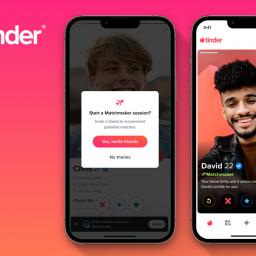
Tinder has rolled out a new feature dubbed Tinder Matchmaker" that will allow users' family and friends to access the dating app and make recommendations for potential matches. The matchmakers do not need to have a Tinder profile to view or suggest possible pairings. Hypothetically, that means anyone from your grandmother to your ex-boyfriend could help you select a new profile to match with.A Tinder user will need to launch a Tinder Matchmaker session" either directly from a profile card or within the app's settings. If you see a potential match, you can share a unique link with up to 15 individuals in a 24-hour period. Once a matchmaker gets a link, they can log into Tinder or continue as a guest.A matchmaker will gain access to profiles they can like" and if they do, it will appear as a recommendation for the original Tinder user to see. The matchmaker's abilities are limited though. They can't send messages or actually swipe right on the profiles in question - ultimately, the Tinder user will decide whether or not to match with another.For years, singles have asked their friends to help find their next match on Tinder, and now we're making that so easy with Tinder Matchmaker," Melissa Hobley, Tinder's Chief Marketing Officer says on the new feature.Bumble has a similar offering, where a user can recommend a profile to a friend through a private link that only they can open within the dating app. However, it's more geared for one-on-one sharing compared to Tinder Matchmaker. Hinge, another key competitor, tried launching a separate Hinge Matchmaker app in 2017. Matchmakers on the Hinge spinoff were supposed to suggest potential pairings based on who the individuals knew personally from Facebook. That secondary app didn't last for Hinge - the app is no longer available.Tinder's matchmaker feature is just the latest offering from the company designed to entice more users to engage with the app in new ways. Verification on Tinder got a boost with video selfies, incognito mode finally was introduced earlier this year and the company just started letting Tinder users specify gender pronouns and non-monogamous relationship types.This article originally appeared on Engadget at https://www.engadget.com/tinder-will-let-your-family-nag-you-and-play-virtual-matchmaker-100011319.html?src=rss
|
 |
by Cheyenne MacDonald on (#6FS9H)
Instagram is testing a sticker creation feature that will let users make custom stickers from their own photos - and other users', in some cases - and pop them into Reels or Stories. While Meta has been going all in on prompt-based, AI-generated stickers lately, this tool is something much simpler. It'll just select the subject of a photo and remove the background, creating a free-floating sticker that can be placed over other content.Adam Mosseri/ InstagramAdam Mosseri gave a brief demonstration of how it'll work in a video shared to his broadcast channel. He also said that, in addition to creating stickers from photos saved on your phone, users will be able to make them from eligible images you see on Instagram." Mosseri didn't share any further details on that, but it suggests users will be able to opt in to making their pictures stickerable.It's still just a test and hasn't rolled out to all users, so we'll see what that actually looks like in time. The platform last week started testing a new polling feature, too, which will show up in the comments section under feed posts.This article originally appeared on Engadget at https://www.engadget.com/instagrams-latest-test-feature-turns-users-photos-into-stickers-for-reels-and-stories-211046111.html?src=rss
|
 |
by Cheyenne MacDonald on (#6FS4Y)
This month has been filled with conflicting rumors of an Apple product launch that either will or won't happen, but Bloomberg's Mark Gurman now says the October event is on, and it could bring a long overdue iMac upgrade. In the Power On newsletter, Gurman reports that sources close to Apple said a Mac launch is in the works for this month. Based on current retail supplies and shipping dates for certain models, Gurman suggests we could see a new iMac and possibly some new MacBook Pros.Apple retail stores are in short supply of the iMac, as well as the 13-inch MacBook Pro and high-end MacBook Pro - two other models that may be due for a refresh," Gurman wrote, noting that current shipping estimates for these models show delays until November. That, plus the timing of the company's earnings call - in November this year, instead of October - suggests Apple has something planned. Gurman speculates the launch event may take place on October 30 or 31.The 24-inch M1 iMac came out in April 2021 and hasn't been updated since, making it a good candidate for a refresh. The 13-inch M2 MacBook Pro, which was released in June 2022, is also due for an upgrade.This article originally appeared on Engadget at https://www.engadget.com/apples-rumored-october-mac-launch-may-happen-after-all-153051265.html?src=rss
|
 |
by Andrew Tarantola on (#6FS3H)
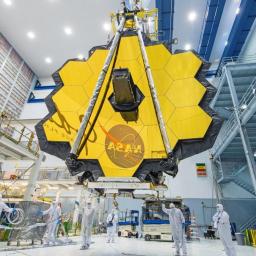
Space isn't hard only on account of the rocket science. The task of taking a NASA mission from development and funding through construction and launch - all before we even use the thing for science - can span decades. Entire careers have been spent putting a single satellite into space. Nobel-winning NASA physicist John Mather, mind you, has already helped send up two.In their new book, Inside the Star Factory: The Creation of the James Webb Space Telescope, NASA's Largest and Most Powerful Space Observatory, author Christopher Wanjek and photographer Chris Gunn take readers on a behind the scenes tour of the James Webb Space Telescope's own journey from inception to orbit. Weaving examinations of the radical imaging technology that enables us to peer deeper into the early universe than ever before with profiles of the researchers, advisors, managers, engineers and technicians that made it possible through three decades of effort. In this week's Hitting the Books excerpt, a look at JWST project scientist John Mather and his own improbable journey from rural New Jersey to NASA.MIT PressExcerpted from Inside the Star Factory: The Creation of the James Webb Space Telescope, NASA's Largest and Most Powerful Space Observatory" Copyright (C) 2023 by Chris Gunn and Christopher Wanjek. Used with permission of the publisher, MIT Press.John Mather, Project Scientist- The steady hand in controlJohn Mather is a patient man. His 2006 Nobel Prize in Physics was thirty years in the making. That award, for unswerving evidence of the Big Bang, was based on a bus-sized machine called COBE - yet another NASA mission that almost didn't happen. Design drama? Been there. Navigate unforeseen delays? Done that. For NASA to choose Mather as JWST Project Scientist was pure prescience.Like Webb, COBE - the Cosmic Background Explorer - was to be a time machine to reveal a snapshot of the early universe. The target era was just 370,000 years after the Big Bang, when the universe was still a fog of elementary particles with no discernable structure. This is called the epoch of recombination, when the hot universe cooled to a point to allow protons to bind with electrons to form the very first atoms, mostly hydrogen with a sprinkling of helium and lithium. As the atoms formed, the fog lifted, and the universe became clear. Light broke through. That ancient light, from the Big Bang itself, is with us today as remnant microwave radiation called the cosmic microwave background.Tall but never imposing, demanding but never mean, Mather is a study in contrasts. His childhood was spent just a mile from the Appalachian Trail in rural Sussex County, New Jersey, where his friends were consumed by earthly matters such as farm chores. Yet Mather, whose father was a specialist in animal husbandry and statistics, was more intrigued by science and math. At age six he grasped the concept of infinity when he filled up a page in his notebook with a very large number and realized he could go on forever. He loaded himself up with books from a mobile library that visited the farms every couple of weeks. His dad worked for Rutgers University Agriculture Experiment Station and had a laboratory on the farm with radioisotope equipment for studying metabolism and liquid nitrogen tanks with frozen bull semen. His dad also was one of the earliest users of computers in the area, circa 1960, maintaining milk production records of 10,000 cows on punched IBM cards. His mother, an elementary school teacher, was quite learned, as well, and fostered young John's interest in science.A chance for some warm, year-round weather ultimately brought Mather in 1968 to University of California, Berkeley, for graduate studies in physics. He would fall in with a crowd intrigued by the newly detected cosmic microwave background, discovered by accident in 1965 by radio astronomers Arno Penzias and Robert Wilson. His thesis advisor devised a balloon experiment to measure the spectrum, or color, of this radiation to see if it really came from the Big Bang. (It does.) The next obvious thing was to make a map of this light to see, as theory suggested, whether the temperature varied ever so slightly across the sky. And years later, that's just what he and his COBE team found: anisotropy, an unequal distribution of energy. These micro-degree temperature fluctuations imply matter density fluctuations, sufficient to stop the expansion, at least locally. Through the influence of gravity, matter would pool into cosmic lakes to form stars and galaxies hundreds of millions of years later. In essence, Mather and his team captured a sonogram of the infant universe.Yet the COBE mission, like Webb, was plagued with setbacks. Mather and the team proposed the mission concept (for a second time) in 1976. NASA accepted the proposal but, that year, declared that this satellite and most others from then on would be delivered to orbit by the Space Shuttle, which itself was still in development. History would reveal the foolishness of such a plan. Mather understood immediately. This wedded the design of COBE to the cargo bay of the unbuilt Shuttle. Engineers would need to meet precise mass and volume requirements of a vessel not yet flown. More troublesome, COBE required a polar orbit, difficult for the Space Shuttle to deliver. The COBE team was next saddled with budget cuts and compromises in COBE's design as a result of cost overruns of another pioneering space science mission, the Infrared Astronomical Satellite, or IRAS. Still, the tedious work continued of designing instruments sensitive enough to detect variations of temperatures just a few degrees above absolute zero, about -270C. From 1980 onward, Mather was consumed by the creation of COBE all day every day. The team needed to cut corners and make risky decisions to stay within budget. News came that COBE was to be launched on the Space Shuttle mission STS-82-B in 1988 from Vandenberg Air Force Base. All systems go.Then the Space Shuttle Challenger exploded in 1986, killing all seven of its crew. NASA grounded Shuttle flights indefinitely. COBE, now locked to Shuttle specifications, couldn't launch on just any other rocket system. COBE was too large for a Delta rocket at this point; ironically, Mather had the Delta in mind in his first sketch in 1974. The team looked to Europe for a launch vehicle, but this was hardly an option for NASA. Instead, the project managers led a redesign to shave off hundreds of pounds, to slim down to a 5,000-pound launch mass, with fuel, which would just make it within the limits of a Delta by a few pounds. Oh, and McDonnell Douglas had to build a Delta rocket from spare parts, having been forced to discontinue the series in favor of the Space Shuttle.The team worked around the clock over the next two years. The final design challenge was ... wait for it ... a sunshield that now needed to be folded into the rocket and spring-released once in orbit, a novel approach. COBE got the greenlight to launch from Vandenberg Air Force Base in California, the originally desired site because it would provide easier access to a polar orbit compared to launching a Shuttle from Florida. Launch was set for November 1989. COBE was delivered several months before.Then, on October 17, the California ground shook hard. A 6.9-magnitude earthquake struck Santa Cruz County, causing widespread damage to structures. Vandenberg, some 200 miles south, felt the jolt. As pure luck would have it, COBE was securely fastened only because two of the engineers minding it secured it that day before going off to get married. The instrument suffered no damage and launched successfully on November 18. More drama came with the high winds on launch day. Myriad worries followed in the first weeks of operation: the cryostat cooled too quickly; sunlight reflecting off of Antarctic ice played havoc with the power system; trapped electrons and protons in the Van Allen belts disrupted the functioning of the electronics; and so on.All the delays, all the drama, faded into a distant memory for Mather as the results of the COBE experiment came in. Data would take four years to compile. But the results were mind-blowing. The first result came weeks after launch, when Mather showed the spectrum to the American Astronomical Society and received a standing ovation. The Big Bang was safe as a theory. Two years later, at an April 1992 meeting of the American Physical Society, the team showed their first map. Data matched theory perfectly. This was the afterglow of the Big Bang revealing the seeds that would grow into stars and galaxies. Physicist Stephen Hawking called it the most important discovery of the century, if not of all time."Mather spoke humbly of the discovery at his Nobel acceptance speech in 2006, fully crediting his remarkable team and his colleague George Smoot, who shared the prize with him that year. But he didn't downplay the achievement. He noted that he was thrilled with the now broader recognition that our work was as important as people in the professional astronomy world have known for so long."Mather maintains that realism today. While concerned about delays, threats of cancellation, cost overruns, and not-too-subtle animosity in the broader science community over the telescope that ate astronomy," he didn't let this consume him or his team. There's no point in trying to manage other people's feelings," he said. Quite a lot of the community opinion is, well, if it were my nickel, I'd spend it differently.' But it isn't their nickel; and the reason why we have the nickel in the first place is because NASA takes on incredibly great challenges. Congress approved of us taking on great challenges. And great challenges aren't free. My feeling is that the only reason why we have an astronomy program at NASA for anyone to enjoy - or complain about - is that we do astonishingly difficult projects. We are pushing to the edge of what is possible."Webb isn't just a little better than the Hubble Space Telescope, Mather added; it's a hundred times more powerful. Yet his biggest worry through mission design was not the advanced astronomy instruments but rather the massive sunshield, which needed to unfold. All instruments and all the deployment mechanisms had redundancy engineered into them; there are two or more ways to make them work if the primary method fails. But that's not the only issue with a sunshield. It would either work or not work.Now Mather can focus completely on the science to be had. He expects surprises; he'd be surprised if there were no surprises. Just about everything in astronomy comes as a surprise," he said. When you have new equipment, you will get a surprise." His hunch is that Webb might reveal something weird about the early universe, perhaps an abundance of short-lived objects never before seen that say something about dark energy, the mysterious force that seems to be accelerating the expansion of the universe, or the equally mysterious dark matter. He also can't wait until Webb turns its cameras to Alpha Centauri, the closest star system to Earth. What if there's a planet there suitable for life? Webb should have the sensitivity to detect molecules in its atmosphere, if present.That would be cool," Mather said. Hints of life from the closest star system? Yes, cool, indeed.This article originally appeared on Engadget at https://www.engadget.com/inside-the-star-factory-chris-gunn-christopher-wanjek-mit-press-143046496.html?src=rss
|
 |
by Cheyenne MacDonald on (#6FRS1)
Google will have to pay over $1 million to an executive who alleged the company discriminated against her based on her gender and later retaliated when she spoke up about it. Ulku Rowe, a Google Cloud engineering director, accused the company of hiring her at a lower level, lower paid position than men with less experience who were hired for similar roles at the same time, according to Bloomberg Law. She also claimed she was passed over for a promotion in favor of a less qualified male colleague.A New York jury on Friday decided that Google did commit gender-based discrimination, and now owes Rowe a combined $1.15 million for punitive damages and the pain and suffering it caused. But, according to Bloomberg Law, it also determined that Rowe did not prove Google violated the New York equal pay law. Rowe had 23 years of experience when she started at Google in 2017, and the lawsuit claims she was lowballed at hiring to place her at a level that paid significantly less than what men were being offered.This unanimous verdict not only validates Ms. Rowe's allegations of mistreatment by Google, but it also sends a resounding message that discrimination and retaliation will not be tolerated in the workplace," said Rowe's lead attorney, Cara Greene, in a statement provided to Engadget. It comes nearly five years after some 20,000 Google employees organized a walkout to demand changes around the company's handling of sexual misconduct and discrimination.While the company pledged to do better on sexual harassment, its response still left a lot to be desired on the topics of bias. According to Bloomberg Law, the Rowe lawsuit is the first such case Google has faced since the protests. Greene called the jury's decision historic," and credited the 2018 demonstrations for making it possible.In a statement, Google spokesperson Courtenay Mencini said that fairness is absolutely critical to us and we strongly believe in the equity of our leveling and compensation processes." Mencini said the jury's finding that Google didn't violate New York law supports this, but went on to dispute its decision that Google did discriminate against Rowe.We disagree with the jury's finding that Ms. Rowe was discriminated against on account of her gender or that she was retaliated against for raising concerns about her pay, level, and gender," Mencini said. We prohibit retaliation in the workplace and publicly share our very clear policy. We take employee concerns seriously, and we thoroughly investigated Ms. Rowe's concerns when she raised them and found there was no discrimination or retaliation."Update, October 22 2023, 9:57AM ET: This story was updated to include a statement from Google and clarify that the jury found Rowe did not prove the company violated New York's equal pay laws.Update, October 22 2023, 2:45PM ET: This story was updated to include a statement from Rowe's attorney.This article originally appeared on Engadget at https://www.engadget.com/google-ordered-to-pay-1-million-to-female-exec-who-sued-over-pay-discrimination-214702002.html?src=rss
|
 |
by Cheyenne MacDonald on (#6FRQT)
Blizzard hasn't exactly been subtle in marketing Diablo IV, but its latest PR stunt is especially on the nose. To celebrate the release of the game's new season, Season of Blood, and the high-payoff Blood Harvest events it introduced, Blizzard has launched a month-long blood drive in the US that'll unlock in-game rewards as more people participate. Once donations reach 666 quarts altogether, players will be able to enter a sweepstakes for a custom liquid-cooled PC infused with real human blood."The first tier of rewards, a batch of five weapons cosmetics, will unlock once donations hit 33 percent of the goal. At the 66 percent mark, players will also be granted access to the Loch Raeth Maor Barbarian armor cosmetic. When donations reach 100 percent of the goal - a total of 666 quarts of blood - the Vermilion Eye Piebald Mount will become available, and the sweepstakes for the custom PC will open.Aside from the whole human blood in the coolant" gimmick, the Seasons of Blood custom PC features NVIDIA's GeForce RTX 4090, an Intel Core i9 CPU, 64GB of DDR5 RAM, 3 TB SSD Storage, and the Quantum Vector GPU Waterblock for cooling. And, the sweepstakes won't just be reserved for those who donated. Once the goal is met, any player in the US over 18 can enter. The blood drive is open from now through November 20, and you don't need to go anywhere special to get in on it. Players 18+ can donate at their local blood centers, then submit proof on the Diablo Blood Harvest website.A typical blood donation is 1 pint, so it'll take a little over 1,300 donations to hit the final goal. Players can keep track of the blood drive's progress by visiting the above website and its motivational fountain of gushing blood. At the time of writing, it's already at 15 percent - or almost halfway to the first goal.Considering the Red Cross recently announced we're in the middle of a blood shortage, it's maybe not the worst idea. All of the rewards will be doled out a few days after the blood drive closes, on November 22. Happy harvest!This article originally appeared on Engadget at https://www.engadget.com/blizzard-will-raffle-off-a-human-blood-infused-pc-if-diablo-iv-players-donate-666-quarts-192828807.html?src=rss
|
 |
by Cheyenne MacDonald on (#6FRN0)
The high-end Roomba s9+ may normally be too expensive for most people to justify spending on a robot vacuum, but a one-day-only deal has shaved the price nearly in half, bringing it down to an all time low of $500. If you've been holding off on buying the premium model, which we ranked as one of the best robot vacuums out there, now's the time to scoop it up.The Roomba s9+ is a splurge in every sense of the word, and boasts 40x the suction power of iRobot's more basic vacuums. Its 1.5-foot-tall self-emptying base holds up to 60 days worth of waste. And with a sleek, black and copper design, it isn't an eyesore. The s9+ is D-shaped, as opposed to being fully circular, meaning its flat edge can more effectively get into corners. We found the s9+ paired quickly with WiFi and the iRobot app for an easy setup, and wasn't unreasonably loud when it emptied its bin.The vacuum works on carpets and hard floors, and has multi-surface rubber brushes to handle more difficult types of debris, like hair. It also promises to filter out microscopic particles and allergens like those that might be accumulating around the house from your pets. But, while it's meant to excel at cleaning up pet hair, its sensors aren't made for spotting and avoiding pet poop. It does, however, have Careful Driver" technology to avoid slamming into objects while it cleans. At the current discount, the s9+ offers premium cleaning power at a mid-range price.Follow @EngadgetDeals on Twitter and subscribe to the Engadget Deals newsletter for the latest tech deals and buying advice.This article originally appeared on Engadget at https://www.engadget.com/irobots-roomba-s9-robot-vacuum-is-down-to-its-best-price-yet-163052747.html?src=rss
|
by Mariella Moon on (#6FRKE)
SpaceX is planning to launch as many rockets as it can over the next two-and-a-half months in an attempt to fly 100 flights by the end of the year, company exec Bill Gerstenmaier recently told the US Senate Subcommittee on Space and Science. He also revealed that the company has an even more ambitious goal for 2024: To launch around 12 flights a month, for a total of 144 missions for the whole year. According to a company official who talked to Ars Technica, SpaceX intends to ramp up its mission numbers next year, mostly so that it could officially roll out its satellite-to-cell phone service."With our 2 million users, (we) need that constellation refreshed," the spokesperson told Ars. "We're also going to look at direct to cell communications with Starlink, and that's a key feature that gets added next year with those 144 flights."The company first announced the service, which will allow normal smartphones to connect with its satellites, back in 2022. It made the revelation alongside T-Mobile, which promised to make the capability accessible to its subscribers. T-Mobile CEO Mike Sievert likened the technology to putting a cellular tower in the sky and said it could eliminate deadzones one day, allowing people to easily get in touch with loved ones even if they're in the middle of the ocean. SpaceX VP of Starlink enterprise sales Jonathan Hofeller also said earlier this year that the company is gearing up to start testing the service.As Ars notes, SpaceX previously said that the capability will require larger satellites that will launch onboard the company's Starship vehicle. The giant rocket is yet to be operational, though, and the company had to design an intermediate-sized Starlink satellite that can fly on its Falcon 9 rockets. That satellite is bigger than older models but smaller than the ones needed to enable voice and data services. SpaceX doesn't have plans to roll out Starlink voice and data until 2025, though, and will introduce its direct-to-cell capability with texting coverage only next year.This article originally appeared on Engadget at https://www.engadget.com/spacex-will-ramp-up-its-launches-in-2024-for-starlinks-satellite-to-cell-service-133050178.html?src=rss
 |
by Karissa Bell on (#6FR85)
As expected, the Supreme Court will weigh in on a controversial case attempting to limit contact between federal officials and social media companies. The case could have sweeping implications for how social media companies make policy and content moderation decisions.The case stems from a lawsuit, brought by the attorneys general of Missouri and Louisiana, that alleges Biden Administration officials, the CDC and FBI overreached in their dealings Meta, Google and Twitter as the companies responded to pandemic and election-related misinformation. A lower court previously issued an injunction that severely limited government officials' ability to communicate with social media companies, though some restrictions were later relaxed.Now, with the Supreme Court agreeing to hear the government's appeal in the case, the entire lower court order remains on hold. As The New York Times notes, three justices, Samuel Alito, Clarence Thomas and Neil Gorsuch, dissented, calling the decision to allow the lower court order to remain paused highly disturbing."It's not the only case involving free speech and social media on the Supreme Court docket this term. The court will also take on two landmark cases that could reshape how social media platforms enforce content moderation rules. Those cases involve two state laws, in Texas and Florida, that would prevent social media companies from removing certain types of posts.This article originally appeared on Engadget at https://www.engadget.com/the-supreme-court-will-hear-case-on-governments-contacts-with-social-media-companies-224551081.html?src=rss
|
by Malak Saleh on (#6FR86)
Twitch will now allow its users to stream concurrently on other live video sites. The announcement was made at TwitchCon in Las Vegas, just as it dropped new simulcasting guidelines. The company emphasized that simulcasting is permitted as long as the Twitch user experience is not compromised" on other platforms.Back in August, Twitch relaxed its rules on cross-streaming, allowing channels to have their live content appear on social media apps like TikTok and Instagram. In terms of what new competitor services are kosher now, Twitch's language is broad - citing that any service" is on the table. The lone exception appears to be channels which have signed exclusivity contracts with Twitch.
 |
by Kris Holt on (#6FR6E)
During the TwitchCon Las Vegas Opening Ceremony on Friday, Twitch CEO Dan Clancy made an important announcement regarding the platform's off-service conduct policy. Starting now, Twitch will take action against users who doxx and swat others outside of its own platform.Doxxing (publishing someone's personal information such as their full name and address) and swatting (making a prank call to dispatch emergency services to someone's home) have long been problems in the livestreaming community. Now, if Twitch catches a streamer or other user doxxing or swatting someone on another platform or even offline, it may suspend or ban their account.Twitch started enforcing its off-service conduct policy in April 2021. At the time, it said it would respond to serious incidents that "pose a substantial safety risk to the Twitch community" even if those happen away from its own platform. Before it makes any enforcement actions related to off-platform activity, Twitch requires evidence of such incidents taking place.The policy covers issues such as sexual misconduct, terrorist activity and recruitment, explicit or credible threats of mass violence and being a leader or member of a known hate group. The platform also takes action related to threats against Twitch and its staff, as well as those who share harmful misinformation. Adding doxxing and swatting to the list is a long-overdue move given the serious and occasionally even deadly nature of such actions.
|
 |
by Malak Saleh on (#6FR6F)
You can't trust everything on a Wikipedia page, which is why it's important that you refer to the original sources cited in the footnotes. But sometimes, even the primary sources can lead you astray. Researchers have developed an AI focused on improving the reliability of Wikipedia references by training the algorithms to identify citations on the website that are questionable.The program, called SIDE, does two things: check if a primary source is accurate and suggest new ones. However, the AI operates under the assumption that a Wikipedia claim is true. This means that, while it can check for the validity of a source, it can't actually verify claims made in an entry.In a study, people preferred the AI's suggested citations to the original 70 percent of the time. The researchers found that in nearly 50 percent of the cases, SIDE presented a source that was already being used by Wikipedia as the top reference. And 21 percent of the time, SIDE was one step ahead when it churned out a recommendation that was already deemed appropriate by human annotators in the study.While the AI appears to demonstrate it can effectively help an editor verify Wikipedia claims, the researchers admit that alternative programs could outperform their current design in both quality and speed. SIDE is limited in its capabilities - namely, the program only considers references corresponding to web pages. In reality, Wikipedia cites books, scientific articles and info presented through other media beyond text like images and video. But beyond its technical limits, the whole premise of Wikipedia is that any writer anywhere could assign a reference to a topic. The researchers suggest that the use of Wikipedia itself could be limiting to the study. They allude that individuals who plug citations into the website could permeate bias depending on the nature of the topics in question.Meanwhile, we all know that any program, especially an AI that is dependent on training, could be prone to the exposure of the biases of its programmer. The data used to train and evaluate SIDE's models could be limited in that regard. But still, the benefits of using AI to streamline fact-checking, or at least use it as a supportive tool, could have reverberating applications elsewhere. Wikipedia and social media companies alike need to contend with bad actors and bots that flood digital town squares with false information. This is especially true and important now more than ever, in the wake of misinformation spreading around the Israel-Hamas war and the upcoming presidential elections in the US. The need to mitigate misinformation online could be catalyzed with AI tools, like SIDE, designed for this exact purpose. But there are still some advances that need to be made before it can.This article originally appeared on Engadget at https://www.engadget.com/study-shows-ai-program-could-verify-wikipedia-citations-improving-reliability-184543711.html?src=rss
|
by Jeff Dunn on (#6FQYF)
We're in the awkward stretch between Amazon's October Prime Day sale and Black Friday, but if you can't wait a few more weeks to start your holiday shopping, there are a few notable tech deals you can take advantage of today. Premium TVs like Samsung S90C and TCL QM8 are both down to new all-time lows, for instance, as is the budget-level Hisense U6K. If you want a new set of wireless earbuds, the Lightning version of the AirPods Pro is $60 off Apple's list price, while the wallet-friendly Jabra Elite 3 is down to a low of $40. We're also seeing discounts on Anker wall chargers, recommended gaming laptops and more. Here are the best tech deals from this week that you can still get today.Samsung S90CThe 55-inch Samsung S90C has dropped to $1,298, which is a new low and roughly $150 below the sale price we saw earlier this month. This OLED TV has received near-unanimous praise for delivering the high contrast, smooth motion and wide viewing angles expected from a good OLED set without sacrificing as much in the way of peak brightness and color saturation. That's because it uses a QD-OLED panel, which mixes OLED tech with a quantum-dot layer. The big benefit is that it'll hold up better in a brightly-lit room compared to a standard OLED TV (though it won't get as bright as the best LCD sets). The S90C is also well-equipped for gaming, as it has four HDMI 2.1 ports that can support up to a 144Hz refresh rate in 4K. The main drawbacks are that it doesn't support Dolby Vision HDR (like all Samsung TVs) and that its default Tizen software can be somewhat clunky.TCL QM8If your living room is particularly affected by glare, the TCL QM8 is a well-reviewed LCD TV with higher peak brightness alongside quantum dots and similar gaming features. It also uses a mini-LED backlight to help with contrast, though it won't look as color-rich as a good OLED TV, and its viewing angles are narrower. Right now the 65-inch model is down to $901, which is a new low and about $200 off its usual street price. The Hisense U8K, another LCD TV that's received similarly high marks, is also worth noting, though the 65-inch version of that TV currently costs $1,098.Hisense U6KMoving closer to the budget side of the market, the 75-inch Hisense U6K is on sale for $698, which is another all-time low and $100 less than its usual street price in recent months. This is a much more basic LCD TV compared to the QM8, so it won't look as vibrant, it's limited to a 60Hz refresh rate and it lacks HDMI 2.1 ports altogether. That said, it's far more affordable, and it's one of the few entry-level TVs to support mini-LED backlighting, full-array local dimming and quantum-dot color. Reviews elsewhere suggest those features help it provide better contrast and color than most TVs in its price range. It also uses the Google TV platform, which we've found simple to use. Like most budget TVs, though, it'll look washed out when viewed from an angle. If a 75-inch set is too big, the 55- and 65-inch models are still available for the lows we saw earlier this month.Anker wall charger saleA handful of quality wall chargers from Anker are on sale this week. The Anker 736 Charger, for one, is down to $43 from its usual $60. This is a larger model meant for laptops or multi-device charging, as it has two USB-C ports that can individually output up to 100W alongside a USB-A port. The Anker 735 Charger, meanwhile, has a similar port selection that tops out at 65W but comes in a smaller overall package; it's down to $40, which is a $20 discount. For less strenuous needs, the Anker 511 Charger is closer in size to an old iPhone charger and packs a single 30W USB-C port. That one is on sale for $17, which is about $3 less than usual. Finally, you can get a two-pack of the Anker PowerPort III 20W Cube for $14, which is around a $4 discount. That one has a similarly tiny shape as the 511 but tops out at 20W, which may be enough if you only need it for a non-Pro iPhone.Apple AirPods ProThe Lightning version of Apple's second-gen AirPods Pro is back on sale for $189. That matches the all-time low we saw during Amazon's Prime Big Deal Days sale earlier this month and comes in $10 below the earphones' typical street price in recent months. The AirPods Pro are the "best for iOS" pick in our wireless earbuds buying guide and earned an Engadget review score of 88 late last year. They continue to offer a pleasingly warm sound profile, effective noise cancellation, an excellent transparency mode and a host of helpful integrations with other Apple devices. A recent update added a useful "Adaptive Audio" mode as well. Do note, though, that Apple released a refreshed model with a USB-C charging case (as well as improved dust resistance) last month. That one isn't on sale as of this writing, though we may see a discount as we get closer to Black Friday.Govee M1 LED Strip LightsGovee's M1 LED Strip Lights are on sale for $70 at Amazon with a $30 coupon, matching the lowest price we've seen. This is a 16.4-foot strip you can cut up and adhere around your house for some colorful ambient lighting. Its colors are bright and saturated, and through Govee's app you can apply several different effects to separate parts of one strip. If you ever want to give a room a more clubby vibe, it can also sync with music. Alexa, the Google Assistant and the new Matter smart home standard are all supported. Just note that it can be something of an eyesore when it's not active, so you may not want to stick it right out in the open. We currently recommend the M1 in our guide to the best smart light bulbs.Jabra Elite 3Jabra's Elite 3 earphones are down to $40 at Best Buy, which matches their all-time low and falls about $25 below their average street price. We gave this wireless pair a review score of 88 back in 2021, and we currently recommend it in our guide to the best budget wireless earbuds. For less than $50, its modestly bass-boosted sound still impresses, while its compact design, snug fit and IP55-rated water resistance make it a fine choice for workouts. Battery life is decent as well at seven or so hours per charge. It's a bit short on features, though, as there's no wireless charging, wear detection, multi-device pairing or active noise cancellation.Keychron V3The tenkeyless Keychron V3 mechanical keyboard is down to $69, which is about $15 less than its typical going rate. Amazon also has it on sale for $5 more. This is a recommendation from our guide to the best gaming keyboards, as we consider it a great entry point for those looking to get into mechanical keyboards as a hobby. It's sturdily put together, compatible with all the major operating systems and configurable with a handful of comfortable switches. (Broadly speaking, the tactile K Pro Brown is best for typing, while the linear K Pro Red is faster for gaming.) Those switches come pre-lubed, so presses have a smooth and full sensation out of the box, while the PBT-coated keycaps feel crisp and stable. It's not dead quiet, but it's not super loud either. It's also hot-swappable, so customizing the keys and switches down the road is fairly straightforward.Samsung Evo SelectThe 512GB version of Samsung's Evo Select microSD card is back on sale for $30, which is $2 more than the deal we saw during Amazon's Prime Big Deal Days sale but still $5 lower than its usual street price. The Evo Select is the "best value" pick in our microSD card buying guide: It's not the fastest card we tested, but it's perfectly adequate for those looking to boost the storage of a Nintendo Switch, Steam Deck or Raspberry Pi at a low cost. The Samsung Pro Plus will technically perform better if you can pony up another $5, but that card isn't priced any cheaper than usual.MSI Stealth 14 StudioA configuration of MSI's Stealth 14 Studio laptop with an Intel Core i7-13620H processor, an Nvidia GeForce RTX 4060 GPU, 16GB of RAM and a 1TB SSD is down to $1,200 at Best Buy. That's the lowest price we've seen for this model and $300 off its MSRP. We gave the Stealth 14 Studio a review score of 87 back in June, praising its striking and relatively light (3.75 pounds) design, solid speakers and capable performance for everyday gaming. This is a lower-end config than the one we reviewed - the CPU is slightly slower, while the 14-inch display has a lower 1,920 x 1,200 resolution and 165Hz refresh rate - but the same general sentiments apply. The main downsides are its middling 720p webcam and the fact that it can run hot under duress. You still won't get a ton of battery life from a gaming laptop like this either. But if you want a more portable machine for gaming and media editing, there's good value here. We currently recommend the Stealth 14 Studio in our guide to the best Windows laptops.ASUS ROG Zephyrus G14The ASUS ROG Zephyrus G14 is the top overall gaming pick in that guide, and it's now on sale for the same price at Best Buy. The model discounted here includes an AMD Ryzen 9 7940HS chip, a GeForce RTX 4060 GPU, 16GB of RAM, a 512GB SSD and a 14-inch, 1440p, 165Hz display. At $400 off ASUS' list price, this deal marks an all-time low. The G14's pitch is similar to the Stealth 14 Studio: It's a compact gaming laptop that doesn't totally sacrifice the "laptop" part. It's powerful enough to run modern games, but it's not an anchor at 3.64 pounds, and its keyboard and trackpad are comfortable. Whether you should get it over the MSI config above likely comes down to your willingness to trade storage space for a higher-res display. The G14 also has more ports, including two for USB-C and two for USB-A, though the Stealth 14 Studio includes a Thunderbolt 4 connector, which may be important if you ever want to use an external GPU.Sonos MoveSonos has its first-gen Move speaker down to $299, which is a $100 discount and matches an all-time low. This deal comes with a major caveat, as Sonos replaced the Move with the upgraded Move 2 earlier this year. We found the new model to deliver improved sound quality and far superior battery life in our review; other upgrades include a redesigned set of touch controls and line-in support (with an optional adapter). If you can spend another $150 - or wait for a potential sale - you should get that device instead. If you can't, though, the broad strokes of the original Move are similar: It's still a hefty yet portable speaker with balanced sound, a weather-resistant design and all the usual Sonos perks. It still pairs easily with other Sonos speakers and can connect to a range of streaming services, plus it supports AirPlay 2, Alexa and the Google Assistant. Its battery just lasts closer to 10 hours instead of 20 like the Move 2.Follow @EngadgetDeals on Twitter and subscribe to the Engadget Deals newsletter for the latest tech deals and buying advice.This article originally appeared on Engadget at https://www.engadget.com/samsung-tcl-and-hisense-tvs-fall-to-new-lows-plus-the-rest-of-the-weeks-best-tech-deals-160856325.html?src=rss
 |
by Lawrence Bonk on (#6FQYG)
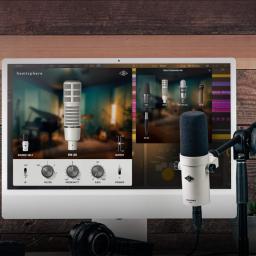
Mic modeling has come a long way in just a few years, and modern software plugins, to these ears, get quite close to the real deal. Universal Audio has been at the forefront of this technology for a while and now the company's released a new condenser microphone that integrates with its equally new Hemisphere mic modeling plugin.The SC-1 is a large diaphragm condenser microphone, operating as part of the company's Standard Series that also includes the pre-existing SD-1 and SP-1. The SC-1 launches alongside the Hemisphere plugin that gives users digital access to a full range of classic mics from big-time companies like Neumann, Telefunken, AKG, Sony and others. The plugin uses a similar technology to the company's Sphere line of modeling microphones, but with a drastic reduction in cost, as the SC-1 costs $500 and Sphere microphones range from $800 to $1,400.The Hemisphere plugin lets you instantly audition different microphones to suit the take, tweak proximity, adjust filters and more. All of these adjustments can be done before recording or afterward, just like with the Sphere line. One benefit the SC-1 boasts over the Sphere line is that it requires just a single XLR input, while Sphere microphones require two to properly capture that stereo field.The Hemisphere modeling plugin also extends to those other Standard Series mics, like the SP-1 pencil microphone and the SD-1 dynamic microphone. As for the SC-1 itself, it's a standard no-frills large-diaphragm condenser with an extended dynamic range and a frequency response from 20 Hz to 20 kHz. There's also an emphasis on low self-noise output, which makes it easier to transform via the numerous modeling options.Universal Audio's SC-1 is available for preorder right now and ships later in the fall. The microphone includes the Hemisphere modeling plugin, so your wallet won't have to double dip. Additionally, the plugin is a free upgrade for existing SD-1 and SP-1 owners.This article originally appeared on Engadget at https://www.engadget.com/universal-audios-sc-1-condenser-microphone-comes-with-new-modeling-software-153349656.html?src=rss
|
by Sam Rutherford on (#6FQYH)
Mario has been stomping Goombas, smashing blocks and running from left to right for damn near 40 years. How is Nintendo supposed to keep its classic side scroller feeling fresh after all this time? First, you shift the location to a brand new kingdom. Next, you introduce a bunch of new enemies and power-ups. But what really pushes things over the top is the introduction of a new mechanic that turns everything you think you know about Mario games on its head. What you get is Super Mario Bros. Wonder, a game that dazzles and delights while living up to its name in a variety of ways.Warning: This review includes some light spoilers, including the number of worlds and descriptions of some hidden levels.The game starts simply enough with Mario and crew (Luigi, Peach, Toad, Yoshi, Nabbit and, for the first time, Daisy) visiting Prince Florian of the Flower Kingdom. But then Bowser barges in and steals a Wonder Flower, which somehow allows him to merge with Prince Florian's castle to create a floating mecha fortress of doom. From there, your job is to collect Wonder Seeds (this game's version of stars and shines) as you help the Florians restore order to their troubled land.Screenshot by Sam Rutherford/EngadgetRight away, this has some subtle but important implications for the rest of the game. The first is that you immediately Wonder Flowers have wild and unpredictable effects. The second is that, because you're not simply recusing a princess trapped in a castle, the whole Flower Kingdom is working with you to take down Bowser. Sometimes that means you might be rescuing some trapped miners. But other times the Florians are the ones helping Mario (who also has a new voice actor for the first time) by rebuilding a bridge or donating a Wonder Seed at the beginning of a new world. The friendly little flowers scattered across each level will even shout words of encouragement or funny quips as you run by. But the impressive part is that, even in a relatively straightforward platformer like this, there's a sense of community that makes this world feel more lived in than a lot of epic RPGs.You'll find a number of familiar baddies along with some new foes across an incredible range of environments and levels. Wonder features six main worlds each with a distinctive theme. But within those, you'll still run into reimagined haunted houses, pirate ships, underwater stages and more. One twist for this game is the addition of badges, which are earned by completing specific levels and some may even be required to find secrets or reveal alternate exits. Some allow you to jump farther or float, while others make extra coins appear. There are even protective badges, like the one that automatically saves you if you fall into lava or poison. It's a mechanic that feels inspired by recent roguelikes, such as Hades, and it does a great job of adding customizability and replayability.Have you ever thought about what it would be like to hear Piranha Plants serenade you?Screenshot by Sam Rutherford/EngadgetHowever, the biggest twist in the game is the Wonder Flowers themselves. In addition to the one Bowser stole, there's also one hidden in almost every stage. And if you find it, you better be prepared for the unexpected. Touching them transports you to an alternate dimension where the rules of the Marioverse have been completely rewritten. In one level Super Stars rain down from the sky, while in another you might be transformed into a giant slime. You may also run into Wonder Flowers which converts the game from a side scroller into a top-down 2D maze or suddenly find yourself the target in a shooting gallery.Almost every flower is different and the possibilities are seemingly endless. In a recent volume of Nintendo's Ask the Developer, I learned that the team had a wall of sticky notes with over 2,000 ideas, and after playing Wonder, I believe it. Wonder Flowers feel like they add an extra half a level to every stage; they're a delicious dessert on top of an already bountiful meal.Toad ain't scared of some stormy skies.Screenshot by Sam Rutherford/EngadgetEven without the aid of a Wonder Flower, the sheer variety of level types is impressive. Alongside classic stages that are capped off by grabbing a flag, there are also races, badge challenges, puzzle levels and more. There are KO Arenas that let you pick your power-up of choice (Fire Flower, Elephant Suit, Bubble Mushroom or the Drill Hat) before taking down waves of enemies, while Break Time levels provide quick 30-second bursts of excitement. You'll never be bored, even if you want a change from standard platform jumping.I also have to say that this might be the best Mario and friends have ever looked, and that includes recent 3D titles like Odyssey. There is just so much detail packed into every level and character. From the determined face Mario makes when he runs around, to the little flames that sprout from your feet every time you jump.Wonder's map is also surprisingly engaging. In the beginning, I wasn't sure if the ability to freely roam around added all that much. But as I progressed, I found a number of secret nooks and crannies that wouldn't have fit if the game was locked to a handful of paths. And with Wonder Flowers giving Nintendo the freedom to mix and match mechanics and enemies, there's just so much to see.Don't let Wiggler beat you. Screenshot by Sam Rutherford/EngadgetNintendo even managed to address a gripe I had about the pacing of previous 2D Marios. Since they're meant for both experienced gamers and children who might be new to the franchise, they often locked more challenging levels behind the story's completion. This meant the beginning of the game could be a slog as you rushed through easier levels to get to the more challenging bits. But with the addition of difficulty ratings and hidden paths that lead to 5-star levels long before you finish the game, there isn't the same rush to get to the good stuff." And I should say that 4- and particularly 5-star levels are balanced just right. Completing one feels like a rewarding challenge, without crossing over into punishing.I do have some very minor complaints about things like mummy enemies (pulling their wraps feels a bit tedious) and I fear the Elephant Suit might be a bit overpowered in comparison to the Drill Hat. The 5-star levels and rhythm stages are also so good I wish there were more of them, I just can't get enough. And I'm slightly disappointed the adorable penguins from the movie didn't make an appearance somewhere in Wonder's ice levels.Have you ever seen a Boo this big?Screenshot by Sam Rutherford/EngadgetBut on the whole, Super Mario Bros. Wonder is a marvelous game. Its art and animations have a level of polish that's practically unmatched by rival titles, and the addition of Wonder Seeds subverts your expectations and keeps this 40-year franchise feeling new and innovative. In a lot of ways, Wonder reminds me of my favorite 2D Mario game: Super Mario World. While I wish it didn't take more than 10 years for Nintendo to create a proper sequel to its last mainline platformer, if that's what it takes to get a game like this, I'm happy to sit and wonder what's next for Mario.This article originally appeared on Engadget at https://www.engadget.com/super-mario-bros-wonder-review-the-joy-of-pure-imagination-141108387.html?src=rss
 |
by Sarah Fielding on (#6FQYJ)
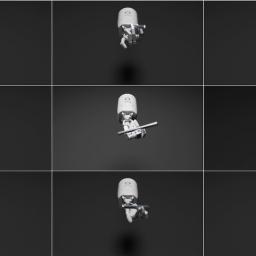
The use for humans in the world of robotics, even as teachers, is shrinking thanks to AI. NVIDIA Research has announced the creation of Eureka, an AI agent powered by GPT-4 that has trained robots to perform tasks using reward algorithms. Notably, Eureka taught a robotic hand to do pen spinning tricks as well as a human can (honestly, as you can see in the YouTube video below, better than many of us).Eureka has also taught quadruped, dexterous hands, cobot arms and other robots to open drawers, use scissors, catch balls and nearly 30 different tasks. According to NVIDIA Research, the AI agent's trial and error-based reward programs are 80 percent more effective than those written by human experts. This shift meant the robots' performance also improved by over 50 percent. Eureka also self-evaluates based on training results, instructing changes in reward functions as it sees fit.NVIDIA Research has published a library of its Eureka algorithms, encouraging others to try them out on NVIDIA Isaac Gym, the organization's "physics simulation reference application for reinforcement learning research."The idea of robots teaching robots is seeing increased interest and success. A May 2023 paper published in the Transactions on Machine Learning Research journal presented a new system called SKILL (Shared Knowledge Lifelong Learning), which allowed AI systems to learn 102 different skills, including diagnosing diseases from chest X-rays and identifying species of flowers. The AIs shared their knowledge - acting as teachers in a way - with each other over a communication network and were able to master each of the 102 skills. Researchers at schools like MIT and the University of Bristol have also had success, specifically in using AI to teach robots how to manipulate objects.This article originally appeared on Engadget at https://www.engadget.com/nvidias-latest-ai-model-helps-robots-perform-pen-spinning-tricks-as-well-as-humans-130004608.html?src=rss
|
 |
by Devindra Hardawar on (#6FQRW)
It seems like Marc Andreessen had a lot of free time this week, as the VC wrapped up his entire pro-tech worldview in a massive tome, the Techno-Optimist Manifesto. Andreessen claims technology is the glory of human ambition and achievement, the spearhead of progress, and the realization of our potential," and he goes on to vilify anyone who dares to step in the way of progress." To break down this document, we're joined by tech critic Paris Marx, host of the Tech Won't Save Us podcast, and the author of the Disconnect newsletter, as well as the book Road to Nowhere: What Silicon Valley Gets Wrong About the Future of Transportation.Also, Deputy Editor Nathan Ingraham discusses why he loves Spider-Man 2 on the PlayStation 5, and we try to make sense of Apple's new $79 Pencil.Listen below or subscribe on your podcast app of choice. If you've got suggestions or topics you'd like covered on the show, be sure to email us or drop a note in the comments! And be sure to check out our other podcast, Engadget News!Subscribe!
|
 |
by Mat Smith on (#6FQRX)
Compared to Samsung's Galaxy Z Fold 5, not only does OnePlus' first foldable pack two larger displays, it's also thinner and lighter - as long as you don't count the hulking camera module. The most impressive thing the Open is doing is putting pressure on the price of big foldables.EngadgetStarting at $1,700, it costs $100 less than the Z Fold 5 and Google's Pixel Fold - and that's before you factor in the launch deal that knocks another $200 off with the trade-in of any phone. We put it through its paces in our full review.And if you're more interested in Oppo's new foldable... well, they're pretty much the same device.- Mat SmithYou can get these reports delivered daily direct to your inbox. Subscribe right here!The biggest stories you might have missedIndia wants to build its own space stationJon Stewart's Apple TV+ show reportedly ends following clash over AI and ChinaHulu's $2-per-month student deal for its ad-supported plan is backAdobe adds plenty of AI wizardry to Photoshop and PremiereElements 2024 can upscale JPEGs and replace visual elements with just a click.AdobeAdobe's latest iterations of Photoshop Elements and Premiere Elements feature plenty of new AI-powered tools, using Adobe's Sensei AI. On the Photoshop side of things, there's a new tool that automatically selects objects and backgrounds for removal, editing or replacement. Adobe's Sensei AI also lets you upscale JPEGs to remove artifacts, creating a smooth, natural look." As for Premiere, the popular video-editing software suite now uses AI to automatically create highlight Reels culled from uploaded footage. The company says these AI-created clips will draw people in by focusing on motion, close-ups and your highest quality footage."Continue reading.Crypto company owned by Winklevoss twins hit by lawsuitThe lawsuit alleges it defrauded investors of $1 billion.Gemini Trust Company, a cryptocurrency exchange helmed by the infamous Cameron and Tyler Winklevoss, just got hit with a lawsuit alleging it defrauded investors. The suit was brought forth by New York Attorney General Letitia James, the same AG currently prosecuting former president Donald Trump on sweeping charges of fraud. The suit is directed at two other companies, alongside Gemini Trust, which the civil lawsuit alleges collectively defrauded 230,000 investors of more than $1 billion.Continue reading.FCC's restoration of Obama-era net neutrality protections progressesIt'll reclassify broadband as an essential communications service.The Federal Communications Commission voted along party lines to move forward with a plan to largely restore Obama-era net neutrality protections. All three of the agency's Democratic commissioners voted in favor, with the two Republican commissioners dissenting. Reclassifying fixed broadband as an essential communications service would give the FCC greater scope to regulate it and more leeway to re-establish net neutrality rules. These rules would mean internet service providers have to give users access to every site, content and app at the same speeds and conditions.Continue reading.Watch a Shiba Inu speedrun video games for charityA new challenger appears.JSR / YouTubeGames Done Quick speedrunning marathons have seen plenty of unusual attempts at beating games as quickly as possible in the name of charity. This time, they're doing it with a dog called Peanut Butter. Any questions?Continue reading.This article originally appeared on Engadget at https://www.engadget.com/the-morning-after-oneplus-thinner-more-affordable-flagship-foldable-111532598.html?src=rss
|
 |
by Sarah Fielding on (#6FQP8)
The United States Justice Department reports that North Korean nationals have been using fake identities to work remotely for US companies as IT professionals in a scheme to fund weapons of mass destruction programs. At a news conference in St. Louis, Missouri, the FBI alleged that thousands of individuals have moved to countries such as Russia and China and posed as freelance IT workers living in the US. Companies in St. Louis and around the US were targeted in this plot.The bad actors used false information for emails, payment platforms and websites - sometimes paying Americans to use their Wi-Fi and setting up proxy computers. Along with funneling their income to North Korea's weapons programs, some workers also hacked their employers' computer networks to take private information and leave the possibility for other schemes, such as extortion.Special Agent in Charge Jay Greenberg of the FBI St. Louis Division went so far as to say that any company that employs freelance IT workers "more than likely" hired one of these bad actors. "This scheme is so prevalent that companies must be vigilant to verify whom they're hiring," Greenberg stated. "At a minimum, the FBI recommends that employers take additional proactive steps with remote IT workers to make it harder for bad actors to hide their identities. Without due diligence, companies risk losing money or being compromised by insider threats they unknowingly invited inside their systems."The FBI didn't disclose when they first learned of the plot or which businesses were impacted. However, the bureau first released a warning to the IT industry-focused scheme in May 2022. The FBI also collected about $1.5 million in money earned by these workers during previously sealed seizures in October 2022 and January 2023.This article originally appeared on Engadget at https://www.engadget.com/doj-says-north-korean-it-workers-were-sent-abroad-to-help-finance-weapons-programs-101824065.html?src=rss
|
 |
by Mariella Moon on (#6FQMD)
The Problem With Jon Stewart isn't coming back for a third season at Apple TV+, according to The New York Times. It was already supposed to begin filming for another eight episodes within the next couple of weeks, but Apple and Stewart reportedly decided to part ways before it can start. While neither party has issued a statement yet, the publications said the parties didn't see eye to eye when it came to hot button topics. The host apparently told production staff that Apple executives had raised concerns about certain subject matters he's potentially covering in the show, particularly China and artificial intelligence.Based on The Hollywood Reporter's confirmation of the news, Apple talked to Stewart about the need to be "aligned" when it comes to show topics and even threatened to cancel the series. Wanting full creative control of The Problem, Stewart chose to walk away instead.The Problem debuted on Apple TV+ in 2021, with episodes coming out every other week, six years after Stewart left The Daily Show. Its second season started streaming in 2022 and had four more episodes - for a total of 12 - than the first. It also streamed every week with a break of a few months after its sixth episode. The newer season covered controversial topics, as well, including gender identity and the indictment of former president Donald Trump. Although those episodes went out for streaming, The Hollywood Reporter's sources said there had already been tension between the parties before the third season production kicked off due to the previous themes Stewart had covered on the show. As The Times said, Apple may have been worried about being dragged into political controversies that the series could bring and had agreed to end their partnership.This article originally appeared on Engadget at https://www.engadget.com/jon-stewarts-apple-tv-show-reportedly-ends-following-clash-over-ai-and-china-080117666.html?src=rss
|
 |
by Mariella Moon on (#6FQH4)
One by one, automakers have started adopting the North American Charging Standard (NACS) used by Tesla's Superchargers as they move towards their goal of replacing their fleet with electric vehicles. Toyota is the latest company to join the growing list. The automaker has announced that it has reached an agreement with Tesla to incorporate NACS ports into certain Toyota-branded vehicles starting in 2025. Some EVs under its luxury brand, Lexus, will come with the standard's charging ports, as well.By using NACS ports on its electric vehicles, Toyota is effectively giving its customers the power to access more than 12,000 Tesla Superchargers across North America. While the company won't be implementing the standard over the next year, its timeline matches its rival automakers'. To note, customers who already have Toyota and Lexus vehicles equipped with the Combined Charging System (CCS) will be offered access to NACS adapters starting in 2025, as well.BMW also recently announced that it was adopting the standard for all its EVs in the United States and Canada. A few months ago, GM and Ford revealed they were making the switch starting in 2025, but owners will already be able to access Tesla Superchargers next year with an adopter. Hyundai will adopt the port for its EVs in the US in 2024, with EVs in Canada to follow in 2025. Honda, Toyota's fellow Japanese automaker, announced its transition to NACS in September and its plans to sell vehicles with the port in two years' time. It also said, however, that it's developing an adapter to allow pre-2025 Hondas to charge using Tesla's system.This article originally appeared on Engadget at https://www.engadget.com/toyota-and-lexus-are-adopting-teslas-ev-charging-standard-051655109.html?src=rss
|
 |
by Malak Saleh on (#6FQAY)
The EPA is inching closer toward regulating the use of leaded fuel often used in smaller planes. In a statement, it highlighted some of the environmental and public health risks associated with lead emissions. EPA administrator Michael Regan said that the White House should move forward" and propose new standards to limit the use of leaded gasoline in aviation.Planes that operate on lead fuel are typically smaller piston-engine aircrafts, which are usually flying in and out of smaller airports and exposing nearby residents. Lead pollution can cause irreversible and life-long health effects" but this is especially true for children. Average levels of lead exposure in the US has gone down dramatically since the 1980s thanks to the heavy regulation of products in homes and schools. However, the risk for exposure is higher if you live near these smaller airports that operate aircraft that rely on leaded gasoline.Now that the EPA has formally declared what it already knew - that leaded gasoline is bad - it can work with the FAA to iron out regulations limiting its use. Although the FAA does not have direct regulatory authority over what fuels airplanes use, the aviation agency has committed to transition all piston-engine aircrafts away from lead-filled aviation fuels before the end of 2030.This article originally appeared on Engadget at https://www.engadget.com/the-epa-takes-initial-step-towards-regulating-lead-fuel-used-by-small-planes-212425524.html?src=rss
|
 |
by Cheyenne MacDonald on (#6FQ87)
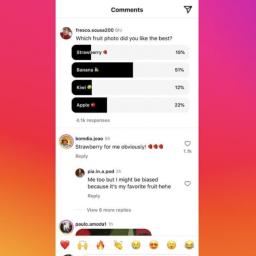
Instagram has started allowing some users to create polls in the comments on their posts, giving creators yet another way to milk their content for more engagement. Adam Mosseri, the head of Instagram, announced the test to his broadcast channel, noting that polls can be added to the comments on both regular feed posts and Reels. It's just a small test for now, but Meta CEO Mark Zuckerberg said in his own update that it will be rolling out to everyone soon."Polls in the comments section will look much like they do in Stories, where they've already been available to users for years in the form of a sticker. Per the screenshot shared by Mosseri, other users will be able to see how many people voted on a given poll. It's unclear right now how long polls will remain open after they're posted, or if users will have the option to choose from different time frames to continue receiving votes, like users on Twitter can.Instagram has been working on making its comment section more of an interactive space, and this past spring finally added the ability for users to post GIFs in the comments. The platform is also testing options for a more tailored Stories experience that builds on what it started with Close Friends, letting users create multiple lists to reserve certain content for specific groups of people.This article originally appeared on Engadget at https://www.engadget.com/instagram-will-soon-let-you-create-polls-in-the-comments-section-of-your-posts-203110464.html?src=rss
|
 |
by Will Shanklin on (#6FQ88)
Students can get Hulu for a mere $2 per month. The streaming service is offering US college students the discounted price on its ad-supported tier, usually $8 monthly. You can keep paying the lower amount as long as your enrollment status remains verified.The offer applies to new customers, but existing subscribers can also use it if their current plan is billed directly through Hulu. The company will verify with SheerID to ensure you're enrolled at a US Title IV accredited college or university.Disney owns a majority stake in Hulu, which offers current-season episodes of broadcast popular television series, films and older TV. It also includes original programming, like Only Murders in the Building, The Handmaid's Tale and The Bear. The discounted price only applies to the version with advertisements, and you also can't download content for offline viewing with this tier. The company offers a Hulu (No Ads)" plan for $18 monthly.Follow @EngadgetDeals on Twitter and subscribe to the Engadget Deals newsletter for the latest tech deals and buying advice.This article originally appeared on Engadget at https://www.engadget.com/hulus-2-per-month-student-deal-for-its-ad-supported-plan-is-back-201558833.html?src=rss
|
 |
by Cheyenne MacDonald on (#6FQ89)
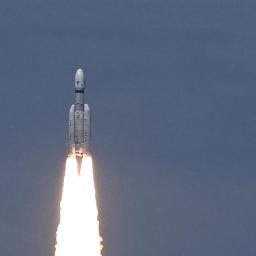
India has announced plans to build its own space station by 2035, and carry out a human mission to the moon five years later. The country has ramped up its space program in recent years, becoming the first in the world to successfully land a spacecraft near the lunar south pole just this past August. Shortly after, in September, it launched a probe to study the sun. But, human spaceflight is new territory. Its upcoming Gaganyaan mission will be the first time India has sent astronauts to space using its own capabilities, and it's now gearing up to start testing the vehicles that will support a human crew.
|
 |
by Will Shanklin on (#6FQ8A)
Rapper Pras" Michel, one-third of the legendary hip-hop group The Fugees, accused his lawyer from a recent federal criminal case of using AI in his closing arguments. Ars Technica reports that the Ghetto Supastar" artist claims his one-time attorney, David Kenner, used an AI program with which the lawyer potentially had a financial interest. Pras, whose legal name is Prakazrel Samuel Michel, was found guilty in April of 10 counts of conspiring and acting as an unregistered foreign government agent and faces up to 20 years in prison. The rapper is seeking a new trial.Pras' motion for a new trial says Kenner used an experimental artificial intelligence (AI) program to draft the closing argument, ignoring the best arguments and conflating the charged schemes, and he then publicly boasted that the AI program turned hours or days of legal work into seconds.'" That quote was pulled from a promotional article for EyeLevel.AI, litigation assistance technology" that lists an entity called CaseFile Connect as a launch partner. The motion says CaseFile Connect's principal address is the same as Kenner's law firm.It is now apparent that Kenner and his co-counsel appear to have had an undisclosed financial stake in the AI program, and they experimented with it during Michel's trial so they could issue a press release afterward promoting the program-a clear conflict of interest," Pras' motion alleges.Attorney David KennerKevin Dietsch via Getty ImagesThe Fugee claims Kenner's use of the AI tool led him to make embarrassing musical misattributions in his closing arguments. It accuses the lawyer of attributing the lyrics Every single day, every time I pray, I will be missing you" to Pras' group, The Fugees. (That line was from Puff Daddy and Faith Evans's 1997 Biggie Smalls tribute I'll Be Missing You.") The motion also alleges Kenner credited Michel's 1998 solo hit Ghetto Supastar (That Is What You Are)" to The Fugees.In addition to the AI accusations, the motion alleges that Kenner was ineffective" and that his actions severely prejudiced the defense." It says the attorney failed to familiarize himself with the charged statutes, causing him to overlook critical weaknesses in the Government's case." In addition, it accuses Kenner of failing to understand the facts or allegations while outsourcing trial prep and strategy to contract attorneys at a friend's e-discovery company (among other allegations).Pras was found guilty in April of funneling money from Malaysian financier Low Taek Jho to Barack Obama's 2012 reelection campaign. Prosecutors insisted Pras donated the money for Low, while the rapper argued he was only trying to help the businessman take a photo with Obama. Pras then allegedly tried to quash a DOJ investigation and influence an extradition case.If Pras' complaint sounds familiar, it parallels the ChatGPT lawyer" Steven Schwartz, who cited fictional cases as an erroneous precedent in a legal document. Schwartz, his associate Peter LoDuca and their law firm Levidow, Levidow and Oberman were fined $5,000 for having abandoned their responsibilities" in the case. Schwartz claimed he used the chatbot to supplement" his research while insisting he was unaware of the possibility that [ChatGPT's] content could be false."This article originally appeared on Engadget at https://www.engadget.com/fugees-rapper-pras-accuses-his-lawyer-of-using-ai-in-closing-arguments-185311864.html?src=rss
|
 |
by Lawrence Bonk on (#6FQ8B)
Gemini Trust Company, a cryptocurrency exchange helmed by the infamous Cameron Winklevoss and Tyler Winklevoss, just got hit with a lawsuit alleging that it defrauded investors. The suit was brought forth by New York Attorney General Letitia James, the same AG currently prosecuting former president Donald Trump on sweeping charges of fraud.This isn't solely directed at Gemini, as cryptocurrency firms Digital Currency Group (DGC) and Genesis Global Capital are also named in the suit. All told, the civil lawsuit alleges that the three companies collectively defrauded 230,000 investors to the tune of more than $1 billion, as reported by Axios. The AG also charged former Genesis CEO Soichiro "Michael" Moro and DCG founder and chief Barry Silbert for trying to conceal the true financial condition of its lending unit.As for the Winklevoss twins and Gemini, the suit alleges that the digital asset platform didn't properly disclose the financials of Genesis before partnering with the crypto exchange to form an investment platform called Gemini Earn in 2021. The suit alleges that Gemini announced that Genesis was a trusted company" despite internal risk analyses to the contrary.It goes on to allege that in February 2022, Gemini revised its estimate of Genesis' credit rating, lowering it from the investment-grade BBB to the junk-grade CCC, all without publicly revealing this change to investors and continuing to advertise correlated investments as low-risk." Additionally, it's been alleged that many of the company's risk assessors took their own money out of Gemini Earn without informing investors.There are even allegations that more than 60 percent of Genesis' financials were tied to Sam Bankman-Fried's disgraced hedge fund Alameda Research. To that end, the connection between Gemini and Genesis is eerily similar to the ties between FTX and Alameda Research, and we all know what happened there.Gemini took to the preferred social media platform for crypto-enthusiasts, X/Twitter, to refute the allegations, writing that it was simply the victim of fraud on the part of Genesis and DCG. It's notable the firm didn't comment on what they knew about Genesis's poor financial condition and when they knew it, placing the onus of blame on Genesis CEO Moro and DCG founder Silbert.Blaming a victim for being defrauded and lied to makes no sense and we look forward to defending ourselves against this inconsistent position," Gemini wrote.For his part, DCG founder Barry Silbert penned a statement that completely refuted his side of the allegations, writing that he is shocked by the baseless allegations in the Attorney General's complaint" going on to say that he intends to fight these claims in court." Cameron Winklevoss hasn't issued his own statement, but did retweet Gemini's post on the matter.Genesis ceased all cryptocurrency trading last month, as reported by CoinDesk, after filing for bankruptcy protection back in January. Today's lawsuit seeks to recoup the $1 billion in losses and hopes to ban all three companies from the financial industry in New York.This article originally appeared on Engadget at https://www.engadget.com/winklevoss-owned-crypto-firm-hit-by-lawsuit-alleging-it-defrauded-investors-of-1-billion-183740973.html?src=rss
|
 |
by Lawrence Bonk on (#6FQ29)
The British Museum has announced plans to digitize its entire permanent collection, totaling over eight million pieces, as reported by ARTNews. The museum announced the move as part of ongoing efforts to increase security and public access. Back in August, the museum reported the theft of thousands of pieces, including over 1,500 historical artifacts, so this announcement is likely in response to that.The project will require the documentation and upload of more than 2.4 million records and is estimated to take more than five years to complete, so you'll have a great time cruising a virtual version of the museum sometime in 2029. Digitization is also an expensive process, which has been one of the primary hurdles when it comes to these projects. British Museum will spend a grand total of $12.1 million on the process.It is my belief that the single most important response to the thefts is to increase access, because the better a collection is known - and the more it is used - the sooner any absences are noticed," interim museum director Mark Jones said in a statement.Despite the aforementioned theft being the primary motivator behind the digitization project, the museum's also using this announcement to fend off repatriation requests for the return of items. Museum board chairperson George Osborne told the UK Parliament's Culture, Media and Sport Committee that they plan on using the digitization efforts as a response to these requests, saying the museum has a pretty good website" that offers digital access even if you cannot visit."However, the museum doesn't currently have the money to complete the project, though it vows to raise the funds via private investors and not by asking taxpayers or the British government. The museum has already digitized half of its collection as part of a project started back in 2020.Speaking of 2020, the early days of Covid forced many museums to hasten digitization efforts. The Grammy Museum digitized its entire archives and many NYC-based institutions followed suit, among numerous other instances.Even before Covid, there were plenty of digitization efforts in place, particularly following a report by the National Science Foundation that urged these projects as part of a comprehensive strategy to protect the actual items from outside elements and to allow increased access for researchers. However, that same report says it'll take decades before most museums are fully digitized at a global cost of $500 million, as noted by Science.This article originally appeared on Engadget at https://www.engadget.com/british-museum-is-digitizing-its-entire-collection-in-response-to-recent-thefts-173426690.html?src=rss
|
 |
by Will Shanklin on (#6FQ2A)
The European Union (EU) has sent official requests to Meta and TikTok for information about their response to content relating to the conflict between Israel and Hamas. The panel's decisions carry significant weight under the recently passed Digital Services Act (DSA), which gives European Commissioner Thierry Breton broad authority to impose heavy fines on the tech behemoths. It follows a move last week to open an investigation into X (formerly Twitter).The Commission is asking Meta for more information about what it's done to mitigate illegal content and misinformation related to the ongoing violence in the Middle East. The TikTok request specifically calls out the spreading of terrorist and violent content and hate speech" and misinformation on the platform. In addition, the Commission wants additional information from TikTok about its provisions related to the protection of minors online," and from Meta related to how it's protecting election integrity.By pointing out the responsibility of platforms - and their CEOs - in the management (or lack of management) of illegal content distributed on their platforms, we are sending out a very explicit signal: things have changed in Europe," Commissioner Breton said in a related speech Wednesday to Parliament. There is a law. It must be respected."
|
 |
by Kris Holt on (#6FQ2B)
Games Done Quick speedrunning marathons have seen plenty of unusual attempts at beating games as quickly as possible in the name of charity. From races between multiple players to blindfolded runs, there's often something a little offbeat on the schedule to shake things up. A run that's earmarked for January's Awesome Games Done Quick event might take the biscuit, though: a Shiba Inu is set to become the first dog to take part in GDQ.Peanut Butter (who is named after the speedrunning term PB, or personal best) is scheduled to tackle NES game Gyromite alongside his human, JSR. The pooch's run will take place remotely, which may come as slightly disappointing news to those attending AGDQ in-person in Pittsburgh.According to a video JSR shared of a previous speedrun of the 1985 game, Peanut Butter uses a custom NES controller with four buttons. Those are mapped to A, B, Select and a fourth button that acts as pressing A and B simultaneously. JSR claims Peanut Butter handled all inputs for the run and that no assistance, autofire, macros or save states were used." However, it's worth noting that JSR did guide PB through Gyromite with the help of some tasty incentives.It took the three-year-old Shina Ibu 25 minutes and 28 seconds to finish the game in that earlier attempt. According to How Long to Beat, that's over an hour faster than it takes the typical player to complete Gyromite. So Peanut Butter is probably better than you at this game.This article originally appeared on Engadget at https://www.engadget.com/the-next-awesome-games-done-quick-will-feature-a-speedrun-by-a-shiba-inu-163951266.html?src=rss
|
by Billy Steele on (#6FQ2C)
There are a few things you can bank on when it comes to Bose headphones. The first is powerful and effective active noise cancellation (ANC) that's been the best in the industry for years. You can also reliably expect that the company's new set of cans will be comfortable over the course of a long flight or extended work session. Bose continues to check both boxes with the QuietComfort Ultra Headphones ($429), but the marquee feature here is the company's unique take on spatial audio. However, more immersive sound and a refreshed design, along with everything else the company is known for, comes at a higher price.DesignAfter debuting a refreshed design on the Bose 700 headphones in 2019, the company returned to its old aesthetic on subsequent models. With the QuietComfort Ultra Headphones, Bose did a mix of the two, but it mostly stuck to the traditional look of the QC line. The outside of the ear cups are where the blend of the 700 and previous QuietComfort models is most apparent. They have a similar shape to those on the 2021 QC 45s, but the physical buttons are almost entirely gone, more like the 700s.Bose removed the three-button setup for playback and volume, instead assigning play/pause, skipping tracks and changing audio modes to a single multi-function control. Just below it on the right ear cup, the Bluetooth pairing button also handles power. The company moved the on-board volume adjustment to a touch-sensitive strip that you can glide your finger across to raise or lower the level. Bose also allows you to assign a shortcut to the volume slider that's activated by long pressing on it. Even though it's touch-based, the slider reliably recognized my thumb swipes.Another notable design change is the headband and hinge. Bose gave these a refined look by using metal instead of relying entirely on plastic. The hinge is better integrated in the headband so there are no visible screws until you fold the ear cups in. Those ear cups can also rotate flat, consistent with previous models over the years. Even with all the changes, Bose managed to keep things extremely comfortable during long listening sessions. Both the earpads and the inside of the headband are soft and cushiony, and I didn't notice the extra weight.Software and featuresPhoto by Billy Steele/EngadgetAll the settings are found inside the Bose Music app. Once connected, the software serves up battery life and a volume slider right up top, with quick access to audio modes, Bluetooth connections, EQ, Immersive Audio, shortcut customization and tips underneath. The app also has a media player that mirrors whatever you're playing elsewhere, so you don't have to leave to control tunes when you're tweaking headphone settings.For audio modes, Bose gives you three by default: Quiet, Aware and Immersion. The first is just active noise cancellation, while the second is full transparency. Immersion is both maximum ANC and Immersive Audio. Bose also offers the ability to create your own modes with an adjustable noise canceling, the option of wind block and Immersive Audio. Once you create a new mode, favoriting it will make it accessible via the QuietComfort Ultra Headphones' on-board controls.For Immersive Audio, there are three options to choose from. You can disable it entirely for the stock Bose tuning, and to save battery life, or you can opt for Still or Motion settings. The former keeps the audio at a fixed point and it is best for when you're sitting. The latter allows the audio to follow you as you move around, using head tracking to keep the sound in front of you at all times.In order to use that long press on the volume slider shortcut, you first have to enable it in the Bose app. From there, you can assign a handful of actions to the gesture. These include hearing the battery level, cycling through the Immersive Audio presets, accessing a voice assistant or playing content from Spotify. If none of those seem particularly helpful, you can always leave it turned off.Sound quality and Immersive AudioPhoto by Billy Steele/EngadgetWhile the headline feature is Immersive Audio, Bose has also improved its stock tuning on the QuietComfort Ultra Headphones. Before I even activated spatial audio, I could tell the sound was considerably warmer and clearer, with more bass right out of the box. Overall sound quality is one area Bose lagged slightly behind the likes of Sony and Sennheiser, but the company is certainly catching up.Bose's take on spatial audio doesn't rely on specialized content like Dolby Atmos in Apple Music or Sony 360 Reality Audio. Those formats have been engineered to specifically make the instruments sound like they're playing around you. Bose uses a combination of headphone components and its newly developed signal processing for Immersive Audio. Thanks to virtualization, it works with any content and that makes it more convenient.Like the dedicated spatial audio formats, the first thing you'll notice is the sound is louder. Immersive Audio lends more overall presence to music, but there's also heightened clarity and detail. Rather than surround you with sound, Bose claims to put you in the acoustic sweet spot, as if you were sitting in the perfect position in front of a set of high-end speakers. Indeed, the company achieves this as albums like TesseracT's prog-metal War of Being have an atmospheric depth while preserving finer details - from the texture of the singer's growl to subtle nuances in the drums.At times, Bose's spatial audio can make songs sound worse. On Tyler Childers' In Your Love," the vocals are sharp and tinny, and the reverb is accentuated to the point it becomes a distraction from the rest of the music. And the vocals are now several notches louder than the instruments. When it hits, this audio tech is a joy to listen to, but because Bose is relying on signal processing rather than carefully engineered content, the results can vary greatly.Another area Bose continues to improve is transparency mode. On the QuietComfort Ultra Headphones, the company offers noticeably clearer audio when piping in your surroundings and allowing you to hear your voice. It's still not as good as what Apple manages on the AirPods Max (no one comes close really), but Bose is making strides. That certainly helps when you're taking a call or need to be tuned into your environment.Stellar noise canceling performance is nothing new on a set of Bose headphones. The company is consistently the best in terms of allowing you to block out the world and the same holds true with the QC Ultra Headphones. Constant rumbling from an air conditioner or white noise machine is reduced to barely a whisper. The headphones do a great job with TV sound and human voices too - even the lethal combination of a nine-year-old playing Fall Guys.Call qualityPhoto by Billy Steele/EngadgetBose promises amazingly clear calls" on the QC Ultra Headphones, a claim that's on par with nearly every headphone company these days. While I wouldn't describe the audio quality for calls that way, it's suitable for everyday voice and video calls when you just need to hear and be heard. It doesn't sound like you're on speakerphone, but it's not pristine either. That's better than what a lot of the competition offers and near the best you'll get on wireless headphones.Battery lifeBose says you can expect up to 24 hours of use with ANC turned on. If you opt for both noise cancellation and Immersive Audio, that figure drops to 18 hours. However, during my tests using the latter option, both the Bose app and macOS were showing 30 percent remaining after 20 hours. So while it's true that the company's new spatial audio impacts battery life, the QC Ultra Headphones still surpass the stated numbers.To help you conserve battery, the QC Ultra Headphones will automatically turn off when they aren't being worn and no audio is playing for 10 minutes. There's also a quick-charge feature that gives you two and a half hours of use in 15 minutes. That's with ANC on and Immersive Audio off though. If you need spatial audio during this time, Bose says you can expect 30 minutes less battery life after the fast top off.The competitionWhile Bose has done a lot to catch up, it still doesn't offer the suite of features that Sony does on the WH-1000XM5. No company does and that's why the M5 is consistently at the top of our best wireless headphones list. The QuietComfort Ultra Headphones do offer more effective noise cancellation, but there's nothing akin to Sony's Speak-to-Chat automatic pausing or the ability to change audio modes based on your activity or location. The M5 also supports Sony's DSEE Extreme that uses AI to upscale compressed audio and increase depth and clarity. The results are far more consistent than Bose's Immersive Audio.Wrap-upWith the QuietComfort Ultra Headphones, Bose remains near the top of the headphone heap. While Immersive Audio is great at times, the results are inconsistent and can be downright bad with some albums and songs. Still, the default tuning is improved and puts these headphones closer to the level of Sony and Sennheiser sonically, mostly due to added bass, increased clarity and enhanced warmth. Bose needed to nail its new trademark feature to help justify the higher price, but it failed to do so. The QuietComfort Ultra Headphones showcase a number of improvements over previous Bose models, but they're not good enough to dethrone the king.This article originally appeared on Engadget at https://www.engadget.com/bose-quietcomfort-ultra-headphones-review-a-new-spin-on-a-reliable-formula-160009025.html?src=rss
 |
by Kris Holt on (#6FPYH)
As expected, the commissioners of the Federal Communications Commission voted along party lines to move forward with a plan to largely restore Obama-era net neutrality protections. All three of the agency's Democratic commissioners voted in favor of the Notice of Proposed Rulemaking (PDF), with the two Republican commissioners dissenting.FCC Chairwoman Jessica Rosenworcel, who has long supported net neutrality rules, last month announced a proposal to reclassify fixed broadband as an essential communications service under Title II of the Communications Act of 1934. It also aims to reclassify mobile broadband as a commercial mobile service.If broadband is reclassified in this way, the FCC would have greater scope to regulate it in a similar way to how water, power and phone services are overseen. As such, it would have more leeway to re-establish net neutrality rules.Supporters believe that net neutrality protections are fundamental to an open and equitable internet. When such rules are in place, internet service providers have to provide users with access to every site, content and app at the same speeds and conditions. They can't block or give preference to any content and they're not allowed to, for instance, charge video streaming streaming services for faster service."The proposed net neutrality rules will ensure that all viewpoints, including those with which I disagree, are heard," Commissioner Anna Gomez, who was sworn in as the panel's third Democratic member in September, said ahead of the vote. "Moreso, these principles protect consumers while also maintaining a healthy, competitive broadband internet ecosystem. Because we know that competition is required for access to a healthy, open internet that is accessible to all."On the other hand, critics say that net neutrality rules are unnecessary. "Since the FCC's 2017 decision to return the Internet to the same successful and bipartisan regulatory framework under which it thrived for decades, broadband speeds in the U.S. have increased, prices are down, competition has intensified, and record-breaking new broadband builds have brought millions of Americans across the digital divide," Brendan Carr, the senior Republican on the FCC, said in a statement. "The Internet is not broken and the FCC does not need Title II to fix it. I would encourage the agency to reverse course and focus on the important issues that Congress has authorized the FCC to advance."Restoring previous net neutrality rules (which the Trump administration overturned in 2017) has been part of President Joe Biden's agenda for several years. However, until Gomez was sworn in, the FCC was deadlocked, leaving that goal in limbo until now.The FCC suggests that reclassification will grant it more authority to "safeguard national security, advance public safety, protect consumers and facilitate broadband deployment." In addition, the agency wants to "reestablish a uniform, national regulatory approach to protect the open internet" and stop ISPs from "engaging in practices harmful to consumers."The FCC will now seek comment on the proposal with members of the public and stakeholders (such as ISPs) having the chance to weigh in on the agency's plan. After reviewing and possibly implementing feedback, the FCC is then expected to issue a final rule on the reclassification of broadband internet access. As the Electronic Frontier Foundation points out, this means net neutrality protections could be restored as soon as next spring.It's still not a sure thing that net neutrality protections will return, however. The implementation of revived rules could face legal challenges from the telecom industry. It may also take quite some time for the FCC to carry out the rulemaking process, which may complicate matters given that we're going into a presidental election year.Nevertheless, net neutrality is a major priority for the fully staffed commission under Rosenworcel. We're laserlike focused on getting this rulemaking process started, then we're going to review the record, and my hope is we'll be able to move to order," the FCC chair told The Washington Post.This article originally appeared on Engadget at https://www.engadget.com/fcc-moves-forward-with-its-plan-to-restore-net-neutrality-protections-154431460.html?src=rss
|
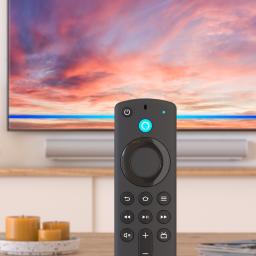 |
by Lawrence Bonk on (#6FPYJ)
The humble Amazon Fire TV Stick is on sale for $20, representing a discount of 50 percent. This is the exact same price found during the Prime Day event earlier this month, so if you missed it then, now's your chance.This sale is for the latest generation of the entry-level Fire TV Stick, and not the often-discounted 4K Max edition. The standard Fire TV Stick offers streaming in Full HD and ships with an Alexa-enabled remote for voice controls. There's Dolby Atmos audio support on select titles with compatible home audio systems and an easy plug-and-play installation process, which is the whole point of these streaming sticks. Just pop it into an available HDMI port and you'll be good to go.The streaming stick allows access to just about every platform out there, such as Netflix, Disney+, Hulu and, of course, Prime Video and the entire spate of Amazon channels. To that end, you also get six free months of Amazon's in-house streaming service MGM+. At $6 per month, that's a $36 value. MGM+ isn't the most popular streaming site on the block, but does offer some unique original programming, like the surprisingly decent Lost-alike From, the crime drama Godfather of Harlem and the just-announced sci-fi vehicle Beacon 23.This is part of a larger sale of Amazon-branded products. There are no 4K Fire TV streaming sticks involved, but there are plenty of smart TVs. You can snag a Fire TV 43" Omni Series 4K UHD smart TV for $300, a discount of 25 percent, and an Amazon Fire TV 55" 4-Series 4K UHD smart TV for $270, a massive savings of nearly 50 percent. Check the whole list here, as some TVs go as low as $110.Follow @EngadgetDeals on Twitter and subscribe to the Engadget Deals newsletter for the latest tech deals and buying advice.This article originally appeared on Engadget at https://www.engadget.com/amazons-latest-fire-tv-stick-is-on-sale-for-just-20-153511003.html?src=rss
|
 |
by Devindra Hardawar on (#6FPYK)
What good are AI-powered processors without apps that take full advantage of them? That seems to be the question Intel has been asking itself lately. The company just announced a new initiative, the AI PC Acceleration Program, which is meant to help developers create new AI-powered features that take advantage of Intel's upcoming Core Ultra mobile chips.Those processors, which are due to arrived on December 14th, are notable for being the company's first to include a neural processing unit (NPU). Just like how a GPU speeds up gaming tasks, an NPU accelerates AI workloads, like the background blur feature in Windows 11's video chat Studio Effects. An NPU alone won't make people rush out to buy new notebooks, though. What Intel needs are compelling reasons for people to want AI acceleration.Enter the AI PC Acceleration Program, which so far includes more than 100 software vendors and over 300 AI-powered features, according to Intel. These aren't just no-name developers either: Current participants include Audacity, Adobe, BlackMagic, Webex and Zoom. As part of the program, Intel connects developers with AI toolkits like OpenVINO, design resources, and marketing help. This is uncharted territory for most software makers, after all - Intel's assistance could help them to deliver useful AI features more quickly."We at Audacity are thrilled to be partnering with Intel to help bring powerful, open and, most importantly, free AI tools to a mass audience of AI PC users," Martin Keary, Audacity's head of product, said in a statement. "With time, we expect these kinds of initiatives to produce a new kind of creative environment for musicians, podcasters and audiophiles - a worthy successor to the traditional audio tools that have typified the last 20 years."This isn't the first time Intel has tried to push developers to build new AI features, Robert Hallock, Intel's senior director of client technology and performance marketing, told Engadget. It runs similar initiatives for server and datacenters, which have led to around 1,000 examples of AI-enabled software. Developers will be able to sign up for the AI PC Acceleration Program online, and Intel will then determine there eligibility and the resources they'll require.Hallock notes that the fruit of Intel's AI push won't just be limited to the company's NPUs either-they should also run on AI hardware from AMD and Intel without much extra effort. Looking ahead, he expects NPUs to be a common component in all PC processors, making them something developers can rely on even more. Developers will still target CPUs for latency-sensitive work, while games and 3D rendering will go straight for GPU power. But the NPU will be the go-to solution for long-running, power-intensive AI tasks because it's far more efficient than GPUs and CPUs."In the quest for performance per Watt, having this third accelerator makes a big difference," Hallock said. "It extends battery life, it allows GPU offloads. That's one of the key benefits."This article originally appeared on Engadget at https://www.engadget.com/intel-ai-pc-acceleration-program-core-ultra-150054881.html?src=rss
|
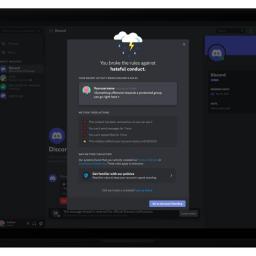 |
by Igor Bonifacic on (#6FPYM)
Discord is introducing new safeguards to protect young users. On Thursday, the company announced Teen Safety Assist. With this week's initial rollout, the program consists of two features: Automated alerts and content filters.Moving forward, when a user a teen hasn't chatted with before sends a direct message, Discord will display a safety alert if the platform's automated systems suspect the teen's safety could be at risk. The prompt will nudge the young person to reconsider if they want to respond to the message, and point them to the app's block feature and related safety tips.By default, Discord will now also automatically blur potentially sensitive images from a teen's friends and delete sensitive content from strangers. Young people can disable the feature through an option in Discord's settings menu. Adults, meanwhile, can enable the filters for themselves, if they want the additional protections.The introduction of Teen Safety Assist comes amid increased scrutiny of Discord's efforts to limit the spread of child sexual abuse material (CSAM) and protect young users from predatory adults. In June, NBC News identified 35 cases over a period of six years where adults had allegedly used the platform to kidnap, groom or sexually assault minors. The outlet also found 165 cases where authorities were prosecuting adults for sharing CSAM over Discord or allegedly using the platform to extort young users into sending sexual images of themselves.In the aftermath of the report, Discord banned teen dating servers and changed its safety policies to ban the sharing of AI-generated CSAM. It also announced new rules explicitly prohibiting any other kind of text or media content that sexualizes children. At the same time, the company introduced Family Center, a dashboard for parents and guardians to keep track of what their teens are doing on Discord.DiscordTeens are still in the process of learning about themselves and what it means to be online, and our new safety features are rooted in providing them with agency on the platform, to give them ways to learn and grow in safe and age-appropriate online spaces," said Savannah Badalich, senior director of policy at Discord. These newest features are part of an ongoing, multi-year effort to continually evolve and advance safety on Discord."At the same time, Discord is introducing a new warning system for people who violate its policies. Outside of incidents involving the most extreme" violations, the company is moving away from permanent bans. It's doing so under the belief that most users will choose to be better online citizens given the chance and proper guidance.In practice, the system will notify a person when they've violated one or more of Discord's policies and detail the restrictions on their account. It will also link out to the company's Terms of Service, Community Guidelines and appeal mechanism. A new Account Standing" tab within the settings menu will allow users to see all their current and past policy violations.We think we've built the most nuanced and proportionate reporting system," Badalich told Engadget, adding the company hopes other platforms will look to what Discord has created for inspiration related to their own enforcement efforts. We believe people, especially teens, have the capacity to grow."Separately, Discord announced a slew of new features and enhancements slated to arrive either in the near future or down the line. To start, the platform's in-app shop, which Discord began testing last month with Nitro subscribers, will soon be available to all users. The marketplace features digital items people can use to decorate their avatars and profiles. Discord will offer store discounts to Nitro members, as part of a new perk for signing up.DiscordThis week, the company will also start rolling out a feature called Remix. It allows users to edit an image directly within Discord's mobile app and share it with their friends and servers. The company spent much of the last year improving its Android and iOS clients. One recent update saw it improve app launch times on both platforms. In the near future, Discord says people can expect a new Midnight" dark mode the company claims reduces battery consumption on devices with OLED screens, more functional notification tabs and a new search feature for the settings menu to make it easier to find the exact option you're looking to tweak.Last but not least, the company says it will begin rolling out Premium App Subscriptions to eligible developers in the UK and Europe, following a launch that began in the US a few weeks ago. On the subject of third-party apps, bots and plugins, the company said it's in the process of exploring how to make those accessible across nearly every part of Discord. It provided few details on the effort, but said the goal is to allow people to access their favorite apps and bots without those experiences being restricted to select servers.We're experimenting with a few different things, but the goal is for developers to reach more people with the awesome experience they're building. For users, we don't want them to be gated from having these custom experiences at their fingertips," Cherry Park, director of product marketing at Discord, told Engadget. In terms of the way we architecture and build it, there are a couple of solutions. Some are easier, some are more difficult, and you're going to see us experiment with a few of them over the next few quarters."Discord promised to share more about its efforts around app portability in the near future. In the meantime, Nitro subscribers will get a chance to test new features before they become available to the public.This article originally appeared on Engadget at https://www.engadget.com/discords-latest-teen-safety-blitz-starts-with-content-filters-and-automated-warnings-150031569.html?src=rss
|
by Sam Rutherford on (#6FPYN)
Samsung was the first manufacturer to make a proper foldable phone, but it's gotten a bit complacent. Now OnePlus is releasing its first phone with a flexible screen and it's already giving the Galaxy Z Fold 5 a run for its money. Not only does the Open pack larger displays, both inside and out, it's also thinner and lighter. That is, as long as you don't count its massive camera module. And with its Open Canvas software, OnePlus is taking a novel approach to multitasking that makes it super fast and easy to switch between apps.But perhaps the most impressive thing the Open is doing, is putting pressure on the price of big fancy foldables, because starting at $1,700, it costs $100 less than the Z Fold 5 and Google's Pixel Fold - and that's before you factor in OnePlus' deal that knocks another $200 off with the trade-in of any phone. In a year when we've already seen Google release its first foldable phone, the arrival of the OnePlus Open is adding even more excitement to the category.Displays: Super brightSimilar to Samsung's Galaxy Z Fold line, the OnePlus Open sports two displays: a skinner 6.3-inch exterior screen along with a 7.8-inch flexible panel on the inside. Both panels are slightly bigger than those on the Z Fold 5 while also featuring 120Hz refresh rates. But the thing the OnePlus has really pushed is brightness, which hits around 1,400 nits during normal use, or up to a mindblowing 2,800 nits in certain situations like when watching HDR content outdoors. And once again, that's for both displays. However, those numbers are so high, it maxed out my colorimeter, so I can't fully verify OnePlus' claims. Regardless, brightness was never an issue.Design: When every gram mattersOnePlus hasn't messed around too much with Samsung's template and stuck with an inward folding design. However, it does feel like the company tried to shave off every extra gram or millimeter. The black model which features a vegan leather back weighs just 239 grams, just one gram lighter than an iPhone 14 Pro Max. Meanwhile, our emerald dusk review unit sports a glass back and only comes in a touch heavier at 245 grams.The Open is also surprisingly sleek measuring just 11.7mm thick. That's even thinner than the Pixel Fold (12.1mm). That is, until you factor in its massive camera module which brings the phone's true thickness to around 18mm. The Open also has a wider exterior display, which makes typing on it much nicer without a ton of added bulk.Photo by Sam Rutherford/EngadgetOf course, some of the biggest areas of concern on a foldable are its hinge and crease. Thankfully, OnePlus has done a pretty good job with both. There is a faint groove that runs down the middle of its main display, but it's subtle. You only notice it when viewed from acute angles or if you really go looking for it.The hinge is also surprisingly smooth and, unlike its rivals, there's a bit of spring-loaded action to it. So after a certain point it just swings wide open. That's a nice change coming from the Pixel Fold which always seems to stop right at 179 degrees, no matter what you do. Another detail I appreciate is that the Open closes flush, so you don't have to worry about keys or other small objects getting inside. Unfortunately, you only get an IPX4 rating for water resistance, which is far short of the IP68 classification on the Pixel Fold and Z Fold 5.Performance: Mobile multitasking made easyThe OnePlus Open features a Snapdragon 8 Gen 2 chip that results in very similar performance to that of the Galaxy Z Fold 5. Samsung's phone does enjoy about a five to 10 percent lead in tests like Geekbench 6 due to slightly higher clock speeds. But during everyday use, the advantage is basically imperceptible. But the OnePlus does have 16GB of RAM (versus 12GB on the Z Fold) along with 512GB of base storage-which is double what you get from both Samsung and Google.Photo by Sam Rutherford/EngadgetHowever, my favorite thing about the Open is how it handles multitasking. You can obviously do stuff like having two apps open in splitscreen. But if you want more, OnePlus' Open Canvas software makes it possible to open three apps at once, with little tabs that let you move things around with a single tap. It's like each app is a little card that slides in and out of view as you need them, and it works surprisingly well. It's so much faster than sliding up and holding to open recent apps, but without adding too much clutter. And as a tweak on Samsung and Google's taskbars, OnePlus added a dedicated icon for recent files, so it's super easy to drag and drop docs or photos into email or messages.That said, as someone who loved older versions of Oxygen OS, I feel like the current design of OnePlus' UI (following the company's merger with Oppo) looks a bit cheap. Almost every button aside from in the quick settings is some kind of rounded rectangle, and while it's functional, it's also kind of boring.Cameras: A big bump from HasselbladPhoto by Sam Rutherford/EngadgetEver since OnePlus partnered with Hasselblad to upgrade its cameras, the modules on the backs of its phones have gotten bigger and bigger. And while it's a bit of an eyesore, the Open's huge camera bump isn't without reason as it holds a large 1/1.43-inch 64-MP LYTIA T808 main sensor from Sony with a new pixel architecture designed to increase the amount of light it can capture for even better nighttime photos. OnePlus claims it delivers the best image quality on any foldable available today and, while I won't go quite that far, its pics are relatively close to what you can capture with a Pixel Fold. Photos are sharp and detailed, the one shortcoming is that OnePlus' low-light processing isn't quite as good as Google's Night Sight. But compared to the Z Fold 5, the Open's pics often had better dynamic range and less exaggerated sharpening.You also get a 48-MP ultra-wide cam that can also shoot macros, and a 64-MP telephoto with a 3x optical zoom that goes up to a 6x lossless magnification. Once again, while that 3x zoom is every bit a match for the Z Fold 5's 3x telephoto cam, it's 6x lossless just isn't quite as sharp as the 5x optical lens on the Pixel Fold. But that's not a big surprise because there still isn't a true replacement for high-quality glass.Battery life: Great longevity but no wireless charging?!OnePlus has always had somewhat spotty support for wireless charging. Its first phone to have it was the OnePlus 8 Pro in 2020, which was years after its competitors got on board. That support continued on the OnePlus 9, OnePlus 9 Pro, and the OnePlus 10 Pro. But then OnePlus dropped wireless charging for the 10T and the 11, and unfortunately, we don't get it here on the Open either.Photo by Sam Rutherford/EngadgetThe lack of wireless charging on any $1,000 phone is pretty disappointing, let alone a brand new flagship foldable. My suspicion is that OnePlus didn't include it because charging coils would have added one or two millimeters in thickness, which would have detracted from the phone's design. And if that's true, that's a pretty weak justification.On the bright side, wired charging is significantly faster than its competition at 67 watts. And it's even faster in Europe at 80 watts due to their 240-volt power standard. However, because of OnePlus' proprietary charging system, you only get those speeds when you use the included brick, so if you switch to a third-party adapter, speeds drop in half to around 30 watts.Thankfully battery life is great. With its exterior display, the Open lasted 25 and a half hours on our video rundown test, which is an hour and a half better than the Z Fold 5. And with its main display, it lasted just over 19 hours, which is also quite respectable.Pricing: An almost unbelievable discountPhoto by Sam Rutherford/EngadgetWhen it comes to pricing, big foldables like this have always been pretty expensive, though at $1,700, the Open costs $100 less than both the Z Fold 5 and the Pixel Fold. But to sweeten the pot even further, OnePlus has an enticing deal that will knock another $200 off the price with the trade-in of any phone. Typically there are some limits or restrictions to promos like this, so I had to confirm the details with OnePlus. But the company really does mean any device, regardless of how old it is or what condition it's in. That means you can finally get rid of the Nokia brick that's been living in a drawer for the last 10 or 15 years and get some value out of it. And if you do, you're looking at an effective price of $1,500, which still ain't cheap, but it is significantly lower than the competition. The caveat is that this discount is only available directly through OnePlus.Wrap-upWhen I first heard OnePlus was making a foldable phone, I wasn't sure what their goal was. The company hasn't been in the business of making flagship killers for a while. But with the Open, OnePlus has crammed some rather impressive hardware into a device with a novel approach to multitasking. The Open's cameras are as good if not slightly better than what you get on a Z Fold 5, and it has bigger screens too. Honestly, there are a lot of things about the Open's design that I wish we were getting from Samsung, as opposed to the three years of minor refinements we've seen following the release of the Z Fold 3.Along with a cable and OnePlus' proprietary charging brick, the Open also comes with an included case which is a nice bit of added value. Photo by Sam Rutherford/EngadgetIt's also important to note that the Open has an alter ego, because depending on where you live, this thing will also be known as the Oppo Find N3. The two phones are essentially the same device just with different branding. That said, the Open will still get four years of Android updates and five years of security patches along with support for all the major US carriers. But unlike Google and Samsung's offerings, the Open will only be available through online retailers and because OnePlus doesn't have any local US retail partners, the only way to get the Open serviced is to send it in. That's a bit of concern as pretty much every foldable phone tends to have an issue with its built-in screen protector bubbling after about a year. So even though OnePlus offers free shipping for repairs under warranty, no one wants to be without their phone for a week or more while it's in the shop.Still, I'm impressed with what OnePlus is bringing out the gate.This article originally appeared on Engadget at https://www.engadget.com/oneplus-open-review-a-thinner-and-more-affordable-flagship-foldable-specs-price-150031633.html?src=rss
 |
by Lawrence Bonk on (#6FPV6)
Alienware just announced a refresh to the popular m17 R5 gaming laptop. The m17 was already a stellar example of an AMD Advantage system and the m18 kicks this up a notch or two. The Alienware m18 goes all-in with AMD integration, with the company boasting that its the most powerful 18-inch AMD Advantage laptop" ever made.The term AMD Advantage is marketing speak for a computer that's built from the ground up for gaming via various AMD chipsets and technologies. To that end, the m18 is the first computer to feature the all-new AMD Radeon RX 7900M laptop graphics chip. These laptops also come equipped with the well-regarded AMD Ryzen 7945HX CPU. So, yeah, this thing's a beast, with Alienware calling it a performance juggernaut."The Radeon RX 7900M has been engineered to deliver desktop-class" visuals even when playing power-hungry AAA titles. The GPU is filled with techy features, like second-gen raytracing accelerators, 16GB of GDDR6 VRAM and other advanced capabilities to push the limits of gaming and content creation on the go."The Ryzen 9 7945 CPU helps everything move along thanks to 16 performance cores, 32 processing threads and AMD's proprietary Zen 4 chiplet technology. The CPU was manufactured using the new 5nm design, the first for gaming laptops, which promises better power efficiency and faster performance.These laptops ship with AMD's Adrenaline Edition software suite, so you can access the SmartShift tool to shift power between the GPU and CPU in real-time to boost performance. Additionally, the company's proprietary SmartAccess graphics tech automatically prioritizes game performance and reduced latency when using FreeSync.AlienwareLaptops are more than just numbers on a spreadsheet, however, and the m18 has some other perks worth mentioning. These computers come equipped with Alienware's Cryo-tech thermal regulation technology. This thermal interface material extends to both the CPU and GPU, with an expanded vapor chamber covering each component, helping to dissipate heat across the entire system. Four thin fans finish this process by pulling heated air through eight heat pipes and out via five vents.You also get an 18-inch display panel equipped with both Dolby Vision and Dolby Atmos, with a 16:10 aspect ratio, QHD+ resolution and a maximum refresh rate of 165Hz. You can overclock this refresh rate all the way to 480Hz at the expense of resolution for competitive gaming scenarios. An FHD webcam and an IR camera for facial recognition are also on board.As for RAM and storage, there's user-replaceable dual-channel DDR5 memory and you can shop options with up to three M.2 SSDs for a combined total of 8.5TB of storage. The laptop boasts some aesthetic flourishes, like an aluminum lid and bottom cover, an aluminum die-cast inner frame and an embossed "18" on the exterior. The m18 is available today with a starting price of $2,800.This article originally appeared on Engadget at https://www.engadget.com/alienwares-latest-gaming-laptop-is-the-first-to-feature-amds-radeon-rx-7900m-gpu-130033731.html?src=rss
|
 |
by Steve Dent on (#6FPV7)
AMD has unveiled the Radeon RX 7900M mobile GPU built around its RDNA 3 architecture, its fastest mobile gaming chip to date and "first-even chiplet laptop graphics." The company has positioned the new chips for high FPS 1440p (QHD) gaming rather than 4K as a way to boost regular laptop gaming. AMD is also touting its FSR 3 (FidelityFX Super Resolution) upscaling tech that's similar to NVIDIA's DLSS 3, promising a large boost in frame rates for games like Starfield and Forspoken.As a flagship chip, the RX 7900M comes with 72 compute units (compared to 32 for the RX 7700S) and features 16GB of GDDR6 RAM, while consuming up to 180 watts - well beyond the 110 watt TDP of NVIDIA's RTX 4080 mobile chip. AMD claims it can outperform the latter by 7 percent on average in terms of frame rates, while offering an additional 4GB of GDDR6 RAM.AMDIn one example, AMD claimed it could beat a laptop with an RTX 4080 mobile chip by 27 percent on Starfield with a 62 fps frame rate (FSR 2, Ultra 1440p). In another, it said that Forspoken could run at 201 fps with FSR 3 turned on, compared to 63 fps with the setting disabled. It also listed higher frame rates for a number of rasterized games, though it was beaten by a majority ray-traced games run on NVIDIA RTX 4080 GPU-equipped laptops. This is an issue we flagged after reviewing the Radeon RX 7900 XTX and 7900 XT desktop processors last year.Along with the mobile GPU, AMD announced a partnership with Alienware, integrating its RX 7900M and Ryzen 9 7945HX processor into the m18 laptop. Along with those chips, that model comes with an 18-inch QHD+ (2,560 x 1,600) display, up to 64GB of RAM, 8.5GB of storage max, and more. That model, along with the RX 7900M, is set to arrive in Q4 2023, when we can hopefully put AMD's claims to the test.This article originally appeared on Engadget at https://www.engadget.com/amds-radeon-rx-7900m-is-its-most-powerful-mobile-gpu-yet-130013737.html?src=rss
|
 |
by Lawrence Bonk on (#6FPV8)
Adobe just released the latest iterations of Photoshop Elements and Premiere Elements. These 2024-branded versions feature plenty of new features that streamline the creative process, many of them aided by, wait for it, artificial intelligence. Beyond AI-powered tools, there's also some other stuff for photo and video editors to get excited about.Let's start with AI features, all of which are powered by Adobe's new Sensei AI platform. On the Photoshop side of things, there's a new tool that automatically selects objects and backgrounds for removal, editing or replacement. This looks to be a more nuanced take on Google's Pixel Magic Eraser tech.The company says you can use this tool to swap out the sky, which should come in handy for those looking to turn standard outdoor photos into a fiery hellscape. The AI tools even let you smooth out a subject's skin and complete a number of automatic smart fixes. Additionally, Photoshop Elements 2024 uses AI for its brand-new Artistic Effect options, allowing you to completely transform images into something resembling a famous work of art.Adobe's Sensei AI also lets you upscale JPEGs to remove artifacts, creating a more smooth, natural look." This should give editors more control over this file type, as it has never been anyone's first choice when it comes to making image adjustments.AdobeAs for Premiere, the popular video-editing software suite now uses AI to automatically create highlight reels culled from uploaded footage. The company says that these AI-created clips will draw people in by focusing on motion, close-ups and your highest quality footage."Of course, this is a proper Elements update, so there's all kinds of features that don't dive into the AI well. Photoshop gets updated color and tone presets, photo reels that can be saved as MP4s or GIFs, a bunch of new one-click editing options and an aesthetic facelift to tie everything together. There's even something called Guided Edits, that teaches you how to do things as you go.Premiere gets a suite of new audio effects, like reverb, and a number of built-in presets to create a unique vibe. Just like Photoshop, there's a visual redesign that offers a fresh look" and access to a similar collection of tutorial-based Guided Edits. Both software suites are available now as solo purchases or in a bundle.This article originally appeared on Engadget at https://www.engadget.com/adobe-adds-plenty-of-ai-wizardry-to-photoshop-and-premiere-130011069.html?src=rss
|
 |
by Mariella Moon on (#6FPV9)
GM, Cruise and Honda are teaming up to introduce a driverless ride-hailing service in Japan, which could launch in early 2026 if things go according to plan. The companies have entered a memorandum of understanding to form a joint venture for the project, and they're hoping to establish the company in the first half of 2024, provided they're able to secure the necessary regulatory approvals by then. Their ride-hailing service will deploy the Cruise Origin electric shuttle van that the companies had developed together. It's a self-driving vehicle with no steering wheel or even a driver's seat, which means it also has no pedals and no rearview mirror.CruiseInstead, it has a big cabin space where up to six passengers can sit facing each other, and its doors slide open like a subway's. "The opportunity for the ridehail service in Japan, which is expected to be the first of its kind, is huge," GM said in its announcement. It has the potential to solve the country's ongoing driver shortage and could provide an alternative for those who can't use Tokyo's extensive train and subway system for any reason.While it's still early days for the project, the companies already have a vision for how they want to execute their plans. They're looking to start by deploying "dozens" of Cruise Origins in central Tokyo by 2026 before expanding the fleet to 500 Origins. After that, they're hoping to make the service available outside of the capital's center. Like any other similar service, passengers will be able to hail an Origin through a dedicated app, as well as pay for their ride.This article originally appeared on Engadget at https://www.engadget.com/gm-honda-and-cruise-plan-to-offer-driverless-taxi-rides-in-japan-in-2026-123500078.html?src=rss
|
 |
by Sarah Fielding on (#6FPRF)
Anker had huge deals running for Amazon's October Prime Day, but if you missed out, there's some good news. The tech accessory leader currently has sales on some of its top chargers, including its super-fast Gallium Nitride (GaN) options. The cheapest - and arguably nicest looking - option of that lot is the Anker 511 GaN charger 30W, discounted 26 percent to $17, from $23.The Anker 511 is a USB-C charger that provides 30W of power at just 1.12 inches wide. It's available in natural green, misty blue and lilac purple, alongside standard black and white options. The three-port Anker 735 GaNPrime 65W is also on sale, dropping to $40 from $60 - a 33 percent discount. It offers two USB-C and one USB-A port and uses Ankers IQ technology for more efficient, 65W charging. One of the best deals comes courtesy of a 43 percent discount on the Anker 736 GaN II 100W charger. At two-thirds the size of a MacBook's 96W power brick, the model also includes two USB-C and one USB-A port, but with even faster charging than its counterparts.Other Anker devices for sale outside the GaN family include the 313 10W wireless charger pad, down to $12 from $16, and the 332 USB-C hub with 100W, available for $30 versus its usual $50. Alongside its chargers for sale, Anker also has a markdown on its PowerConf S3 Speakerphone with six microphones. The home office device is discounted 38 percent in Black, dropping to $80 from $130.Follow @EngadgetDeals on Twitter and subscribe to the Engadget Deals newsletter for the latest tech deals and buying advice.This article originally appeared on Engadget at https://www.engadget.com/anker-gan-chargers-are-up-to-43-percent-off-in-amazon-sale-122043698.html?src=rss
|
 |
by Will Shanklin on (#6FPRG)
EV charging infrastructure company ChargePoint announced Thursday that it's rolling out support for Tesla's North American Charging Standard (NACS) connector. In a move announced earlier this year, the network will support AC and DC charging for the formerly proprietary, soon-to-be-ubiquitous Tesla plug. Rival Electrify America announced a similar change in June, but it set a more modest deadline of 2025 to make the transition.Support begins rolling out today with much of the lineup" expected to deliver during the next month. Cable upgrade kits for the company's existing DC fast chargers will be delivered to customers in November, offering Tesla drivers a public fast charging alternative for the first time," the company wrote in a press release Thursday.The ChargePoint app now includes an NACS selection filter to help find a compatible station on your route. With many car manufacturers recently adopting the NACS standard for upcoming models, ChargePoint now offers every necessary cable solution to charge an EV in North America and Europe," the company wrote. ChargePoint has over 48,000 EV charging stations globally.ChargePointChargePoint will provide a native DC connector and AC solutions" compatible with Tesla vehicles. It will also continue supporting the Combined Charging System (CCS-1) standard. The lineup offers AC solutions as well, negating the need for a cumbersome adapter to charge," the company wrote. In addition, ChargePoint begins shipping cables for its Level 2 Home Flex charging system this month. It's the first publicly available option offering NACS DC fast-charging speeds for non-Tesla EVs.With more than 35 million historical ChargePoint sessions initiated by Tesla vehicles, we saw the need to offer native connector solutions for this large portion of the EV market," Pasquale Romano, CEO of ChargePoint, wrote in a press release. Our support for both installed and new products opens up ChargePoint DC chargers to millions of drivers who have not yet had a fast charging alternative to the Tesla ecosystem, and makes their AC charging experience more convenient."The auto industry has lined up behind NACS in recent months. Ford, GM / Rivian, Volvo, Polestar, Mercedes, Honda, Jaguar, BMW and Hyundai have announced plans to adopt the standard in upcoming vehicles. Toyota and Volkswagen stand as two of the few remaining holdouts.This article originally appeared on Engadget at https://www.engadget.com/chargepoints-ev-network-rolls-out-support-for-teslas-nacs-connector-120034510.html?src=rss
|
 |
by Sarah Fielding on (#6FPRH)
WhatsApp is finally giving you the option to send voice notes without concerns about them being recorded or shared. The messaging app is rolling out a feature that lets you set voice notes to view once and then self-destruct, WABetaInfo reports. Now, there's really very little reason to call anyone.
|
 |
by Mat Smith on (#6FPRJ)
We haven't heard much on the state of Amazon's drone deliveries, but the company still seems focused on exploring the possibilities. A report earlier this year said Amazon had made only a handful of deliveries due to FAA regulations. However, in the announcement of prescription deliveries in parts of Texas, Amazon said its drones have safely delivered hundreds of household items in College Station [in Texas] since December 2022."AmazonCustomers at College Station are now eligible for aerial deliveries of more than 500 medications" for common conditions like the flu, asthma and pneumonia. Texas has established itself as a hotbed for drone delivery trials. Alphabet's Wing also began offering them in Dallas-Fort Worth, including a partnership with Walmart.Beyond a future third drone delivery area in the US, Amazon is planning an international expansion to the UK and Italy in 2024. Drone deliveries will start at one site each before expanding to more locations. Amazon added it will integrate the Prime Air program into its delivery network. In the US, drones will run out of some Same-Day Delivery sites.Amazon will also start using its MK30 drone, first revealed last November. This model has a range twice as large as previous drones and improved tolerance for higher and lower temperatures. The MK30 can also operate in light rain. It's smaller, lighter and quieter than previous drones too. But will it attempt delivery while I'm in the shower? Probably.- Mat SmithThe biggest stories you might have missedMeta is temporarily changing Facebook comment settings amid Israel-Hamas warNordVPN plans are nearly 70 percent off ahead of Black FridayChan Zuckerberg Initiative's $250 million NYC biohub will engineer disease-fighting cellsWhatsApp will soon let you add two accounts to one deviceYou can get these reports delivered daily direct to your inbox. Subscribe right here!Netflix jacks up the price of its premium plan to $23 a monthGrandfathered Basic subscribers will pay $12.Netflix has announced two price hikes during its quarterly earnings. It said it's increasing rates for its Basic and Premium plans. The Basic plan, which Netflix killed earlier this year, moves from $10 to $12 for grandfathered customers, while Premium rises from $20 to $23. Netflix said its ad-supported and Standard plans will remain the same at $7 and $15.49, respectively. Yay?The company's move to limit password sharing appears to have paid off too. Paid memberships are up to 247.15 million, a significant 10 percent annual increase.Continue reading.Tesla begins Cybertruck deliveries on November 30Prepare for your angular ride.ASSOCIATED PRESSAfter years of delays and redesigns, Tesla Cybertruck deliveries will begin to select customers starting November 30, before the vehicle enters full production next year at its Texas Gigafactory. The latest design tweak is the vehicle's electrical architecture, reportedly now being redesigned to accommodate an 800-volt standard, up from the 400V in existing Tesla vehicles. A lot of luxury and heavy-duty EV models - from the Audi e-Tron to the GMC Hummer EV - use 800V architecture as it enables EVs with large battery capacities to charge faster.Continue reading.YouTube's new news hub directs you toward reliable sourcesThe platform is also helping channels create news-focused Shorts.At a time when misinformation is rife on many platforms and is arguably even incentivized in some cases, YouTube is attempting to push back (while also being the home of so much of it). In around 40 countries, it's rolling out a news hub to pull together news from authoritative sources" in several formats: video on demand, live streams, podcasts and even Shorts. The feature will eventually land on desktop and connected TV apps.Continue reading.This article originally appeared on Engadget at https://www.engadget.com/the-morning-after-amazon-expands-its-drone-ambitions-111517920.html?src=rss
|
 |
by Mariella Moon on (#6FPRK)
YouTube creators may be able to upload music that sounds like it was actually sang by famous musicians one day. According to Billboard and Bloomberg, the video hosting platform is developing an artificial intelligence tool that can mimic the voice of recording artists. It was also hoping to introduce the feature during its Made On YouTube event in September, where it debuted other AI-powered creator tools including a generative green screen. Obviously, its plan didn't push through, and it was apparently because negotiating with recording companies is taking time. The technology is new, after all, and there are a lot of questions that need to be answered first.Billboard says one of the key issues they're still hashing out is how monetization would work. Will artists be paid for the music YouTube feeds its AI model, or for the output made using the AI tool? Further, how would songwriters be compensated for any of their music used to train YouTube's AI? Recording companies still reportedly have questions about how the AI model is trained, as well, and about how artists will have the power to opt in or out. If and when the tool does come out, YouTube intends to beta test it first by giving a select group of creators access to the voices of artists who opt in.While negotiations are taking time, recording companies are receptive to YouTube's idea, according to the sources. That's because they're looking at the use of AI in music as an inevitability, and they're concerned about getting left behind if they resist licensing deals like what YouTube is offering. As Bloomberg notes, though, YouTube is walking a tricky path and may have to brace itself for legal issues in its quest to explore the use of generative AI in music. OpenAI, for instance, had been sued by a group of authors, including John Grisham and George R.R. Martin, for the alleged use of their novels to train its large language model.This article originally appeared on Engadget at https://www.engadget.com/youtube-may-soon-let-musicians-lend-their-ai-voices-to-creators-105038588.html?src=rss
|
 |
by Richard Lai on (#6FPP8)
Oppo's first two horizontally folding phones caught our attention with their shorter 9:8.4 "golden" aspect ratio, but with the brand new Find N3, the company sided with a more conventional design, which is backed by some new software tricks to boost the multitasking experience. Not to mention an upgraded set of Hasselblad-branded rear cameras, a vastly improved folding durability, and the alert slider inherited from OnePlus - as we've already seen on the recent Find N3 Flip.The new foldable AMOLED display on the Oppo Find N3 comes in at 7.8 inches wide, with a resolution set at 2,240 x 2,268, which ends up being a pixel density of 426 ppi. As far as crease goes, it's even less visible than before, so it's definitely fair to call it "virtually crease-free" this time round. The more interesting feature here is the new self-healing coating, which can apparently smooth out scuffs to keep the panel in pristine condition for a little longer.With the increased body height, the Find N3's cover display features a more familiar - and arguably more practical - 20:9 aspect ratio (though it's still shorter than, say, the Xiaomi Mix Fold 3). Here we have a flat 6.3-inch, 2,484 x 1,116 AMOLED panel (431 ppi), and much like the flexible screen, it supports 1,440Hz PWM dimming for less eye fatigue, 1-120Hz refresh rate, Dolby Vision, HDR10+, up to 1,400 nits in High Brightness Mode and up to 2,800 nits peak. This is noteworthy, considering that many earlier foldable phones have weaker display properties on the inner screen.OppoThe Find N3 is built with Oppo's third-generation Flexion hinge, which consists of zirconium-based liquid metal for compactness, as well as the company's self-developed aircraft-grade steel for strength. The flexible screen is also backed by carbon fiber support plates for structural strength, making the device "36-percent more resistant to warping than past-generation foldables." Better yet, Oppo got TUV Rheinland to certify the Find N3's 1,000,000-fold durability, which is more than double that of the Find N2's "mere" 400,000 folds, let alone the Samsung Galaxy Z Fold 5's 200,000 folds. The fold counts remain at 100,000 for both the 50C (122F ) and -20C (-4F) tests. While there's no Ingress Protection Rating here, Oppo has applied a weather-sealing process to make the Find N3 splash-proof.Photography is also a significant upgrade here. Find N3 is the first smartphone to pack Sony's 48-megapixel (4:3), 1/1.43-inch LYTIA-T808 sensor (it's actually 52 megapixels, 1/1.35 inches in full - 20-percent larger than the main rival's). This is apparently the first sensor to feature a two-layer transistor pixel structure, which is a cunning trick to let each pixel receive more light, thus more image detail. Sony goes as far as claiming that this chip "rivals the high-quality 1-inch type sensor." Additionally, this f/1.7, 24mm-equivalent main camera comes with optical image stabilization.There's also a 64-megapixel, f/2.6 periscope telephoto camera with an unnamed 1/2-inch sensor - one that's apparently three times larger than what you'd get on a main competitor's foldable. With this 70mm-equivalent lens, you get 3x optical zoom and 6x "lossless" zoom (by cropping), both of which are assisted by optical stabilization via a floating prism structure. You can use the same camera in Hasselblad Portrait mode.Last but not least, the 48-megapixel, 14mm equivalent ultra-wide camera packs a Sony IMX5811/2-inch sensor, which Oppo claims to be 130-percent larger than key rival's. It comes with an f/2.2 lens, a 114-degree field of view and macro shot support down to 4cm.OppoTo complement the photography hardware upgrade, the Find N3 packs a new Oppo Computational Photography (OCP) feature, which captures the original brightness information for fine-tuning each HDR shot "pixel by pixel." The result is supposedly "a more natural image with rich highlights and shadows." This sounds somewhat like what the now-retired MariSilicon X imaging neural processor would have handled in the past, but Oppo has yet to dive into the technical details on OCP. On a related note, the ProXDR display mode in the gallery app leverages OCP details to optimize the screen's peak brightness, in order to make the photos pop; but you can also long-press the ProXDR button to see the photos as-is.For video calls, you also have the option to use either the external 32-megapixel f/2.4 selfie camera (1/3.14-inch, 22mm equivalent), or the internal 20-megapixel f/2.2 counterpart (1/4-inch, 20mm equivalent).As for the remaining core phone specs, the Find N3 is unsurprisingly packing Qualcomm's flagship Snapdragon 8 Gen 2 processor, along with 16GB of LPDDR5X RAM, 512GB of UFS 4.0 storage, a dual SIM tray, NFC, a triple-speaker system (with spatial audio support) and a larger 4,800mAh battery. With 67W SuperVOOC charging support, the device reaches over 80-percent charge in 30 minutes, or a full charge in 42 minutes. You'll find the new alert slider (silent, vibrate and ring) located right next to the volume rocker, which is above the side-mounted fingerprint reader. The whole package comes in at 239 grams heavy and 5.8mm thick when opened - not record-breaking numbers but still impressive in this category.On the software side, Oppo justified its shift in aspect ratio by adding some handy multitasking features. In this ColorOS 13.2 (based on Android 13), the new "Global Taskbar" offers an "App Library" button on the far left, which toggles a pop-up menu for quickly launching an app or even dragging it into a split-screen view. There's also a "File Pocket" button next to that, which is another pop-up menu showing your recent files, images and clipboard items, so that you can easily drag and drop into an active app.OppoAnother powerful multitasking feature is "Boundless View," which is basically split-screen on steroids. By tapping the top bar above your desired app in split-screen mode, you can click on "Expand View" which then automatically widens said app, but still leaving a small portion of the other app in view, thus letting you quickly swipe between apps. Similarly, you can also have up to three apps in this horizontal split-screen view - just drag the third app from the dock to the center of the screen. By expanding all three apps in this split screen, you'll be creating a "15-inch Boundless View" layout, and you can get an interactive overview with a four-finger pinch at any time. Much like the usual split-screen mode, you can save these Boundless View app combos for quick access on the home screen.My favorite handy features from before, namely two-finger split screen (swiping down the middle of the screen) and "FlexForm Capture" (partly open the phone while in the camera app), are here to stay. As a bonus, Oppo promises four years of software updates and five years of security updates for the Find N3.OppoThe Oppo Find N3, available in "champagne gold" and "classic black," will be rolling out to global markets soon, with pre-orders starting in Singapore on October 20th. The damage is S$2,399 (around US$1,745) which, to our surprise, is a big jump from the Find N2's price for the same 16GB RAM and 512GB storage configuration. The China version is offered as a premium kit, which is asking for 12,999 yuan or about US$1,777, and it comes with a kickstand case, a car charger and other accessories. Luckily for folks over there, they also have a more affordable 12GB RAM and 512GB storage variant for just 9,999 yuan (about US$1,367), but this is still a lot pricier than last year's base model. It'll be interesting to see how the supposedly near-identical OnePlus Open foldable - launching later today - will differentiate itself from its Oppo twin, be it pricing or software.This article originally appeared on Engadget at https://www.engadget.com/oppos-find-n3-foldable-goes-big-on-displays-and-durability-094134290.html?src=rss
|
 |
by Sarah Fielding on (#6FPP9)
The ninth annual Google for India event had a big announcement: the company plans to manufacture its Pixel phones in India, following steady growth in the country's demand for the devices. Google's senior vice president for Devices and Services, Rick Osterloh, positioned India as one of the company's most important markets for Pixel devices. Google aims to begin rolling out locally produced Pixel 8 smartphones in 2024, eventually expanding to other Pixel models.Google's contribution to the "Make in India" initiative will see partnerships with domestic and international manufacturers. In a tweet, the CEO of Alphabet and Google, Sundar Pichai, stated, "We're committed to being a trusted partner in India's digital growth." The pivot also allows Google to diversify its production away from China, where supply chain risks continue due to strains between the nation and the United States.
|
 |
by Mariella Moon on (#6FPJP)
If you have a personal WhatsApp account and a business one - or two accounts of the same nature - you'll soon no longer have to carry two phones to be able to access them both. WhatsApp will finally let you add two accounts to one device, as long as you have a second phone number or a phone that supports eSIM or dual/multiple SIMs.You won't even need to log out of one account to be able to access the other. To have simultaneous access to two accounts, go to the app's Settings page and click on the arrow next to your name to find the "Add account" option. Each account has its own privacy and notification settings, so you can choose to receive alerts from one and not the other, which sounds incredibly useful if you're on vacation and don't want to hear from your work or business for a while.The new feature follows an update earlier this year that gave you the capability to access your account on multiple devices. WhatsApp used to be very strict when it comes to account access and limited you to having one account on one phone. It started exploring multi-device functionality in 2021, though, and rolled out the ability to sync one account across up to four phones in April. This upcoming update, which could make it easier to juggle different aspects of your life while maintaining boundaries, is rolling out for Android devices in the coming weeks.This article originally appeared on Engadget at https://www.engadget.com/whatsapp-will-soon-let-you-add-two-accounts-to-one-device-070407645.html?src=rss
|